Baking Bellybuttons

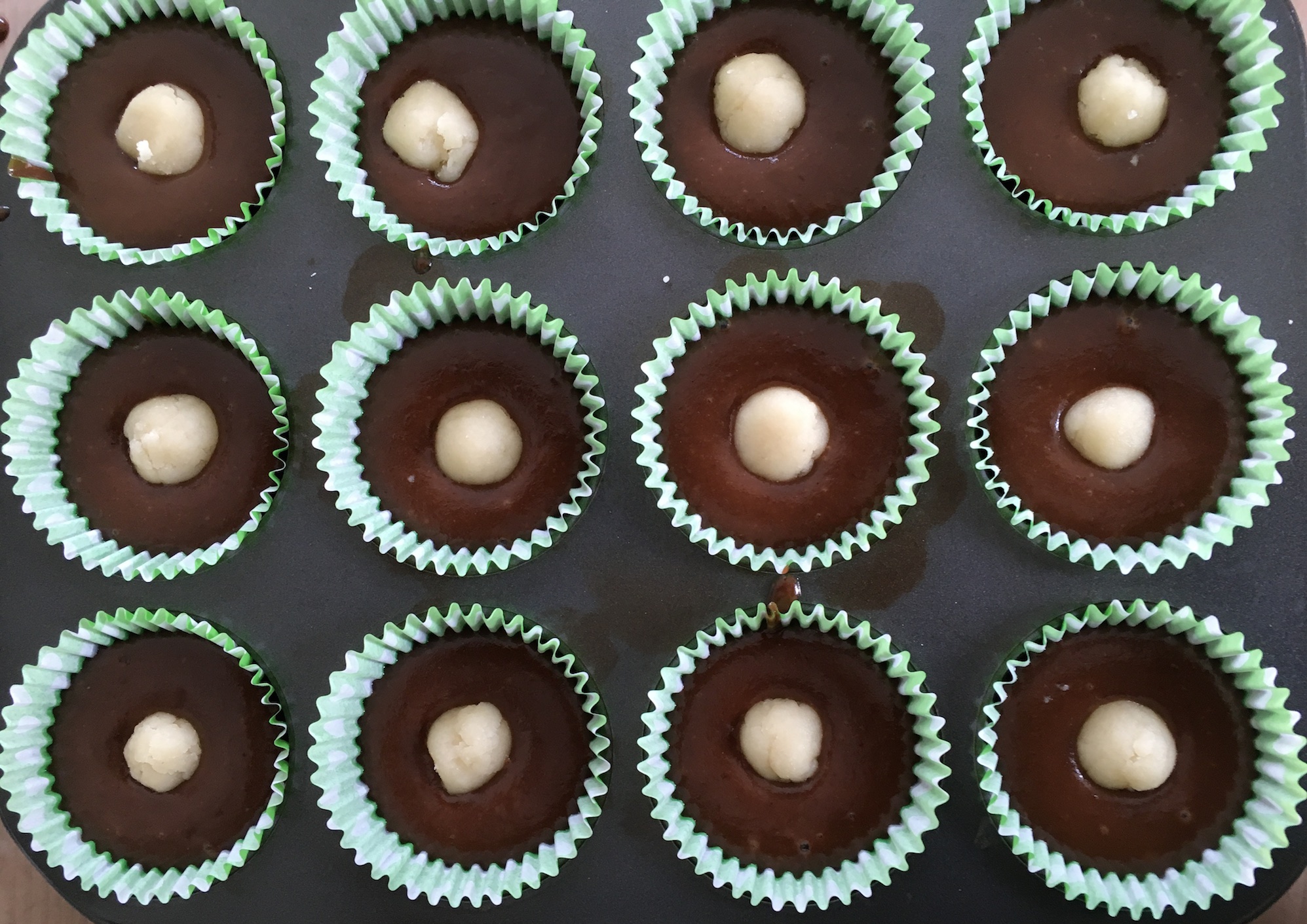
Before baking--moons in the night sky. How romantic!

Before baking–moons in the night sky. How romantic!

I had to bake on the equinox. Something to celebrate the season, and the coming long nights.

I had some marzipan left over from recent birthday cakes, so I made chocolate cupcakes, each with a little ball of marzipan dropped into the batter–you know, a moon in the night sky.

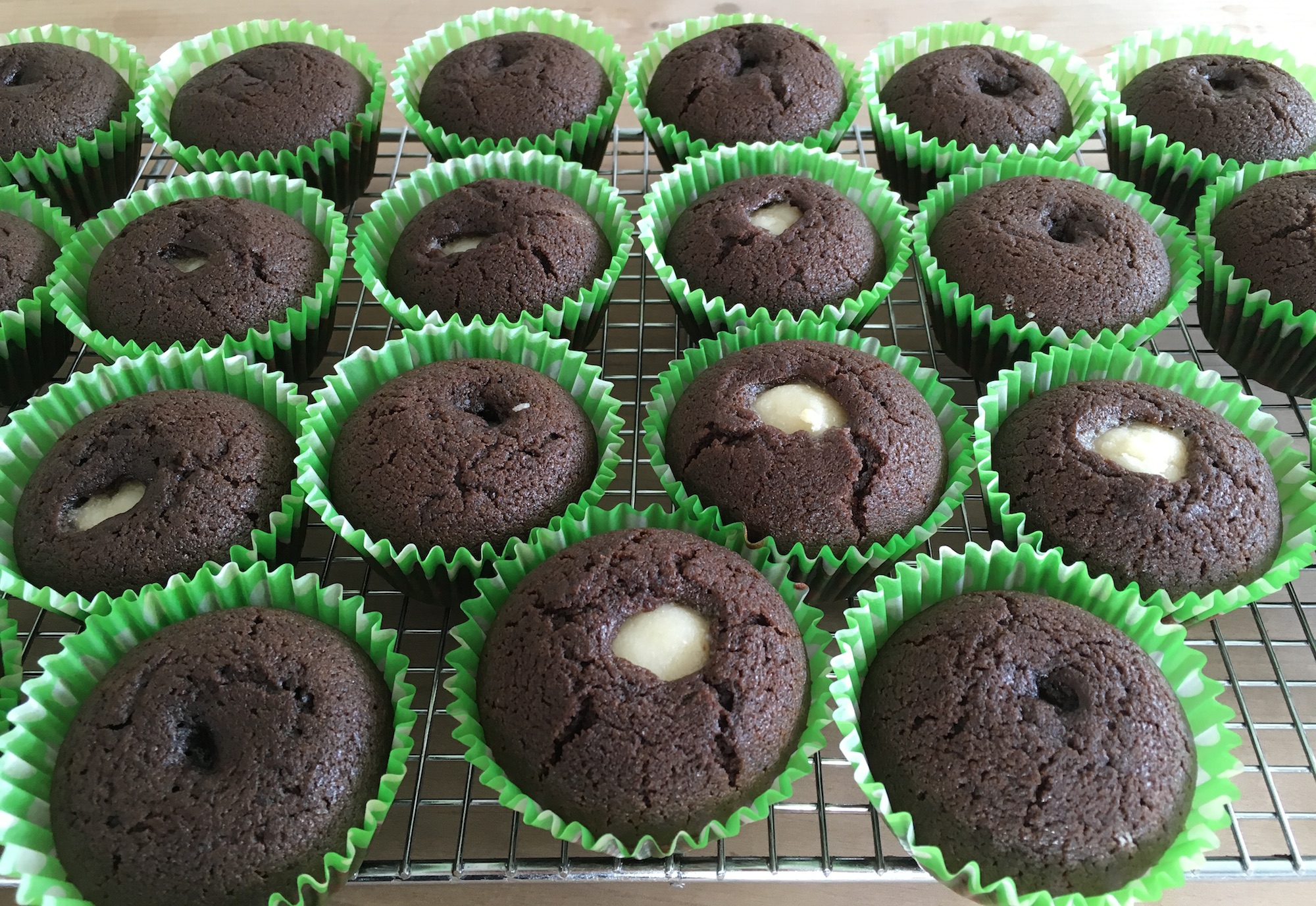
After baking--bellybuttons. How...um...something.

After baking–bellybuttons. How…um…something.

But the marzipan moons sank, leaving the cupcakes looking a bit like bellybuttons.

Delicious bellybuttons, I might add…


Throwback Thursday—visiting friends, Panama style

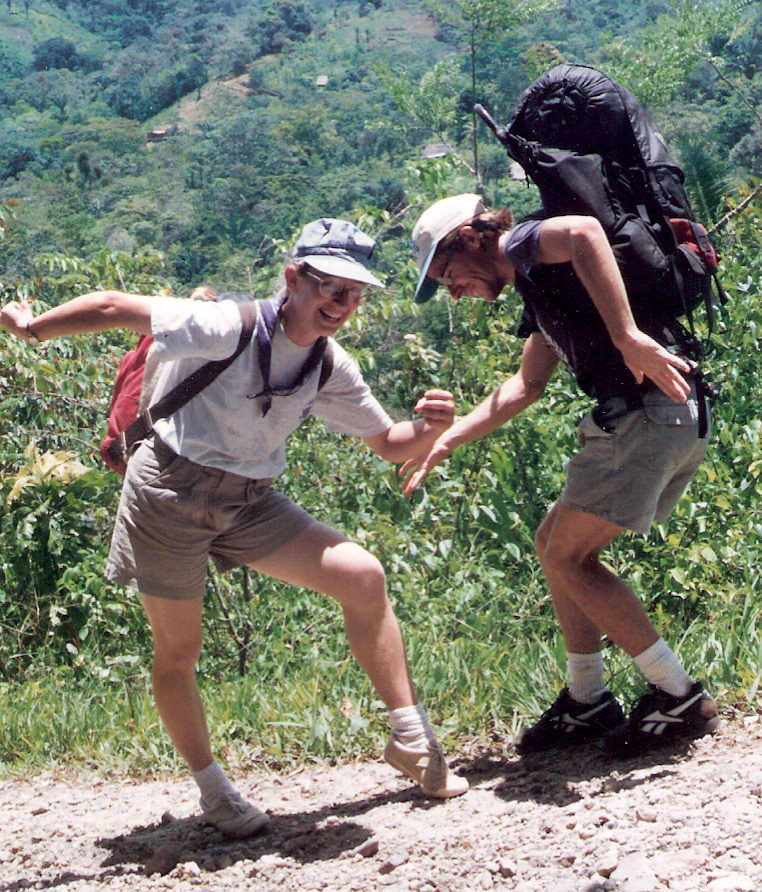
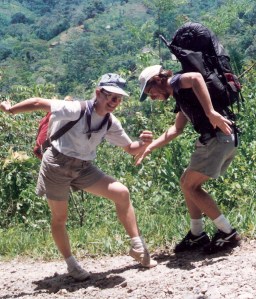
Paul and me, hamming it up for the camera on our trek.

Paul and me, hamming it up for the camera on our trek.

In Peace Corps in Panama, we lived in a village that was on the edge of what was accessible by vehicle. The lower part of our village was reliably accessible, but the upper part, where we lived, was only accessible in the dry season, and even then it was rough.

Walking was the main mode of travel there.

We walked everywhere. To all the farmers we worked with, to all the forestry groups we worked with. To the tienda, to the bus stop. Up and down (because there was no flat land in our village, or anywhere nearby, for that matter). We grew what we called “campo calves”—massive calf muscles that would have made an Elizabethan swoon.

Walking was such a natural mode of transport, that when we decided to visit a friend, Gareth, who lived on the other side of the mountains (hills, really, the continental divide is very low in Panama), we decided to walk.

First stop was our friend, Paul’s house, an hour up the mountain from our place. Paul went with us. Paul, Gareth, my husband, and I regularly met up for late-night Dungeons and Dragons sessions—a modified version that used only the two ordinary dice we had with us. This was to be an epic journey to play D&D.

After picking up Paul, we climbed further, to El Valle, where we spent the night with one of Paul’s friends there. We found ourselves without breakfast in the morning, so we shouldered our packs and set off with nothing but a cup of coffee in our stomachs.

Not to worry, we soon came across a campesino willing to sell us some bananas, and we ate as we walked.

We had only a vague notion of how to get where we were going, but all paths lead somewhere in the Panamanian countryside, and with regular stops along the way to ask directions, we managed a good pace.

Along the way we talked and laughed, we met campesinos, we enjoyed beautiful views. When we finally trudged into Gareth’s yard late in the afternoon, we felt we’d seen the world.

I have visited many friends since then, but that trip stands out as the best journey ever.
Fruit overload

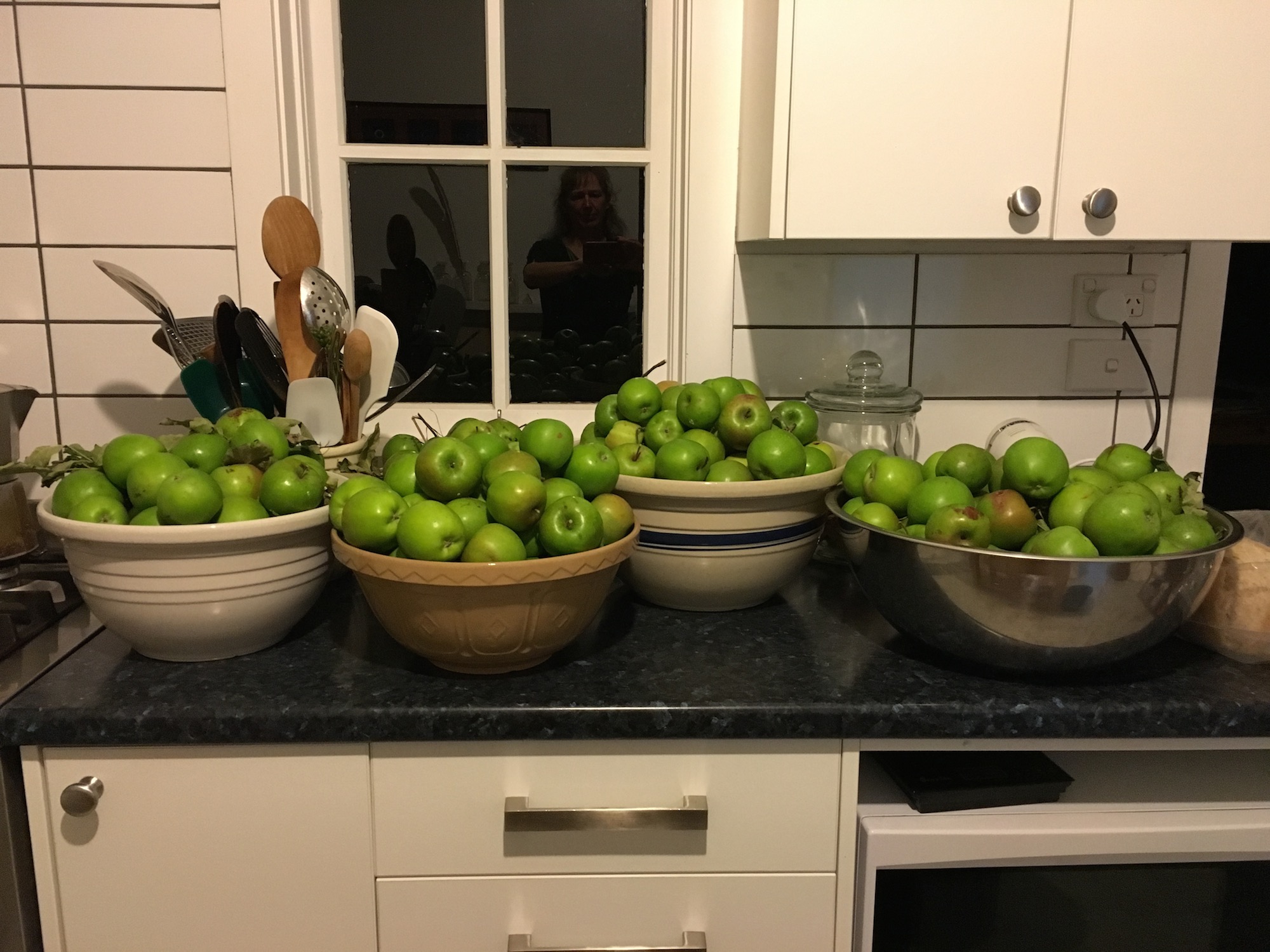
2016-03-15 19.20.44 smCan you have too much fruit? I’m not certain, but if you can, I think we’re approaching it.

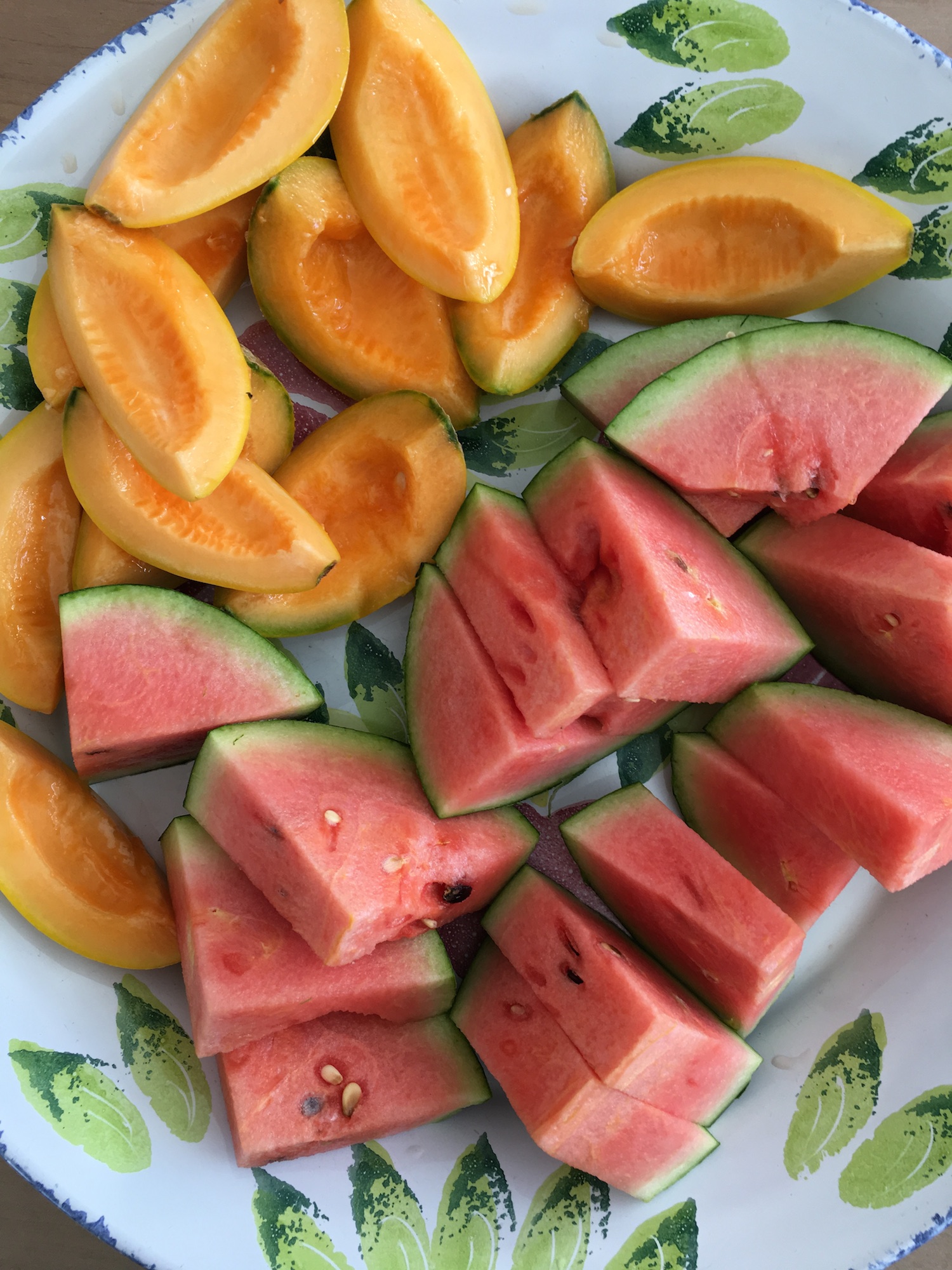
I mentioned the apples the other day—there’s still a 20 litre bucket and a large bowl full of them in the kitchen. Then there are the melons I mentioned yesterday—a great heaping platter of them, and more to come in the next few days.

And a houseguest brought us a box of apricots as a gift.

And the grapes have started coming in, so there’s a colander full of them in the kitchen.

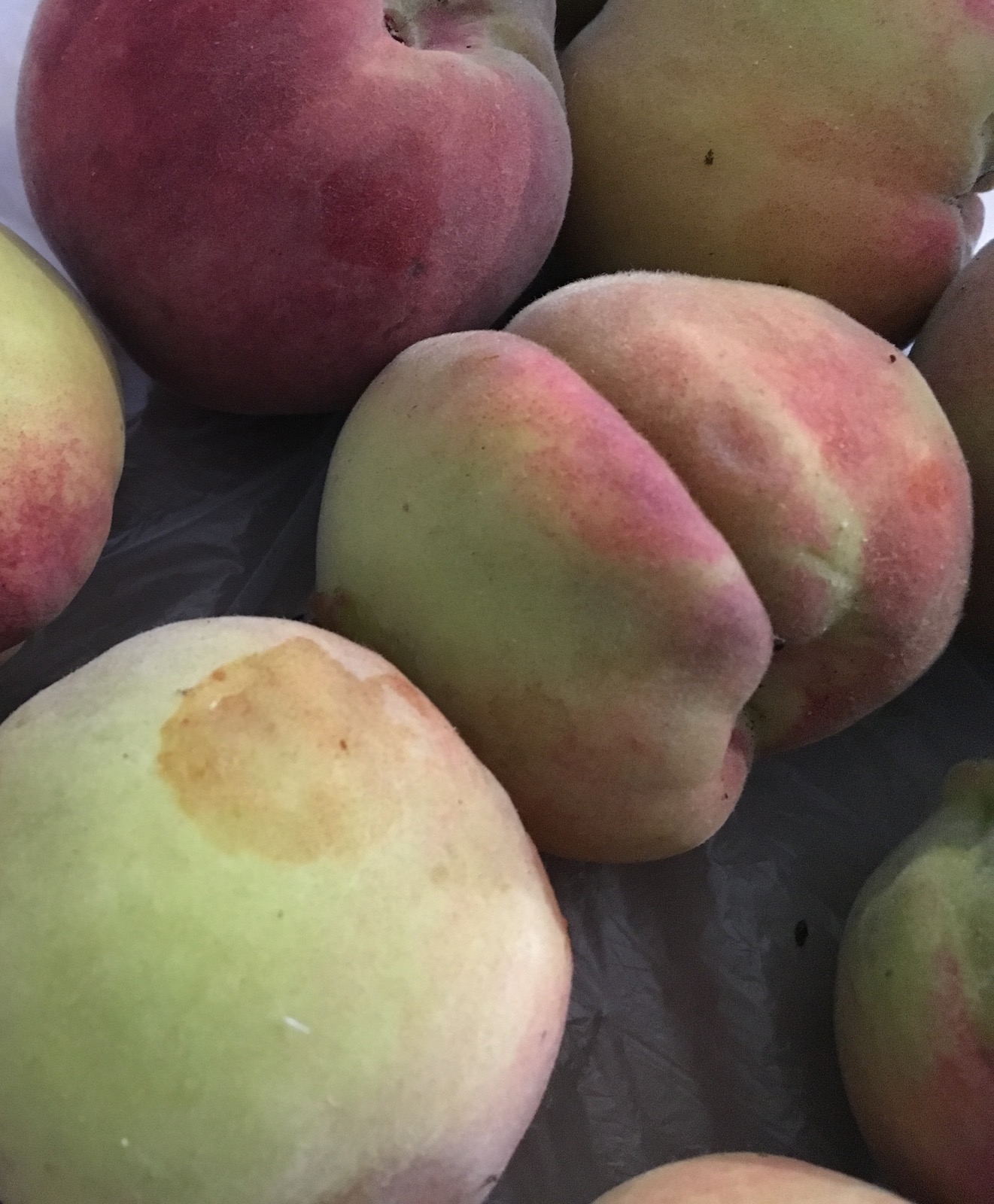
And today I went to pick up 200 daffodil bulbs I ordered, and it turns out that the woman selling the bulbs was the first person I ever sold goat kids to—she’s still got one of them. Anyway, so we got to talking (as you do), and next thing I know, she’s filling a bag with peaches for me—dead ripe and luscious.

So sitting in the kitchen right now are probably 10 kilos of fruit for every person in the family.

So I wonder, can you have too much fruit?


Melon time

2016-03-14 17.47.43 smThey only just squeak into summer here, screaming in at the last minute, if they come at all.

Melons usually hate Canterbury summers—cool and dry just isn’t melon weather. I plant them every year anyway, because sometimes they manage.

This year has been a good year for melons. They would have liked more water, but they at least had the heat they wanted. Most of the melons are grapefruit-sized, but they’re delicious, and because they’re so small, they make fabulous lunchbox fruits—cut them in half, scoop out the seeds, then put the halves back together with a rubber band, and they travel beautifully.

And though they come in only after summer is officially over, they are still the ultimate flavour of summer.

German Wasps

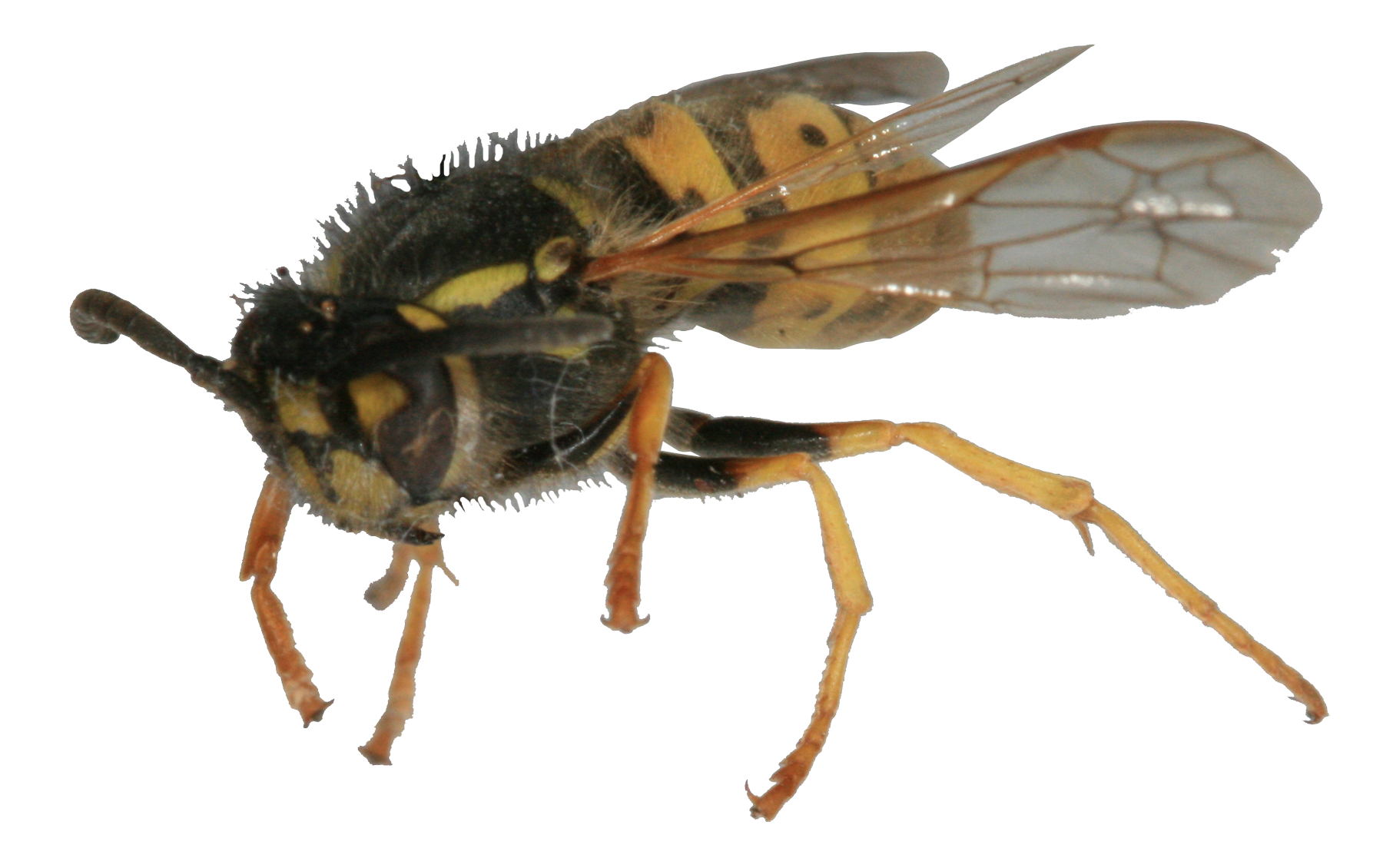
GermanWaspCanning fruit or tomatoes always brings them around—the German wasps can’t resist the sweet/tart smell of chutney, tomato sauce, or apples. And of course, their numbers are highest in late summer/early autumn when we’re doing lots of canning.

Today, they flitted around the kitchen most of the afternoon, licking up applesauce from the benchtops, and generally being a nuisance.

German wasps are opportunistic feeders—they’ll eat most anything, from fruit, to dead animals, to live insects. In the house, they not only go for whatever’s cooking on the stove, but they catch houseflies in mid-air, chomping them messily on the windowsills and leaving cast off fly legs and wings all over the place.

Though they are a nuisance indoors, and can prove deadly to people like me, with allergies to their stings, they do their worst damage in our native forests where they rampage like a pack of hungry teenage boys.

As flexible scavengers whose numbers can grow to an estimated 10,000 wasps per hectare in beech forest, their impact can be devastating. They compete for food with native birds, lizards, and bats. They also eat native insects and even baby birds.

Almost every year, we have a wasp nest somewhere on the property. I haven’t found this year’s yet, though by the number of wasps enjoying my applesauce today, I know there’s a nest somewhere nearby. When I find it, I’ll destroy it—from an environmental perspective, and from a personal safety perspective it needs to be done.

But I admit I will do so with a twinge of guilt. Troublesome as they are, I have great respect for wasps. These beautiful animals are the ultimate efficient eating machine. They are no-nonsense foragers who go out and get the job done so well that they’ve been able to invade diverse habitats throughout the world. I may not like the consequences of that, but I can admire an animal flexible enough to thrive almost anywhere.

Windfall

2016-03-10 21.13.23 smToday.

Thirty degrees C.

120 kph wind.

Dust clouds so thick I couldn’t see the back fence 20 metres away.

So I knew there would be carnage by day’s end.

Picking yellow summer squash for dinner, I was having trouble finding them, because they were completely coated in dust.

I studiously avoided looking at the fruit trees—I couldn’t face what I knew I’d find while the wind still howled.

Later in the evening, my husband and kids went out and surveyed the damage. Remember back in November when I posted the picture of all those apple blossoms? I knew it was too good to be true.

Every fruit was stripped off of every tree. They collected them all, tossed the bad ones on the compost, and brought the rest inside.

None are quite ripe, but we’ll make the best of them—applesauce and pie this weekend, for sure!

Summer Soup 2016

2016-03-06 19.55.54 smEight pm, and I feel like I’ve hardly stepped outdoors today.

I remember the air was still and warm early this morning. I milked by the light of the stars and a sliver of a crescent moon.

I remember the cool drips of water in the freshly watered vegetable garden just after breakfast.

But, aside from a hurried trip to the goat paddock with an armload of corn husks or carrot tops, I haven’t been outside since eight am.

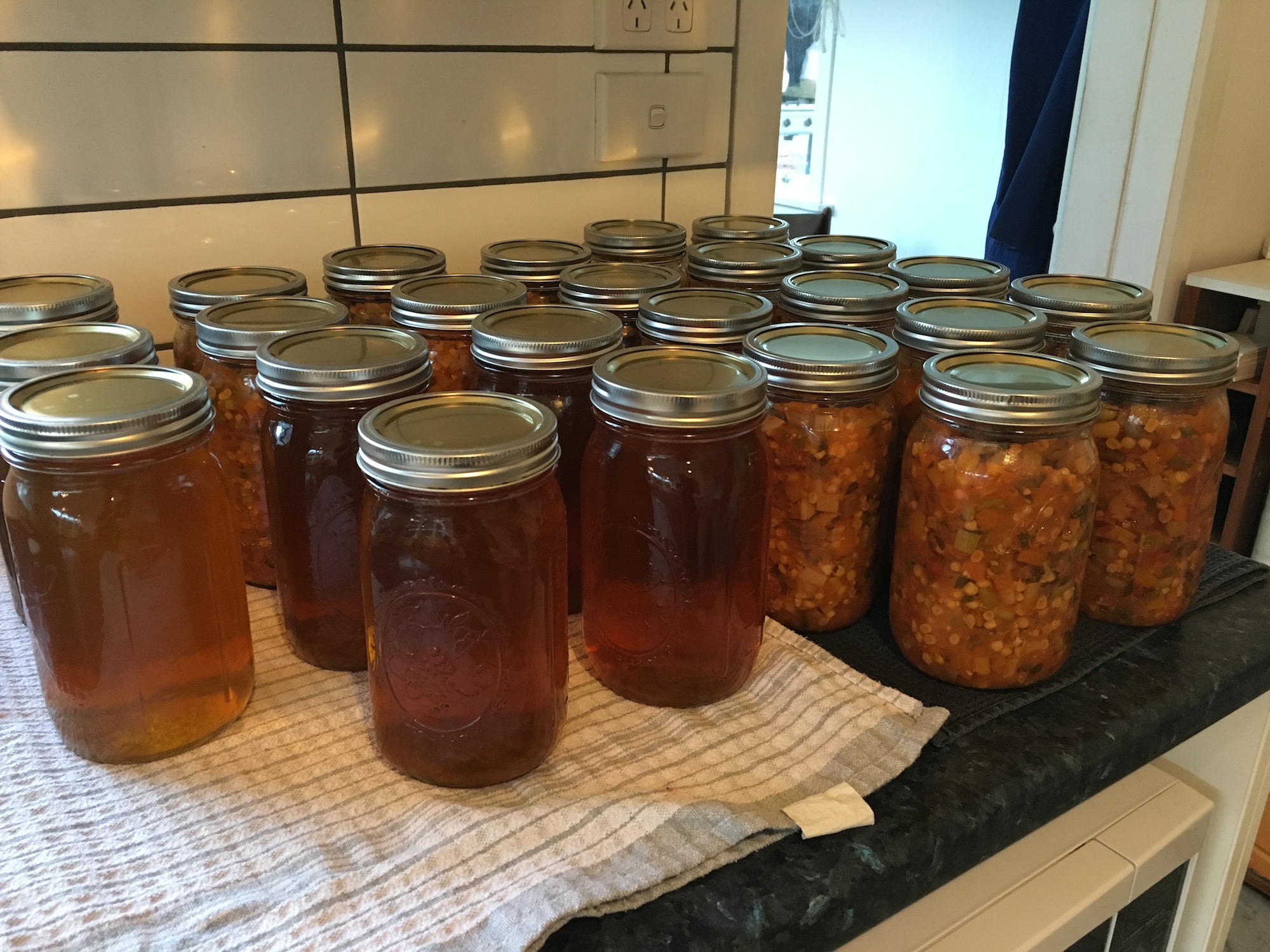
Just after breakfast, the whole family got to work making the year’s Summer Soup (which I’ve blogged about before). We spent the morning chopping vegetables and making up the soup together, then I settled in alone for the long slog at the pressure canner.

It was a hot day to be in the kitchen canning soup. I thought it was just that I had four burners and the oven going much of the afternoon, but when my daughter walked through the kitchen looking wilted, I realised it was just a hot day.

That was the closest I got to knowing what it was like out there.

But I’ll appreciate this lovely summer day spent indoors—over and over again all winter. The final tally for the day was nineteen quarts of soup and six quarts of vegetable stock. That’s a lot of summer, stored up to cheer us on a cold winter evening.

Invasion of the Cabbage Whites

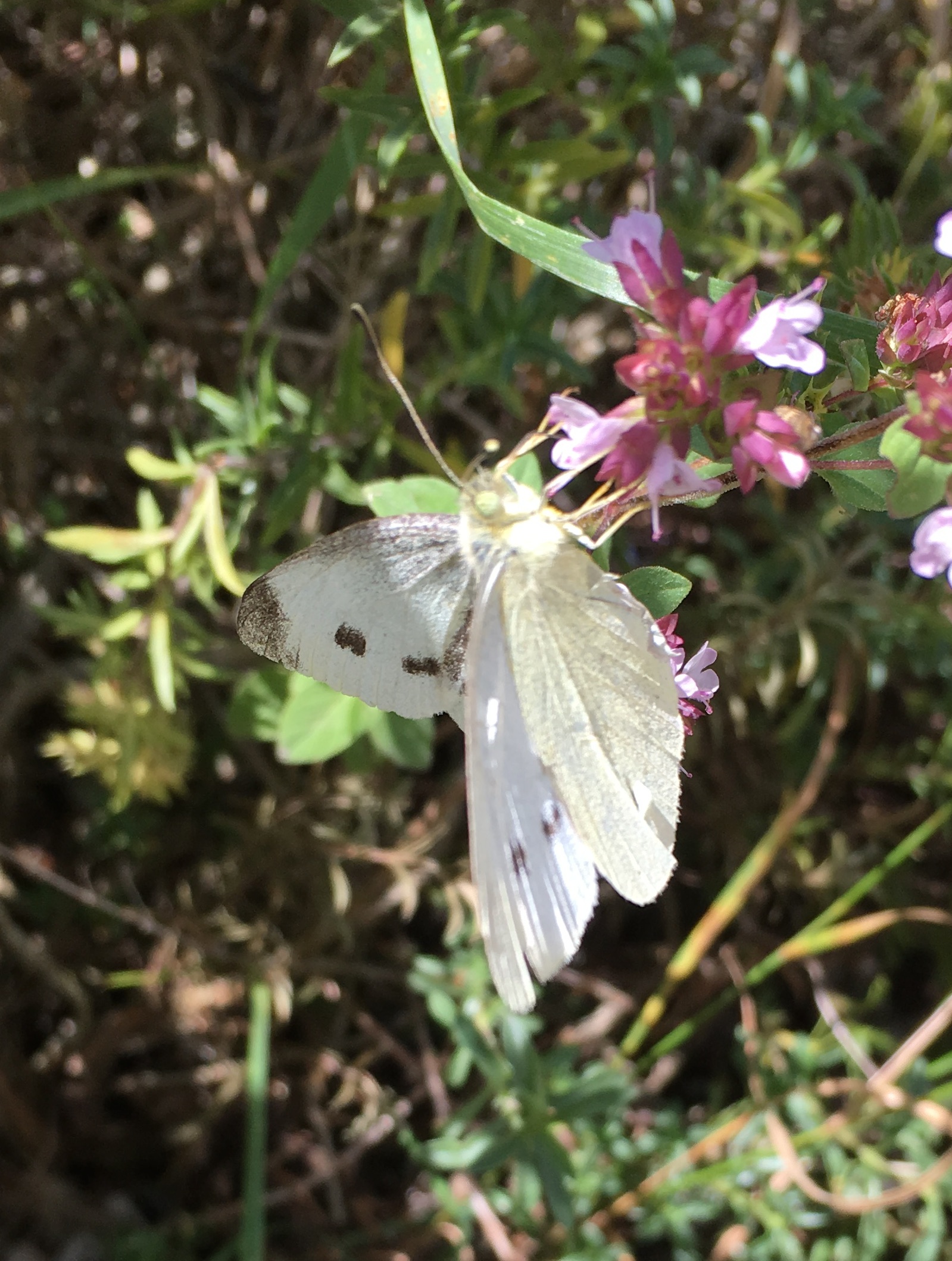
2016-03-02 14.24.23The small cabbage white butterfly (Pieris rapae) is the bane of gardeners’ existence all over the world. Native to Europe, Asia and North Africa, the butterfly is now found throughout most of North America, Hawaii, Australia and New Zealand.

In my little corner of New Zealand, the butterfly is especially common, presumably because of the huge numbers of commercial brassica crops grown here. In late summer, the roadsides shimmer with the butterflies, and their tattered wings flutter like flags in my car’s grille.

These butterflies are the reason broccoli is a seasonal crop for us. Broccoli can be grown year-round here, but mid- to late-summer broccoli becomes infested with caterpillars. For a few years, I dutifully treated my broccoli with Bt (an organic bacterial toxin that selectively kills caterpillars), but I eventually stopped bothering.

By mid-summer, there is so much other food coming out of the garden that, truth is, we don’t need the broccoli. And having a broccoli-free part of the year helps bring variety to our diets, and makes broccoli more special when it is available in winter and spring.

Sour grapes? Not at all! Just learning to work with the local wildlife instead of against it. Makes life easier for everyone!

The Beginning of the End

Pumpkins are filling out and beginning to harden off.

Pumpkins are filling out and beginning to harden off.

March 1—first day of autumn here. It is appropriately autumnal today, with a grey sky and brisk, cool wind.

But it didn’t take a cool day, or the calendar to tell me summer was coming to a close. I have been milking in the dark for weeks—a sure sign the equinox is coming. Last week, the first of the elm leaves crunched brown and crisp underfoot. The poplar trees are looking sparse. The dry beans have started to senesce—pods bleaching, yellow leaves plopping to the ground.

The coming weekend will be full of harvest activities—no time for the beach, regardless of how hot it is. Soy beans, dry beans, and corn will all need harvesting. We’ll make the year’s summer soup. I’ll make another batch of pesto for the freezer before the basil is finished. I’ll dry some tomatoes.

There will be plenty more hot days, and likely a few trips to the beach. There will be many more tomatoes, eggplants, beans, and melons. Summer’s not really over. But it’s beginning to pack its bags and get rid of whatever it can’t take with it when it leaves for the Northern Hemisphere.

The Season for Salsa

2016-02-26 16.28.01 smNothing beats a good salsa. And there are limitless variations on the theme—tomato or tomatillo, cooked or raw, spicy or mild, cilantro or none…

If I’m using tomato, I prefer a raw salsa, but if I’m making salsa verde—based on tomatillos—I like it cooked.

I have a love/hate relationship with tomatillos. On the one hand, I quite enjoy them in salsa verde. On the other hand, we don’t tend to like them in any other form, so we’ve never been able to eat all the tomatillos produced by even one plant, and the rotting fruits in the garden are truly disgusting.

But salsa verde is a lovely alternative to ketchup on burgers and fries, is fantastic in burritos, and makes a great chip dip. I’ve seen many variations on salsa verde, but this is what I do.


500 g (1 lb) tomatillos, husked and rinsed

½ cup water

1 fresh chilli pepper or a pinch of cayenne

2 red sweet peppers, charred

1 onion

1 clove garlic

½ cup chopped fresh cilantro

2 Tbsp cream or half and half (optional)

salt to taste


To char the sweet peppers, spear a whole pepper on a fork and hold it over the flame of a gas burner, turning regularly, until the skin blackens. Drop the charred pepper into a bowl and cover with a plate for a few minutes to let the skin steam and loosen Peel off the blackened skin before using. Roughly chop tomatillos, chilli, sweet peppers, onion, and garlic. Place all ingredients except the cilantro and cream in a saucepan and cook 15-20 minutes until the vegetables are soft and the liquid is reduced by about a third.

Blend until smooth (I use my immersion blender). Stir in the cilantro and optional cream, and adjust the salt. Serve hot or chilled.

This sauce freezes well—I freeze it in small quantities and pull it out as we want it.