Orange Cranberry Scones

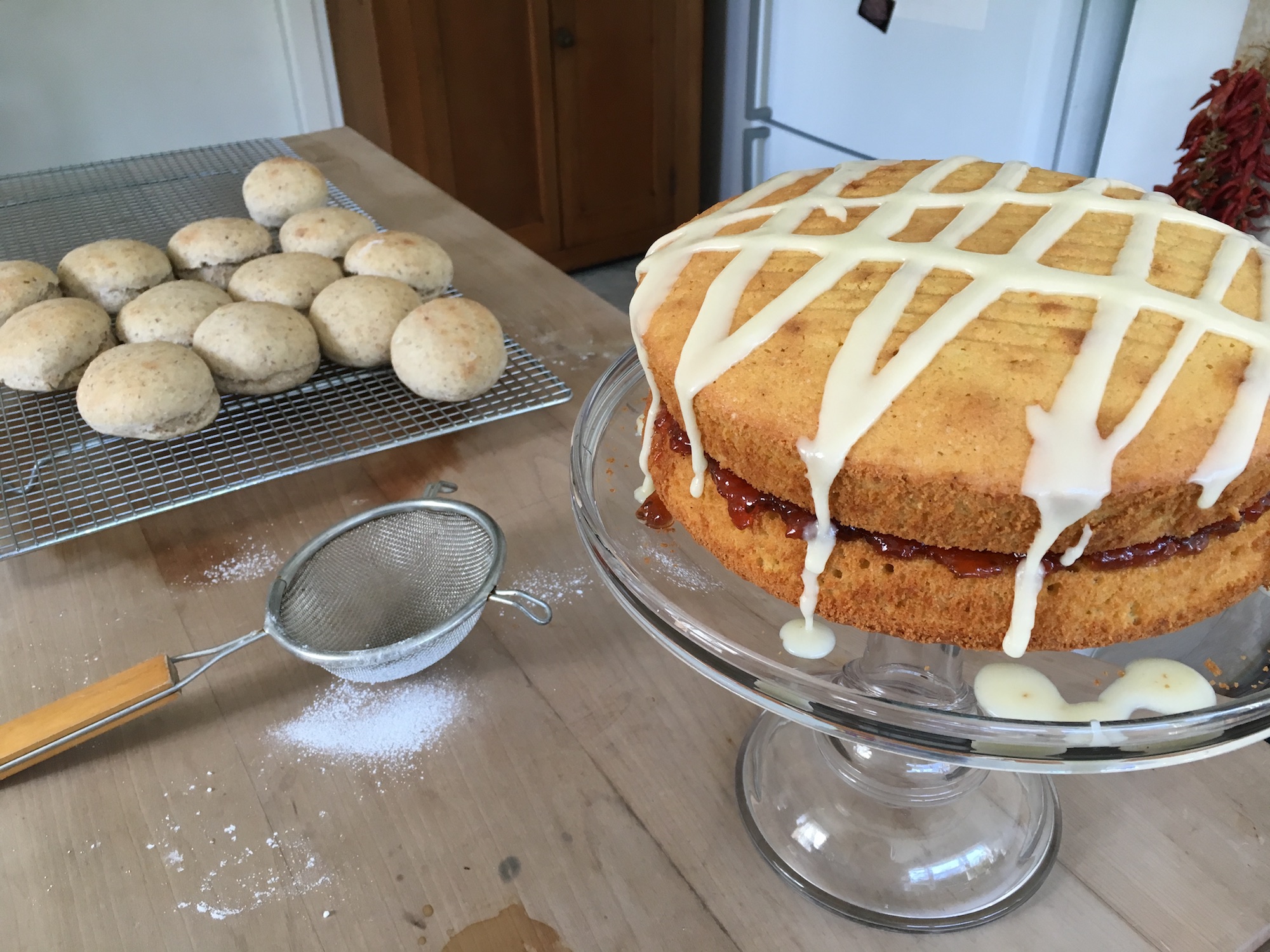
In a nod to Thanksgiving, I made orange cranberry scones for Sunday breakfast. Another wonderful use of barley flour. I’ve grown quite fond of barley flour in cakes and pastries–it lends a softness to the texture that is delightful. It also seems to delay baked goods going stale. The remaining scone, pictured here, was just as tender and moist on Monday morning as it had been fresh out of the oven on Sunday.

2 cups barley flour
1 1/4 cup all-purpose flour
1/2 cup lightly packed brown sugar
1 tsp baking soda
1 tsp baking powder
1/4 tsp salt
125 g (1/2 cup) cold butter
1 egg
1/2 cup buttermilk
1/2 cup orange juice
grated rind of 1 orange

Combine the flours sugar, baking soda, baking powder and salt in a large bowl. Cut the butter into the flour mixture until it resembles coarse crumbs.

Whisk together the egg, buttermilk, orange juice and orange rind in a separate bowl. Add to the flour mixture, stirring until evenly moistened.

Turn the dough onto a floured surface and knead two or three times. Divide dough in half. Pat each half into a circle about 2 cm (3/4-inch) thick, and cut each circle into eight wedges.

Place on an ungreased baking sheet and bake at 190°C (375°F) for 20-25 minutes.

Giving Thanks

Special thanks to plate tectonics for this…

Thanksgiving Day in the U.S.

We don’t even try to celebrate it here anymore, for obvious seasonal reasons.

Still, today, and every day, I am thankful for many things:

  • An incredible, supportive partner who has stuck with me for over 25 years.
  • Two really cool kids, and all the amazing teachers that have helped them grow
  • A home that feeds my soul and my family
  • The health to physically manage half an acre of food-producing garden
  • Lovely friends
  • Forty-seven years of rich experiences to give me ballast
  • A world of wonders to explore
  • My adopted country, where I have been so warmly welcomed
  • Sunshine
  • Rain
  • The opportunities life has presented me
  • The difficulties life has presented me
  • All the little things that make me smile–fresh basil, strawberries, hedgehogs, skinks, jumping spiders, lavender…

I could go on and on. Mostly, I am thankful to have the opportunity to take this ride on rollercoaster Earth.

Enjoy your day, enjoy your ride.

The Christmas Season

Twelve years ago, I was facing my first Christmas in the Southern Hemisphere. Everything felt wrong. I tried to carry on the traditions my husband and I had established in the States; I made truffles and cookies, I decorated with fresh greenery, we strung Christmas lights, we planned a big Christmas dinner, we played Christmas music.

The truffles melted, the greenery turned brown, the Christmas lights were invisible in the long summer evenings, the heavy dinner sat like lead on a hot summer day.

I longed for snow, and all the indoor family time of the northern holiday. I wanted long nights, candles and a roaring fire. I wanted hygge. But it was summer—time to be outdoors, on the beach, enjoying the sun.

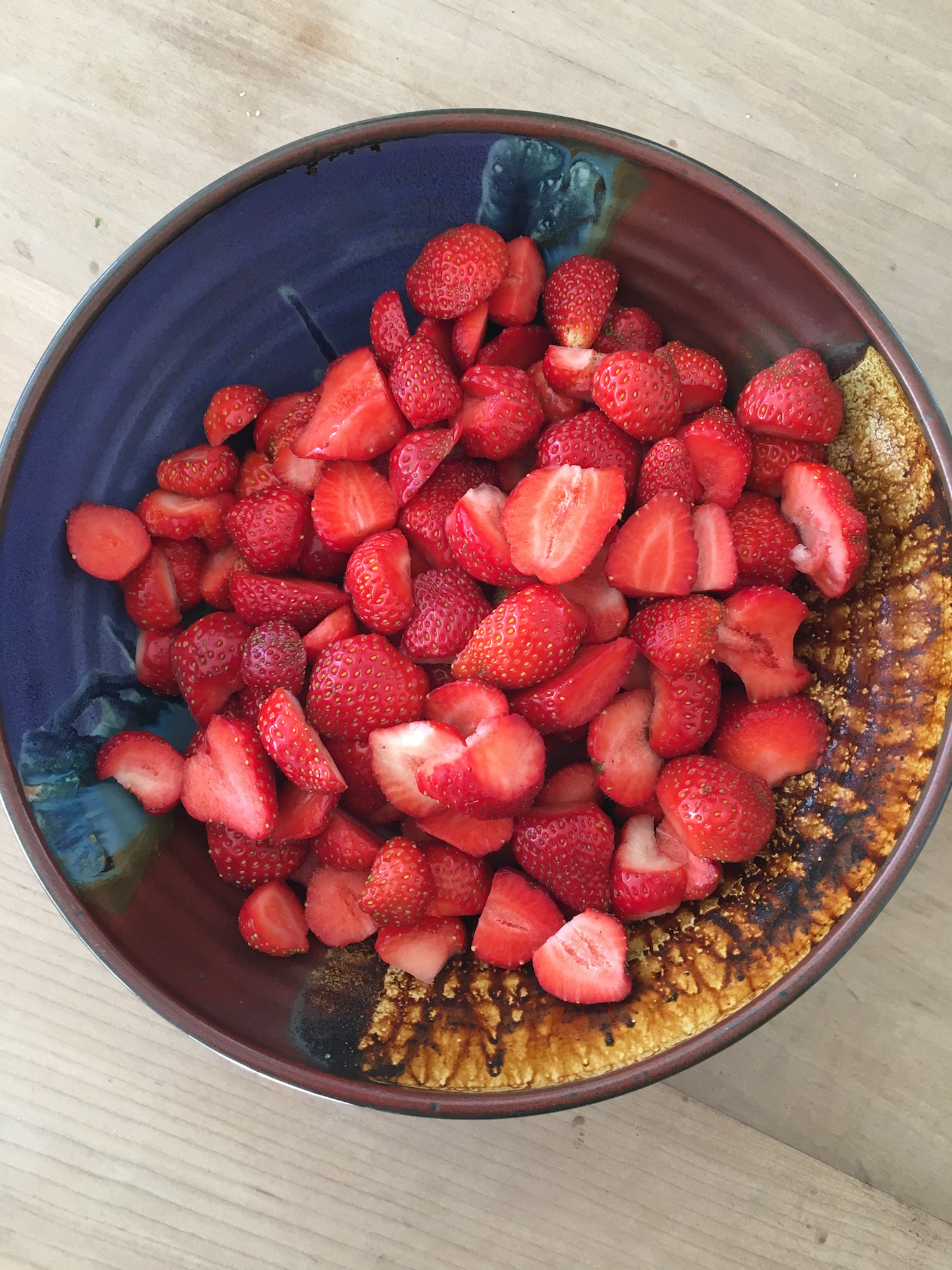
Slowly our traditions have adapted to this southern holiday. I realised how far I’d come on Sunday morning. Slicing strawberries for breakfast, the smell of berries made it feel so Christmassy, I started humming carols. Then I laughed at the idea that strawberries equal Christmas.

I thought about all the things my kids have grown up associating with Christmas—long days at the beach, gardening, strawberries, cherries, making jam, making sauerkraut (which usually happens about Christmas eve every year), the ‘traditional’ Christmas salad, the first new potatoes, broad beans, backpacking.

We rarely play Christmas carols anymore (who wants to be indoors?). We bake fruit pies, and not many cookies. We use red carnations from the garden for Christmas decorations. Rather than being a time for focusing inward, Christmas is a time for adventuring—traveling, hiking, exploring.

And so, as we start into this Christmas season, I am looking forward to our travel plans. I’m looking forward to many days at the beach. I’m looking forward to the summer bounty from the garden. I’m looking forward to ice cream, roadside stands selling Otago cherries, outdoor dinners, and warm sun.

And that, I think, is the key of the season—to celebrate what is good about the here and now. To celebrate the bounty we’ve been given, whatever form it comes in—love, friendship, snow or strawberries. To be mindful. To be present in the moment.

Gooseberry pie

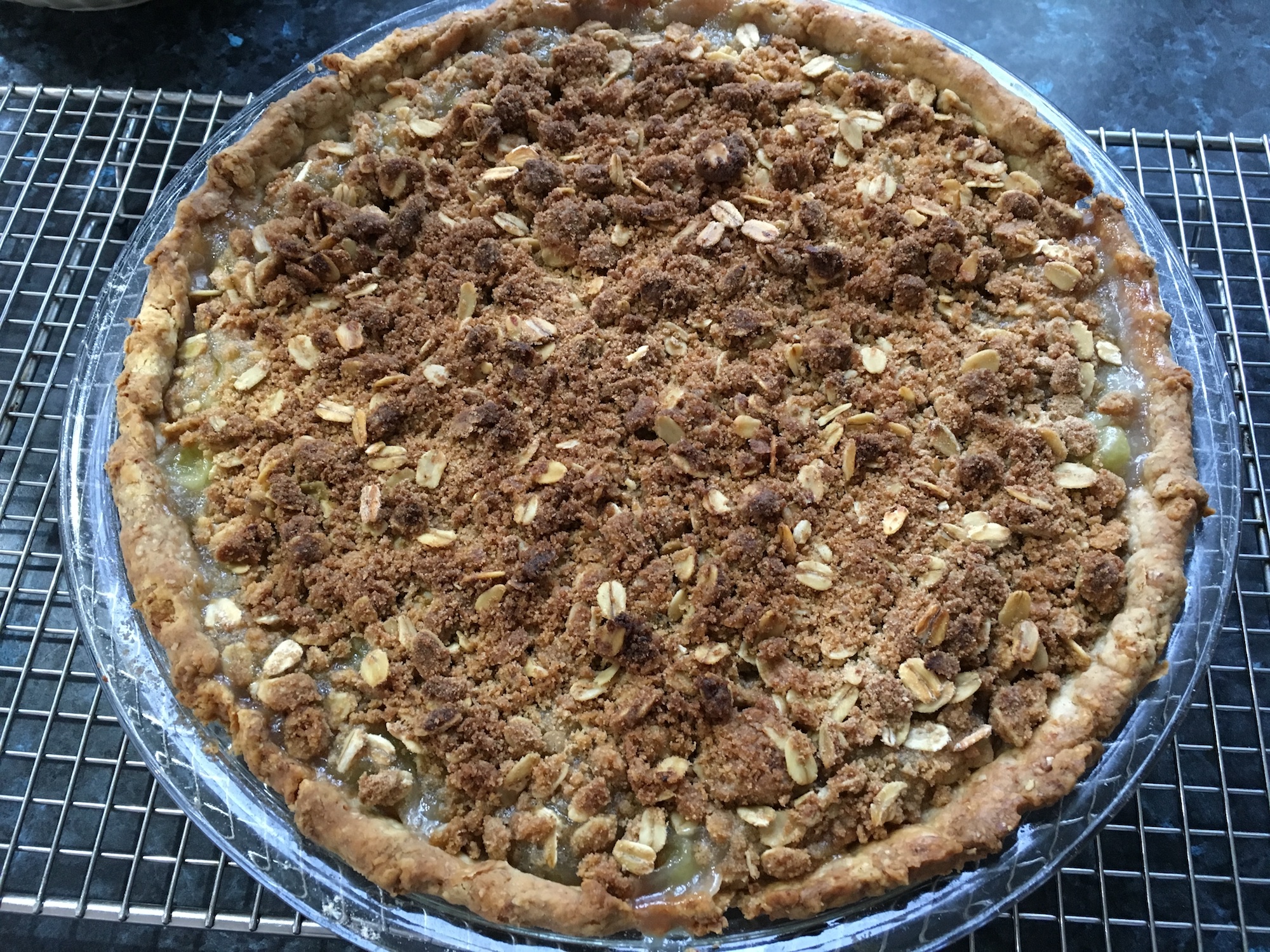
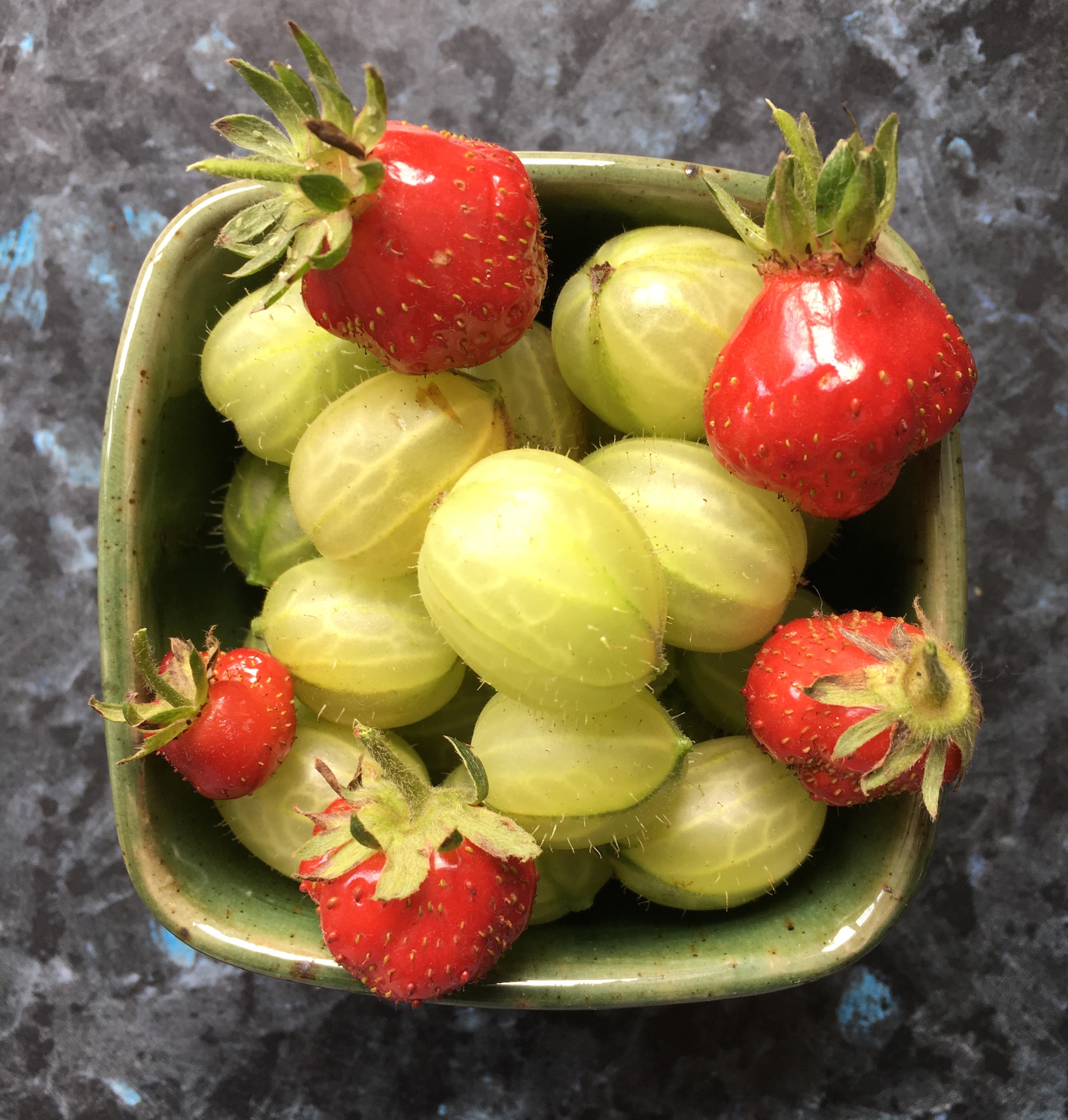
It’s a good year for gooseberries. Our supply of them seems to be limited only by our tolerance for the spines. Gooseberry jam, gooseberry ice cream, and the tartest, most gorgeous pie…

4 cups fresh gooseberries, stemmed and tailed
1 1/4 cups sugar
1/4 cup all-purpose flour
1/4 tsp nutmeg

pastry for 1 pie crust

Speedy Streusel:
2/3 cup wholemeal flour
1/2 cup brown sugar
2/3 cup old-fashioned rolled oats
1 tsp cinnamon
5 Tbsp melted butter

Roll out the dough and line a pie plate. Refrigerate until ready to use.

Mix all ingredients for the streusel, stirring until crumbly. Set aside.

Put gooseberries in a medium saucepan and add a few tablespoons of water. Heat over medium heat until the berries ‘pop’. Combine sugar, flour and nutmeg. Add these to the gooseberries and cook until thickened.

Pour gooseberries into the pie dough. Sprinkle streusel on top. Bake at 190ºC (375ºF) for 30 minutes. Cool completely before cutting.

This pie is very tart. Serve small slices, accompanied by whipped cream or vanilla ice cream.

How (not) to Curb Your Sweet Tooth

Many years ago, I decided I was not going to buy sweets anymore. If I wanted cookies or cake or pie, I would have to make them myself. It was a way for me to curb my sweet tooth, at least a little.

Oh, how that has backfired.

It’s turned me into an obsessive baker.

I’m sure it’s done good things for my health—my baked goods are full of whole grains, and much lower in fat and sugar than commercial products—but it hasn’t curbed my sweet tooth.

Instead, my sweet tooth has simply developed a more sophisticated and discerning palate. As I’ve mastered a wide range of baked goods and refined my recipes and techniques, I’ve grown uninterested in the vapid sugar-bombs on the supermarket shelves. They leave me unsatisfied (where’s the flavour?) and slightly ill (excess fat and sugar to mask low-quality ingredients). Instead, I now crave my own cakes, cookies and confections. And because I’ve had a lot of practice, it’s easy for me to whip up a delicious desert whenever I have a hankering for it.

The result is, I probably eat just as many sweets as I ever have.

I just eat better ones, now.

I suppose it’s an improvement…

‘Tis the Season

And So It Begins…

We’ve been watching the berries for weeks, and the signs have been promising. The gooseberry bushes are dripping with fruit. The currants, too, promise a good harvest. In spite of a viral infection, even the strawberries are managing a crop. The raspberries are humming with bees, attracted to a plethora of flowers.

The first harvest was tiny—a handful of berries—but it marks the beginning of my favourite season on the property. The season of fresh fruit. It begins with strawberries and gooseberries, moves on to currants, cherries and raspberries, and ends with apricots and plums. Watermelons, apples, and peaches come late in the year, and they’re lovely, but nothing compares to the early summer fruits. Their season is short, but bountiful. It’s the season of jams, fruit pies, and fruit ice cream. The season of gooseberry fool, strawberry-smothered waffles, and apricot upside down cake. It is the season of plenty.

In festive red and green, ’tis the season, indeed.

Summer Rock Concert

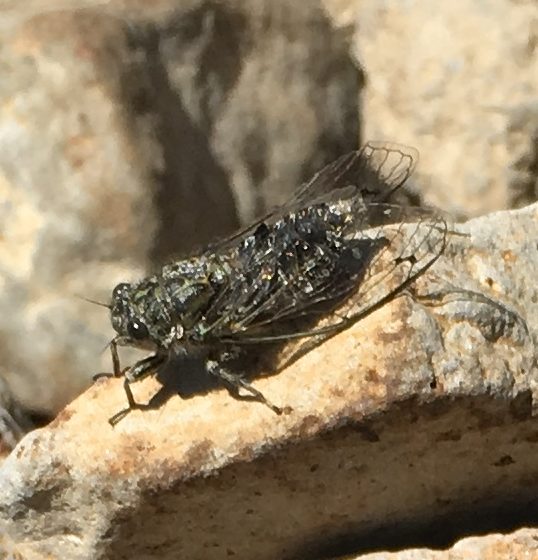
It’s a cicada; it must be summer.

The main cicada season doesn’t really start until the chorus cicadas (Amphisalta zealandica) come out after Christmas, but two weeks ago, we found a few chirping cicadas (Amphisalta strepitans) on the rocks around Okains Bay.

Cicadas are largish, as insects go, but they’re well camouflaged. Usually, you find them by sound. As with most insects, it’s the males that do the singing. The main part of a cicada’s song is made by flexing plates (tymbals) on top of the body. Built-in amplifiers (opercula) pump up the volume to an astonishing level. Cicadas are noisy. I don’t know if any of the New Zealand species have been tested, but the calls of some North American cicadas are over 105 decibels at a distance of 50 cm. That’s nearly as loud as a rock concert (115 decibels). When the chorus cicadas here in New Zealand come out in large numbers, they can be so loud in some places that it’s impossible to carry on a conversation.

Some New Zealand cicadas add an extra feature to their song—a bit of drumming called clapping. The cicada snaps the leading edge of its wings against a branch to make a sharp click. Females also clap, and I’ve read (though I’ve never tried it) that you can call the males to you by snapping your fingers.

There are about 2500 species of cicada worldwide. Because of their size and volume, they seem to be culturally important wherever they live. They are eaten as food in many areas, and sometimes used as fish bait. Growing up, my siblings and I used to collect the shed exoskeletons of cicadas and attach them to our clothing like jewellery. When I lived in Panama, the children would catch cicadas and tie strings to their feet, then carry them like helium balloons, flying on the end of the string.

Wherever they live, they mark the seasons. Here in New Zealand, and in America where I grew up, summer hasn’t really started until the cicadas sing.

Loud singing? Drumming? Must be a summer rock concert!

Orange Cake

Having friends over is such a good excuse to bake. I normally wouldn’t experiment for guests, but I was pretty sure of the orange cake I tried out on Saturday, because I based it on my lemon cake recipe.

It’s a close race, but I think I may like the orange version even better than the lemon. I filled the cake with gooseberry jam and drizzled it with a simple orange icing, both of which nicely set off the cake itself.

Here’s the recipe. I suggest trying the lemon version also, to see which you prefer. You might need to make them both several times to decide.

1 cup butter, softened
1 3/4 cups sugar
4 eggs, separated
grated rind of 1 orange
2 1/4 cups all-purpose flour
1 cup barley flour
1/2 tsp salt
2 1/2 tsp baking powder
1/2 cup orange juice
1/2 cup water
3/4 cup threaded coconut

In a medium bowl, mix flours, salt, and baking powder. In a large bowl, cream butter. Add sugar gradually and beat until fluffy. Add egg yolks and orange rind and continue to beat. Add dry ingredients alternately with orange juice and water. Beat thoroughly after each addition. Fold in stiffly beaten egg whites and coconut. Pour into greased pans. Bake at 180ºC (350ºF) for 30 minutes.

Orange frosting: Sift 1 cup confectioners sugar into a small bowl. Stir in orange juice by the teaspoon until the icing reaches a thick, just pourable consistency (I used about 2 Tbsp total).

Cheesy Scones

I came home late earlier this week. No time to really cook. So I pulled out a couple of jars of summer soup and made savoury scones (biscuits to the Americans) to go with it.

But I didn’t want plain scones…

These are what I threw together, and they were divine.

1 cup all-purpose flour
3/4 cup whole wheat flour
1 Tbsp baking powder
1/2 tsp salt
60 g butter (about 4 Tbs)
1/2 cup chopped parsley
1/4 cup chopped dill
1 cup grated cheddar cheese
2 small leeks (about 1/2 cup), finely chopped
3/4 cup milk

Combine flours, baking powder and salt in a large bowl. Cut butter in until it’s the consistency of coarse meal. Mix in the herbs, cheese, and leek. Stir in the milk. On a well-floured board, knead the dough gently 4 or 5 times, then roll out to 1.5 cm (5/8 inch) thickness. Cut into squares or use a biscuit cutter.

Bake on an ungreased sheet 15 minutes at 200ºC (400ºF).

An Abundance of Artichokes

It’s a terrible thing, having excess gourmet vegetables. We are in our usual springtime artichoke excess. It’s not unusual for us to eat eight or nine artichokes five days out of seven.

A quick online search shows artichokes currently selling for anywhere from US$3 to 10 per pound (that’s NZ$9-31/kg). Given we easily eat a kilo per meal…Well, you get the idea. If we had to pay for them, we couldn’t afford them.

Of course, the problem remains–what do you do with that many artichokes? We preserve quite a few for use at other times of the year, but that still leaves plenty to enjoy during the season.

We eat a lot of artichokes in risotto, pasta, pizza, and gratins. The other day, I tried a new way of preparing them–crusted with parmesan and baked.

It’s simple, if a bit time-consuming (it would be trivial if you simply bought canned or frozen artichokes).

First, prepare the artichokes: snap off the outer leaves, peel the base and stem, trim off the top 1/3 of the leaves, remove the choke and any spines on the inner leaves, and cut the remaining heart into wedges. Drop wedges into a bowl of lemon juice and water as you go to avoid browning. Drain and steam for 3-5 minutes, until just tender, but not falling apart.

Then prepare the breading: mix in a medium bowl 1 cup bread crumbs, 1 cup grated parmesan cheese, 1/4 cup finely chopped parsley, 1 tsp salt, 1 tsp paprika, 1/8 tsp cayenne, and black pepper to taste.

In another bowl, beat two eggs.

Dredge the artichoke wedges first in the egg, then in the breading to coat thoroughly. Arrange in one layer on an oiled baking sheet. Bake for about 20 minutes at 190°C (375°F) until brown.

I served them plain, but they would be lovely with a dipping sauce like aioli or skordalia. They made a delicious accompaniment to the tiropitas (spinach and feta triangles) and salad that rounded out the meal.