Summer Soup 2019: proof we really are nuts

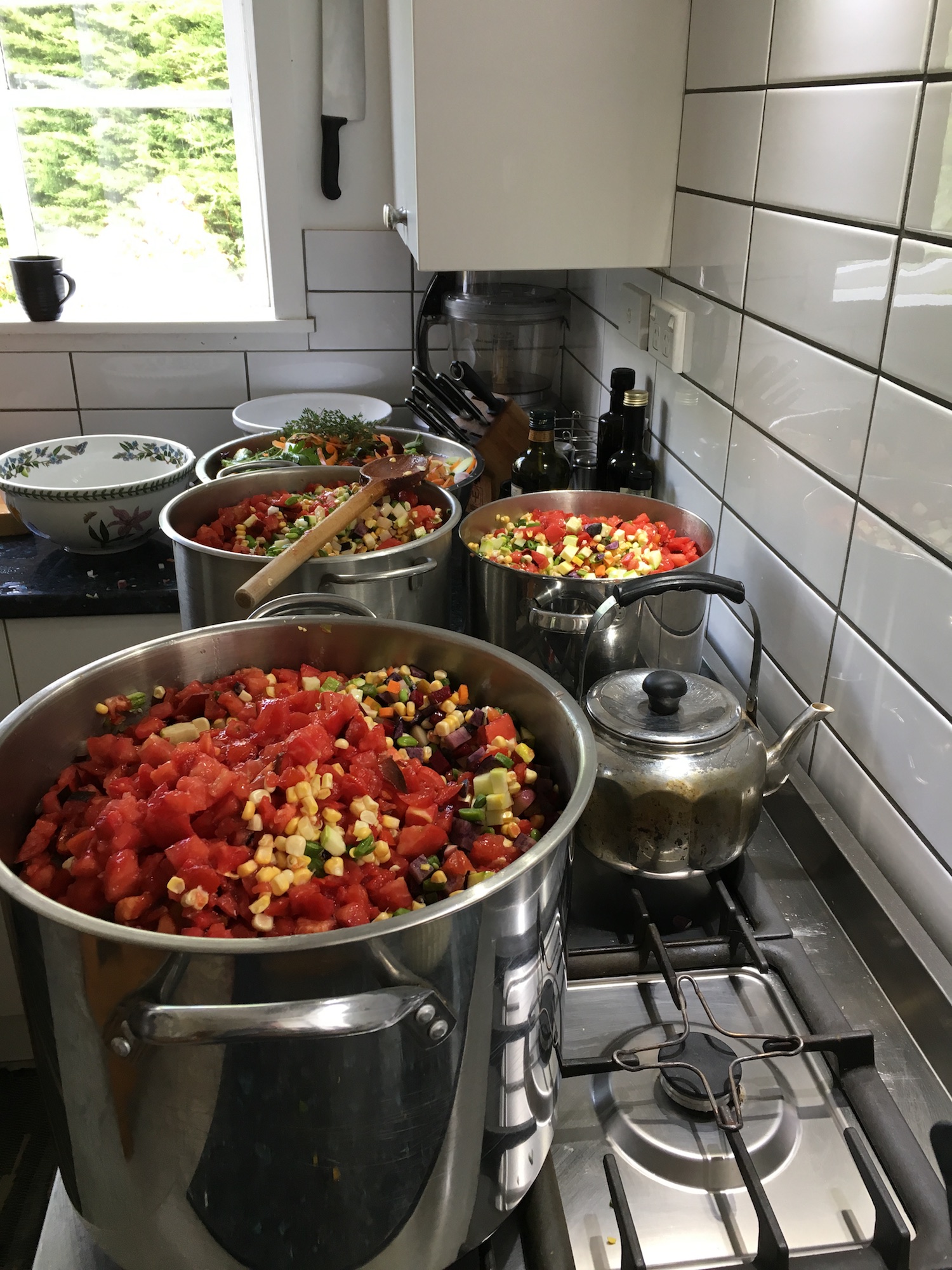
The family made our annual Summer Soup on Sunday. 

I think we definitively proved we have no self-control when it comes to gardening or cooking. In spite of me reducing my garden area this year, and despite the knowledge that our son is leaving home in a week (and won’t be around to eat this year’s soup), we managed to make even more than usual.

We filled all three of our big stock pots, and it took from 7.30 am to 9.00 pm to pick, chop, and process all that soup.

We had soup for dinner, I put a meal’s worth of soup in the fridge, and there are 28 beautiful quart jars full of soup lined up in the cupboard. 

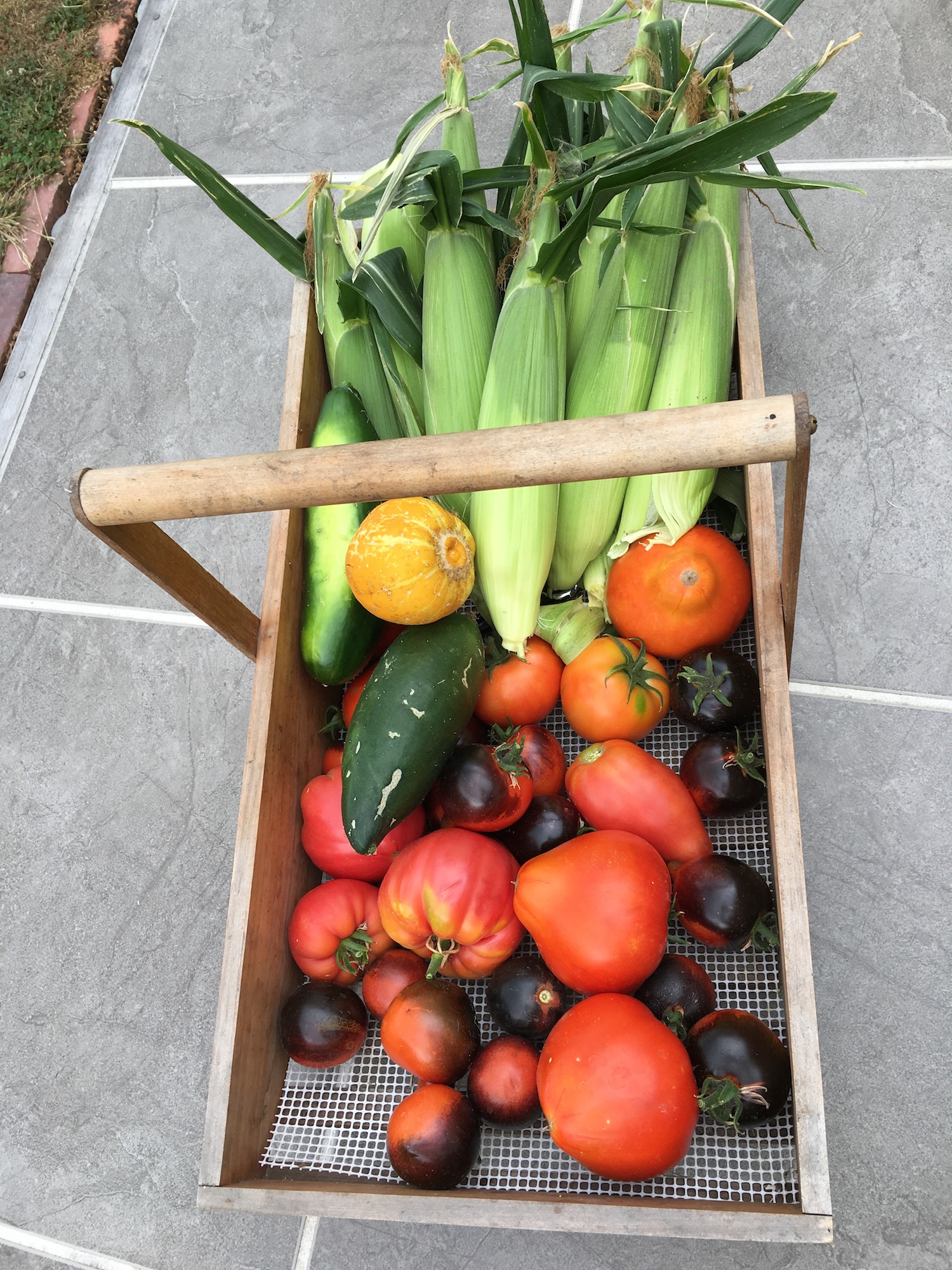
Summer Soup is full of potatoes, carrots, soy, green beans, zucchini, tomato, sweet peppers, hot peppers, onions, garlic, sweet corn, beet root, basil, oregano, thyme, rosemary, and celery. The only thing not from the garden is the salt. It’s a burst of summer goodness for the cold days of winter. It’s a quick and delicious meal when we all come home late. 

But it’s more than preserved vegetables. It’s a whole-family team building exercise. After a dozen years, it’s a family tradition. Each soup-making session brings back memories of early years, when the kids’ help was more of a hinderance. They took enormous pride in their work those years, reciting the vegetables they’d cut every time we opened a jar.

Now they’re both accomplished cooks, and their help allows us to go way overboard on soup-making. They’re less vocal about it now, but I think they’re still proud of their part in Summer Soup.

As I’ve mentioned before, anyone can make soup, but it takes a family to make Summer Soup.
Inside-out Cupcakes

I love cupcakes for lunch boxes. They’re just the right size and are an easy to grab and go snack. But if they have icing on them, they make a huge mess in the lunch box. 

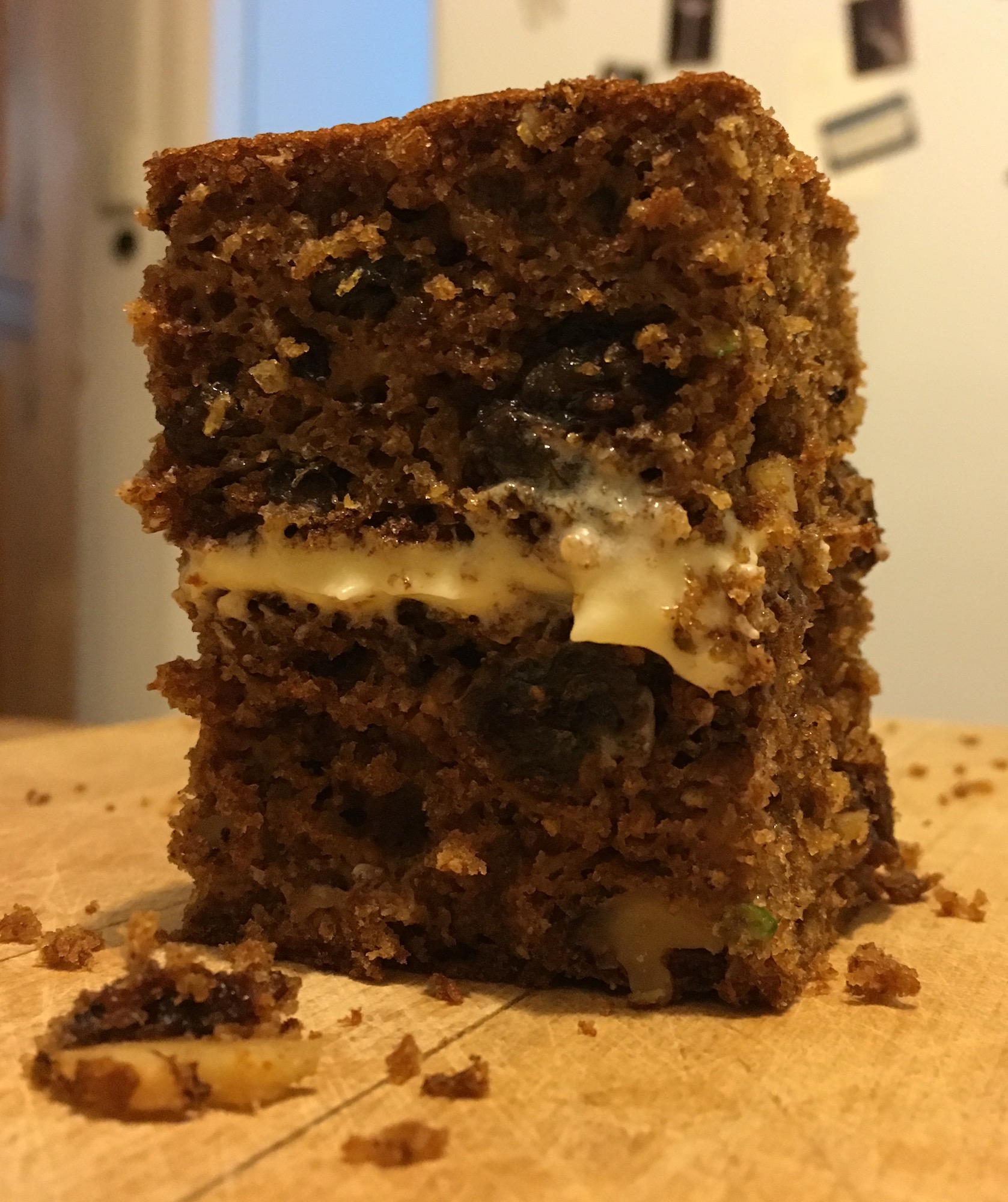
I had some cream cheese frosting left over from a cake I made a couple of weeks ago. It needed to be used, so I thought I’d make zucchini cupcakes to put it on. Then I considered the problem of frosting in lunch boxes. What I needed was a way to put icing in the middle of the cupcakes, so it wouldn’t get all over everything else.

I decided to divide the batter into two square pans. Then I stacked the two layers bottom-to-bottom, with the icing between. This left the mostly crumb-free cake tops exposed on top and bottom, and kept the messy icing in the centre. I cut them into handy grab-and-go squares, and voila! We had … what? Inside-out cupcakes? Icing sandwiches? I’m not entirely certain what to call them, but they’re delicious and travel well in lunches without making a big mess.

Crazy Cake Season 2019

I’ve been remiss. Crazy Cake Season is two-thirds over and I haven’t posted a single cake blog!

I admit, it’s because I felt this year’s cakes weren’t as good as previous years. In part, the kids asked for challenging subjects for their cakes: slime moulds (daughter) and a 3-D map of Wellington with all the buildings (son).

I resisted the urge to create a big pile of dog vomit slime mould for my daughter’s cake, and instead created a log covered in slime moulds of various species. Mexican paste worked well for the stalked fruiting bodies, and a little gum arabic glaze made them glisten like the real thing. All in all, it was a successful cake (she was able to identify most of the species, so I got points for biological accuracy, at least), but it wasn’t a cake with a lot of visual appeal for most people.

The Wellington cake was trickier. A map of Wellington? In cake?! I opted for a Wellington-themed cake, instead. Mexican-paste letters created a passable replica of the iconic Hollywood-style Wellington sign. A Mexican paste whale tail rises over the choppy waters of the harbour, and a replica of the Beehive proves you can actually make that building uglier than the original. The map? Well, I did try to create a map of the neighbourhood where my son will soon be living, but my icing wasn’t behaving well (it was a very dry 30 degrees C in the kitchen, and it was variously melting and crusting over), and that bit was quite a disaster. The end result wasn’t something to feast the eyes on.

But in the interests of full disclosure, here they are: this year’s lacklustre cakes. The good news is that they tasted great! The slime mould log was a lemon curd jelly roll that was one of the most flavourful cakes I’ve ever made, and perfect for summer. And the Wellington cake was a reliably delicious spice cake recipe with a beautifully soft texture. So, regardless of their look, they were enjoyed by everyone.

One more cake to go in Crazy Cake Season!

The Colours of Summer

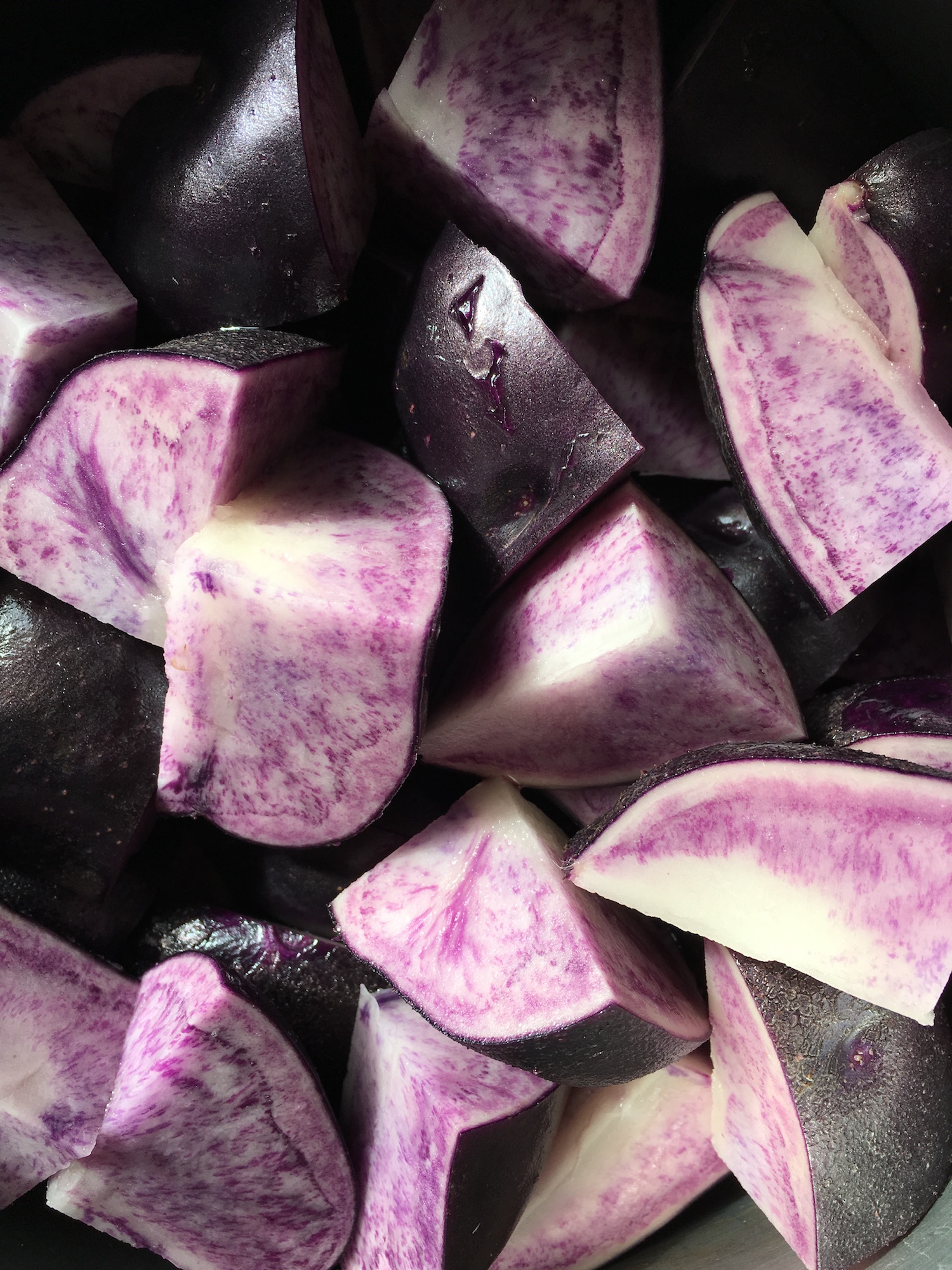
Blue peas, purple potatoes, green beans, yellow zucchini, red tomatoes, orange carrots … The summer garden is full of colour. But it’s not just a feast for the eyes.

In the garden, the colours can serve a purpose—black and yellow tomatoes and red lettuce are overlooked by birds and bugs because they’re not the ‘right’ colours. Blue peas have tough pods that resist birds. And purple basil deals better with dry heat than green.

In the kitchen, the colours create spectacular visual treats—purple mashed potatoes, deep orange braised carrots, bright green pesto, pasta studded with all the colours of the rainbow. Along with the colours come flavours not found in supermarket produce—the rich sweet-tart of an Indigo Apple tomato, the succulent crunch of Scarlet Runner beans, the smooth earthiness of a Zephyr zucchini, the nutty bitter of a Touchon carrot.

A few years ago there was a campaign here to get kids to eat more vegetables. The main message was “Eat your colours.” I agree. Eat your colours. Revel in them. Feast your eyes and your taste buds.

Happy Coincidences = Amazing Results

I wanted to bake brownies the other day. I had my heart set on my usual brownie recipe, with chocolate chips and walnuts added.

But when I went for the cocoa, there was none. Oh no!

But there was a large bar of really nice dark chocolate … I used the chocolate instead.

Then, we were almost out of walnuts. Darn!

I rifled through the cupboards. Plenty of raisins, but that wasn’t what I wanted. Only a few dried cranberries, but that flavour would be nice. I remembered that dried gooseberries tasted a lot like dried cranberries, and we had plenty of those. As I reached for the gooseberries, I noticed a little jar on top of them.

Dried raspberries. When we dried them, I had no idea how I might use the crunchy little nuggets that resulted.

Now I knew exactly what they were for. I tipped the whole jar into the brownie mix, along with a generous quantity of chocolate chips.

The result is the most divine brownie I think I’ve ever made. The high-quality dark chocolate makes the bar decadently rich, and the dried raspberries provide sparkling, intense bursts of fruit flavour that lingers long after the last crumbs are eagerly licked off the plate.

And to think I would have settled for an ordinary walnut brownie …

Lucky thing I was out of cocoa and walnuts!

Gazpacho–Cool Food for a Hot Day

Gazpacho depends on good quality tomatoes. Only use the best.

While many of you in North America are shivering in the cold, we’re sweltering in the heat here. Our daily highs are in the mid-30s (the mid-90s F). After dripping sweat all afternoon, the idea of cooking is unappealing.

So we resort to hot-weather foods. Fortunately, the garden makes this easy. One of my favourite cool dinners is gazpacho—a cold vegetable soup. I think there are as many variations on gazpacho as there are cooks, but here’s my version. Serve with crusty bread and butter for a more substantial meal.

5-6 medium tomatoes (about 10 cups, chopped)
2 medium cucumbers
1 small red onion
handful fresh basil
1 clove garlic
1/4 cup red wine vinegar
1 tsp salt
black pepper to taste

Peel and coarsely chop the cucumbers. Process in a food processor until finely chopped (not pureed). Remove to a large bowl.

Core and coarsely chop the tomatoes. Process in a food processor until finely chopped. Remove to the bowl with the cucumbers.

Finely chop the onion and basil (I find this easiest by hand, but it can also be done in the food processor). Add to the bowl.

Crush the garlic and add to the bowl, along with the vinegar, salt, and pepper.

*Optional—add a finely chopped jalapeño or a dash of hot sauce.

Mix all ingredients together and chill 2 hours before serving. If you’ve got no time to chill it, add crushed ice to the soup.

A Passion for Pickles

I’ve blogged about pickles before. How could I not? I love pickles. I plant pickling cucumbers only every other year, to prevent me from becoming the Crazy Pickle Lady, but this year is a pickle year.

Our favourites, without question, are dills. I made seven quarts of dills last weekend, and this weekend I put up another nine quarts. Plenty more to come before I’m finished pickling.

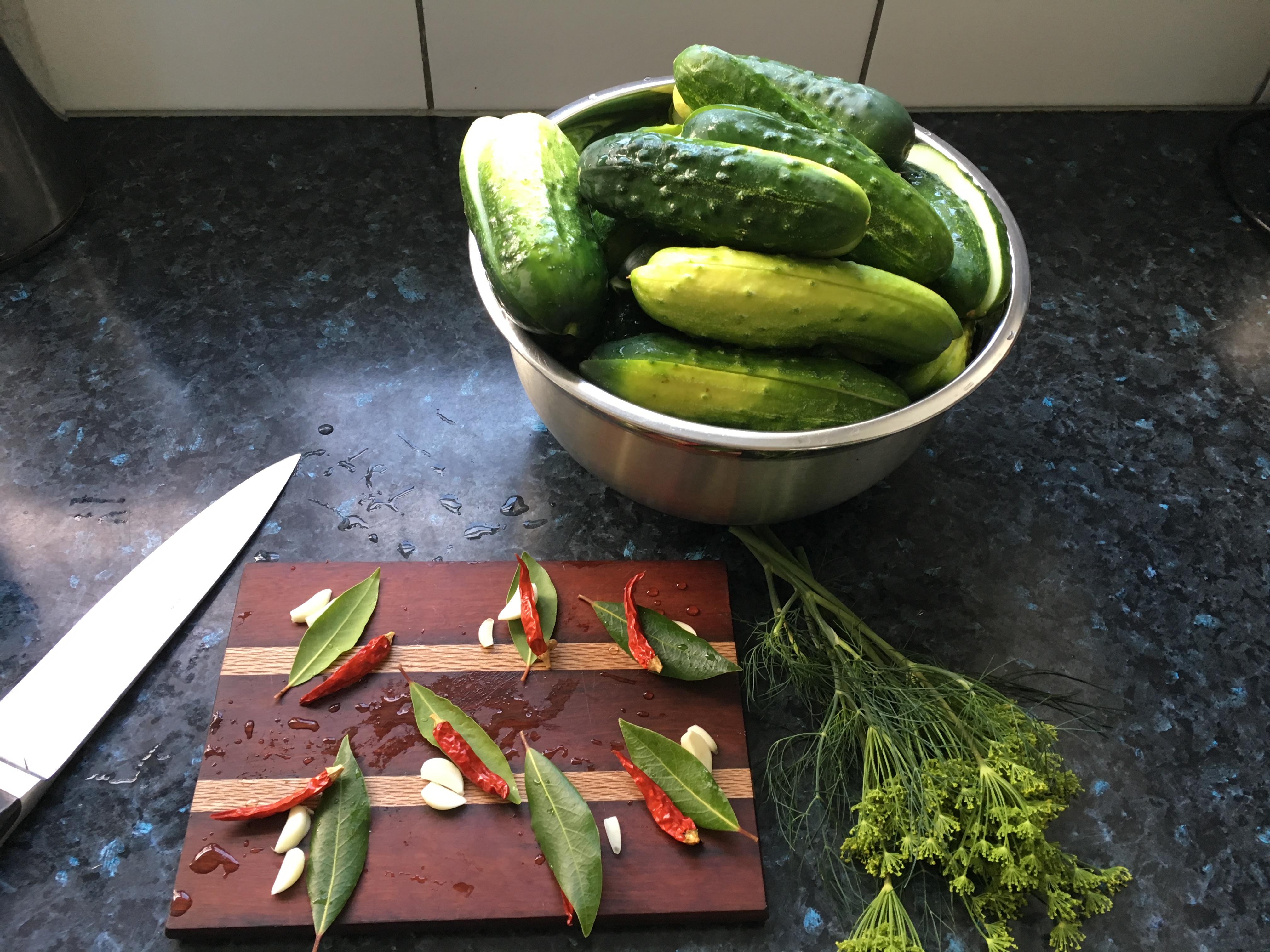
I can most of my pickles in a water-bath canner, so they last two years. But the canning process leaves them less crisp than I like, so I also make fresh pickles to eat right now. They’re crisp and sour, and super easy to make.

For a 1-quart jar, you’ll need:
1 kg pickling cucumbers, washed and cut in half lengthwise
1 head fresh dill
1 small red chilli (fresh or dried)
1 clove garlic, cut in half
1 bay leaf
1 cup vinegar (white or cider)
1 cup water
2 Tbsp coarse salt
3 Tbsp sugar
1 Tbsp mixed pickling spices (you can buy commercial, but I make my own mix to have on hand, see below)

Combine vinegar, water, salt, and sugar in a saucepan. Tie the spices into a cloth bag (or use a stainless-steel tea ball) and drop it into the vinegar mixture. Bring to a boil, then lower the heat and simmer, covered, for 15 minutes.

Shortly before the vinegar is ready, fill your jar with hot water (from the tap is fine, but make sure it’s as hot as you can get it). Let it sit for a few minutes, to ensure the jar is hot. This step minimises the risk of heat stress cracking the jar when you pour boiling liquid into it.

When the jar is warm, pour out the water. Drop the dill, chilli, garlic and bay leaf into the jar, and then pack the cucumbers in tightly. Try to arrange them so the cut sides are not pressed against one another—you want the pickling liquid to penetrate the flesh. Remove the spice bag from the simmering pickling liquid and pour it over the cucumbers, covering them completely.

Allow to cool, and then store in the refrigerator for 3-5 days before eating.

If you have leftover pickling liquid, save it in a jar, and just heat it up to make your next batch of pickles.

Pickling spice mix (makes about 1 cup):
6 Tbsp whole mustard seed
3 Tbsp whole allspice
6 tsp whole coriander seed
1 tsp whole cloves
3 tsp ground ginger
3 tsp red pepper flakes
3 bay leaves (crushed)
3 cinnamon sticks (crushed)

A Trifle More Christmas Baking

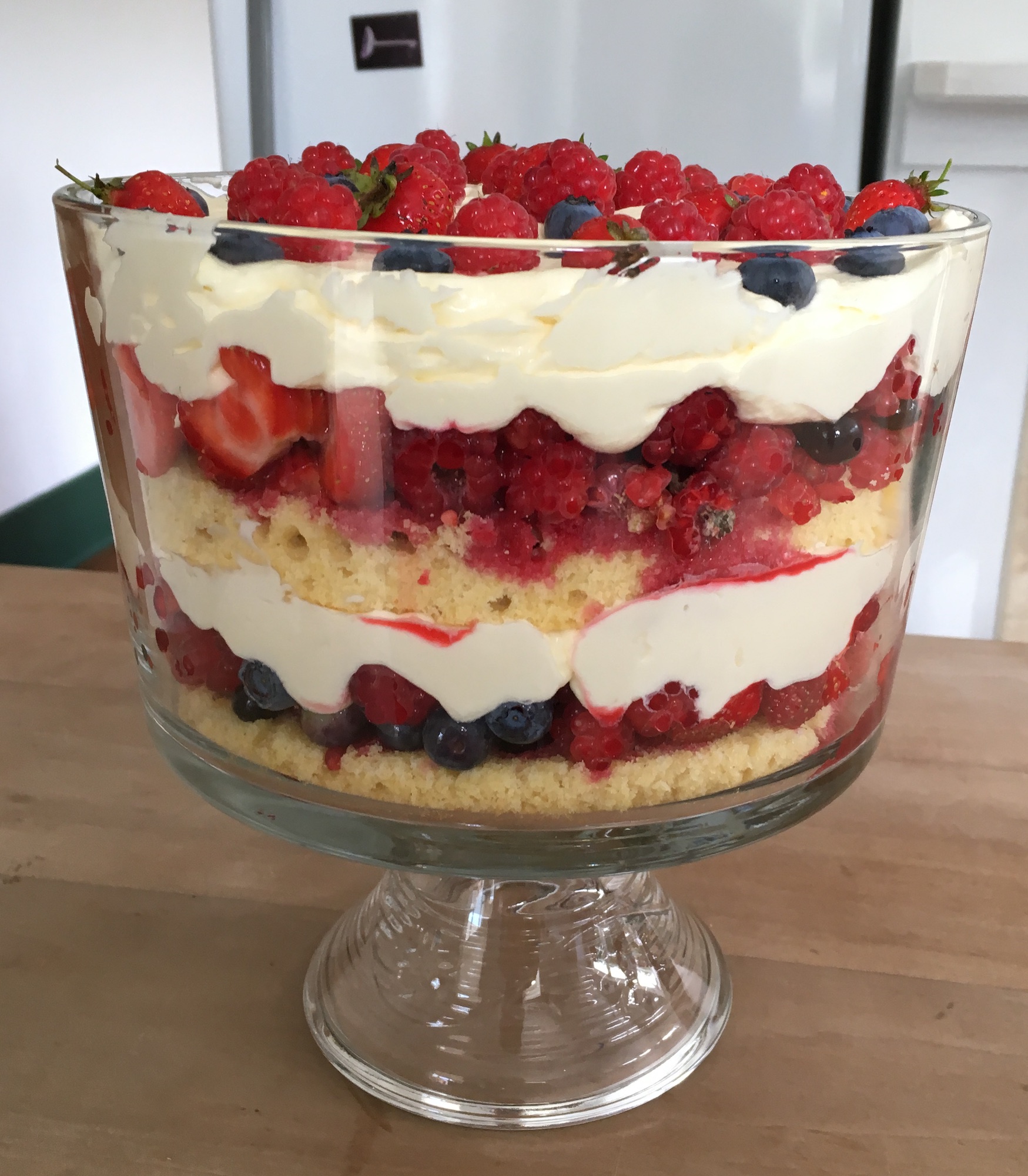
Okay, so I wrote the Christmas Baking blog post a couple of days ago, and then this happened. We picked another mountain of fruit this morning, and it happened to be a bread day. My original plan was to bake a pie, but my husband agitated for a trifle, but without the custard, which he’s not fond of.

So into the baking rotation went a lemon cake. Once it was cool, I sliced it and layered it with fresh fruit (strawberries, raspberries, black currants and blueberries), raspberry sauce, and a mixture of cream cheese, whipped cream, sugar and vanilla (inspired by this trifle recipe, but I measured nothing, and ignored most of the directions).

Just making it made everyone smile. Eating it … Oh my! I think I have a new favourite Christmas dessert!

Christmas Baking

When I was a kid, my mother would start her Christmas baking just after Thanksgiving. She’d bake dozens of kinds of cookies and freeze them. For weeks before the big day, there would be a big platter of cookies—a few of each of the types she’d made—out for eating. It was a child’s dream. I don’t remember her making anything but cookies for holiday desserts. We certainly didn’t need anything else, with all those cookies available.

Before moving to New Zealand, my holiday baking was similar (though with only one child eating cookies, I didn’t make quite so many as my mother did—she had three young cookie eaters). But it’s changed a lot since then.

Cookies are made with ingredients that store well—flour, butter, sugar, nuts—that’s great for winter baking, when fresh ingredients are hard to come by. But Christmas falls at the height of the summer fruit season here—it’s no wonder the traditional Christmas dessert here is pavlova—a meringue ring filled with fresh fruit (Unfortunately, I’m really not fond of meringue).

At the moment on our property, we are harvesting black currants, red currants, gooseberries, raspberries, strawberries, cherries, and blueberries. With as much as 10 kilograms of fruit coming in every two days, much of that harvest goes into jam, sauces, chutney, or simply gets frozen for later use. But it would be a shame not to bake with that fruit, in favour of cookies, which I can make any time of the year.

So we’ve been enjoying strawberry shortcake, currant pie, and gooseberry crisp. For breakfast, we’ve been eating waffles smothered in fruit, and muffins studded with fruit. For snacks, and with every meal, we’ve been eating fresh fruit—whatever hasn’t gone into baking or the freezer.

Oh, there are cookies, too (why not?). But it’s the fruit I snitch while walking through the kitchen, and it’s the pie I crave for dessert.

Some day I’ll dispense with the cookies entirely … Maybe I’ll even learn to like pavlova.

Summer?

It’s been decidedly un-summer-like recently. We’ve had an exceptionally wet two weeks—there’s a puddle in the yard, Coes Ford is flooded, and weeds and mushrooms are sprouting everywhere.

Fortunately, that hasn’t stopped the strawberries. When my daughter braved the rain to pick, she found a surprising number of slug-bitten but delicious ripe fruits.

Strawberry shortcake for dessert, strawberries on my morning muesli, strawberries every time I walk through the kitchen…it must be summer!

Now, if only we’d see the sun…