Pumpkin Galette

squash galetteOne of our favourite ways to eat pumpkin. We enjoyed the first pumpkin galette of the year today.

Make enough pie dough for a double crust pie. Refrigerate until you’re ready to assemble the galette.

1 large or 2 medium winter squashes or pumpkins

2 med shallots

3 cloves of garlic

8 large sage leaves

2 sprigs fresh thyme

1 c. grated cheese (cheddar, edam, or whatever you like)

sunflower or pumpkin seeds for on top.

salt and pepper to taste

Cut the squash in half and scoop out the seeds. Place cut side down on an oiled baking sheet (a jelly roll pan works well–avoid cookie sheets, as liquid from the squash may spill off). Tuck the garlic (in its peel) into one of the squash cavities. Bake at 190°C (375°F) for 30-45 minutes, until the squash is quite soft. While the squash is baking, sauté the shallots until translucent in a generous amount of olive oil. Add the herbs and sauté a little longer. Set aside until the squash is done. When the squash is soft, scoop the flesh out of the skins, and mix it with the shallots in a large bowl. Peel the garlic cloves and put them into the bowl. Stir everything together, mashing any large chunks of squash, until you have a stiff puree. Season to taste with salt and pepper. Roll out the pie dough into a large round (38 cm/15 inches diameter). Place rolled out dough flat on a large baking sheet. Sprinkle most of the grated cheese on the dough, then mound the squash mixture on top, leaving about 8 cm (3 in) around the edge. Sprinkle the remaining cheese and a small handful of sunflower or pumpkin seeds on top. Gently fold up the edges of the dough to partly cover the squash. Bake at 190°C (375°F) for about 30 minutes, until the crust is lightly browned.
Helpful kids

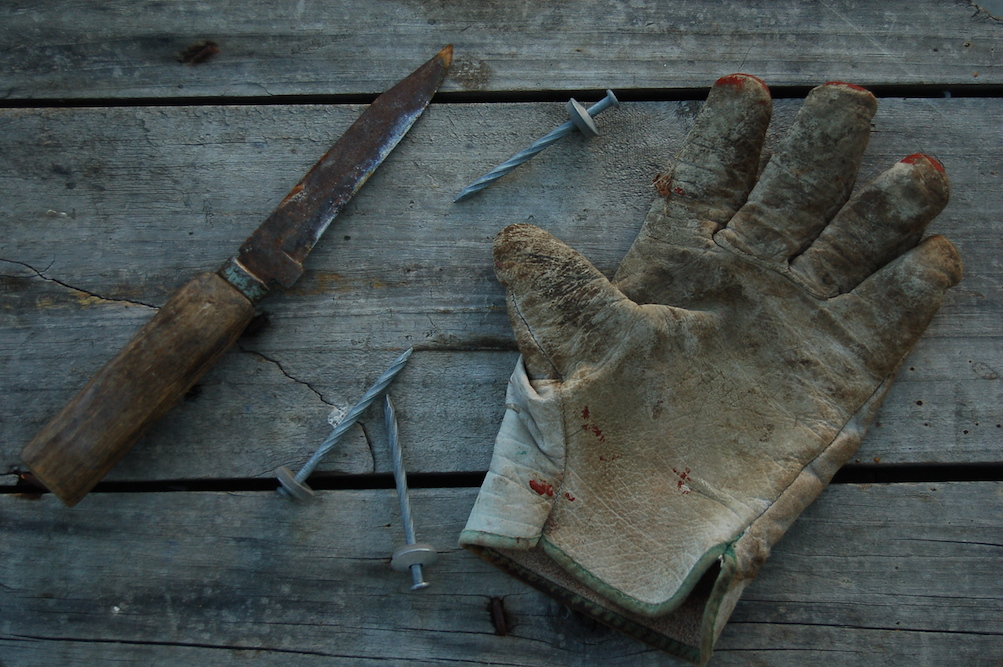
still life with nails sm*Sigh*

Dropped a wall on my hand today, so this will be short…typing skills aren’t really up to snuff at the moment.

It’s been a busy week of DIY at our house. Everyone in the family has been involved in one way or another. The days have been long and exhausting, but it’s been great to watch the kids help out, confidently and competently, in so many ways. Not just hammering nails and measuring things. In spite of the demands of the project (in fact, because of it, most days) we still need to eat. Fortunately, the kids are old enough now, they can take care of food, letting the adults spend every possible minute building.

At lunch time, kids get out the bread, cheese, pickles and other lunch items, and call us when it’s ready.

They can also cook dinner, if we’re at a stage where we can’t stop to cook. All those frustrating times teaching them how to chop, sauté, and bake (when having them “help” meant it took twice as long to make dinner), have begun to pay off!

(Especially handy when you’ve dropped a wall on your hand.)

Marcella Hazan

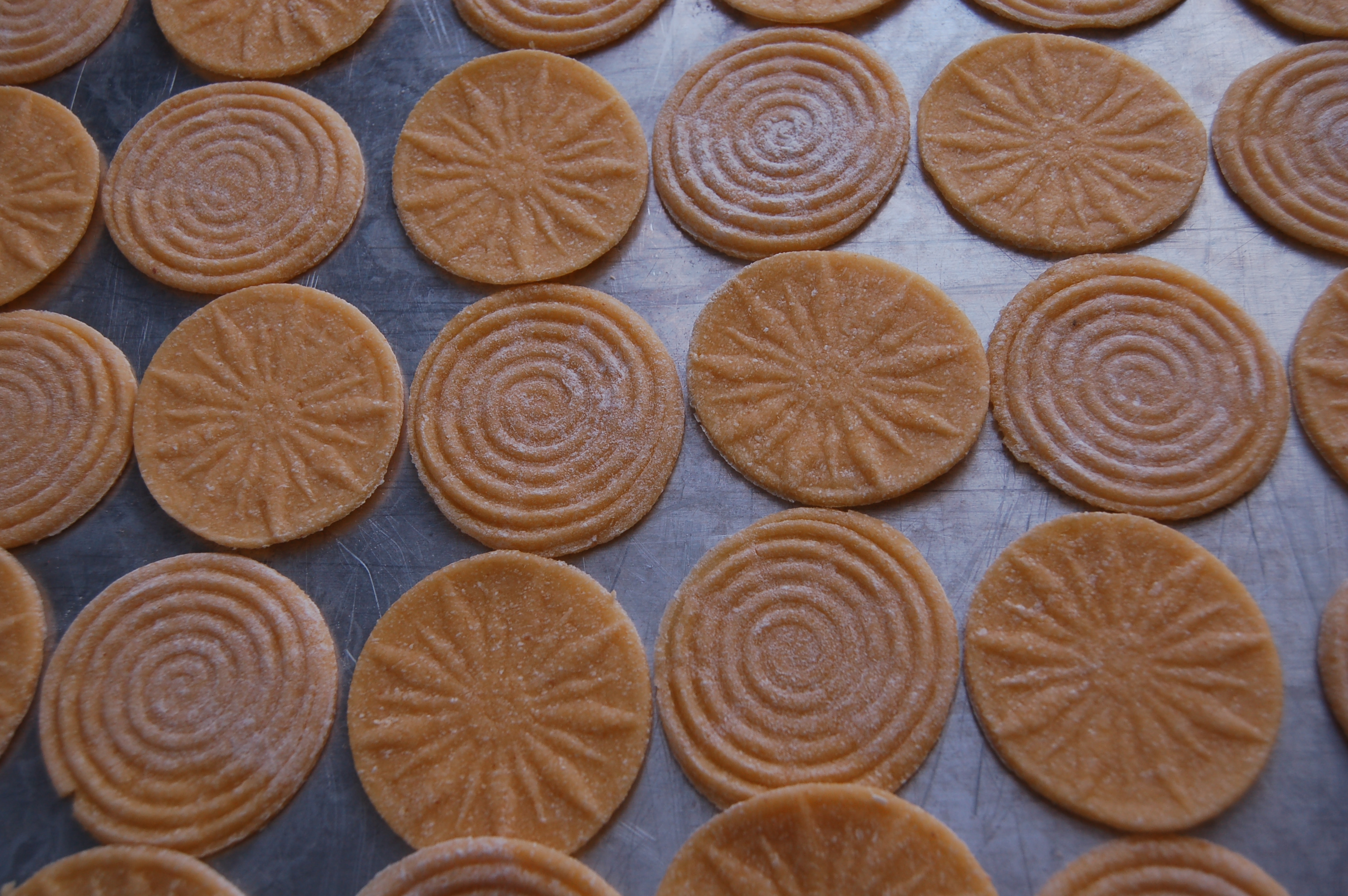
Corzetti made with Hazan's pasta recipe.

Corzetti made with Hazan’s pasta recipe.

Marcella Hazan was born on my birthday…or I suppose I was born on her birthday, as she was born 46 years before me. Our copy of her first book, The Classic Italian Cook Book, falls open to two pages—homemade pasta and risi e bisi (rice and peas). They form opposite ends of our cooking spectrum. Risi e bisi is the comfort food we go to when we come home late from work and school and don’t feel like cooking. It is delicious and filling, and oh so easy to make.

Homemade pasta, on the other hand, is what we pull out when we want an extra special meal–pumpkin stuffed ravioli, linguini with mounds of home grown oyster mushrooms in a creamy goat milk sauce, lasagne packed with the freshest vegetables from the garden.

I didn’t know much about Hazan until she died in 2013. Upon her death, the New York Times published a lovely obituary, painting her as the initially reluctant chef, who wasn’t terribly interested in food and learned to cook to please her husband. Apparently, she had to be cajoled into writing a cookbook. What a lovely picture of this icon of Italian cooking!

What speaks to me most about her cooking style are her insistence on intimacy with the ingredients and the cooking process, and the simplicity of many of the recipes. This was a woman who cooked for everyday, but who felt that every day should include good food. In The Classic Italian Cook Book she writes, “The finest accomplishments of the home cook are not reserved like the good silver and china for special occasions or for impressing guests, but are offered daily for the pleasure and happiness of the family group.” This is a woman I would have loved to meet.

Fresh vegetables, pasta rolled by hand, homemade stock—she could be quite opinionated and judgemental. In her risi e bisi recipe, she notes, “You may use frozen peas, if you must… but until you’ve made it with choice fresh peas your risi e bisi will be a tolerable but slightly blurred copy of the original.” At the same time, her recipes are written for real cooks. About Minestrone di Romagna, she writes, “It is not necessary to prepare all the vegetables ahead of time…while one vegetable is slowly cooking in oil and butter you can peel and cut another. I find this method more efficient and less tedious than preparing all the vegetables at one time”.

For Hazan, cooking and eating were both expressions of love:

“Italian cooking is the art of giving expression to the undisguised flavors of its ingredients.”

“The Italian art of eating is sustained by a life measured in nature’s rhythms, a life that falls in with the slow wheelings of the seasons, a life in which, until very recently, produce and fish reached the table not many hours after having been taken from the soil or the sea.”

“There probably has been no influence, not even religion, so effective in creating a rich family life, in maintaining a civilized link between the generations, as this daily sharing of a common joy. Eating in Italy is essentially a family art, practiced for and by the family.”

Thank you, Marcella, for everything.

Seasonal food

100_0535 cropOvernight, the mountains were cloaked in snow, and this morning they seemed to have leapt closer, looming huge and white where all summer they’d been nothing but distant grey peaks. The wind is cold and keen, and brings driving rain and hail clattering against the windows. The cat stretches out in front of the first of the season’s fires in the log burner.

Overnight, it seems, we have broken from our never-ending summer and have been plunged into winter. And overnight, our meals have changed. Though there are still a dozen cucumbers in the fridge, the thought of a cool cucumber salad is not appealing today. Instead I hunger for potato soup, bread warm from the oven, and hot apple crisp. I eye the pumpkins as I could not on the shorts-and-T-shirt day last week when I harvested them, and I think of gallette, soup, and pie. I am excited by the culinary opportunities the change of seasons presents.

There will be more T-shirt weather, I know. The cucumbers will be eaten. Here in the land of perpetual spring, even winter days can call for iced drinks now and again. But for now, I will enjoy the excuse to eat steaming soup with buttered biscuits, and drink hot tea in the middle of the afternoon.

Quince

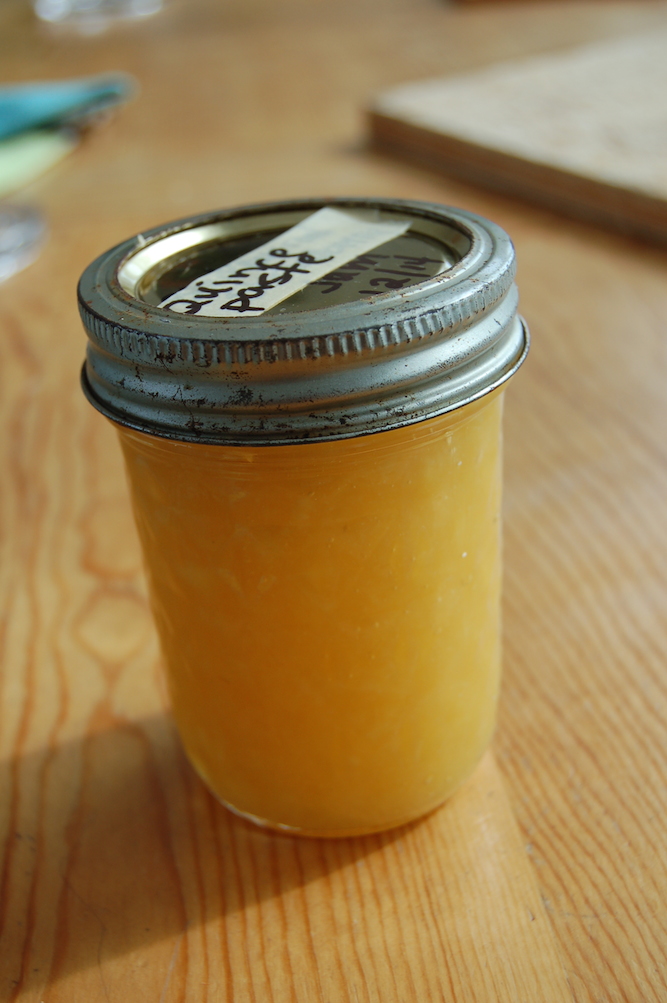
quincepaste1smQuince was a fruit I never knew before we moved to New Zealand. Looking like a fuzzy pear, and inedible raw, they’re not the most inviting fruits at first glance. But cooked into quince paste, they are one of the most delicious and versatile fruits around.

Our little quince tree (not much more than a stick) produced three fruits this year, so I made a very small batch of quince paste—about three cups. I’m afraid that it’s almost gone already. It is delicious on crackers with a thin slice of goat cheese. It’s also lovely on toast in the morning, or on bread as a late-night snack. It goes well with yogurt and granola, and…well, it never had a chance of lasting long.

Mommy’s Magical Crackers

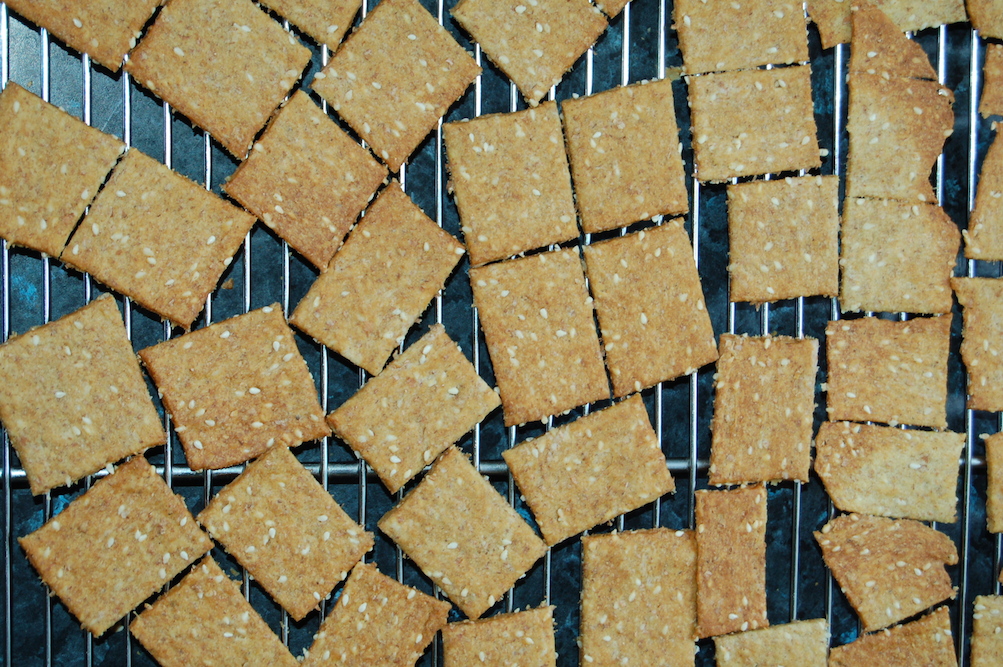
DSC_0007 copyNamed by my kids years ago, these are so magical, they start disappearing almost before they leave the oven. It’s a good thing they’re easy to make—easy enough for every day, good enough to include on a fancy cheese and cracker tray at a party.

1 c. all-purpose flour

1 c. wholemeal flour

¼ c. sesame seeds

1 tsp baking soda

½ tsp salt

1/3 c. vegetable oil

2/3 c. warm water

Mix flours, sesame seeds, soda and salt. Stir in water and oil, stirring just until the dough comes together in a mass. Divide dough into halves. Roll out each half very thin (1-2 mm) on a lightly greased baking sheet. Cut into cracker shapes, and bake at 190°C (375°F) for about 15 minutes, until they are brown and crispy. Check regularly toward the end of baking and remove any crackers that have browned before they burn.

Eat quickly before they vanish!

* Replace the wholemeal flour with rye meal (or a coarse ground rye flour) for a lovely variation.

Pumpkin seeds

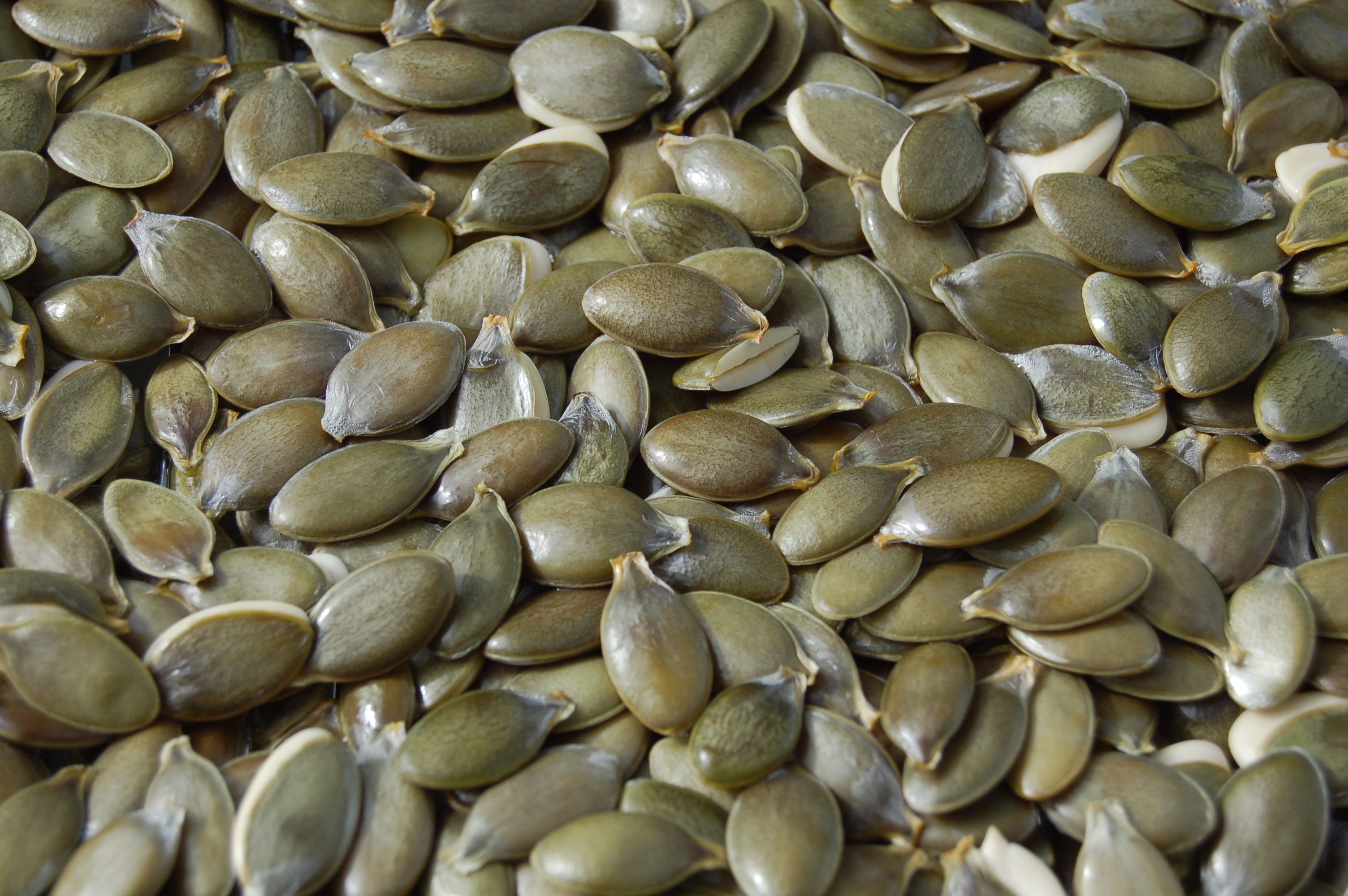
DSC_0013Pumpkin seeds are another of those foods (like onions) that I never really appreciated before I grew them myself. It’s not that I didn’t like them, but they weren’t something I paid much attention to.

I still don’t go out of my way to buy them, but I very much enjoy our harvest of pepitas, roasted with salt and a bit of curry powder. They’re almost as hard to stop eating as peanuts (and just as good with a beer)!

Recipe Reminiscing

DSC_0001 copyBren’s Quince Paste

Vilma’s Marinated Eggplant

Mrs. Cassel’s Mint Tea


Recipes linked to a person. Old friends, neighbours, family members.


Susan’s Tofu Meatballs

Ray’s Potato Bread

Mom’s Cheesecake


Each recipe is a story, a memory.


Virginia’s Chocolate Shortbread Hearts (made for our wedding party)

Lisa’s Orange Biscotti (first eaten at her house while her husband, Pete, taught me to knit)

Granny’s Tabouli (granddaughter Rhian, one of my housemates at Uni, collected bras)


Other recipes evoke a place.

DSC_0004 copy

Donuts (Camp Tamarack, where we made them with children during cultural history lessons)

Rosti a la Grenada (Grenada, eaten while visiting friend Ginger during her Peace Corps service)

Ricotta (Panama, made with Klim powdered milk; it was the height of luxury in our mud house life)


You could read our life story, know our friends, just by flipping through our recipe book. As good as a photo album; every turn of the page is another image, another taste of from our past.

Easter Egg Engineering

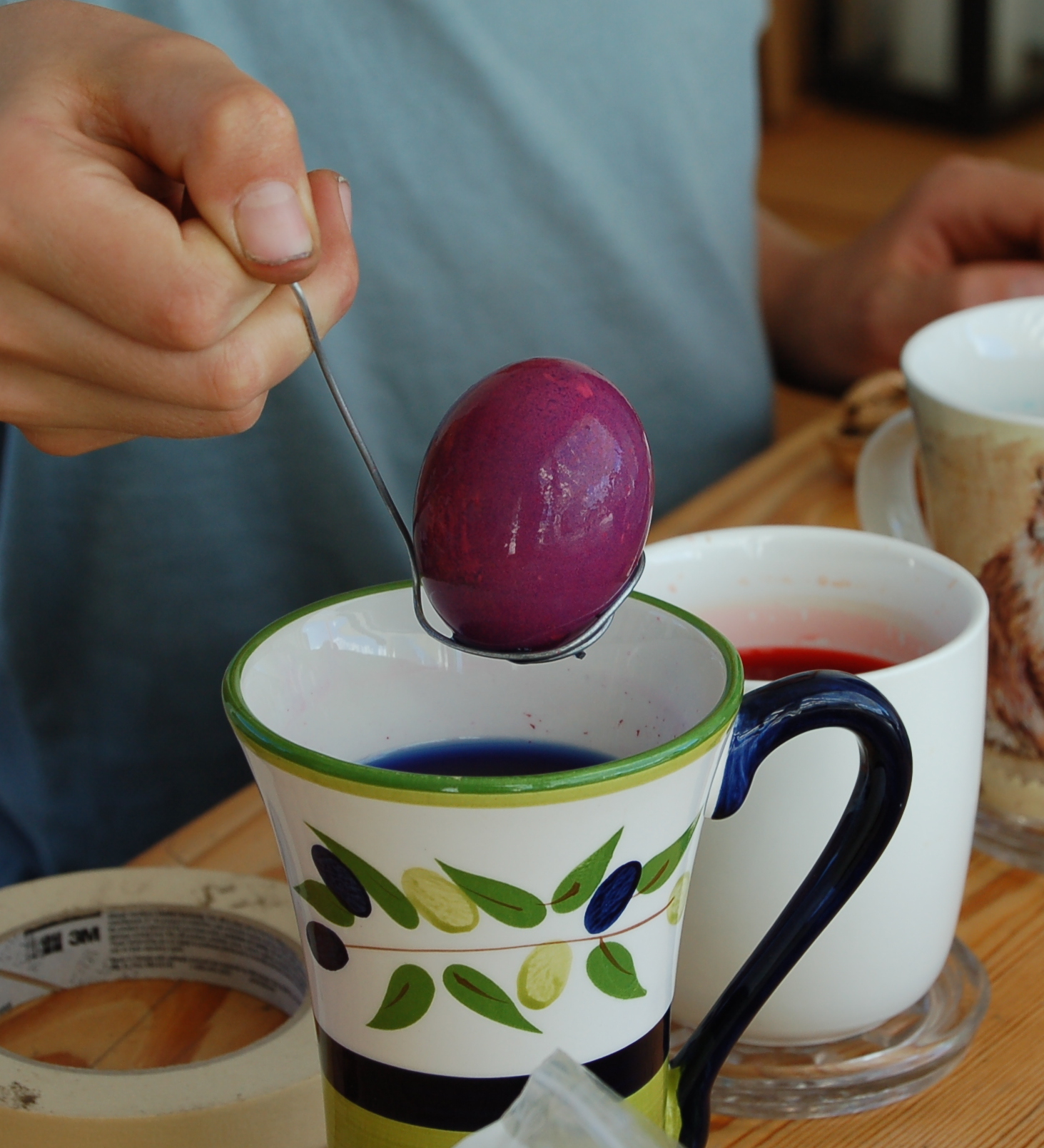
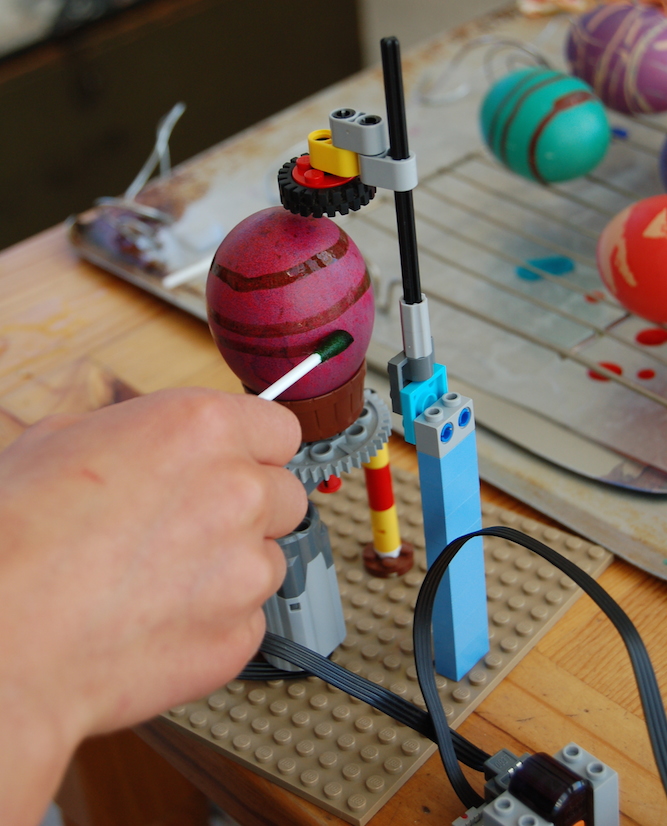
First, they dyed the eggs.

First, they dyed the eggs.

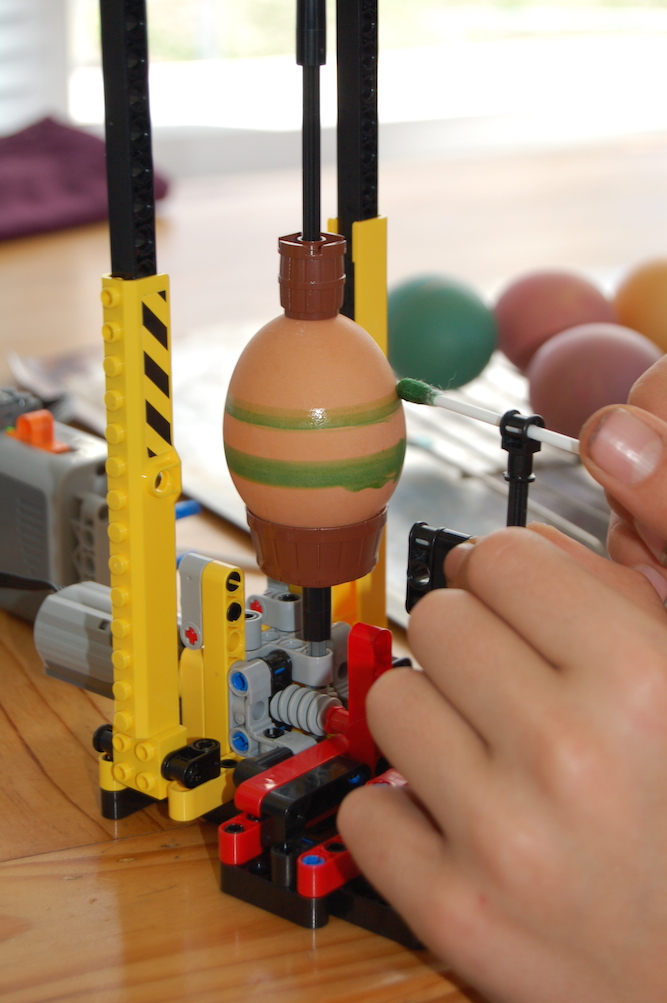
The annual glut of hard-boiled eggs is about to begin. The children dyed eggs this afternoon. This year I challenged them to create Lego machines that would allow them to paint designs on their eggs. They took on the challenge with enthusiasm! One created a remote-controlled machine to rotate the egg. The other created a machine that rotated the egg, and moved it up and down, and held a cotton swab soaked in food colouring, all at the same time. The results were pretty impressive.

The remote controlled model.

The remote controlled model.

The deluxe model, complete with cotton swab holder.

The deluxe model, complete with cotton swab holder.

Peanut Butter Eggs

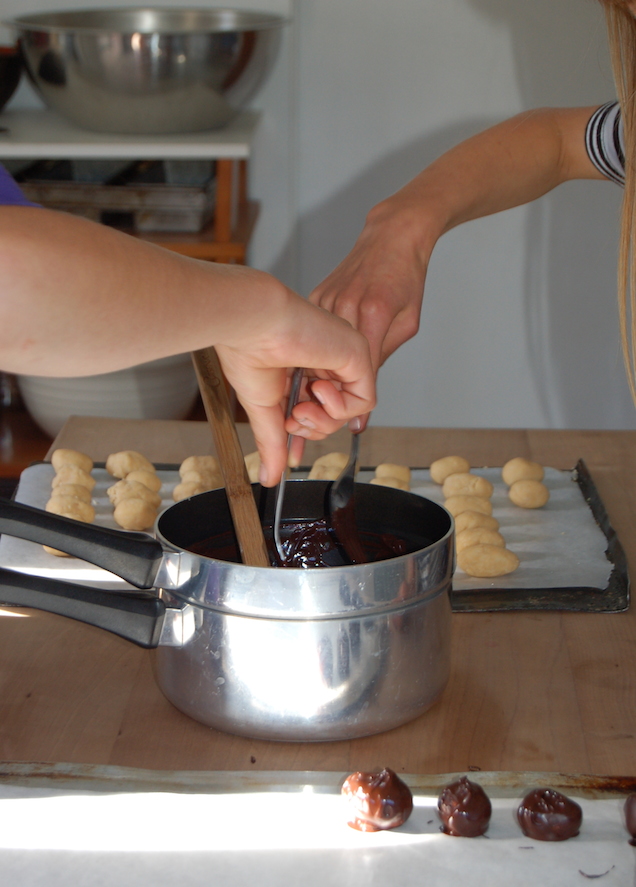
With older kids, now, I didn't even need to do anything--they did it all (except the dishes).

With older kids, now, I didn’t even need to do anything–they did it all (except the dishes).

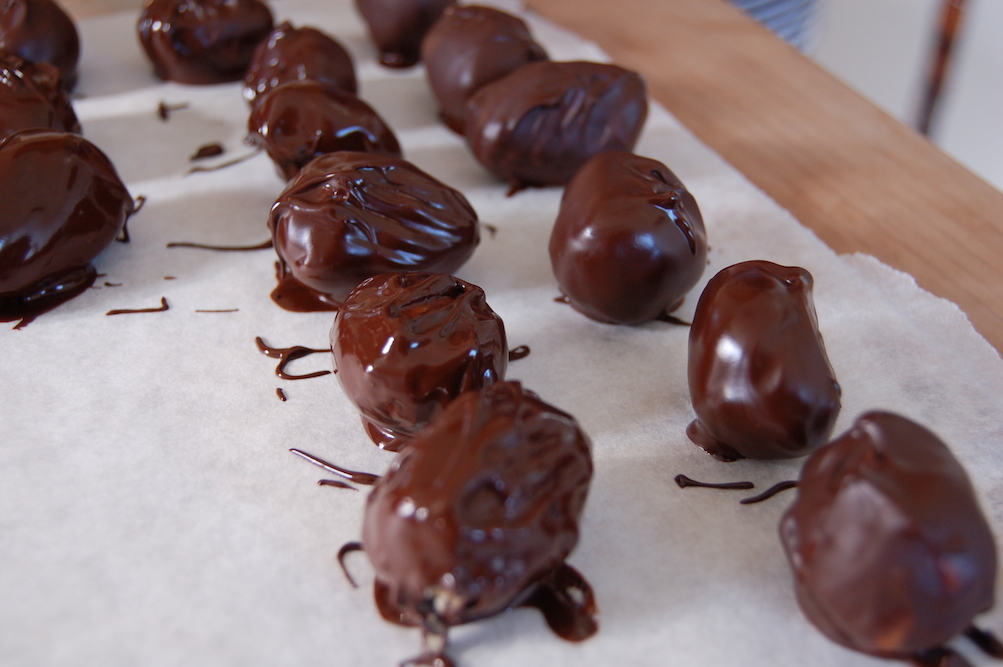
I don’t go in much for Easter candy. Waxy chocolate rabbits and creepy marshmallow chicks? Ick! I do, however, have in inordinate fondness for homemade peanut butter and coconut eggs, made with good dark chocolate. Years ago, one of the secretaries where I worked made them and sold them every Easter, and I had no resistance whatsoever. They were a daily treat for me until her supply was gone.

Thankfully, I don’t have that temptation any more, but last week my son asked me to pick up smooth peanut butter and chocolate for peanut butter eggs. What could I do, but comply?DSC_0008 copy