Through Fresh Eyes

100_2137-smAll week I weeded and tidied the yard in preparation for a pizza party on Friday night. I tried to make the sad, tired parts of the yard look less decrepit and free the nicer spots from their mantle of early summer weeds.

It’s a Sisyphean task—by Friday, the spots I had weeded on Monday were already sporting fresh weed growth.

So as the first guests arrived, I fretted over the shabby state of the yard and garden. As I looked around, I saw weeds, flowers that needed deadheading, outdoor furniture that should have been hosed off…

But no one noticed my weeds, aside from those guests studying particular ones (it was a party of ecologists, after all, and they were thrilled to find their research subjects ‘in the wild’).

Instead, they saw the musical instruments, the blooming flowers, the fish in the pond, the cat playing with a grass stalk, the places for playing and relaxing. They saw all the things we love about the yard, and never noticed the twitch sprouting in the paths and the flecks of bird poo on the deck chairs.

“This is awesome!” cried one guest as he beat out a rhythm on the outdoor drum set.

“It all looks so fresh…like it’s all new,” said another.

Throughout the evening kids and adults alike wandered around, feeding goats, playing outdoor instruments, grazing on raspberries, sitting on the benches tucked here and there, climbing trees, playing lawn games, and feasting on produce from the garden, baked in the new bread oven. Everyone smiled. Everyone relaxed.

It was good to see the property through their eyes for the evening. I focus so closely on the work that needs to be done, that sometimes I forget that, even with weeds or grass that needs mowing, the place is a haven. Sometimes I forget to put away the to-do list and just enjoy the place. I struggle to stop and smell the roses without also noticing they need to be pruned.

So thank you to all the guests who joined us Friday night. You gave me a fresh perspective and gave me permission to slack off a little this weekend—to just be here.
Thanksgiving

2016-11-25-18-36-30-smTimed to coincide with the last of the autumn harvest, Thanksgiving is traditionally a celebration of the foods that store through winter—pumpkins, apples, potatoes, corn.

Which is why we don’t really celebrate it here. Not in the traditional culinary sense, at least. Apples and potatoes are wrinkled and old by November. The pumpkins are all gone.

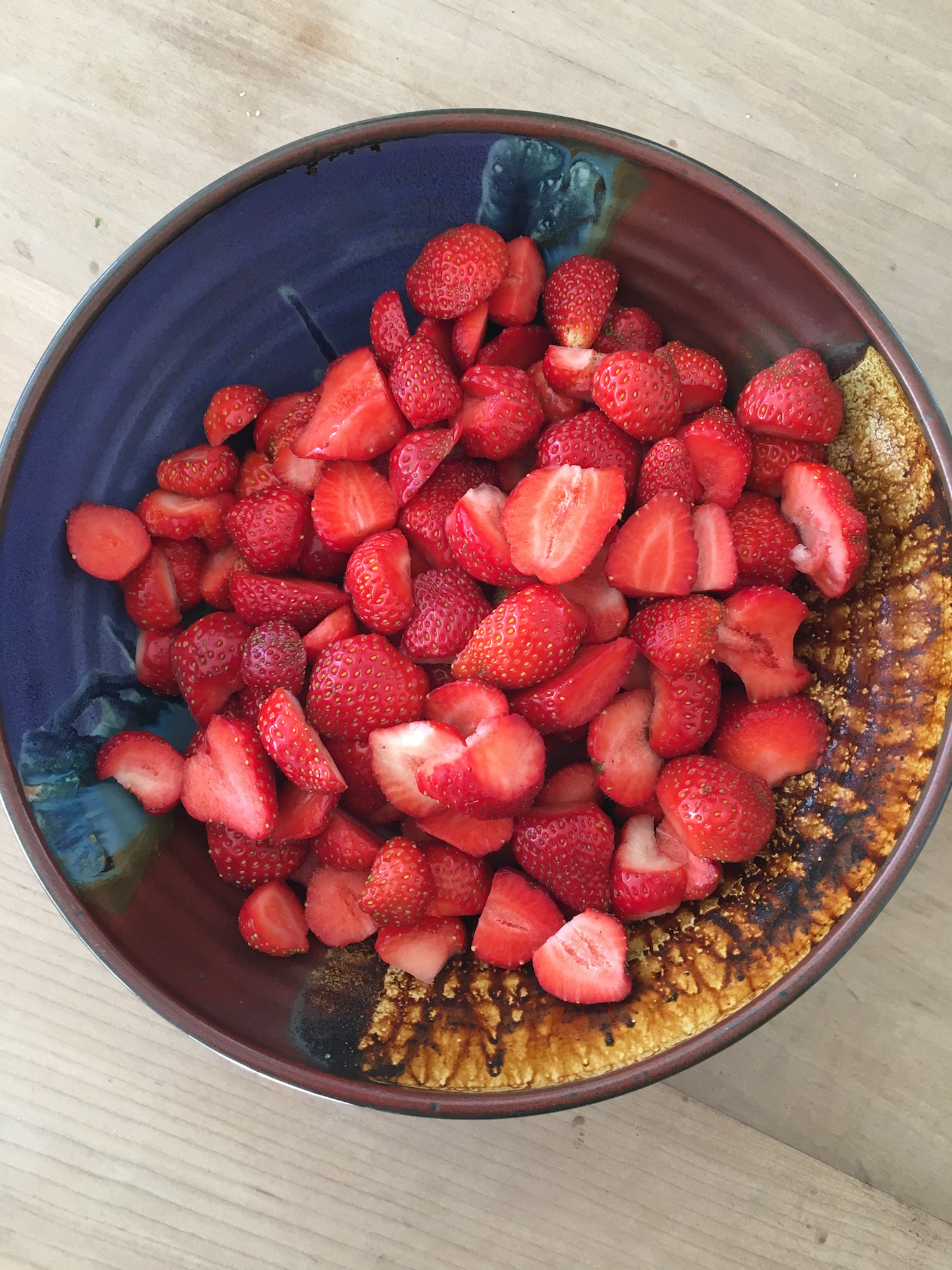
But there is much to be thankful for at the beginning of summer, and our Thanksgiving Day meal reflects this—pasta full of spinach, artichokes, and peas; a fresh green salad; and strawberries for dessert. Indeed, every day is a harvest celebration at our house. Every day, I am thankful for the sun, rain, and soil. I am thankful for our ability to produce much of our own food. I am thankful for my children, who understand and appreciate the amount of work that goes into every bite they eat—who thank the cook and the gardener every day.

I am thankful for the partner with whom I share the daily tasks that provide food for our table. I am thankful for the neighbours who help keep animals and plants alive when we go on vacation.

Yes, I’m sometimes a grumpy farmer—there’s never enough rain, the pests are terrible, the neighbour’s weed-killer has wafted across the fence line again…there’s always something to complain about.

But however much I grumble as I’m pulling weeds or dragging irrigation hoses around, dinner is always a time of Thanksgiving.

Random Acts of Kindness

2016-10-17-08-54-55I noticed this article in the news today, and thought it was worth sharing as an antidote to all the hate that’s on the news.

http://www.stuff.co.nz/travel/themes/adventure/85392553/How-kind-acts-by-strangers-renew-faith-in-peoples-goodness-the-world-over

In it, the author writes about several instances in which the kindness of strangers renewed her faith in humanity. Most the experiences she relates happened while she was travelling, and the kindness she was shown often required sacrifice and bravery.

I had a similar experience in Panama one day while waiting for the bus in Panama City. My husband and I were staying in a seedy part of town—Peace Corps volunteers have little money, so we stayed in the cheap hotels when we had to go to the city. We were headed from the hotel to the Peace Corps office, and waiting for the bus on a busy street.

We were wary, and prepared for pickpockets and the like, but we both froze when a huge man stalked over to me. A good 30 cm taller than me, he came right into my personal space and hung over me. Didn’t say a word, but glared at me with bloodshot eyes, his whole body screaming murder.

I blinked at him for a moment, waiting for him to say something, threaten me, whatever. When it was clear he wasn’t going to, I smiled and said good morning to him. This elicited a grudging good morning back, but didn’t soften his stance.

On the busy street, the confrontation didn’t go unnoticed. A pair of policemen began to saunter toward us. The situation was about to get ugly.

That’s when the little old lady selling lottery tickets on the sidewalk took matters into her own hands. Though she was easily another 15 cm shorter than me, she picked up her umbrella and began whacking the threatening man with it, scolding him for giving Panama a bad name.

She couldn’t possibly have been actually hurting him, but he withered under her attack, shrinking away and looking ashamed of himself, and finally slinking off.

The bus came, and we quickly hopped on. Life on the busy street returned to normal.

I’ve blogged before about other experiences I’ve had giving and receiving kindness from strangers. Whether the gesture is little or big, random acts of kindness make everyone feel good.

We could use a little more of it, by the sound of the news these days. Go ahead. Practice a little random kindness today.

Peace Corps

2016-10-15-20-10-59Fifty-six years ago today, John F. Kennedy introduced a new public service challenge to the American people. That challenge would become known as the Peace Corps. While it is considered a foreign aid programme, Peace Corps’ value (and, in fact, it’s stated goal) is far more than the aid it provides to people in developing countries.

Peace Corps is about connecting people and cultures, one volunteer at a time. It is about cultural exchange, friendship, and understanding. It is about breaking down the ideas of ‘us’ and ‘them’. It is about promoting peace and understanding.

We need the Peace Corps as much today as we did fifty-six years ago. Perhaps more.

Twenty-four years ago, my husband and I, newly married, took up Kennedy’s challenge, becoming Peace Corps Volunteers in the Republic of Panama.

Those two years of service remain a defining time of our lives.

We left our homes and families in order to serve—to give of ourselves. In the end, we received far more than we could ever have given.

Nothing about Peace Corps service was easy. There were cultural misunderstandings, dangerous situations, language barriers, frustration, boredom, discomfort, failure, homesickness, and loneliness. But there were also laughter, friendship, curiosity, wonder, success, music, and dancing.

We watched our actions empower young farmers to become leaders, and they in turn empowered us. Together, we made a difference in our little corner of the world. Together, we learned that the colour of our skin, the language of our birth, our education, and the luxuries we either have or have not don’t matter. We are all alike inside, and it is the qualities of our hearts that matter.

If we give ourselves to the world, the world will give back and make us better. I entered Peace Corps as an American citizen, I left as a citizen of the world.

Competition Ploughing

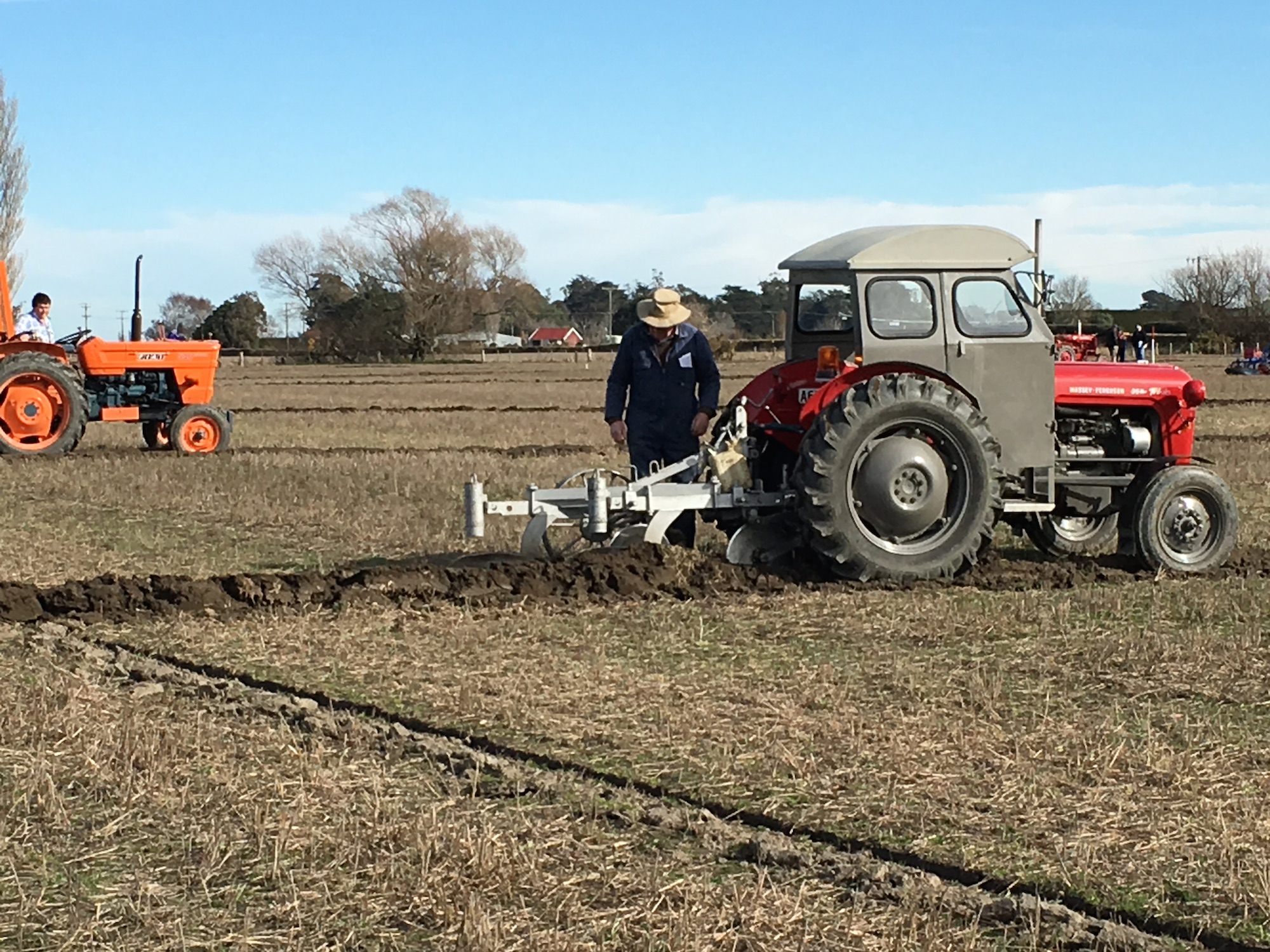
2016-08-20 11.18.35 smThis past weekend was the annual Ellesmere Vintage Club’s Ploughing Match. Our neighbour hosts the event, so we walked down there on Saturday morning to watch the action.

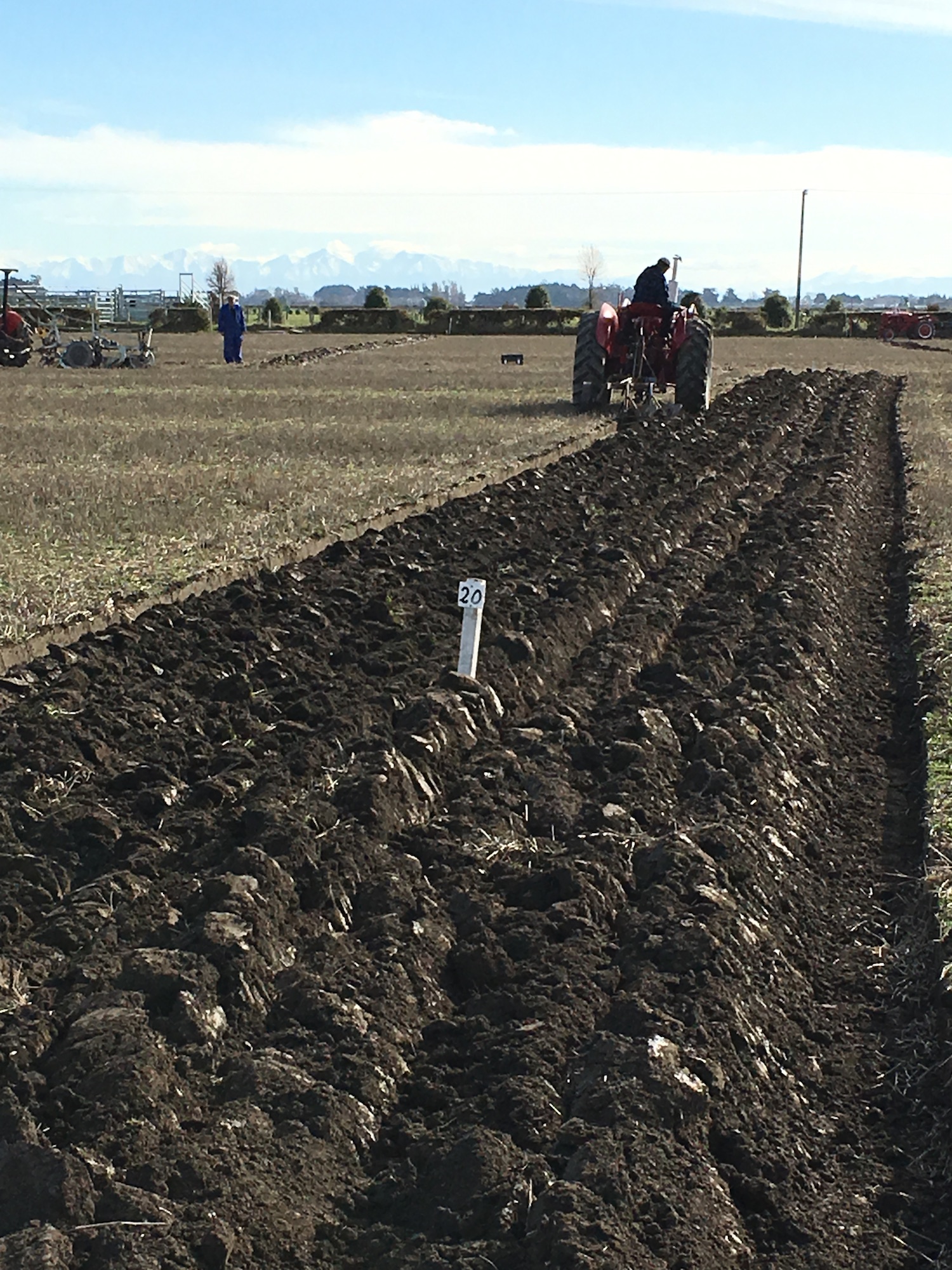
It was slow-motion action. No big thrills or adrenalin. Just the rumble of diesel engines and the smell of freshly turned soil. It was clear the point was a perfectly-turned patch of ground, not speed. There was a lot of starting and stopping, and adjusting of freshly-painted ploughs.

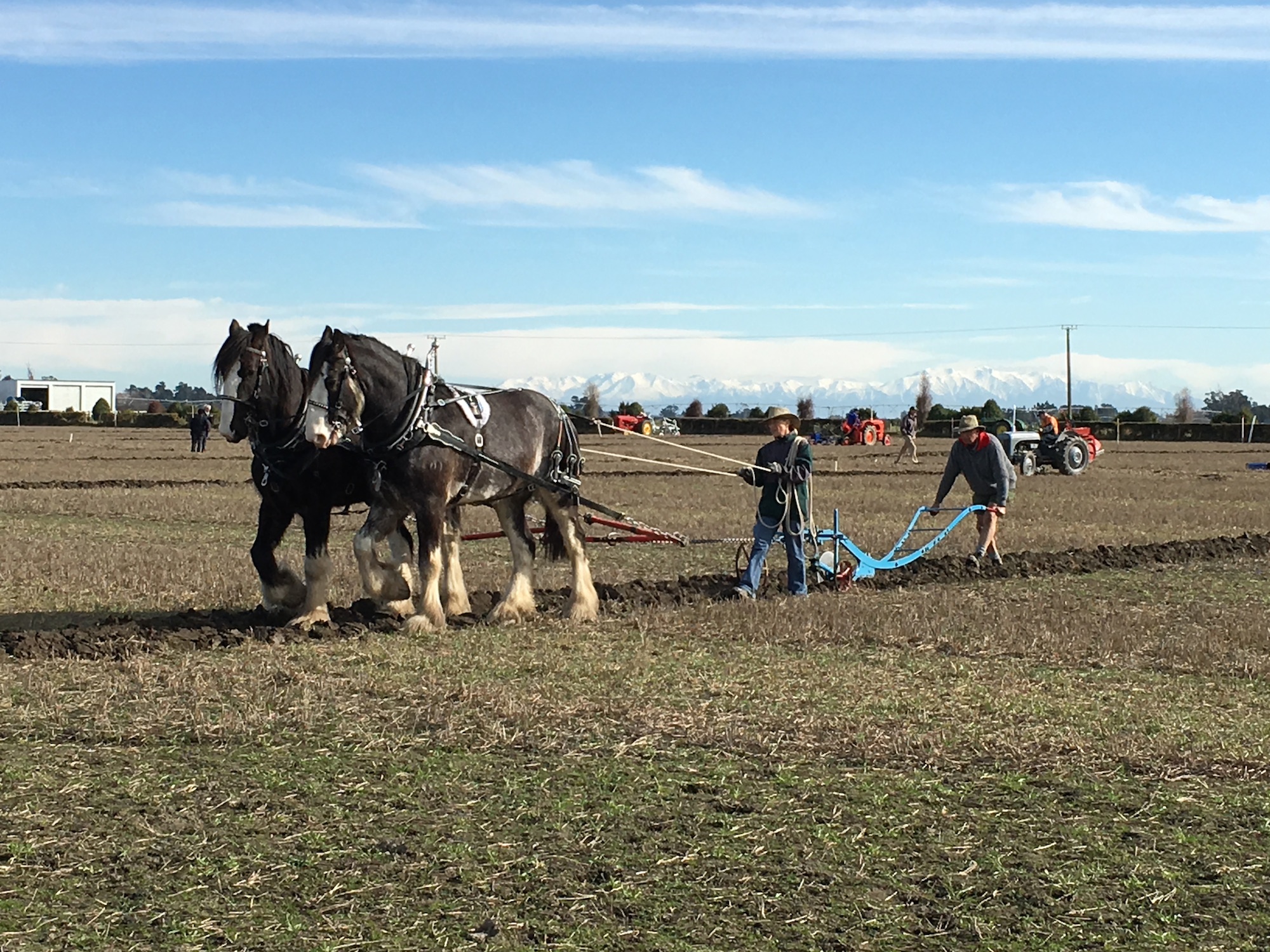
2016-08-20 11.22.21 smA pair of horses joined the 1940s and ’50s era tractors. Watching them work, it’s clear why tractors have taken over on the farm—there was significantly more fiddling to be done by the horse team in order to perfect their rows.

The demographics of the crowd were predictable. Before we arrived, I commented to my daughter that we might be the only women there. Her response was that she would likely be the youngest person there…by about 70 years.

2016-08-20 11.32.18 cropWhile the majority of competitors were as vintage as their tractors, there were a few younger ones. Two or three other children were there, too, though they were sitting in a car playing on an iPad. And there was a small contingent of women. A few wives watched from the sidelines, and a woman drove the horse team.

It was a true small-town event—25 competitors, and perhaps 40 people in total at the event when we were there. Participants were shuttled to the local hall for lunch on two long benches, set back-to-back atop a flatbed trailer.

2016-08-20 11.33.12 smLater, as the event broke up and tractors motored past the house, we laughed—it was hard to tell which vehicles were en route from the competition, and which ones were simply on their way from paddock to paddock. Many of these vintage tractors still get regular use on the farm.

Of course, I have to wonder what will happen as the vintage tractor enthusiasts and their machines age further. Will younger farmers grow nostalgic about tractors from the 60s and 70s as they age? If not, we’ll see a lot fewer than 25 contestants at vintage ploughing matches in future years.

Noisy Neighbours

2016-07-27 14.13.35Most city dwellers don’t think of the country as a noisy place, but it can be. Yesterday I was working away at my desk when I heard a deep rumble. My first thought was earthquake, then I thought it must be a milk truck. But the rumble peaked then faded, peaked and faded. I looked out to see the neighbour’s sheep running laps back and forth along our fence line. Several hundred sheep thundering back and forth, for no apparent reason other than it was fun.

It’s a noisy time for sheep, even without running races. It’s lambing season in our neck of the woods, and lambs are noisy. The ewes get noisy, too, as they call back to their bleating lambs.

And there’s no point in telling these neighbours to quiet down—they never listen. 😉

A Fine Delivery

The cat declared the stack of straw bales an excellent napping spot.

The cat declared the stack of straw bales an excellent napping spot.

I ordered pea straw a couple of weeks ago. I told them there was no rush. They took me at my word.

The straw arrived on Sunday. I happened to see the ute as it came down the road, and guessed it was my straw. Finally.

The old blue truck was piled with bales, but it wasn’t nearly as crowded in back as it was in front. Three men, the youngest not a day less than 68, were squashed into the cab and rattled like bottles up the gravel drive. A little dog scampered back and forth across their laps, eager to jump out and explore.

“The men grinned at me as they drew up to the house.”

“The usual place?”

“Yes,” I said, “But we’ll just stack it next to the shed—I’ve got to do some organising in there before I can put the pea straw in.”

The driver pulled the ute across the lawn and into the rough paddock, bouncing over ruts and hillocks I was sure he’d bottom out on. He stopped just beside the little hay shed.

“That’s the closest we’ve gotten yet!”

The dog leapt out of the cab, and the three men unfolded themselves and stumbled out. They began hefting bales as they took them off the truck and stacked them beside the shed.

“One, two…So, when’s it gonna rain again, eh, Robinne?”

“I don’t know but any day now is fine with me,” I answered.

“That’s five, six…”

“Sure is dry.”

“Seven, eight… Oh. We don’t know how to count. That’s only nine.”

I’d ordered ten bales.

“Aw, all I’ve got is sixty dollars,” I joked. “Let me see if I can come up with fifty-four.”

“Nah, don’t worry about it. We’ll bring round another bale some day when we’re coming by.”

“Yeah, we’ll be coming past at some point, we’ll just toss one out the door.” The old farmer grinned, but I know he was only half kidding, and I reminded myself to keep an eye out for a bale of straw on the verge.

So the men and dog squeezed themselves back into the truck and backed out. I watched in fear as they did so—last year, they’d nearly gone over the metre-high drop onto the kids’ playing field. But they managed to back out without flying over the edge or taking out any of the plantings along the way.

“Thanks!” I called, waving as they rattled back out the drive.

I smiled. Every pea straw delivery is sort of a James Herriot moment. Even if I didn’t need it, I might still order straw every year, just to see those guys…

Throwback Thursday: At the Centre of the Universe

d1scans001 copy“This bit needs to be yellow. It’s part of the United States.”

“No it’s not. It can’t be! There is the United States. This bit, way over here can’t be part of it.”

I was working with a group of students in Membrillo, Panama. We were painting a map of the world on the wall of the school, and we were arguing about Alaska.

We argued about more than one country placement, including Panama.

It wasn’t really a surprise that these children, most of whom had never gone further from home than they could walk in a few hours, didn’t know where on the planet they lived.

But talking to them, I realised they didn’t even know where in Panama they lived. Many of them had parents working in Panama City, and most of them would one day work there themselves, but they had no idea where the city was in relation to their own village.

So when we finished the world map, I spent a week enlarging a map of Panama to transfer to the other blank wall at the school. Before these kids were going to make sense of Panama’s place in the world, they needed to be able to see their place in Panama. We outlined the provinces, and labelled the cities and towns. When we finished, Membrillo was the largest name on the map—the centre of the universe, with their nation and their world arrayed around them.

Throwback Thursday—visiting friends, Panama style

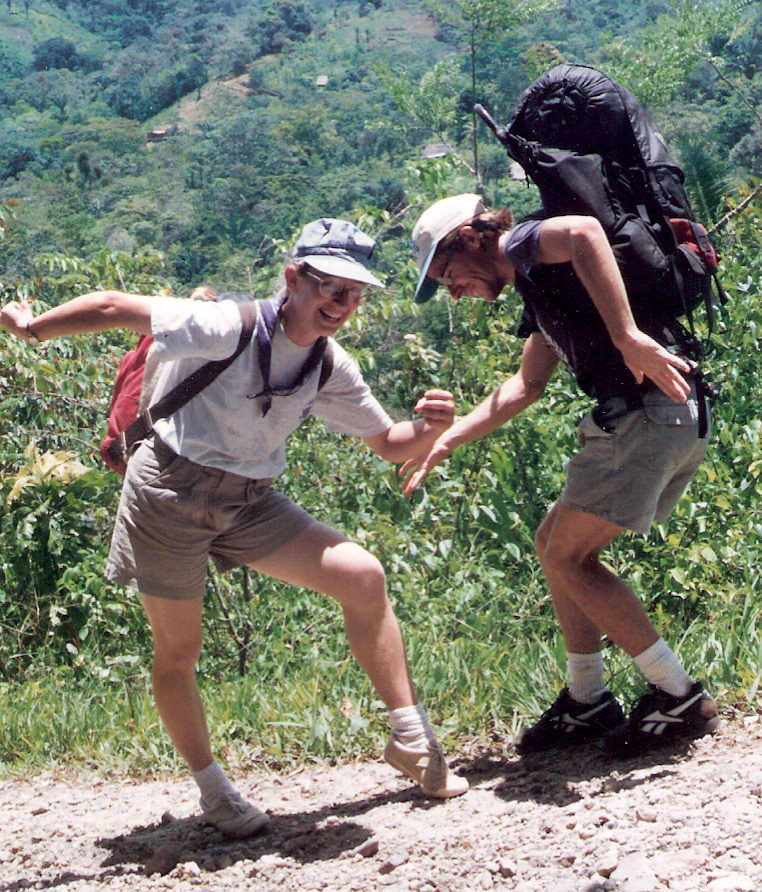
Paul and me, hamming it up for the camera on our trek.

Paul and me, hamming it up for the camera on our trek.

In Peace Corps in Panama, we lived in a village that was on the edge of what was accessible by vehicle. The lower part of our village was reliably accessible, but the upper part, where we lived, was only accessible in the dry season, and even then it was rough.

Walking was the main mode of travel there.

We walked everywhere. To all the farmers we worked with, to all the forestry groups we worked with. To the tienda, to the bus stop. Up and down (because there was no flat land in our village, or anywhere nearby, for that matter). We grew what we called “campo calves”—massive calf muscles that would have made an Elizabethan swoon.

Walking was such a natural mode of transport, that when we decided to visit a friend, Gareth, who lived on the other side of the mountains (hills, really, the continental divide is very low in Panama), we decided to walk.

First stop was our friend, Paul’s house, an hour up the mountain from our place. Paul went with us. Paul, Gareth, my husband, and I regularly met up for late-night Dungeons and Dragons sessions—a modified version that used only the two ordinary dice we had with us. This was to be an epic journey to play D&D.

After picking up Paul, we climbed further, to El Valle, where we spent the night with one of Paul’s friends there. We found ourselves without breakfast in the morning, so we shouldered our packs and set off with nothing but a cup of coffee in our stomachs.

Not to worry, we soon came across a campesino willing to sell us some bananas, and we ate as we walked.

We had only a vague notion of how to get where we were going, but all paths lead somewhere in the Panamanian countryside, and with regular stops along the way to ask directions, we managed a good pace.

Along the way we talked and laughed, we met campesinos, we enjoyed beautiful views. When we finally trudged into Gareth’s yard late in the afternoon, we felt we’d seen the world.

I have visited many friends since then, but that trip stands out as the best journey ever.

Throwback Thursday—Amas de Casa

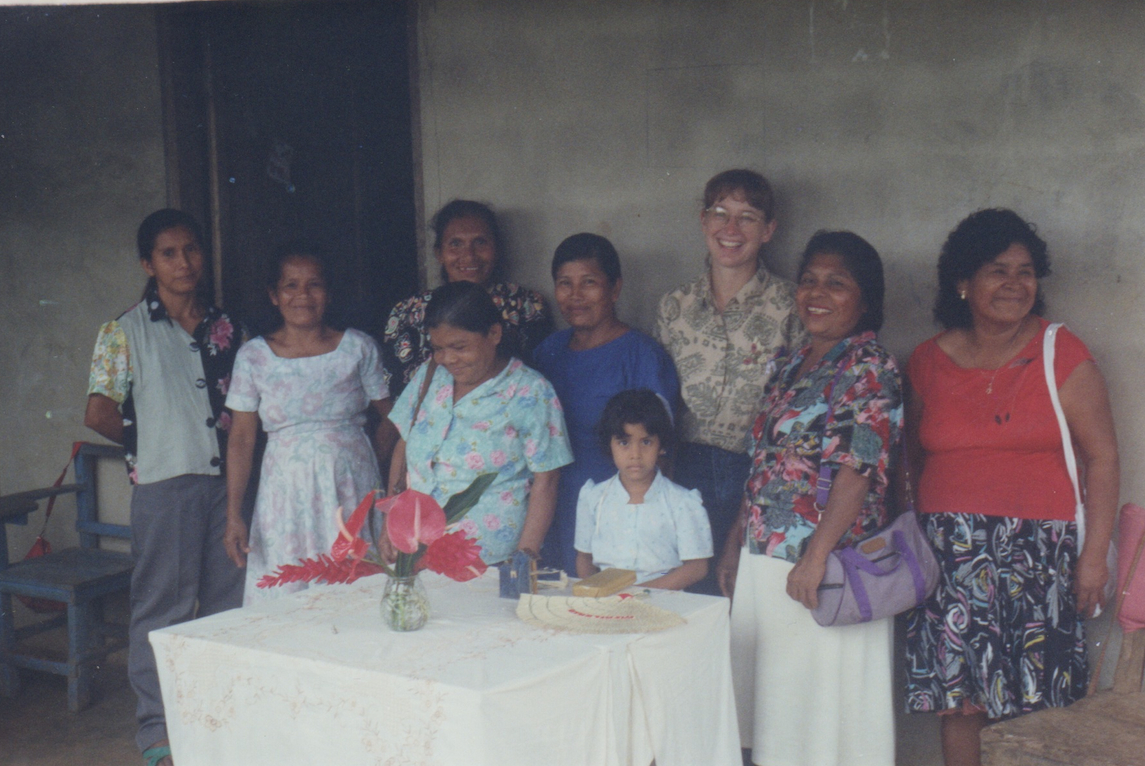
AmasdeCasasmI thought I’d take a trip down memory lane today and share this photo of some of the women I worked with as a Peace Corps Volunteer in Panama.

I regularly joke that this is my favourite photo ever, because it’s the only one in which I look tall (at 5-foot 2, I towered over most everyone in my village). But that isn’t really why I love this photo. I love it because of who is in it.

These women were all part of the Membrillo Amas de Casa (housewives) group. These women welcomed me into their group, and taught me so much. Together we created a tree and medicinal plant nursery. We created a demonstration garden using soil conservation techniques. We made bollo for Carnival. We laughed, we drank coffee, we shared our lives.

Two of the women were particularly special to me.

Onofre Gonzalez, the woman to my right, taught me that when it comes to using a machete, it’s attitude that matters, not size. Onofre could take down a tree in seconds with her little, wickedly sharp blade. She once snicked a palm viper’s head off right in front of me with her machete before I even saw the snake. She carried loads on her head, feeling the path with her bare feet like a cat.

To my left is Francisca Chirú. She and her husband, Cándido, adopted me and my husband into their family, though we did not live with them. They embraced us as though we were long lost friends, and we became a regular fixture at their house. They taught us to weed, included us in their family celebrations, and shared their lives with us.

All these women were incredibly strong, creative, and loving. Even 22 years later, I am still honoured and humbled by their acceptance of the tall white stranger among them.