Managing Water

2016-04-22 15.51.16 smMake hay while the sun shines, they say.

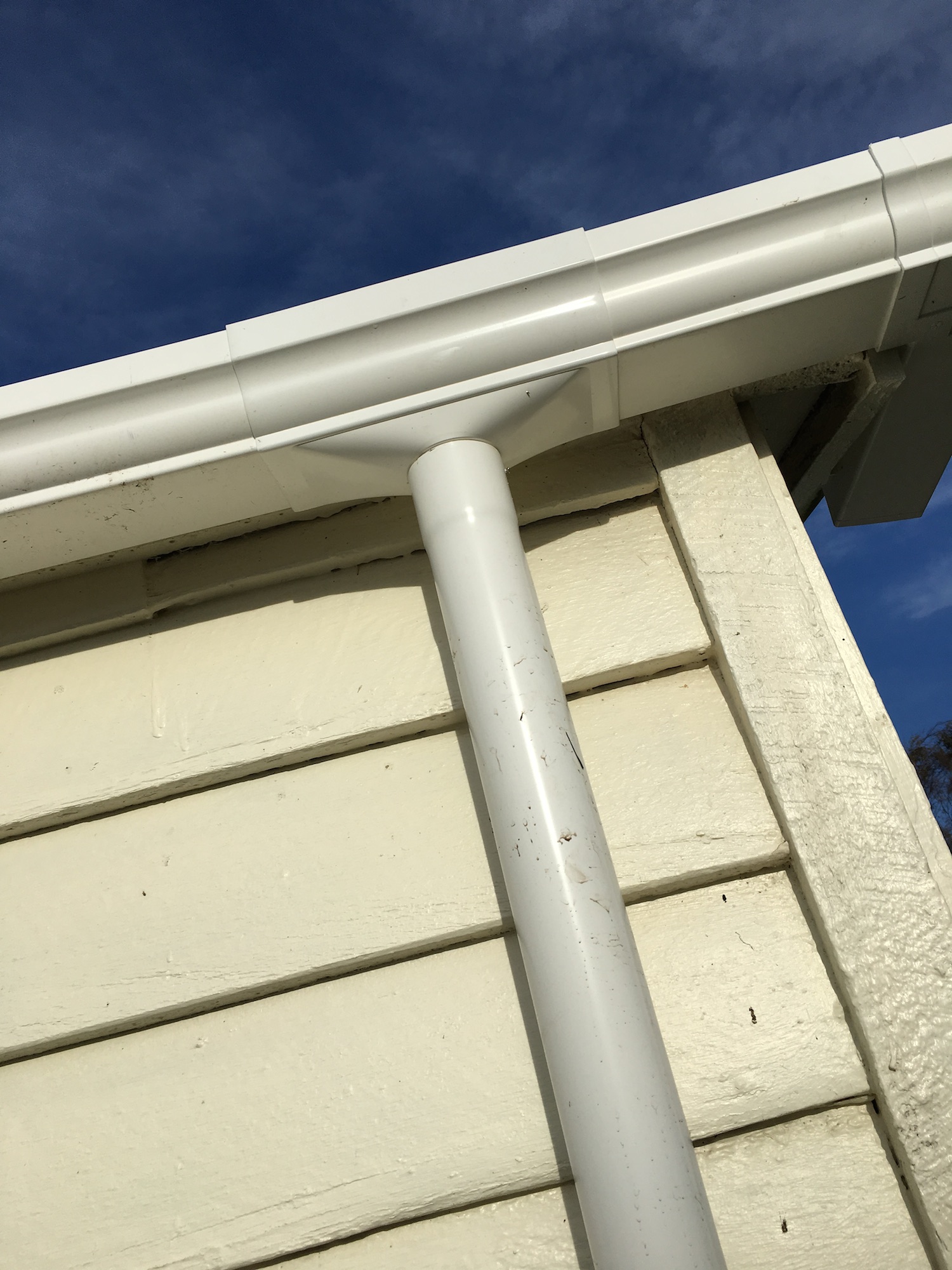
They could also say fix your roof while the sun shines.

The sun shone so much over the summer (and now well into autumn), that it would have been easy to forget the leaky roof and broken gutters. And we did manage to ignore them both all summer, but one of these days (hopefully very soon) it’s going to start raining again. It was time to get the work done.

I enjoy being on the roof. But roof work is never fun—wrestling sheets of corrugated iron roofing around in the wind, pulling rusty lead-topped nails, dealing with rotting roof beams, and doing it all on an angle four metres above the ground.

Still, it is good to have roof and gutters repaired. And after we prepared for rain, I weeded the artichokes.

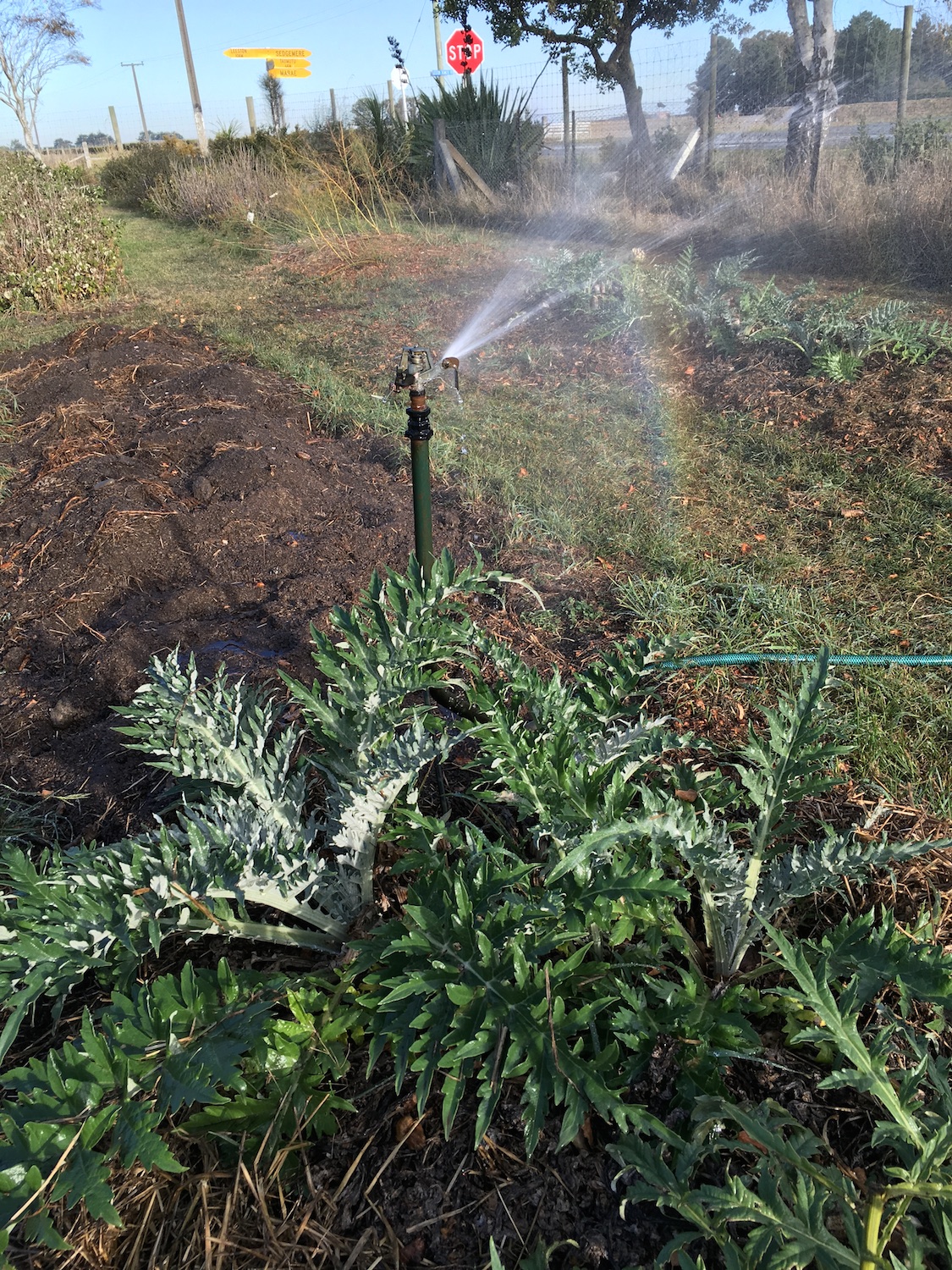
2016-04-22 15.50.14 HDR smIt was a lesson in dry—the ground was dust, and the poor water-loving artichokes were suffering. So I turned the sprinkler on them, dealing with an extreme lack of water after preparing for an overabundance of it.

Some day I do hope it begins raining again. It would be good to know if the roof and gutters are properly fixed, and it would be nice if we didn’t have to water the garden all winter. Either way, we’ll be managing water—either too much or too little of it.

When it rains, it pours, as they say.

Jack-o-lanterns

2016-04-17 11.17.03 smWhile you folks in the Northern Hemisphere are cleaning out your pools, dusting off the barbecues and planting seeds, we in the South are enjoying all that autumn has to offer.

And something we always look forward to is carving pumpkins. Growing up in the US, it was one of my favourite Halloween activities. Here pumpkin season falls inappropriately near Easter.

That doesn’t stop us from celebrating the season with jack-o-lanterns.

All my pumpkins are grown for food, but the edible part of the Austrian oilseed pumpkin is its seeds—the flesh is only suitable for goat food (and even the goats aren’t excited by it). So once I scoop out the delicious seeds, I have no problem using the shells for artistic purposes.

A nice crop of Austrian oilseeds this year means there is plenty of raw material for our artwork.

Touched by Frost

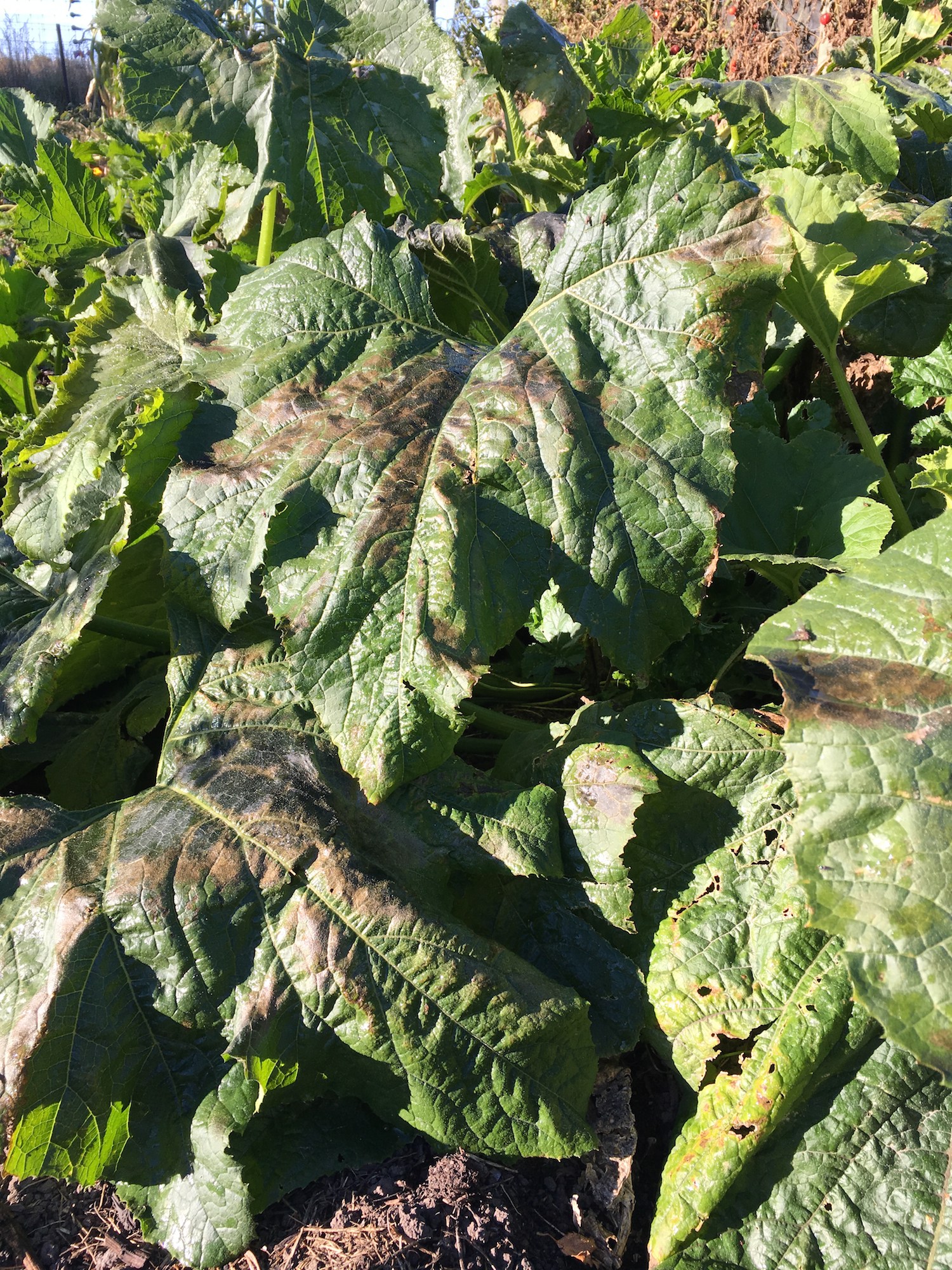
2016-04-14 08.42.53 smIt happened. The first frost hit the vegetable garden. Not hard, but enough to show. Most of the tender and unprotected plants were already done for the year, anyway—the tomatoes had largely succumbed to drought, the cucumbers had given up, the melons were done, the pumpkins were already harvested, and the basil had gone to seed. The summer squashes were only lightly touched—a few of the leaves browned, but most of the growing tips in good shape.

Of course, at this time of year, any day could be the last.

So we savour each day—enjoying the tastes of summer while they last.

Pumpkins

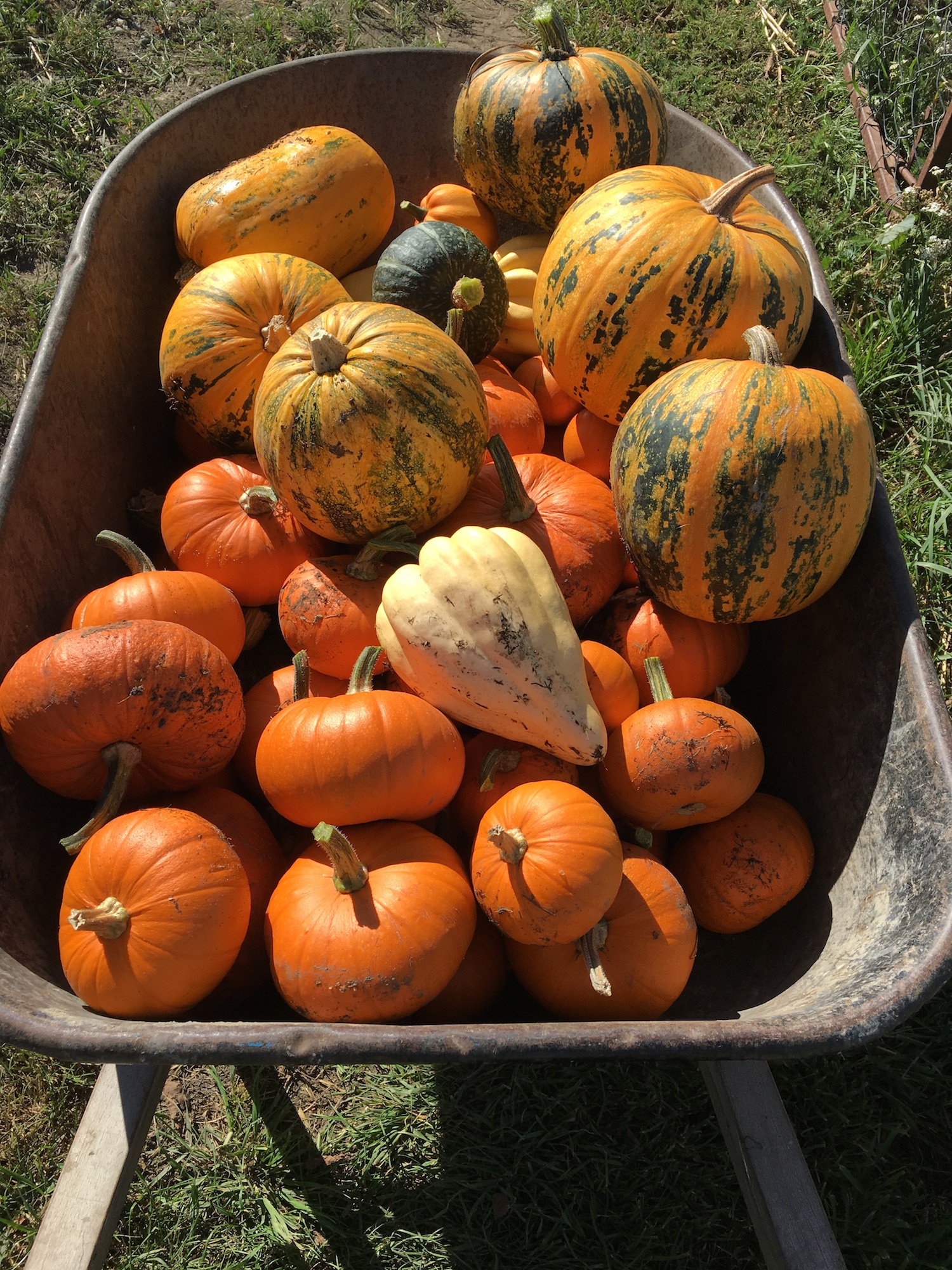
About a third of the harvest.

About a third of the harvest.

Autumn wouldn’t be complete without the requisite wheelbarrow loads of pumpkins and other winter squash. In spite of some late-frost drama this spring, the harvest wasn’t bad.

My kids ask every year, “Which are the pumpkins and which are the squash? What makes a pumpkin a pumpkin?”

The short answer is that a pumpkin is a squash that we call a pumpkin. There are four species and countless varieties that variously get called pumpkin and squash. Some fruits are known as pumpkins in one place, and squash in another.

I don’t bother with the distinction. The important distinctions are between varieties. Some are best made into soup, others make splendid pies. Some have robust, dry flesh that holds up well in savoury galettes. Some are just the right size for baking whole. Some keep well, and others need to be eaten quickly after harvest. Some have flesh only useful as goat food, but have naked seeds that are wonderful toasted with salt and spices.

Which is, of course, how I justify planting so many pumpkins of so many varieties. I need them all!

The Aphipocalypse

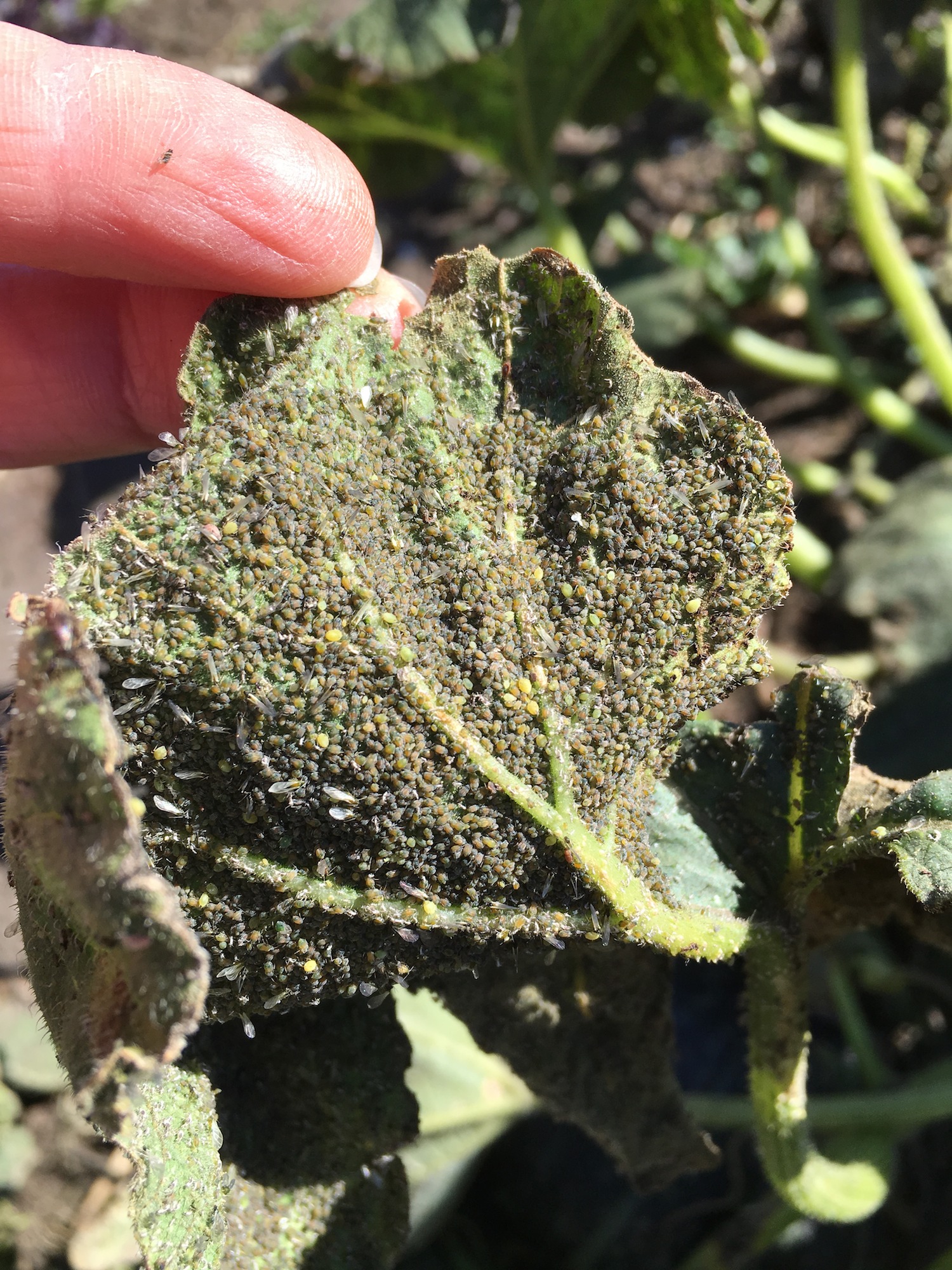
2016-04-09 11.19.43 smIt has been years since I’ve seen an aphid infestation quite this bad, and rarely at this time of year.

As I’ve mentioned before on this blog, I usually have aphids in early spring, and then the predators and parasitoids knock them back to almost nothing through the summer.

But somehow, the predators and I all missed the aphids on the pumpkins. I expect the warm dry summer was perfect for their growth. I rarely take note of the pumpkins from December to April—they need little weeding, and are generally pest free.

So when I went to harvest, it was a bit of a surprise to find millions of aphids on the underside of nearly every leaf in a back corner of the pumpkin patch.

All summer, the aphids have been cloning themselves, producing dozens of replicas every week—an army of little green girls. Only girls. It wouldn’t have taken them long to build up the population level out there right now. Some of the generations of aphids had wings (you can see some on the left side of the leaf in the photo), and dispersed to other plants, but most stayed put, slowly spreading across one leaf after another.

But, as big as the population is today, they will all die over winter. About this time of year, the females will start producing a few males—also genetically identical to themselves, with the exception of a missing sex chromosome. Only in the fall will females mate and produce eggs. The eggs will overwinter, hatching out in spring (all female) to start the cycle over again.

I think I won’t wait for these girls to lay eggs. I’m afraid that, now that the pumpkins are gone, the infested vines will be dunked in a bucket of soapy water and buried deep in the compost pile. No sense in letting them get a head start on next spring!


Fungal Forest

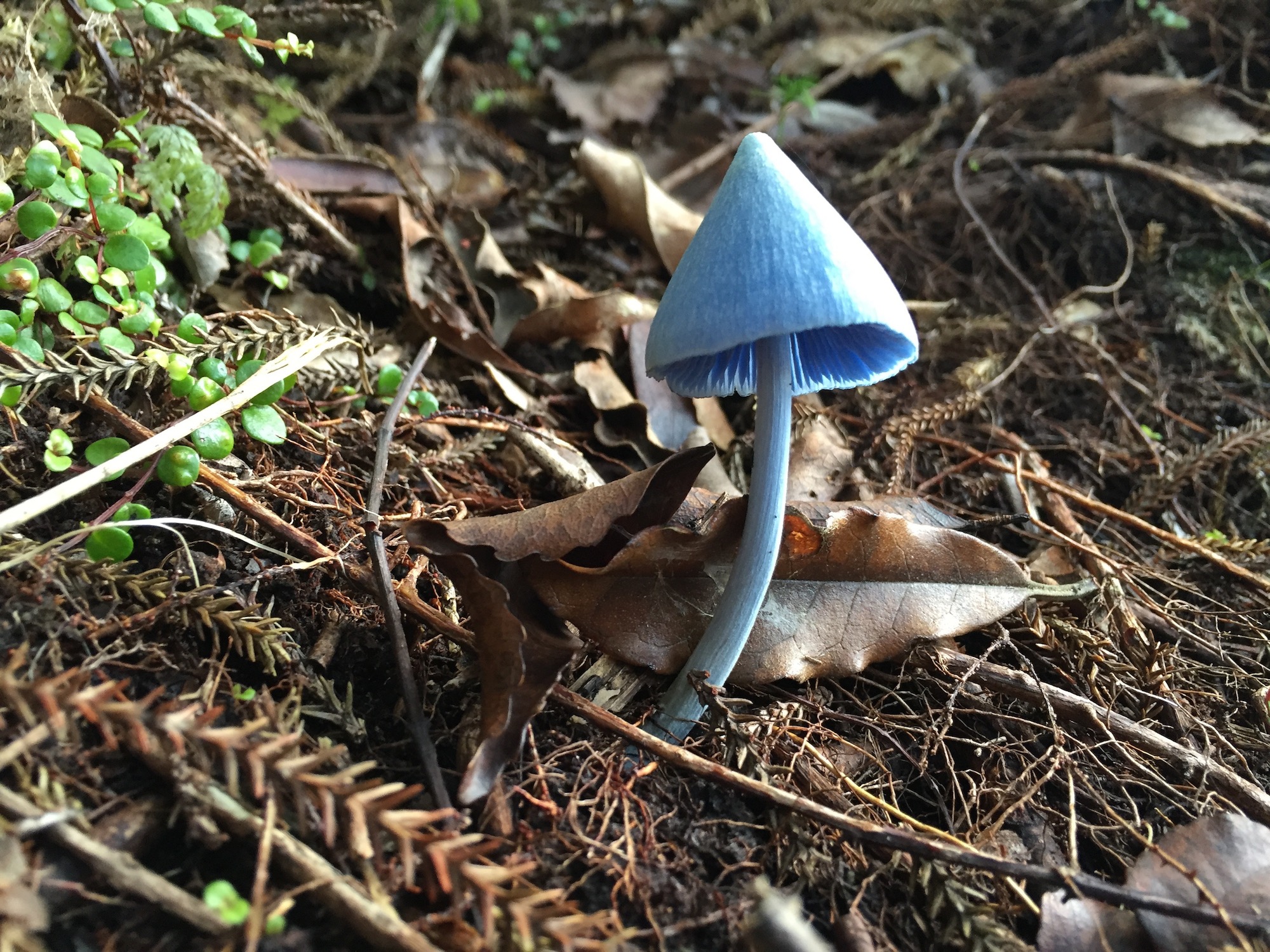
Entoloma hoschstetteri--the only fungus that appears on a nation's currency.

Entoloma hoschstetteri–the only fungus that appears on a nation’s currency.

Over the weekend, we went on a lovely hike from Okarito, through the bush up the hill behind the town, over to the next lagoon, and back via the beach.

The beach part was, naturally, lovely, with huge waves, trickling waterfalls down the cliffs, and a lazy seal who watched us pass.

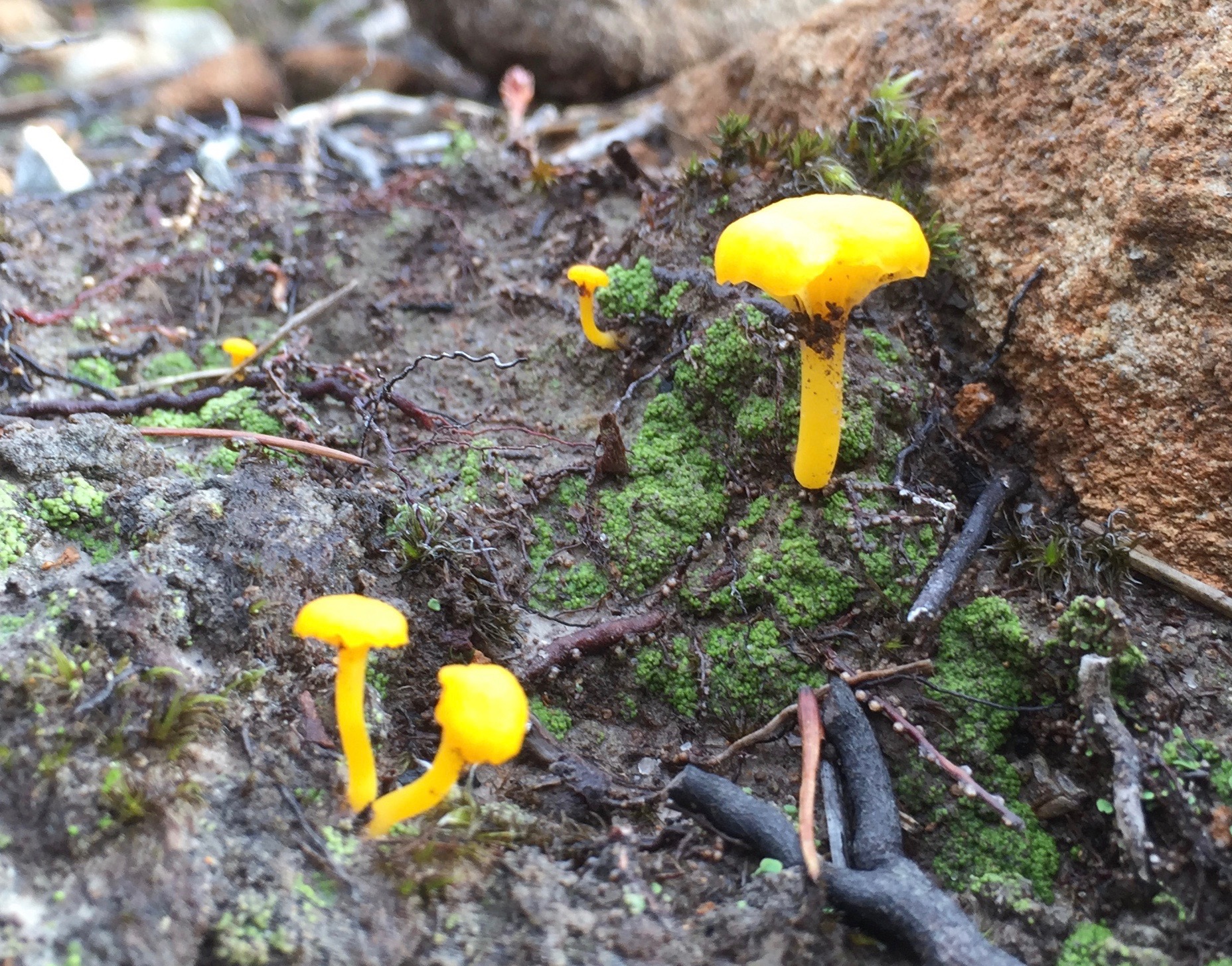
Hygrocybe spp.--known as waxcaps--the Crayola of the fungi

Hygrocybe sp.–known as waxcaps–the Crayola of the fungi

But the real beauty lay on the forest floor. The track was like a Disney storybook forest, with colourful mushrooms everywhere. It just needed a few gnomes or fairies to be complete.

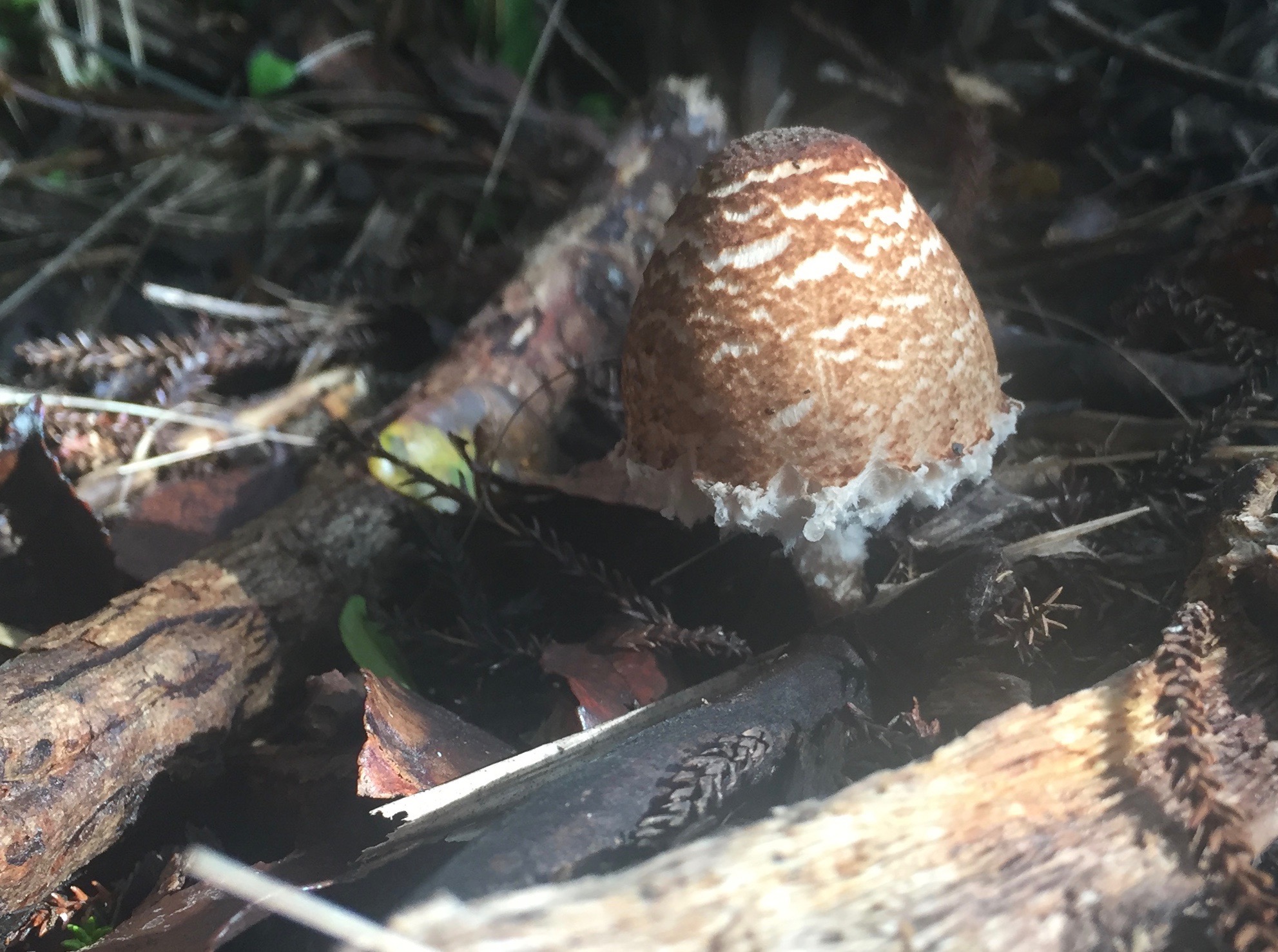
This unknown mushroom had a lovely lace petticoat.

This unknown mushroom had a lovely lace petticoat.

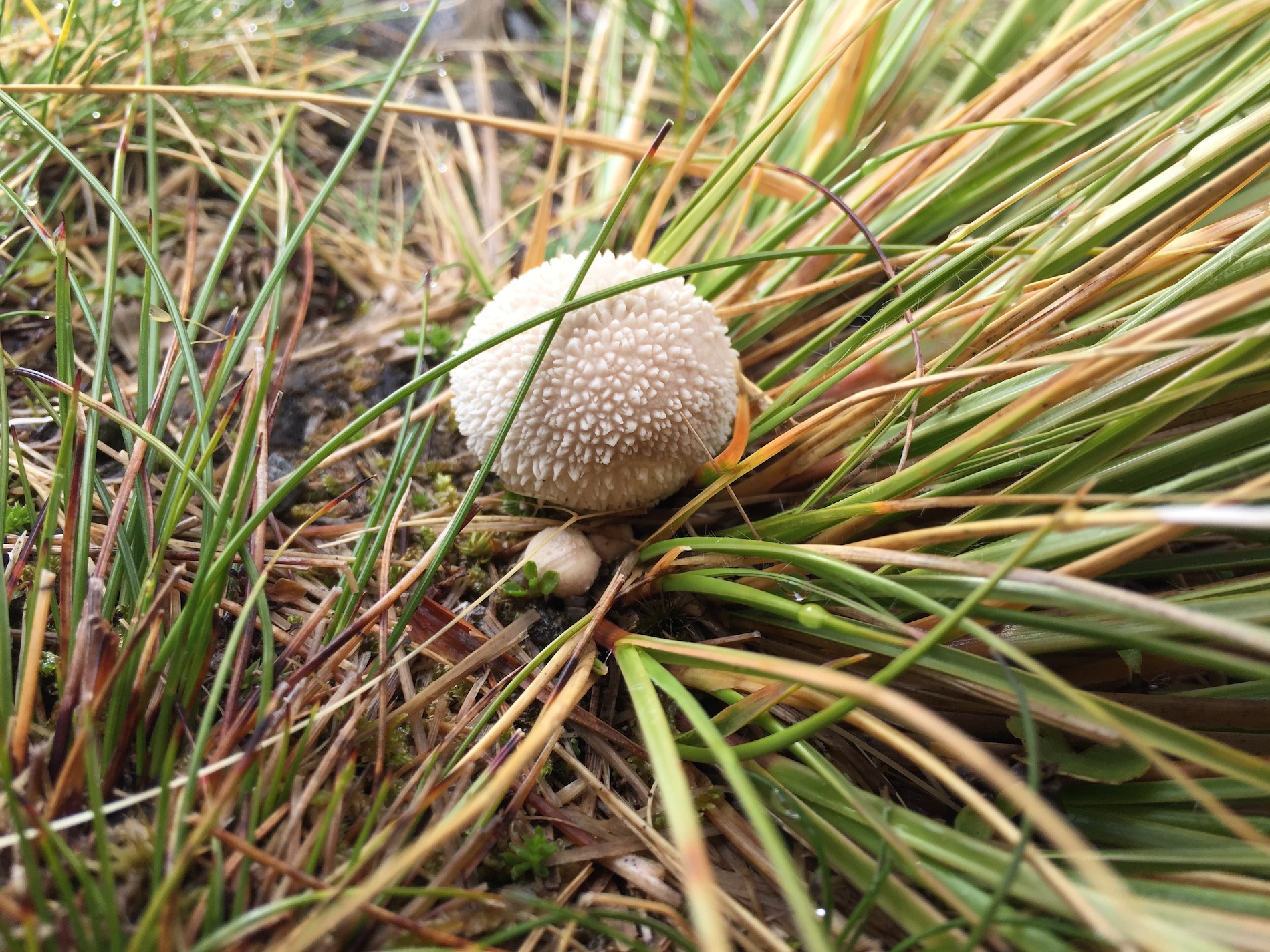
Lycoperdon spp--a puffball. The genus name means "wolf fart"

Lycoperdon sp.–a puffball. The genus name means “wolf fart”

Another member of the genus Hygrocybe

Another member of the genus Hygrocybe

Otira Valley

2016-03-25 10.41.03 smWe spent the past three days on the West Coast. On the way over the mountains, we stopped for a hike up the Otira Valley.

The track goes through stunning, diverse alpine vegetation, much of which was in seed at this time of year—lots of weird and wonderful berries to be seen! Though we were lucky to avoid being rained on ourselves, there had been recent rain, so the track was wet, and every little rivulet was running. The Otira River roared below us.

The day was moody, and low clouds shrouded the mountain tops around us.

2016-03-25 11.19.21 HDR smI love the alpine environment. One of the most wonderful things about it is that its beauty lies both in the minute plant life clinging to the rocks, and in the grand vistas—one must view the landscape at both scales to fully appreciate it. We spent our time divided between marvelling over some tiny plant, and admiring the peaks and waterfalls around us.

Hedge trimming

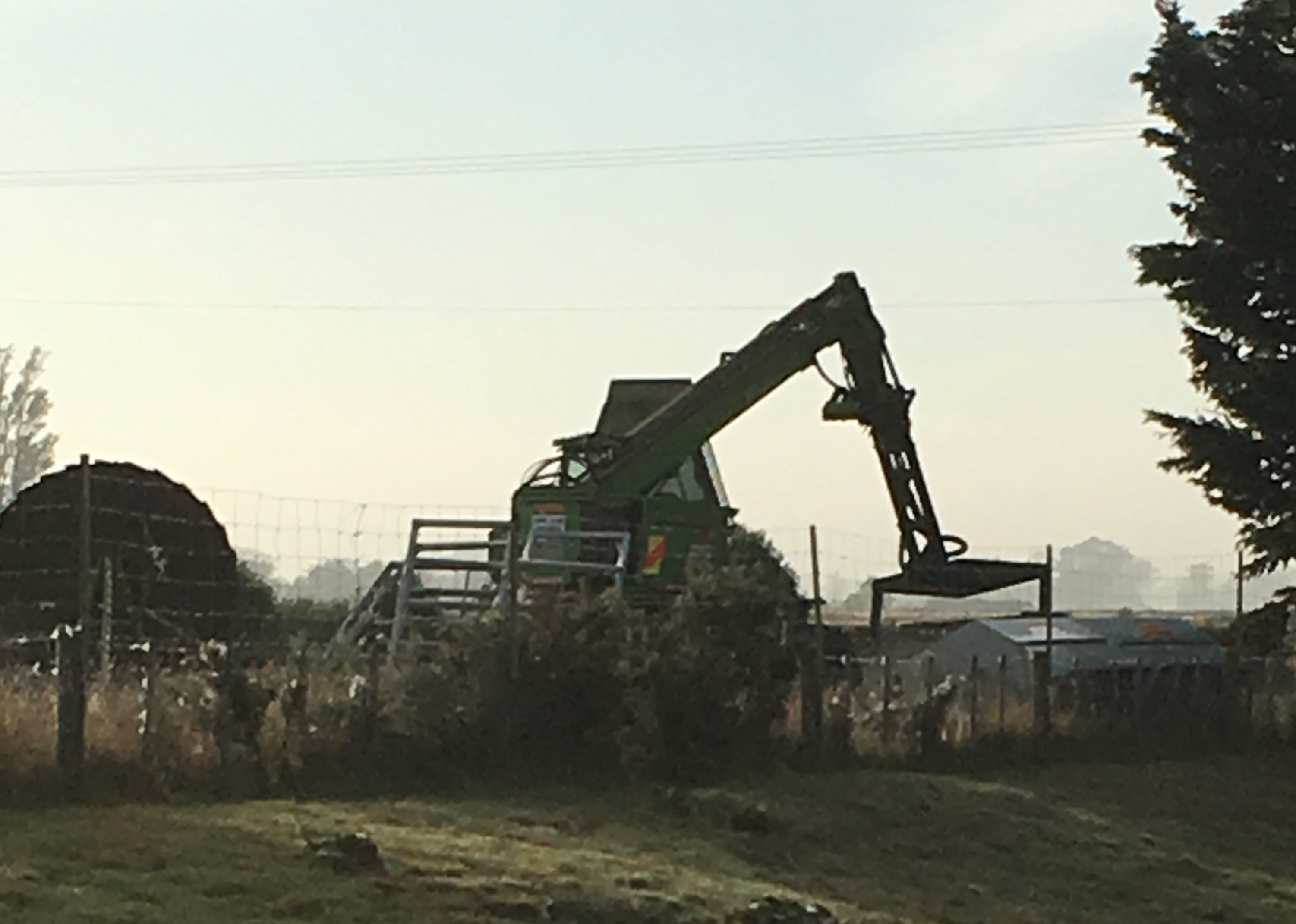
Trimmer looming out of the early morning fog. Note the circular blade to the left--he switched to that later.

Trimmer looming out of the early morning fog next door. Note the circular blade to the left–he switched to that later.

THWACK! THWACK! THWACK! THWACK! THWACK! THWACK!

The sound, like a helicopter crashing into a stand of trees, is unmistakable, though the first time I heard it, I had no idea what it was—a giant hedge trimmer.

Hedges are a necessity here on the windswept Canterbury Plains, and autumn is hedge trimming season.

Our hedge, hemmed in by fruit trees and the septic system, has to be trimmed by hand—a full-day job for my husband and me, and one we put off as long as we can every year.

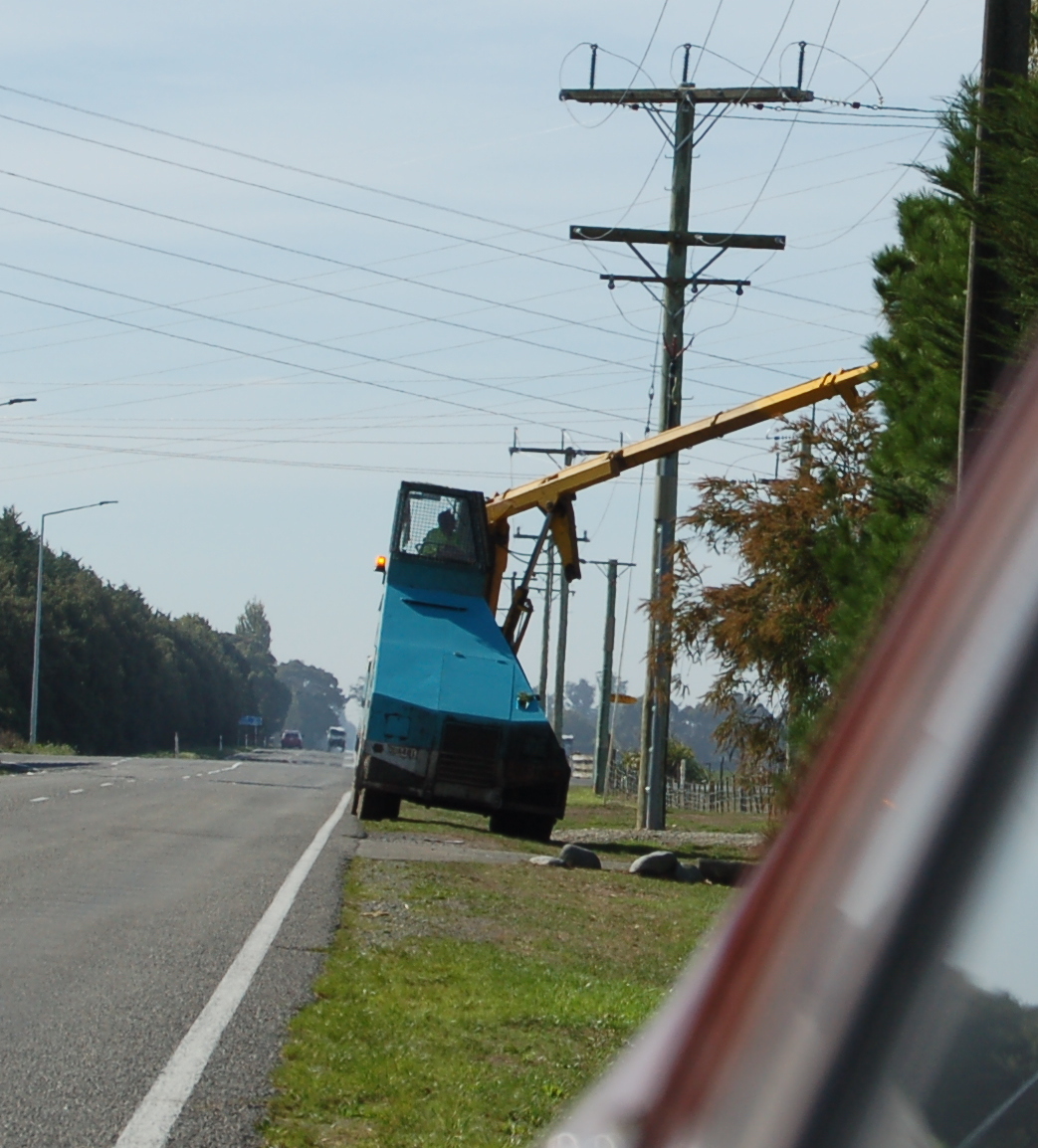
Here's another, snapped along the roadside on the way to town.

Here’s another, snapped along the roadside on the way to town.

Our neighbours, however, have their hedges trimmed by professional hedging contractors. The hedge trimming machines they use are terrifying—giant, armoured vehicles with a long crane arm bearing any one of a number of wicked-looking cutting devices.

There are circular saw blades the size of a man, two-metre wide lawn mower blades, heavy chains that just beat the branches off the hedge. The machines must be Occupational Safety and Health’s worst nightmare. Some have an 18 metre reach, and the result is perfectly trimmed hedges the size of castle battlements.


The Dark Side

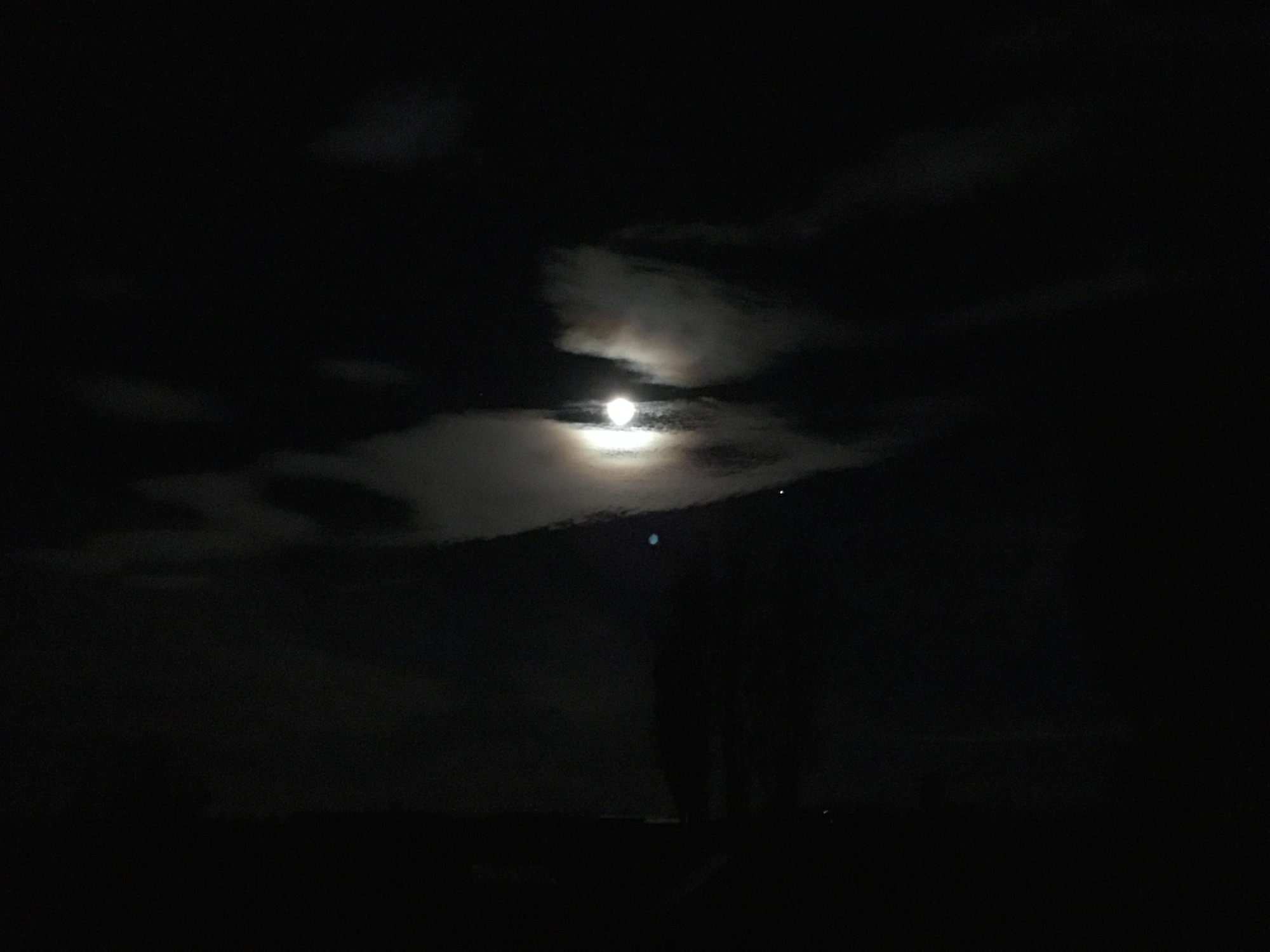
Near-full moon means bright evenings, but dark mornings.

Near-full moon means bright evenings, but dark mornings.

Today we tip to the dark side. Tomorrow, night will outstrip day for the first time in six months.

It seems the equinox should be momentous. Autumn should sweep in, chilly and dark, leaving summer behind.

But yesterday, the temperature reached 33 degrees (91F). Today is on track to be even warmer, and tomorrow, the same. Though darkness creeps up on us, the sun has not abandoned us yet.

Still, it is time to remember to appreciate the dark.

This morning, I milked and fed the animals in the dark, as I’ve done for the past month. But before I went back inside and turned on the lights, I paused to appreciate the night sky. The milky way slashed from northern to southern horizon, southern cross glinting in its midst. Pavo, Scorpius, and Lupus were there too—a veritable menagerie of constellations, though truth be told, I can identify only a handful of them without a star chart.

But in the still of early morning, it didn’t matter whether I could find the peacock’s tail in the sky. It was enough to look up and appreciate the vast universe, accessible to us only in the dark.

The Beginning of the End

Pumpkins are filling out and beginning to harden off.

Pumpkins are filling out and beginning to harden off.

March 1—first day of autumn here. It is appropriately autumnal today, with a grey sky and brisk, cool wind.

But it didn’t take a cool day, or the calendar to tell me summer was coming to a close. I have been milking in the dark for weeks—a sure sign the equinox is coming. Last week, the first of the elm leaves crunched brown and crisp underfoot. The poplar trees are looking sparse. The dry beans have started to senesce—pods bleaching, yellow leaves plopping to the ground.

The coming weekend will be full of harvest activities—no time for the beach, regardless of how hot it is. Soy beans, dry beans, and corn will all need harvesting. We’ll make the year’s summer soup. I’ll make another batch of pesto for the freezer before the basil is finished. I’ll dry some tomatoes.

There will be plenty more hot days, and likely a few trips to the beach. There will be many more tomatoes, eggplants, beans, and melons. Summer’s not really over. But it’s beginning to pack its bags and get rid of whatever it can’t take with it when it leaves for the Northern Hemisphere.