Crazy Corner Farm

2016-04-17 11.13.55 sm“So, what do you grow here at Crazy Corner Farm, eh?” asked the man who delivered 500 bricks earlier this week.

I laughed.

“Well, it’s basically a subsistence farm. A little milk and cheese. A lot of vegetables.”

It was a good enough answer, and appropriate to the situation. But other things came to mind.

What do we grow here at Crazy Corner Farm?

A lifestyle. A lifestyle of hard work rewarded by the fruits and vegetables of our labour.

Kids. Kids who know where their food comes from. Kids who understand the work that goes into a simple block of cheese. Kids who can tell a bee from a syrphid fly, use a machete and an axe safely, and design and plant a garden.

Creativity. Creativity in food, garden, crafts, DIY problem-solving, circus arts…everything. By providing the space, materials, and encouragement to let it flourish.

Stories. Or, as my husband said it, “Organic hand-picked words available in convenient poem, economic story, and family-size novel packs.”

So, we grow a lot here on our tiny farm. More than you might guess at first glance.
Diptera—the Flies

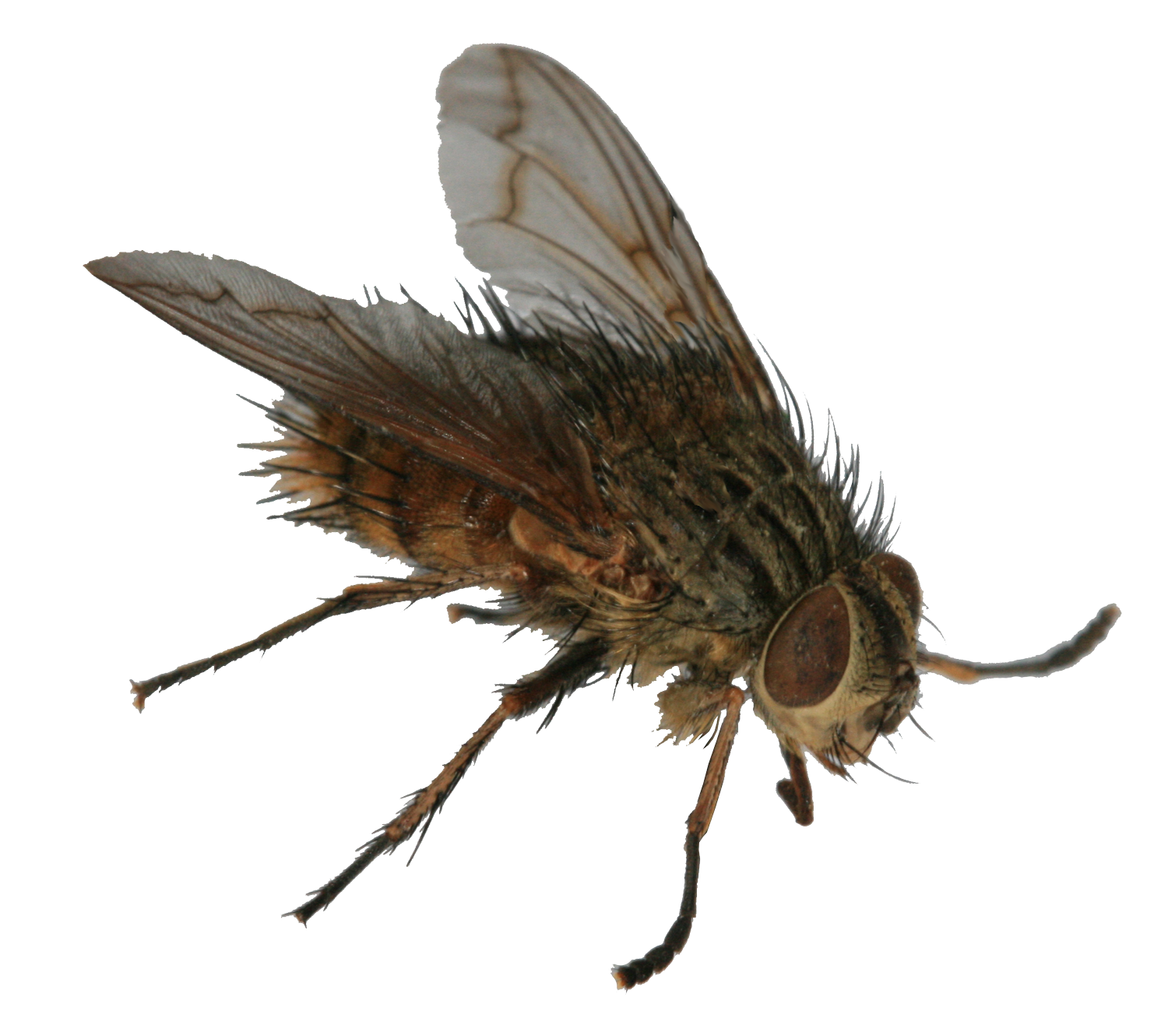
tachinid2With several thousand sheep as neighbours, it’s no surprise the house is full of flies all summer.

There are, of course, house flies, but the Dipterans don’t stop there, and not all of them are around for the sheep poo. We also have lesser house flies, crane flies, fungus gnats, midges (which I’ve mentioned before), several species of blowfly, drone flies, striped dung flies, ginger bristle flies, two species of soldier fly, robber flies, longlegged flies…and those are just some of the flies that find their way into the house.

Not all of the flies are pests, though none really belong in the house. Some are important pollinators, many are decomposers breaking down plant and animal material, some prey on pest flies, and all are food for other animals.

And, like all insects, they are inspiration for doggerel…

The order Diptera
Known as the flies
Have one pair of wings
(I tell you no lies)

They’re often seen flying
‘Round garbage and such
And generally people
Don’t like them too much.

Cape Gooseberries

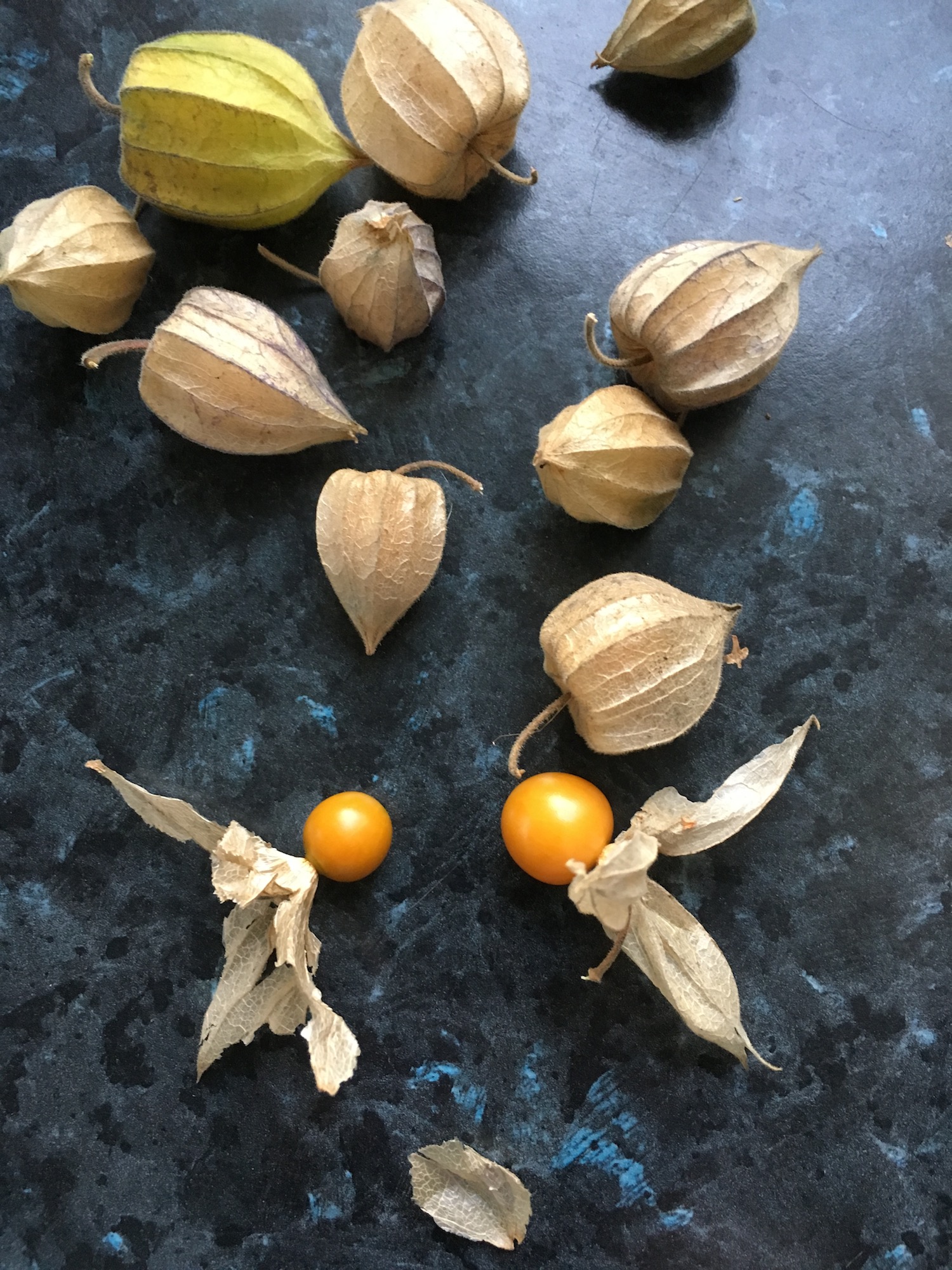
2016-03-22 19.08.56 smCape gooseberries (Physalis peruviana) are not something you’re likely to find in the grocery store. The plant is native to Peru and Chile, and has been introduced into most temperate and tropical climates around the world as a fruit for home gardens. It has been only sporadically commercially grown, however.

The fruit’s flavour defies categorisation. It is like a sour grape crossed with a tomato—not entirely surprising, as it is related to tomatoes. The initial sensation is the sour, and then they leave a lingering fruity tomato flavour in the mouth.

Cape gooseberries grow reasonably well here—some years they grow too well, actually. I’m still learning how to use them and how to enjoy their odd flavour. This year we got only a handful, as I wasn’t able to water them as much as they needed in this hot, dry summer.

Their tartness goes well in jams, chutneys, pies, and fruit salads. They’re also good eaten right in the garden—the papery husk acts as a handle, so you can snack on them even with hands dirty from gardening!

In temperate climates they are an annual, though here they often overwinter, if the weather is mild. In tropical climates they are perennial.

They’re definitely a plant to try, if you’ve never grown them.

Invasion of the Cabbage Whites

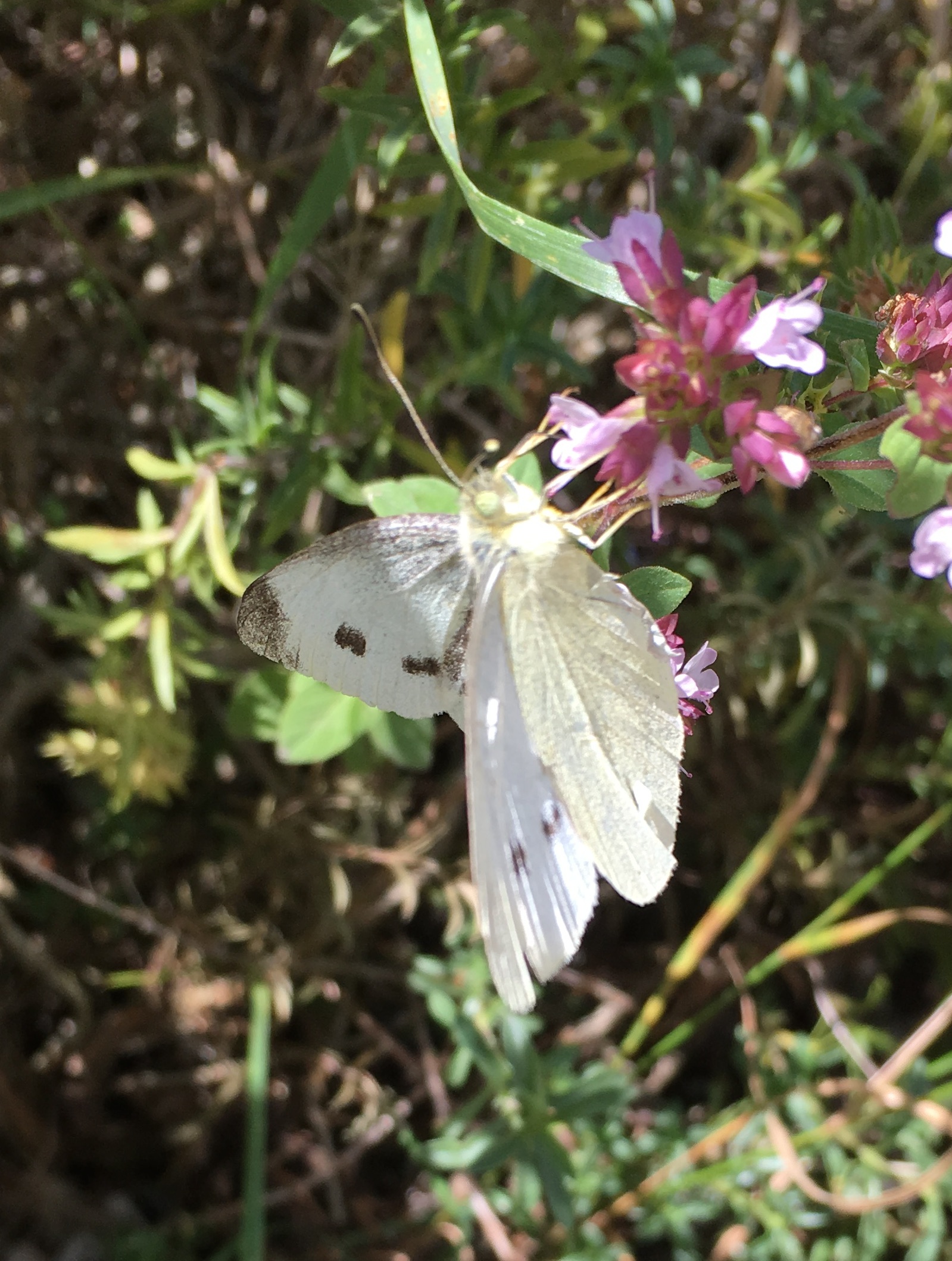
2016-03-02 14.24.23The small cabbage white butterfly (Pieris rapae) is the bane of gardeners’ existence all over the world. Native to Europe, Asia and North Africa, the butterfly is now found throughout most of North America, Hawaii, Australia and New Zealand.

In my little corner of New Zealand, the butterfly is especially common, presumably because of the huge numbers of commercial brassica crops grown here. In late summer, the roadsides shimmer with the butterflies, and their tattered wings flutter like flags in my car’s grille.

These butterflies are the reason broccoli is a seasonal crop for us. Broccoli can be grown year-round here, but mid- to late-summer broccoli becomes infested with caterpillars. For a few years, I dutifully treated my broccoli with Bt (an organic bacterial toxin that selectively kills caterpillars), but I eventually stopped bothering.

By mid-summer, there is so much other food coming out of the garden that, truth is, we don’t need the broccoli. And having a broccoli-free part of the year helps bring variety to our diets, and makes broccoli more special when it is available in winter and spring.

Sour grapes? Not at all! Just learning to work with the local wildlife instead of against it. Makes life easier for everyone!

Feijoa

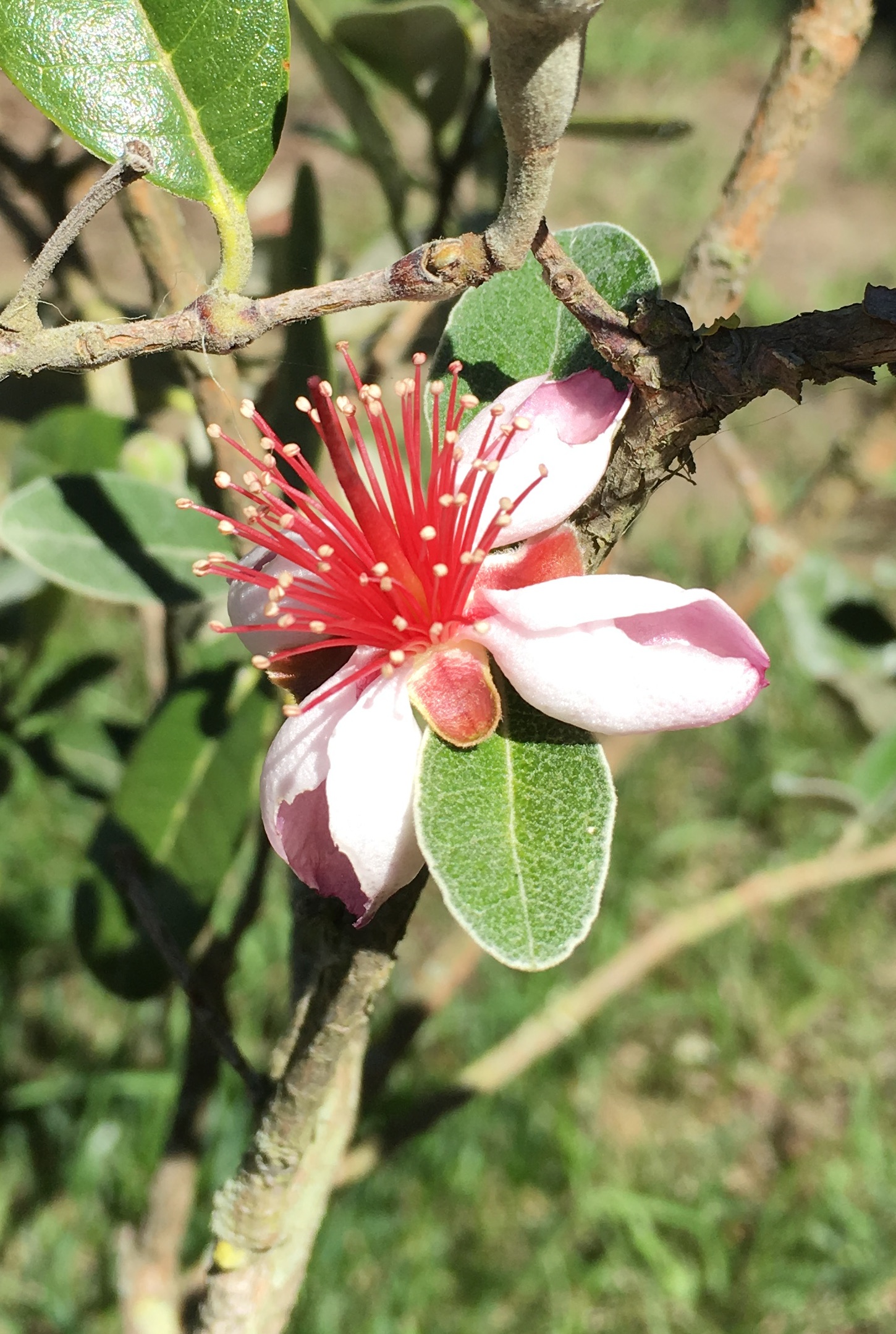
2016-02-01 15.35.52 cropI had never heard of the feijoa before arriving in New Zealand, though it is native to South America and is grown in various locations around the United State. I’m afraid that even after eleven years, I’m still not fond of feijoas. In fact, I can’t even stand having them in the house—the smell alone makes it hard for me to breathe.

Wikipedia says, “Feijoa fruit has a distinctive, potent smell that resembles that of a fine perfume.” Which may explain my response to the smell and the taste, as I have to walk out of the room if anyone enters wearing perfume.

Still, we have two small feijoa trees. Planted too close to our macrocarpa hedge, they have never produced fruit (for which I am grateful), but they do flower. Their flowers are stunning, and I’d grow feijoas any day, just to see these tropical-looking beauties.

Fire!

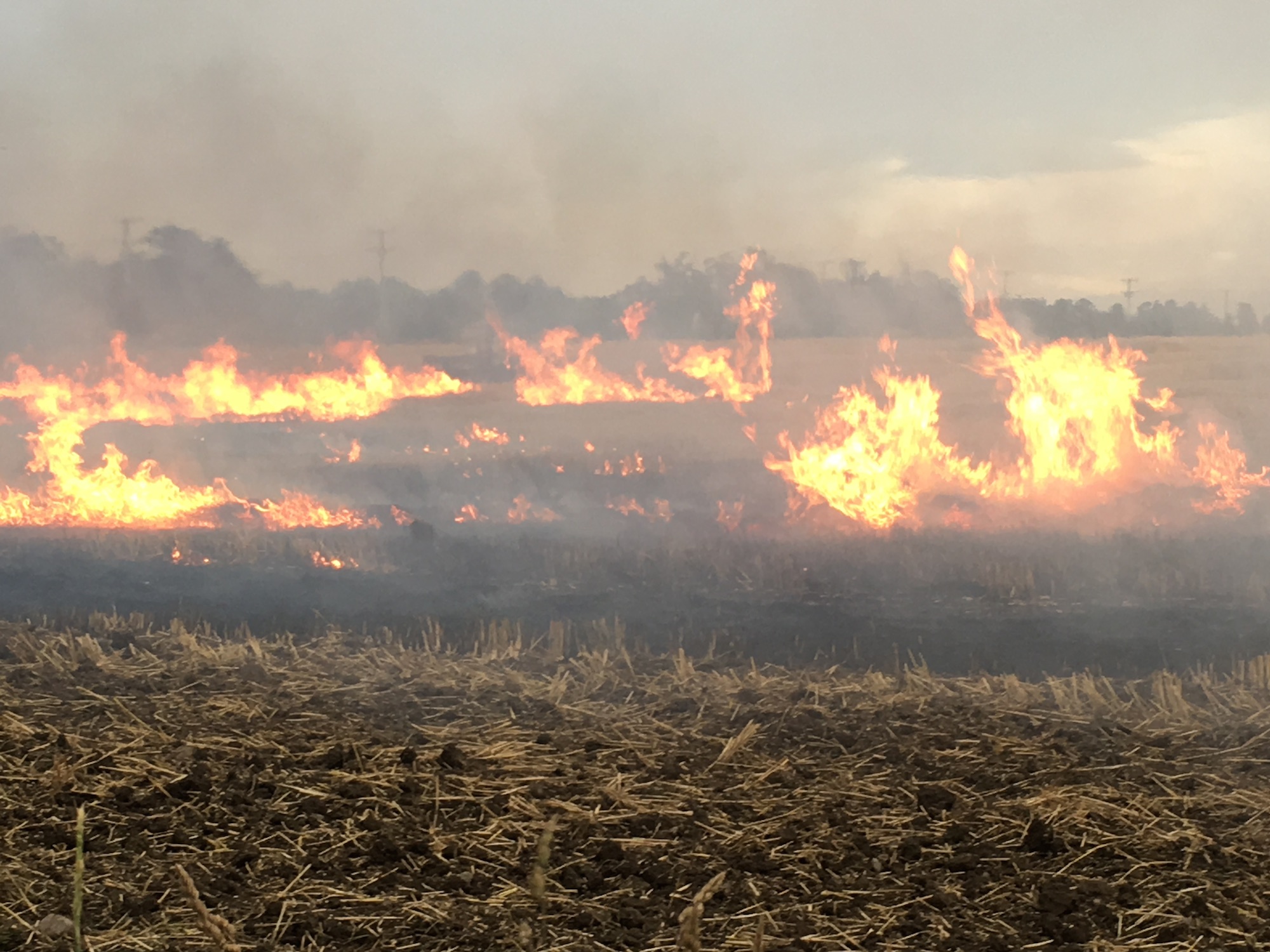
2016-02-17 08.58.04 smPreying mantises were leaping out of the flames, scaling the fence and jumping on my face in panic.

And rightfully so. The neighbour (the one who harvested yesterday) burned off the stubble today to prepare the field for replanting.

I have to say, that though I hate the practice of burning off stubble—it mostly ends up sending nutrients into the air as pollution, rather than back into the soil—I still love to watch a good burn-off. Something about fire…

I had extra incentive to watch this one, as the fire was lit five metres from our fence line, and the wind was blowing towards our property.

It was while I watched that the preying mantises began landing on me. I’m sure there were other insects (and probably a whole lot of mice) fleeing the fire, but I only noticed the mantids.

It won’t be long, though, before they’re back in the neighbour’s field. By this afternoon, it will be planted in grass, to provide winter grazing for his sheep. In a week, you’ll hardly be able to tell it was burnt.

Harvest

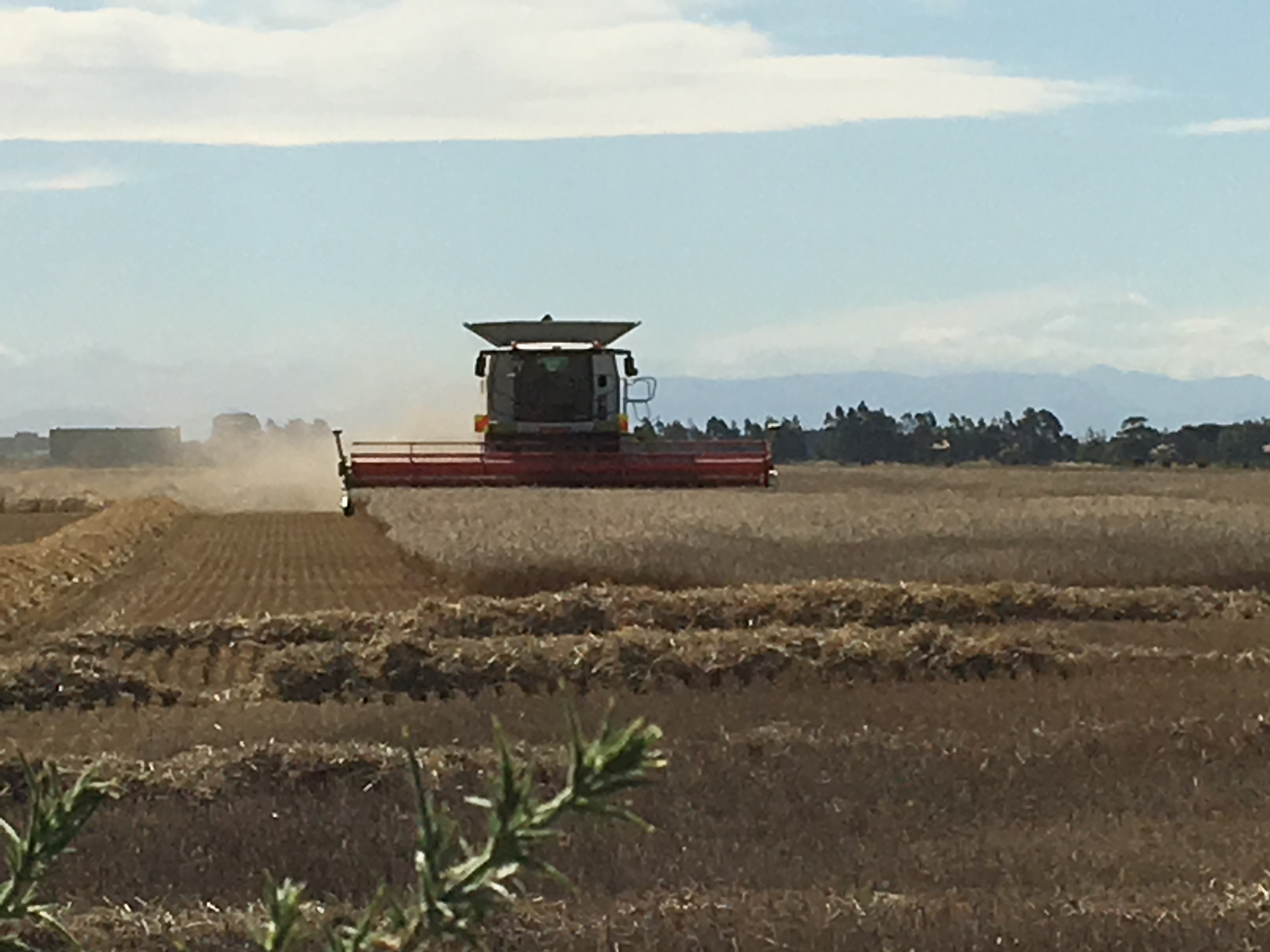
2016-02-16 16.41.47It’s time to harvest barley.

For us that means the rumble of combine harvesters all day and long into the night.

And it means realising how tiny our property is. Never does our property feel so small as when the neighbour harvests next door.

He’s been harvesting for weeks—distant fields—but today he cut the barley behind our house. The harvester dwarfs every building on our property. If I planted every inch of our land in barley, he’d be able to harvest it in just a few passes.

When he drives down the road between fields, the machine fills the road entirely—good thing there’s little traffic out here.

It’s a reminder of the massive scale modern agriculture works on. And these Canterbury farms are nothing compared to the ones in the Midwestern US.

It’s also a reminder that my view of agricultural life, as a “subsistence” farmer is entirely different from my neighbours’ views.

I count my plantings by the square metre or by the plant, they measure theirs in the tens of hectares.

I measure the harvest by the colander, they by the truckload.

My tools are a hoe, a spade and a knife—at a garage sale, you might buy them all for under $20. His tools include multiple machines clocking in at over $100,000 each.

I can produce $50,000 worth of food over the course of a year. He can lose twice that amount in a bad storm.

My soil and water conservation strategies—mulching with grass clippings, using drip irrigation, composting everything—don’t scale up to two hundred hectares. Nor do my planting, harvest and storage techniques.

There is very little resemblance, in fact, between what I do and what my neighbours do, though we both produce food.

And so, I stand and watch in awe as the harvester roars by and the trucks fill up with grain.

And he marvels at the variety and quality of my summer squash and beans.

And we find our common ground in the sun, wind and rain that rules us both.

Currants

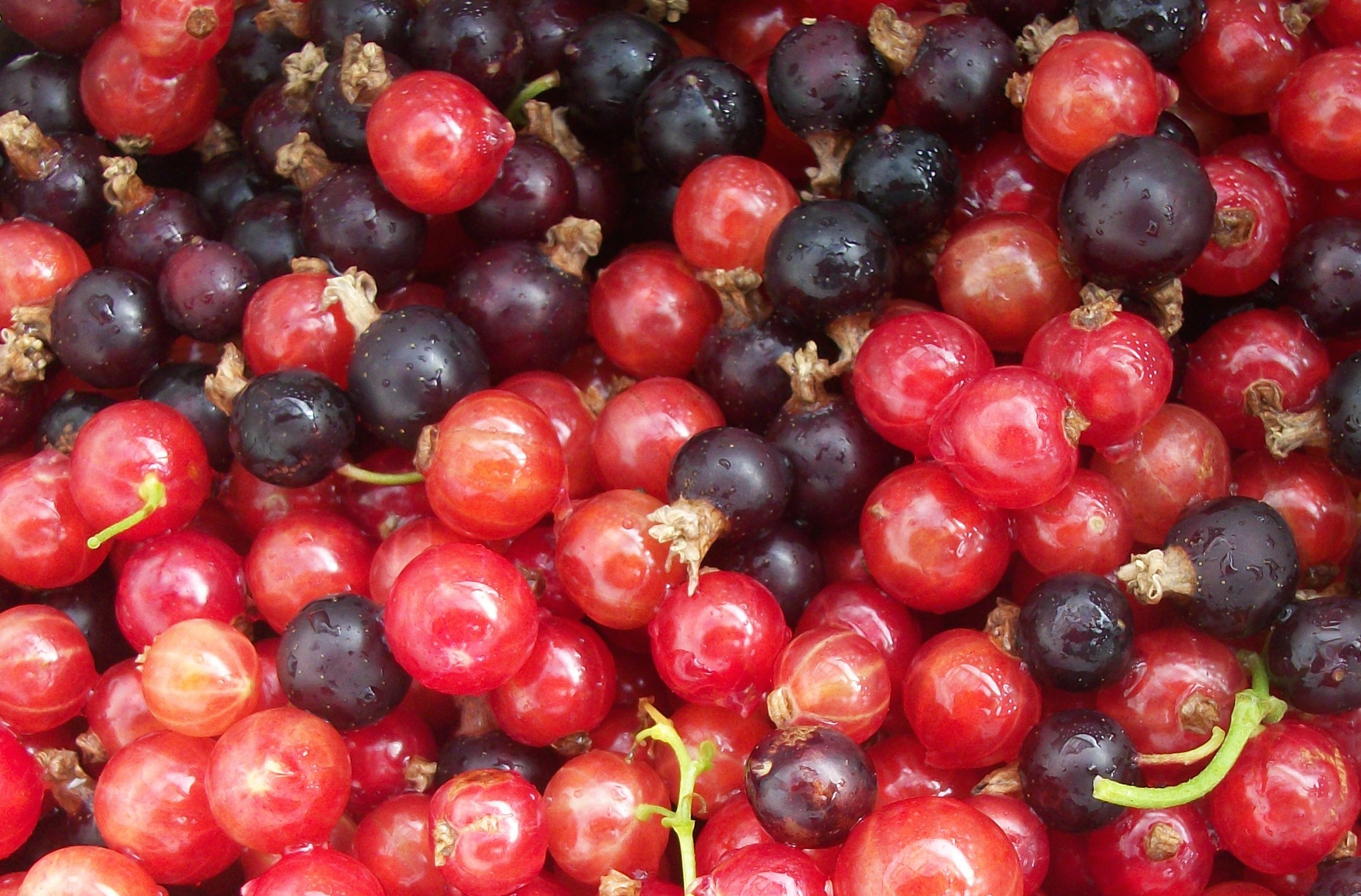
100_4192 cropNew Zealand produces about 8,000 tonnes of blackcurrants each year—5% of world production. We have at least one large blackcurrant farm nearby, and more popping up, as a craze for blackcurrant products grows. Marketing for blackcurrant products focuses on their health benefits (antioxidants, vitamin C).

We grow both red and black currants, but not for their health benefits. We grow them for their flavour, colour, and prolific production.

Let’s forget healthy entirely–currants’ bright colours and tart flavour make for beautiful and decadent pies, jams and ice cream. They liven up fruit salad, and their juice makes a lovely drink on a hot day, mixed with tonic water and a splash of gin.

And you can toast your health with that!

(Not so) Plain Vanilla

100_4048 smI knew I would be picking strawberries later in the day, so this morning when I was baking I made a simple vanilla cake, because it would go well with the berries.

But why do we consider vanilla simple, plain?

Vanilla is an exotic spice, made from the bean of a tropical orchid. Like most orchids, it has evolved a close relationship with it’s pollinator, and is only pollinated by one genus of bees. Outside its native Mexican range, vanilla must be hand pollinated. Though vanilla was introduced to Europe in the 1500s, it was more than 300 years before a viable hand-pollination technique was developed, allowing vanilla to be grown throughout the tropics.

To make vanilla even trickier to cultivate, it cannot germinate without the presence of specific mycorrhizal fungi.

Add to that the fact that it grows in regions prone to hurricanes and cyclones (which regularly wipe out regional production), and it’s not surprising that vanilla is the second most expensive spice after saffron.

So, why do we think of vanilla as ordinary and plain?

Perhaps it comes from the fact that vanillin, the artificial vanilla flavour that is used in 95% of “vanilla” flavoured products is made from lignin, a by-product of the papermaking industry. That makes artificial vanilla much cheaper than real vanilla—cheap enough to use in everything. Unfortunately, vanillin is only one of 171 different aromatic compounds found in the real vanilla bean, which is why artificial vanilla tastes so…well…plain.

This lovely, exotic spice has been rendered plain by its cheap imitation.

I use only real vanilla.

It’s not plain.

But it goes great with strawberries!

Favourite Garden Tool–Machete

100_4045 smI learned to use a machete in Panama, where it became an extension of my arm. I learned my macheteing technique from greats such as Julián Valdéz and Onofre Gonzales. Not having been born with a machete in my hand as they were, I could never match their skill, but by the end of my two years, I could at least keep pace with a crew clearing brush for a new crop. Of course I could only do this because I’m ambidextrous, and when my left arm gave out, I could switch to the right. But, hey, that meant I was at least half as good as the farmers around me!

In rural Panama, a machete may be the only tool a farmer owns. It’s used for everything from taking down trees three feet in diameter to paring one’s toenails. Machetes are kept razor sharp, and if a farmer isn’t using her machete, she’s probably sharpening it. All that use wears them down. As a machete grows smaller and smaller, its use changes—from land clearing, to weeding tool, to kitchen knife. The smallest ones are given to little children, who proudly toddle around with machete in hand—able to help around the farm now they have a tool.

When I left Peace Corps, I sadly had to leave my “Collins”* behind—it was Peace Corps issued, and went to the next volunteer in my village. But I couldn’t live long without a machete, and soon had another upon my return to the United States. Actually, we had three…size is critical, and you have to get just the right one, so my husband has a long one, and I have a shorter one, and we have an even shorter one that fits neither of us well, but is useful for edge-destroying activities.

Those machetes came to New Zealand with us when we moved, and they are as useful here as they were every other place we’ve lived, though they get odd looks from the neighbours.

Here in the developed world, the machete is an anachronism of sorts. Its jobs are done by petrol-powered weed whips, chainsaws, saws and secateurs.

But there is something satisfying about a tool that can do just about anything. A tool that never breaks down, doesn’t need fuel, and requires only simple maintenance—sharpening—easily done with a file or even a chunk of concrete.

And of course, as the forerunner of the sword, a machete comes in handy if you happen to come across a dragon in the garden…

*Collins is a favoured brand of machete in Panama.