An Apartment in Town

100_4017Some days make me want to live in an apartment in the city.

Today was one of them.

As I mentioned in a previous post, I planted out all the frost-tender plants last weekend.

Earlier this week, it frosted. In spite of my efforts to save them, I lost nearly 200 plants. I saved hundreds more, so I tried to make the best of it. I replanted what I could.

When it looked like it was going to frost again last night, I covered everything I could.

But it didn’t just frost last night. It froze.

When I tried to spray the plants down in the morning to save what was left, my hoses were frozen. I managed to get a sprinkler going eventually, but when I came back half an hour later, the water it had sprayed had frozen solid.

I won’t know until tomorrow, but I expect I have now lost all of my frost-tender crops, except the few plants that fit in the greenhouse.

After the plant disaster, I headed to the goat paddock to do the milking and noticed that one of my yearlings was scouring badly. The result of worms, no doubt (she was the one goat I didn’t manage to dose the last time I drenched them). Treatable, but in a goat so small, I worry—they can go down fast once they start scouring. I gave her an injection of Dectomax, but like the plants, I won’t know until tomorrow what the outcome is.

So I rushed around trying to save lives this morning before driving an hour into the city to take the kids to school…makes that apartment in town look really attractive.

Overspray

100_4002Planting out, I scrutinise each plant for health. I discard damaged or poorly growing plants. I pick off pests.

But there are some problems I can’t do anything about.

The neighbour’s 2,4-D overspray is one of those.

2,4-D is a broadleaf herbicide that has become increasingly popular with our neighbours over the past five years. Unfortunately, it is extremely volatile, so if the wind is blowing our direction when they spray, we are enveloped in a cloud of herbicide.

It usually doesn’t kill our plants outright, but it has long-lasting effects on them. Grapes are particularly susceptible, but we’ve had damage to nearly every vegetable crop in some years. Some plants, like the green beans, seem to be able to ‘grow out’ of the damage. Others never do, and the effects of an early spring spray can still be seen at harvest time in late summer.

This year, the first overspray hit us in mid-October. Though the frost-tender crops weren’t in the garden yet, they were in the greenhouse, and didn’t escape damage.

I’d surveyed the damage in general as the plants were massed in the greenhouse, but as I inspected each plant at plant out time, I saw the full extent of the damage.

The most obvious early sign of 2,4-D damage is deformation of the leaves—they elongate and curl, and develop odd-looking venation. They can also bleach, sometimes looking nearly white. This year, the tomatoes were particularly hard-hit, with almost all the young leaves deformed. Eggplants, too. Thankfully, the peppers seem to have escaped, and many plants weren’t even up yet, so they made it, too.

I accept that my neighbours aren’t organic farmers, and that they have little control over when the contractor comes to do their spraying, but still it is discouraging to face the same overspray problems year after year.

Plant out!

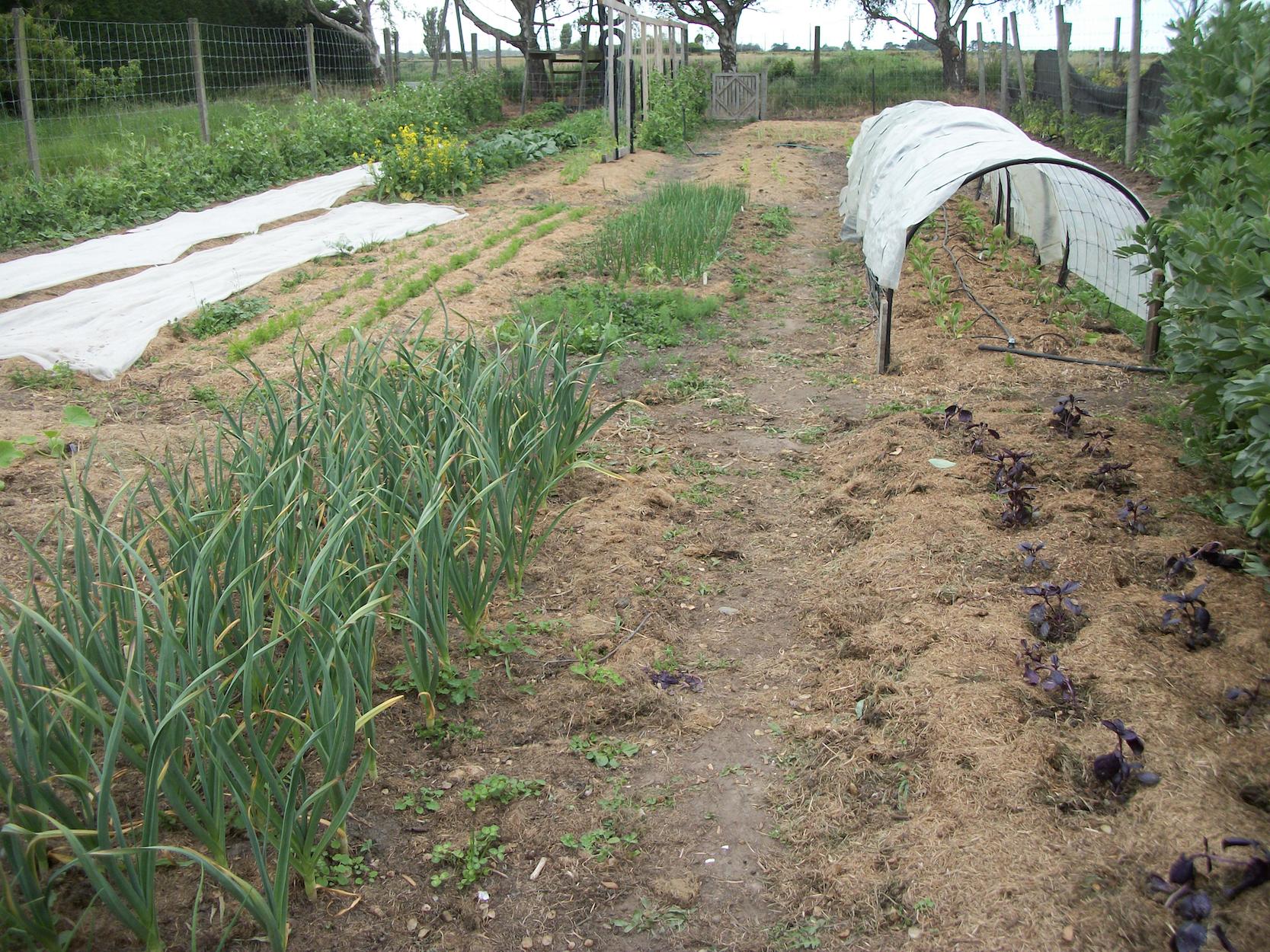
100_4005 smIt’s Canterbury weekend here, and that means it’s time for all the vegetables to head to their prepared spots in the garden. In theory, the frost is over and summer is upon us!

The approach to plant out weekend is always a bit stressful. Plants are overly large for their pots, and there’s a temptation to plant out too early (and Murphy’s Law says that if you plant out before Canterbury Day, it WILL frost). It’s a mission just to keep the plants watered in the greenhouse. And with all the plants crammed together in one place, all it would take is one hungry possum discovering the greenhouse, and the entire garden would be destroyed for the year.

And then there’s the task of making sure all the garden beds are ready to receive those plants in time for plant out weekend. I start mapping out each weekend’s jobs in late September so that I’m not caught with half a dozen beds still full of weeds at plant out time.

This year, plant out went beautifully. The weather cooperated—it was cool and cloudy so the transplanted plants and I weren’t stressed by heat. The beds were all ready to go, and most of the plants were in good shape.

And now I get to rest, right?

Ha!

Now the early crops are desperate to be weeded, the berry beds are sprouting full of thistles, and I’m probably 10 days from being inundated by strawberries, gooseberries and currants.

Never a dull moment!

I can, can you?

100_3986 cropsmFaced with 45 artichokes, there’s really only one thing to do—pull out the pressure canner, and bottle them up for later.

We thought long and hard before buying a pressure canner years ago—it was expensive, and signalled a whole new level of commitment to preserving than a simple water bath canner.

And then, of course, there are all the horror stories about exploding pressure canners. When the canner arrived, emblazoned with more warning stickers than a case of TNT, it didn’t alleviate my concerns.

But now I can’t imagine being without it. We can preserve so much more of what we grow, and not everything needs to be pickled to be preserved.

Pressure canning changes vegetables—the high pressure and temperature destroys their structure and basically turns them to mush. I wouldn’t want to subsist on pressure canned vegetables.

But our summer soup

LINK provides a burst of summer flavour, and wonderfully convenient instant meals through the winter. A few jars of canned green beans mean we can make our favourite Indian charcharis any time of the year. And canned artichokes add incredible flavour to pizzas, regardless of their texture. We could freeze these things, of course, but especially here where the power goes out with such frequency, having some of our preserved food not dependent on a continuous supply of electricity is a good idea. It also saves room in the freezer for those things that really don’t do well in the canner—berries, corn, peas, and of course the bread and baked goods from our baking days.


Siren Call

100_2141I fidget at the computer.

Perhaps the greenhouse needs watering.


I fling open the office door.

The smell of grass reminds me I need to mow.


I type a few words

Then delete them.

Do the goats need their hooves trimmed?

Maybe I should go have a look.


I check my e-mail.

I watch a pair of sparrows build their nest.


I should be working, but

You know, if I just did half an hour of weeding now

There would be less to do on the weekend.


Perhaps an early lunch.

I’ll sit in the sun, bare feet in the grass.


And then, perhaps…


I will give in, and follow the siren’s call

To the garden.

Dreaming Big

100_3861 cropDon’t count your chickens before they’re hatched.

And don’t count your apples before they’re in the basket.

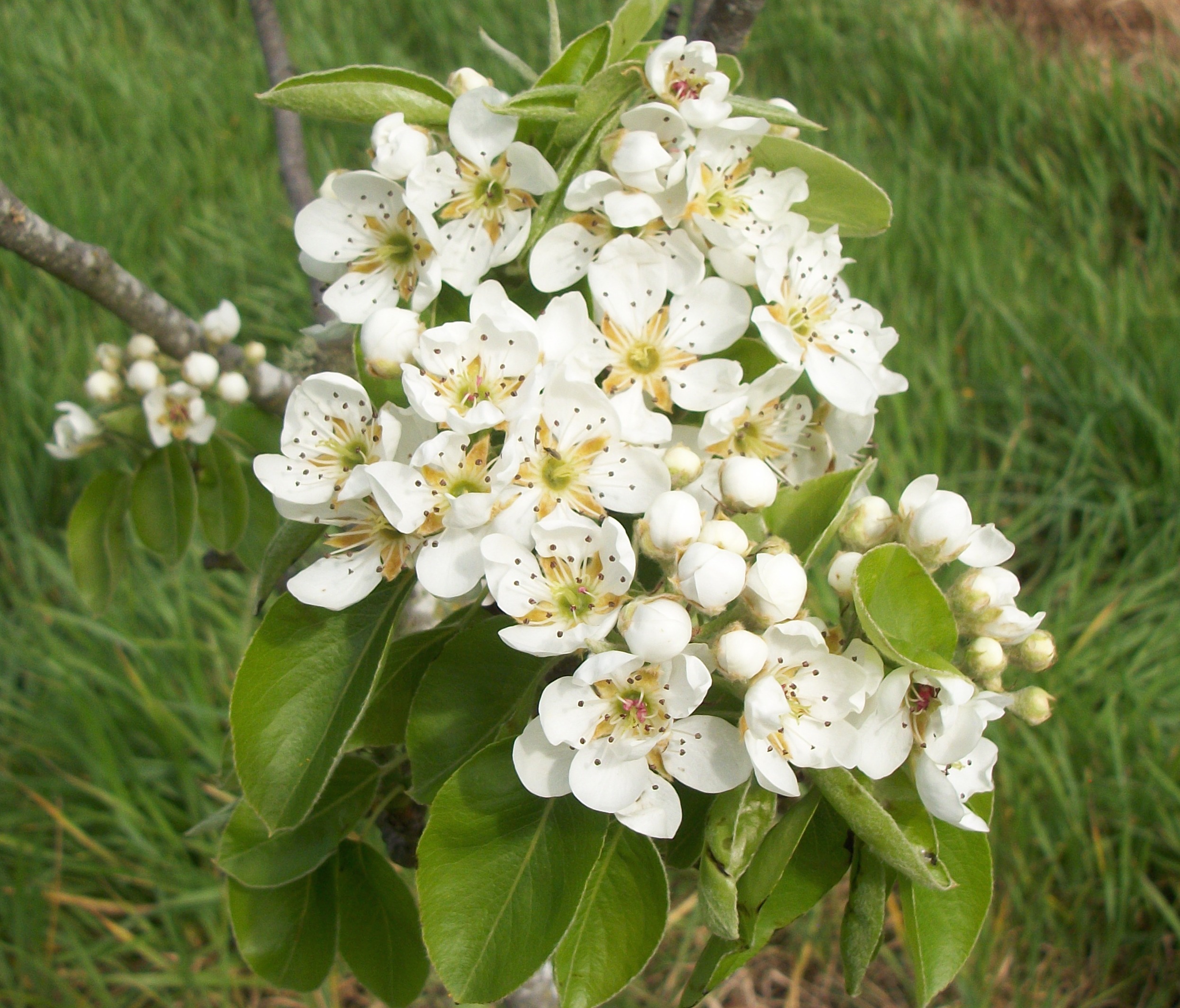
But it’s lovely this time of year to think what you’re going to do with that fruit if ALL the flowers end up producing a fruit. All the fruit trees were flush with flowers this spring—apples, pears, peaches, cherries…

But it’s a long time between October and April. Anything could happen, and it usually does.

Some of those flowers won’t get pollinated and will drop from the tree once they’re done blooming.

A storm will blow some of the pollinated flowers off the tree.

The tree will naturally prune some of its own fruit, because it simply cannot support so many.

Birds will snatch the small fruits as they ripen, and possums will eat the larger fruits.

A hail storm will damage or destroy more fruit.

Before you know it, there will be, not bushels of apples, but maybe a few. Enough for a couple of pies, some apple crisp. Not the larder-filling bounty that spring promised.

That’s okay. I’ll still count my apples by the flowers each spring. I’ll imagine the applesauce and the pies, the crisp bites of tart flesh, and it will be just as if they were actually here.

Milk the goat

DelilahmilkingI can’t believe I’ve been milking nearly three weeks now and haven’t blogged about it.

After her disastrous kidding, my goat Ixcacao was given an antibiotic to prevent infection of her much-invaded uterus. That meant that I had to throw out her milk until the withholding period was over. So, though I’ve been milking, we haven’t had goat milk until this week.

I milk in a sheltered spot behind our large shed, where a previous owner conveniently built a head-lock for his beef cattle. We added a platform, a feed tray, and a roof to create a sturdy milking stand protected from the worst of the weather.

I milk twice a day for the first half of the milking season. 5.30 am and 4 pm. There are usually a few days of awkwardness after kidding, when doe and kids don’t want to be separated, but once everyone is into the routine, milking runs smoothly.

I enjoy milking, especially the early morning milking, which happens in the dark for the early and late part of the season. There is something soothing and centring about milking.

When it goes well…

“Watching you milk is just scary,” said my husband the other day. “You’re so fast at it.”

Milking is not the stress-free experience for him as it is for me. I forget sometimes what a steep learning curve it was for me the first time I was faced with goats with udders tight as drums who had never been milked. There was a lot of cursing, and more than a few tears. And there was a lot of spilled milk.

But with practice, the goats and I got much better at it. As I got quicker, they had more patience with me. I learned how to tell when they were about to kick, and how to prevent them from stepping in the milk. I learned the particular foibles of each goat—how to get them to stand still, whether their milk squirted from the teat at an angle, how to work with small teats or teats with small holes, how to manage an udder that sagged almost to the ground.

Instead of a test of wills, milking became a partnership between me and each goat. And so it became almost effortless.

Almost.

I still lose a pot of milk to a misplaced foot now and again, and ‘breaking in’ a new goat is never a smooth process.

But usually, if something goes wrong, I can fall back on some advice I read when I was first learning how to milk—relax and just milk the damn goat. It’s good advice, whether you’re milking goats, or taking on any other challenge.

Trellis Trials

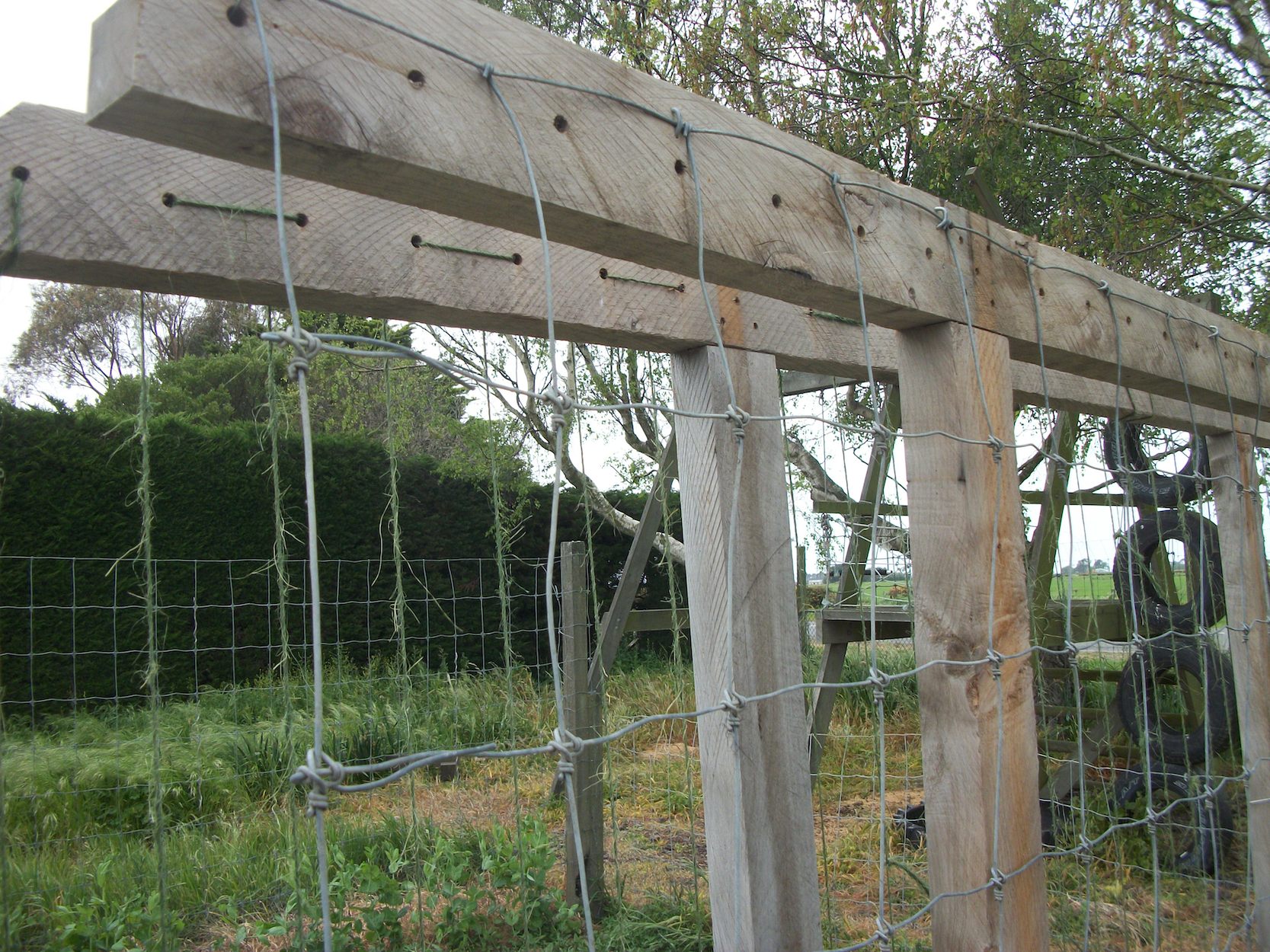
Trellis with jute

Trellis with jute

As a gardener, I’m always trying out new things, always trying to make my gardening easier and more productive.

Last year, I tried out a new trellis, and it worked pretty well. This year, I’m testing variations on last year’s trellis.

Trellis with fencing

Trellis with fencing

The trellis is a wood frame composed of two supports and a top and bottom bar. Holes in the top and bottom bar allow me to string the trellis with jute. Last year, the jute worked well for peas and beans, but wasn’t strong enough for tomatoes. It was also a bit of a pain to string and clean up at the end of the year.

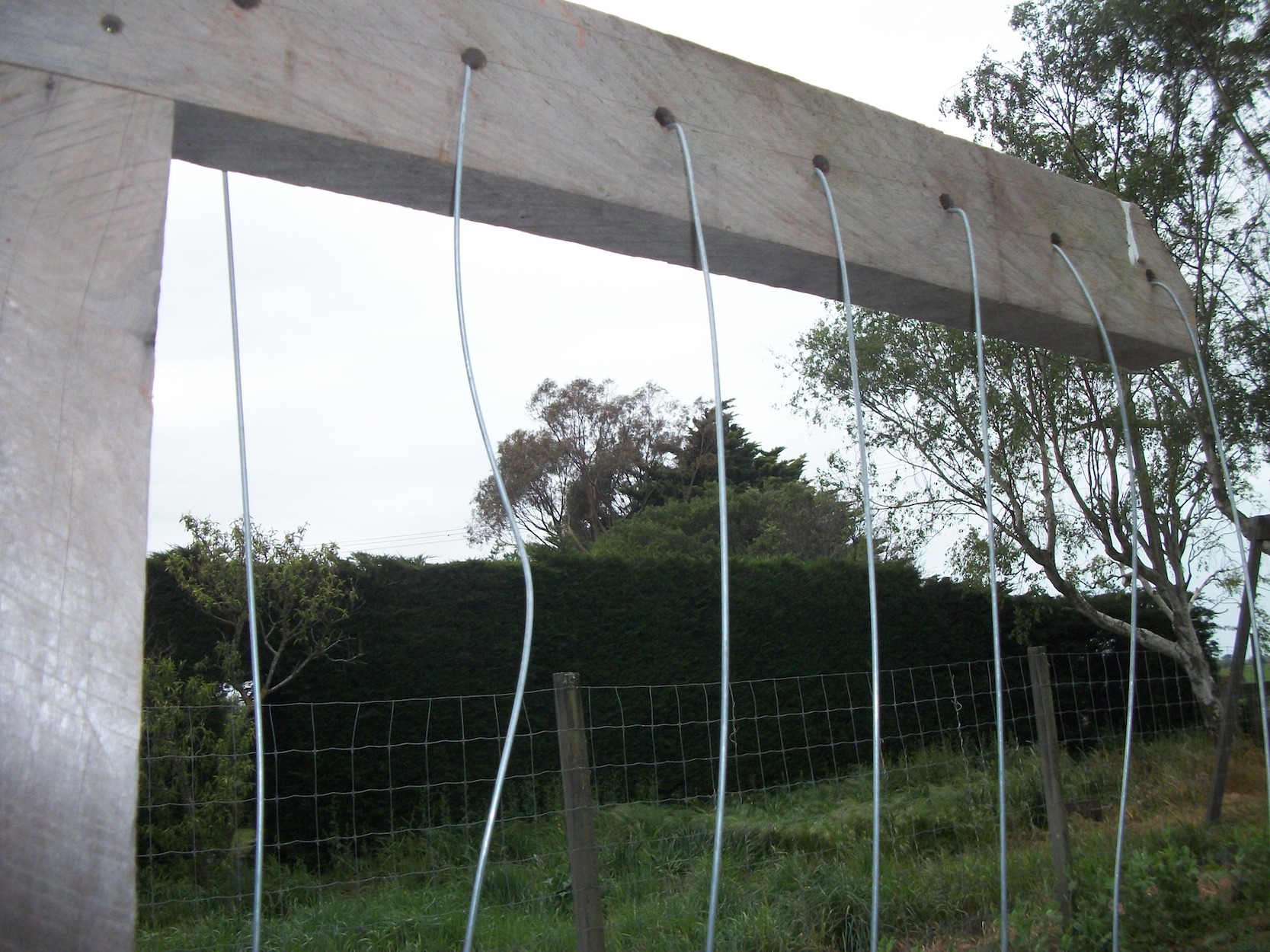
Trellis with wire

Trellis with wire

So this year, I’ve strung some of them with jute again, but I’ve also stapled deer fencing to one of them, and strung the tomato trellis with high-tensile wire (both of which were left over from other projects). Neither fencing nor wire looks as nice as the jute, but I’m hoping they are stronger, and they have the bonus that they won’t need to be replaced every year, saving me time and money in future years.

Omelettes

IMG_3731 smIt’s funny how quickly we can go from being desperate for eggs to having more than we know what to do with. My new chickens have all started laying now, and so this afternoon when I was looking for a quick dinner after getting home late, I found a fridge full of eggs.

Of course, that meant omelettes! Filled with cheese, mushrooms and herbs, they’re a delicious, quick-to-make, high protein meal that everyone loves. I served ours tonight with roast potatoes slathered in ketchup.


Ellesmere A&P Show

ellesmereA&Pparade1Today was the Ellesmere A&P Show (that’s Agricultural and Pastoral Show—Farm Show to you Americans). In true Ellesmere Show fashion, it rained, but we headed to the show mid-afternoon when it cleared somewhat.

We have a routine at the A&P show—the same every year. First stop is Karikaas Cheese.

When we first arrived in New Zealand, we could only get Karikaas cheeses at the A&P show. Now, nearly all the supermarkets carry their cheese. Still, we always make sure we buy a few wedges at the show.

Then, of course, we had to pick up a bottle of our favourite olive oil—South Lea, which I’ve blogged about before—if only to say hello to Frances Baylis.

Of course, there are the obligatory mini-donuts. It wouldn’t be an A&P show without them!

The highlight of my trip to the show is usually the sheep shearing competition. Not that it’s exciting—indeed, this year, even the caller seemed bored with the action (though it was a pretty lopsided contest we caught—no exciting race to the finish)—but because it’s just such a Kiwi thing.

We admired the poultry (some particularly handsome roosters this year), the baked goods (our neighbour, Suzie, swept the baking section as usual), the giant swedes, and the radish seed (Suzie’s brother-in-law, also a neighbour, placed second there).

We watched the wood chopping competition (another favourite stop at the show), and the kids considered a carnival ride, but found them uninspiring.

ellesmereA&Pparade2A new find this year was Emilio’s Cheese, a real Italian woman selling serious Italian cheeses, including some that could probably be classified as biohazards. We came home with two—a lovely provolone, and another whose name I can’t remember, but that oozes and smells like dirty socks (that one was double bagged before being put in the fridge!).

We stayed long enough to watch the grand parade, with the Ellesmere Pipe Band marching sedately ahead while a lurching band of livestock and their handlers followed behind.

An exciting day out, for sure.