Daylight Savings Cat

None the worse for wear.

None the worse for wear.

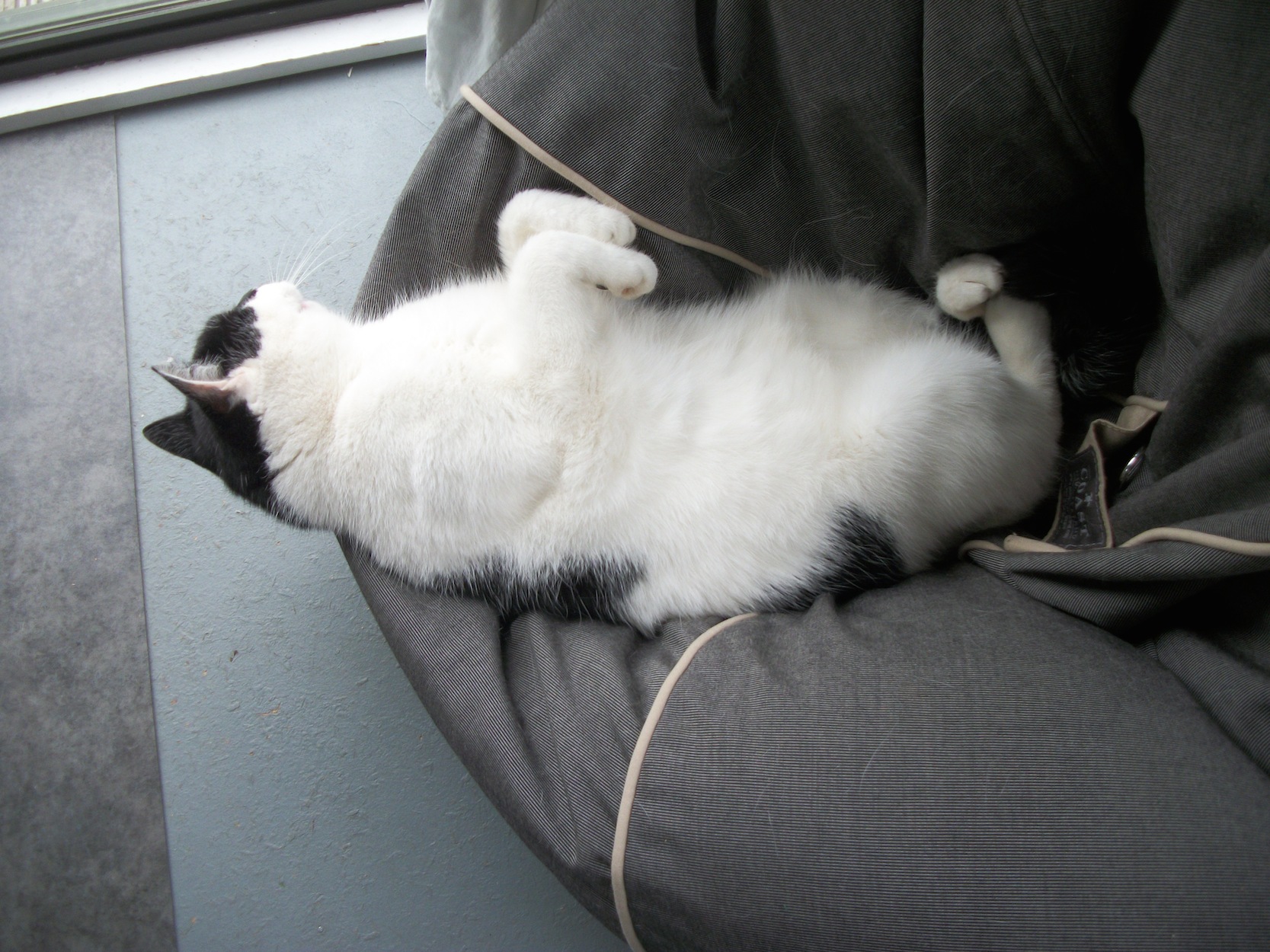
The cat has been particularly annoying lately. Usually he meows at my bedroom window around five am to be let in.

But when we came off daylight savings time last week, he refused to change his schedule. And out of spite, he even started meowing earlier, which means he’s been waking me up before four am for a week.

Ignoring him only makes it worse. If I don’t get up and start my day when the cat calls, he hurls himself at the front door until I do.

I can ignore a meowing cat, and even fall back asleep if I try. I can’t ignore seven kilos of fury rattling the front door for an hour.

So this morning when my eyes opened at 4.30 am I was surprised it was so late. All was quiet, and for ten minutes I lay blissfully thinking the cat had finally gotten the message about daylight savings time. I was just drifting back to sleep when I remembered…

About 4.30 pm yesterday, I was balanced on the top of a ladder, hanging a sack of pumpkins on a rafter in the shed. The cat was slinking around in the shed, and the wind blew the door shut. I remember seeing his tail slip in, just before the bang.

I never let him out.

Darn cat. Even locked in a shed forty metres from the house, he was able to get me out of bed early.

Because, once you realise your daughter’s cat has been locked in a shed for twelve hours, you can’t lounge around in bed enjoying the quiet.
Stormy Weather

Somewhere out there...

Somewhere out there…

Don’t know why
There’s no internet or wi-fi
Stormy weather…

Rural life is great, but these days, when so much of our lives revolve around connecting with others via the internet, rural living can be a lesson in frustration.

Not only does our normal “broadband” speed make us wax lyrical about dial-up, but on rainy days, we’re lucky to connect at all.

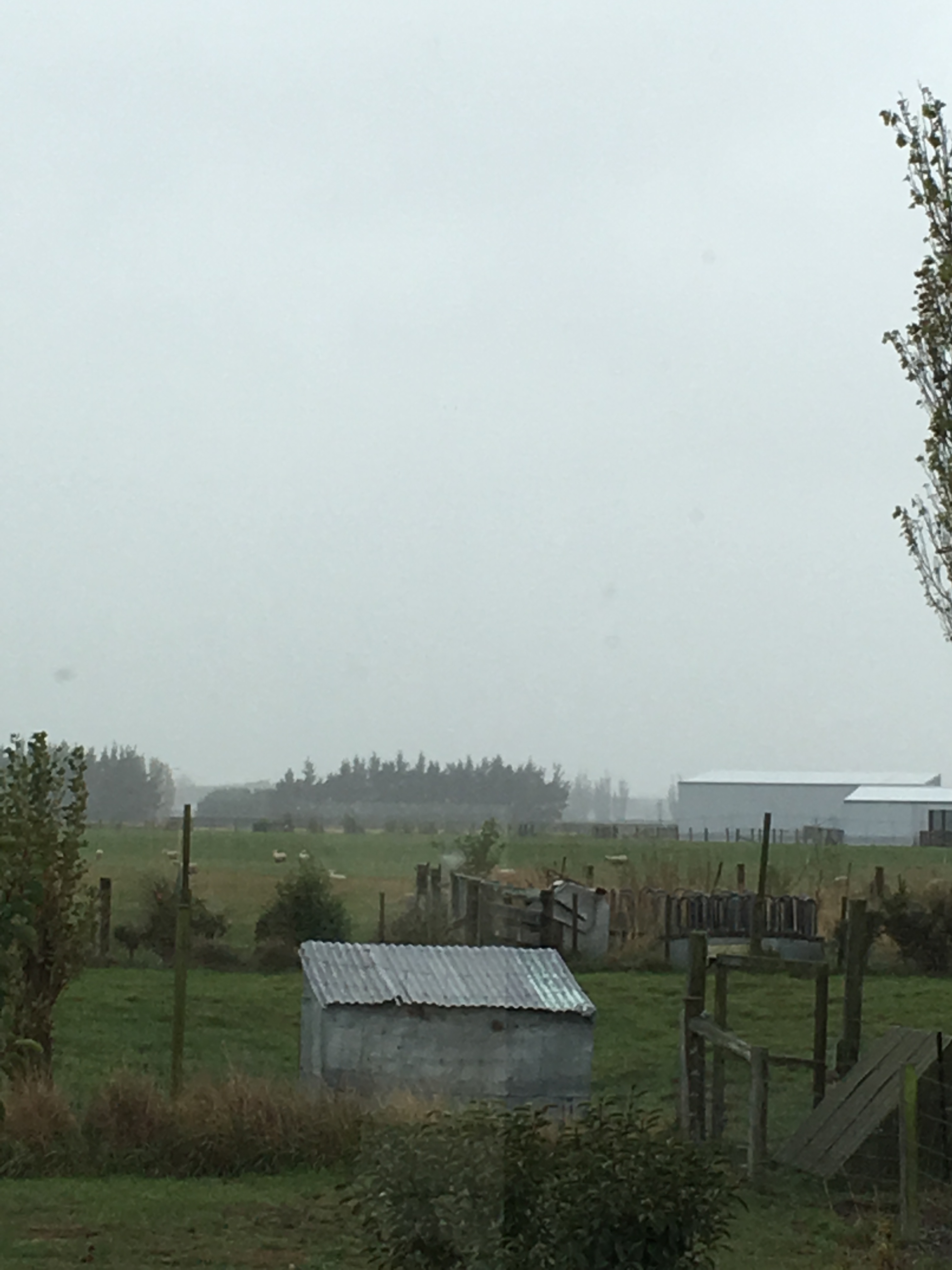
Our internet comes to us via a transmitter on the Port Hills, about 50 km away. The receiving dish on the roof must have line-of-sight access to that transmitter in order to receive a signal. Installing it required cutting down two trees that were in the way, and involves regular trimming of a bush that threatens to grow too tall.

It also means that when there’s a lot of rain between us and the transmitter—particularly if it’s a fine, misty rain—we get no internet signal. Compound that with the fact that our phone line now goes through the internet, and rainy days cut us off from the world.

Enter today’s weather—exactly the sort of fine, misty rain that isolates us. Want to do some research? You’re stuck with whatever books you’ve got in the house. Want to ring the vet? Not today. Post your blog? Not likely. Check your e-mail? Forget it.

Makes it a good day for writing, I suppose.

And if I’m lucky, the rain will clear briefly so I can post this blog…

Death in the Paddock

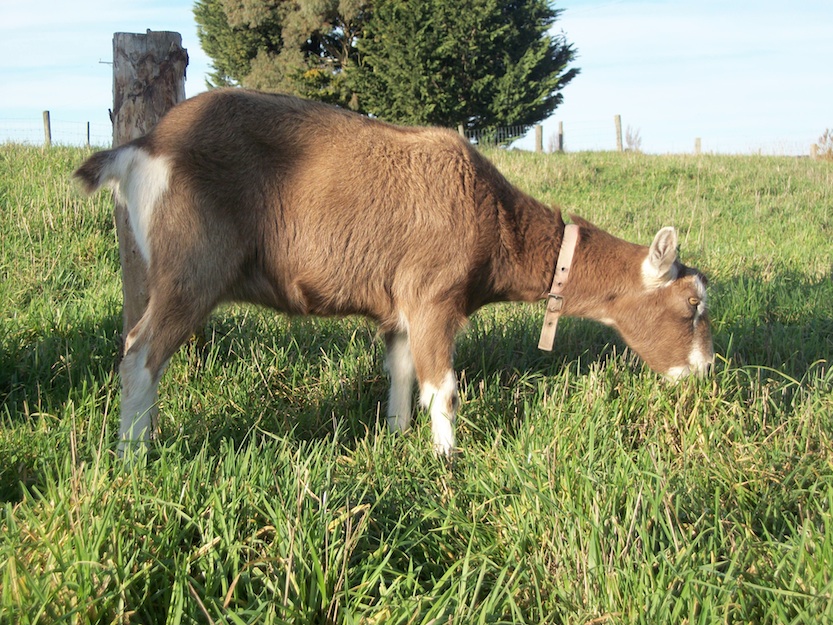
100_1931smI buried a goat today—Ixcacao, my little toggenburg. Well, I considered her little until I had to dig a hole big enough for her, and drag all 65 kg of her deadweight over to it.

I’ve found that, for most of the goats, digging their graves gives me the time and exercise I need to face the loss stoically. Usually, anyway. But each death is a blow.

There was Hebe, 9 months old, dead two weeks after I bought her. No clear cause. Just dead one morning.

Quickly following her was Hebe 2, four months old, who tore the ligaments in one of her knees. “If she were a rugby player, we’d operate on her, but…” was the way the vet delivered the verdict. I had kidded her myself at the end of a long struggle with three tangled kids. She was weak and couldn’t stand properly for the first few weeks, and I’d hand fed her until she could hold her own against her two big brothers. I held her while the vet put her down.

Hebe is the Greek goddess of youth. I should have known no goat named Hebe would live to adulthood.

There was Demeter, eight years old, who poisoned herself on green acorns, destroying her liver and causing her to waste away. She had always been a sweetheart. I sat next to her in the goat shed, stroking her head while the vet injected her.

There was Delilah, three years old, who wasted away, probably from Johnes disease. She was never particularly friendly, but I sat with her, too, when the vet came to put her down.

Ixcacao, four, went too fast for me to call in the vet. She had been off her feed a bit yesterday, which I attributed to being in season. Now, I think she must have had a tumour—she’d been looking a bit lopsided lately. And I wonder if it had been there in the spring when she delivered a dead, malformed kid. I won’t ever know, I suppose. She gave me no signs of trouble until late yesterday.

As a breeder once said to me, “If you have goats, you have dead goats.” It just goes with the territory, I suppose.

And tomorrow we will get up and carry on with another ordinary day.

Small Town Celebration

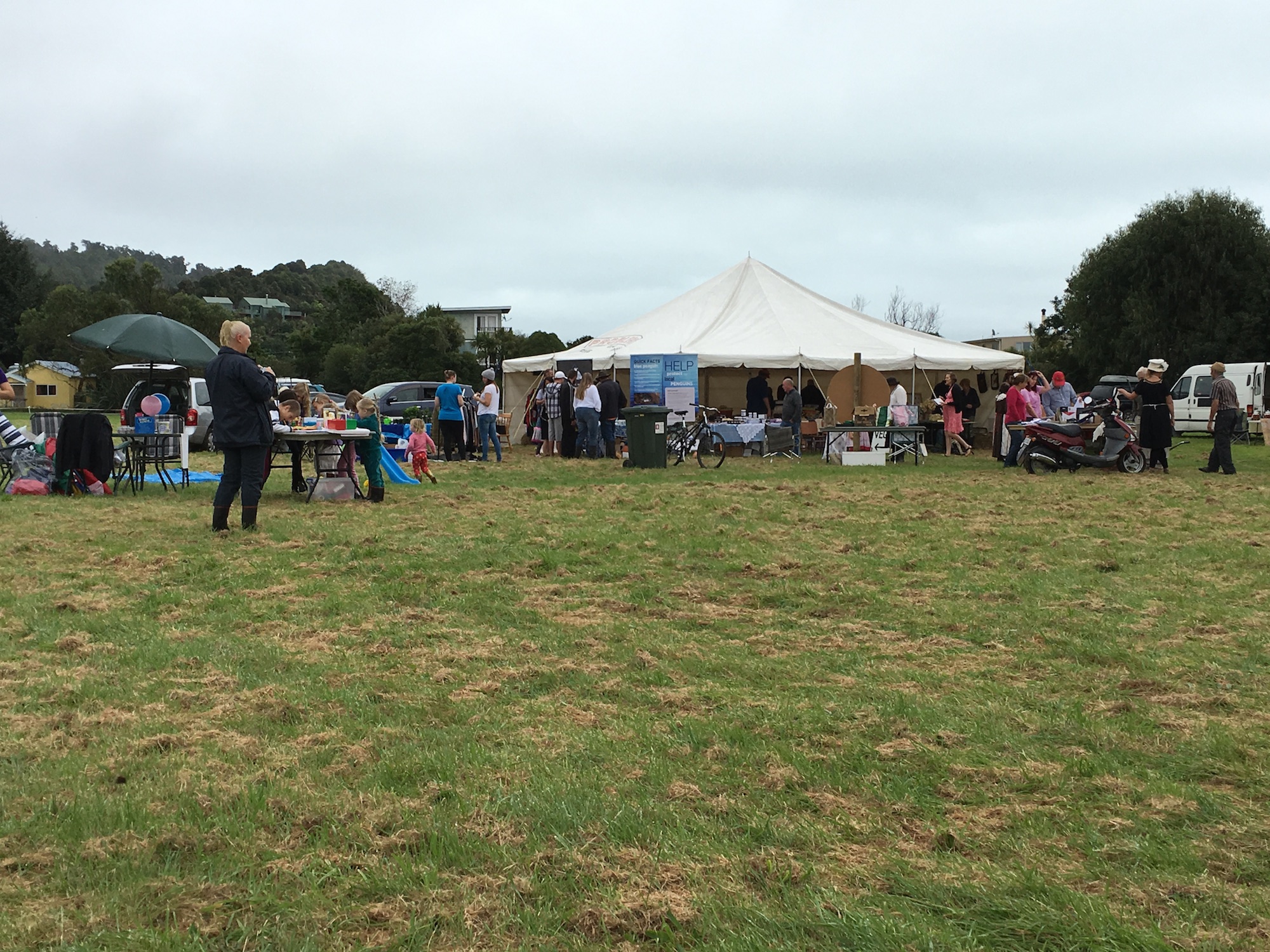
2016-03-26 10.31.51 smWe spent Friday and Saturday nights last week at the Okarito campground. As it happened, Saturday was Okarito’s 150th anniversary celebration. Okarito used to be a town of about 4000 people, back in the late 1800s when the West Coast gold fields were booming. The town sported a 25 hotels, 3 theatres, two banks, several general stores, and a public swimming pool, Today it has a year-round population of about 30. Most of what was once bustling streets has been reclaimed by the rainforest. There are no hotels (though many of the baches are rented as holiday homes), no banks, no pool, and the only remaining general store serves as a tiny museum and event venue seating 40. You can buy a coffee and insect repellent at the local kayak rental company.

Okarito is 30 minutes drive from the township of Franz Josef Glacier, and 3 hours from Hokitika. In the middle of nowhere, I was curious to see how many people would actually show up to the town’s 150th celebration.

It started off slow…

The festivities were scheduled to start at 9 am and run through to 10 pm on Saturday. At 9.00, there were a few people setting up in the marquis…

About 10.30, the bouncy castle was inflated, and half a dozen kids tumbled around on it. We bought a coffee from a food truck that had parked on the edge of the commons and some baked goods from some girls who had set up a table on the lawn. There was a woodworker, the local scout troupe, a few Department of Conservation staff, some locals selling second-hand goods, a knitter selling baby sweaters, a woman selling jam and goat cheese…And very few customers.

By the time the auction started, there might have been 50 visitors, most locals. A good proportion of the items up for auction were purchased by the auctioneer.

A couple of dozen people enjoyed the barbecue dinner.

When the band started playing at 7pm, there were maybe 30 people in attendance. But the music brought out a surprising number, and within half an hour, there was an audience of 125.

Most of that 125 knew one another. They were local farmers, residents, bach owners, regular visitors, and young people working the local tourism industry. Everyone knew each others’ dogs by name, and the dogs chased each other around the crowd like young cousins at the annual Labour Day get-together. It was a lovely atmosphere—more like a family reunion than a public event.

I don’t know whether the Community Association had hoped for a larger crowd, or if it exceeded their expectations. I don’t know if they made back the cost of the marquis rental. But I do know that those who were there smiled, laughed, and enjoyed the day.

Fruit overload

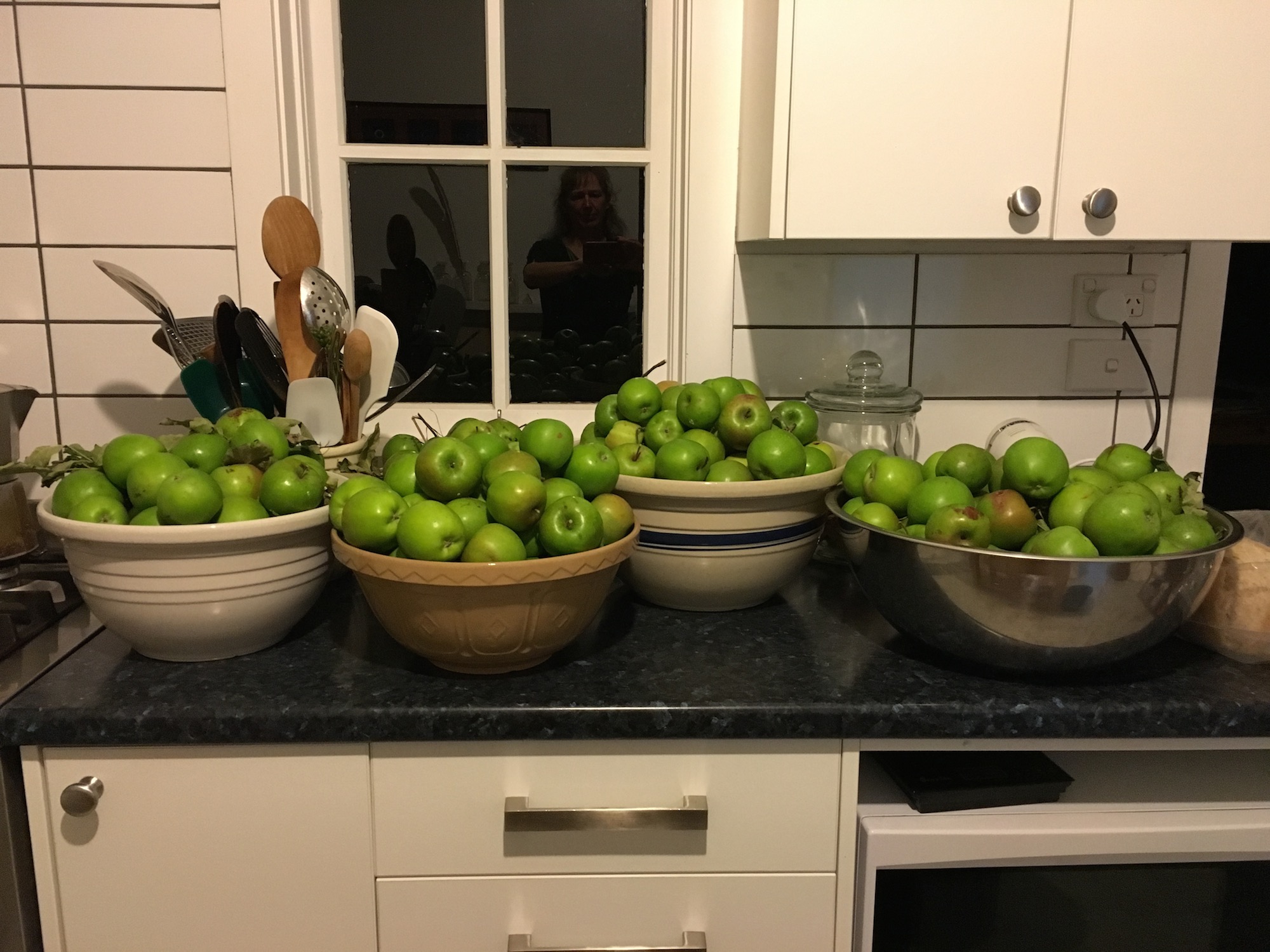
2016-03-15 19.20.44 smCan you have too much fruit? I’m not certain, but if you can, I think we’re approaching it.

I mentioned the apples the other day—there’s still a 20 litre bucket and a large bowl full of them in the kitchen. Then there are the melons I mentioned yesterday—a great heaping platter of them, and more to come in the next few days.

And a houseguest brought us a box of apricots as a gift.

And the grapes have started coming in, so there’s a colander full of them in the kitchen.

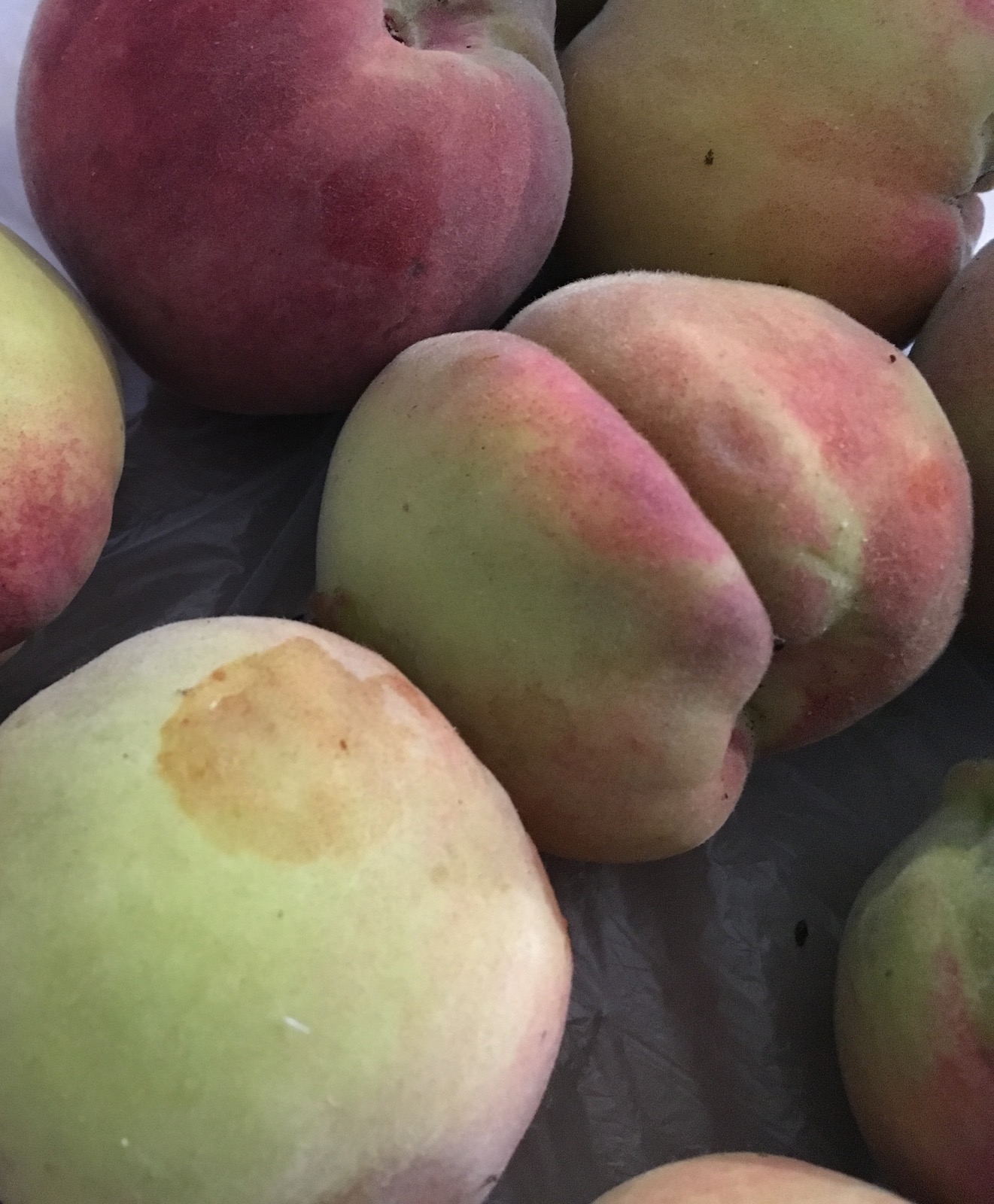
And today I went to pick up 200 daffodil bulbs I ordered, and it turns out that the woman selling the bulbs was the first person I ever sold goat kids to—she’s still got one of them. Anyway, so we got to talking (as you do), and next thing I know, she’s filling a bag with peaches for me—dead ripe and luscious.

So sitting in the kitchen right now are probably 10 kilos of fruit for every person in the family.

So I wonder, can you have too much fruit?


Windfall

2016-03-10 21.13.23 smToday.

Thirty degrees C.

120 kph wind.

Dust clouds so thick I couldn’t see the back fence 20 metres away.

So I knew there would be carnage by day’s end.

Picking yellow summer squash for dinner, I was having trouble finding them, because they were completely coated in dust.

I studiously avoided looking at the fruit trees—I couldn’t face what I knew I’d find while the wind still howled.

Later in the evening, my husband and kids went out and surveyed the damage. Remember back in November when I posted the picture of all those apple blossoms? I knew it was too good to be true.

Every fruit was stripped off of every tree. They collected them all, tossed the bad ones on the compost, and brought the rest inside.

None are quite ripe, but we’ll make the best of them—applesauce and pie this weekend, for sure!

The Beginning of the End

Pumpkins are filling out and beginning to harden off.

Pumpkins are filling out and beginning to harden off.

March 1—first day of autumn here. It is appropriately autumnal today, with a grey sky and brisk, cool wind.

But it didn’t take a cool day, or the calendar to tell me summer was coming to a close. I have been milking in the dark for weeks—a sure sign the equinox is coming. Last week, the first of the elm leaves crunched brown and crisp underfoot. The poplar trees are looking sparse. The dry beans have started to senesce—pods bleaching, yellow leaves plopping to the ground.

The coming weekend will be full of harvest activities—no time for the beach, regardless of how hot it is. Soy beans, dry beans, and corn will all need harvesting. We’ll make the year’s summer soup. I’ll make another batch of pesto for the freezer before the basil is finished. I’ll dry some tomatoes.

There will be plenty more hot days, and likely a few trips to the beach. There will be many more tomatoes, eggplants, beans, and melons. Summer’s not really over. But it’s beginning to pack its bags and get rid of whatever it can’t take with it when it leaves for the Northern Hemisphere.

Sing to Your Plants

DSC_0006smMy plants are fond of show tunes—Oklahoma!, Pirates of Penzance, The Music Man.

At least, I hope so, because I sing show tunes in the garden.

Sometimes I switch up the words so the song is appropriate to the moment:

Oh what a beautiful eggplant!

Oh what a beautiful bean.

I’ve got a wonderful feeling

I’m going to eat like a queen.


I sing to the chickens and goats, too, though they prefer folk songs.

Oh my chickens, oh my chickens,

Oh my darlin’ little birds.

You’re revolting, you’re disgusting,

You’re obnoxious little turds.


I don’t know if any of my charges like it. I don’t believe that my singing will actually make my plants grow better. But when I’m pulling stubborn weeds, mucking out the chicken house, or trimming goat hooves, I can either grumble or sing. I choose to sing.

Harvest

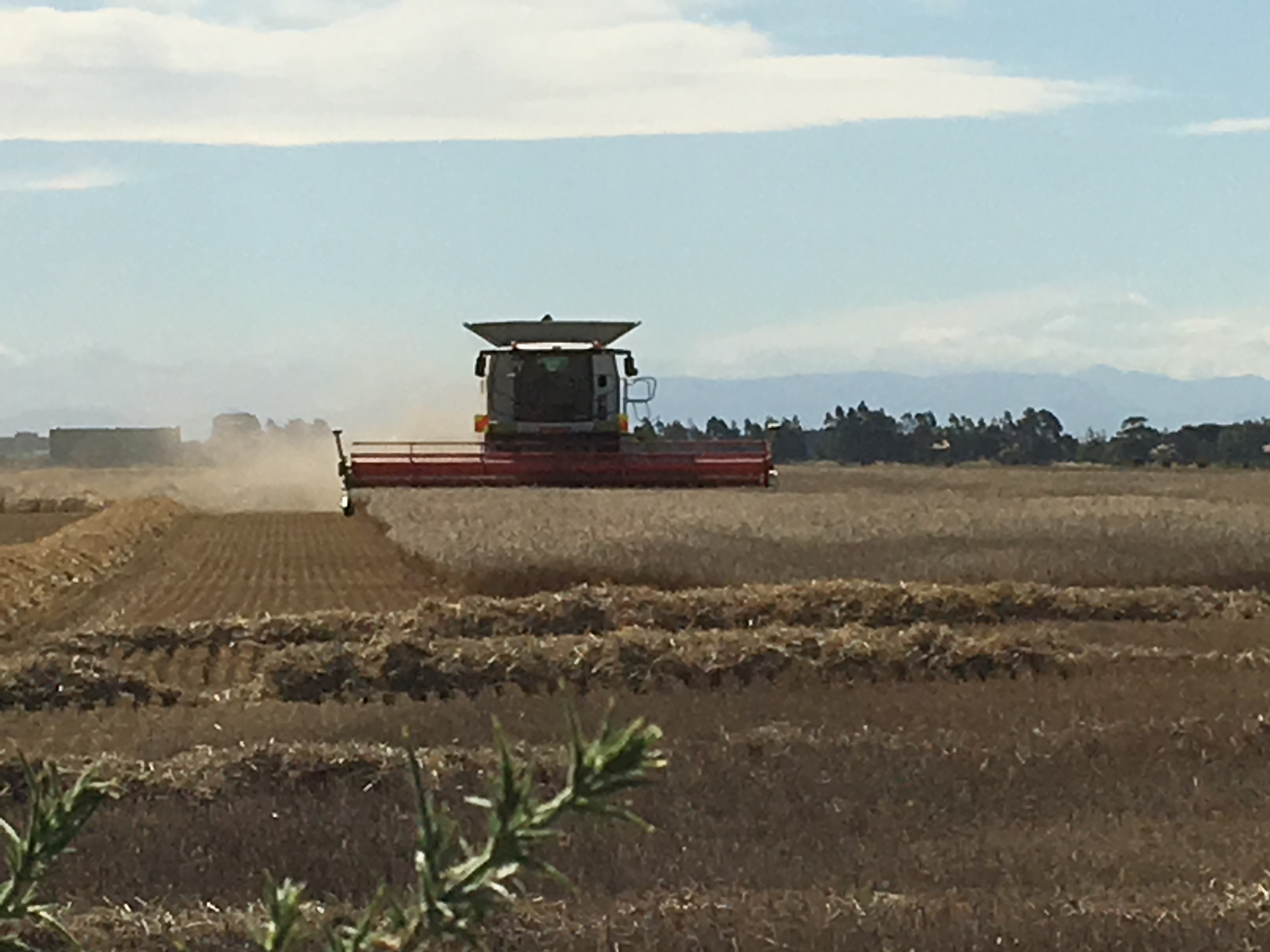
2016-02-16 16.41.47It’s time to harvest barley.

For us that means the rumble of combine harvesters all day and long into the night.

And it means realising how tiny our property is. Never does our property feel so small as when the neighbour harvests next door.

He’s been harvesting for weeks—distant fields—but today he cut the barley behind our house. The harvester dwarfs every building on our property. If I planted every inch of our land in barley, he’d be able to harvest it in just a few passes.

When he drives down the road between fields, the machine fills the road entirely—good thing there’s little traffic out here.

It’s a reminder of the massive scale modern agriculture works on. And these Canterbury farms are nothing compared to the ones in the Midwestern US.

It’s also a reminder that my view of agricultural life, as a “subsistence” farmer is entirely different from my neighbours’ views.

I count my plantings by the square metre or by the plant, they measure theirs in the tens of hectares.

I measure the harvest by the colander, they by the truckload.

My tools are a hoe, a spade and a knife—at a garage sale, you might buy them all for under $20. His tools include multiple machines clocking in at over $100,000 each.

I can produce $50,000 worth of food over the course of a year. He can lose twice that amount in a bad storm.

My soil and water conservation strategies—mulching with grass clippings, using drip irrigation, composting everything—don’t scale up to two hundred hectares. Nor do my planting, harvest and storage techniques.

There is very little resemblance, in fact, between what I do and what my neighbours do, though we both produce food.

And so, I stand and watch in awe as the harvester roars by and the trucks fill up with grain.

And he marvels at the variety and quality of my summer squash and beans.

And we find our common ground in the sun, wind and rain that rules us both.

Jewellery

2016-02-01 15.47.45I don’t wear jewellery.

No earrings—they irritate my ears—the last time I wore them was at my sister’s wedding twenty-three years ago, and that was the first time in years.

No necklaces or bracelets—they hang down and catch on things as I’m working.

And rings are hopeless. I lost the stone from my engagement ring twice—knocked out by some violent motion—before I gave up on wearing that. I even regularly threaten to remove my wedding band, as it catches in tools and branches.

Frankly, no jewellery stands a chance of survival on me.

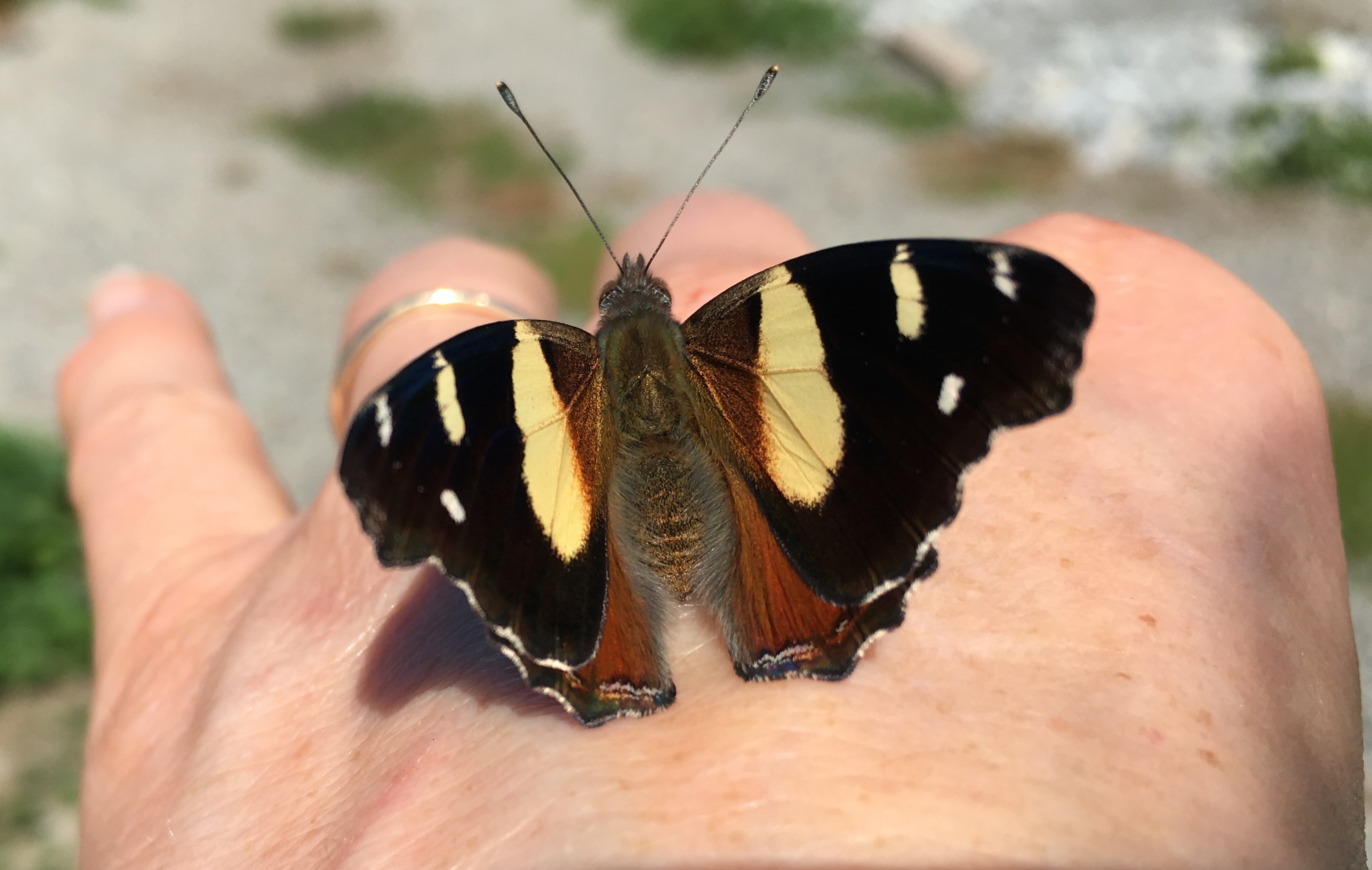
But when this gorgeous ornament (a yellow admiral) landed on my hand today, I stopped what I was doing. I ignored my work for as long as it was content to stay there. This sort of jewellery, I’ll wear.