Nettle Season

It’s stinging nettle season and, as I’ve mentioned before, my garden is host to an irritating quantity of nettle—quite literally.

But though it is a stinging weed, I’ll admit to a certain fascination with nettle. Look at the stinging hairs (trichomes) under the microscope, and you’ll find beautifully wicked structures like fine hypodermic needles. Those syringes are full of an irritating mix of acetylcholine, histamine, serotonin, moroidin, leukotrienes, and formic acid to irritate your skin.

But the triggering mechanism for the trichomes depends upon turgor (water pressure), so once a nettle wilts, it can’t sting.

And once it wilts, nettle is an incredibly useful plant. It is edible and quite nutritious for both humans and livestock. The cooked greens are used in traditional dishes throughout the Northern Hemisphere where it is native.

It can be used to make a vegetarian rennet for cheesemaking, and is used to flavour and decorate some cheeses. I’ve made nettle rennet myself as a substitute for commercial rennet when I’ve run out.

Nettles can be used to make tea, cordial and beer.

The fibrous stems can be used to make linen-like textiles. The roots can be used to make a yellow dye.

Fed to chickens, nettle is an effective egg colourant, which may explain the deep orange colour of my chickens’ egg yolks at this time of year.

All in all, stinging nettles don’t deserve their bad reputation. Like many of our weeds, they’re useful plants that we’ve forgotten how to use.

Aggravation or Aurora

I was frustrated all day with the internet, or rather, the lack of it. Being on rural broadband, we’re used to lousy internet speeds, and frequent outages. But today was particularly frustrating. I’d load a page with no problem, then be unable to load the next. Five minutes later, all would be well again. All day this went on, and I was tearing my hair out.

Then this evening, my son mentioned we’re supposed to have a spectacular aurora tonight.

Ah. That explains the internet, then.

And now I’m terribly excited that I had dodgy internet today. I can’t wait for daylight to fade fully so I can enjoy the aurora.

Funny how understanding the why makes all the difference…

Zombie Cat

A hapless zombie cat victim.

At this time of year, birds and small mammals are distracted. They’re busy fighting over territories, building nests, and mating. There are young, naive animals fluttering, scurrying and hopping about.

So it’s no surprise the cat catches more prey in spring. English sparrows, mice, rats, rabbits–he brings almost all the major vertebrate pests home and leaves them on the porch for us.

I don’t mind, really. It doesn’t bother me to have to dispose of his kills–I’m not squeamish about it, and I’m happy he’s dealing with at least some of the animals that destroy my garden and wreak havoc in the sheds.

But there’s something that worries me.

I’m afraid the cat is a zombie.

Rodents, birds, rabbits…they all show up headless. The cat doesn’t seem interested in eating anything except the head. Even on a succulent rabbit, he ignores the meaty legs and flank, and goes straight for the head.

Maybe it’s just the crunch he likes, but I think it’s more sinister than that.

Now every time he gives me his wild-eyed look, I can almost hear him say, “Braaaaaaaaaaaains.”

Spur-winged Plovers

Almost every year, a pair of spur-winged plovers (Vanellus miles, known as the masked lapwing in Australia) establishes a territory in the goat paddock. A few days ago, I was taking food to the goats, and noted where the plovers were making a ruckus at the other end of the paddock.

This afternoon, I took a walk out there. The plovers were nowhere to be seen, and I was worried–they’re not always successful nesters here. There are simply too many predators around our property.

I nearly turned around, but I decided to take a look anyway.

I was rewarded with the perfect plover nest. Two eggs, a little dried grass, and some rocks.

The spur-winged plover self-introduced from Australia in 1932. Since then, its population has grown dramatically. No surprise when you consider it likes open habitat, and is quite happy to set up house in paddocks, parks, and road verges (we once had a pair nesting in the middle of an intersection nearby).

It has done so well since it arrived in New Zealand that its protections as a native bird were removed in 2010 due largely to the problems it was causing for aircraft (airports are lovely habitat for it). It is one of only two native birds to not be protected under the Wildlife Act (the other is the black backed gull).

I enjoy the plovers. I love their harsh night-time cry, and their indignant posturing while defending territory and nest. I love the fact they cheekily nest wherever they want and expect everyone else to stay out of their way.

I’ll be watching these eggs closely. Fluffy plover chicks are even more fun to see than plover eggs.

Happy Spring

It’s the first day of spring!

Naturally, it’s cold, windy and rainy–day to be curled by the fire with a cup of tea, not a day to be out in the garden enjoying the flowers.

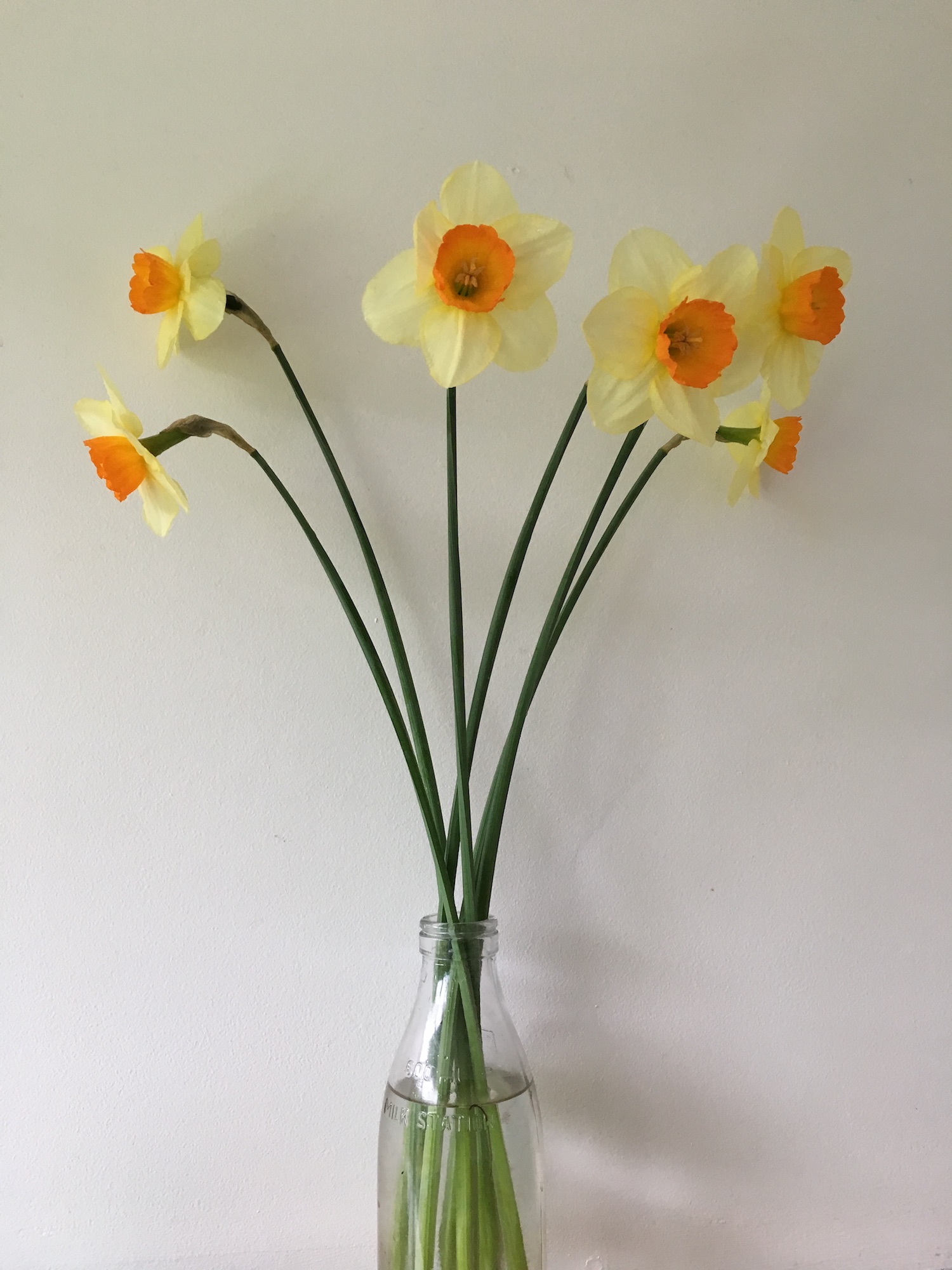
So I braved the rain to pick flowers and bring them inside.

Forget the weather. It’s spring indoors.

It’s Show Time!

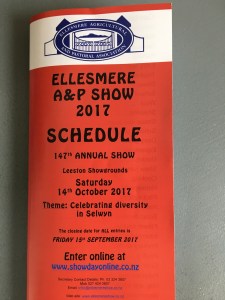
We got the annual schedule for the Ellesmere A&P Show the other day. For those of you not familiar with the term, A&P means Agricultural and Pastoral–Farm Shows they’re called in the US.

I grew up enjoying the local Farm Shows, entering bad art projects into the competition, and admiring the rows of cattle on display. As an adult, I was lucky enough to live for several years mere blocks from the Minnesota State Fair–the Farm Show to end all Farm Shows. I even entered a quilt there–won second prize in a category in which I was the only entrant. A feat worthy of mention in the News from Lake Wobegon, if you ask me.

Farm Shows/A&P Shows are a defining cultural experience, but the truth is, you don’t even need to go to the show to have a cultural experience. Reading the show schedule is almost as good.

For example, in the little old Ellesmere show, there are 95 different sheep classes in which one could enter one’s woolly livestock. That doesn’t include the children’s pet classes or the wool classes. And then, of course, there are the shearing and sheep dog competitions. Sheep farming may be on the decline in New Zealand, but it’s still king in Ellesmere.

Dairy has boomed in recent years, and there are quite a large number of dairy classes in which aspiring farmers can enter their bovines. The lucky winners of many of the dairy classes will receive semen as their prize. Doesn’t that just make you want to enter?

Semen certainly beats the poor dairy goat farmers, who pay $5 to enter a goat, and can only hope for, at best, $5 for first prize.

If you’ve got a dairy animal, it might just win Best Udder (Judged both full and empty–I expect no saggy udders need apply). Now there’s something to aspire to.

One of my favourites is the calf fancy dress class. Nothing like a bunch of calves in tutus and tuxes to make you smile.

And I noticed a new category I never knew existed–Donkey Challenge, judged on ‘willingness, style and accuracy over four challenges’. Now, that’s a competition I may have to make sure I see this year.

But of course, like any rural event, the real excitement is simply the hustle and bustle on the day. The hot chips and mini-donuts, the carnival rides, running into neighbours and people you haven’t seen for months, and celebrating the importance of agriculture in our lives and culture.

Who’s Debbie?

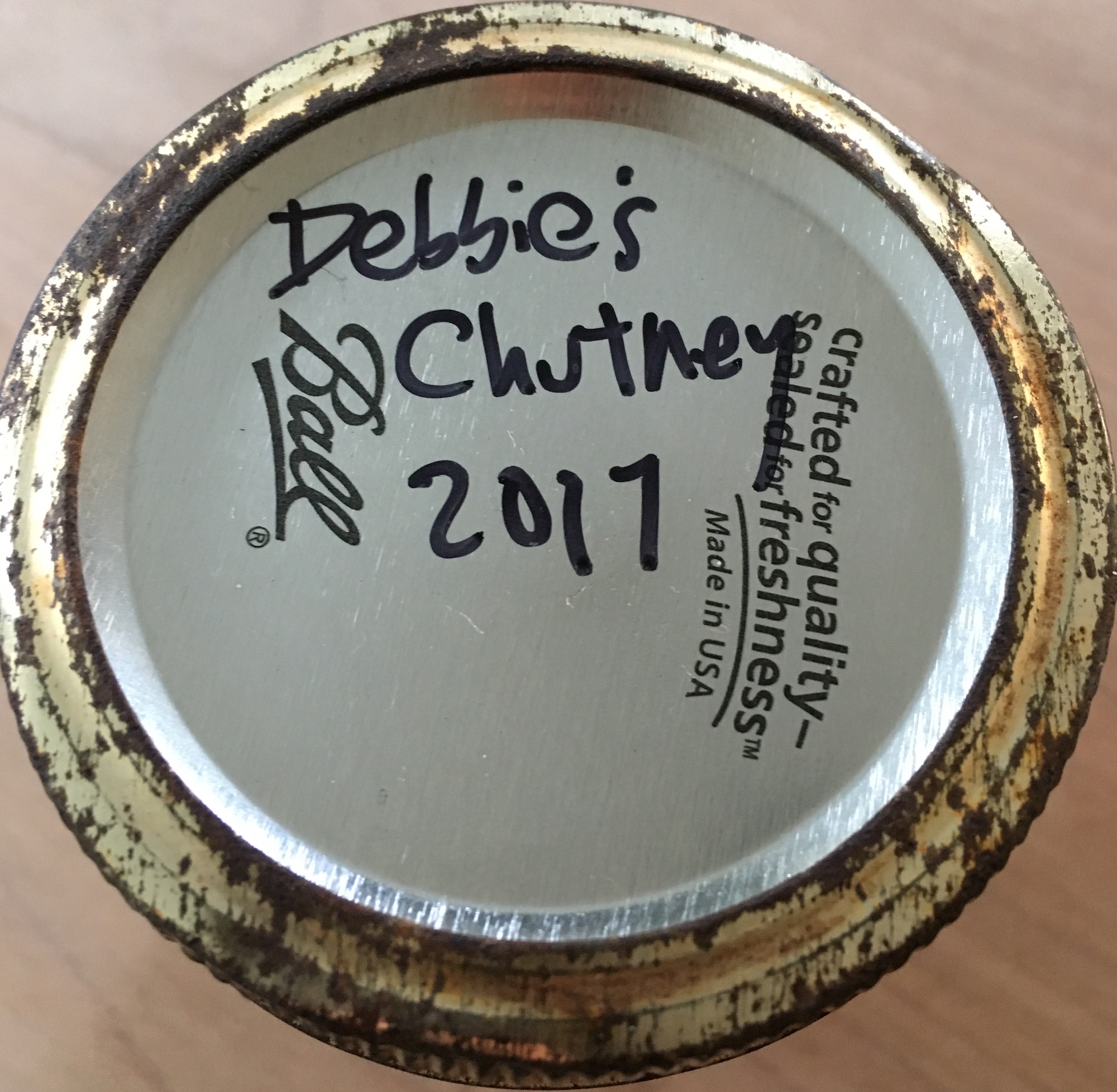
We pulled a jar of chutney from the cabinet a few days ago, and it inspired hours of speculation.

Who is Debbie? My husband made the chutney, and he labeled it, but no one can remember why it’s called Debbie’s chutney. Did someone named Debbie give us some fruit that was used in the chutney? Is Debbie an acronym for something? Delicious black boy [peach] interesting experiment? Is it a description of what’s in it? December berries?

The truth is, no one remembers. Which is a shame—I’m sure it’s a good story.

Many of our preserves and homemade products have names that tell a story, or describe what went into them. Just a few memorable ones:

Strawgooberry Jam—strawberry and gooseberry jam

Brewcurgooberry Jam—black currant, strawberry, red currant, and gooseberry jam.

Windfall Chutney—made from not-quite-ripe apples that blew down in a storm.

Black Daze of May—a dark beer brewed during a May several years ago when it rained continuously.

Baby Butt Bitter—a beer brewed many years ago during the potty training phase of one of the children.

Non-Dillicious Pickles—a batch of dill pickles that I forgot to put dill into (they were actually quite good)

Ginpricot Jam—apricot and ginger jam

Taumutu Squeak—mozzarella cheese that hasn’t quite worked properly and can’t be stretched, but squeaks when you bite into it

And, of course, Summer Soup—soup made of all the late summer vegetables.

So…

Who the hell is Debbie?

Missing My Mix

I planted my first vegetable seeds this weekend. I had planned on planting them last weekend, but when I looked at my garden notebook from previous years, I decided it was a few days too early. So I was doubly eager to get my hands dirty this weekend.

But when I opened one of the bags of growing mix I bought this week, I discovered it was thick with fungal hyphae. They’re saprophytic fungi, to be sure—not technically interested in eating live plants—but in that kind of quantity, they could easily overwhelm my seeds and seedlings. When I opened the second bag of mix, I found it was the same.

I looked at the mountain of seeds I intended to plant, then at the small quantity of growing mix I had left from last year. There was no way I had enough to plant everything. It was already past 1 PM on Saturday—the nearby stores would be closed for the weekend. To get more soil would require a 45 minute drive to the city. Yuck.

So I did triage. Some of the plants I start in August are summer crops that need a long time indoors to get growing (eggplants, peppers, cape gooseberries). These I planted today. Others are spring crops that can go out to the garden as soon as they’re big enough to survive the slugs, birds, and drying winds. Every year I’m in a race with those early crops. They’re always ready before I’ve prepared the garden beds for them. I left many of these for next week.

In the end, the lack of planting mix will probably mean a more pleasant, less stressful spring planting season for me. And if it goes well, I might look back at my garden notebook next August and learn a thing or two about pacing my planting.

A Look at Larvae

They’re just midges. If anyone pays attention to them at all, it’s to note how irritating they are when they swarm by the millions, here near Te Waihora/Lake Ellesmere. They are annoying at times, swarms so thick you can’t breathe without sucking in a few.

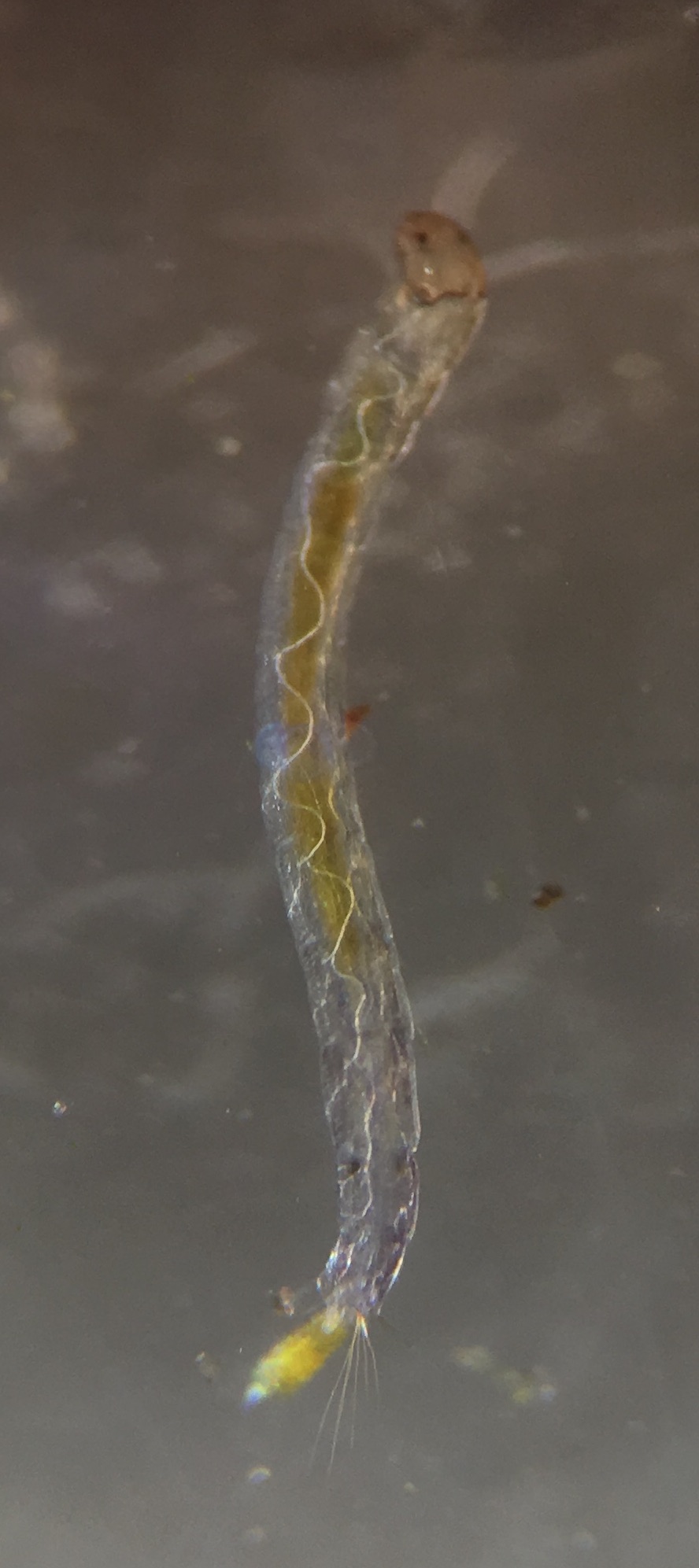
But there are few adults flying at this time of year. Most are still waiting out the winter as larvae underwater. Midge larvae are fun to look at under the microscope, as their exoskeletons are clear, allowing a great view of the inner workings of their bodies.

Seeing the inside of an insect larva helps one appreciate the job a young larva is tasked with—eat. Eat as much as you can and grow as fast as you can. A larva is little more than a mobile digestive system. The brownish streak you can see running the length of this midge larva is the animal’s gut, filled with the algae and other debris it has eaten. At the tail end, you can see, this little larva is having a poo.

Also at the tail end is a wee snorkel of sorts. These midge larvae can survive in low-oxygen water by sucking air from the surface using their snorkel. The silver lines meandering the length of the body are trachea that carry oxygen to all the insect’s cells.

This midge larva was tiny—about two millimetres long—it still has a while to grow before it’s ready to become an adult. But there are lots of other larvae out there getting ready to emerge with the upcoming warm days of spring.

Food, Sleep, and a Good Scratch

I know it’s been a good day of writing when I suddenly realise it’s four o’clock, and I haven’t written a blog post for the day or prepared for tomorrow’s school programme or fed the animals, collected the eggs, filled the firewood box, gotten the mail…

Thankfully, I have an effective alarm to let me know when I’ve gotten too wrapped up in writing and need to stop.

“Maa…”

“Maa…”

“Maaaa…”

The goats are polite, but insistent. They like their afternoon feed, and let me know when it’s late. Animals are good for that. They don’t get caught up in things going on inside their heads. Life is clear and uncomplicated—food, sleep, a good scratch now and again.

Sometimes it’s important to be reminded of that.