Ruined by Popularity

Twelve years ago, we made the hair-raising drive out to Tumbledown Bay, on the recommendation of a colleague.

We fell in love. The remote bay with its sandy beach, kid-friendly waves, stunning scenery, and fabulous wildlife was exactly what we wanted in a beach. We began going there regularly.

For a few years, we could count on sharing the beach with, at most, half a dozen other people–that was on busy days. It was an intimate, private sort of experience, and those who found themselves together at Tumbledown Bay often struck up conversations (or, as we did on one of our very first visits, lasting friendships). It was a certain kind of person who went to Tumbledown, and everyone respected the desire for a crowd-free beach experience.

But word got about. Partly our fault–we praised the beach and encouraged our friends to visit it. Last week, when we arrived at Tumbledown Bay, there were already a dozen cars there, and more kept pouring in as the day wore on. The narrow footpath over the dunes had been replaced by a wide, driveable lane, and there was even a car on the beach. A rubbish bin overflowed at the end of the lane. Beach tents, boom boxes, people harassing the seals, dogs leaving ‘gifts’ along the waterline…it was no longer our Tumbledown Bay.

By any Northern Hemisphere standards, the beach was sparsely populated. But Tumbledown Bay isn’t equipped to handle crowds. It has no facilities, and the road to and from the bay is steep, narrow, and in poor shape. It’s not a road on which you want to meet oncoming traffic, but last weekend there was no way to avoid it.

It was possibly the last time we will visit Tumbledown Bay. A shame, really. It was a magical spot.

Currant Clearwing

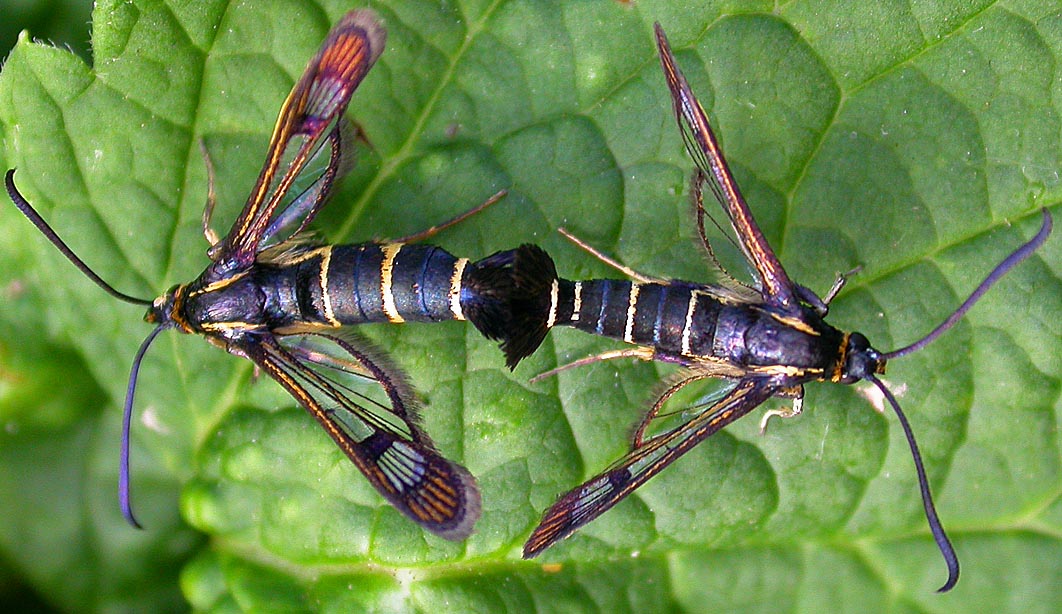
Mating currant clearwings. Photo: Plantsurfer, public domain

They’re the most beautiful pests in the garden. Currant clearwings are moths, but they would like you to think they’re wasps, with their clear, narrow wings and yellow stripes. The deception deters predators who don’t want to tangle with a dinner that stings.

Adults emerge in early summer. They lay their eggs on the growing tips of currants and gooseberries. The caterpillars hatch out and burrow into the stems, killing them.

We’ve had the occasional currant clearwing in the past. Mostly, I let them go, because there were few of them, and I do like the way they look.

But this year there are many, many more than usual. I’m squishing all that I see. They leave gold dust on my hands when I do.

Hopefully, my efforts will be effective, and we’ll go back to just a few currant clearwings next year, so I don’t have to kill so many of these beauties.

Giving Thanks

Special thanks to plate tectonics for this…

Thanksgiving Day in the U.S.

We don’t even try to celebrate it here anymore, for obvious seasonal reasons.

Still, today, and every day, I am thankful for many things:

  • An incredible, supportive partner who has stuck with me for over 25 years.
  • Two really cool kids, and all the amazing teachers that have helped them grow
  • A home that feeds my soul and my family
  • The health to physically manage half an acre of food-producing garden
  • Lovely friends
  • Forty-seven years of rich experiences to give me ballast
  • A world of wonders to explore
  • My adopted country, where I have been so warmly welcomed
  • Sunshine
  • Rain
  • The opportunities life has presented me
  • The difficulties life has presented me
  • All the little things that make me smile–fresh basil, strawberries, hedgehogs, skinks, jumping spiders, lavender…

I could go on and on. Mostly, I am thankful to have the opportunity to take this ride on rollercoaster Earth.

Enjoy your day, enjoy your ride.

The Christmas Season

Twelve years ago, I was facing my first Christmas in the Southern Hemisphere. Everything felt wrong. I tried to carry on the traditions my husband and I had established in the States; I made truffles and cookies, I decorated with fresh greenery, we strung Christmas lights, we planned a big Christmas dinner, we played Christmas music.

The truffles melted, the greenery turned brown, the Christmas lights were invisible in the long summer evenings, the heavy dinner sat like lead on a hot summer day.

I longed for snow, and all the indoor family time of the northern holiday. I wanted long nights, candles and a roaring fire. I wanted hygge. But it was summer—time to be outdoors, on the beach, enjoying the sun.

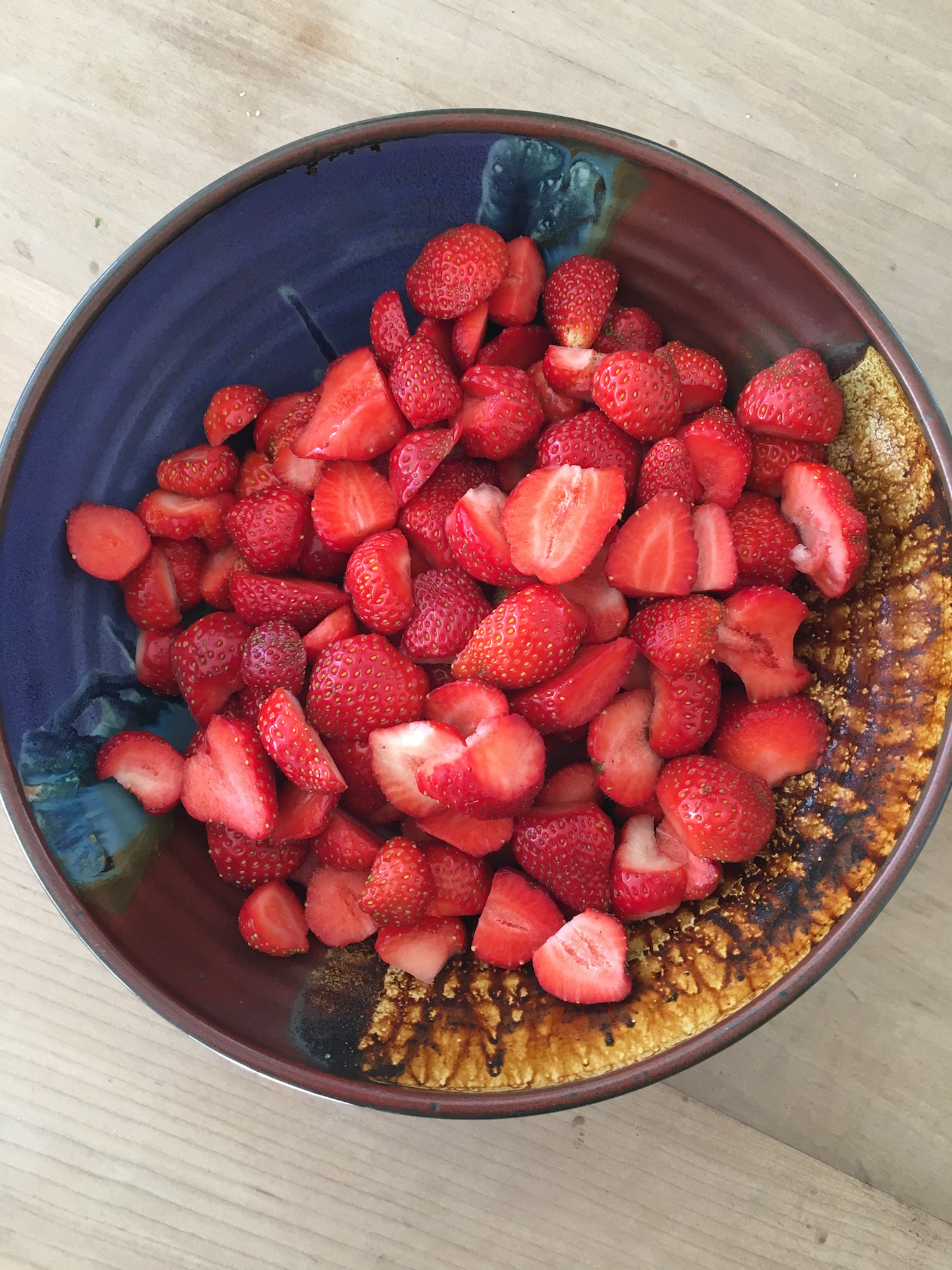
Slowly our traditions have adapted to this southern holiday. I realised how far I’d come on Sunday morning. Slicing strawberries for breakfast, the smell of berries made it feel so Christmassy, I started humming carols. Then I laughed at the idea that strawberries equal Christmas.

I thought about all the things my kids have grown up associating with Christmas—long days at the beach, gardening, strawberries, cherries, making jam, making sauerkraut (which usually happens about Christmas eve every year), the ‘traditional’ Christmas salad, the first new potatoes, broad beans, backpacking.

We rarely play Christmas carols anymore (who wants to be indoors?). We bake fruit pies, and not many cookies. We use red carnations from the garden for Christmas decorations. Rather than being a time for focusing inward, Christmas is a time for adventuring—traveling, hiking, exploring.

And so, as we start into this Christmas season, I am looking forward to our travel plans. I’m looking forward to many days at the beach. I’m looking forward to the summer bounty from the garden. I’m looking forward to ice cream, roadside stands selling Otago cherries, outdoor dinners, and warm sun.

And that, I think, is the key of the season—to celebrate what is good about the here and now. To celebrate the bounty we’ve been given, whatever form it comes in—love, friendship, snow or strawberries. To be mindful. To be present in the moment.

Gooseberry pie

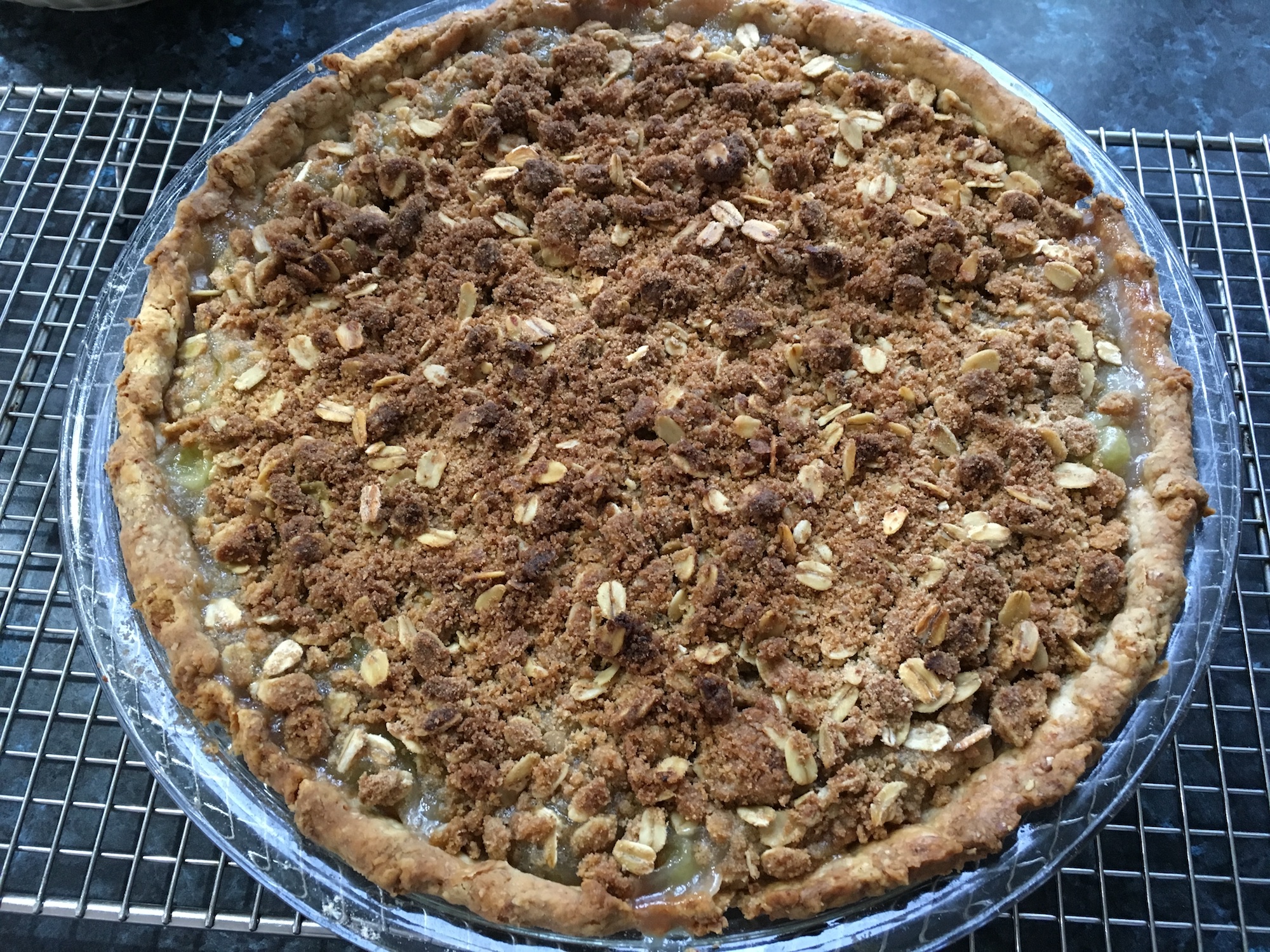
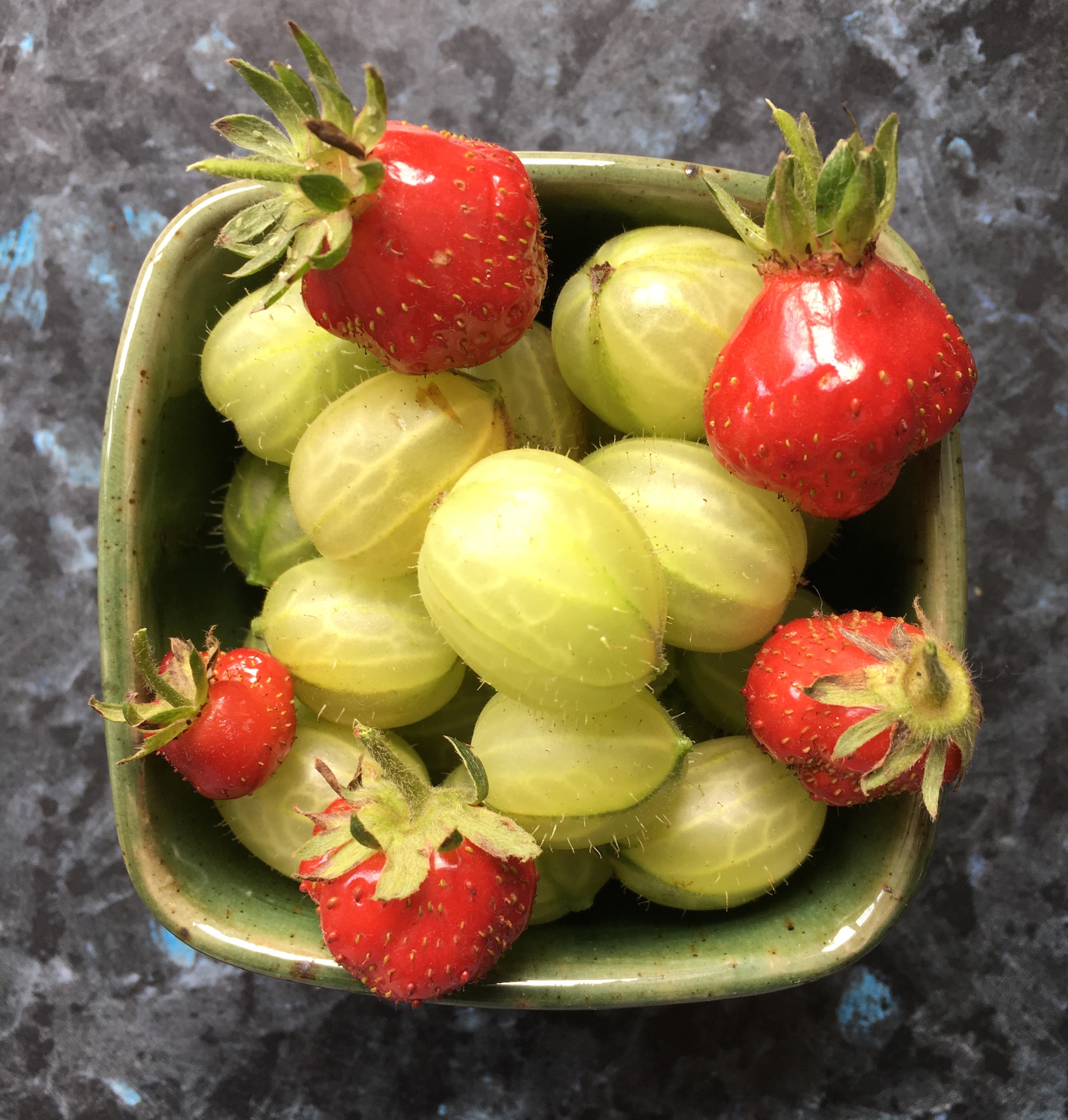
It’s a good year for gooseberries. Our supply of them seems to be limited only by our tolerance for the spines. Gooseberry jam, gooseberry ice cream, and the tartest, most gorgeous pie…

4 cups fresh gooseberries, stemmed and tailed
1 1/4 cups sugar
1/4 cup all-purpose flour
1/4 tsp nutmeg

pastry for 1 pie crust

Speedy Streusel:
2/3 cup wholemeal flour
1/2 cup brown sugar
2/3 cup old-fashioned rolled oats
1 tsp cinnamon
5 Tbsp melted butter

Roll out the dough and line a pie plate. Refrigerate until ready to use.

Mix all ingredients for the streusel, stirring until crumbly. Set aside.

Put gooseberries in a medium saucepan and add a few tablespoons of water. Heat over medium heat until the berries ‘pop’. Combine sugar, flour and nutmeg. Add these to the gooseberries and cook until thickened.

Pour gooseberries into the pie dough. Sprinkle streusel on top. Bake at 190ºC (375ºF) for 30 minutes. Cool completely before cutting.

This pie is very tart. Serve small slices, accompanied by whipped cream or vanilla ice cream.

‘Tis the Season

And So It Begins…

We’ve been watching the berries for weeks, and the signs have been promising. The gooseberry bushes are dripping with fruit. The currants, too, promise a good harvest. In spite of a viral infection, even the strawberries are managing a crop. The raspberries are humming with bees, attracted to a plethora of flowers.

The first harvest was tiny—a handful of berries—but it marks the beginning of my favourite season on the property. The season of fresh fruit. It begins with strawberries and gooseberries, moves on to currants, cherries and raspberries, and ends with apricots and plums. Watermelons, apples, and peaches come late in the year, and they’re lovely, but nothing compares to the early summer fruits. Their season is short, but bountiful. It’s the season of jams, fruit pies, and fruit ice cream. The season of gooseberry fool, strawberry-smothered waffles, and apricot upside down cake. It is the season of plenty.

In festive red and green, ’tis the season, indeed.

Pheasants: Honorary Natives

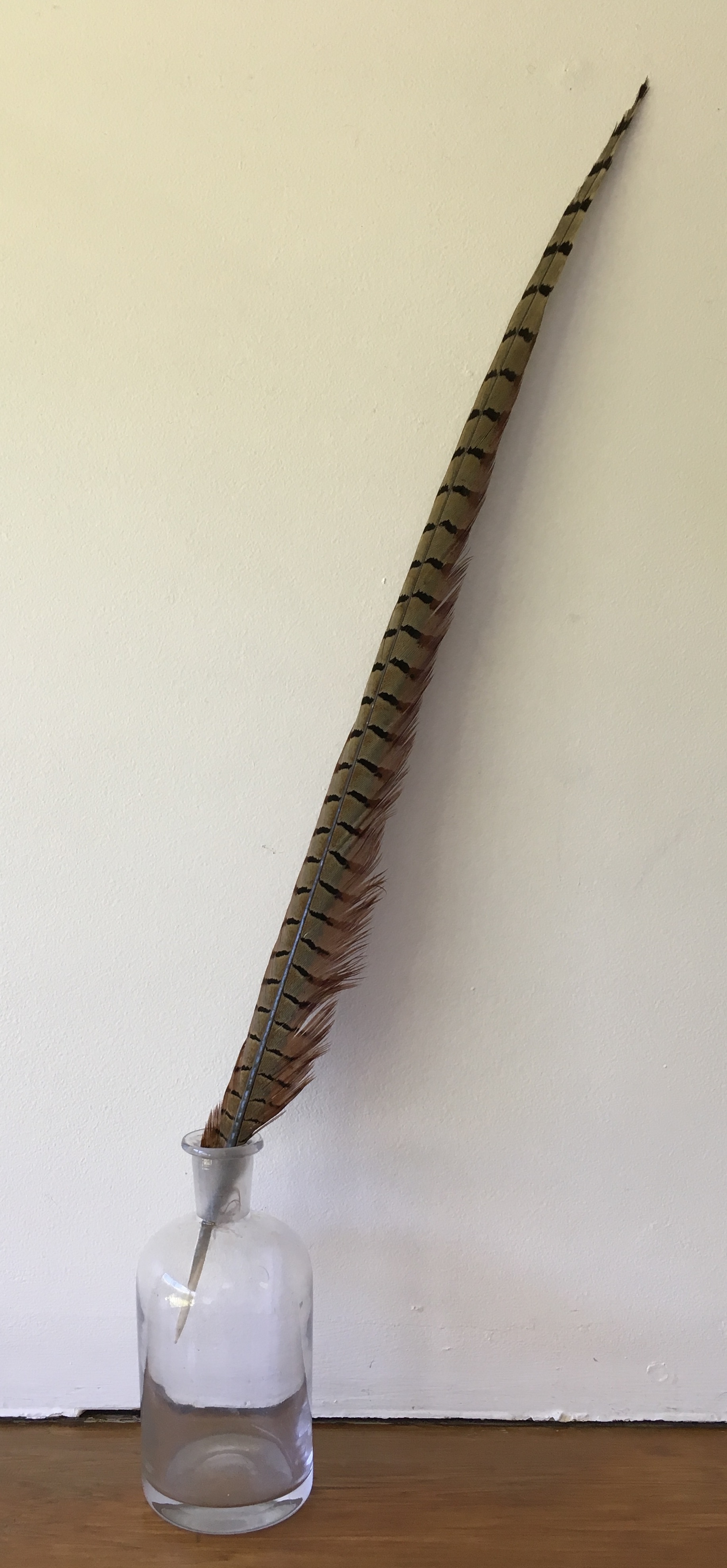
We’ve had a lot of pheasants around the house this spring. The common pheasant (Phasianus colchicus), also known as the ring-necked pheasant. Is a curious bird…or rather, our relationship to it is curious.

The common pheasant is native to Asia, but has a long history in Europe. It was probably introduced by the Romans, and the first printed mention of the bird in Britain was in 1059.

Who knows what ecological impacts the pheasant had in Britain? I doubt anyone paid attention at the time. By the time people began to worry about conservation, in the early 1800s, it was the pheasant they worried about, as its numbers declined with land-use changes and the introduction of firearms for hunting.

The pheasant was first introduced to North America in the 1770s, and has naturalised in many areas. As in Europe, it has become a popular game animal and is the focus of conservation efforts, in spite of its non-native status.

Many years ago, I applied for a job with a ‘conservation’ organisation in Minnesota. Though I was ultimately offered the job, I turned it down, because its sole focus was on the maintenance of pheasant populations for sport hunting. I struggled to view that as conservation in a place where pheasant habitat was incompatible with habitat for threatened native animals, and where maintaining a pheasant population required captive breeding, because winters are simply too harsh for it to survive, even with appropriate habitat.

Even in Hawaii and New Zealand, where introduced species are almost universally considered pests, the pheasant is fussed over and cared for as a native—bred in captivity and released to keep its numbers up for the benefit of sport hunting.

A search for information on the ecological impact of pheasants is curious. Many sources presuming to address the ecology of pheasants deal only with the threats to pheasants themselves, not pheasants’ impact on the native ecology around them. It is as if even researchers have turned a blind eye to the fact pheasants are non-native over most of their current range. In truth, their impact is undoubtably small compared with non-native predators like stoats, cats, and rats. They tend to prefer disturbed, agricultural habitats (though they have been recorded as competing with native prairie birds in North America) and feed primarily on cultivated foods, weeds, and insects.

Yes, they feed primarily on crops. They’re crop pests. They particularly like grains and small fruit crops, and can cause significant losses in grape vineyards and in small holdings.

So, why do we embrace the pheasant so unreservedly? Let’s face it, most of us don’t eat pheasant, so we get no benefit from the bird. But it seems its long historical association with people and the agricultural landscape have made it almost a domesticated species. And, as we put up with the chickens occasionally wreaking havoc in the garden, so we put up with the pheasants, too.

Summer Rock Concert

It’s a cicada; it must be summer.

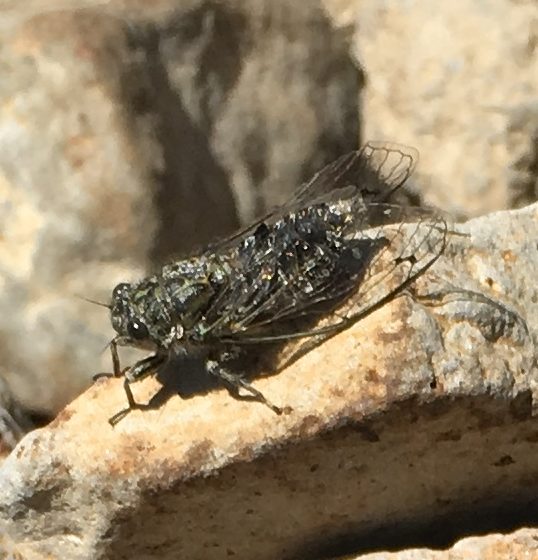
The main cicada season doesn’t really start until the chorus cicadas (Amphisalta zealandica) come out after Christmas, but two weeks ago, we found a few chirping cicadas (Amphisalta strepitans) on the rocks around Okains Bay.

Cicadas are largish, as insects go, but they’re well camouflaged. Usually, you find them by sound. As with most insects, it’s the males that do the singing. The main part of a cicada’s song is made by flexing plates (tymbals) on top of the body. Built-in amplifiers (opercula) pump up the volume to an astonishing level. Cicadas are noisy. I don’t know if any of the New Zealand species have been tested, but the calls of some North American cicadas are over 105 decibels at a distance of 50 cm. That’s nearly as loud as a rock concert (115 decibels). When the chorus cicadas here in New Zealand come out in large numbers, they can be so loud in some places that it’s impossible to carry on a conversation.

Some New Zealand cicadas add an extra feature to their song—a bit of drumming called clapping. The cicada snaps the leading edge of its wings against a branch to make a sharp click. Females also clap, and I’ve read (though I’ve never tried it) that you can call the males to you by snapping your fingers.

There are about 2500 species of cicada worldwide. Because of their size and volume, they seem to be culturally important wherever they live. They are eaten as food in many areas, and sometimes used as fish bait. Growing up, my siblings and I used to collect the shed exoskeletons of cicadas and attach them to our clothing like jewellery. When I lived in Panama, the children would catch cicadas and tie strings to their feet, then carry them like helium balloons, flying on the end of the string.

Wherever they live, they mark the seasons. Here in New Zealand, and in America where I grew up, summer hasn’t really started until the cicadas sing.

Loud singing? Drumming? Must be a summer rock concert!

Eau de Paddock

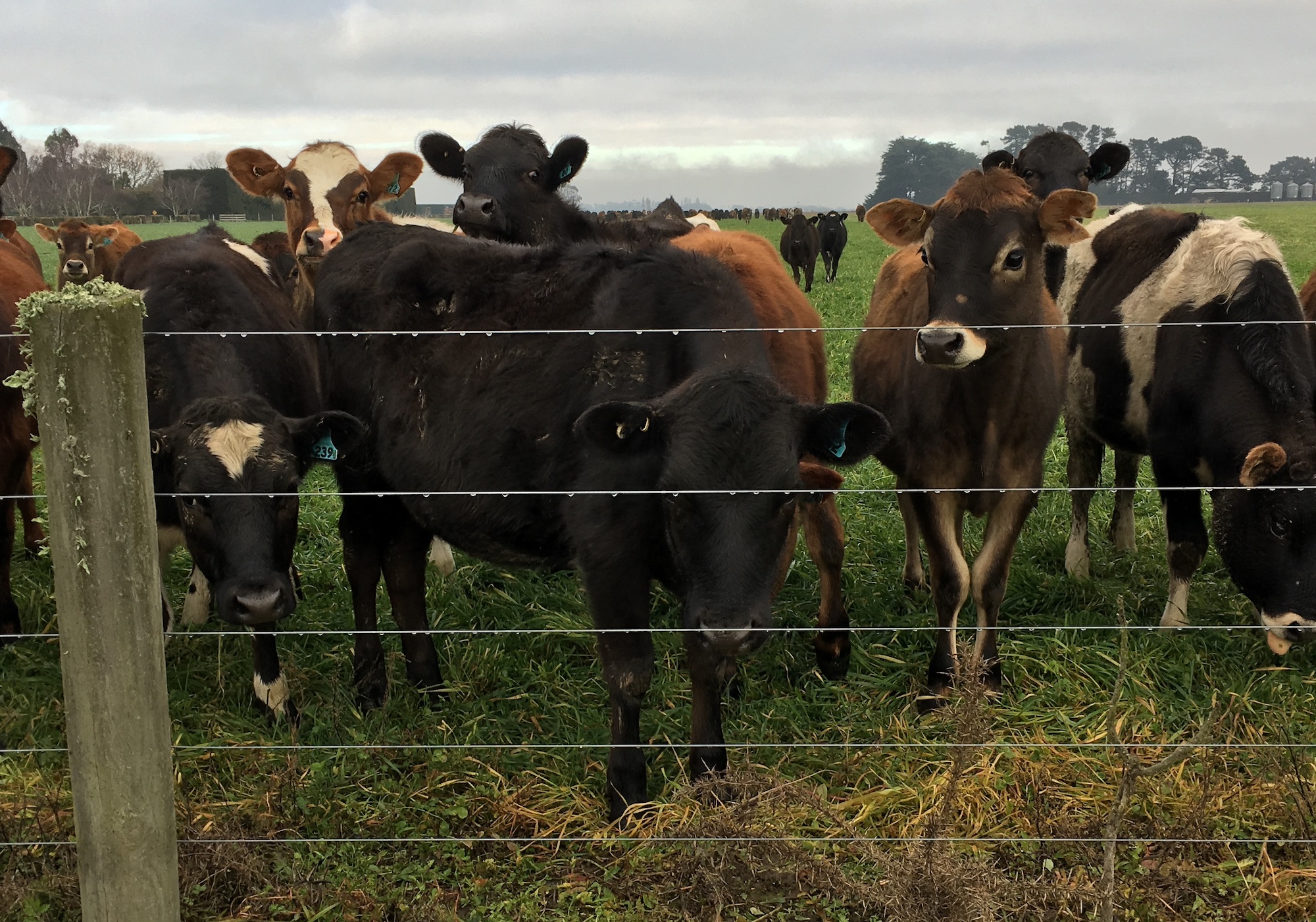
The smell of cattle and rank pasture grasses.

Most of you are saying, “Ew! Disgusting!”

But a few, I’m sure, are thinking, “Yep! Nothing else says summer like that smell.”

And I can guess that, if you’re in the second group, you grew up running barefoot through yours or the neighbours paddocks as a kid. You hopped the fence, dodged the cows (or if you were unlucky, the bull), and swished through tall grass to the creek where you’d wade in the ankle-deep water for hours in the hot sun, catching crayfish, water striders, and dragonfly nymphs. You’d follow the trickle upstream to ‘the dam’, made by countless ten-year-old hands over decades of summers. The pool behind the dam always teemed with minnows, and you’d stand still, hands outstretched in the water hoping to catch one.

The whirligig beetles loved the pool behind the dam, too, and their jiggling, twirling dance on the water’s surface sent ripples across the water, bouncing and refracting into mesmerising patterns.

All the while, the sun heated grass and cow pies, and the perfume of the paddock hung in the hot air and clung to the back of your neck like your sweaty hair.

And when the sun finally began to sink in the west, and you knew dinner was waiting for you at home, you’d climb up from the stream and swish through the paddock again, the cows further off now, in the lengthening shade of the trees. You’d climb back over the fence and take one last, deep breath, storing the summer day, and saving it for tomorrow.

And now, forty years later, you drive past a paddock on a hot day, and in a single breath, you are suddenly ten again, ankle-deep in a creek catching crayfish.

An Abundance of Artichokes

It’s a terrible thing, having excess gourmet vegetables. We are in our usual springtime artichoke excess. It’s not unusual for us to eat eight or nine artichokes five days out of seven.

A quick online search shows artichokes currently selling for anywhere from US$3 to 10 per pound (that’s NZ$9-31/kg). Given we easily eat a kilo per meal…Well, you get the idea. If we had to pay for them, we couldn’t afford them.

Of course, the problem remains–what do you do with that many artichokes? We preserve quite a few for use at other times of the year, but that still leaves plenty to enjoy during the season.

We eat a lot of artichokes in risotto, pasta, pizza, and gratins. The other day, I tried a new way of preparing them–crusted with parmesan and baked.

It’s simple, if a bit time-consuming (it would be trivial if you simply bought canned or frozen artichokes).

First, prepare the artichokes: snap off the outer leaves, peel the base and stem, trim off the top 1/3 of the leaves, remove the choke and any spines on the inner leaves, and cut the remaining heart into wedges. Drop wedges into a bowl of lemon juice and water as you go to avoid browning. Drain and steam for 3-5 minutes, until just tender, but not falling apart.

Then prepare the breading: mix in a medium bowl 1 cup bread crumbs, 1 cup grated parmesan cheese, 1/4 cup finely chopped parsley, 1 tsp salt, 1 tsp paprika, 1/8 tsp cayenne, and black pepper to taste.

In another bowl, beat two eggs.

Dredge the artichoke wedges first in the egg, then in the breading to coat thoroughly. Arrange in one layer on an oiled baking sheet. Bake for about 20 minutes at 190°C (375°F) until brown.

I served them plain, but they would be lovely with a dipping sauce like aioli or skordalia. They made a delicious accompaniment to the tiropitas (spinach and feta triangles) and salad that rounded out the meal.