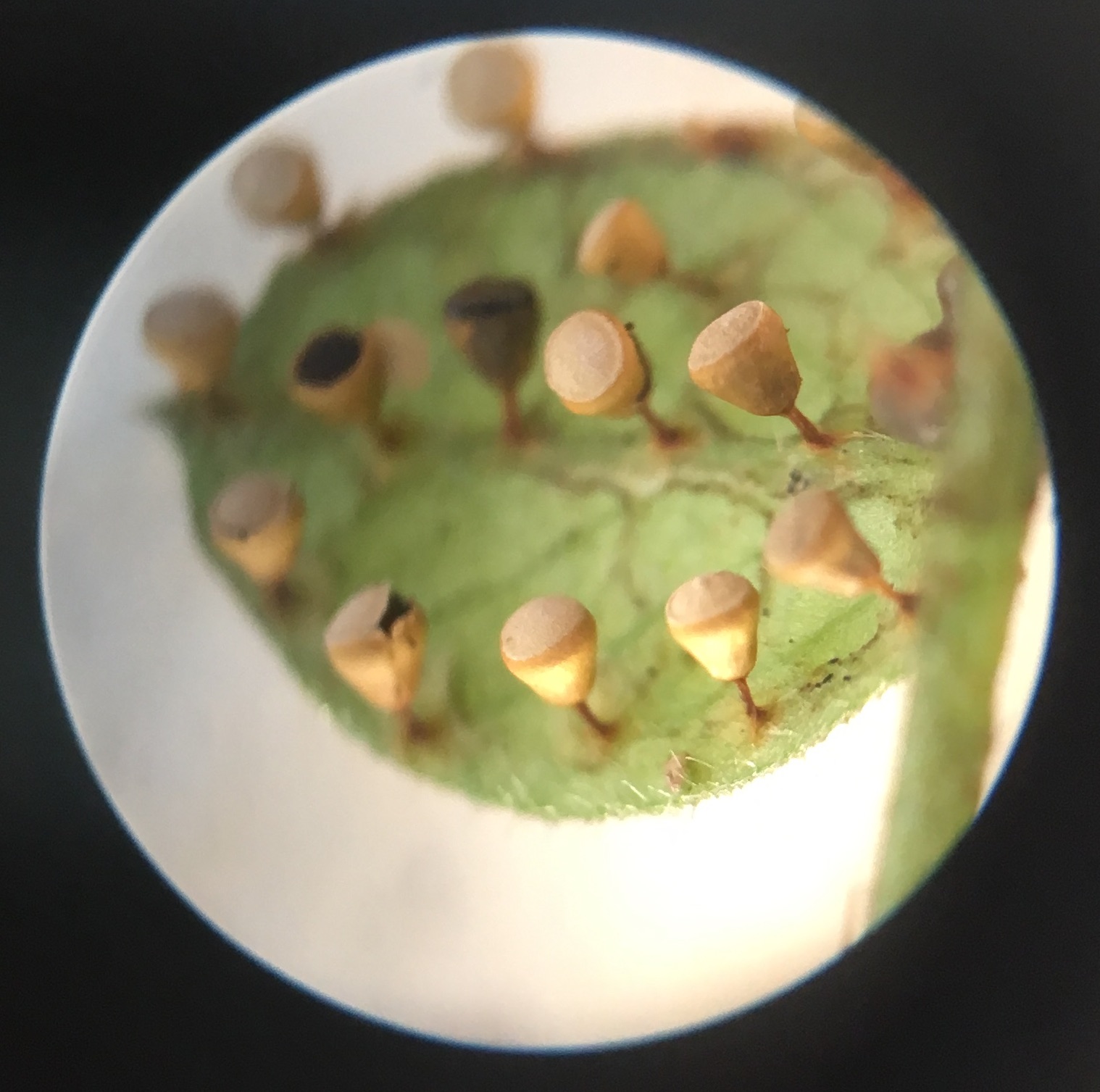
Backyard Biodiversity

Craterium minutum

I know it’s been a good weekend when I arrive in my office Monday morning to find my microscope in the middle of the desk, and dirt and bits of plant material strewn about.

It means I’ve been outdoors, seeing cool stuff, identifying plants, insects, or other organisms.

Once you start looking at and identifying what lives around you, the variety is astounding. A glance at the citizen science website iNaturalist shows a pile-up of dozens of observations at our address—and those are only the species we’ve bothered to upload.  I’ve identified 58 species of weeds in the vegetable garden alone. We have half a dozen slime moulds, dozens of fungi and lichens, who knows how many insects and other invertebrates. Then, of course, there are the birds, rats, mice, stoats and other vertebrates. I’ve never bothered to make lists of anything beyond the weeds.

So here in the dark depths of winter, I’ve decided to start a comprehensive list of the biodiversity on our little acre and a half. It will take time. It will require my microscope and many Monday mornings brushing dirt off my desk. But wouldn’t it be cool to know exactly how many other species we share this patch with?

And though many of the species I’ll put on my list are ones I’ve noted many times before, I’m sure some will be new and surprising, like the beautiful slime mould, Craterium minutum my daughter found last week.

Because, the truth is, we needn’t travel far to find natural wonders. We merely need to look closely and have a sense of wonder.

Here Comes the Sun

After weeks of grey, unending drizzle, we’re finally seeing a bit of sun. Mushrooms abound in the yard, revelling in the dank mist we’ve been swimming through for a fortnight. We are all eagerly awaiting passing of the solstice and the lengthening of the days.

Though it is still pretty dark and drear, and the days will still be short for some time, there are signs of the spring to come.

Lambing has started. This is the time of year when the neighbours grow noisy, with lambs and ewes calling to one another day and night.

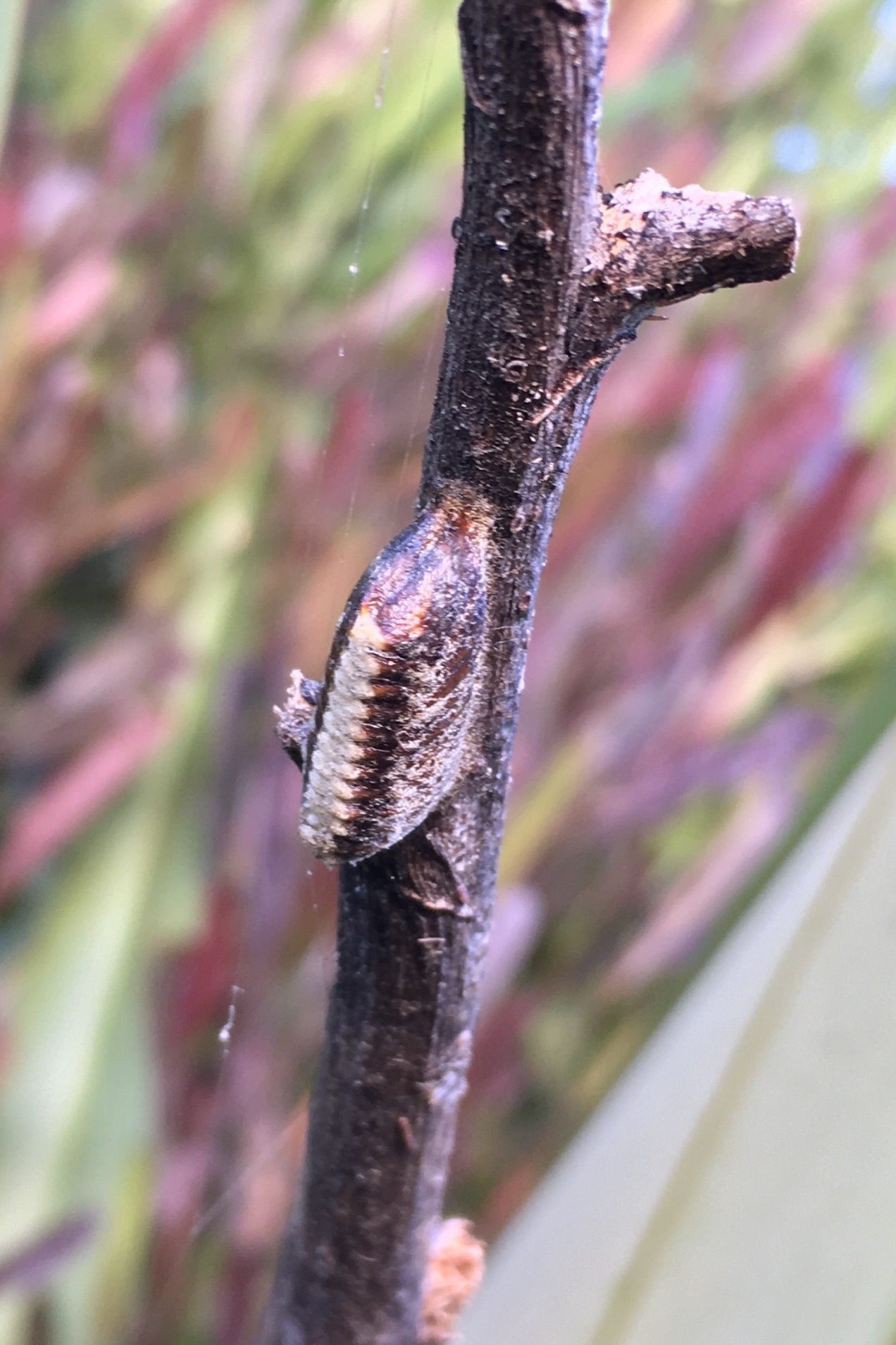
The preying mantids are gone, but their egg cases are dotted around the yard, promising a healthy population of my favourite predators come spring.

The daffodils and snowdrops are coming up, and I’ve even seen them blooming in other people’s yards.

And tomorrow is the solstice. Friday, the sun will remain above the horizon fractionally longer than it did the previous day. We’ll be on the upswing.

Throwback Thursday: A Journey with Sammy Sandoval

Home sweet home

I started writing a post about the winter weather we’re experiencing this week, but it was as grey and dull as the sky.

Then my husband played a song by Sammy and Sandra Sandoval, and I was transported back 25 years and 11,000 kilometres to the tropical heat and sun of Panama in 1993, where we served in the Peace Corps.

Like all our neighbours in the province of Coclé, my husband and I loved Sammy and Sandra Sandoval. They would play in the little villages sometimes, and we’d go see them whenever we could. Their music was loud and joyful, and we’d walk hours to pack into a crowded room and dance to it.

But what I remember most is the silent walk home from the first of those dances. Leaving the noise and sweat of the dance hall, we stepped into the dark night of the campo. No lights, no roads, just a packed clay footpath and the sound of music receding behind us.

That walk was magical. I don’t know if the buzz was from the music, the beer (Cold beer! What a luxury!), or the faint glint of moonlight off the palm trees. Most likely, it was from the blessed silence and the recognition that, in walking an hour and a half to dance Panamanian tipico, we’d stepped irrevocably out of our previous lives.

Navigating our way home on a familiar path lit only by moonlight, we traveled much further than the few kilometres of hilly mountain terrain between the dance hall and our house. In that short space, we traversed a one-way path that left our past lives behind. Yes, we’d already made many steps along that path before, but that night was the moment I knew we could never go back. The magic of that moment is that I never heard the door click shut behind us; I only saw the landscape open out in front.

Pumpkin Pancakes

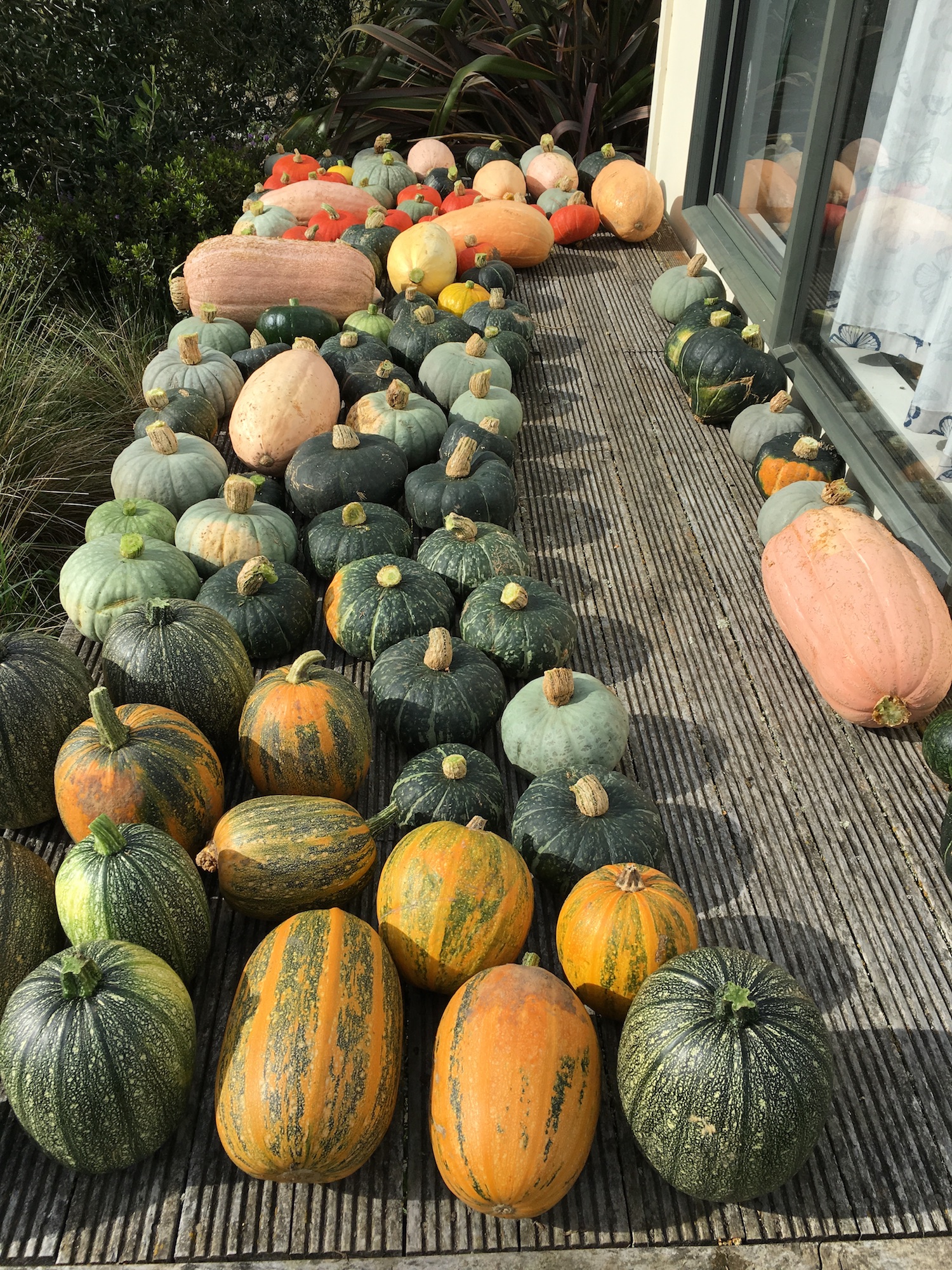
Now that winter has set in, we’ve turned our culinary sights from eggplant and courgettes to pumpkin, pumpkin, and pumpkin. I blogged about our excellent pumpkin harvest earlier this year. That post was written mid-way through the harvest–ultimately we picked nearly 200 pumpkins and other winter squash.

So w’re eating a lot of pumpkin. That’s not a problem.

Yesterday I made lovely pumpkin pancakes for breakfast. They were moist, dense, and spicy—excellent with maple syrup or redcurrant jam.

To make these delicious pancakes, start with a double batch of my World Famous Pancake Recipe. Add 2 tsp cinnamon and 1/2 tsp cloves to the dry ingredients. Add 1 1/2 cups pureed pumpkin (or other winter squash—I used kabocha squash) to the wet ingredients.

If your pumpkin is dry, you may need to increase the milk to achieve the right batter consistency.

We found these pancakes didn’t store/reheat as well as regular pancakes—they became quite fragile upon reheating (though they were still delicious).

Beautiful Basket Fungus

Mature fruiting body

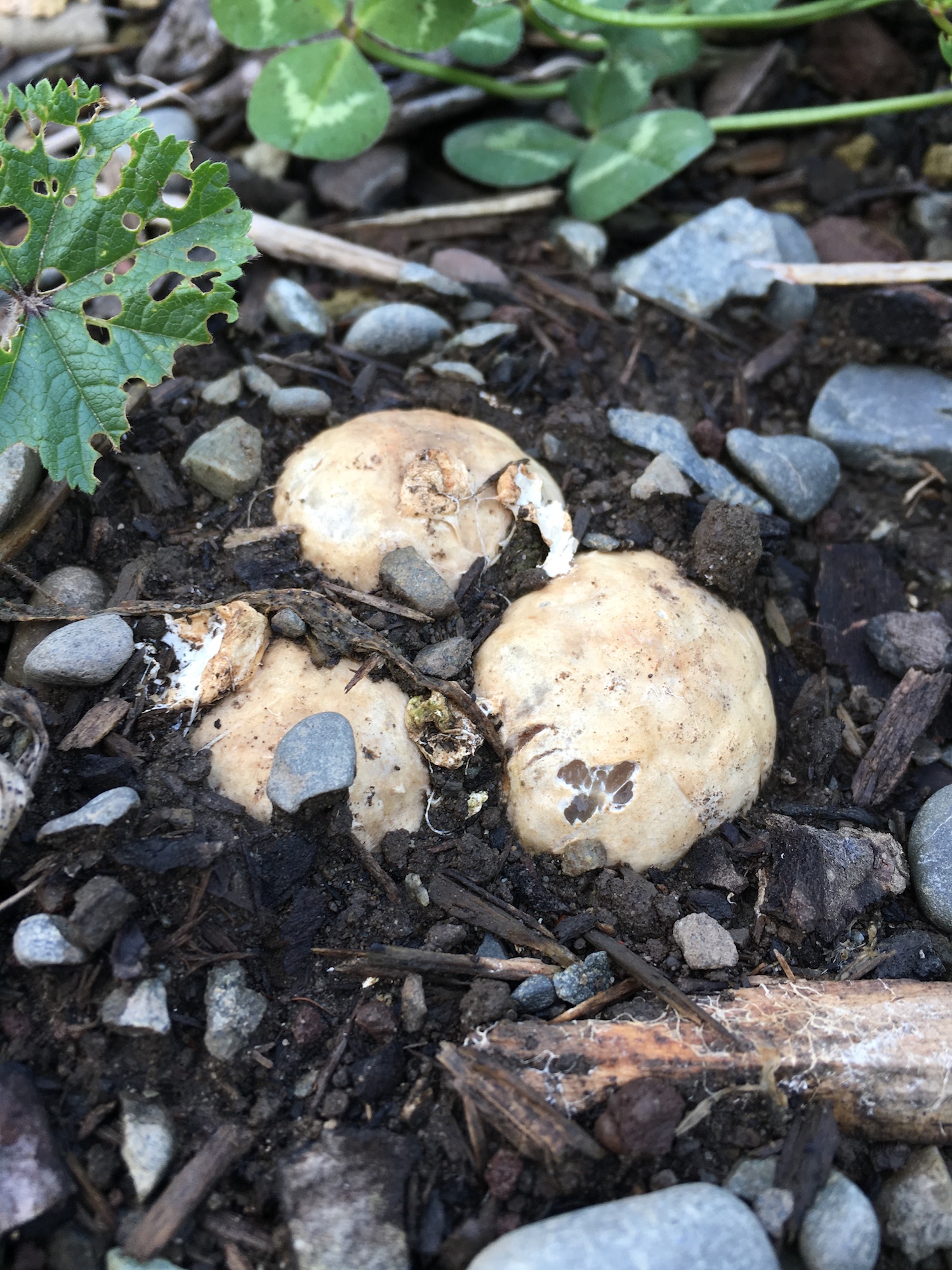
One of my favourite fungi is Ileodictyon cibarium, the basket fungus, native to Australia, New Zealand and Chile. We have been treated this year to an amazing display of these fungi in our recently wood-chipped pond garden. Usually we don’t notice them until the fruiting bodies are fully formed, but because there are so many this year, we’ve been able to watch their whole emergence, from egg-like volva to lacy soccer ball.

Aside from their striking look, there’s nothing particularly lovely about these fungi. The basket fungus is in the family Phallaceae, also known as the stinkhorn fungi. Members of this family—you guessed it—have a foul odour (and many are phallus-shaped). The carrion or dung-smelling fruiting bodies attract flies to disperse the spores. Supposedly, the young fruiting bodies are edible … but not very tasty, as you can imagine.

Immature volvae

In spite of their smell, basket fungi have a certain celebrity status, owing to their remarkable structure. In fact, in Hagley Park in Christchurch there used to be a play structure in the shape of a giant basket fungus. I’m not sure if it’s still there—my kids don’t frequent playgrounds anymore—but it was always a favourite with my kids.

You can take me out, but you can’t dress me up

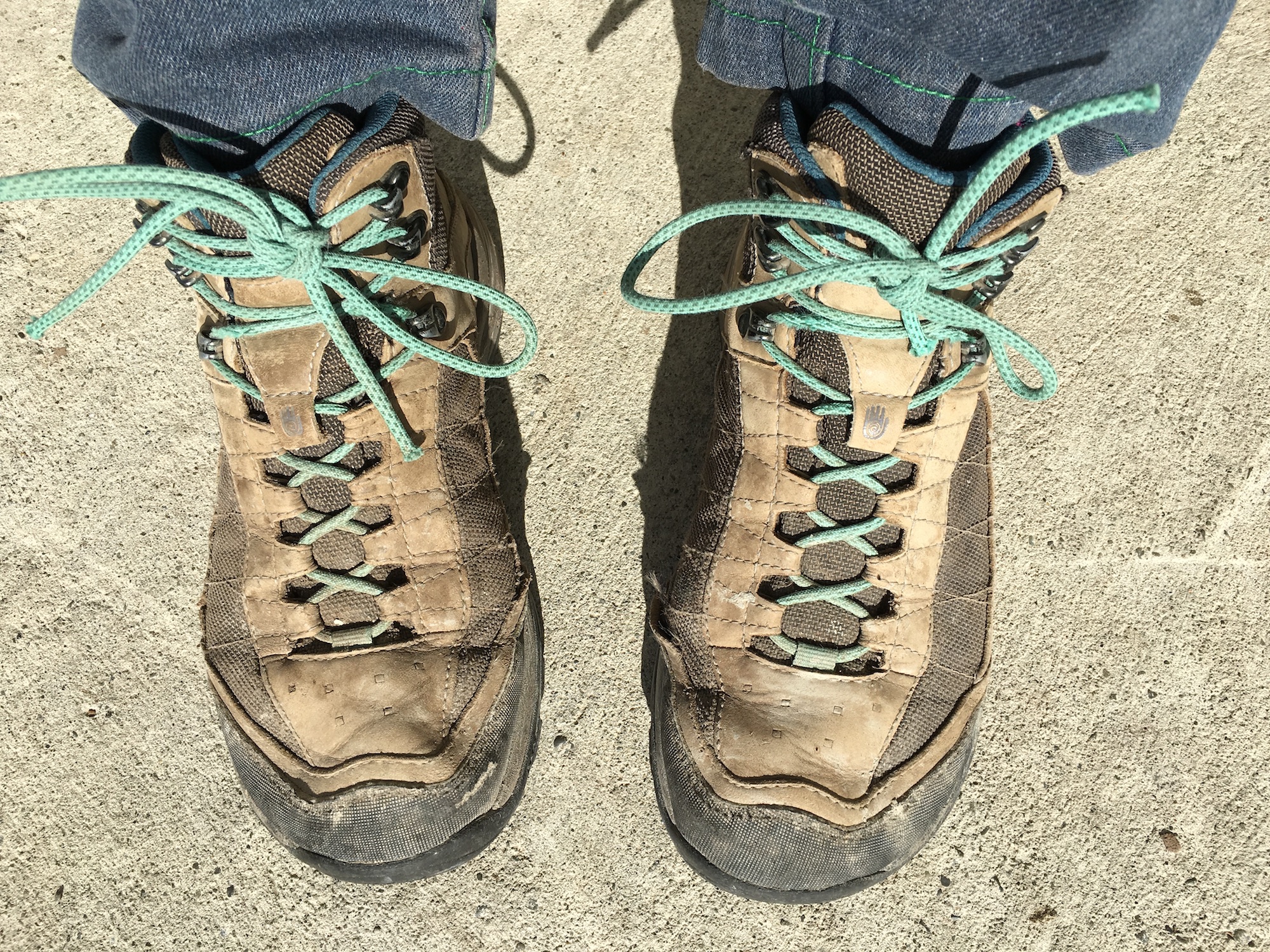
I laced up my shoes to go to town yesterday and thought to myself, “Gosh, these shoes are comfortable.” My next thought was, “Gee these shoes are looking a bit rough for town wear.”

Truth is, I’m a bit rough for town wear. I feel it every time I go for groceries. Other women arrive at the store in high heels and skirts, with flouncy scarves and jewellery. I rock up in my hiking boots, still dusty from my last trip. My clothes are clean, well-made and tailored perfectly for me (because I make the myself), but that’s just it—they’re tailored for me, and not just in the fit. Denim, cotton, lots of pockets, and comfortable enough to walk five kilometres in (because I never know when I’ll have the need or urge to take a brisk walk).

Even my ‘town’ shoes—the ones I wear when I’m trying to look at least somewhat professional—are wide, clunky affairs that are, quite frankly, ugly (but really comfortable).

Most of the time, it doesn’t bother me to be the unfashionable slob in town, but it doesn’t mean I don’t notice my wardrobe is wildly different from others’.

I could theoretically dress up to go to town. Somewhere, deep in the closet is one outfit that could count as marginally dressy. It would pass for normal in the grocery store. I expect it will last the rest of my life, given how seldom it comes out.

You can take me out, but you can’t dress me up.

The Sound of a Story

I sit down at my desk and breathe a sigh of relief. It’s quiet here, in my office. Not like the noisy library where I worked yesterday.

But, no, that’s not true. I hear the roar of the surf in the distance. The trickle of the artificial stream in the garden overlays the sound of the ocean. When I step to the office door, a goat greets me with a maa. Starlings mutter in the treetops, magpies warble on the fenceposts, and a fantail chitters in the shed. A plover’s percussive call is underlain by the chirping of a thousand crickets.

The neighbour rumbles past in his tractor, carrying a bale of silage. I can hear his son in the paddock shouting and whistling at his five barking sheep dogs.

It is far from quiet.

And yet …

Somehow, the sounds here caress my thoughts, rather than intruding upon them like the horrible Muzak from the library cafe, or the screams of tired children, or the drone of the automatic returns machine—please place the item on the trolly.

The fantail flits in and out of the story I’m writing without knocking over my coffee. The goats and sheep graze beside me without barging across the keyboard. The crickets keep to the grass. The tractor rumbles along without leaving tire tracks on my manuscript. The ocean doesn’t even wet my toes.

But somehow, I’m certain these sounds end up in my stories, caught up in the weave of plot and characters. The fantail is there, in the flick of a character’s fingers. The ocean is the relentless sound of the plot line. The tractor is the rumble of disaster bearing down on my protagonist. The goats’ deep maa is the voice of wisdom, and the crickets’ chirping lightens the mood.

Nursery web spiders

The nursery web spider (Dolomedes minor) is one of New Zealand’s larger spiders, in spite of it’s species name. At this time of the year, it’s also one of the more visible spiders, or at least its webs are.

Nursery web spiders don’t use webs to catch food. Instead, they use their silk to create shelters for their eggs and newly-hatched young. These shelters are visible in late summer and autumn on the tips of shrubby plants, especially gorse.

The female spider can sometimes be seen hanging around the web during the day. In fact, if she’s nearby, its hard to miss her, with a body nearly two centimetres long, and a leg span reaching six centimetres.

The nursery web isn’t the only care the nursery web spider gives her young. Until the spiderlings are near to hatching, she carries the egg sac with her to protect it. The young hatch out inside the nursery web, staying within the web’s protection for about a week.

The spiderlings disperse by ballooning—they let out a strand of silk until the force of the wind blowing on it is greater than their own weight, and then they float away on the end of the thread to a new home.

Like other members of the genus Dolomedes, the nursery web spider is an ambush hunter, chasing down its prey on foot. But most other Dolomedes do this exclusively on or in water, whereas the nursery web spider hunts on land as well as water, eating a wide range of invertebrates.

Home Fires Burning

Cat enjoying a good book by the fire.

I woke yesterday morning shivering under the summer quilt on the bed after a restless night listening to icy rain on the roof.

Time to switch to winter mode, I suppose.

I lit the first fire of the season.

It wasn’t long before the cat joined me by the fire. Then my daughter, then my husband, then my son…Nothing like a hearth to draw everyone together.

I think about the angst over today’s youth, separated from face-to-face interactions by their devices, and I think that perhaps what we all need are small, poorly insulated houses heated by inefficient wood burners. In a big, centrally heated house, it’s easy for everyone to retreat to their own rooms—shut the door, pull out the phone and troll the internet. But in our house, the only comfortable room in the winter is the 3×4 m living room. A teen who retreats to their room and shuts the door pretty quickly returns to warm up by the fire.

Yes, we may all sit here doing our own thing, but by gathering around the fire together, we share what we’re doing with each other. Someone might share a good line from the book they’re reading, or show a dumb cat video they thought was funny, or ask for help on a maths problem. Simply by virtue of proximity, we connect in other ways.

I will admit that on winter mornings, crawling out of a warm bed into the freezing air to light the fire, I dream of luxuries like heat pumps. And sometimes it would be really nice to have some space to myself, rather than do my knitting cheek-by-jowl with a teenager practicing a new juggling trick. But on the whole, I suspect the benefits outweigh the drawbacks. We humans are hardwired to sit around the fire talking to one another. Our ways of relating to one another, passing on wisdom and culture, and finding our place in a community evolved around the fire.

So, again this winter, I will keep the home fires burning.

The Pumpkin Fairy

It was most certainly the year of the cucurbit—from an abundance of cucumbers to an avalanche of zucchini, to a mountain of melons, and finally, more pumpkins than we can possibly eat.

My daughter picked about three-quarters of the pumpkins over the weekend—the total came to exactly 100, some of which are 15 kg behemoths. That’s a lot of pumpkin. That’s eating pumpkin every three days for a year. That’s only three-quarters of the pumpkins from this year’s garden!

The kids think I should start dropping pumpkins off on random people’s doorsteps—a sort of Pumpkin Fairy. It would certainly get rid of the excess pumpkins, but I wonder what people would think to find a pumpkin on their doorstep …

Would you like to be visited by the Pumpkin Fairy?