Garden Gifts

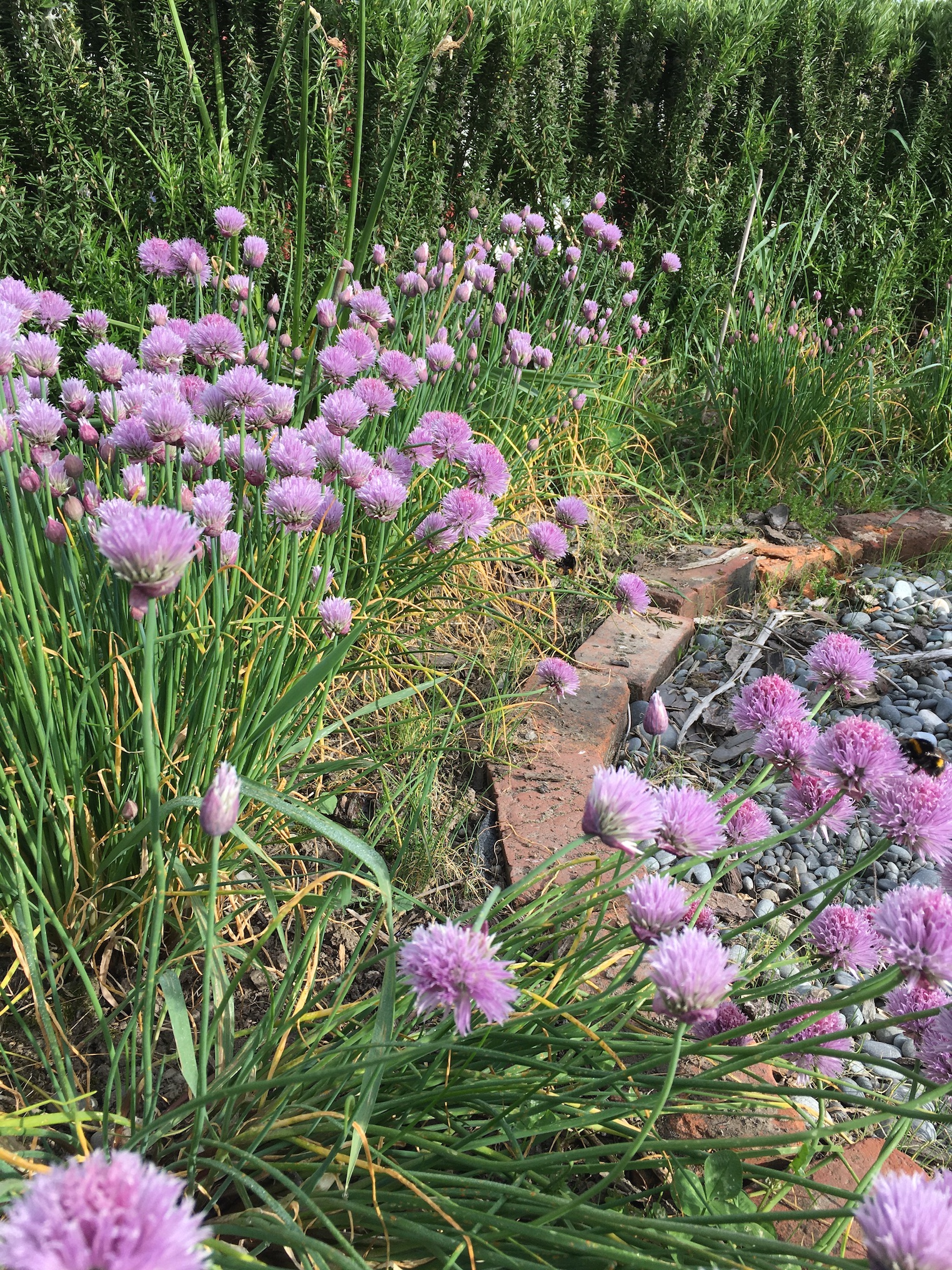
Our house went on the market today. We’ve spent the past several weeks painting, tidying and weeding to make the place look its best. On Sunday evening, after a hard three days of work, I wandered around the yard. The air was sultry—oppressive heat slowly giving way to the comfort of a lazy summer evening. The freshly cut grass was soft and cool underfoot as I padded past purple baubles of blooming chives, snow-in-summer spilling onto the path in frosty profusion, multi-hued pansies nodding in the light breeze, and pale irises standing tall. I strolled the rose garden, only just beginning to flower. A lone peony sported golf-ball-sized burgundy buds. The last of the pittosporum flowers perfumed the air.

In short, the garden was at ease in its lush maturity—the result of fifteen years of hard work, on top of the botanical history of a hundred years of landscaping. I thought of all the plants the property had gifted us with—roses, dahlias, naked ladies, camellias, irises, and others. Discovered among the overgrown gardens, often nearly choked out by weeds, the plants responded well to love and care, and formed the core of what we’ve done with the yard.

Then I thought of our new property, a bare paddock, its botanical history limited to pasture grasses and clover. There will be no gifts, discovered among the weeds. No heirloom plants needing only a little love to bloom and thrive.

The thought was depressing as I strolled the mature plantings we will leave behind. Starting from nothing but rock and clay is a daunting prospect.

But this property will gift us plants yet again—hundreds of seedlings, cuttings, bulbs and divisions sit in pots, awaiting transport to their new home. One day, they will be the botanical history of the new property. One day, I will stroll among them in contemplation, just as I did among their predecessors at the old house.

Inspired Cooking

A few days ago, after a busy day, I couldn’t be bothered to cook. I decided to throw together a quick pasta, so I headed to the garden to pick a few vegetables.

But when I arrived in the garden, the sight of the winter spinach, growing like a weed and thinking about bolting, inspired me.

All that spinach would make an excellent spinach quiche. I even had some feta in the fridge, and there’s nothing better than spinach with feta.

Of course, a quiche is a whole lot more work than pasta …

And it really would need dill, too …

I scoured the weedy parts of the garden for volunteer dill, because my seedlings weren’t ready to pick yet. The weedy dill plants clinched it.

No longer tired, but inspired, I set about cooking. The result was worth the effort (as I knew it would be).

And that’s what I most enjoy about gardening—when the daily grind gets me down and I just want to order takeaways, it provides the inspiration to instead make a glorious meal.

A Day Off

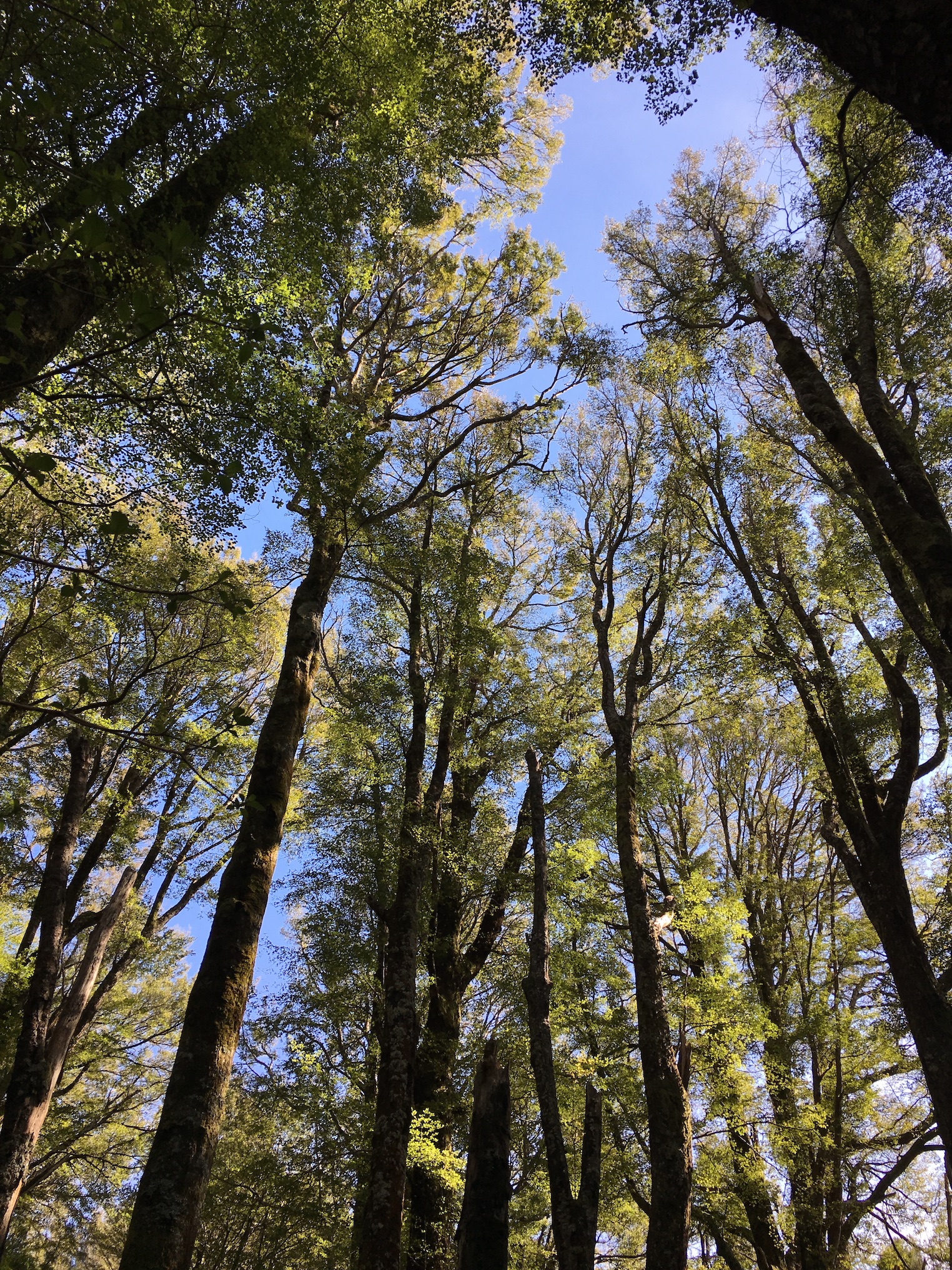
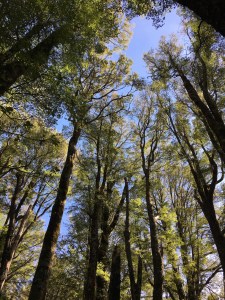
Cathedral of red beech

Sunday dawned warm and sunny, and I prepared myself for another day of hard work in the garden, in spite of my aching back. It would be a crunch to finish what I needed to stay on track—my garden to-do lists get longer each week, and I don’t dare fall behind at this time of year.

Meanwhile, my husband was fretting about the lectures he still needed to prepare for this week. But he’s much better at relaxation than I am. Before I had a chance to gather my tools, he suggested a hike instead of a day of work.

So we ignored our pesky to-do lists and enjoyed a day at Hinewai. 

Hinewai Reserve is privately owned, and encompasses 1250 hectares of the outer Banks Peninsula. It includes a glorious mix of vegetation types.
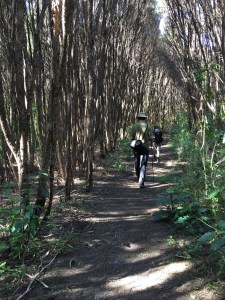
The track forms an avenue within a dense kānuka stand.

Probably the most impressive are the 50 hectares of old growth forest. The red beech create a green cathedral, shading out much of the undergrowth. The effect is in stark contrast to the dense kānuka stands that blanket other parts of the reserve.

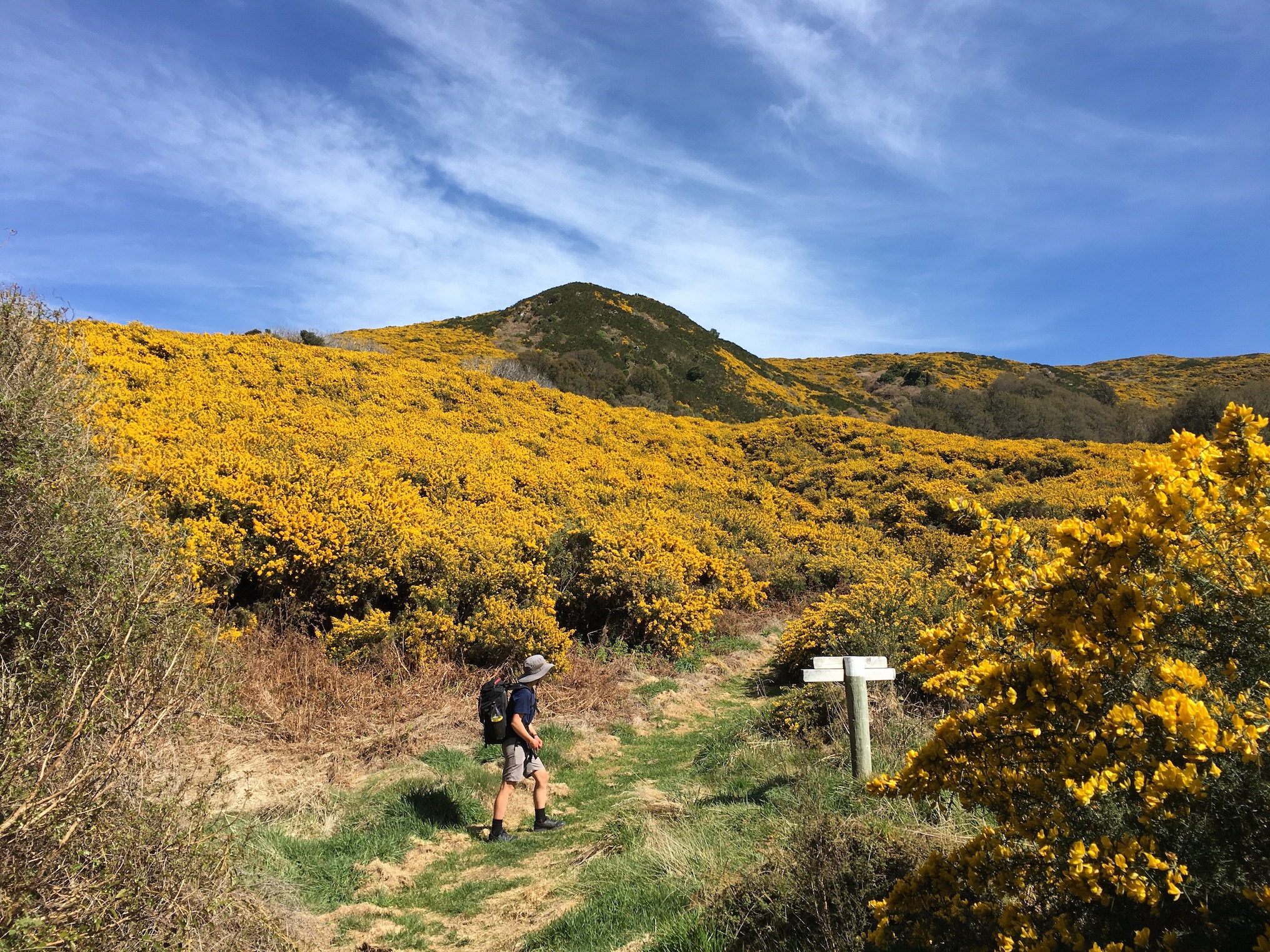
At this time of year, the gorse is in full bloom. Management at Hinewai allows this invasive weed to grow, because it provides an effective nursery for native trees. Eventually, the native plants will overtop the gorse and shade it out, but in areas recently disturbed by fire, the gorse is thick. On Sunday, the tops of the hills looked like they’d been capped with bright yellow snow, for all the gorse.
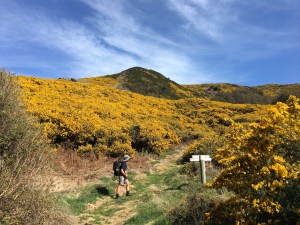
Gorse in full bloom in a recently burned area.

With 330 species of native vascular plants, and 60 species of fern (including six species of tree fern), Hinewai is probably the most diverse site on the Banks Peninsula. We never fail to see interesting things when we visit. This visit was no exception. A bright purple fungus creeping along a rotting branch was probably the most unusual find on Sunday, but we were treated to tree fuchsia in bloom, kererū swooping overhead, and pīwakawaka and tomtits flitting around among leafy lacebarks, kahikatea, tōtara, and kōwhai. I enjoyed seeing my favourite filmy ferns, with their translucent fronds. Large quantities of ongaonga (tree nettle) supported the red admiral butterflies that were enjoying the warm day along with us, flitting through the dappled light in the forest.
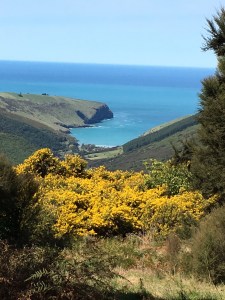
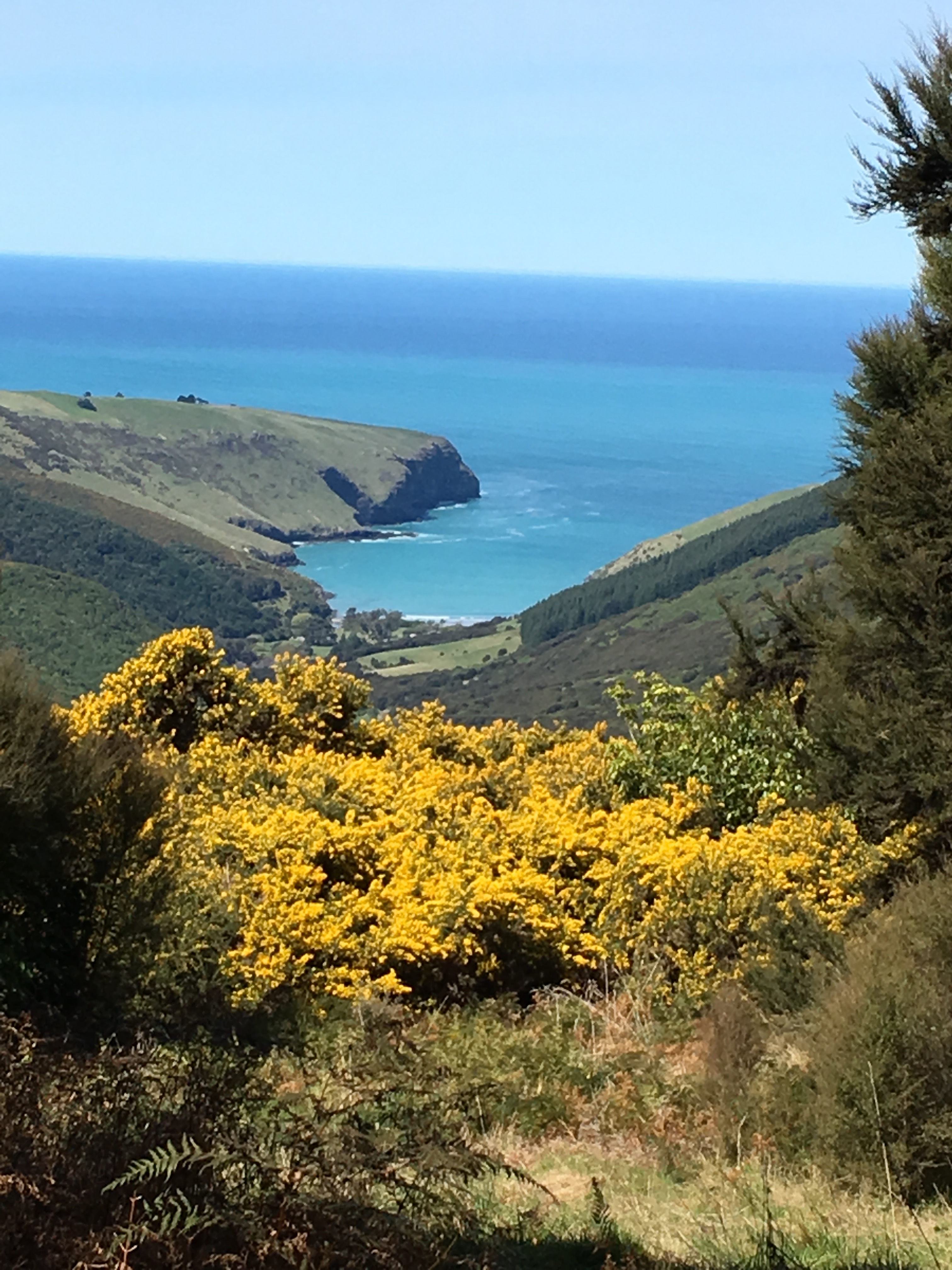
View down to Otanerito/Long Bay

And, of course, as with most spots on the Banks Peninsula, the views from the clearings at Hinewai were spectacular. 

My weekend to-do list forgotten, I had a lovely day enjoying the outdoors. Next weekend’s list is necessarily longer now, but it was good to take a day off. I must remember to do that more often.


Too Good Not to Share

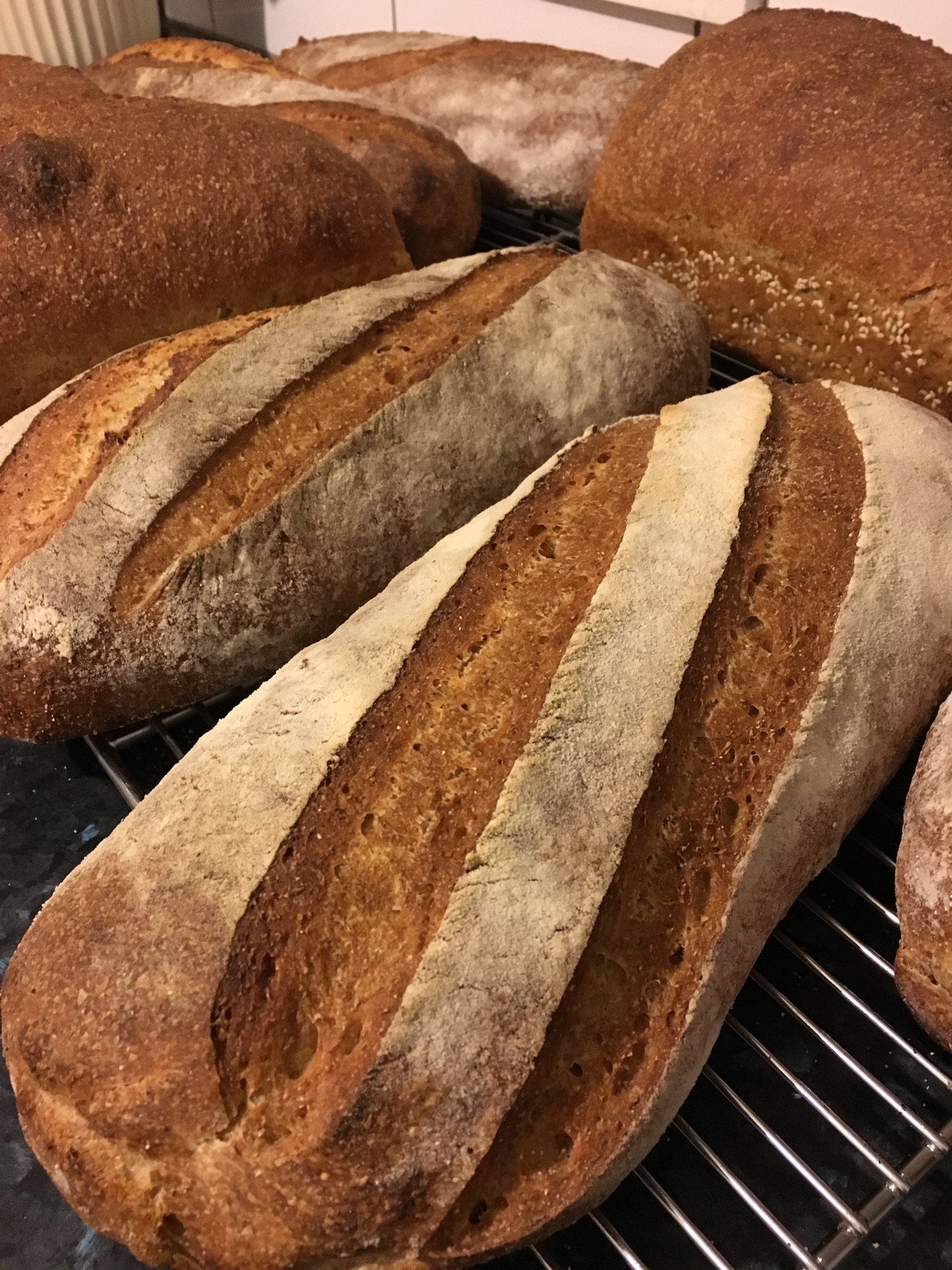
A few of the two dozen or so loaves from Saturday.

Saturday was a bread day, so while I headed to the garden in the morning, my husband began making up the dough and getting the fire lit in the oven. As I worked, the familiar scent of wood smoke wafted across the yard. The bread oven smell is different from the smell of the wood burner or a brush fire—from the first wisp of smoke, it declares itself a cooking fire. The smell always gives me a sense of well-being. It tells me that soon there will be a bounty of baked goods, and we will eat well for days on the delicious things we’ll bake.

Bread days are always busy—baking is done on top of the gardening, mowing, and cleaning on the weekend’s to-do list. By mid-day Saturday, I had planted out my peas and hauled a dozen loads of compost to the garden, and the kitchen was full of rising loaves in a variety of shapes and sizes. It was time for me to join the baking. While my husband managed the bread, I chopped vegetables for what would become dinner. 

It was an especially hot oven Saturday. Pitas baked in seconds, kaiser rolls in a handful of minutes, the vegetables came out beautifully caramelised in no time, and focaccia bubbled up quickly and came out sizzling. While the larger loaves baked, I mixed up pound cake and hazelnut biscotti to slip into the oven after the bread was through. 

Dinner was a feast of roast vegetables and salad greens stuffed into fresh pita breads followed by pound cake and biscotti—a celebration of good food after a day of intense work. The only problem with it was there was no one besides us to share it with.

(For those of you who missed it a few years ago, you can check out our kitchen during a bread day in this time lapse video.)

First Day of Spring

Last Sunday was the first day of spring, and it was as if all of nature wanted us to know it.

The day dawned crisp and sunny, and by mid-afternoon the temperature had climbed to a summer-like 27ºC.

The weeds in the garden seemed to have put on extra growth, and I hauled almost a dozen wheelbarrow loads of them to the compost pile as I began preparing the garden for the upcoming planting season.

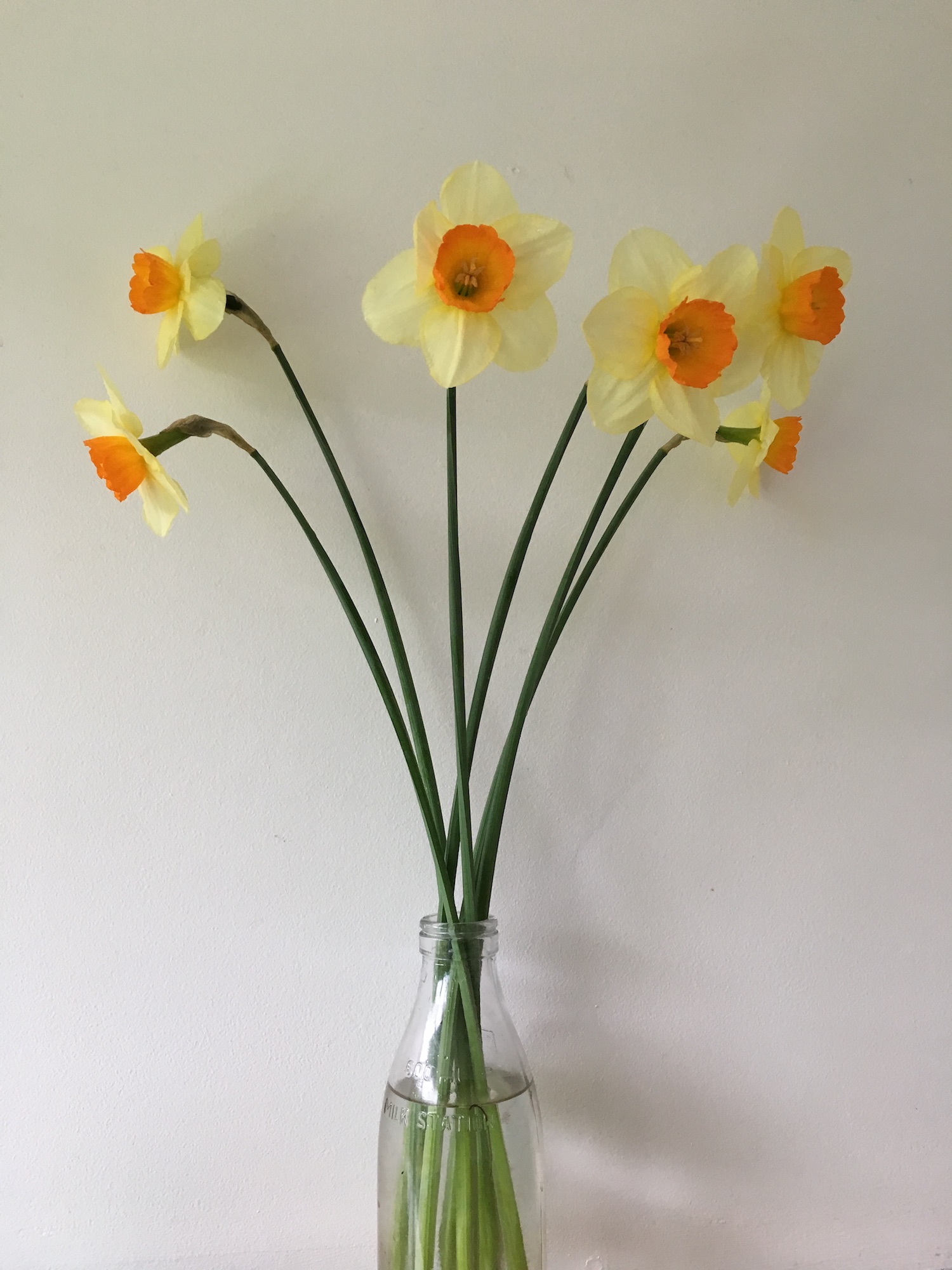
Daffodils, snowdrops, and bluebells nodded in the sunshine, carpeting the yard with colour.

Willows everywhere suddenly burst into leaf, the fresh green of their branches like a beacon.

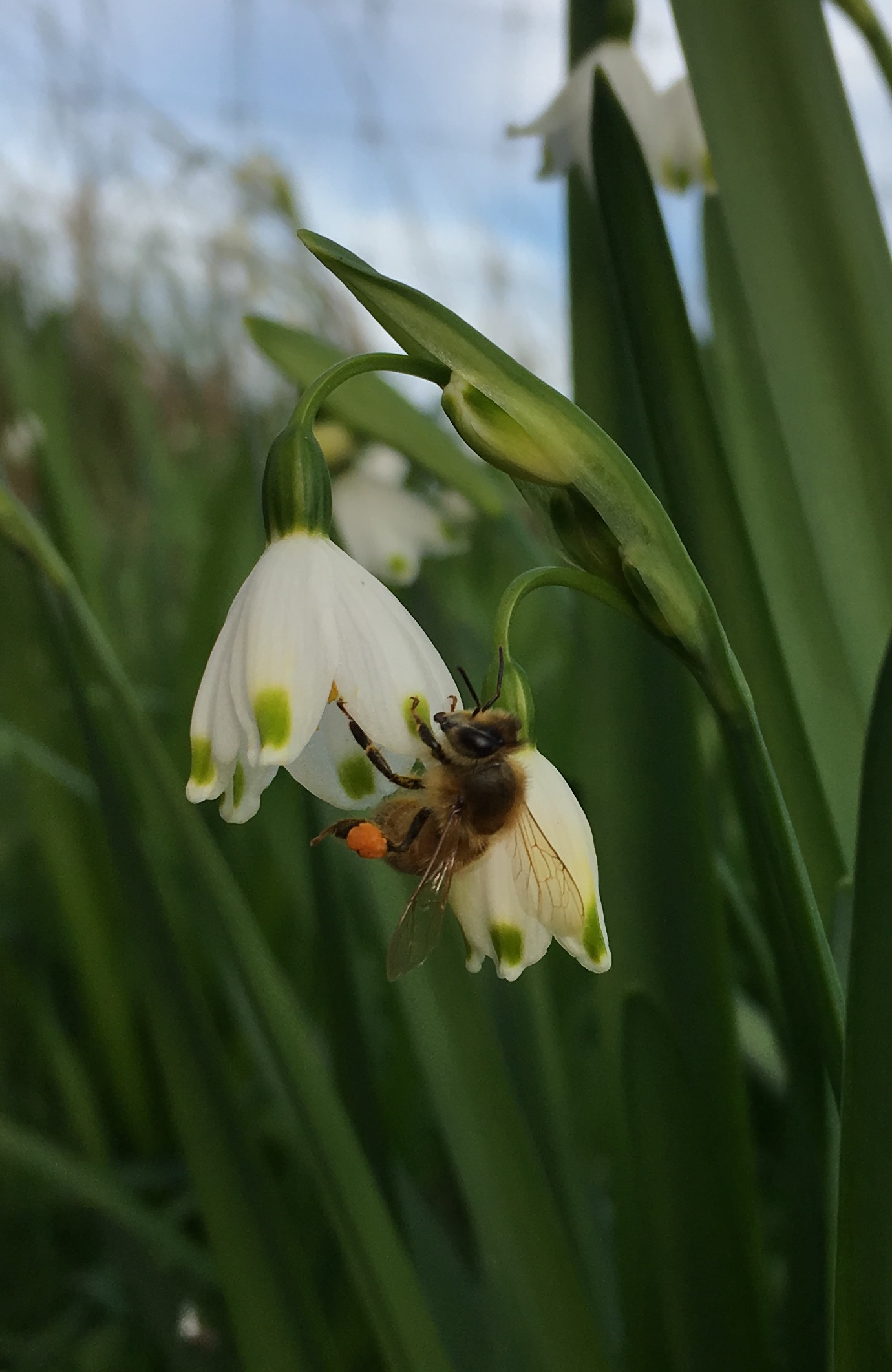
Bees hummed in every flower, and midges danced in lekking storms that sounded like rain against the windows.

We spent the day outdoors, threw open the windows, and drank in the warmth, going inside only when hunger drove us in to dinner.

Even the sun seemed to linger, painting the evening with golden streaks of promise.

Winter Losing its Grip

When I returned a tool to the equipment hire place yesterday morning, the owner asked if I thought we’d have snow.

At school, the staff were buzzing with the possibility of a snow day. “Don’t tell the kids!” one whispered. “They’ll go crazy.”

The weather forecast is for a southerly storm to blow in on Wednesday. Depending on which forecast you look at, we might have snow to 400 metres or to near sea level.

But regardless of the forecast, it’s beginning to feel like spring.

Yesterday evening when I stepped out to close the chicken house, lambs bleated in nearby paddocks, starlings warbled in the treetops, and blackbirds fought over new territories. 

The sky was still light, though it was nearly six o’clock, and the air was soft and full of promises.

Today I am comfortable in a t-shirt, and have opened the doors and windows to warm up the house in the winter sunshine.

Whether it snows tomorrow or not, winter has lost its grip. Spring is on its way.

Gifts from the freezer

With love, from the freezer.

Our apple trees struggle against the macrocarpa hedge shading them and sucking away nutrients and moisture from the soil. I’m sure many years ago, when a previous owner planted them, they seemed far enough from the hedge, but today, without aggressive pruning, the hedge would engulf the fruit trees. So we rarely get large harvests of apples, and most years we eat them all fresh, long before they go wrinkly with age. 

This past summer was different. We had extra apples after accepting a big box of them from a friend, and then realising our trees held more than we thought. There was no way we were going to use all of the apples before they dried out, nor did I want the kitchen and dining room littered with baskets and bowls of apples for months. I filled the last of our empty canning jars with applesauce and still had more fruit. So I made a large quantity of apple pie filling, cooking the apples just enough to soften them slightly and release some of their juices. Then I froze it in pie-sized quantities. We enjoyed apple pie all through autumn.

We thought we’d finished the apple pie filling off, but the other day, my husband found a container of it on the bottom of the freezer. To find that pie filling on a cold and rainy weekend was a beautiful gift. A gift from our summer selves and from the freezer itself, which hid it until the need was greatest.

So while rain streamed down the window panes, I made a pie, filling the house with the warming smell of baking cinnamon, apple and pastry. We enjoyed the pie warm with whipped cream by the fire on a dreary night—a wintertime decadence to make us forget the damp and cold.

Thank you, freezer, for the wonderful winter gift.

Mail-order Summer

The rain has been steady all day—cold and drenching. Even indoors, I feel like the cold and damp has settled into my bones. Hibernation seems like a good idea.

But midday, the post arrived.

I braved the rain to run to the mailbox.

Inside, I found summer, or at least the promise of it. My seed order had arrived.

I’m still considering hibernation—this rain is supposed to continue for days—but now I have seeds to sort out and gardens to plan. With my mind on summer, I can’t possibly feel cold.

Inspired Red Currant Cobbler

Sometimes you have an idea that simply works.

We have a large quantity of red currants in the freezer from last summer, so we regularly enjoy red currant desserts. Usually, we make crisp with them, but tonight we wanted something different.

I decided to make a cobbler, but I wanted something different from a plain biscuit on top—something sweeter, and with a bit more flavour to complement the intense sour of the currants.

In a stroke of inspiration, I remembered a biscuit recipe in King Arthur Flour’s Whole Grain Baking book. I’ve never made the recipe, but I’ve often looked at it. It pairs cornmeal and maple syrup, and I was pretty sure those were the perfect flavours to go with red currants.

I was right.

The result was perfectly balanced, cake-like, and absolutely delicious (and would probably be excellent with frozen cranberries, if you don’t have red currants).

Combine in a shallow baking dish:
3/8 cup sugar
3 cups frozen red currants

Set aside while you make the biscuit.

Combine in a medium mixing bowl:
1 cup cornmeal
1 cup wholemeal flour
1 Tbsp baking powder
1/2 tsp salt

Cut into the dry ingredients until the consistency of coarse crumbs:
80 g (5 Tbsp) cold butter

Combine in a small bowl or measuring cup:
1/2 cup milk
1/4 cup maple syrup

Add the liquid to the dry ingredients, mixing until evenly moistened. Pat out the dough into a shape to fit neatly over the fruit in your baking dish. Poke steam vents into the dough. Bake 30-40 minutes at 190ºC (375ºF). 

*Like any baked fruit dessert, this gets quite bubbly. Mine boiled over onto the bottom of the oven—you may want to set the dish on top of a baking sheet to avoid a mess in the oven.

New Year, New Garden

A blank slate for a new garden–10 cubic metres of compost ready to be added to the soil.

Another solstice has passed and we can look forward to more sunlight each day. We celebrated Matariki—the Māori new year—last week, too, so it’s well and truly time to start thinking about the garden for this coming summer.

This year, my garden decisions are more difficult than they’ve been recently. This year we will be moving house mid-summer, assuming all goes as planned with our new build.

We have already marked out and tilled the garden at the new property, and we’ve planted it in green manure crops for the winter, even though the foundation of the house hasn’t even been laid yet. 

But moving mid-summer, it’s hard to know where to plant all the crops. Late-season vegetables like pumpkins and dry beans are easy—they’ll go in the new garden. Early crops like broccoli and radishes are also easy—they’ll go in the old garden.

Unfortunately, a huge number of crops will come on before we move and still be going strong afterwards. I’ll want them at both houses. But the prospect of maintaining two full gardens forty-five minutes apart from one another is daunting.

Add to the challenge the fact that the soil at the new garden is hard clay generously studded with rocks. It will easily take a decade of soil improvements to make the new garden as productive as the old, and it will always be rocky, no matter how much organic material I can build up.

So in my garden planning and calculating this year, I have to lower my expectations. I have had such a glorious garden, with excellent soil, for many years. It will be a challenge to start over, rehabilitating a compacted paddock scarred by years of commercial agriculture and not naturally blessed with loamy soil.

It will mean finding new varieties that thrive in different conditions, pulling out all the tricks I know for improving soil conditions, and learning new ways of working with the soil. I am prepared for disappointment, and excited by the challenge.

Stay tuned …