Playing with Fire

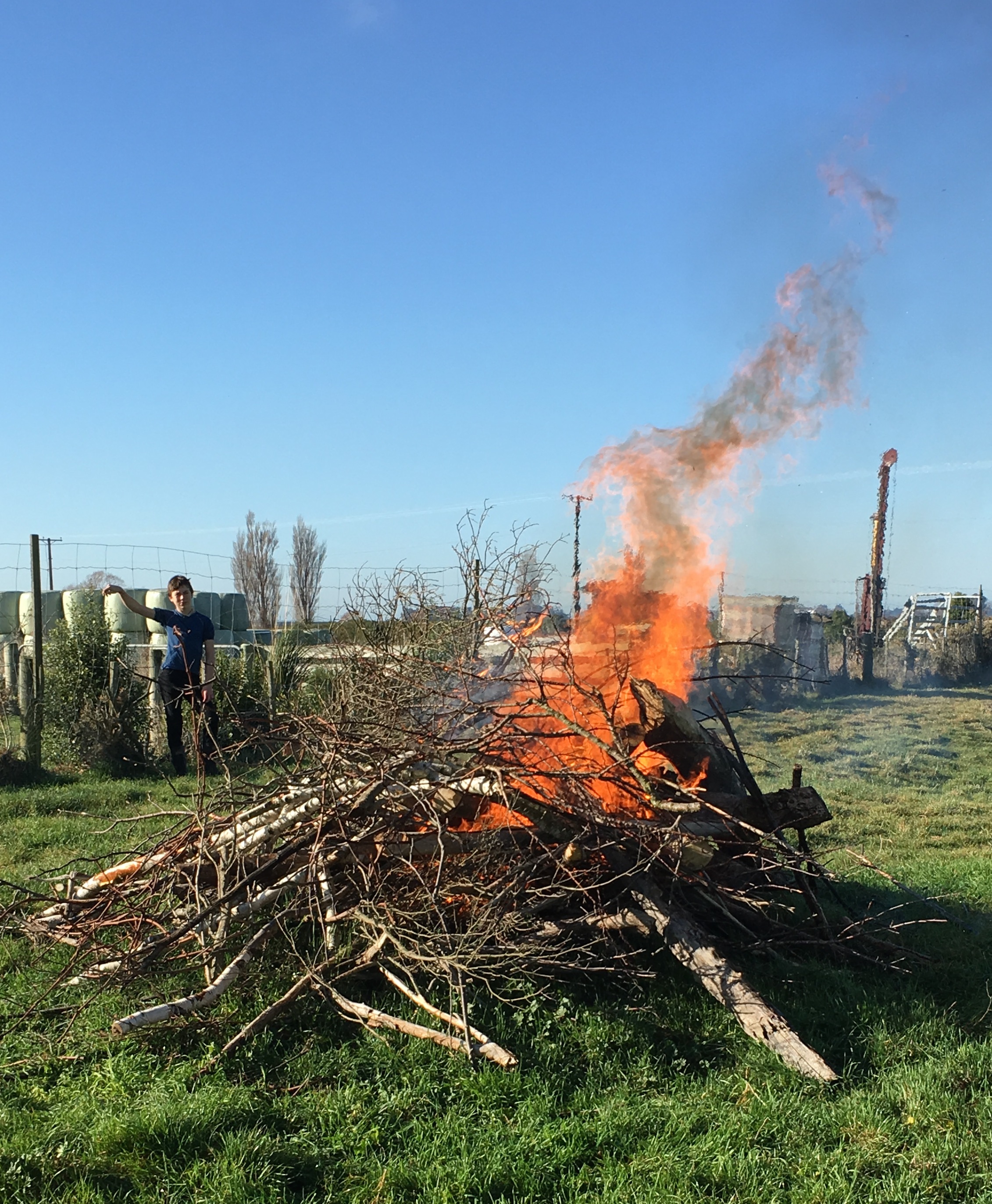
2016-06-25 11.56.06There is nothing better calculated to get my teenage son outside than the prospect of fire.

Most weekends, he spends the day indoors reading books or playing computer games. He’ll come out to help in the yard or garden if we ask him to, but as soon as he’s released, he’ll be back inside.

Tell him we’re going to burn off the brush pile, though, and he’s out the door like a shot, and will spend all day pottering around the fire—tossing sticks in, raking coals together, hosing down the grass around the fire to keep it from spreading.

What makes fire so compelling, especially for teenage boys?

Believe it or not, scientists have actually tried to answer this question. Researchers at the University of Alabama found that gazing at even a video of a fire reduced subjects’ blood pressure. The longer they watched the fire, the more relaxed they became. The researchers suggest that the multisensory aspect of a fire focuses our attention and reduces anxiety.

Whether that is simply an outcome of meditation associated with this sensory focus, or an evolutionary response to the social and physical security that a fire was to our ancestors is a matter of speculation.

Fire is, in fact, essential to humans. Our power-hungry brains need the extra nutrition provided by cooked food (about one-fifth of our calories are used by our brain). We can’t grow and develop properly on a raw diet, and human culture never would have evolved without it, so it stands to reason it would be important to us.

So, why are kids so interested in fire—more so than adults?

Researchers at UCLA have studied fire play among children in various cultures, and have concluded that the desire to master the control of fire is common among cultures. This makes sense from an evolutionary standpoint—we need fire to survive, so those able to control it historically did better and produced more children.

In westernised cultures, where open fires aren’t used on a daily basis, children’s interest in fire lasts longer than in cultures where fire is a daily necessity for cooking or heating. They remain fascinated by fire until they’ve learned to master it.

This doesn’t fully explain my teen—he mastered fire years ago, learning to light and maintain a fire in our log burner. But I do think there is an aspect of control that keeps us coming back to fire, especially when we’re young. Fire has incredible destructive power. To ignite that power, then hold it in check to achieve a goal (heating the house, cooking dinner, or disposing of brushwood), is a heady thing, particularly for teens who have so little control over their own lives.

All of which leads me to believe that it’s important for us to teach our kids to safely light and control fires. Research indicates they will play around with it until they learn—it’s an innate need. Better they learn safely than by burning down the house.

I also think that giving kids safe ways to exert control is important for their growing sense of accomplishment and self-worth. There is so much we can’t let them control—they can’t drive, they have to go to school, they can’t leave home—I remember all those restrictions eating away at me when I was a teen, eager to exert myself on the world.

So, yeah, we let our kids play with fire. It’s good for them.
Throwback Thursday: Tramping the Abel Tasman

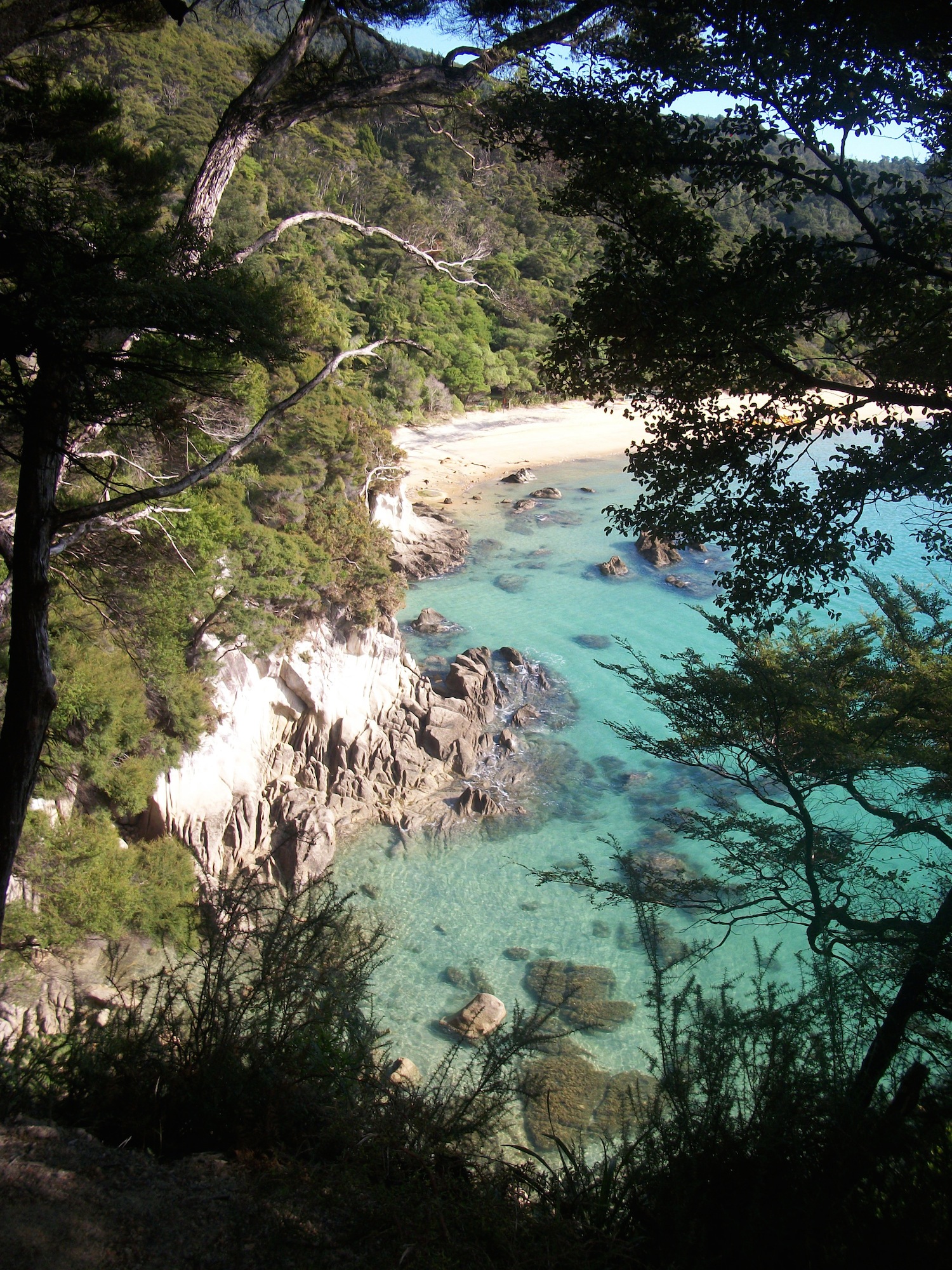
100_1198 smThe Abel Tasman was our first Great Walk as a family. It was also our first family tramp longer than two nights—the kids were still at the stage where they sometimes needed a prod to get to the top of a hill (or more accurately, the promise of chocolate at the top).

The Abel Tasman was the perfect trip—long enough to give the kids a ‘real’ adventure, and easy enough that they didn’t struggle with it. The distances between huts were short enough that the kids could spend hours playing on the beaches along the way and still get to the hut by mid-afternoon.

I’ve heard that the track is miserable in bad weather—all those exposed beaches can’t be fun in the wind and rain—but we were blessed with perfect sunny days. Though it was April, the weather was warm enough for lots of swimming along the way, and the whole experience felt more like a frolic than a tramp.

For me, the best part about the trip was gaining a greater appreciation for tides. The surges of water, so different from the normal waves, that fill the estuaries, bringing schools of fish and rays with them. The rippled and exposed mud flats of low tide. The twice-daily rhythm of inundation and exposure of the coast.

It wasn’t a wilderness experience—the huts were filled to capacity, and boats stopped at most of the beaches—but it was a beautiful chance to explore a rich and dynamic coastline.


Racing Ahead

100_3459 smI think the best feeling as a parent is to see your children way out ahead of you.

Not just on the trail, though that’s good, too, because it means they’re having fun doing something we all enjoy.

Metaphorically, too, it’s great to see them in the distance.

It means they are developing their own interests, taking the initiative to grow in ways I can’t help them, taking risks.

It means they’re growing up.

I love the fact my son knows more about bridge engineering than I do.

I delight in the fact my daughter races around the yard on a unicycle (nothing I ever learned).

I’m thrilled that they both come to me to say they’ve arranged to participate in various extracurricular activities—on their own initiative, and having gotten all the details I need to make sure they are at the right place at the right time.

Having the kids running out ahead makes my life a scramble at times (juggling schedules to make sure everyone gets where they need to go, and can do what they want to do), but it also makes my life easy. The kids are taking control of their own lives and learning. That’s what we’ve raised them to do, and it’s a joy to watch.

Jack-o-lanterns

2016-04-17 11.17.03 smWhile you folks in the Northern Hemisphere are cleaning out your pools, dusting off the barbecues and planting seeds, we in the South are enjoying all that autumn has to offer.

And something we always look forward to is carving pumpkins. Growing up in the US, it was one of my favourite Halloween activities. Here pumpkin season falls inappropriately near Easter.

That doesn’t stop us from celebrating the season with jack-o-lanterns.

All my pumpkins are grown for food, but the edible part of the Austrian oilseed pumpkin is its seeds—the flesh is only suitable for goat food (and even the goats aren’t excited by it). So once I scoop out the delicious seeds, I have no problem using the shells for artistic purposes.

A nice crop of Austrian oilseeds this year means there is plenty of raw material for our artwork.

Unicycle

2016-04-08 15.50.22 smThe girl was saving up her money.

I should have known she was aiming for something like this. Metre-and-a-half high stilts weren’t enough, nor juggling balls, nor devil’s stick, nor diabolo, nor feats of strength and flexibility.

It arrived in the mail today, and in spite of a looming piano recital, she assembled it after school and spent her potential practice time repeatedly throwing herself off the seat and onto her backside, laughing the whole time.

She’s clearly preparing for the day she’ll run away to the circus.

If she keeps it up, she’ll be able to start her own one-person circus.

Step on a Hedgehog

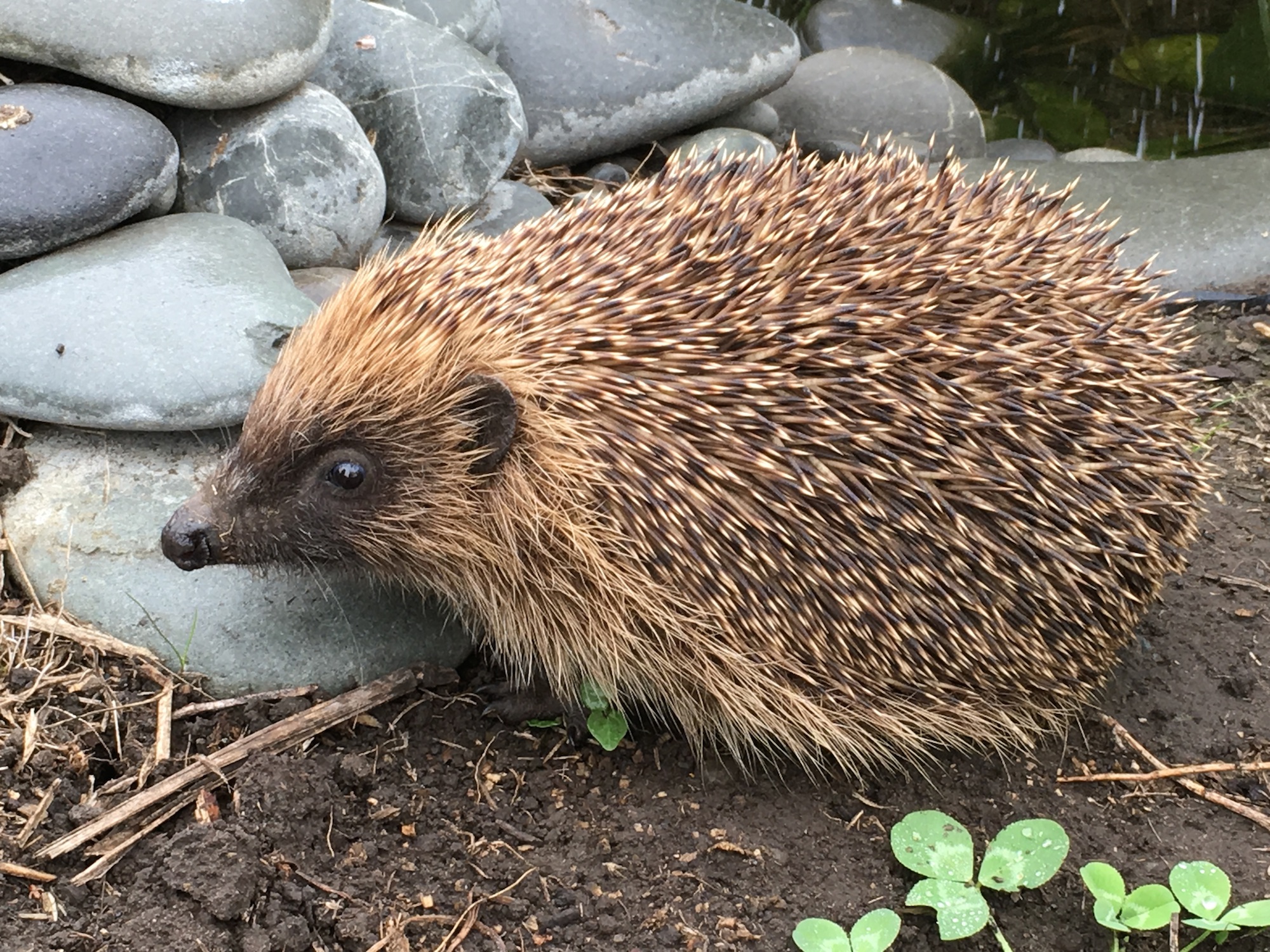
2016-01-26 18.07.41 smMy daughter came to me frustrated yesterday evening.

“What is fear?”

Knowing she had just been out in the dark, I asked her if she was frustrated because she was afraid of the dark.

“No, I’ve gotten over my fear of the dark. Now I’m afraid of hedgehogs.”

“Ah. You’re afraid of stepping on them in the dark.”

She nodded.

“Well, you learned that from your father, who worries about stepping on hedgehogs in the dark. But I’ve actually stepped on hedgehogs in the dark.” I shrugged. “It’s not so bad—for me or for the hedgie. You tend to feel it before you put all your weight on it, and you pull back before you hurt it.”

She looked relieved.

It got me thinking about the nature of fear, how easily it is taught, and how difficult it can be to overcome.

Teaching children about insects, I see fear all the time. The fear that another living thing might harm us (and sometimes the fear that we might harm another living thing). Much of my teaching is aimed at overcoming those fears.

And in saying ‘overcoming,’ I don’t mean eliminating those fears—that’s the work of decades, not of an hour.

I know that, because I experience those fears, myself—they are deeply rooted in our culture, and I was taught them just like everyone else was. But I have confidence in spite of the fear. Part of that comes from knowing that the worst that can happen is really not all that bad (for most things). I have been bitten, clawed, and stung by songbirds, parrots, raptors, rabbits, rodents, snakes and all manner of insects and spiders, and have survived it all. More importantly, I’ve learned that if I understand the animal and move with confidence and care, I am unlikely to be hurt (or to hurt the animal).

So I don’t try to make children unafraid of insects; instead, I teach them how to move with confidence and care, even if they don’t feel the confidence yet. I teach them how to hold an insect safely. If I think they’re ready for it, I give them an insect that is likely to bite them—a tiny nip they might actually feel, if they’re paying attention. They might cry out, “Oh! It bit me!” They might fling the insect off their hand. But chances are good, they’ll pick it up again, because the worst has happened, and it wasn’t so bad. The act of taking the risk once makes it easier to do it again. Confidence grows. The fear may still be there, but it is diminished by understanding and experience.

I hope my daughter does step on a hedgehog in the dark. She will stumble in her effort to not squash it. She’ll cry out in surprise, and then laugh as the offended hedgehog lumbers away. When she goes out in the dark next, she’ll walk with more confidence. And because the fear will probably still be there, she’ll feel incredibly brave in doing so.

On the Beach

Today's massive, whole-family sandcastle effort.

Today’s massive, whole-family sandcastle effort.

We spent the day at the beach today, doing what most parents do at the beach—building sand castles with the kids, throwing frisbee with the kids, jumping in the waves with the kids, flying kites with the kids, rock pool fossicking with the kids.

Do you sense a pattern?

Beach activities always seem to be “with the kids.” So, what do adults—without kids—do at the beach?

Today at Okains Bay, an elderly couple lay in the sun. Another older couple walked the beach together. A young gay couple swam in the waves, then made sand castles. Tourists photographed children playing.

Though my husband and I were married for ten years before having children, it’s sometimes hard to remember life before kids.

But now that the kids are both in high school, it’s time to start looking ahead to that light at the end of the tunnel—that glorious day when the kids leave home. It’s time to start figuring out what we want to do when we grow up.

Why not start my plans with the beach?

I, for one, still plan to jump in the waves. And I’ll always peer into the rock pools. And you might even catch me with a frisbee…

A Sense of Place

IMG_0147 copyMy daughter’s homework today involved exploring the idea of gratefulness.

One of the questions asked her to photograph the thing she was most grateful for.

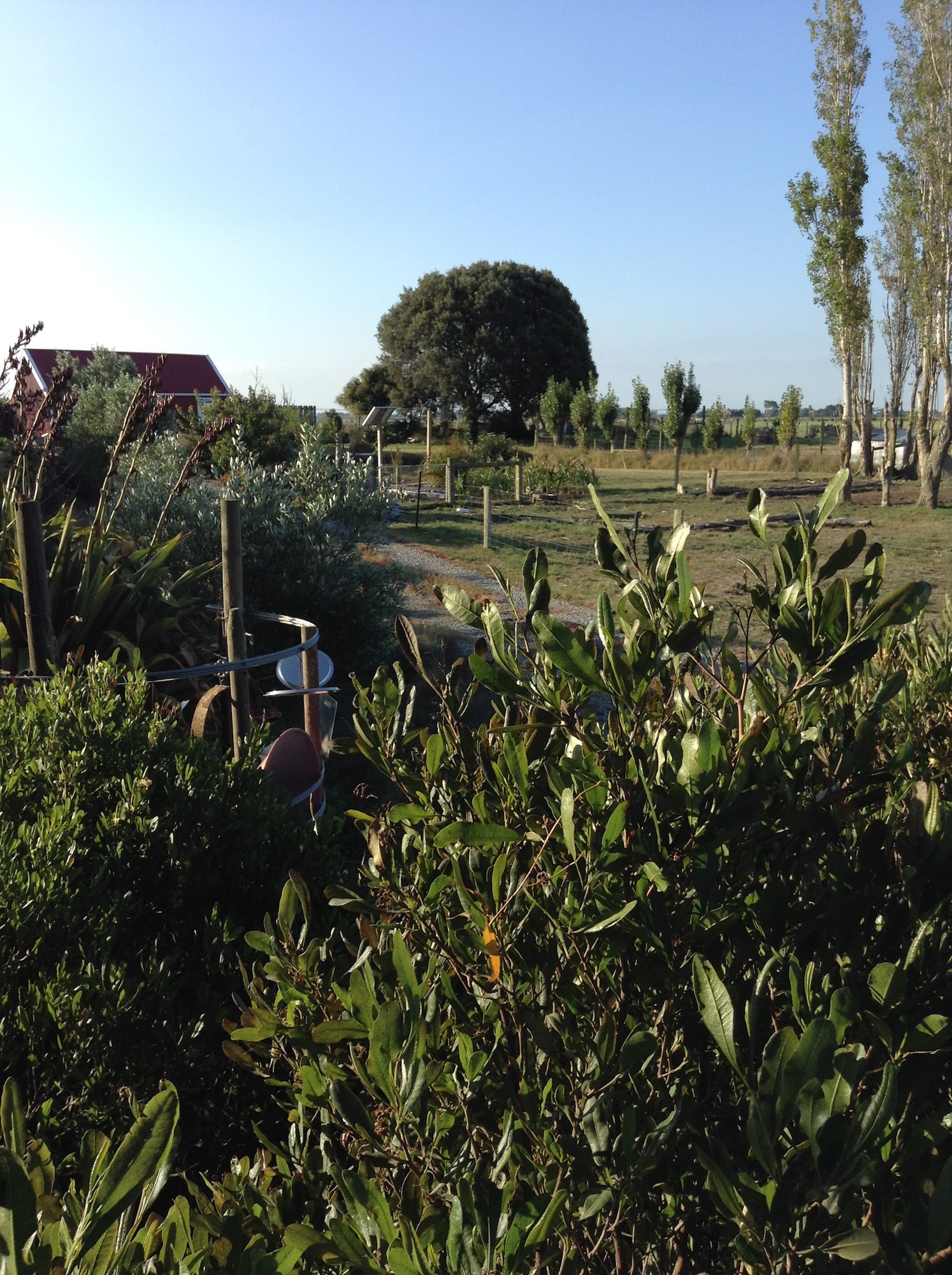
This is the photograph she took. It is of our property, and includes a bit of everything here—trees, paddocks, sheds, gardens, and art.

Her answer doesn’t surprise me, and I echo her sentiments. I, too, am grateful for this piece of land that feeds us, shelters us, and provides us the vast majority of our entertainment.

And though some parents might have wished for her to say that she was most grateful for her family, I am pleased that my daughter has put her roots into the soil. I am pleased that she has developed a strong sense of place. In fact, I would have expected nothing less from the girl who spends every waking minute outdoors.

We develop relationships with places, just as we develop relationships with people. Those place relationships help us shape our identity, and place us in context in the larger world around us. They provide us an anchor, a whakapapa (cultural identity), and a homeland.

Our sense of place gives us a solid foundation from which to explore and learn to love the rest of the world. It makes our relationship to the entire planet more personal.

In order to care about the earth in general, we must first care about a special place.

In order to understand the tragedy of the loss of a rainforest, we must first understand the tragedy of the loss of our favourite climbing tree.

In order to understand the magic of an unknown place, we must first feel the magic of our own special place.

And so, for today, I am most grateful for this piece of land that has rooted my daughter’s sense of self, family and community in the earth.

The Homework Table

homework table2My daughter started high school last week.

I don’t know who was more terrified about that—her or me.

She had been attending a special character school in which she had a great deal of freedom about where she did her work, she could climb trees at lunchtime, and which didn’t assign any homework.

She still attends a special character school, but one with a different philosophy.

Her classes are almost entirely indoors, tree climbing on campus is forbidden, and she has homework.

For a girl who NEEDS to be outdoors and moving, I’m sure the transition is going to be rocky.

But she recognises her needs, and she’s getting better at asking for what she needs.

So when she came home with her first homework yesterday, instead of bemoaning the fact she couldn’t go run around outdoors after school, she came to me with a suggestion.

“Mum. We need a table outdoors in the shade somewhere so I can do my homework outside.”

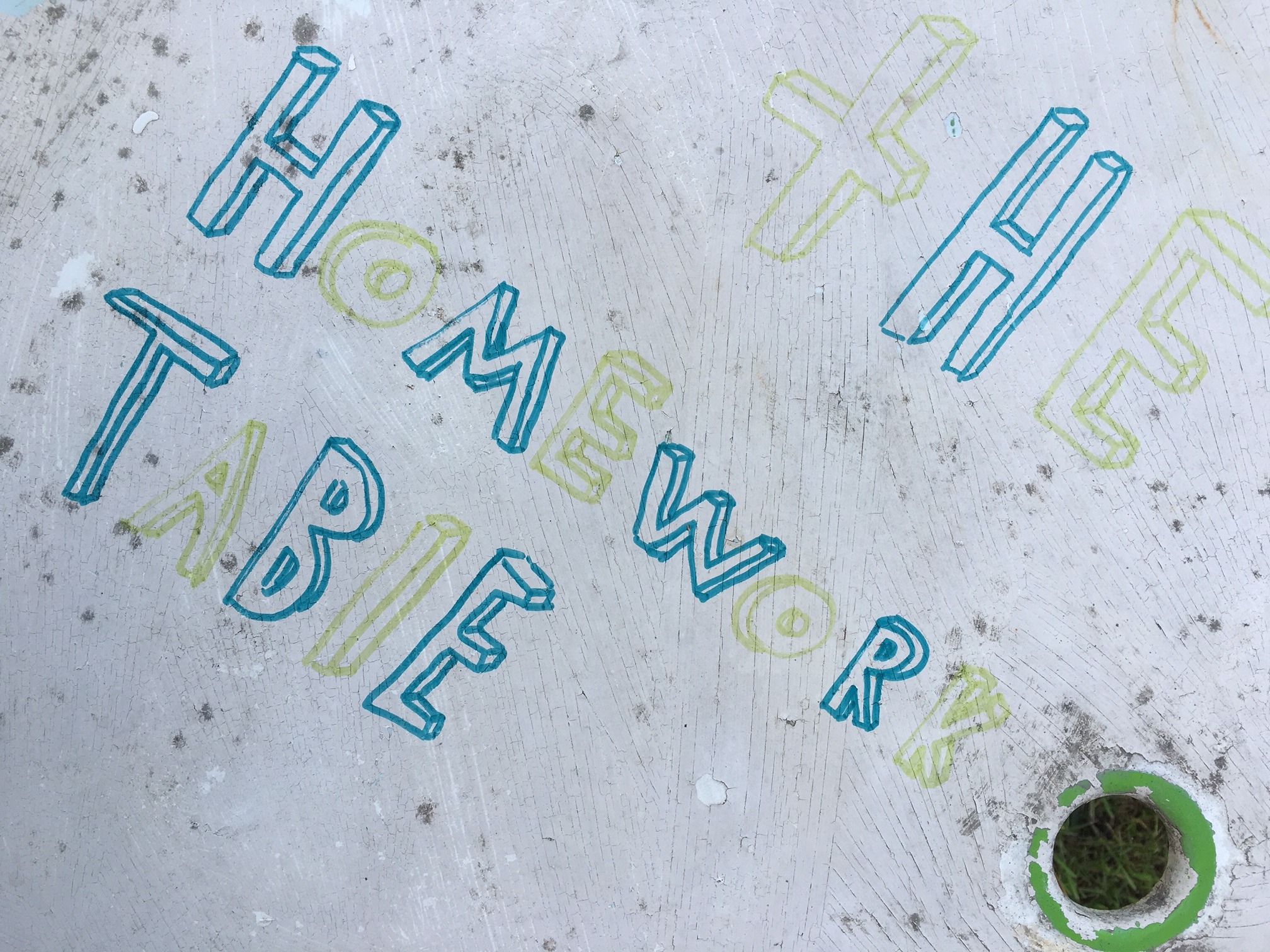
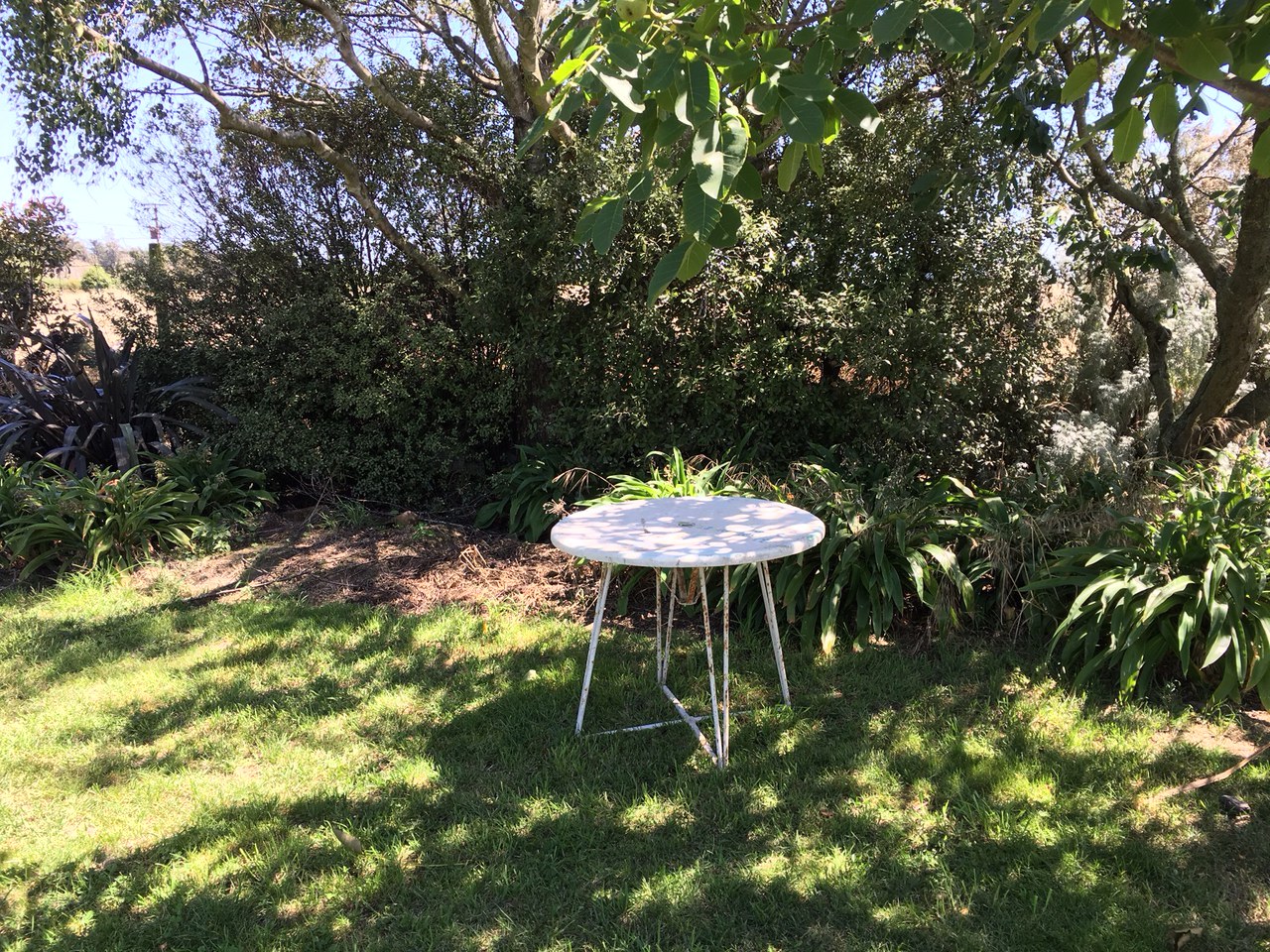
homework table1As it turned out, we had a table that fit the bill perfectly—an old picnic table that I’d recently banished from the shed because it was in the way. She scrubbed it up, dubbed it the homework table, and brought her desk chair outside to complete her homework.

No grumping, no tears, no stress.

If the whole school year goes like that (yeah, right), it’ll be a fantastic year!

Science education at its best

Physarum cinereum

Physarum cinereum

About eight months ago, my daughter did a school project on slime moulds. Along with internet research on slime moulds, she searched for live slime moulds in various habitats, and even tried keeping one as a pet. Unfortunately, the weather was particularly dry and warm, so slime moulds were scarce, and her pet died. We considered the project somewhat of a failure.

Except that she has been tuned in to slime moulds ever since, so when she noticed a funny grey substance covering blades of grass in the yard a few days ago, she was primed for it. She brought it inside to look at under the microscope, and correctly identified it as Physarum cinereum, a type of slime mould.

She posted a photo and her identification on Nature Watch NZ, and had her identification verified by several scientists.

Today, she found a similar slime mould, but this one was a mustard yellow colour. In form it was very like Physarum cinereum, but altogether the wrong colour.

She pulled out her iPad to search for it online. No luck…

But…

While she was searching, the sample under the microscope changed colour, from yellow to grey. Based on her knowledge of slime mould biology, she reckoned the grey colour must be spores. She has posted her new photo and identification to Nature Watch NZ, and is waiting to see what the experts think.

Could I ever have devised a better science lesson? Not in a million years. She made an observation, used her research skills and prior knowledge to make sense of what she saw, and got corroboration from an expert.

The resources available to kids (and bigger kids, too) these days are amazing—the opportunities to engage directly with the scientific community, find current information about things (no more 20 year-old World Book Encyclopaedias), and record their observations are so far beyond what I had as a child, it still feels a bit like magic to me.

But of course none of that is possible if we don’t nurture our children’s curiosity and teach them how to use the tools available to them. None of it is possible if we don’t give our kids time to watch the world go by, time to get bored and lie down in the grass. Tom Eisner (famous entomologist, for those who don’t know him) wrote in his book For Love of Insects, “How is it, I am often asked, that I make discoveries? I always feel a bit awkward about answering the question, because I do not have a particular method. The truth is that I spend a fair amount of time looking around.”

So go on. Get out there. Look around. Who knows what you might discover.