22 February 2011

100_0076 smToday is the fifth anniversary of the Christchurch earthquake that killed 185 people and brought life as we knew it to a grinding halt.

It was the day my husband insisted we get cell phones.

It was the day I started posting details of my whereabouts on the fridge every morning, just in case I didn’t make it home.

Our house was fine (anything vulnerable to quakes had been destroyed by the September 2010 quake), and we watched in dismay as news of the destruction and death in town trickled out to us. We watched the rescue helicopters fly over, ferrying patients to Dunedin.

When we loaded the car with tools and food and drove to the eastern suburbs two days later to do what we could to help, we were stunned by the destruction.

Five years later, those eastern suburbs are still struggling, and life for all of us is fundamentally changed.

New Zealand sits on the Ring of Fire. It was built by the Ring of Fire. Earthquakes and volcanoes are simply what happens here.

Do earthquakes frighten me? I don’t know if frighten is the right word, but I will admit to a surge of adrenaline with every tremor. I admit that whenever I enter a new room or building now, I immediately assess earthquake hazards, shelter, and exits. I’ve lost my love of cliffs and caves, replaced by wariness and visions of falling rocks. I still pause at the sound of a loud rumble, poised to dive under the table until it resolves into the sound of a truck.

I suppose we could leave New Zealand. We could move back to the U.S., to live on firmer ground.

But, much as I hate to admit it about my homeland, there is an ugly culture of fear in the U.S. When a presidential candidate can preach a doctrine of hatred, misogyny, and racism and gain in the polls, that feels like a betrayal. When schools are patrolled by armed guards, it is an outrage. When violence against each other is considered normal, there has been a failure of humanity and society.

But in an earthquake, there is no malice. Though it may cause great destruction, it is impersonal. It is simply the earth doing what the earth does. An earthquake is not a betrayal. It is not an outrage. It is not a failure of humanity and society.

Not that bad people don’t do bad things in New Zealand—there is racism, sexism, and violence here, too. But here I need not wonder who is packing heat on the street. Children walk to school. Fear of each other does not pervade life.

And so I choose earthquakes. I choose the destruction and stress, the uncertainty, and the inconvenience. And if someday the earth should shrug me off as it shifts to a more comfortable position, I’m okay with that.


Sounds of Summer

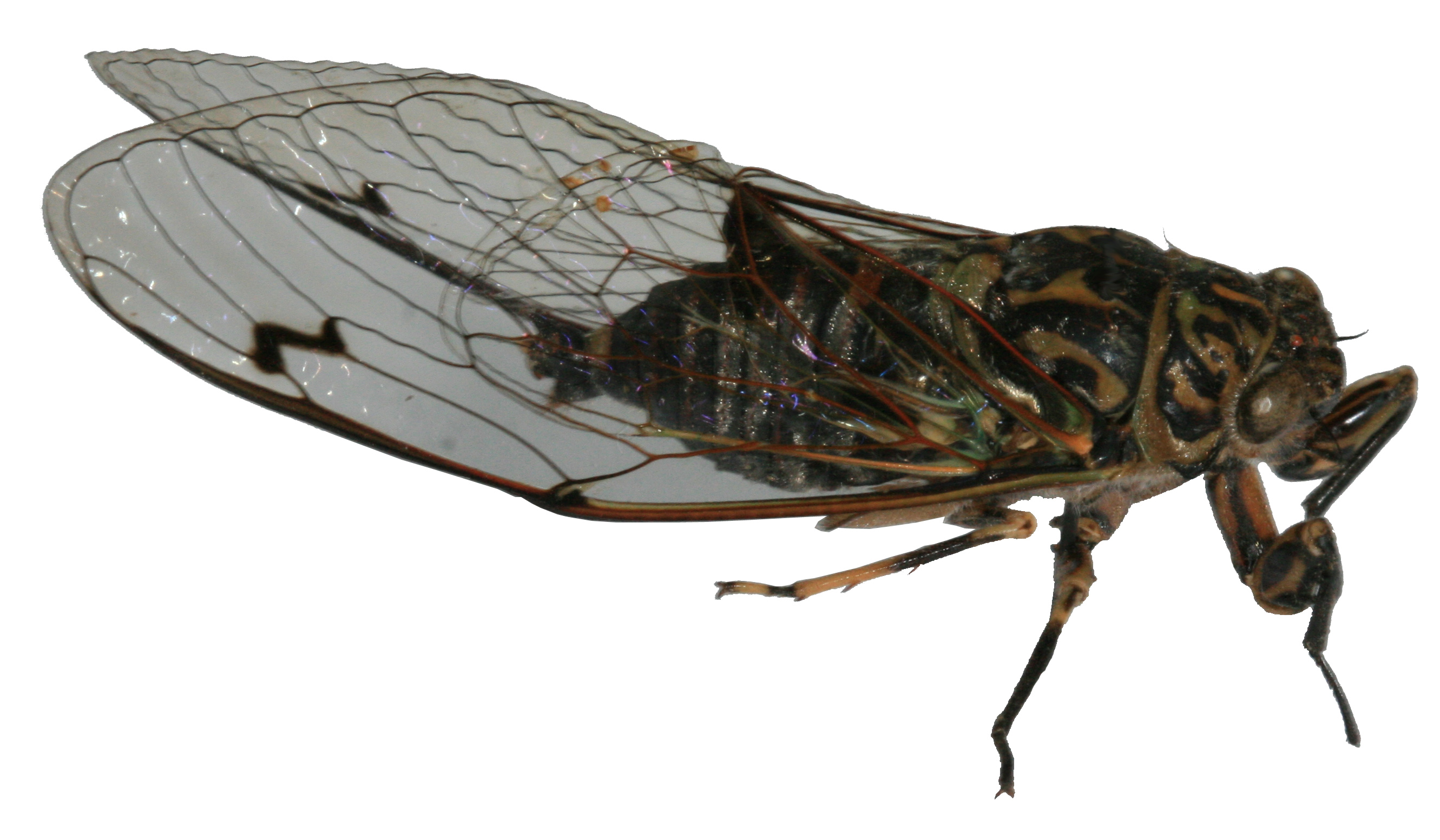
cicada2As we drove to the beach this afternoon, we passed out of the agriculturally blasted plains to the slightly less blasted Banks Peninsula. As we drew closer to the remnants of bush on the Peninsula, the decibel level outside the car rose dramatically. The culprit was the chorus cicada/kihikihi wawā (Amphipsalta zealandica). Wawā means roaring like heavy rain, and it’s an excellent description of the noise the males make en masse from every bush and tree. In some places, they are so loud, that conversation is completely impossible.

But their chorus is summer here. The season hasn’t really arrived until the cicadas start calling in January. As my husband noted today as we drove, “It just feels warmer when the cicadas are calling.”

And for as long as they call, we will believe it is summer. For as long as they call, we will feel we are on vacation, and the work week is simply a temporary interruption between trips to the beach.

Outside In

2016-01-01 16.46.05Window screens are uncommon in New Zealand.

It’s not that there is no need for them. This time of year I struggle to keep the outside out of the house.

Flies, bees, wasps, mosquitoes, and moths all find their way in, to buzz, bite, and generally be a nuisance. Leaves and seeds blow in on the ever-present wind. And the occasional escaped chicken or feral cat wanders in, too.

So why no screens?

It makes sense if we look at why window screens are found elsewhere in the world.

In the United States, window screens were uncommon until the early 1900s, when they were suddenly mandated by local governments all over the country. An important advance of science was the reason for the new laws.

Today, with think of malaria, yellow fever, dengue, and a host of mosquito-borne diseases as tropical. But these “tropical” diseases, especially malaria, used to range all through Europe and North America. The ancient Romans invading Scotland, lost half their soldiers to Scotland’s local strain of malaria. Yellow fever and malaria were common in Boston and London. Philadelphia was decimated in 1793 by a yellow fever epidemic.

The connection between mosquitoes and malaria was discovered by entomologist Ronald Ross in 1897, and by 1900, mosquito control efforts were underway all over the world. Within a few years, window screens were being mandated by law in disease-hit areas. Most of those laws are still in place, as there is nothing preventing those mosquito-borne diseases from returning.

Here in New Zealand, we are remarkably free of mosquito borne diseases. Malaria, and yellow fever have never gained a foothold, though they almost certainly have shown up now and again in the form of sick travellers.

With no mosquito borne disease, the biters that slip in through my windows every night are just a nuisance, so screens haven’t been written into the building code.

But they would be nice to have…

Damselflies

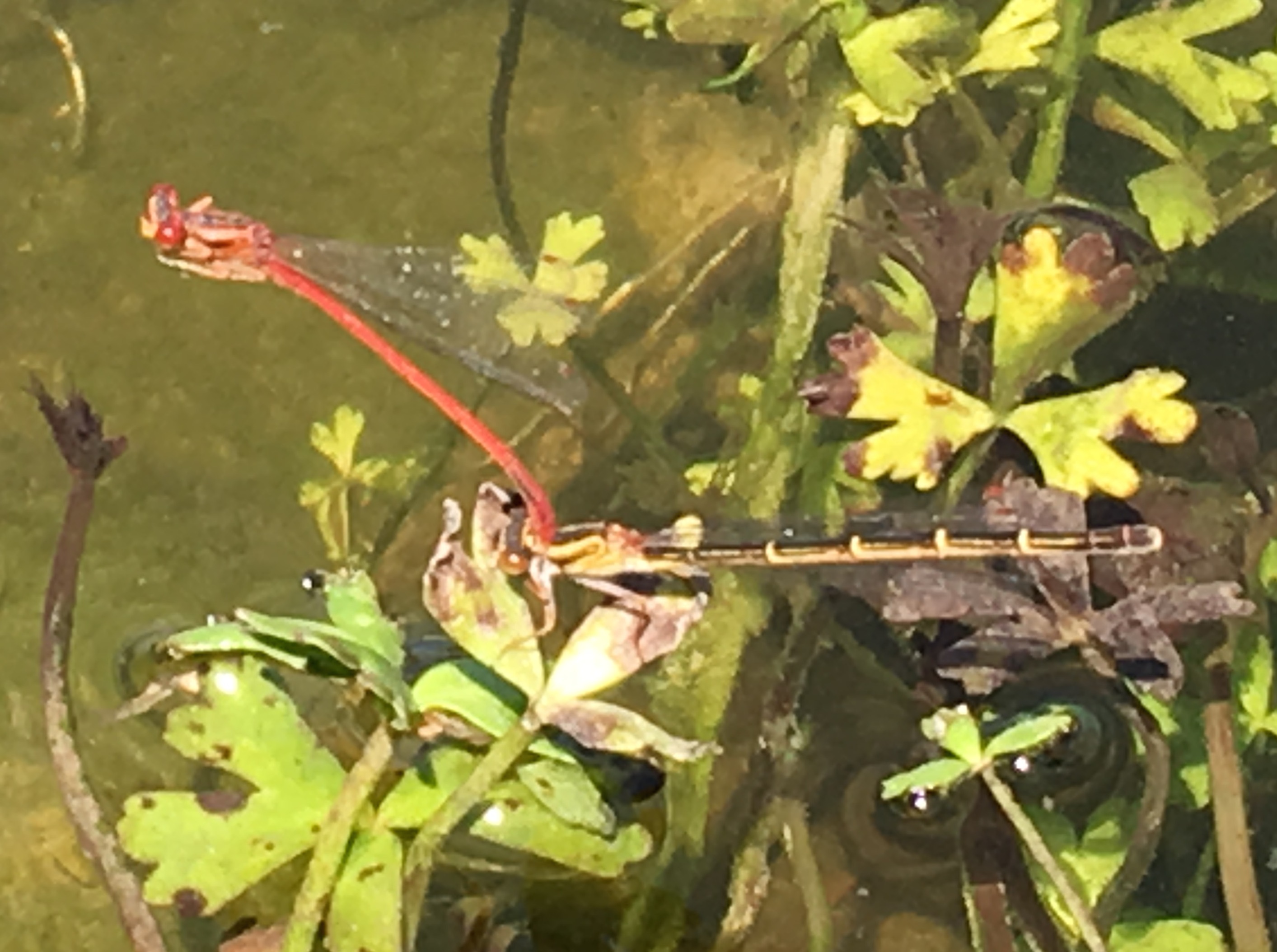
2016-01-31 13.44.27 cropTwo years ago, my husband did what he’d been threatening to do for years—he dug a pond. At some point, I’ll write a blog post on the pond itself, but today I want to talk about the damselflies that live there.

I took a break from my work this morning and spent a few minutes sitting beside the pond. It was swarming with red damselflies (Xanthocnemis zealandica). They were mostly males jockeying for the best territories—chasing and dive bombing each other, all short jabs of snapping wings.

2016-01-31 13.44.40 cropThe females were there, too. Every one I saw was being guarded by a male as she flitted from plant to plant, dipping her abdomen into the water to lay her eggs in the plant’s submerged stem. Damselfly mate guarding is awkward at best—the male grasps the female behind the head with claspers on the end of his abdomen and discourages other males from mating with “his” female. Both insects must beat their wings to keep the pair aloft, and as I watched them, it wasn’t at all clear to me who chooses the spots to stop and lay eggs.

When a pair stops, the male often supports himself entirely with his claspers, tucking in wings and legs and forming a bizarre appendage to the female as she gets down to business. She appears completely oblivious of her escort, resting after laying each egg, as if to say, “If you want to cling there in that ridiculous pose, that’s fine by me, but you’re not going to rush me.”

The eggs these girls lay will hatch in a week or two, and the nymphs will spend nearly a year living in the pond, eating other aquatic invertebrates with a hinged, extrusible mouth that is the stuff of horror movies, before emerging from the water as adults.

I sat and watched the spectacle for a while, and just as I was about to leave, I was treated to the sight of the other damselfly resident in this part of New Zealand—the blue damselfly (Austrolestes colensonis)—a large neon-blue insect that makes the red damselfly look dull.

Unfortunately, he didn’t stick around for a photograph, but I’ll be looking for his nymphs in the water later in the year.

Hedgehogs

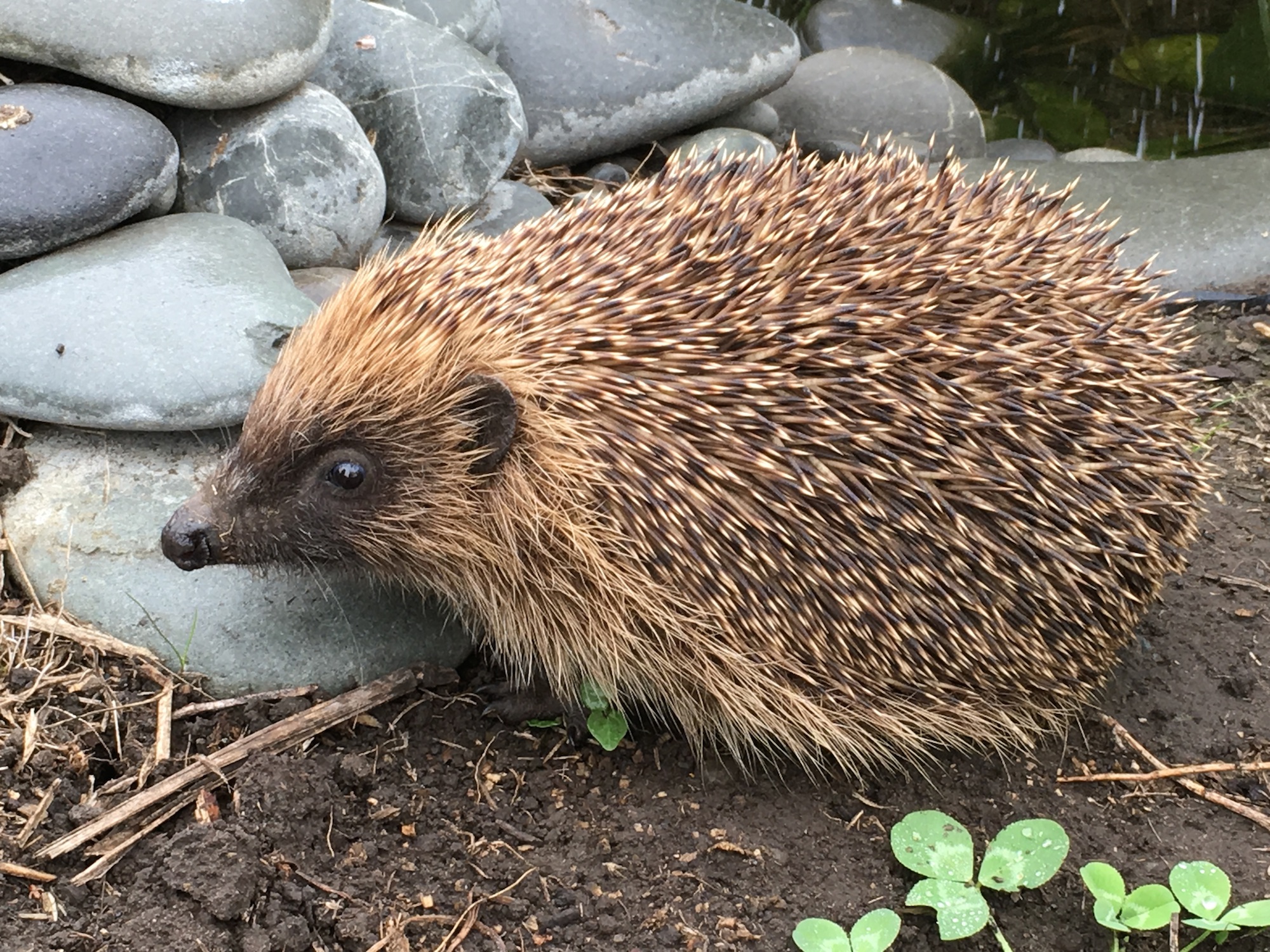
2016-01-26 18.07.41 smThey’re adorable and unafraid of humans. They eat snails, slugs and grass grubs. What’s not to like about hedgehogs?

Unfortunately, a fair bit, here in New Zealand. In addition to eating pests, they also feast on ground nesting bird eggs and chicks, skinks, and many native and endangered invertebrates.

And they’re more common in New Zealand than they are anywhere in their native habitat.

And I think they’re more common in our yard than anywhere else in New Zealand.

Now that the days are getting shorter, I regularly step on them in the dark when I’m out milking and feeding the animals. I certainly wouldn’t walk barefoot through the yard at night here.

They snuffle around the flower beds, snorting and grunting, oblivious to anything non-edible. They spread compost all over the yard.

They also apparently love cucumbers—last year I had to trap one out of the garden after it managed to squeeze in through a hole in the rabbit fencing. It took a bite out of each cucumber—obviously trying to find the perfect one.

They like the apples and peanut butter I bait the possum traps with, and though I don’t aim to kill them, I will admit that I’m not upset when I catch a hedgehog instead of a possum (my trapping seems to have no effect whatsoever on the population of either pest, anyway…). They snatch the eggs of the spur-winged plovers that nest unsuccessfully every year in our paddock, and I’d much prefer plover chicks to hedgehogs in the yard.

It still doesn’t stop me from smiling when I see one trundling along through the grass.

They are adorable after all…

These Are a Few of My Favourite Things: Preying Mantids

DSC_0025 sm

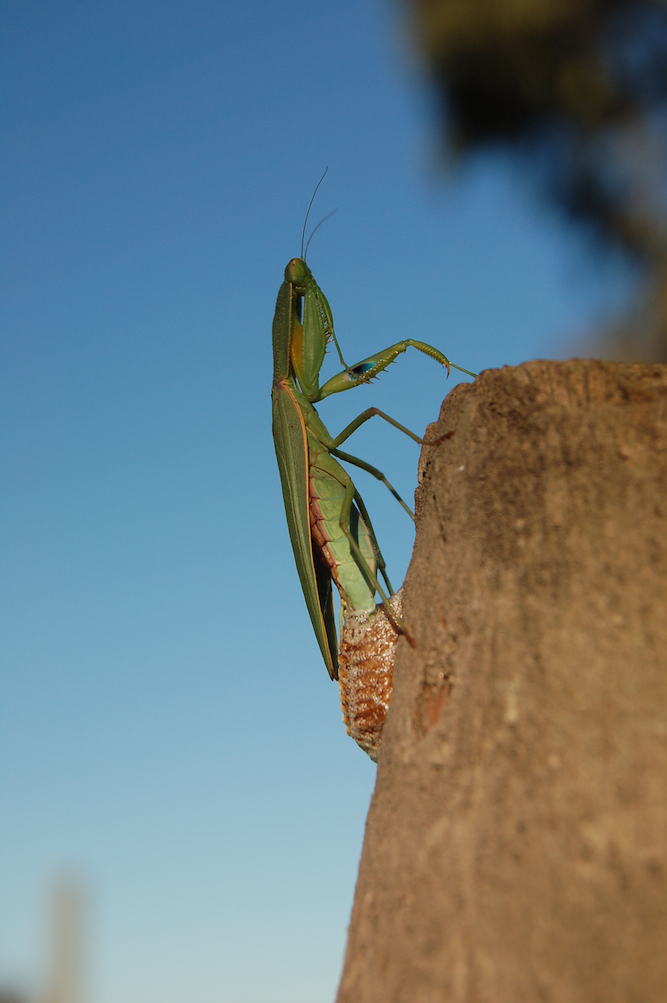
NZ mantis laying eggs

There’s no question why I’ve been known as The Bug Lady most of my life. I have a weakness for anything with more than four legs.

Preying mantids are some of my favourites. Not just because they eat pests in the garden, but because they are simply fun to watch.

How often can you watch a cheetah bring down an antelope in real life? Um…never. But it’s easy to watch a mantis snatch a fly—all the drama of the Discovery Channel, right in your back yard.

Sometimes the drama is a little too close for comfort.

When we lived in Panama, a beautiful 10 cm long green mantid with bright pink hind wings often came to our light at night. It would sit on our table and snatch moths attracted to the oil lamp. It was a cheeky insect, and had no compunctions about perching on our faces or arms to get a better vantage point for its nightly hunting. We laughed that it would follow us to bed some night.

We weren’t quite right, but one morning I slipped on my jeans, only to feel something enormous crawling up my thigh. With a yelp of surprise (and visions of scorpions, which were common in our house) I tore the jeans back off and peered down the leg to find our cheeky mantid scrambling out. It looked distinctly ruffled by the experience, but that didn’t stop it from returning to our light.

But from then on, we trapped it in a jar every night before we went to bed.

We are blessed with a healthy population of New Zealand mantids here at Crazy Corner Farm. Like most mantids, they enjoy hanging out on flowering plants, particularly herbs which attract huge numbers of flies and bees. Sometimes, I sit in the middle of the herb garden with my morning coffee, just to watch the mantids. I’m always surprised and impressed by the size of prey they can take down. I’ve even seen them snatch more than one fly at a time—one in each “hand”. Indeed, they will keep snatching prey as long as it keeps coming—even once they are fully sated and can’t possibly eat any more—their predatory instinct is so strong, they can’t stop themselves.

Of course, everyone has heard that female preying mantids eat their mates, and in species in which the female is much larger than the male, I’m sure it happens. But male preying mantids are just as fierce as the females, and they don’t go without a fight. The female New Zealand mantid is only slightly larger than the male, and I have kept males and females together in captivity. Only once did I see a female try to eat her mate. It was an epic struggle, worthy of the best wildlife documentary. It went on for at least fifteen minutes, and in the end, the male got away.

So turn off the TV. Get outside and watch the drama unfold!

Margaret Mahy Playground

IMG_0072For those unfamiliar with Down the Back of the Chair, The Great White Man-Eating Shark, and The Man Whose Mother Was a Pirate, Margaret Mahy was a prolific author of children’s books and young adult novels. She lived just over the hill from Christchurch, in Governor’s Bay from the late 1970s until her death in 2012.

Her books are quirky, adventuresome, and often wildly creative.

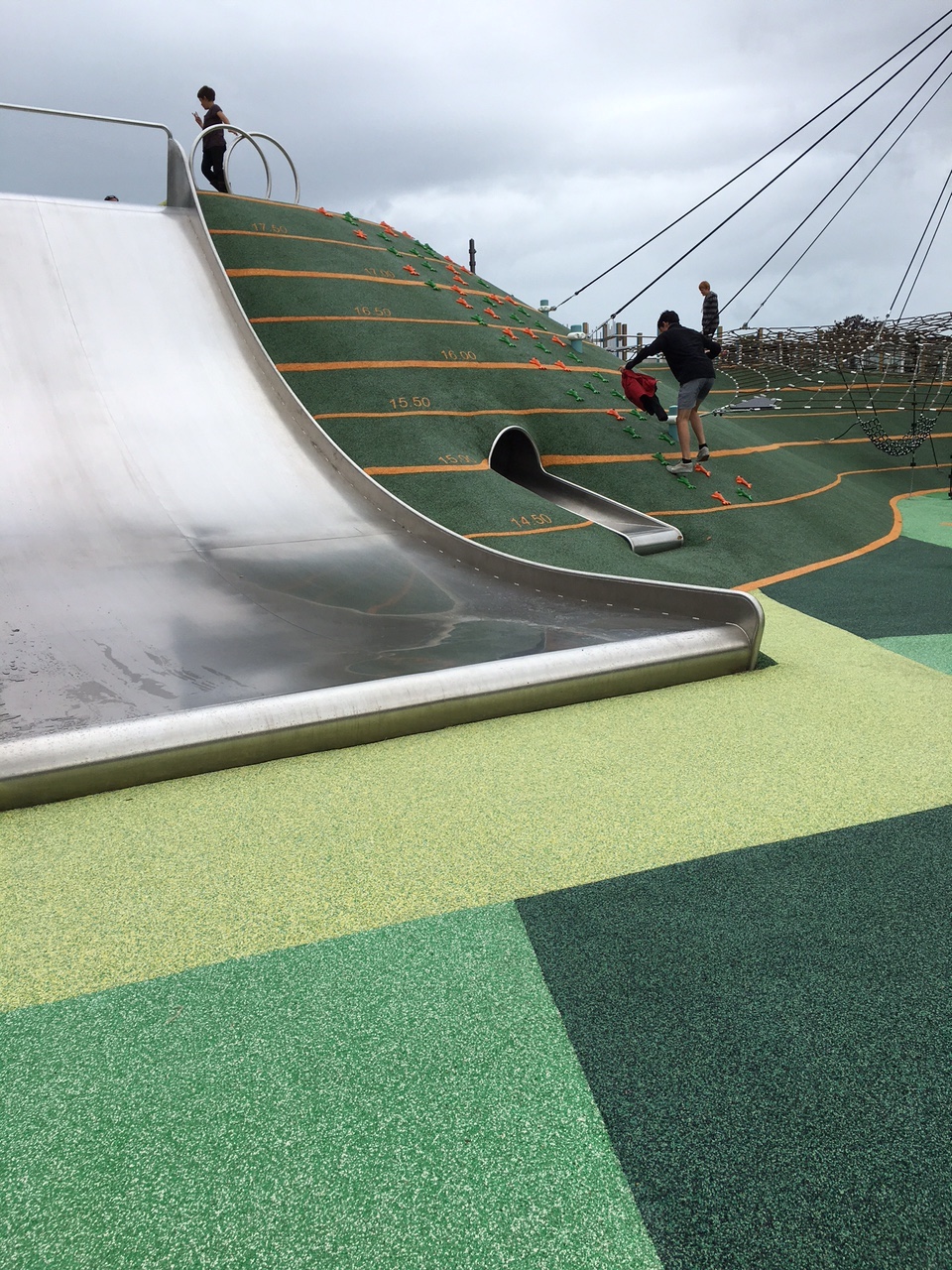
The recently opened Margaret Mahy Playground is also quirky, adventuresome, and creative.

We don’t frequent playgrounds anymore—our kids are mostly past the age where they insist on playground stops—but when we were in town the other day to visit the (finally) reopened art museum, we decided to check out the new playground.

IMG_0084Water, sand, a flying fox, climbing structures, the “fastest slide ever” (according to my daughter who flew off the end of it like a champagne cork), and a hill marked with contour lines…Horrakapotchkin! The playground was awesome. Even my too-cool-for-playgrounds teenage son went down the slide (twice), sent water through the sluice system, and delighted to find the sensors that turned on sprays of water.

Best of all, there is a path out the back of the playground down to a dock on the river.

The only downside to the playground is that all the surfaces are concrete or rubber mat. A necessary choice of materials, I’m sure—even on the chilly, rainy day we visited, the playground was crowded. Grass would be trampled to death in a day.

One of the best playgrounds I’ve ever seen, and a great tribute to Margaret Mahy.

Summer Christmas

Photo: Ian Dickie

Photo: Ian Dickie

It took me a while to get used to Christmas in the summer. Walking past shop windows frosted with fake snow while wearing shorts and a t-shirt, decorating a tree with lights that we don’t bother turning on because they can’t be seen in the long summer days, listening to Christmas carols that speak of snow…it’s all a bit ridiculous here.

But I’ve learned to be flexible and view Christmas as a summer holiday. And we’ve picked up a few southern hemisphere Christmas traditions.

Champagne with strawberries—nothing says summer better than a little bubbly with a fizzing strawberry in the bottom of the glass. Anytime after 11 am on Christmas day is time for a little champagne.

Christmas camping trips—this is a Kiwi tradition we’ve embraced wholeheartedly. We enjoy a pre-Christmas tramping trip every year to get us in a festive mood.

Trips to the beach—The holiday season wouldn’t be complete without at least one day on the beach. It should also include ice cream.

A laid-back approach to life from mid-December to mid-January—it used to really irritate me that I couldn’t count on anyone being in their offices for the better part of a month around Christmas. I was the sort of person who worked up until Christmas eve, and was back at it no later than the second of January. But I couldn’t get anything done because everyone else was on vacation. Eventually I got the message—it’s summer. Relax. The work will still be there in February. It can wait.

Have another glass of that champagne.

Seasons greetings to you all!

Currants

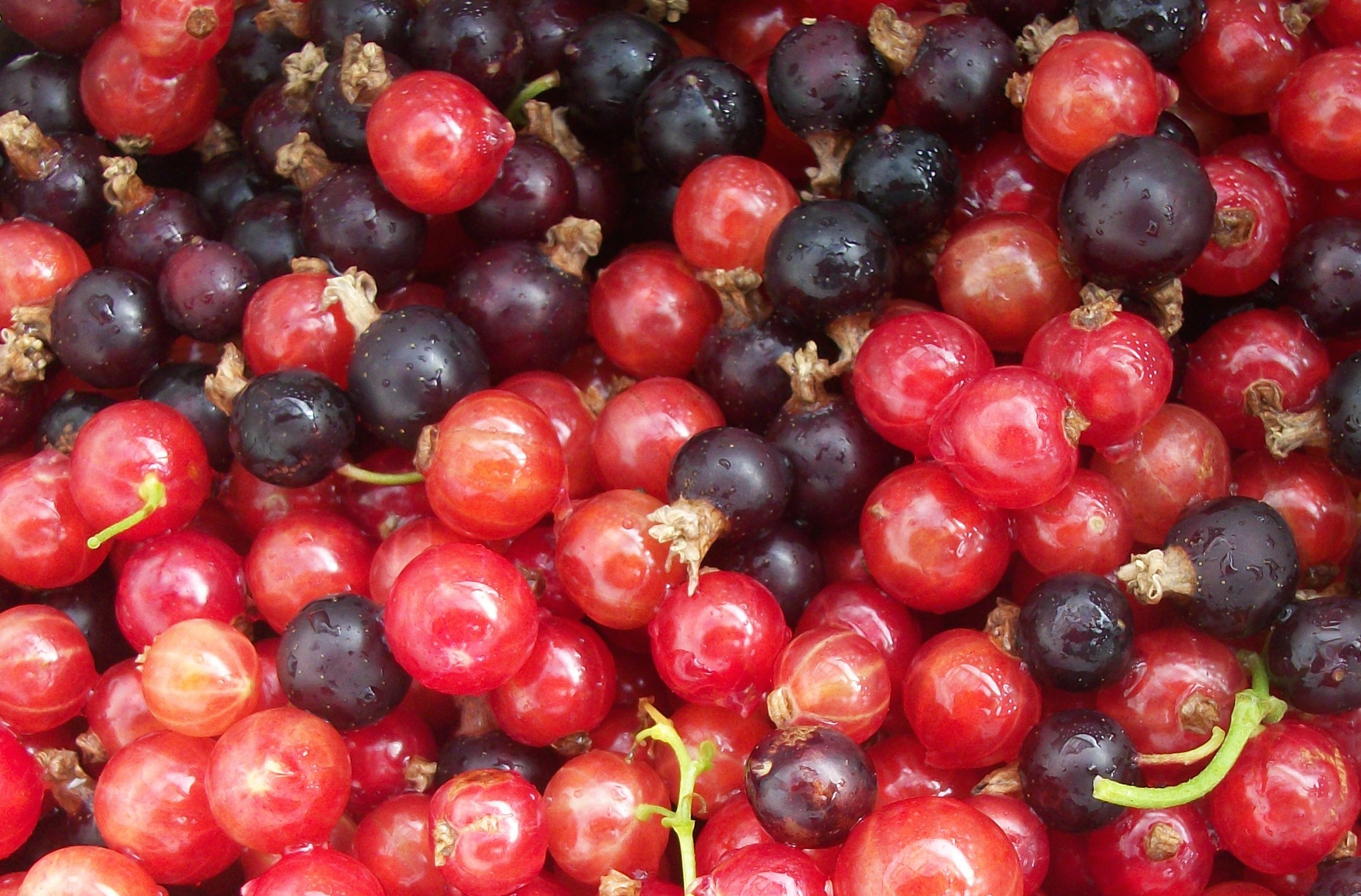
100_4192 cropNew Zealand produces about 8,000 tonnes of blackcurrants each year—5% of world production. We have at least one large blackcurrant farm nearby, and more popping up, as a craze for blackcurrant products grows. Marketing for blackcurrant products focuses on their health benefits (antioxidants, vitamin C).

We grow both red and black currants, but not for their health benefits. We grow them for their flavour, colour, and prolific production.

Let’s forget healthy entirely–currants’ bright colours and tart flavour make for beautiful and decadent pies, jams and ice cream. They liven up fruit salad, and their juice makes a lovely drink on a hot day, mixed with tonic water and a splash of gin.

And you can toast your health with that!

Christmas Doggerel

Seasonally adjusted Christmas tree--the Christmas bean!

Seasonally adjusted Christmas tree–the Christmas bean!

It wouldn’t be Christmas in New Zealand if I didn’t completely trash at least one Christmas song by writing a geographically appropriate version for us.

And so, to kick off the Christmas season, here it is–to the tune of Chestnuts Roasting Over an Open Fire.


Marshmallows toasting o’re the campfire.

Sand crabs nipping at your toes.

Yuletide carols being sung by a choir,

And folks with sun block on their nose.


Everybody knows a wetsuit and some ice cream

Help to make the season bright.

Tiny tots with a sunburn will seem

To find it hard to sleep tonight.


They’re tracking Santa’s every vector.

He’s loaded lots of toys and goodies on his tractor.

And every mother’s child is gonna spy

To see if sheep really know how to fly.


And so I’m offering this simple phrase

To kids from one to ninety-two.

Although it’s been said many times, many ways,

Kia ora to you.