Plant tags

100_3660 smI use a lot of plant tags every spring—many hundreds, at least. I reuse as many as possible from year to year, but they don’t last forever.

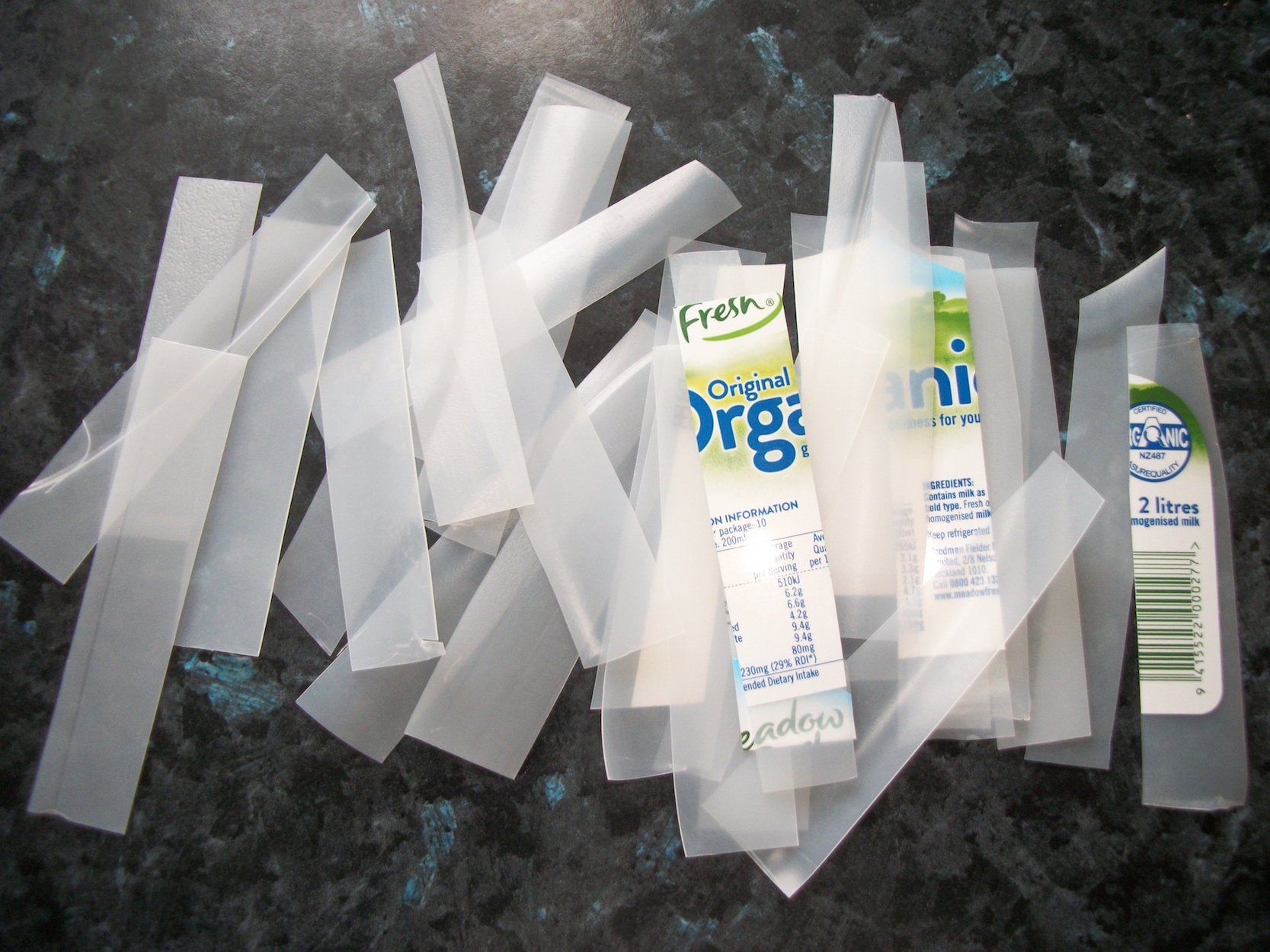
I hate the idea (and the expense) of buying plastic tags, so instead I use empty milk bottles cut into strips. Permanent marker shows up well on them, and they last several years. Best of all, they’re free, and I can make hundreds of them every year.

Duct Tape

100_3655smIt is the answer to every problem, the fix for every break. It is one of the most essential tools I use.

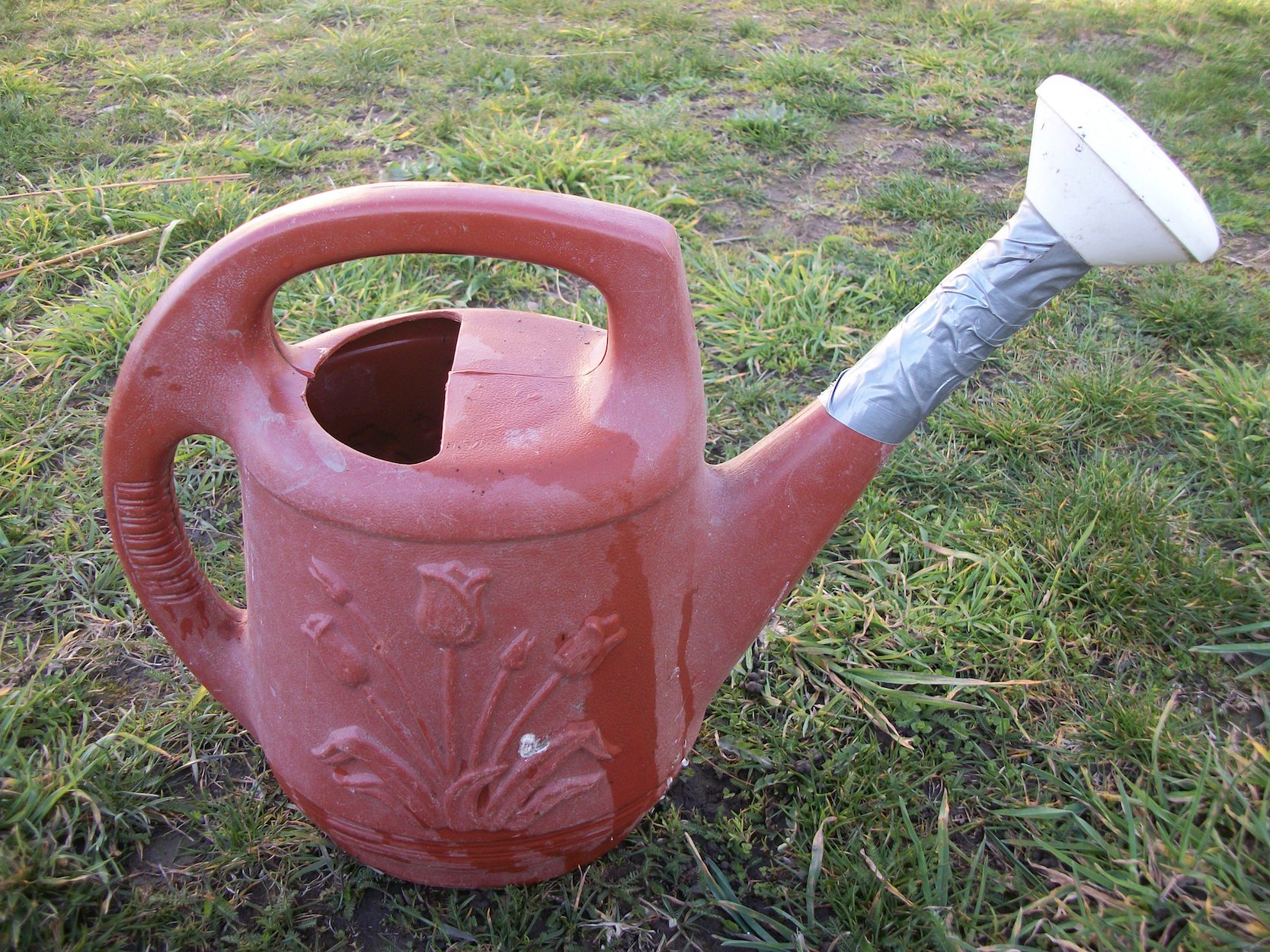
Old watering can is cracking? Wrap it in duct tape!

Binding on your favourite book splitting? Put some duct tape on it!

Rubbish bag tear? Duct tape will take care of it!

Hole in your sneaker? Duct tape will fix that!

Outdoor outlet needs a little more rain protection? Secure a plastic cover onto it with duct tape!

Break the hoe handle? Duct tape will hold it together for years!

Duct tape!

Spring

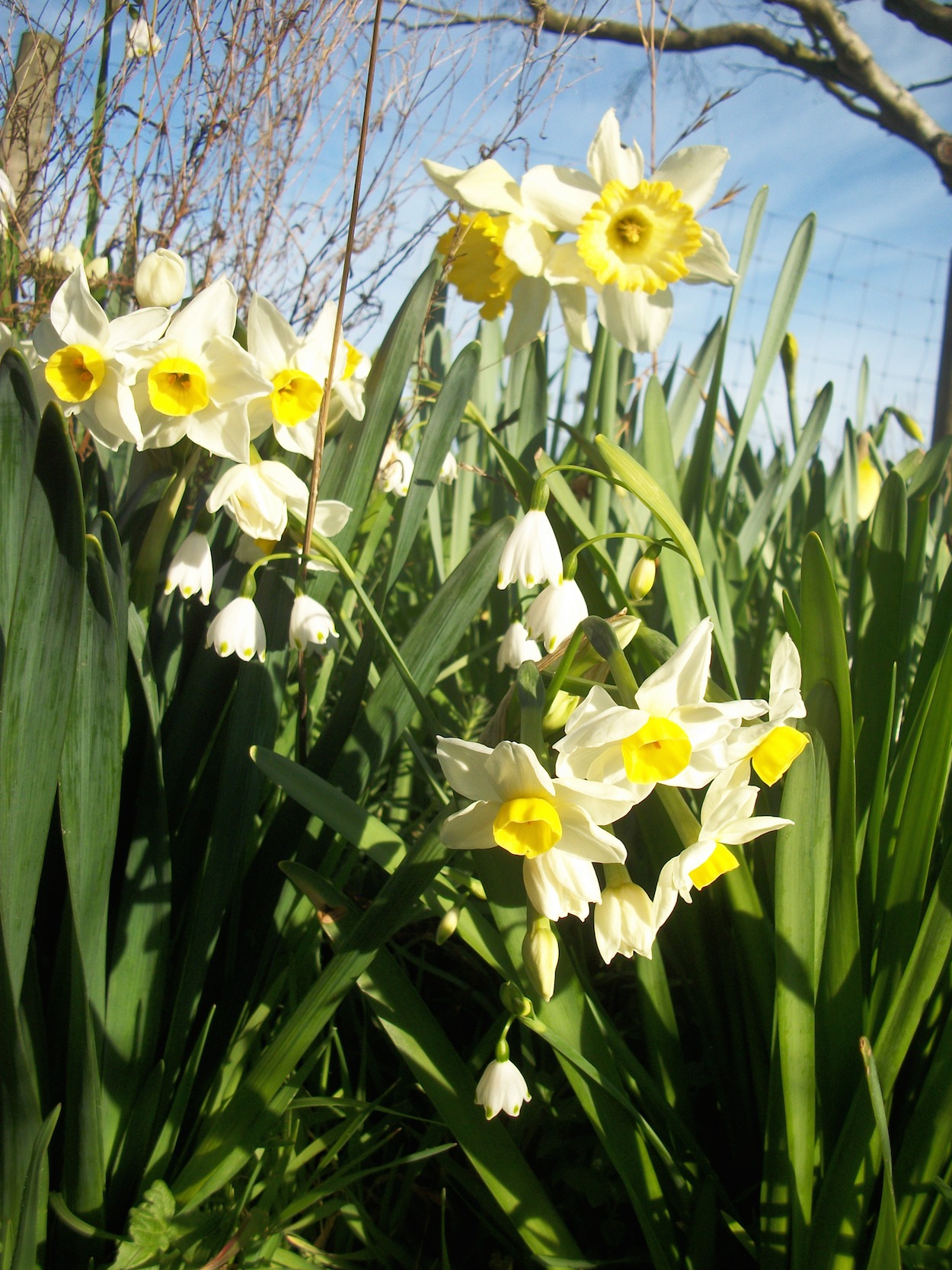
100_3654 smYesterday was the official start of spring, though the plants have known it for weeks. The crocuses are all but over. The daffodils and snowdrops are blooming. The willow trees flushed green last Thursday. The grass needs mowing.

So, naturally, it’s been cold and rainy for five days.

But cold and rainy at the beginning of September is fundamentally different from cold and rainy in July.

It may be twelve degrees in the house in the morning, but I don’t feel the need to light the fire—it feels warmer than it is.

The sky is light at 6 am.

The sky is still light at 6 pm.

The magpies tussle on the lawn and sing in the early morning darkness.

The plovers run in fits and starts across the paddocks.

We are all restless to be outside, regardless of the weather.

Weeds seem to spring up overnight in the garden.

Yes, it is spring.

Capturing water

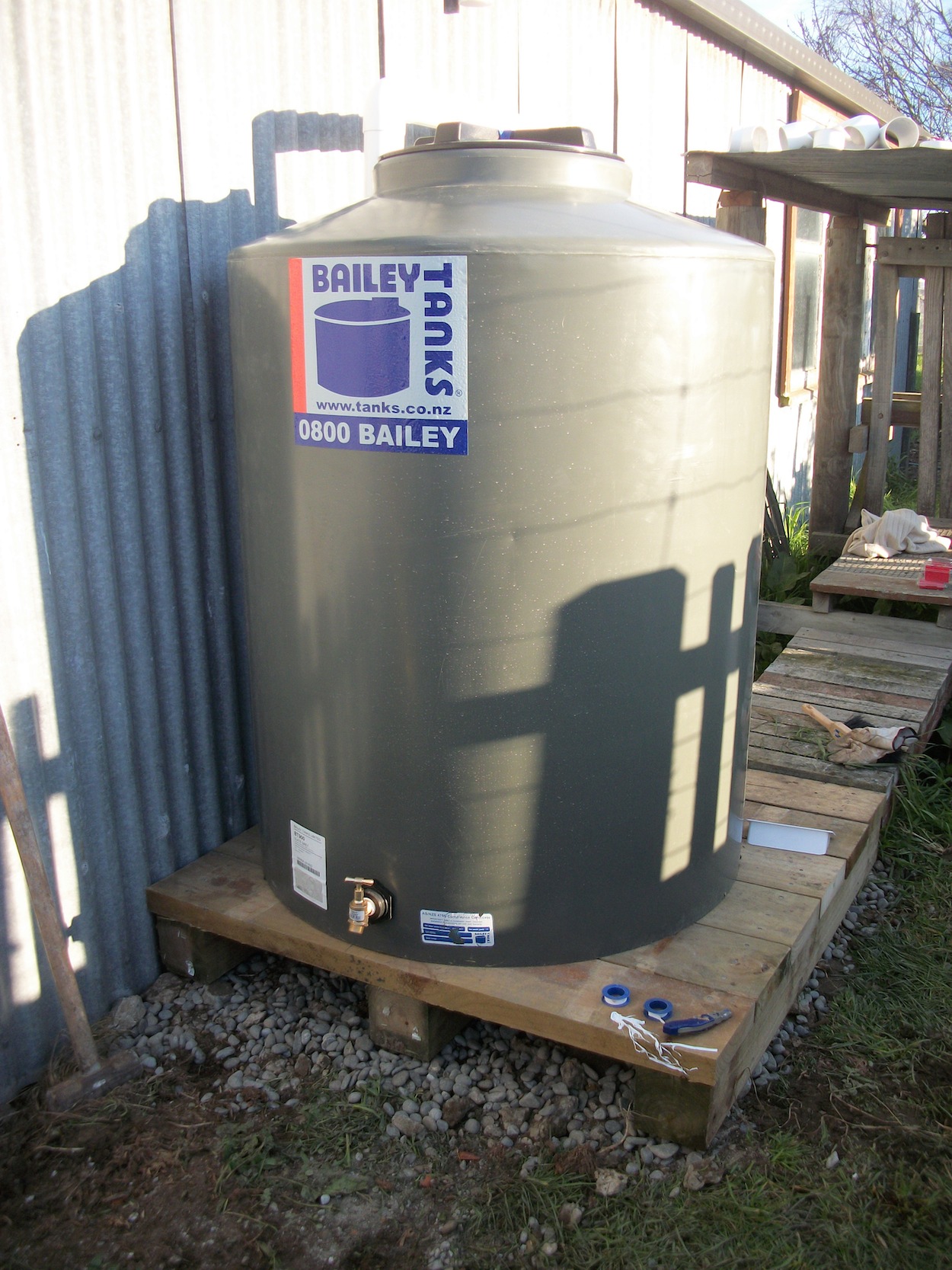
100_3635 smSummers are dry here. Nor’west winds whip hot and dry across the plains, sucking moisture from the plants and soil. Though I protect my garden as best I can, with mulch and shelter, there is no escaping the need to water, at least once in a while.

That’s in a good year, when it rains occasionally during the summer.

Last year, we got almost no rain from October to February, and our autumn and winter have been unusually dry as well. The prediction with climate change is for more of our years to be like that.

Which naturally leads me to worry about water. For now, there is plenty of water in our well to keep the vegetable garden green in a dry year. But if we have more and more dry years, who knows what might happen to the water table.

So this year, when we needed to address some aging guttering on our sheds anyway, we tried to arrange things so we could make better use of the rain that does fall on the property.

We had a rain barrel before—a rusty old 55 gallon drum of unknown origin, from which we were able to draw rust-flecked orange water in an emergency. It was great for flushing the toilet after the earthquakes, but it wasn’t particularly pleasant, and it wasn’t enough water to make much difference if we needed to use it on the garden.

Now we have a 900 litre tank collecting water off our large shed roof, set up so I can easily attach a hose and draw off the water when I need it. And the water from the small shed’s roof is being directed into the pond, so that, hopefully we won’t need to refill it with water from the well when summer evaporation threatens to dry it up. Any overflow will water the garden around the pond.

There is still a lot of water we don’t capture, but the rain off the house roof currently runs out into perennial garden areas, including some of our fruit trees, so it’s reasonably well used.

Waste not, want not. At least, we hope so.

Broomrape

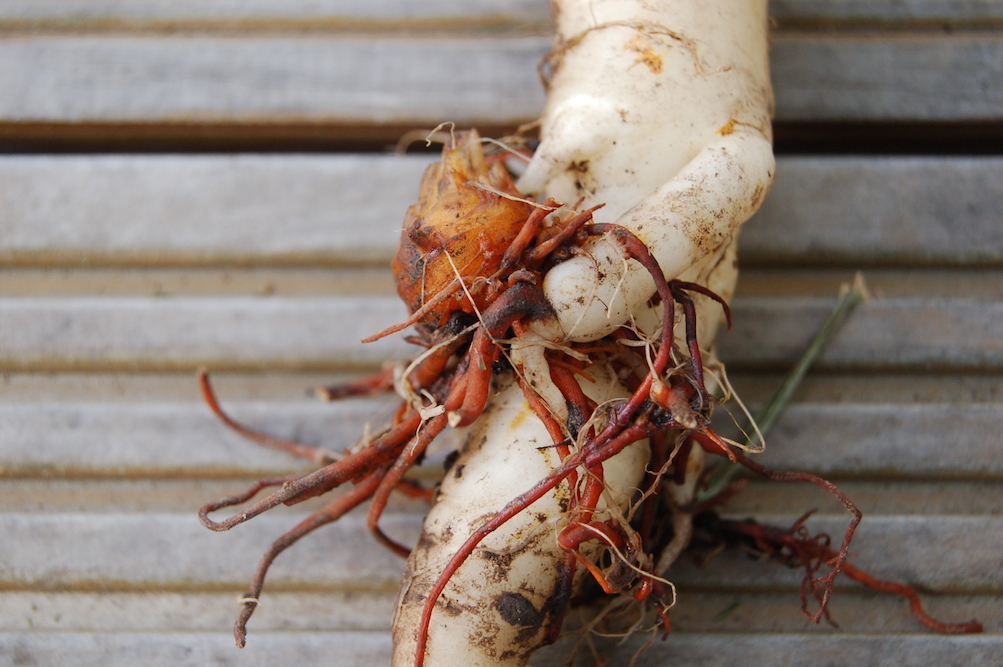
Belgian white carrot in a broomrape embrace

Belgian white carrot in a broomrape embrace

We have a moderate infestation of broomrape (Orobanche minor) on our property. It shows up here and there in perennial beds and in the vegetable garden.

Broomrape is a parasitic plant. It contains no chlorophyll, and when it is not flowering, the entire plant is below ground. Its fibrous, root-like tentacles encircle the host plant’s roots, sucking off nutrients and water from the host.

Though it “officially” prefers clover, in the vegetable garden, it seems particularly fond of carrots. I regularly find carrots being strangled in a broomrape embrace.

The gardener in me is dismayed every time I find one.

The scientist in me is fascinated.

Many parasites are very host-specific, that is, they only live on one or a limited number of host species. Orobanche minor appears to have a wide host range, but there is evidence that individuals parasitising different species are actually genetically isolated from one another, because the parasite’s reproductive cycle is tied to the host plant.

Eventually, that isolation could cause Orobanche minor to speciate…or maybe it has, and we haven’t noticed yet.

Perhaps some day my carrot-loving parasites will be different enough from my clover-loving parasites that they will have a new name. Maybe Orobanche carota!

Garden Update–24 August

100_3612The greenhouse and the first of the garden beds have been cleared of weeds and prepared to receive plants!

The first plants to go into the greenhouse won’t stay there long. They are the early crops that need just a little extra warmth now, but will be planted out into the garden in just a few weeks. These plants have spent the past week in my office, with a little overnight heat to help the seeds germinate. Now they’ve moved to the greenhouse, making way for the late season crops in the office.

I start the vast majority of my vegetables indoors, because I get much better and more even germination there, and it protects the seeds and very young seedlings from the voracious birds and slugs that prowl the garden.

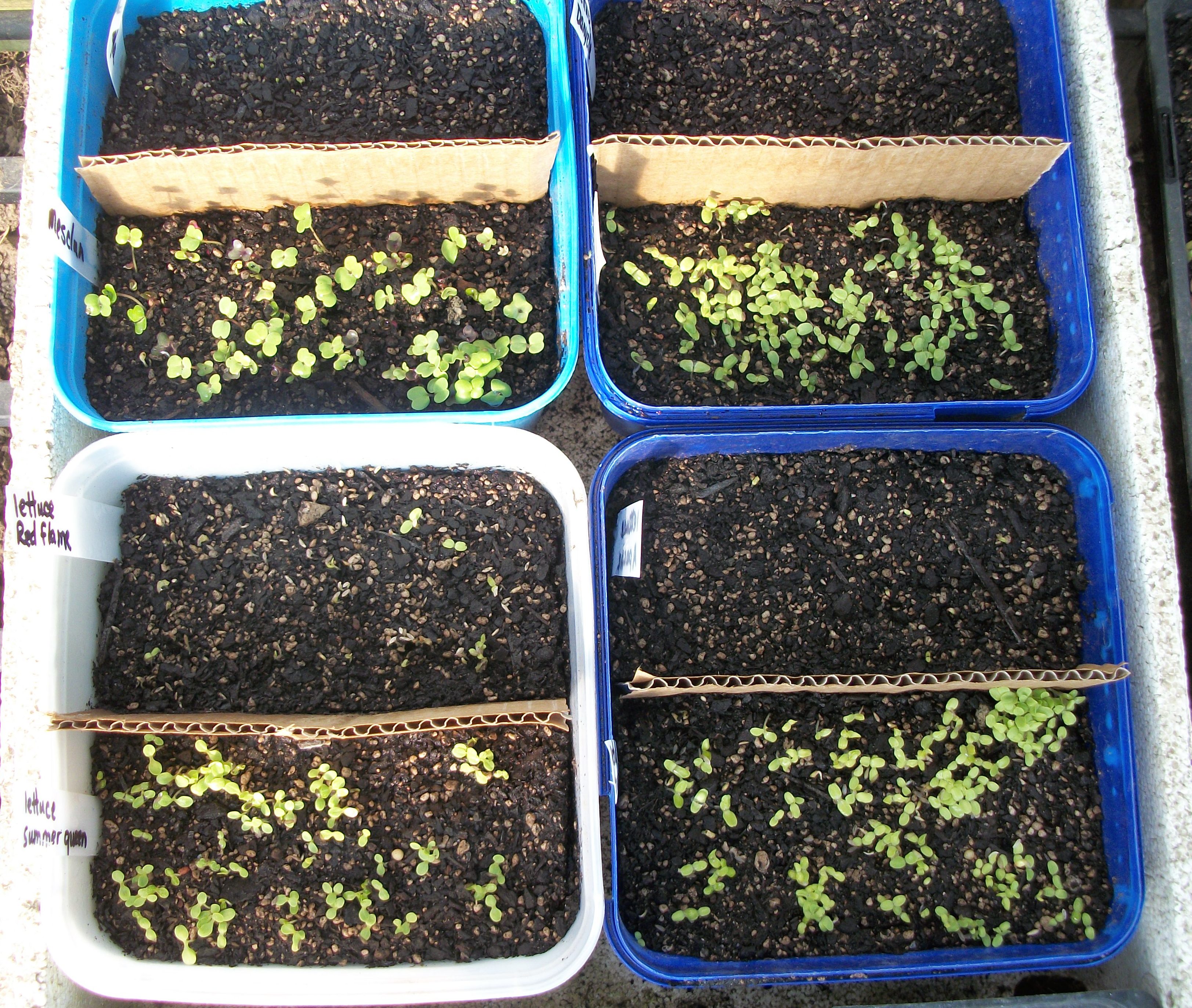
Over the past two weekends, I’ve planted the following in seed trays:


Broccoli (de Cicco)

Cabbage (Puma)

Pak Choi (Joi Choi)

Broccoli Raab (Spring rapini)

Cauliflower (Snowball)

Pepper (Jalapeño Early)

Pepper (Marconi Red)

Pepper (Thai Super Chilli)

Pepper (Mini-Stuffer)

Pepper (Muscato)

Pepper (Cabernet)

Eggplant (Tsatsoniki)

Eggplant (Tokyo Black)

Eggplant (Eclipse)

Snow Pea (Goliath)

Sugar snap pea tall

Blue Shelling Pea

Lettuce (Danyelle)

Lettuce (Merveille de quatre saisons)

Lettuce (mesclun mix)

Lettuce (Red Flame)

Lettuce (Summer Queen)

Lettuce (Drunken Woman Fringed Head)

Lettuce (Apache)

Arugula

Spinach (Santana)

Spinach (Bloomsdale)

Spinach (Red Stem)

Onion (Stuttgart Long Keeper)

Onion (Red Amposta)

Spring onion (Ishikura)

Shallot

Cilantro (slow bolt)

Celeriac

Gogi berry

Dill (bouquet)

Cape gooseberry

Fennel (Florence)

Fennel (Sweet Leaf)

Celery (Elne)

Celery for cutting

Parsley (Gigante Italiano)

Parsley (Green Pearl)

Tomato (Amish Paste)

Tomato (Indigo Rose)

Tomato (Window box red)

Tomato (Bloody Butcher)

Tomato (Beefsteak)

Tomato (Brandywine pink)

Tomato (Russian Red)

Tomato (Pear Blend)

Tomato (Delicious)

Beet (Detroit Dark Red)

Turnip

Chard (Cardinal)

Basil (Amethyst)

Basil (Sweet Genovese)

Basil (Thai Siam Queen)

Tomatillo

And a bunch of flowers I won’t list…

For a total of about 1300 plants.

Many more to come…

Weeds, weeds, weeds!

DSC_0001 smI was surveying the vegetable garden the other day, contemplating the winter’s crop of weeds. It’s not a pastime calculated to bring out good thoughts.

I have identified 57 weed species in the garden. Most of the weeds are not a big problem. Nettles, while irritating, are easily removed (and they’re food plants for two lovely native butterflies, so that’s okay). Clover, difficult to remove from around vegetables, is easily hoed out of a bare garden. Dock and mallow, even with their long taproots, come up without difficulty in the soft wet soil of spring. California thistles…well, I can at least pretend, at this time of year, that I’m getting them out deep enough that they won’t just resprout.

Then there’s twitch (couch grass). Twitch is the bane of my existence, and gains ground all winter. It creeps in from the edges of the garden and seeds itself into the middle. It is impossible to remove from the packed earth of the paths, and even the smallest piece of a runner left in the ground (or even on the surface) will resprout.

And twitch isn’t something you can just ignore, like shepherd’s purse or henbit. If it goes unchecked, it can wreak havoc in the garden. It sucks moisture, and can sprout thick as the hair on a dog’s back overnight, smothering even good-sized vegetables.

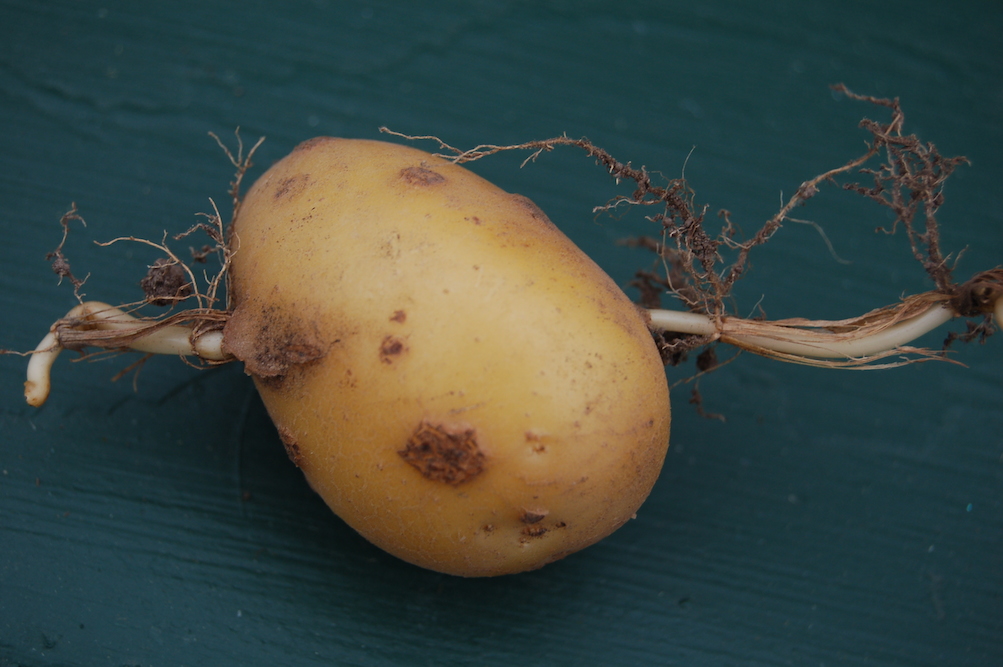
One year, I ignored twitch in the potato bed, thinking that the potatoes would shade it out. I only realised my error when I harvested the potatoes. They were shot through with twitch roots!

My annual struggle with twitch will start soon—probably this coming weekend. I will be sharpening my tools in preparation for the battle.

Garden Planning

gardenplanning1Part of my late-winter garden work is planning the coming summer’s vegetable garden. It’s a job I take seriously, because it affects my work for the entire year.

The vegetable garden (minus the greenhouse) covers about 410 square metres (4400 sq ft). It is divided into 28 beds, separated by narrow paths, with a broad path running up the middle between the gates on either end.

During the winter, the chickens run in about two thirds of the garden, controlling weeds and pests, and the remaining third is devoted to winter crops.

In planning the new crops, I need to take into account when the winter crops will be over, when I’ll have to remove the chickens from the garden for the year, and what was in each bed the year before.

I also need to take into account wind, irrigation patterns, available support structures, and growth patterns. For example, corn always goes near the edges, because the irrigator can’t throw water over the mature stalks—anything on the other side of the corn dries up. Corn is also a great wind block, and I can use it to protect more delicate plants from the vicious nor’west winds. Peas and tomatoes usually go on the edges of the garden, which are bounded by deer fencing they can be tied to for support. Melons like tall plants on their south side to block any cool southerly winds.

My goal is to have every inch of the garden covered with food plants for the entirety of the growing season. For example, the early spinach will be bolting by the time the tomatoes are ready to plant out, so they will share a bed. Chopped spinach stalks will form the mulch for the newly planted tomatoes. The garlic will be harvested before the pumpkins get large, so they can be planted in adjacent beds, and the pumpkins trained into the garlic bed once it is empty. Plants with a single harvest date, like dry beans, are planted in adjacent beds, and packed in so that the plants can spill into the paths, because I won’t need to walk down them frequently for picking.

It takes several hours (and usually a cup of coffee, and a scone if I can get it) to plan the garden to my satisfaction. There are often small changes as I go, but once the plan is in place, it guides my entire spring.

I can’t prepare 410 square metres of garden all at once, but with the plan in hand, I can prepare the beds in the right order so that each one is ready when the crop is ready to go in it. The plan allows me to ignore waist-high weeds in one bed while I focus on another, knowing that all the beds will eventually be prepared and planted. It makes my springtime as stress free as possible, and gives me time to stress about the weather instead!
And They’re Off!

100_3569 smHurrah! The gardening season has begun!

Though it was cold and rainy today, I began planting the early (onions, peas, spinach, lettuce, brassicas) and the slow-growing (peppers and eggplants) crops in trays today.

Now, my office/craft room also becomes a greenhouse. For the next three months it will house a growing array of seedlings that need a little extra warmth overnight.

For several years I started my seeds on top of an old electric blanket in the shed. It worked fine at keeping the seeds warm, but I had difficulty keeping the rats and birds from digging up the seeds and eating them.

Then I discovered that the blanket was getting wet in spite of the plastic I employed to protect it. I decided that, rather than risk burning down the shed or electrocuting myself with a decidedly off-label use of an electric blanket, I should move my plants.

The office has proven a wonderful greenhouse. The seedlings sprout quickly and without fail, and the large sliding glass doors let in plenty of sunlight. And there are no rats or birds to contend with.

The only downside is the humid atmosphere in the office for the spring months. What is good for plants isn’t exactly the best for people or office supplies!

Maybe someday I’ll have a heated greenhouse. Until then, I’ll have to make do with an office full of plants.

Seasons of Garlic

15 heads of garlic, all in one pint jar!

15 heads of garlic, all in one pint jar!

The garlic I planted on the winter solstice has taken advantage of the recent rain. It is now 5cm above ground, and looking great!

Of course, when the garlic in the garden starts sprouting, so does the garlic stored in the shed. And once it starts sprouting, its flavour goes off. The goats will still eat it (they seem to love garlic, and the local breeders feed it to them to help fend off intestinal parasites), but it’s not very tasty to the human palate.

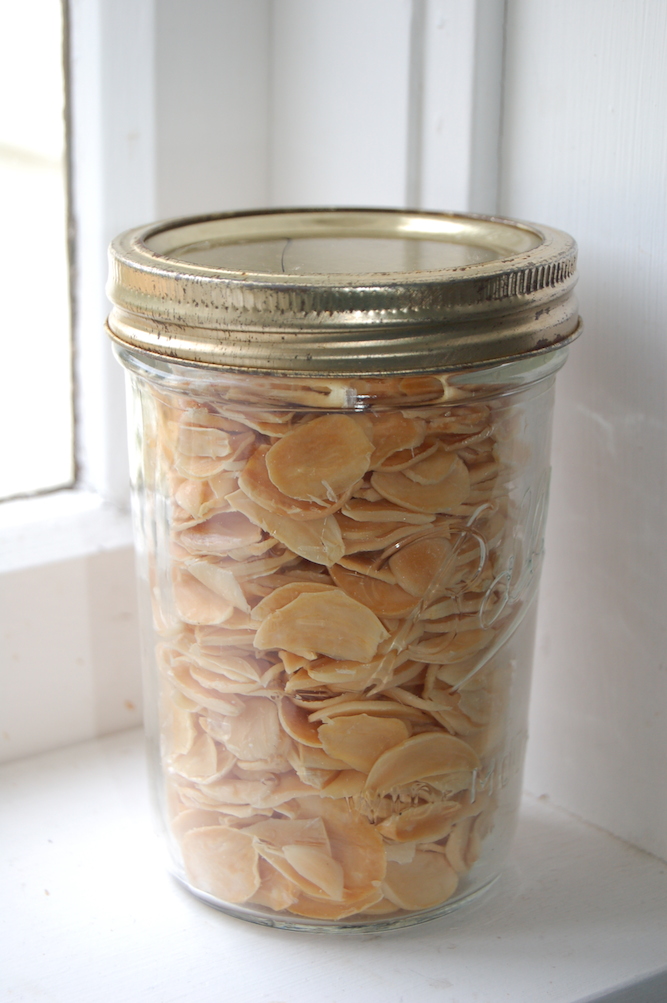
So it’s about this time of year when we switch to using the garlic we dried at harvest time. The thin slices grind well in a mortar and pestle, and are easy to use. Though they aren’t as good as fresh garlic, they’re much better than sprouted garlic, because they were dried at peak freshness.

We’ll use this dry garlic until we can start harvesting the first immature new heads around Christmas. But as spring comes on, and the winter-planted leeks and the spring onions begin to be harvested, we naturally start using more of these fresh members of the onion family and less garlic. There will almost certainly be dry garlic left when the new heads start coming in. But that’s okay—the goats like dry garlic, too!