Noddy’s Back!

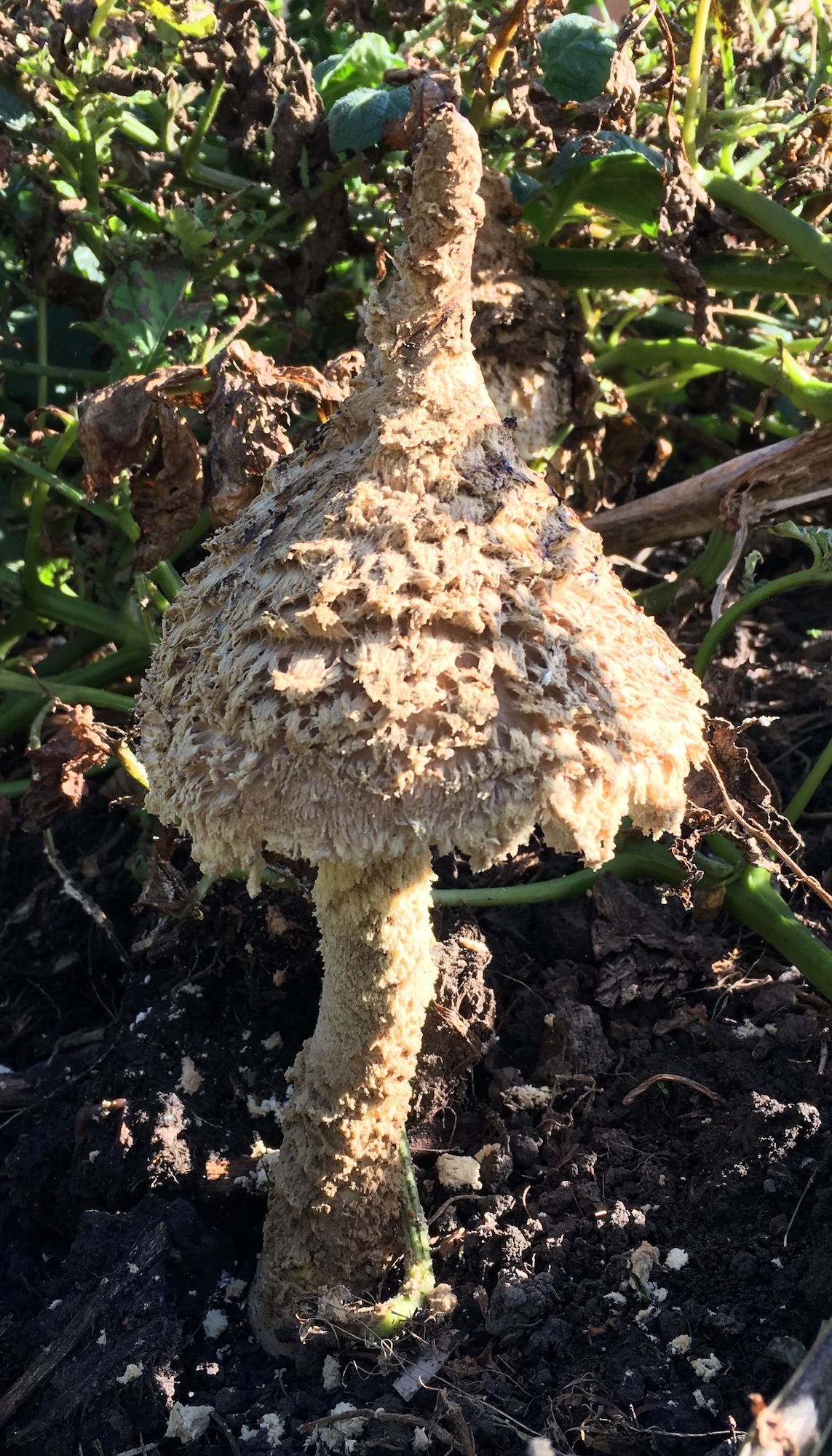
Okay, call me a complete geek, but I’m inordinately pleased about today’s find in the vegetable garden—Noddy’s flycap. This striking and mysterious mushroom showed up last year, causing great excitement and a blog post. The word from the scientific community was we weren’t likely to see it again for a long time, as it doesn’t seem to fruit every year.

Ha! Another thing we can tick off as an unknown for this fungus. Second year in a row Noddy’s has popped up in the garden.

As far as I know, the fungus still has no official scientific name, and its origin remains as mysterious as it was when I wrote about it last year. So for now I’ll simply enjoy the whimsy of this most delightful of fungi.

Magpie Moths

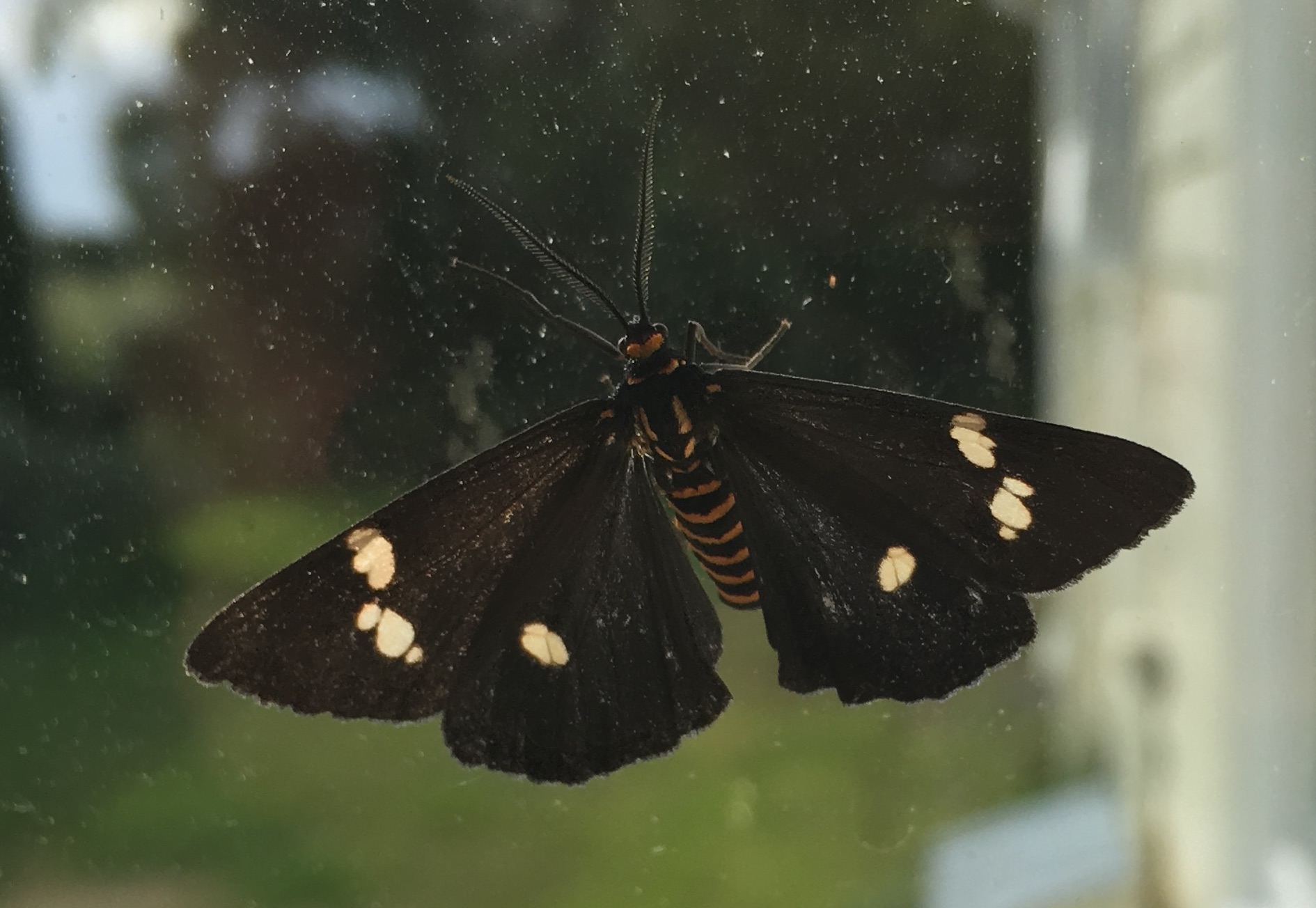
It’s the time of year when one of my favourite moths emerges—the magpie moth (Nyctemera annulata). Magpie moths are in the family Arctiidae—a family including many brightly coloured day-flying moths that threaten to blur the line between moth and butterfly. N. annulata is endemic to New Zealand, though it has a closely related Australian cousin, N. amica, with which it can interbreed.

Magpie moth caterpillars eat plants in the daisy family, especially in the genus Senecio. Common host plants include groundsel (Senecio vulgaris), ragwort (Senecio jacobaea), and cineraria (Jacobaea maritima, formerly Senecio cineraria).

We have large quantities of groundsel, and a few sizeable cineraria on the property, so we always have a healthy population of magpie moths. The caterpillars are black with orange ‘racing’ stripes, and somewhat hairy.

As you can guess from their colouration, magpie moths are poisonous. As caterpillars, they sequester toxins from the plants they eat. These toxins deter most predators. The shining cuckoo, however, is apparently quite fond of magpie moth caterpillars. It avoids the poison by eating only the insides of the caterpillar, leaving the bitter-tasting exoskeleton behind.

In addition to eating weeds like groundsel and ragwort, the magpie moth is a beautiful, colourful addition to the garden. It always makes me smile.

Ushering in Autumn


Thursday’s dawn farewell of Gita.

Gita blew through earlier this week, dumping 96 mm (nearly 4 inches) of rain on us. She also seems to have ushered in autumn. Sultry summer heat has given way to crisp air in Gita’s wake. The sun is still hot, but the nights have been chilly. The crickets sing their welcome to a new season. Even the garden has taken on an early autumn look, tired plants beginning to look tattered and yellow. Before Gita, I had ordered my firewood for the winter. It seemed too early at the time, but now, I’ll be happy to see it arrive.

Summer fruits and vegetables should still roll out of the garden for the next six to eight weeks, but the end is in sight. We’ll enjoy it while it lasts.


Preparing for Gita

Just some of the weekend’s harvest.

I have been AWOL from the blog for longer than usual. I have good reasons, one of which is whirling toward New Zealand as I type. Cyclone Gita is bearing down on us, and though we aren’t likely to bear the full brunt of her damage at our place, we will get heavy rain and gale-force winds.

So I’ve spent the last two days bringing in the crops that might be damaged by her—wheelbarrow loads of corn, soy, black beans, borlotto beans, tomatoes, and apples. This summer’s intense heat and sufficient rainfall have not only encouraged excess cucurbits, but also increased my bean harvest—picking took far longer than I expected, and I will spend the next week shelling them all.

But when the rain starts later tonight, I’ll be able to relax, knowing I’ve done as much as I can to protect the crops. And the rush to bring them in means the job isn’t still hanging over me, lingering on the to-do list.

So I may not have posted the blogs I’d hoped to, but I’m ready for whatever Gita throws at us.

Summer Soup 2018

I feel like a broken record sometimes (those of you under the age of 45, ask your parents what I mean by that). The garden season repeats itself each year in a pretty predictable fashion, and I find myself blogging about the same events every year.

Saturday was Summer Soup day, which I’ve blogged about more than once before (in 2015 and again in 2016). This year’s production was 25 quarts of soup and 6 quarts of vegetable stock, bottled and ready for quick meals throughout the year. Production time, just over 14 hours.

It always feels good to fill every pot in the kitchen with delicious vegetable soup…at least for the first hour or so. But by the end of the day, I’m sick of being in the kitchen and ready to collapse. I need to remember the feeling later in the year when I’m feeling guilty about just pulling a jar of soup out of the cupboard for dinner. I’ve put in the time. We all have, because even the kids help pick and chop vegetables for summer soup. We’ve earned every ‘free’ meal we get from it.

Downsizing?!

I realised a shocking thing the other day. My son will finish high school in December this year. We all hope he’ll be leaving home for university shortly thereafter.

Next year, my teenage boy won’t be here all summer to eat vegetables.

Next year, I’ll need to plant a smaller garden, or be completely overwhelmed with food we can’t eat.

This is the last summer I will ever have a garden this big.

I’m having a harder time adjusting to that thought than I am the thought one of my kids will leave home in a year. Oh, I always knew that someday I’d scale back the garden, but ‘someday’ in my mind was always when I grew too old to manage so much garden.

But ‘someday’ is next year.

How am I going to cut back? Which varieties will I not plant? How will I curb my zucchini problem? What am I going to do with my time, if I’m not forced to spend every daylight hour in the garden from September to December?

It’s a good thing I have several months to prepare. This is going to take some getting used to.

Aftermath

The courgettes (zucchini) will recover, in spite of all the broken leaves.

The remnants of cyclone Fehi hit New Zealand yesterday. We didn’t receive the brunt of the storm, and I am thankful for that. But we didn’t escape damage.

After Fehi’s wind dumped rain on the West Coast, it swooped over the Southern Alps and raced down the other side, heating up as it went. We were blasted by the hot, dry wind—gusts at least 130 kph (and higher, by the damage inflicted), and a temperature that reached 35ºC by early afternoon.

Parts of the garden will not recover. I’m glad we ate our first sweet corn earlier in the week, because it might be our last—the corn lies flat on the ground today.

The greenhouse plastic was shredded, and the stakes holding the greenhouse in place were pulled from the ground. Only my paranoia about the greenhouse taking flight in the wind saved the structure—years ago, I’d tethered it to y-posts driven deep into the soil. They were the only things left holding the structure in place.

Today is cool and rainy. The change will help the garden recover from yesterday’s thrashing, but it can’t bring back the stripped fruit, broken branches, and fatally flattened vegetables. It won’t fix the greenhouse.

We pick up the mess and get on with it. The damage is discouraging, but I am not discouraged. If gardening (and life in general) were not laced with setbacks and disaster, we could take no pride in our accomplishments. I will be extra-pleased with every tomato and cucumber we eat for the remainder of the summer.

And, by the way, if cyclone Fehi did nothing else, it reminded me where the name Debbie’s chutney came from—cyclone Debbie stripped the apples from the trees before they were ripe. We made chutney from those apples, and named it Debbie’s. Perhaps we will be making Fehi’s chutney this weekend.
Year of the Cucurbit

A portion of one day’s cucurbit harvest…and the melons and pumpkins haven’t even begun.

The Chinese New Year is coming up in less than a month. It will be the year of the dog.

I beg to differ. At least at Crazy Corner Farm, it will be the year of the cucurbit.

Extremely high temperatures combined with an unusual amount of rain seem to have encouraged growth of the pumpkins, zucchinis, melons, and cucumbers this year. I have never, in over 30 years of gardening on three continents, seen cucurbits grow like this.

I accept responsibility for the zucchini. I know I always plant too many. But the others aren’t my fault.

Melons are usually incredibly difficult to grow here. They barely grow, and give very few, tiny fruits. I’ve tried them in the greenhouse, and they seem to do even worse there than in the garden. Too cool and dry, I suspect. Not this year! They have outgrown their bed and are invading the beans on either side of them. There are dozens of fruit set, and those fruits (still quite immature) are already larger than most of the mature fruits I’ve gotten in previous years.

The pumpkins have simply devoured half the garden. They’ve invaded the corn, overtopping it in some places. I’ve had to push them back into the garden when they’ve escaped, growing over five metres from where I planted them. I planted just a few plants each of pickling cucumbers and  table cucumbers, and spaced the two varieties well apart from one another. I am now hacking them back to keep them separate and avoid them spreading over the shade house. My plan with the pickling cucumbers was to have just a handful for making fresh pickles (because I only ‘make pickles’ every two years to avoid becoming the crazy pickle lady), but I’m harvesting as many pickling cucumbers as I do on most pickle years.

I have lost all paths in half the garden to cucurbits, and many of the paths in the more clear half are overgrown, too. It is truly out of control. I have never seen this sort of cucurbit exuberance before.

So, I declare 2018 Year of the Cucurbit. Care for a pickle, anyone?

Infidelity

It’s time to come clean. This will be hard for some of you to hear, but it needs to be said. I never thought this would happen. I never thought I’d be saying this, but I can’t deny it anymore.

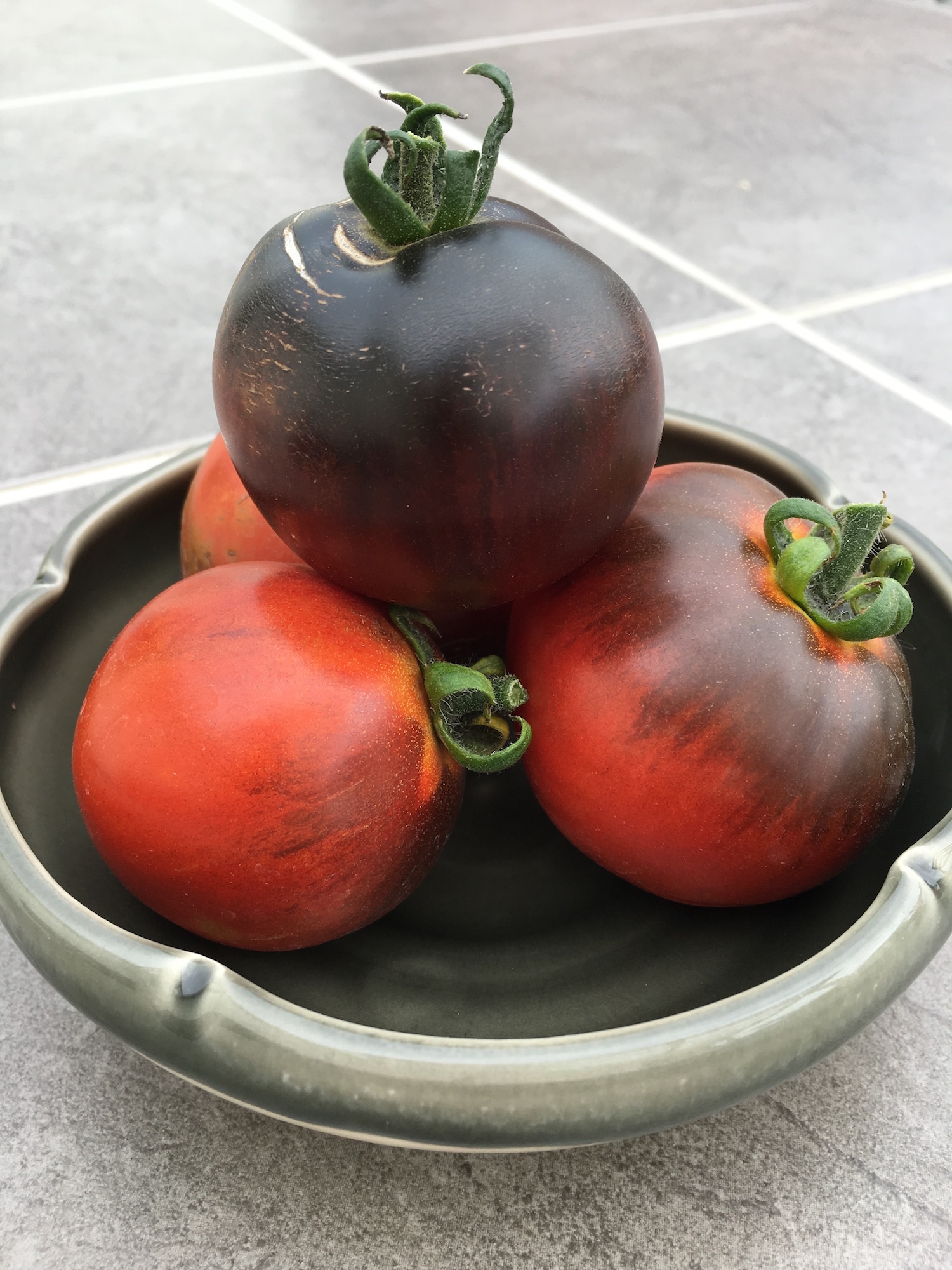
I’ve found a tomato as good as Brandywine.

I know, I know, you can’t believe I would do something like that. Can’t believe I’d be so unfaithful after decades of tomatoey bliss.

But there you have it. Indigo Apple is my new love. She’s a black tomato—a beautiful medium-sized fruit on an indeterminate plant. Her flavour is complex and rich, like Brandywine’s and, in contrast to Brandywine’s long maturation time, she ripens early. What can I say? I’m in love.

Hawksbeard: a Cheerful Weed

We’ve had recent, much-appreciated rain, and the grass is unusually green for January. But even with the grass growth, summer is weed season in the lawn.

More specifically, summer is weed flowering season.

Some of the weed flowers are uninspiring, and merely annoying—the dull greenish flowers of plantain, for example.

Others bring a splash of colour to what is normally a bleak time in the lawn.

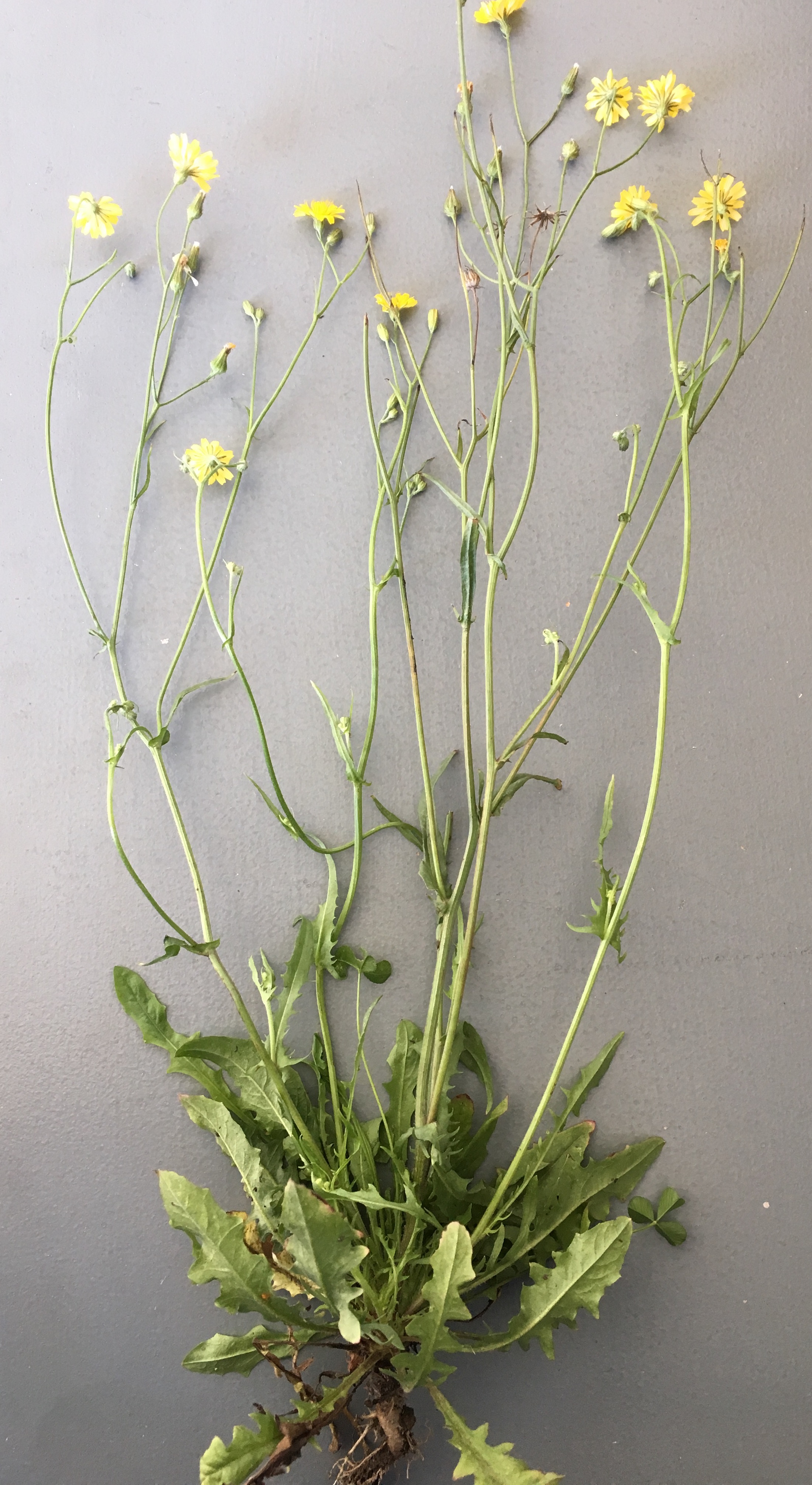
Hawksbeard (Crepis capillaris) is one of the more prolific colourful weeds in the lawn in summer. An annual or biennial member of the dandelion family, this plant bears small, cheery yellow blooms on tall, branched stems.

The NZ Plant Conservation Network shows hawksbeard as being naturalised in 1867 from Europe. Like its cousin dandelion, it was most likely brought to New Zealand on purpose as a food plant—it’s young leaves are edible. Like the dandelion, it is no longer valued as a food, but is considered a weed.

I will admit, the tall flower heads of hawskbeard can be annoying in the lawn. They seem to spring up overnight between mowings, and they slap against your legs as you walk through the yard. But I do appreciate their yellow blooms at a time of year when most other plants give up from the heat and drought. I have been known to use hawksbeard in flower arrangements, and their green rosettes are sometimes the only green to be found around the yard.