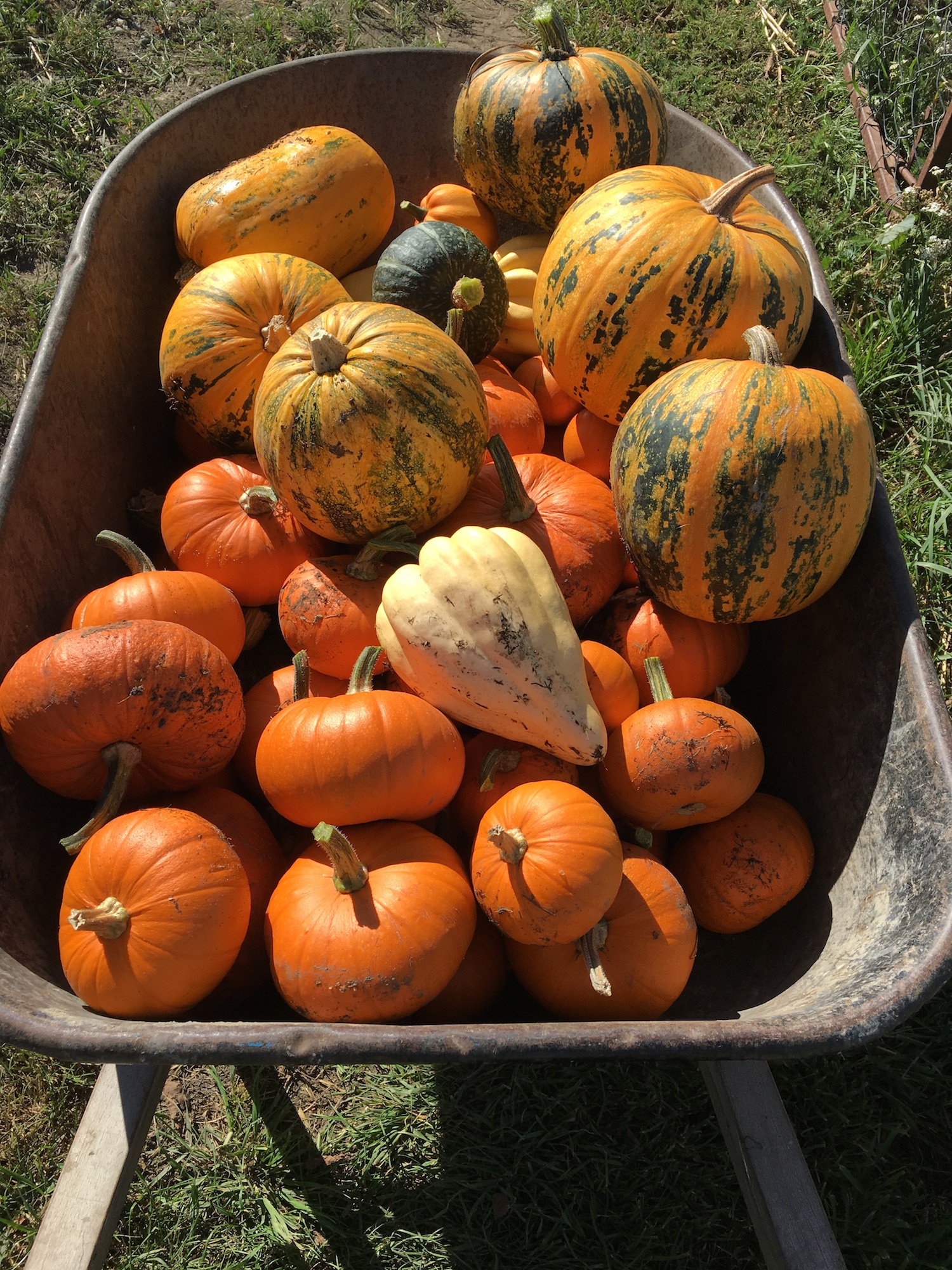
Pumpkins

About a third of the harvest.

About a third of the harvest.

Autumn wouldn’t be complete without the requisite wheelbarrow loads of pumpkins and other winter squash. In spite of some late-frost drama this spring, the harvest wasn’t bad.

My kids ask every year, “Which are the pumpkins and which are the squash? What makes a pumpkin a pumpkin?”

The short answer is that a pumpkin is a squash that we call a pumpkin. There are four species and countless varieties that variously get called pumpkin and squash. Some fruits are known as pumpkins in one place, and squash in another.

I don’t bother with the distinction. The important distinctions are between varieties. Some are best made into soup, others make splendid pies. Some have robust, dry flesh that holds up well in savoury galettes. Some are just the right size for baking whole. Some keep well, and others need to be eaten quickly after harvest. Some have flesh only useful as goat food, but have naked seeds that are wonderful toasted with salt and spices.

Which is, of course, how I justify planting so many pumpkins of so many varieties. I need them all!
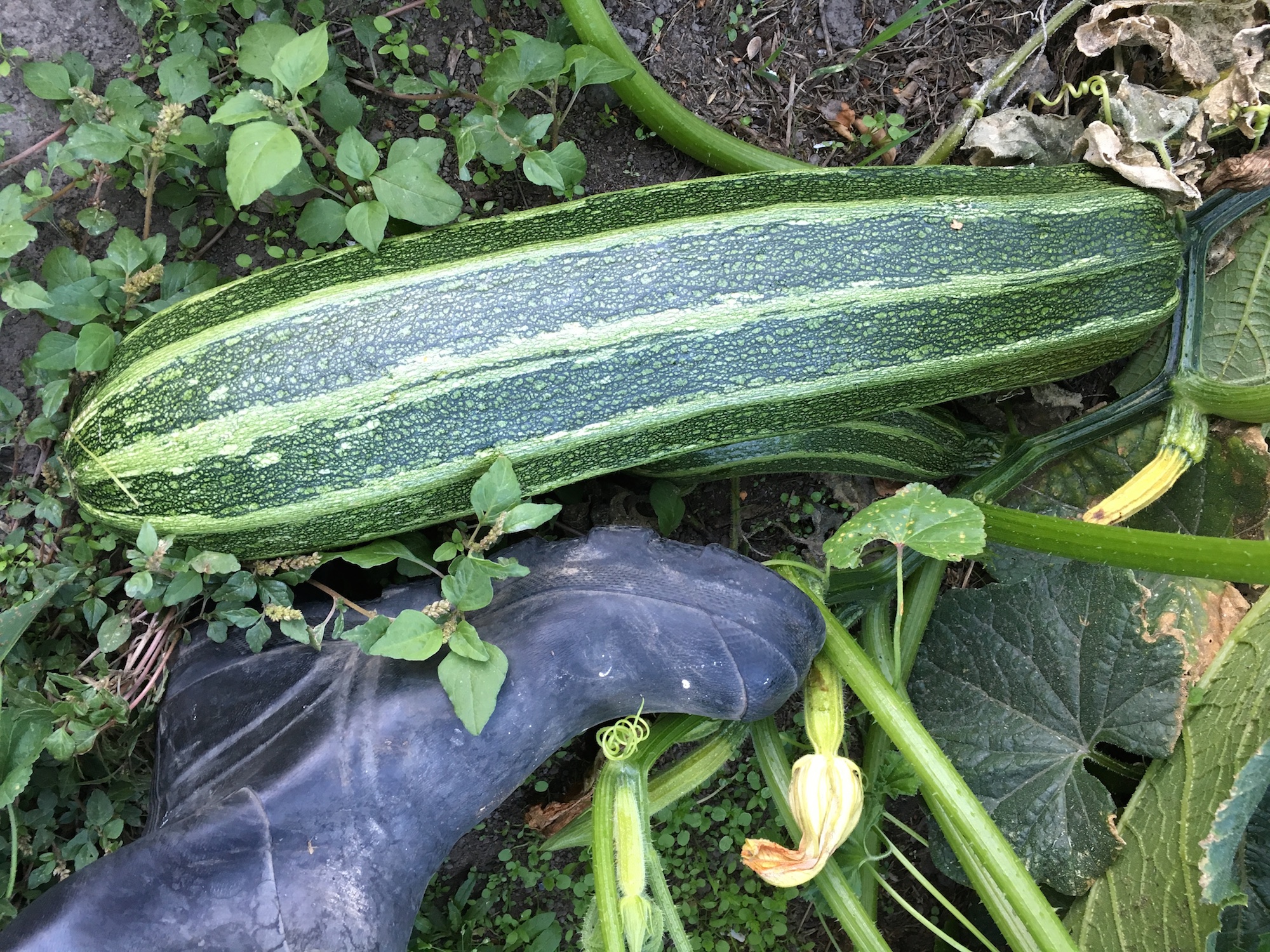
What do you do with a giant zucchini?

2016-04-02 18.47.15 smTo the tune What do you do with a drunken sailor?


What do you do with a giant zucchini?

What do you do with a giant zucchini?

What do you do with a giant zucchini,

Early in the morning?


Hey, they just get bigger.

Hey, they just get bigger.

Hey, they just get bigger.

You can’t eat them all.


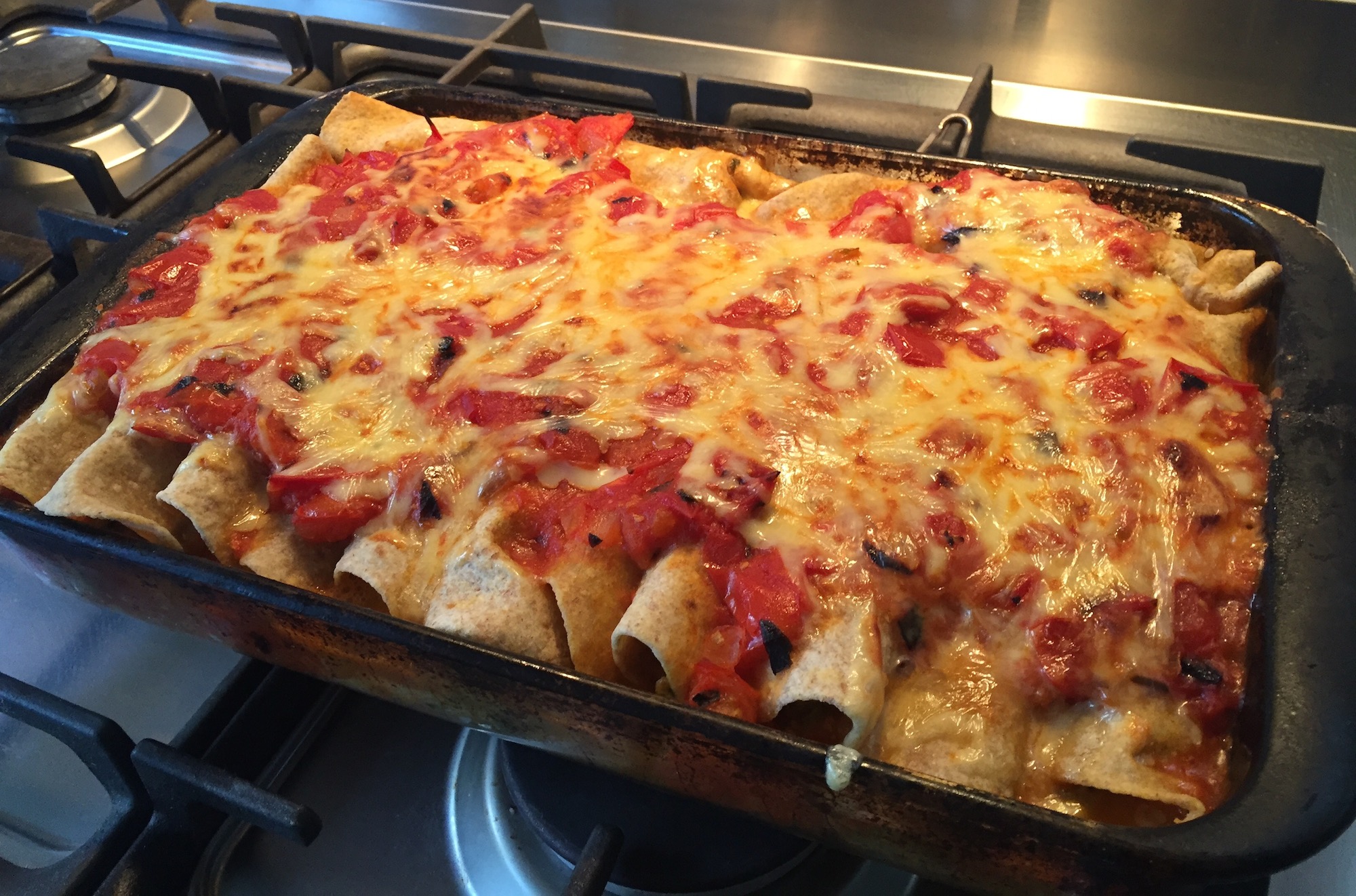
zucchinienchiladassmCook ’em in a sauce and make enchiladas,

Cook ’em in a sauce and make enchiladas,

Cook ’em in a sauce and make enchiladas,

Early in the morning!


Hey, they just get bigger.

Hey, they just get bigger.

Hey, they just get bigger.

You can’t eat them all.


chocolatezucchinicakesmBake ’em in a cake and add chocolate chips,

Bake ’em in a cake and add chocolate chips,

Bake ’em in a cake and add chocolate chips,

Early in the morning!


Hey, they just get bigger.

Hey, they just get bigger.

Hey, they just get bigger.

You can’t eat them all.

Cape Gooseberries

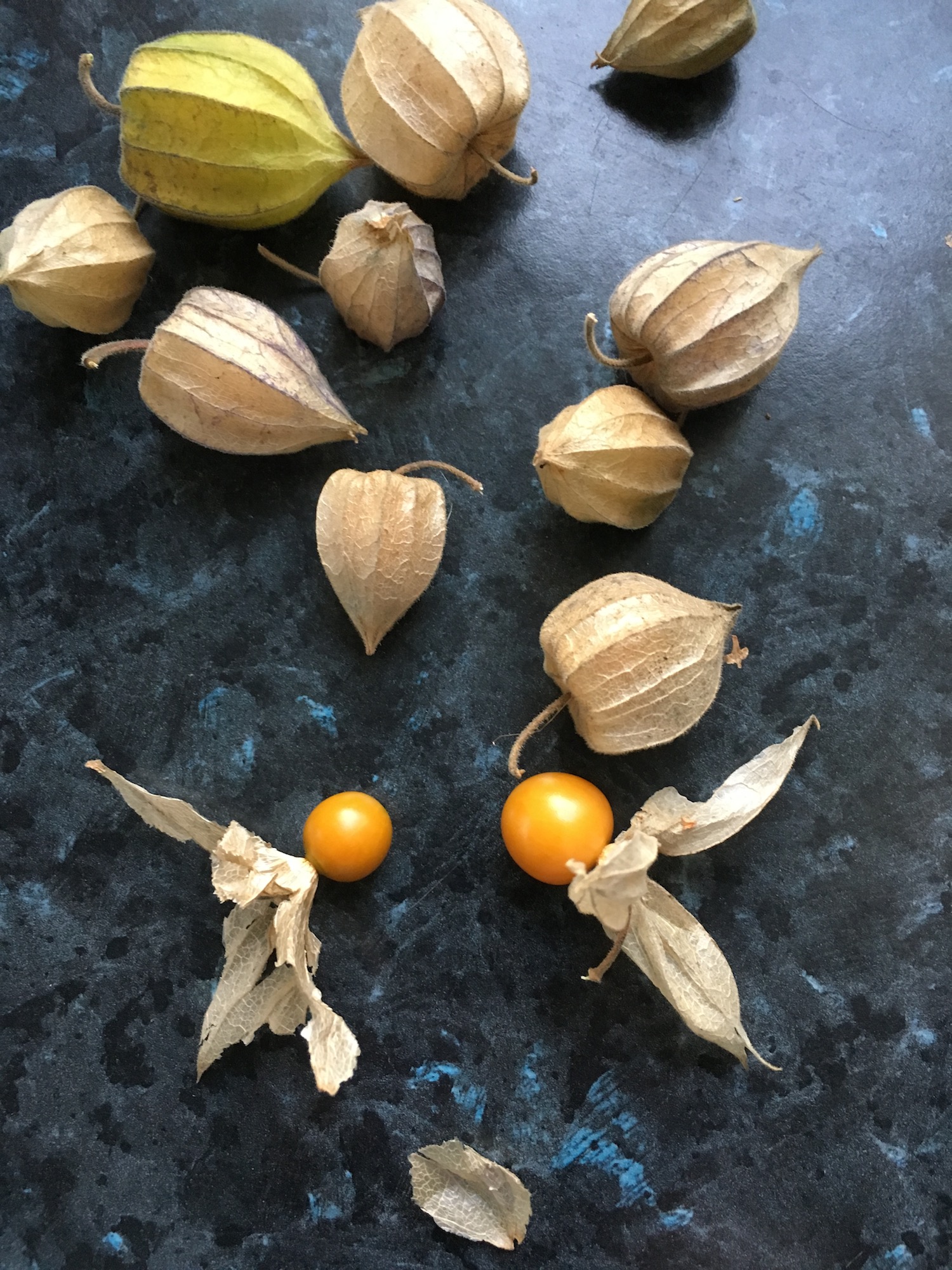
2016-03-22 19.08.56 smCape gooseberries (Physalis peruviana) are not something you’re likely to find in the grocery store. The plant is native to Peru and Chile, and has been introduced into most temperate and tropical climates around the world as a fruit for home gardens. It has been only sporadically commercially grown, however.

The fruit’s flavour defies categorisation. It is like a sour grape crossed with a tomato—not entirely surprising, as it is related to tomatoes. The initial sensation is the sour, and then they leave a lingering fruity tomato flavour in the mouth.

Cape gooseberries grow reasonably well here—some years they grow too well, actually. I’m still learning how to use them and how to enjoy their odd flavour. This year we got only a handful, as I wasn’t able to water them as much as they needed in this hot, dry summer.

Their tartness goes well in jams, chutneys, pies, and fruit salads. They’re also good eaten right in the garden—the papery husk acts as a handle, so you can snack on them even with hands dirty from gardening!

In temperate climates they are an annual, though here they often overwinter, if the weather is mild. In tropical climates they are perennial.

They’re definitely a plant to try, if you’ve never grown them.

Baking Bellybuttons

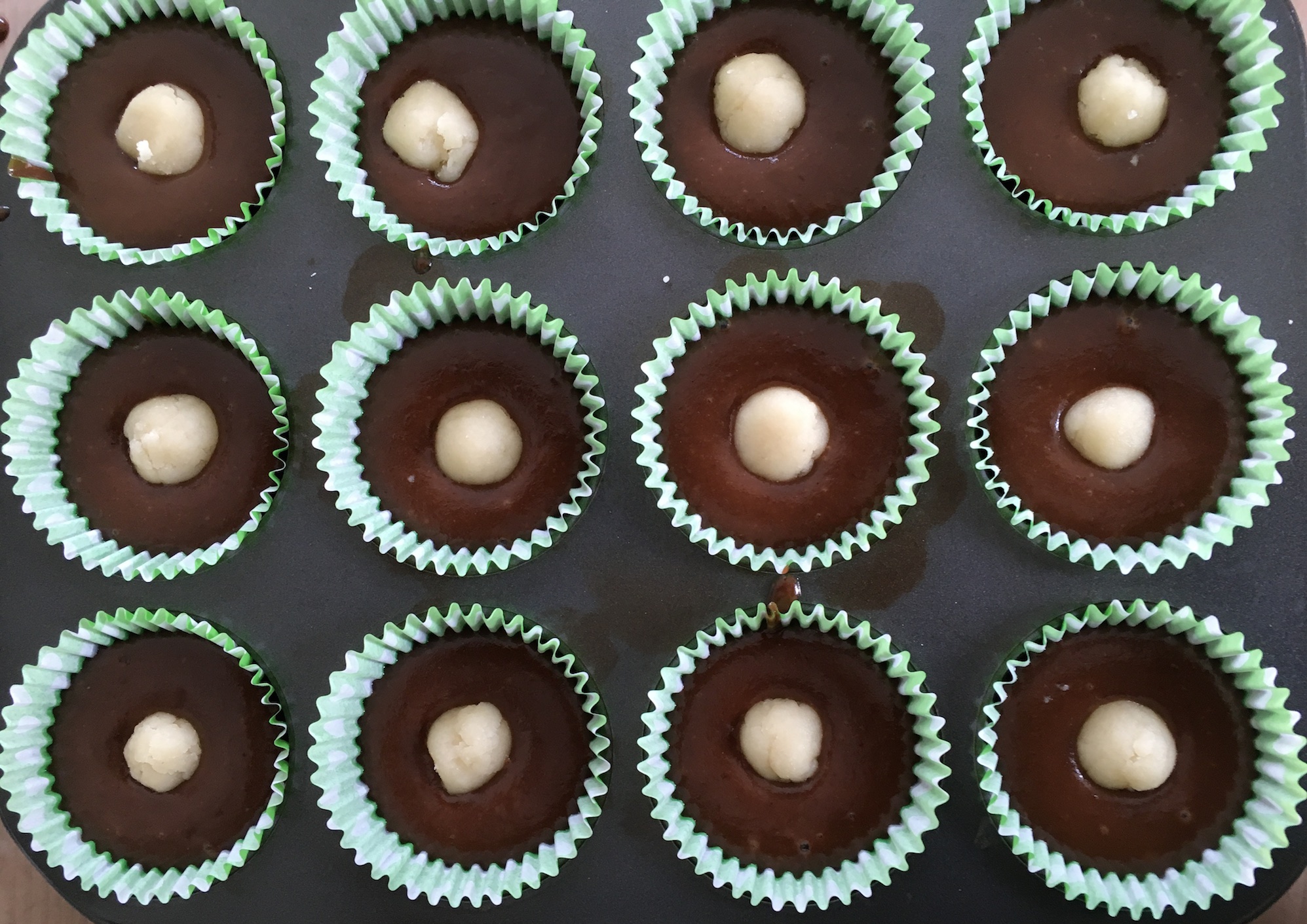
Before baking--moons in the night sky. How romantic!

Before baking–moons in the night sky. How romantic!

I had to bake on the equinox. Something to celebrate the season, and the coming long nights.

I had some marzipan left over from recent birthday cakes, so I made chocolate cupcakes, each with a little ball of marzipan dropped into the batter–you know, a moon in the night sky.

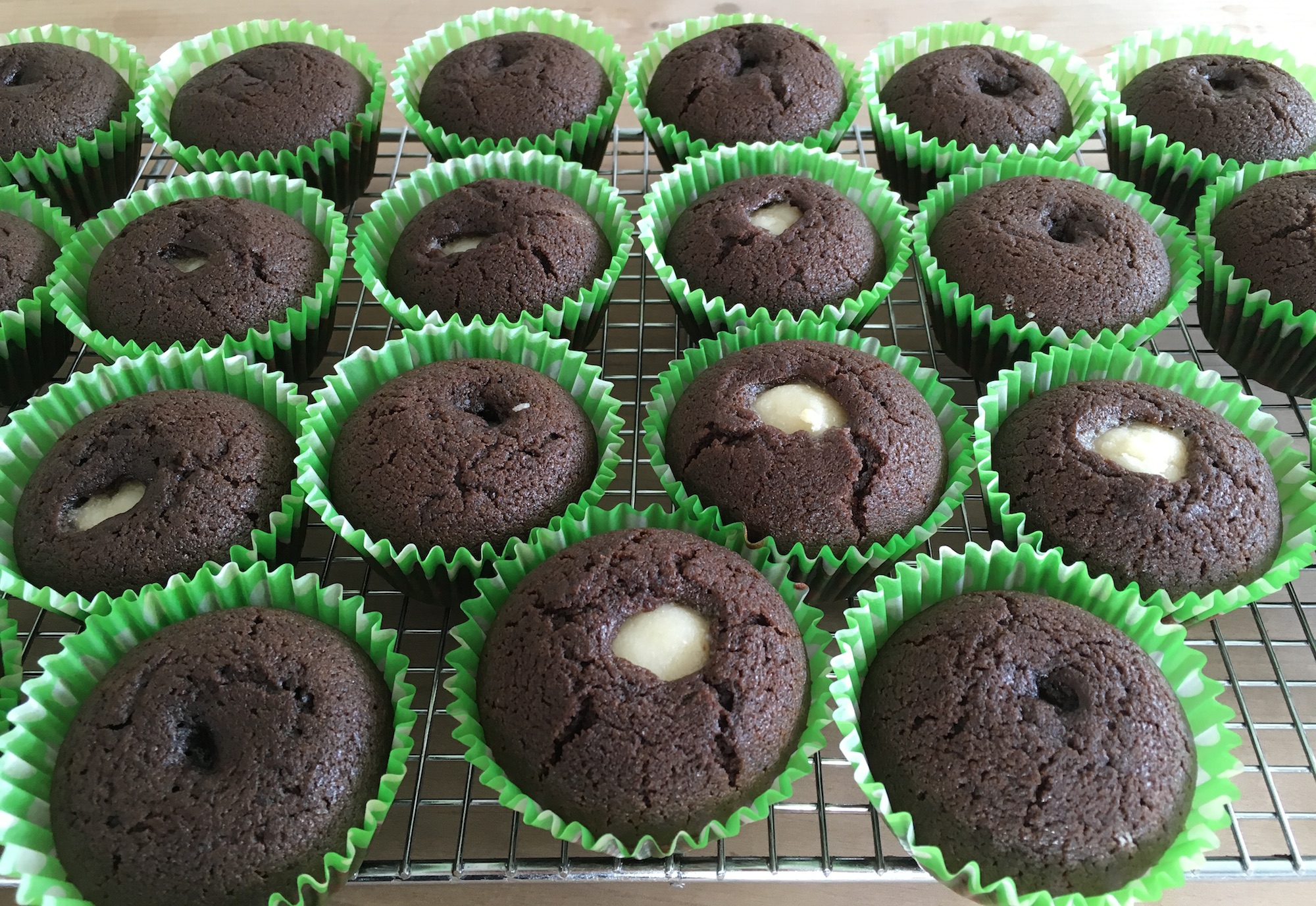
After baking--bellybuttons. How...um...something.

After baking–bellybuttons. How…um…something.

But the marzipan moons sank, leaving the cupcakes looking a bit like bellybuttons.

Delicious bellybuttons, I might add…


Windfall

2016-03-10 21.13.23 smToday.

Thirty degrees C.

120 kph wind.

Dust clouds so thick I couldn’t see the back fence 20 metres away.

So I knew there would be carnage by day’s end.

Picking yellow summer squash for dinner, I was having trouble finding them, because they were completely coated in dust.

I studiously avoided looking at the fruit trees—I couldn’t face what I knew I’d find while the wind still howled.

Later in the evening, my husband and kids went out and surveyed the damage. Remember back in November when I posted the picture of all those apple blossoms? I knew it was too good to be true.

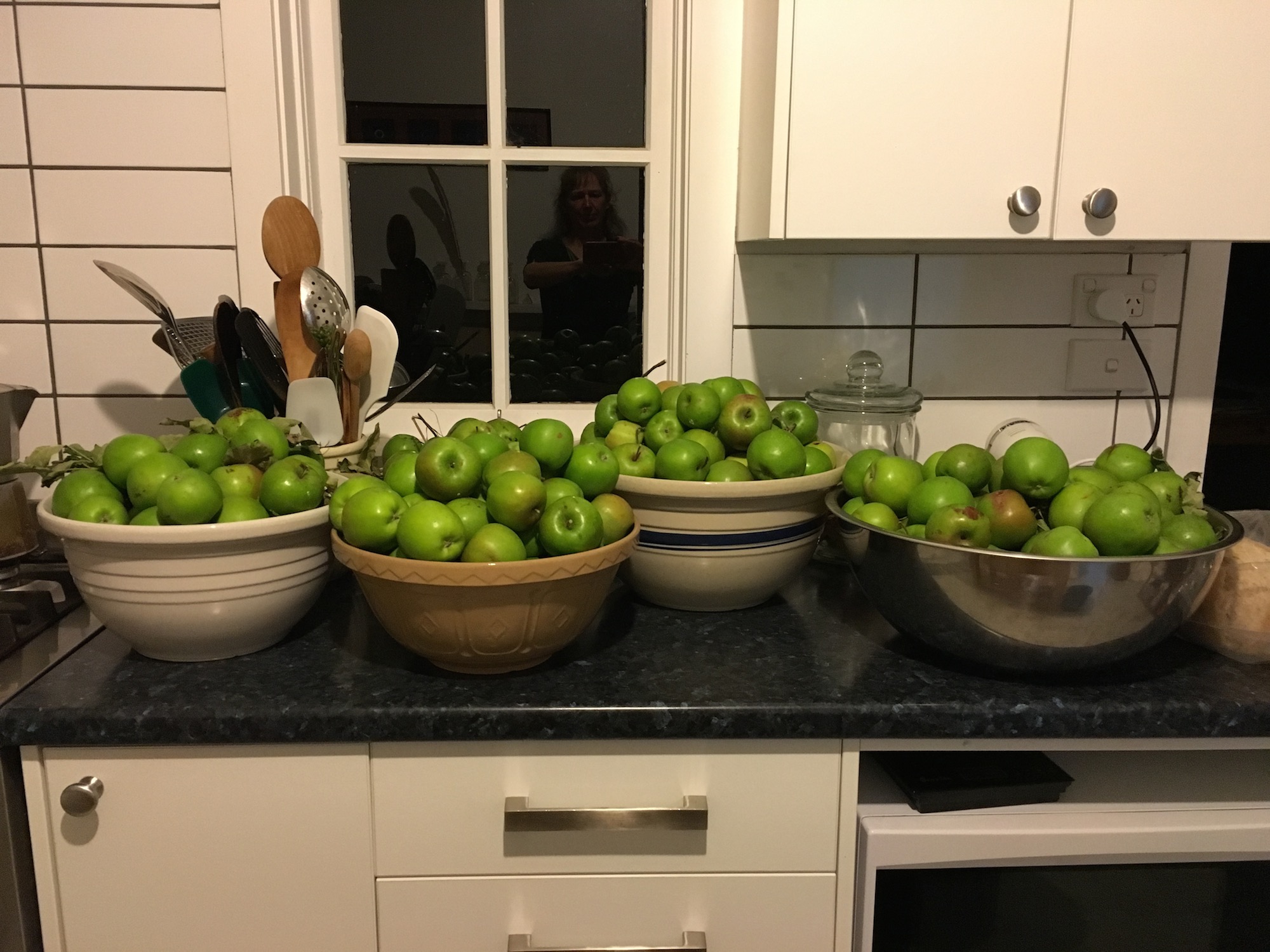
Every fruit was stripped off of every tree. They collected them all, tossed the bad ones on the compost, and brought the rest inside.

None are quite ripe, but we’ll make the best of them—applesauce and pie this weekend, for sure!

Summer Soup 2016

2016-03-06 19.55.54 smEight pm, and I feel like I’ve hardly stepped outdoors today.

I remember the air was still and warm early this morning. I milked by the light of the stars and a sliver of a crescent moon.

I remember the cool drips of water in the freshly watered vegetable garden just after breakfast.

But, aside from a hurried trip to the goat paddock with an armload of corn husks or carrot tops, I haven’t been outside since eight am.

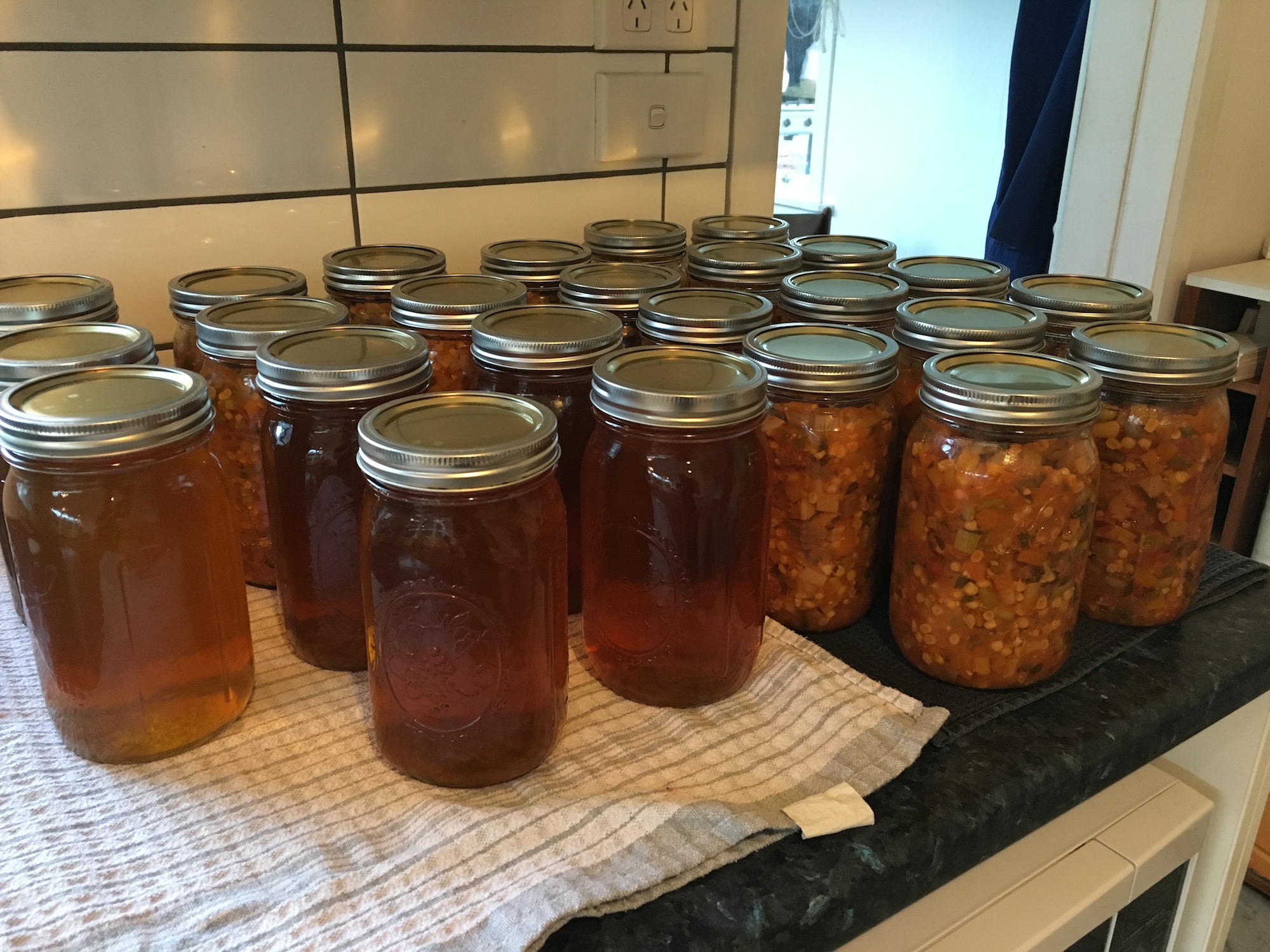
Just after breakfast, the whole family got to work making the year’s Summer Soup (which I’ve blogged about before). We spent the morning chopping vegetables and making up the soup together, then I settled in alone for the long slog at the pressure canner.

It was a hot day to be in the kitchen canning soup. I thought it was just that I had four burners and the oven going much of the afternoon, but when my daughter walked through the kitchen looking wilted, I realised it was just a hot day.

That was the closest I got to knowing what it was like out there.

But I’ll appreciate this lovely summer day spent indoors—over and over again all winter. The final tally for the day was nineteen quarts of soup and six quarts of vegetable stock. That’s a lot of summer, stored up to cheer us on a cold winter evening.

The Season for Salsa

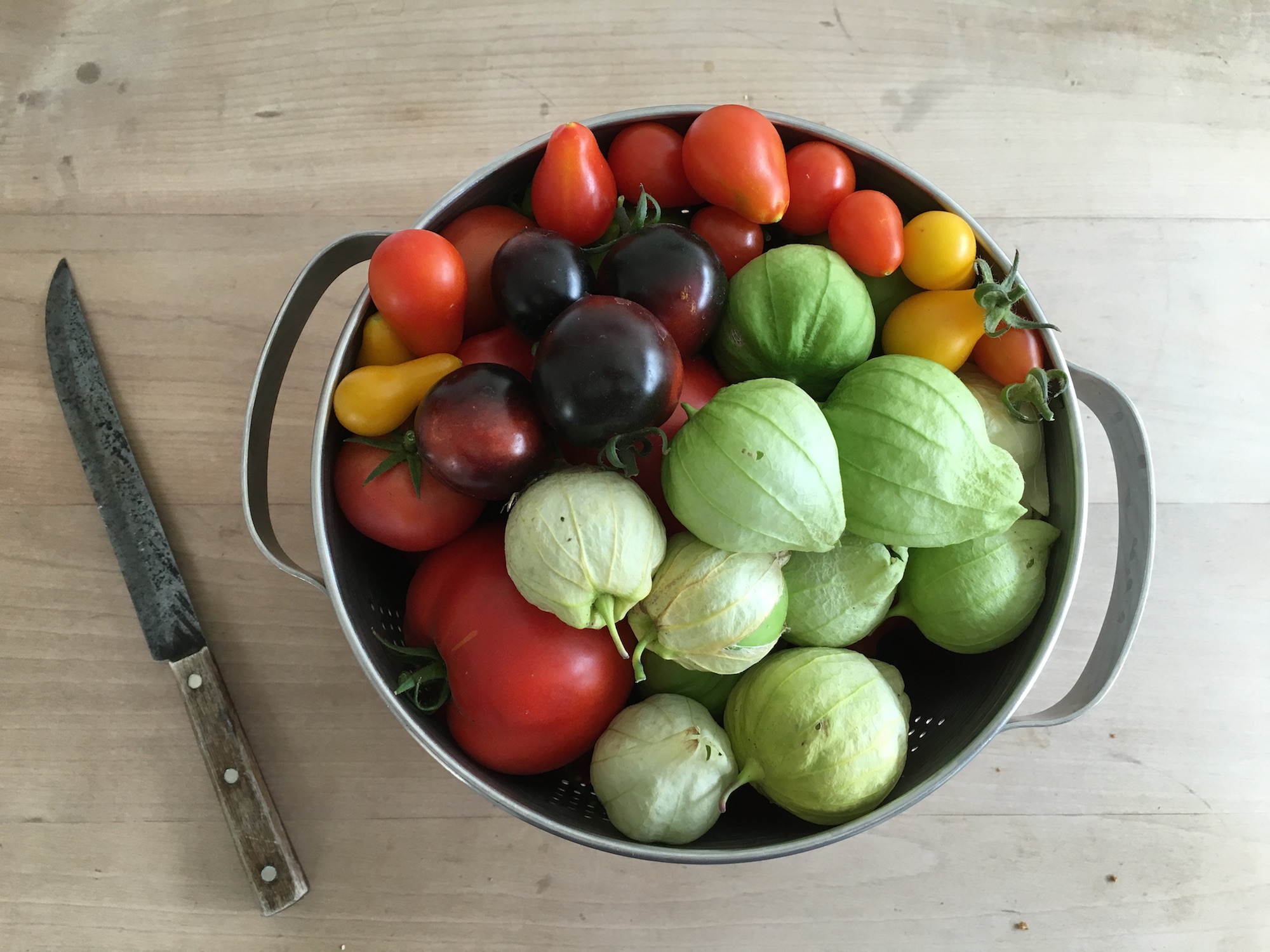
2016-02-26 16.28.01 smNothing beats a good salsa. And there are limitless variations on the theme—tomato or tomatillo, cooked or raw, spicy or mild, cilantro or none…

If I’m using tomato, I prefer a raw salsa, but if I’m making salsa verde—based on tomatillos—I like it cooked.

I have a love/hate relationship with tomatillos. On the one hand, I quite enjoy them in salsa verde. On the other hand, we don’t tend to like them in any other form, so we’ve never been able to eat all the tomatillos produced by even one plant, and the rotting fruits in the garden are truly disgusting.

But salsa verde is a lovely alternative to ketchup on burgers and fries, is fantastic in burritos, and makes a great chip dip. I’ve seen many variations on salsa verde, but this is what I do.


500 g (1 lb) tomatillos, husked and rinsed

½ cup water

1 fresh chilli pepper or a pinch of cayenne

2 red sweet peppers, charred

1 onion

1 clove garlic

½ cup chopped fresh cilantro

2 Tbsp cream or half and half (optional)

salt to taste


To char the sweet peppers, spear a whole pepper on a fork and hold it over the flame of a gas burner, turning regularly, until the skin blackens. Drop the charred pepper into a bowl and cover with a plate for a few minutes to let the skin steam and loosen Peel off the blackened skin before using. Roughly chop tomatillos, chilli, sweet peppers, onion, and garlic. Place all ingredients except the cilantro and cream in a saucepan and cook 15-20 minutes until the vegetables are soft and the liquid is reduced by about a third.

Blend until smooth (I use my immersion blender). Stir in the cilantro and optional cream, and adjust the salt. Serve hot or chilled.

This sauce freezes well—I freeze it in small quantities and pull it out as we want it.


Beautiful food

2016-02-22 17.55.00 smI was making a lovely Indian dish the other day, with paneer, zucchini, green beans and tomato, and as I stirred everything into the pot, I couldn’t resist taking a photo.

And I realised that half my enjoyment of food comes from the beauty of the colours and shapes in the pot and on the plate. That beauty is what turns an ordinary meal into an extraordinary one.

Apricots…with recipe

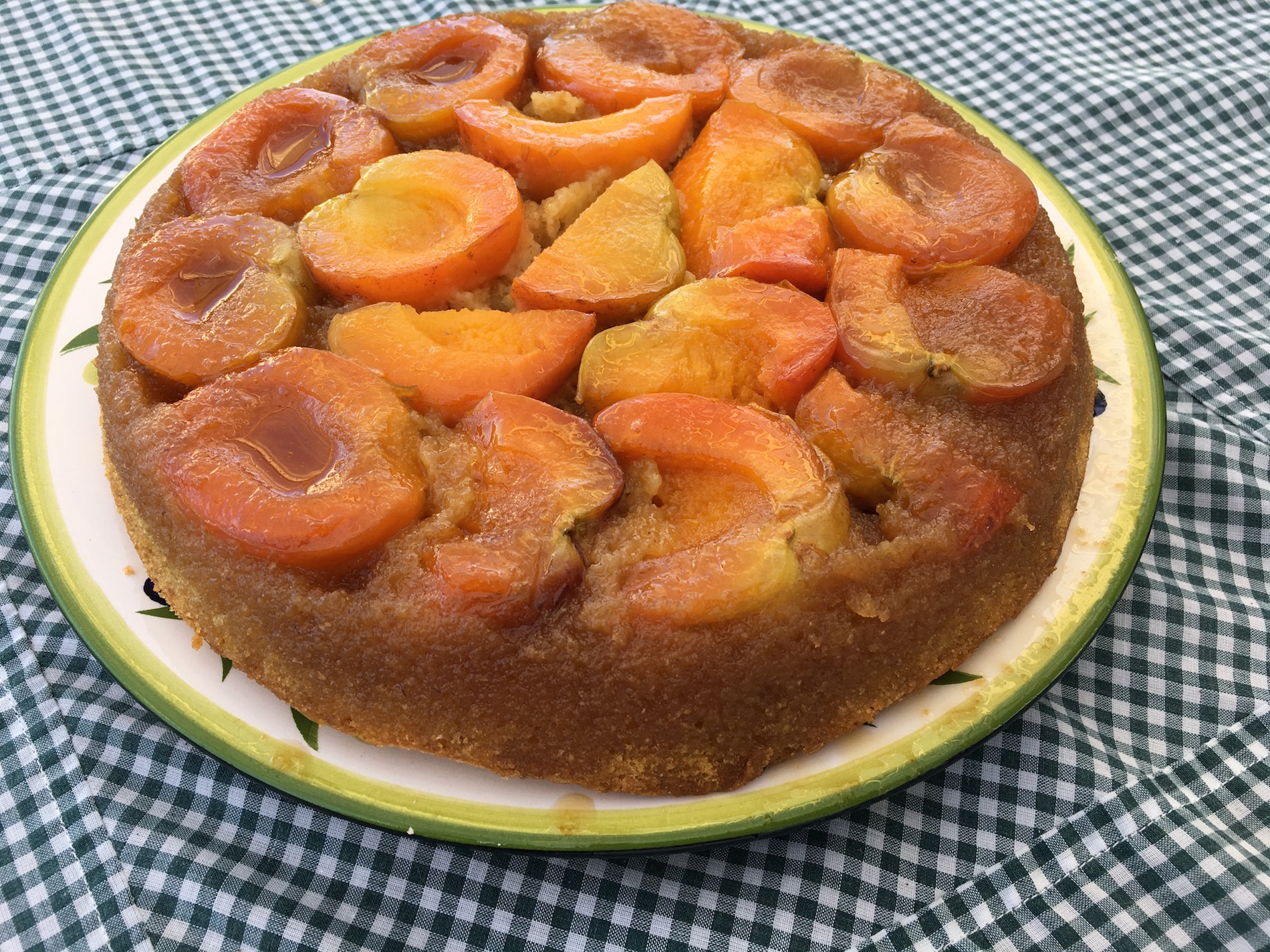
2016-02-16 18.53.39 smAs I wandered through the pond garden yesterday evening, watching the fish and the damselflies, I noticed that the apricots had blushed. I tested one. It was soft and ripe—so ripe, the juice dripped down my arm when I bit into it.

This was the first year the apricot tree has given us anything, and the wind stripped many of the fruits a month ago, but there were still about two dozen on the tree, and they were all ready to pick.

So this afternoon, I made apricot upside down cake—for the second time in a month. This time, I’ll give you the recipe…

This is adapted from a recipe in the 1997 edition of Joy of Cooking.

Melt 3 Tbsp butter in a 9-inch (20cm) cast iron skillet or round cake pan. Tilt the pan to coat all sides with butter.

When the butter is melted, sprinkle ½ cup brown sugar evenly over the bottom.

Arrange apricot halves, cut side down in the bottom of the skillet, completely covering the bottom.

Whisk together in a medium bowl:

2 large eggs

2 Tbsp buttermilk

½ tsp vanilla

Combine in a large bowl:

½ cup all-purpose flour

½ cup whole wheat flour

½ cup brown sugar

Âľ tsp baking powder

ÂĽ tsp baking soda

ÂĽ tsp salt

Add to the flour mixture:

6 Tbsp softened butter

6 Tbsp buttermilk

Beat on low speed just until the flour is moistened, then increase the speed to high and beat for 1 ½ minutes. Add one-third of the egg mixture at a time and beat 20 seconds after each addition. Pour batter over fruit.

Bake at 180C (350F) for 35-40 minutes. Cool in the pan for 2-3 minutes before unmolding. To turn the cake out, run a knife around the edge to ensure the cake has separated from the pan. Place a plate on top of the pan and quickly flip pan and plate together. Carefully lift off the pan.