Mint

100_3952smMint doesn’t like the dry soil of my herb garden…so it’s only a minor weed there.

And as weeds go, mint is a wonderful one—delicious in all sorts of drinks and dishes, both sweet and savoury.

My all-time favourite way to use mint is in Mrs. Cassel’s mint tea. Mrs. Cassel was a friend of my grandmother, and I remember nothing about her except for her tea recipe—orange juice and mint tea, well-sweetened and served over ice—summer in a glass!

In winter, a hot cup of mint tea is a great pick-me-up, especially when you have a cold.

Mint leaves, cut into strips, perk up any salad, and of course are essential to tabbouli and many other Mediterranean dishes.

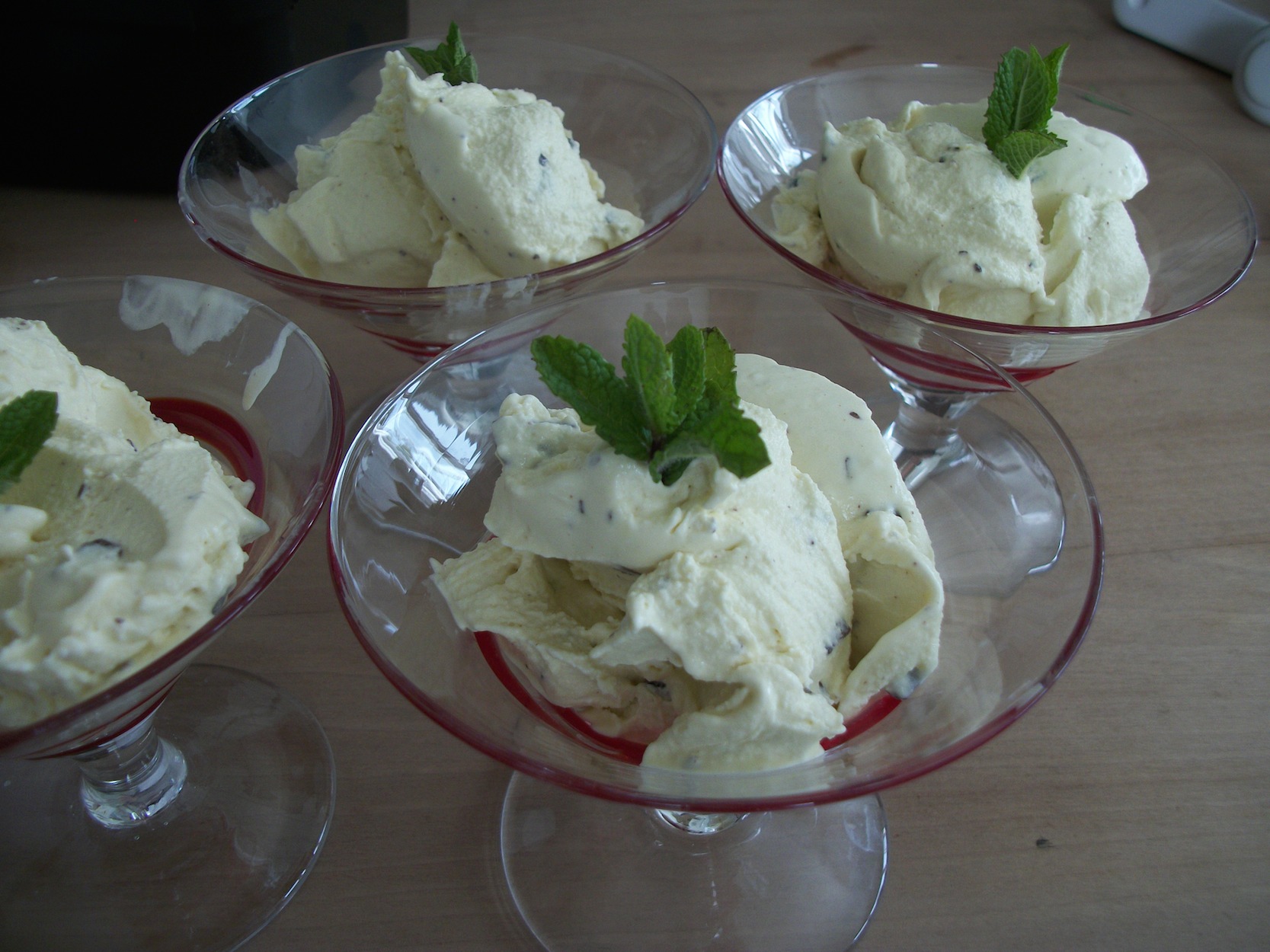
And the most important use of mint—homemade mint chocolate chip ice cream! Special thanks to my husband and daughter who made this treat yesterday!
Pak Choi

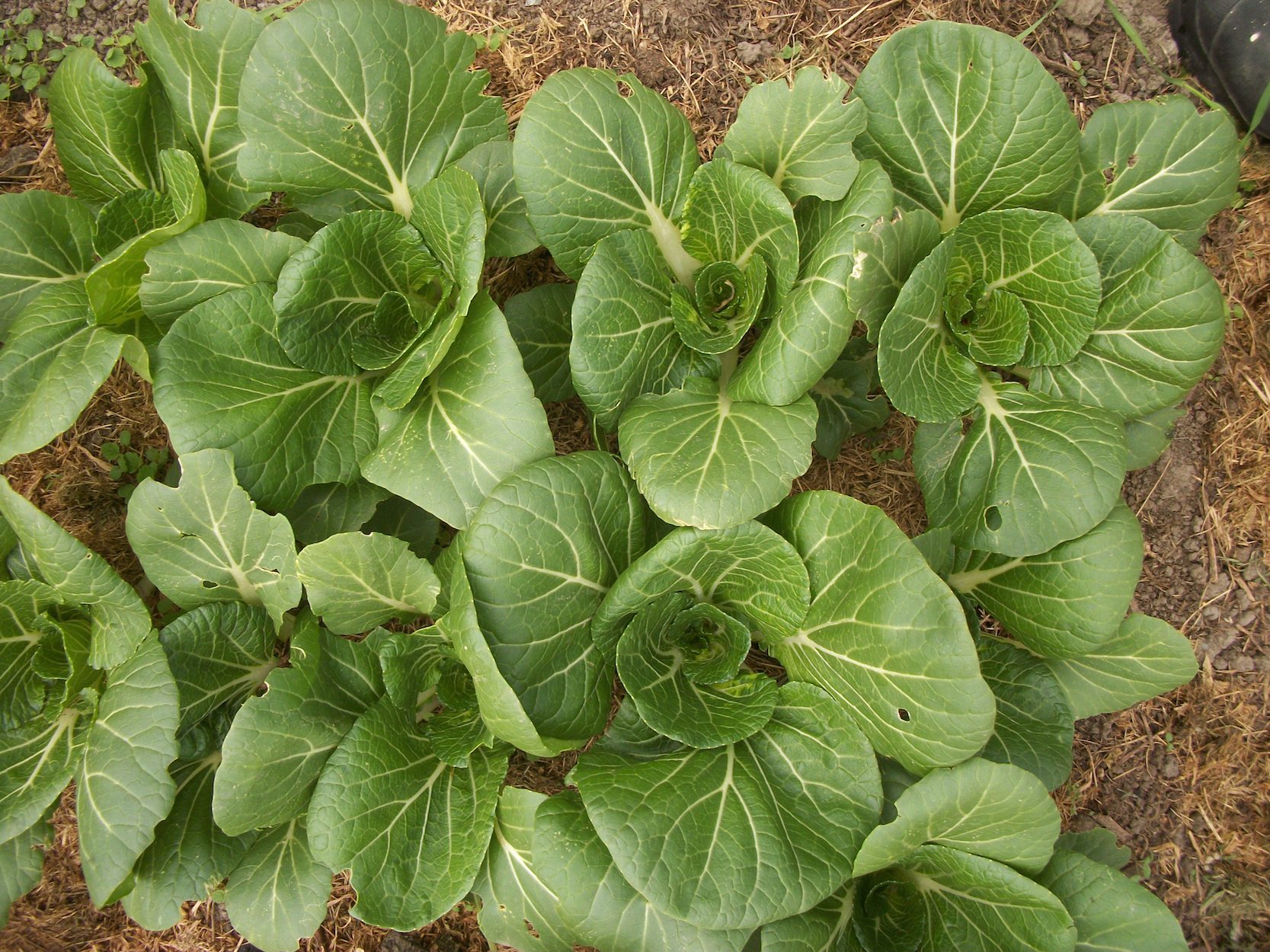
100_3943 smPak Choi, also known as Bok Choi or Chinese cabbage, is another of the early brassicas we enjoy in springtime.

Pak choi is best as an ingredient in stir fries. Lighly fried, it is crunchy and nutty, a bit like cabbage. It also imparts a glossy sheen to all the vegetables in a stir fry.

Pak choi’s origins go back at least 2000 years in China, and it is usually used with oriental spices. But pak choi is versatile. We also use it in pasta and even on pizza (where it is odd, but not bad).

Like most brassicas, pak choi doesn’t like heat or drought, and bolts once things heat up in summer. So we enjoy it while it lasts!

Broccoli raab

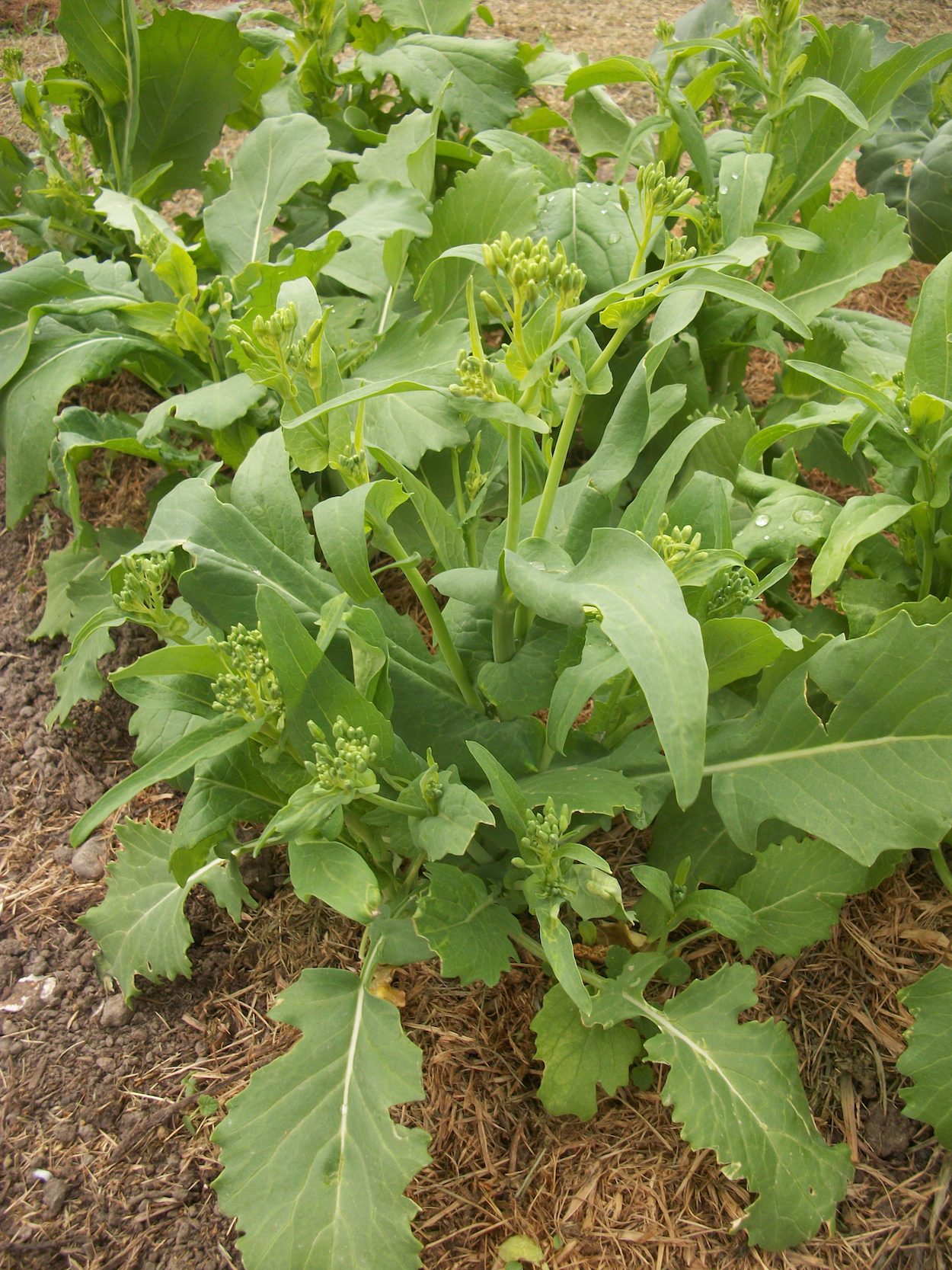
100_3940 smOne of my favourite spring vegetables is broccoli raab. Not so much because it is the best vegetable, but because it produces so early, before any of the other brassicas are ready.

Broccoli raab looks like mini-broccoli, though it is more closely related to turnip than to broccoli. Broccoli raab is eaten “lock, stock and barrel”—leaves, stem and flower buds. As one of the earliest spring vegetables at our house, it gets used in everything from stir fry to pasta to pizza to gratins.

It is more bitter and pungent than broccoli (more like turnip greens), and a little goes a long way in a dish. I plant just a small amount of broccoli raab, and by the time the other brassicas are producing, it has bolted and is ready to pull out. A perfect little filler crop that adds kick to springtime meals!

Preparing artichokes

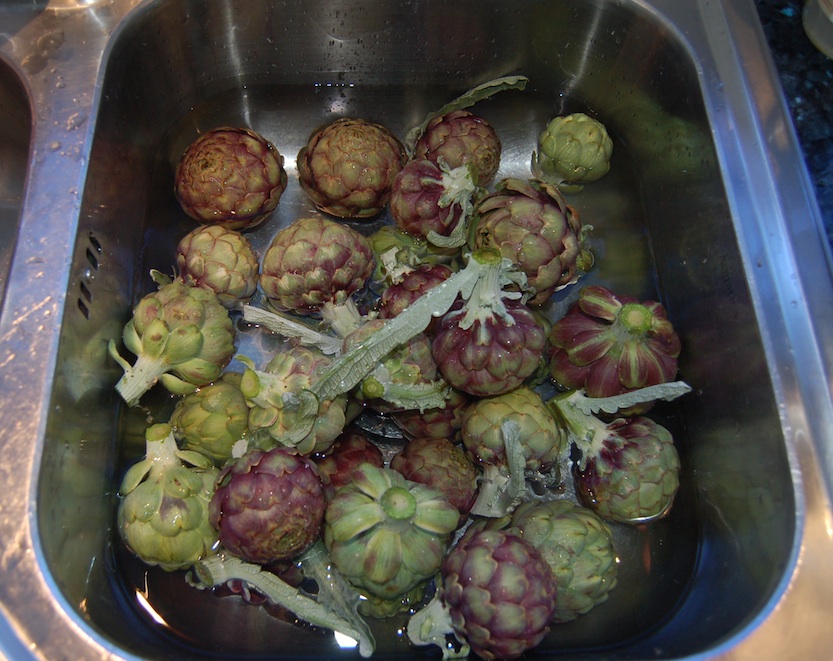
100_3927 smUntil we grew them ourselves, I really didn’t know how to prepare artichokes. How does one make a giant thistle flower edible?

Now, I don’t think twice about prepping a dozen artichokes for dinner. It’s time-consuming, and can be painful (they are thistles, after all), but it’s not difficult.

If you’re preparing your artichokes for use in a pasta, risotto, pizza, or other dish, you need to remove all the really tough and prickly bits.

100_3929 smStart by snapping off the outer bud scales until the remaining scales are pale and soft about half way to their tips. I find this easiest to do by pushing sideways with my thumb—the scale snaps cleanly off, and I avoid the spine on the tip of the scale.

100_3931 smNext cut off the top third of the artichoke with a large knife (cut where the remaining scales change from soft to tough).

Peel the stem with a paring knife, then cut the artichoke in half lengthwise.

Nice and young--no need to remove the choke.

Nice and young–no need to remove the choke.

Check the inside of the artichoke—there is a part known as the choke, made of spiky hairs. If these are soft and small, you don’t need to do anything. If they are long and stiff, use the tip of your knife to cut them out.

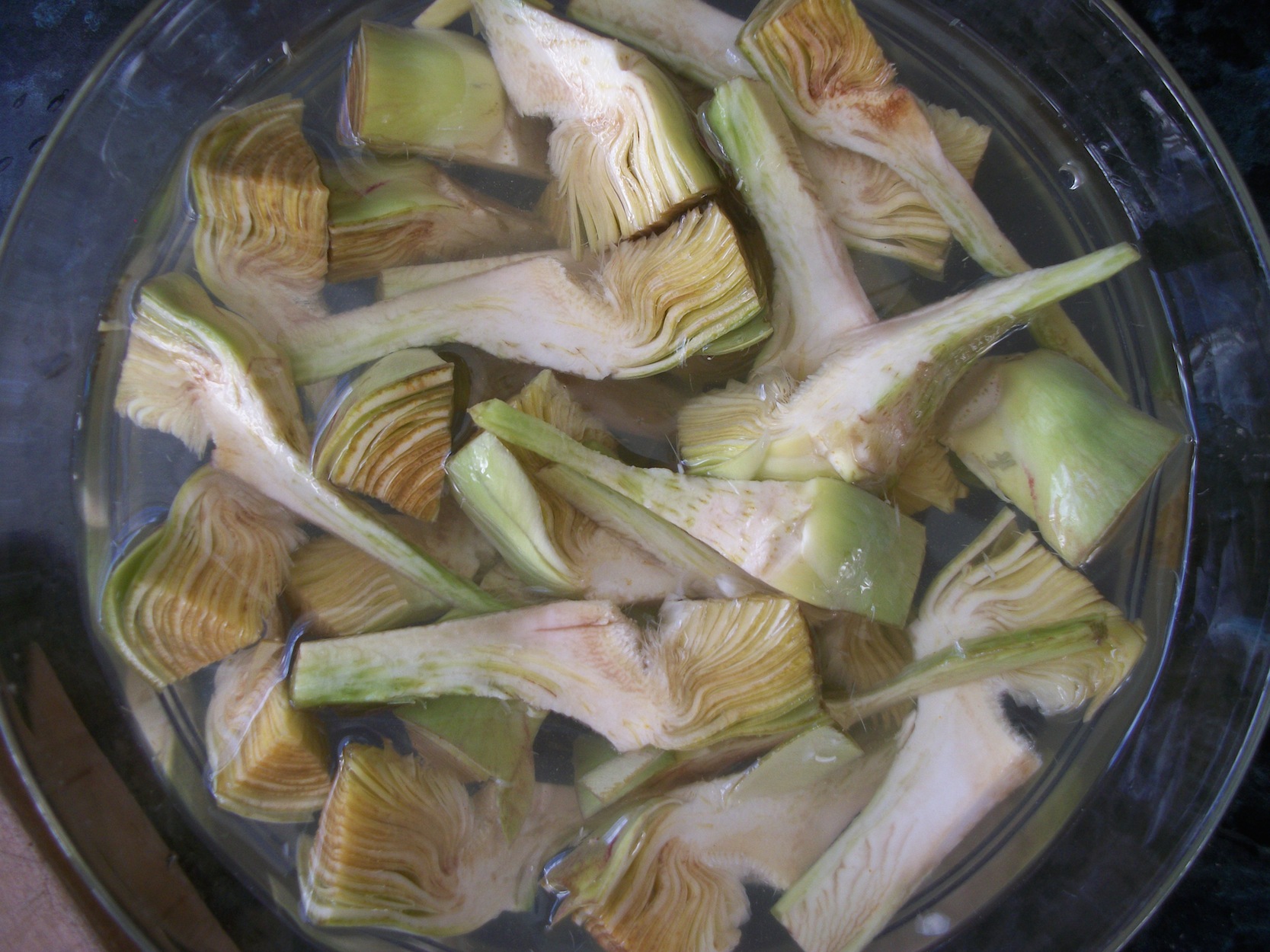
Then, cut your artichoke into whatever size pieces you want, and drop them into acidulated water (water with a generous amount of lemon juice in it), to prevent them from browning. You won’t be able to prevent all browning, but the brown seems to largely vanish during cooking.100_3936 sm


Artichokes

artichokes2cropsmI don’t think I ever ate an artichoke until I was an adult. They just weren’t a part of the diet in eastern Pennsylvania in the 1970s and 80s.

I probably could have counted on one hand the number of artichokes I’d eaten until I started growing them. And I had no idea how incredible and prolific they could be until I lived in a place where artichokes were perennial.

Now I can hardly imagine springtime without them.

The globe artichoke is a thistle (not to be confused with the very different Jerusalem artichoke, which is a sunflower). It grows as a large rosette of leaves and can reach over 1.5 metres tall. The edible part is the unopened flower bud. If you let the buds mature, they open into giant purple flowers that bumblebees can’t resist.

Artichokes are the same species (different variety) as cardoon which is more commonly planted as an ornamental. Cardoon flowers are smaller, and it is generally the leaf stems that are eaten. I grew cardoon for food briefly, before realising that blanching the leaves (by wrapping the plants in straw and cardboard as they grow) is time-consuming, and the final product—the cooked leaf stems—tastes a lot like artichoke, only more bitter and less rich. (Then, of course, I tried to get them out of the garden—it took four years—they are thistles after all) Now I keep just one in the flower garden as a stunning centrepiece plant.

The first records of artichokes come from ancient Greece, where wild varieties were selected and bred into the large-flowered plants we grow today.

Today Egypt and Italy produce about half the world’s artichokes, but with new cultivars that can tolerate cold winters, they can be grown just about anywhere. Put them in the perennial part of your garden, and even if you don’t like to eat them, you can enjoy their beauty!

Omelettes

IMG_3731 smIt’s funny how quickly we can go from being desperate for eggs to having more than we know what to do with. My new chickens have all started laying now, and so this afternoon when I was looking for a quick dinner after getting home late, I found a fridge full of eggs.

Of course, that meant omelettes! Filled with cheese, mushrooms and herbs, they’re a delicious, quick-to-make, high protein meal that everyone loves. I served ours tonight with roast potatoes slathered in ketchup.


Favourite Kitchen Tools—Mortar and Pestle

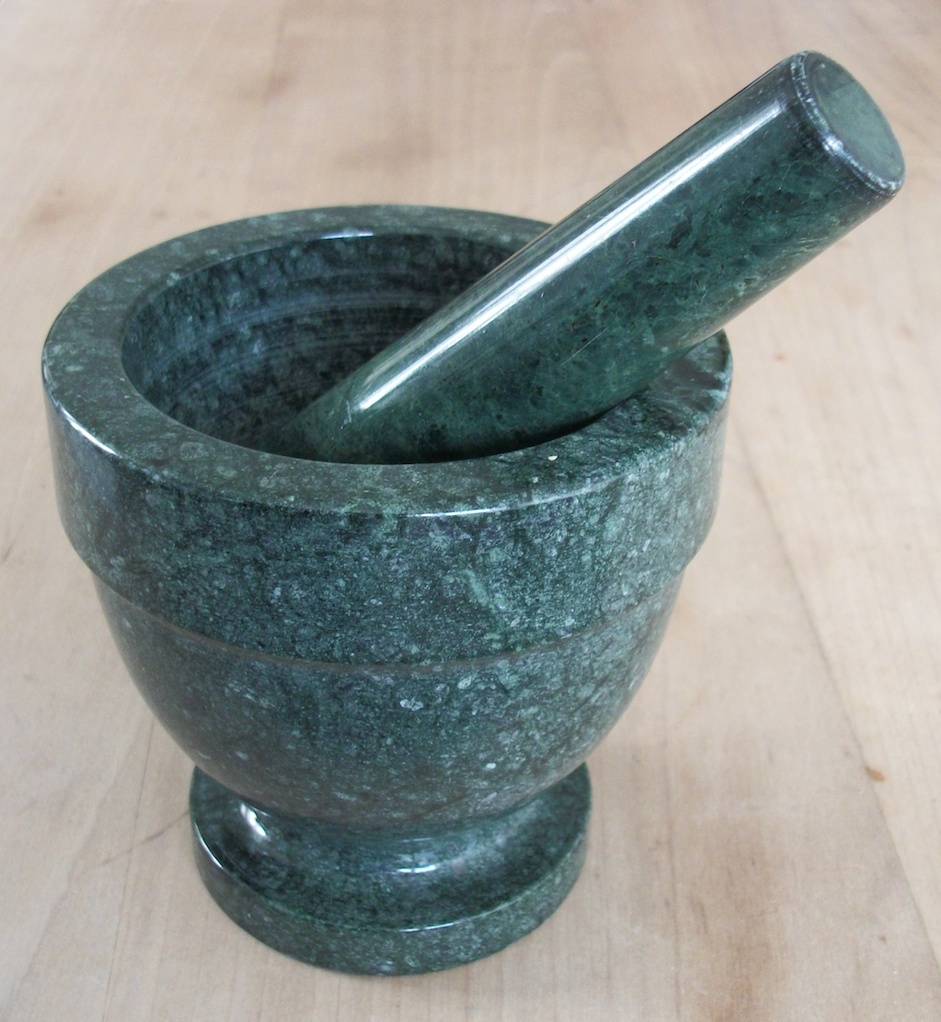
100_3915 smOkay, I admit it. We own two mortar and pestles—a large wooden one, and this small stone one. And we use them both.

There’s something satisfying about a mortar and pestle. There’s the timelessness of the act of grinding food between two stones—people have been doing that probably since we first used tools. There’s the rewarding transformation of some seed, herb, or vegetable into a powder or paste. There’s the lovely aroma of whatever it is you’re crushing. And there’s the joy of the physical work (which always makes me think of the Luddite’s Kitchen Weight Loss Programme). You just don’t get all that from a spice grinder or food processor.

We grow all of our own herbs, and some of the spices, too, so the mortar and pestle gets used regularly on herbs and spices. It’s great for crushing the dried garlic we use at this time of year, too. And with the milking season underway, I’ll soon be using it to grind rock salt to just the right consistency for salting cheeses.

A very handy tool to have around!

Orange cake

100_3918 cropsmI made a new cake today. It was supposed to be the Orange Cake from King Arthur Flour’s Whole Grain Baking. But my husband had just used the last of the whole wheat flour for bread, and since I was going to change the type of flour in the recipe, I made a few other changes…

The result was lovely! Crunchy on the outside and divinely soft inside. It was difficult not to just sit down and eat several slices all at once!

So here’s the recipe in all its untested glory.

2 ½ cups barley flour
1 cup all-purpose flour
2 tsp baking powder
¼ tsp salt
1 cup (250g) butter, softened
1 ¼ cup sugar
4 eggs
1 cup milk
Zested rind of 1 orange

Mix together the flours, baking powder and salt in a medium bowl. Cream the butter and sugar until light and fluffy (this will take about 5 minutes). Beat in the eggs, one at a time. Add the flour mixture alternately with the milk. Stir in the orange zest.

Spoon batter into two greased and floured 9 x 5-inch loaf pans. Bake about 1 hour at 180°C (350°F). Remove the pans from the oven and allow to cool for about 5 minutes before turning out onto a rack. Place the rack over a large baking tray, and brush the glaze (see below) over the tops, bottom, and sides of the hot loaves, allowing it to soak in. Cool fully before serving.

Orange glaze:

½ orange juice
zested rind of 1 orange
¾ cup sugar

Put all glaze ingredients into a heat proof bowl and microwave for 1 minute. Stir until the sugar is dissolved. Brush onto cake.

**The crust on these loaves is fabulous! Next time I make these I’m going to bake them in mini-loaf pans in order to increase the crust to interior ratio! They’d probably also be great as cupcakes!

Watercress

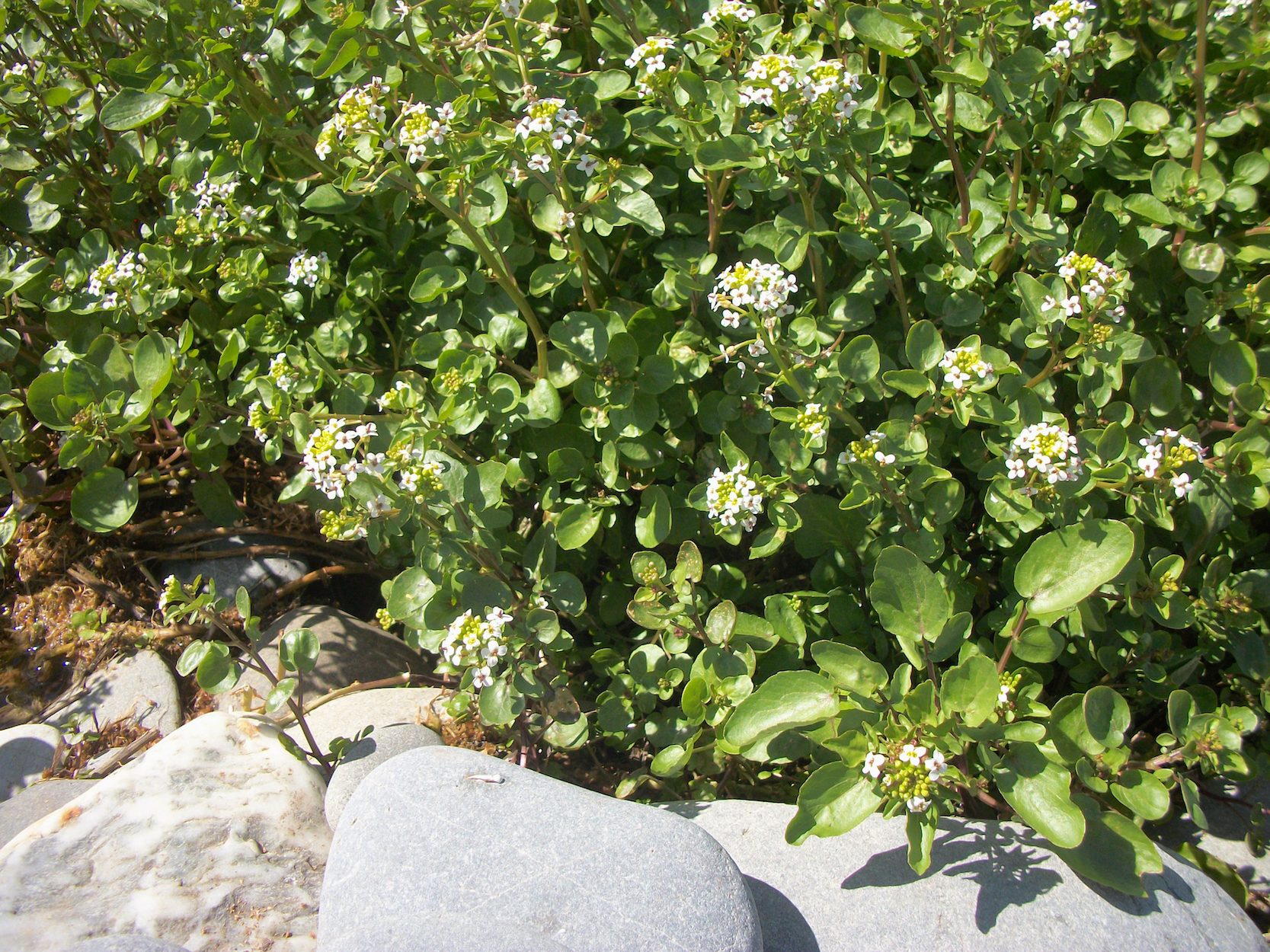
100_3897 smI probably first read The Trumpet of the Swan, by E.B. White when I was 7 years old. I remember being enthralled by the book, and ever since, I have loved the song, Beautiful Dreamer, which the mute swan Louis plays to woo his lady friend, Serena. I don’t remember much else about the book, but for some reason I vividly remember that Louis and 11-year-old Sam eat watercress sandwiches.

This was the only experience I ever had with watercress until we grew it ourselves (though thinking back, I’m pretty sure it grew in the neighbour’s stream, growing up, but I didn’t know what it was at the time).

Now, I’m very impressed that Sam ate watercress sandwiches. I can’t imagine many 11-year-olds who would do that.

Watercress is in the mustard family, and it’s glossy leaves are sharply bitter, like a mixture of arugula and radishes. They are delicious, but challenging for the palate of a child. I enjoy them on a cheese sandwich (and my 11-year-old does, too), but I’m not sure I would want an entire sandwich of nothing but watercress.

Still, watercress is a great way to spark up salads and sandwiches, and I look forward to trying it in soups and stir-fries as well.

Salad Burnet

100_3894 smSanguisorba minor, salad burnet, began primarily as a medicinal herb. Sanguisorba means “blood absorber”, and it was thought to stanch the flow of blood. Later, it was also used as a cure for diarrhoea, digestive disorders, rheumatism and gout. It was also thought to protect against plague.

Sadly, salad burnet’s real virtues are more modest and culinary in nature. Its toothy, slightly bitter, cucumber-flavoured leaves make a delicious addition to salads, herbed butters, and cheeses. We use salad burnet heavily in the spring, when the fresh new growth is less bitter, and before the cucumbers are in—a springtime taste of summer in our salads.

But it’s virtues aren’t confined to the kitchen. Perennial, drought tolerant, and pretty, too, salad burnet is a perfect addition to your landscaping.