Corn

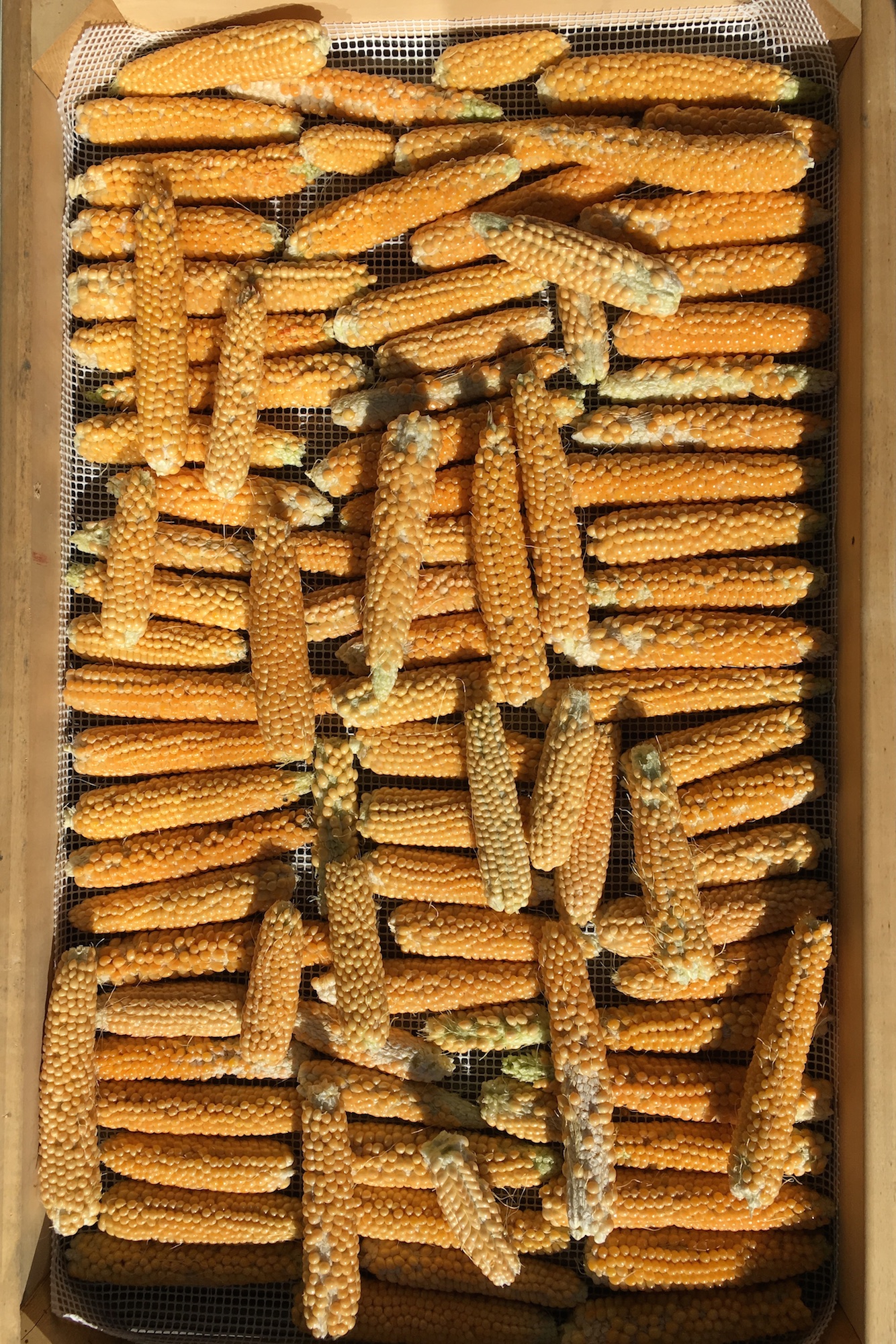
This year's popcorn harvest.

This year’s popcorn harvest.

What would life be without it?

Even ignoring the highly processed corn oil and corn sugars found in so many products, what would a movie be without a big bowl of butter-laden popcorn?

What would chilli be without a slab of corn bread to go with it?

What would summer be without corn on the cob?

And how dull life would be without polenta, corn dodgers, corn chowder, corn and pea succotash, roast corn, caramel corn, tacos and tortillas, nachos…

And then, there’s chicha fuerte…

Um…well…we can just forget chicha fuerte. It’s a corn alcohol brewed in Panama. Tastes a bit like vomit, and even a sip leaves you with a hangover the next day.

But hurrah for all the other forms of corn!

Many thanks to the people in what is now Mexico who bred corn from its ancestor, teosinte, about 9000 years ago! I doubt they had any idea how ubiquitous corn would become, but they hit on a winner.

Pumpkins

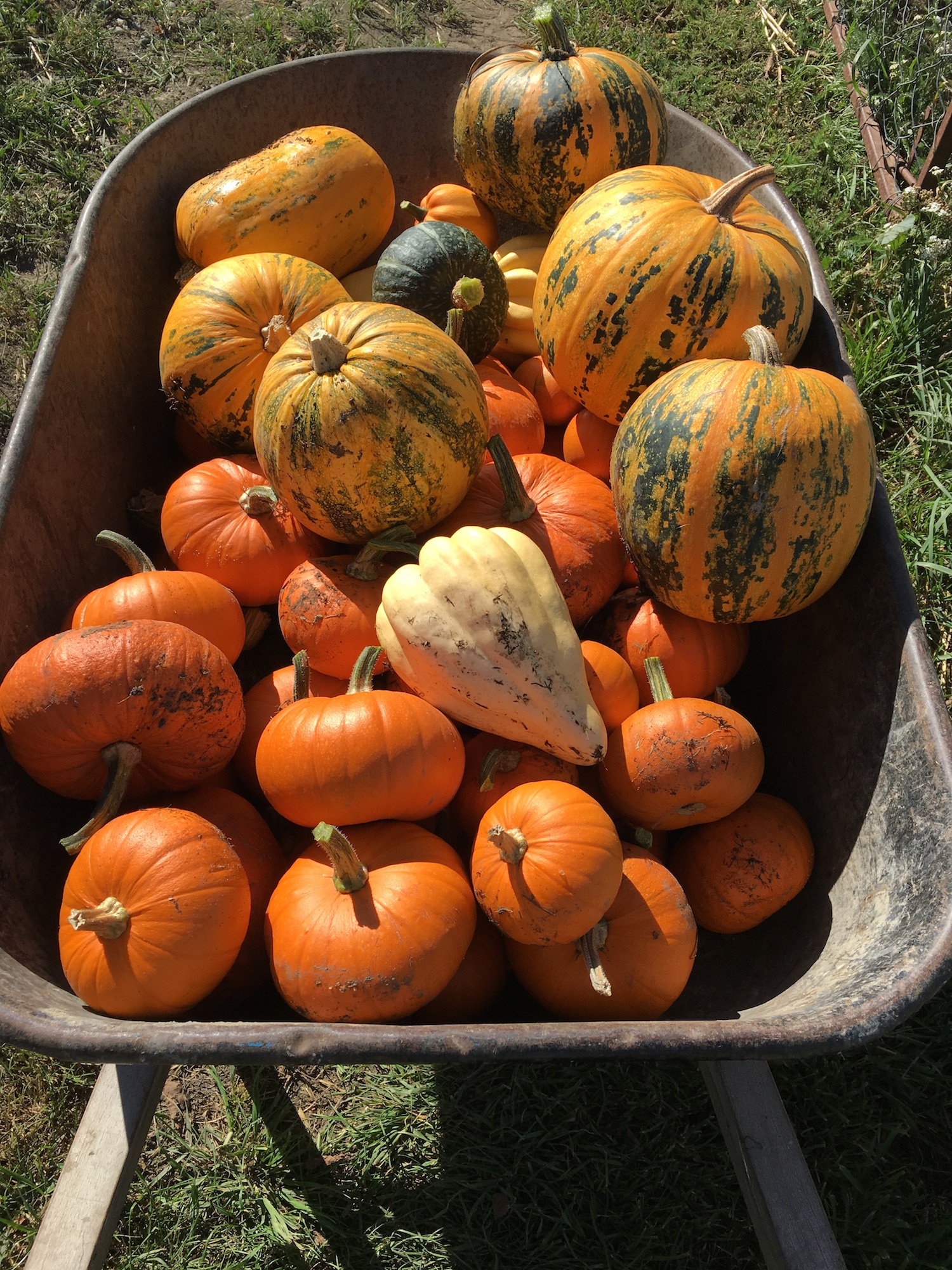
About a third of the harvest.

About a third of the harvest.

Autumn wouldn’t be complete without the requisite wheelbarrow loads of pumpkins and other winter squash. In spite of some late-frost drama this spring, the harvest wasn’t bad.

My kids ask every year, “Which are the pumpkins and which are the squash? What makes a pumpkin a pumpkin?”

The short answer is that a pumpkin is a squash that we call a pumpkin. There are four species and countless varieties that variously get called pumpkin and squash. Some fruits are known as pumpkins in one place, and squash in another.

I don’t bother with the distinction. The important distinctions are between varieties. Some are best made into soup, others make splendid pies. Some have robust, dry flesh that holds up well in savoury galettes. Some are just the right size for baking whole. Some keep well, and others need to be eaten quickly after harvest. Some have flesh only useful as goat food, but have naked seeds that are wonderful toasted with salt and spices.

Which is, of course, how I justify planting so many pumpkins of so many varieties. I need them all!

The Aphipocalypse

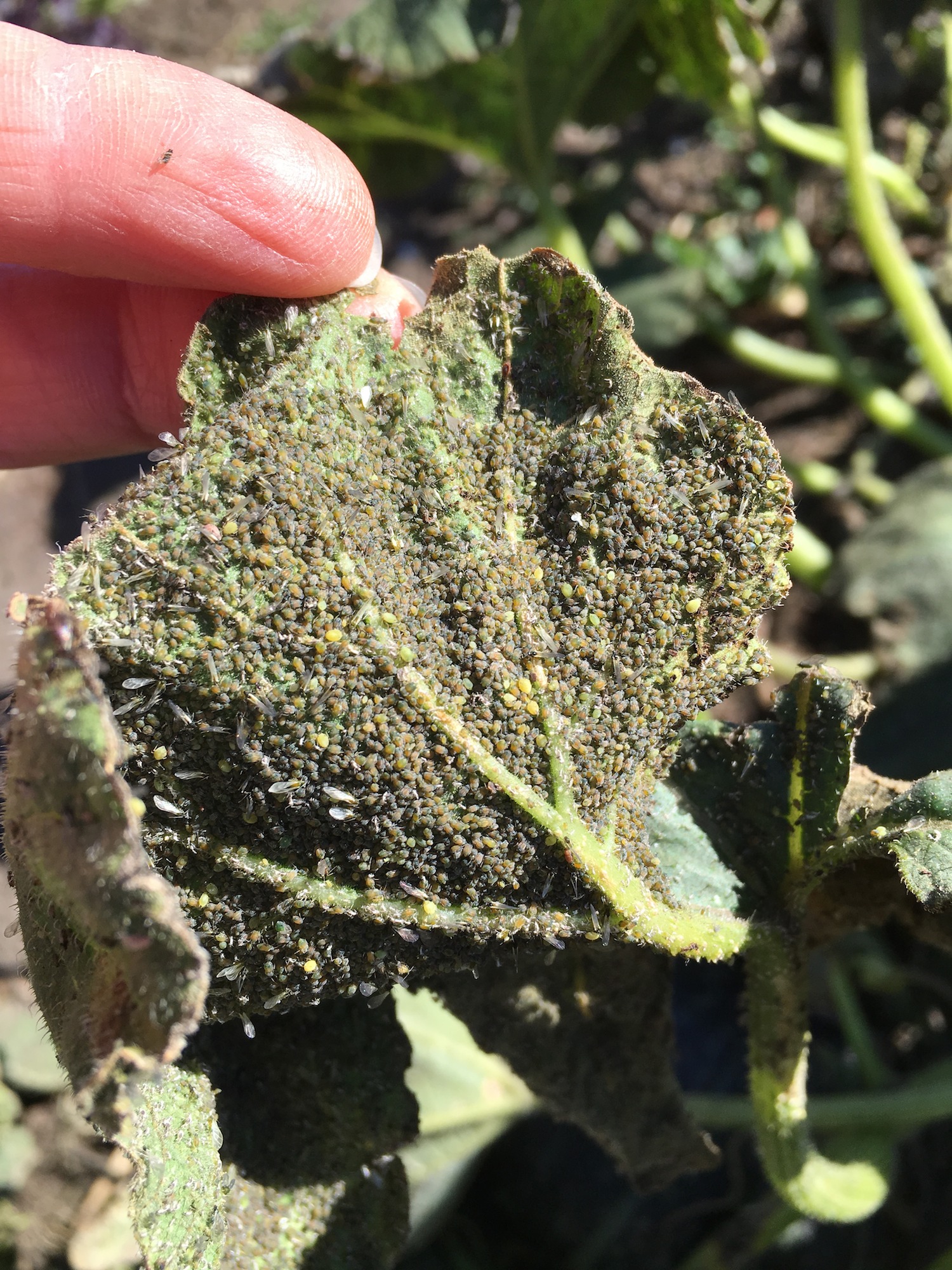
2016-04-09 11.19.43 smIt has been years since I’ve seen an aphid infestation quite this bad, and rarely at this time of year.

As I’ve mentioned before on this blog, I usually have aphids in early spring, and then the predators and parasitoids knock them back to almost nothing through the summer.

But somehow, the predators and I all missed the aphids on the pumpkins. I expect the warm dry summer was perfect for their growth. I rarely take note of the pumpkins from December to April—they need little weeding, and are generally pest free.

So when I went to harvest, it was a bit of a surprise to find millions of aphids on the underside of nearly every leaf in a back corner of the pumpkin patch.

All summer, the aphids have been cloning themselves, producing dozens of replicas every week—an army of little green girls. Only girls. It wouldn’t have taken them long to build up the population level out there right now. Some of the generations of aphids had wings (you can see some on the left side of the leaf in the photo), and dispersed to other plants, but most stayed put, slowly spreading across one leaf after another.

But, as big as the population is today, they will all die over winter. About this time of year, the females will start producing a few males—also genetically identical to themselves, with the exception of a missing sex chromosome. Only in the fall will females mate and produce eggs. The eggs will overwinter, hatching out in spring (all female) to start the cycle over again.

I think I won’t wait for these girls to lay eggs. I’m afraid that, now that the pumpkins are gone, the infested vines will be dunked in a bucket of soapy water and buried deep in the compost pile. No sense in letting them get a head start on next spring!


Unicycle

2016-04-08 15.50.22 smThe girl was saving up her money.

I should have known she was aiming for something like this. Metre-and-a-half high stilts weren’t enough, nor juggling balls, nor devil’s stick, nor diabolo, nor feats of strength and flexibility.

It arrived in the mail today, and in spite of a looming piano recital, she assembled it after school and spent her potential practice time repeatedly throwing herself off the seat and onto her backside, laughing the whole time.

She’s clearly preparing for the day she’ll run away to the circus.

If she keeps it up, she’ll be able to start her own one-person circus.

Impossible Sky

I couldn't capture today's sky, but it was something like this...

I couldn’t capture today’s sky, but it was something like this…

It was another of those drive-off-the-road-gorgeous skies this evening. The kind that is completely impossible to capture in a photograph, and is more likely to be seen in a cheap painting for sale alongside velvet paintings of Elvis.

I can get lost in one of those skies.

Ripples and waves of grey cloud surging across the sky. A break just big enough to illuminate the edges, just big enough for the sea foam-salmon pink-blue of evening to peek through. The ragged shreds of dark cloud caught in shadow. And far out across the plains, a shaft of brilliant sun lighting sheets of mist shrouding the mountains.

These things only happen in bad paintings.

Or so I thought.

But the New Zealand sky is like the Andes Mountains. As a child, I was obsessed with the Andes–so impossible, so improbable in the National Geographic photos, I couldn’t believe they were real. And then I went there and climbed them, and I knew they were not.

It is the same with the New Zealand sky. To see it is to know it cannot possibly be real. It is a storybook caricature of a sky. It is a fantasy sky. It is a sky so dense with colour, you think it must have drained the rest of the world, casting everything else in black and white.

And I am so profoundly humbled and honoured to be able to call it my sky. My home.

Step on a Hedgehog

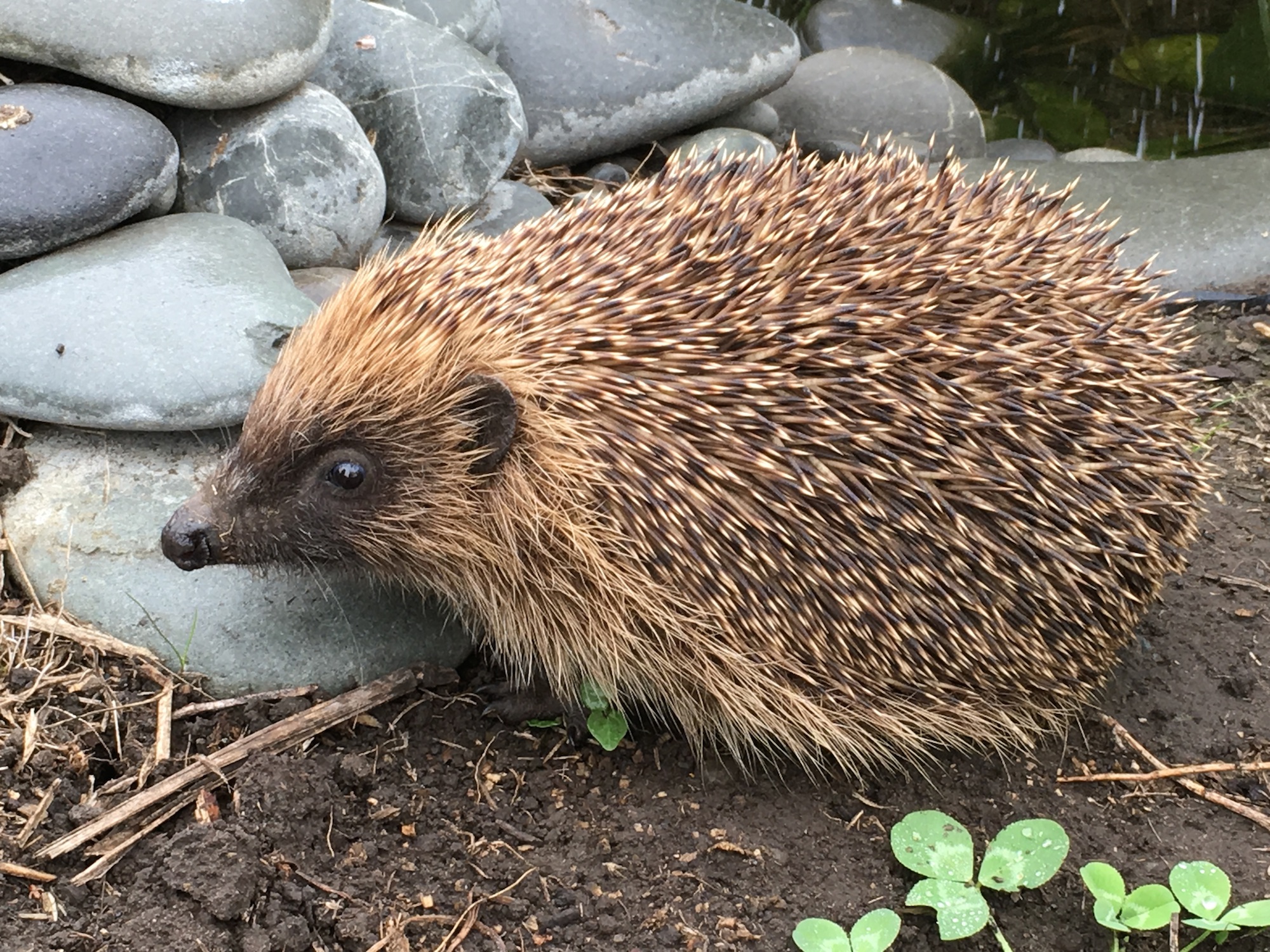
2016-01-26 18.07.41 smMy daughter came to me frustrated yesterday evening.

“What is fear?”

Knowing she had just been out in the dark, I asked her if she was frustrated because she was afraid of the dark.

“No, I’ve gotten over my fear of the dark. Now I’m afraid of hedgehogs.”

“Ah. You’re afraid of stepping on them in the dark.”

She nodded.

“Well, you learned that from your father, who worries about stepping on hedgehogs in the dark. But I’ve actually stepped on hedgehogs in the dark.” I shrugged. “It’s not so bad—for me or for the hedgie. You tend to feel it before you put all your weight on it, and you pull back before you hurt it.”

She looked relieved.

It got me thinking about the nature of fear, how easily it is taught, and how difficult it can be to overcome.

Teaching children about insects, I see fear all the time. The fear that another living thing might harm us (and sometimes the fear that we might harm another living thing). Much of my teaching is aimed at overcoming those fears.

And in saying ‘overcoming,’ I don’t mean eliminating those fears—that’s the work of decades, not of an hour.

I know that, because I experience those fears, myself—they are deeply rooted in our culture, and I was taught them just like everyone else was. But I have confidence in spite of the fear. Part of that comes from knowing that the worst that can happen is really not all that bad (for most things). I have been bitten, clawed, and stung by songbirds, parrots, raptors, rabbits, rodents, snakes and all manner of insects and spiders, and have survived it all. More importantly, I’ve learned that if I understand the animal and move with confidence and care, I am unlikely to be hurt (or to hurt the animal).

So I don’t try to make children unafraid of insects; instead, I teach them how to move with confidence and care, even if they don’t feel the confidence yet. I teach them how to hold an insect safely. If I think they’re ready for it, I give them an insect that is likely to bite them—a tiny nip they might actually feel, if they’re paying attention. They might cry out, “Oh! It bit me!” They might fling the insect off their hand. But chances are good, they’ll pick it up again, because the worst has happened, and it wasn’t so bad. The act of taking the risk once makes it easier to do it again. Confidence grows. The fear may still be there, but it is diminished by understanding and experience.

I hope my daughter does step on a hedgehog in the dark. She will stumble in her effort to not squash it. She’ll cry out in surprise, and then laugh as the offended hedgehog lumbers away. When she goes out in the dark next, she’ll walk with more confidence. And because the fear will probably still be there, she’ll feel incredibly brave in doing so.
Standard Time

2016-02-04 07.21.17We came off Daylight Savings Time last Sunday. And though it doesn’t change the actual day length, it does seem to shorten the days.

I’m still milking in the dark—an hour doesn’t change that. But now, it is all but dark by the time we’re doing the dinner dishes. There is no time to potter in the garden in the evening. The dinner leftovers destined for the chickens have to be saved until morning, because the chickens are already roosting for the night by the time we’re done eating.

But the truth is, there isn’t much still to be done in the garden. Oh, there are pumpkins and popcorn to harvest, and at some point I need to bring in the remaining carrots, but all those tasks can be done on the weekend. Large swaths of the garden don’t need to be weeded anymore—the crops there are done, and the chickens will appreciate the weeds when I turn them out into the garden for the winter.

So instead, I have time to read a book after dinner, which is a luxury I don’t have during Daylight Savings Time. I’m actually quite excited by it this year, as we have a new book nook my husband built along with some beautiful cabinetry for the bedroom. The perfect place to curl up with a book.


Dobsonflies

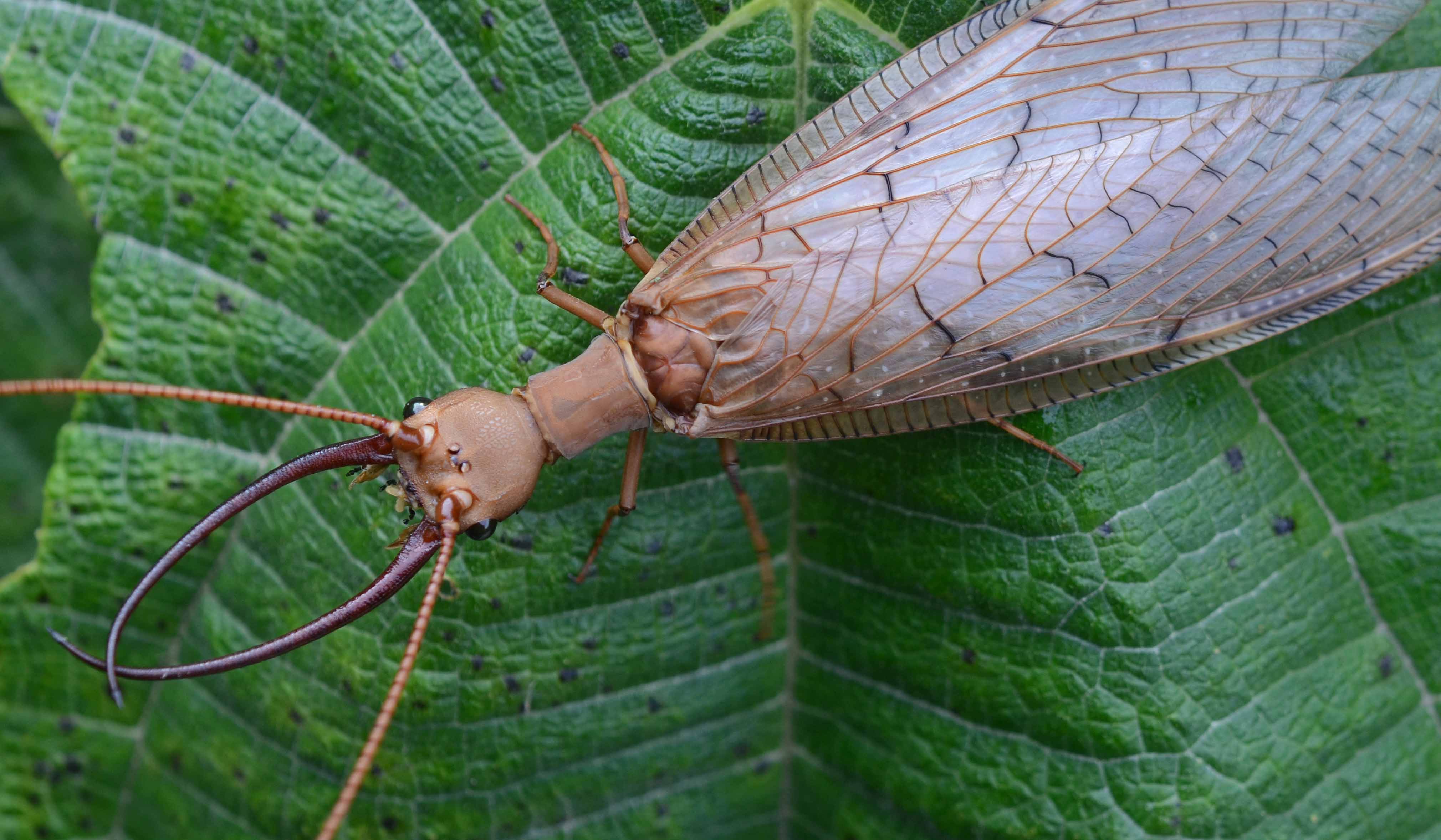
Photo: Geoff Gallice

Photo: Geoff Gallice

One of the insects I wish we had in our pond is dobsonflies. When I first learned the insect orders, the dobsonflies were lumped with the lacewings. Now they’ve got their very own order–Megaloptera. So, of course, since they have their own order, they need their own poem!

Megaloptera, helgrammite!
Known as toebiters.
When larvae bite

Adults are gentler,
Though they still look fierce
Their scimitar jaws
Are too weak to pierce.

Massive jaws
And flashing wing
Woo the ladies
But don’t catch a thing.


Herb Garden Reboot

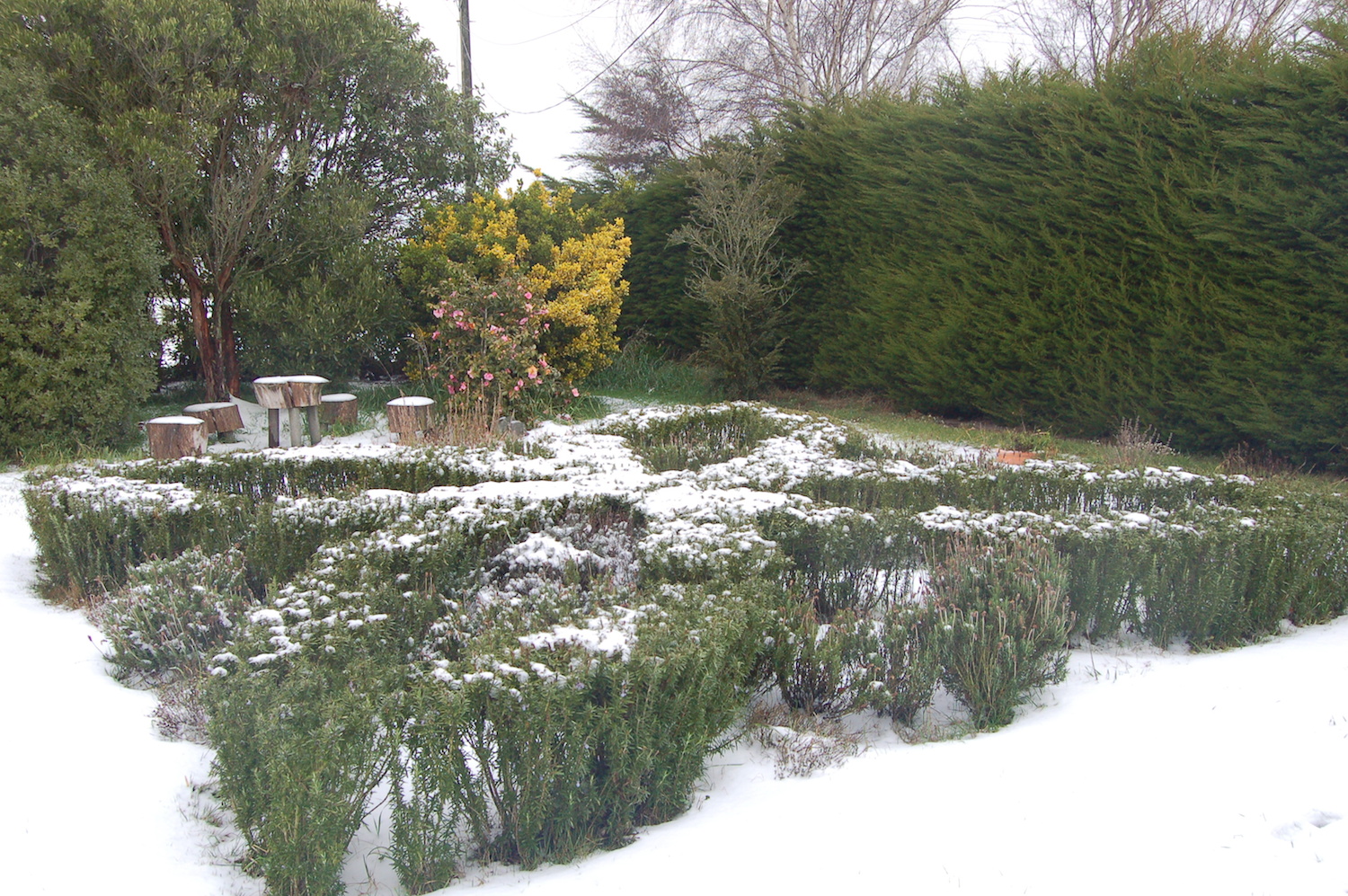
The herb knot in the snow a few years ago.

The herb knot in the snow a few years ago.

You know you’ve lived somewhere for a while when it’s time to replace perennial gardens you planted.

One of the first gardens we established when we moved in eleven years ago was the herb garden. That garden is now looking sad—the plants are aging, and this summer’s dry hot, weather took a toll. The beautiful Celtic knot of lavender and rosemary is overgrown and the plants are dying in patches. The clay pots we nestled into the ground to contain the mint are cracked and crumbling. A few of the surrounding shrubs are dead.

We’ve also been talking about some changes to the flower garden that flows into the herb garden. When we turned it from driveway to garden about seven years ago, it was meant to be full of annual flowers, but no matter what I’ve done to it, it still feels like I’m digging in a driveway every spring when I plant out the annuals. Perennials would really make more sense there.

It’s time for some planning!

2016-04-03 13.15.16 smMy daughter went out there this afternoon with clipboard and tape measure and measured off the area, including features we want to keep, but ignoring everything else. I took those numbers back to the office and made a scale drawing of the space on the computer.

Now comes the fun part.

I’ll print out blank copies of the space, and we’ll scribble garden ideas on them. The pages will float around the house. We’ll draw ideas over breakfast, after dinner, at odd times of day and night. We’ll list all the things we “need” to have in the garden. We’ll take our sketches out into the yard to try to visualise them. We’ll argue about how many rosemary plants we actually need, whether the lemon trees would prefer the warmth of the northeast side of the house or the better soil on the southeast side, and how many artistic installations is too many.

We’ve got roughly 285 square metres to play with, which I’m sure will seem like not enough as we plan, but will feel like way too much once we’re in there pulling out plants and reconfiguring the space.

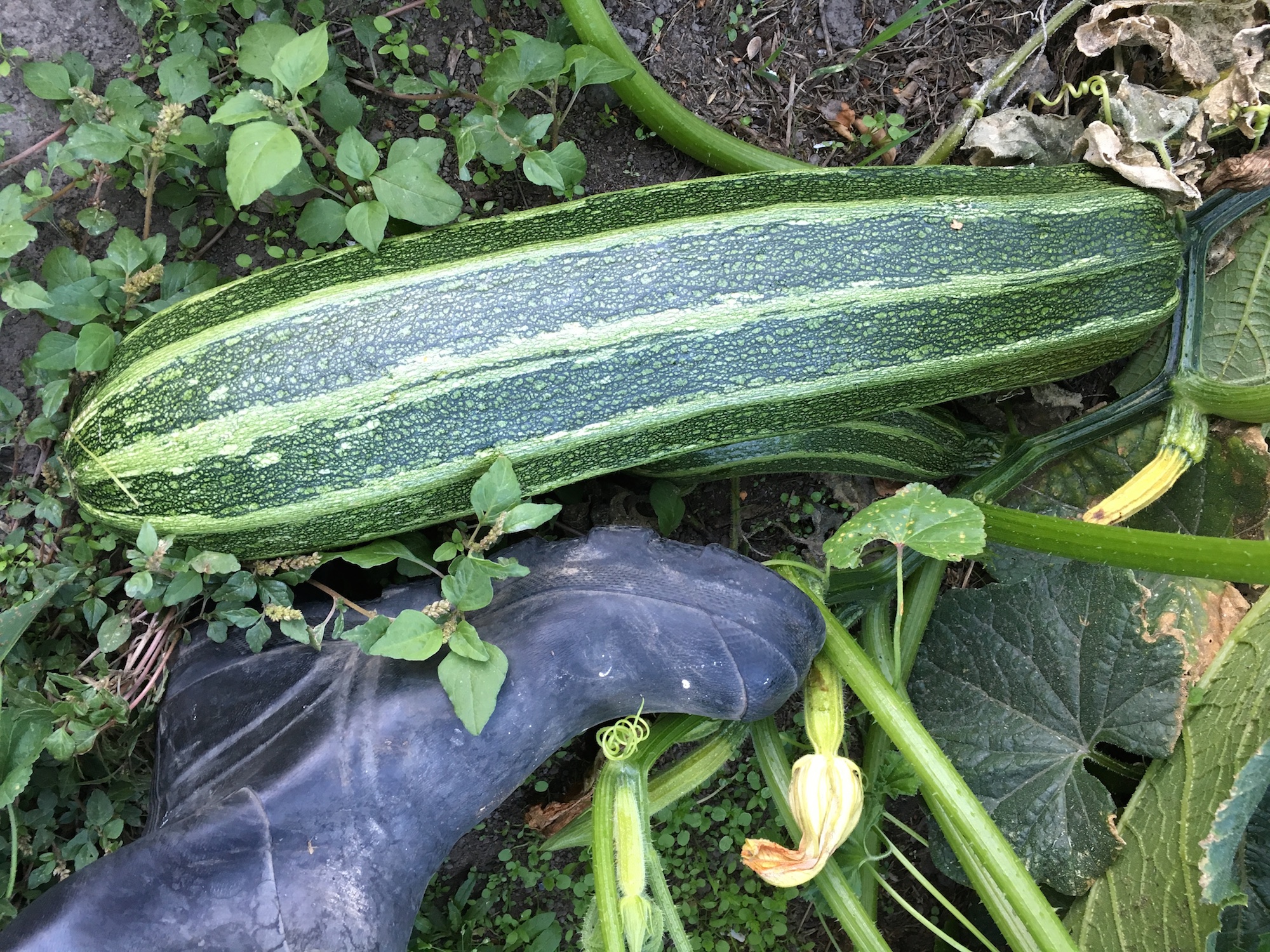
What do you do with a giant zucchini?

2016-04-02 18.47.15 smTo the tune What do you do with a drunken sailor?


What do you do with a giant zucchini?

What do you do with a giant zucchini?

What do you do with a giant zucchini,

Early in the morning?


Hey, they just get bigger.

Hey, they just get bigger.

Hey, they just get bigger.

You can’t eat them all.


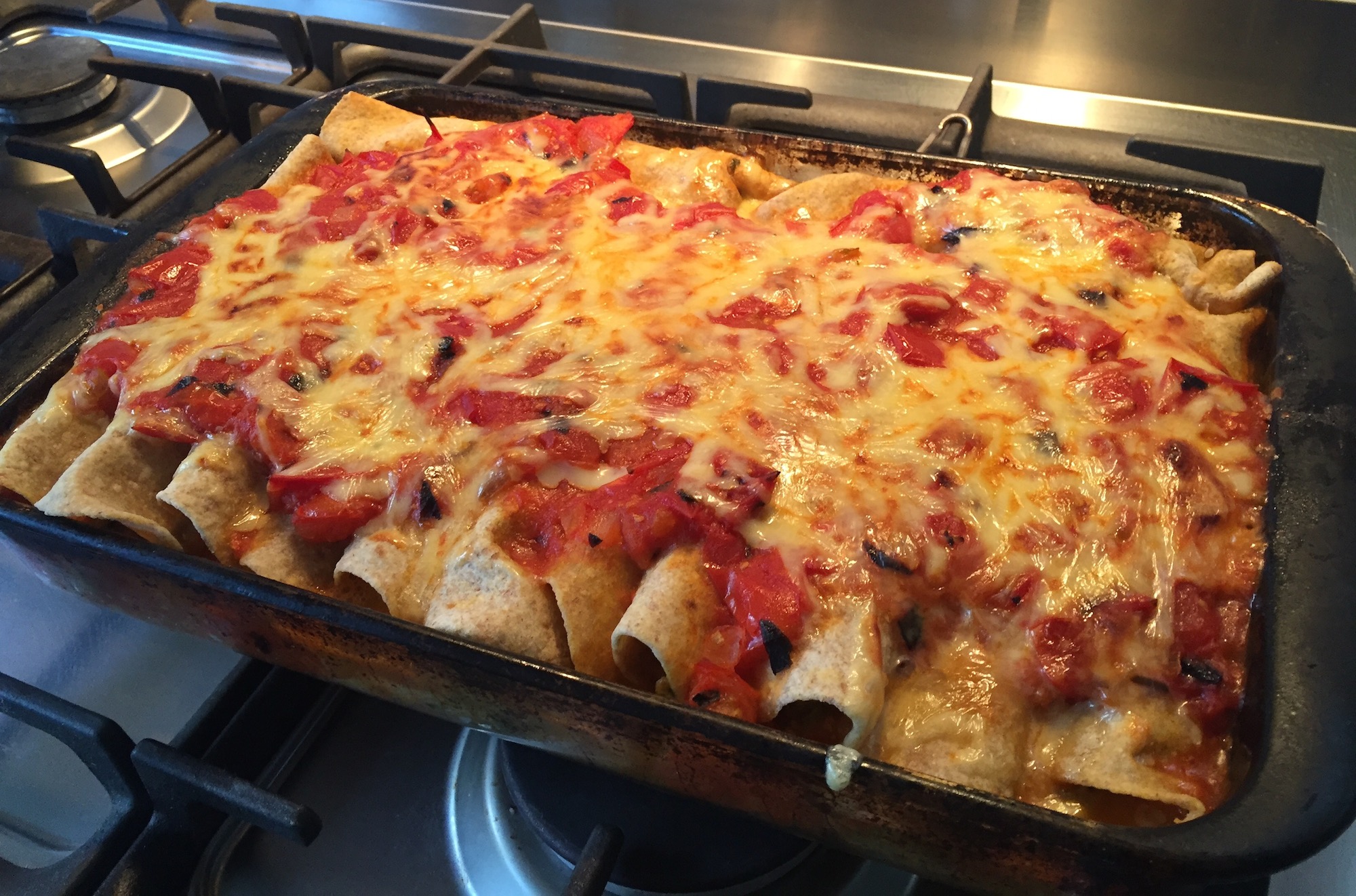
zucchinienchiladassmCook ’em in a sauce and make enchiladas,

Cook ’em in a sauce and make enchiladas,

Cook ’em in a sauce and make enchiladas,

Early in the morning!


Hey, they just get bigger.

Hey, they just get bigger.

Hey, they just get bigger.

You can’t eat them all.


chocolatezucchinicakesmBake ’em in a cake and add chocolate chips,

Bake ’em in a cake and add chocolate chips,

Bake ’em in a cake and add chocolate chips,

Early in the morning!


Hey, they just get bigger.

Hey, they just get bigger.

Hey, they just get bigger.

You can’t eat them all.