Adventure on Kaitorete Spit

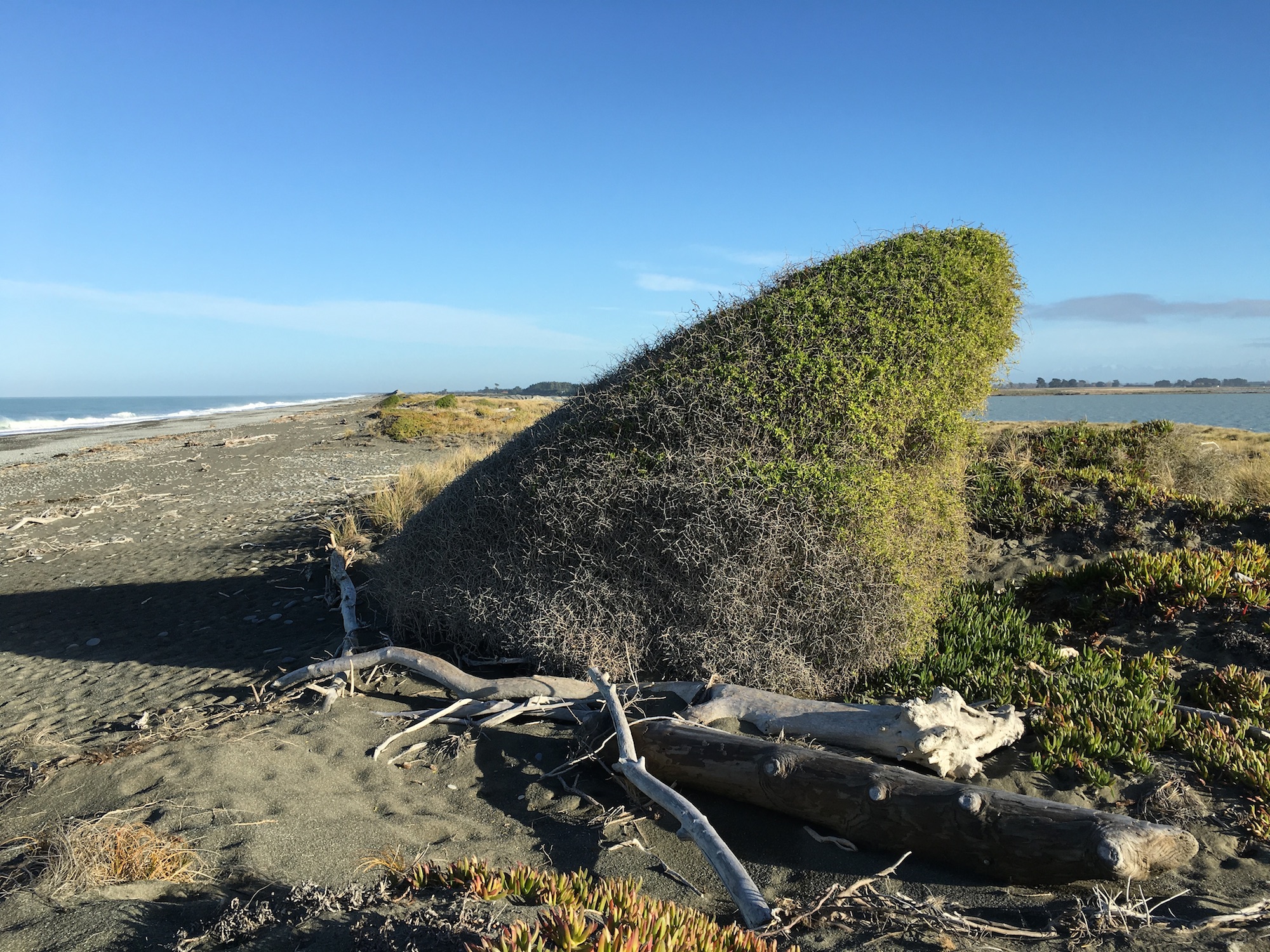
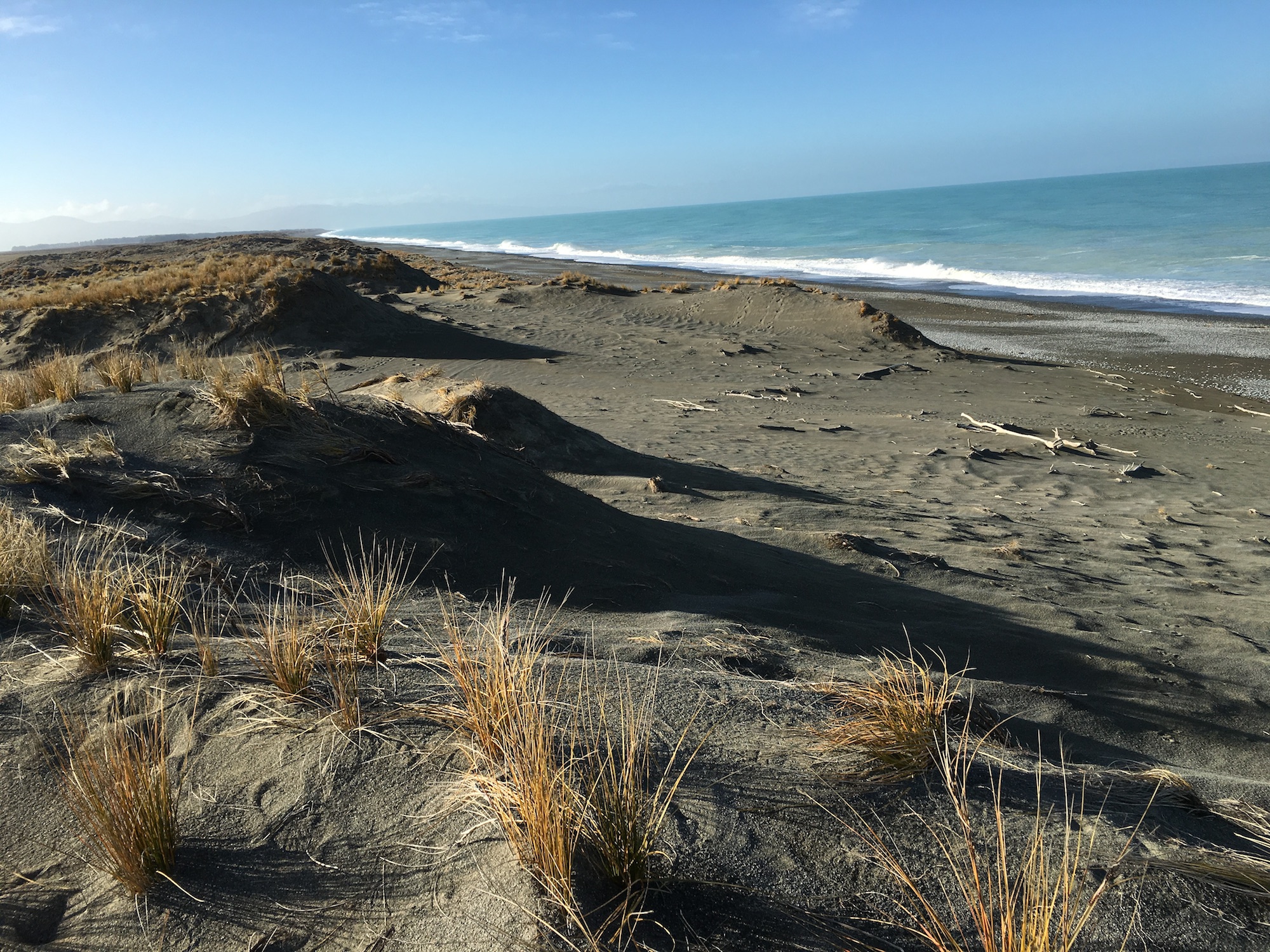
2016-06-11 11.10.09 smSaturday morning, we took advantage of the lovely weather to take a walk out on ‘our’ beach. Not just any old walk, but one that would take us beyond the lake opening onto Kaitorete Spit.

I can’t believe that in the eleven years we’ve lived here, we’ve never done this before. We’ve walked to the lake opening many times, but always when the lake was open to the sea, to see the dolphins and seabirds that congregate there eating the fish migrating in and out of the lake.

But our goal this time was the wild tip of the spit.

You would think that a mere couple of kilometres would make little difference in the beach, but the change was positively stunning.

On ‘our’ part of the beach, the dunes are covered in non-native shrubs and ice plant. Not a native plant to be found.

An hour’s stroll out onto the spit took us into a different world. Non-native plants all but gone on the dunes, replaced by pingao. Behind the dunes, native broom, Raoulia (vegetable sheep), and Muehlenbeckia.

The shape of the dunes was different. The whole effect less verdant and more windswept.

Naturally, we searched for kātipo spiders among the pingao, as this is one of the few places this endangered spider can be found. We found none, but we did find a number of other spiders, lots of spider egg cases, and a couple of sand scarabs (including an adult, which was a first for me).

We knew all this was out there, but knowing and having experienced it are two different things.

And now that we understand what’s out there, I’m sure we’ll be going back again soon.

The Care and Feeding of a Cookie Jar

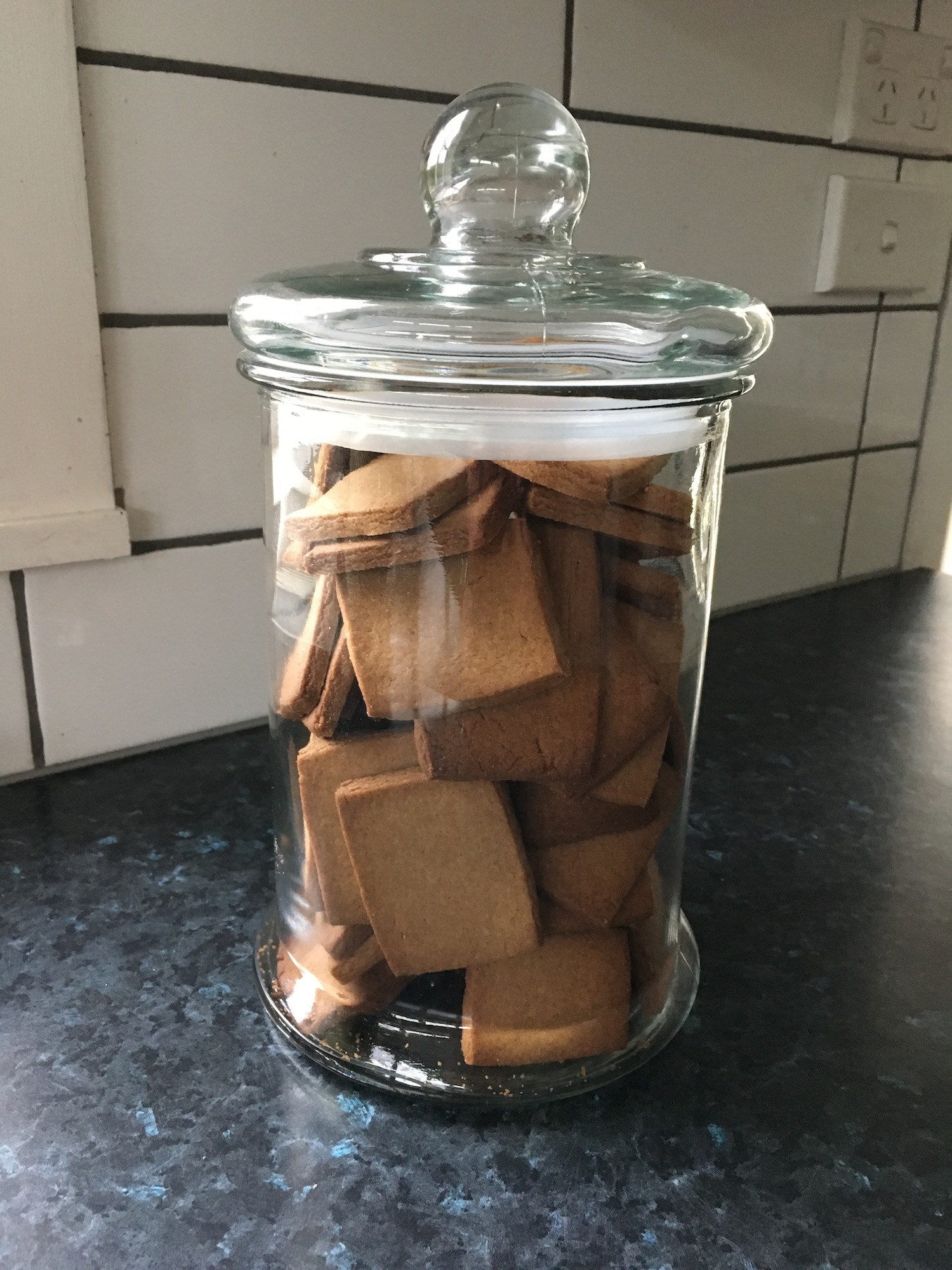
2016-06-12 11.06.35 smThe role of a cookie jar is to be full.

I didn’t fully understand this until I bought a cookie jar for my husband for Christmas. I didn’t realise the responsibility I was taking on with cookie jar ownership.

As with any pet, the cookie jar requires care and feeding. You can’t leave it sitting empty on the kitchen benchtop. It looks at you with those great big eyes, begging for some biscotti or a few macaroons. Maybe some chocolate chip cookies? You might be able to ignore it for a while, but that empty jar will sidle into your field of view, whimper a bit, and rattle its lid.

Next thing you know, there is butter, flour and sugar all over the kitchen. The air smells of cinnamon and cloves. Kids are hanging around waiting for a bowl to lick clean.

An hour later, you glance at the clock and realise it’s time to start cooking dinner, but you have no idea what you’re going to make. But the cookie jar is full, so everything is alright.

Saturday Stories: Why I Always Obey Warning Signs

2016-06-11 10.13.31 smWe didn’t see the sand shark until it was too late.

To tell the truth, I don’t think any of us really believed they existed.

Oh, we’d been warned. Mum and Dad saw the news on television and told us not to go out to the beach after school. But we always went out on the beach after school. Who would walk along the street when you could walk the beach home instead? The street was full of rubbish and car exhaust. On the beach there were shells, and sand hoppers, and sometimes even dolphins out in the waves.

So, naturally, coming home from school the next day, we turned off the street onto the beach path.

Five metres along the path, a big red sign blocked our way: DANGER! SAND SHARKS! DO NOT ENTER!

We laughed and stepped over the rope barrier. Sand sharks—yeah, right. There were plenty of sharks in the water—we knew that—they cruised along the shore, just beyond the breakers. We didn’t always see them, but we saw enough that we could tell the difference between a great white and a tiger shark. But sand sharks? That was ridiculous.

We crested the dunes and raced down the far side, like we did every day. The beach was deserted. I suppose that should have told us something, but like the other warnings, we ignored it.

Jamie and Kate kicked off their shoes and raced down to the water, splashing right into the waves. Mum would have a fit about their soaking wet school pants when we got home, I thought.

I picked up their shoes as I followed more slowly, texting my friend Ellie to see if she wanted to go to the movies on the weekend.

Maybe if I’d been paying attention to something other than my phone, I would have seen it. But it wasn’t until the shark’s massive dorsal fin sliced across the beach that I looked up.

It was speeding down off the dunes, the dorsal fin looking like a wave-sculpted bush. A heaving ripple of sand pushed out in front and to the side, like the wake of a speeding boat.

I screamed at Jamie and Kate and broke into a run, trying to get to them before the shark did. I don’t know what I thought I was going to do if I made it—I was no match for the animal—it must have been at least fifteen metres long, by the size of the dorsal fin.

Jamie and Kate either heard me or saw the shark, because they turned and shrieked. Kate grabbed Jamie’s arm and pulled, but Jamie was frozen in fear. I don’t think running would have saved them anyway—the shark raced toward them at a speed none of us could have matched. A metre from my siblings, it heaved its body out of the sand, jaws wide open, rows of razor teeth gleaming in the sun. The jaws snapped shut and Jamie and Kate were gone.

I was still racing toward them as the shark sank back into the sand and turned toward me. My steps faltered. Then I dropped my phone and the shoes I still carried, and pounded up the beach.

I could hear the hiss of sand as the shark gained on me. I hit the dry sand above high tide line, and my feet slipped as they sank in. Stumbling, I kept going, finally hitting the harder sand of the dunes. I dared a glance behind me, only to wish I hadn’t—the shark was nearly on top of me.

I flew down the path over the dunes, vaulted the rope barrier and kept going toward the street.

I heard the warning sign splinter as the shark hit it and sent it flying. I could feel the sand shift under my feet now as the shark’s wake hit me.

My feet hit the sidewalk, and an instant later the concrete buckled, sending me tumbling to my knees.

The shark’s dorsal fin was jammed into the broken sidewalk, just a metre from where I crouched. Slowly, it sank out of sight, leaving me shaking and unable to move.

A car I recognized pulled up at the kerb.

“Lynn, are you okay?” asked my mother. “Where are your brother and sister?”
My Best Day

I gave a writing prompt to a few students yesterday—describe your best day ever (real or hypothetical). Here’s my response in poetry:

100_4209 cropOn my best day, the sun shines
But it’s not too hot.
I get up before dawn
And the air is soft
The moon full
Sinking gently to the mountains.
I am outdoors all day
With people I love
Or alone.

On my best day, I sweat
And get my hands dirty.
I see endangered wildlife
And pick tomatoes.
I stay out late to watch
Orion rise
And see the aurora australis.

My best day stretches into night
And I sleep
Without dreams.

Missed Day

2016-05-31 13.41.32I missed a day.

I failed to blog yesterday, for the first time since 2014.

The world didn’t come crashing down.

I didn’t even notice (and I’m sure no one else did either), until this morning.

If I’d failed to blog because I was blowing off writing for the day, that would have been unfortunate, but I failed to blog because I was so engaged with my work in progress that I just forgot.

I forgot to blog, I forgot to take breaks, and I nearly forgot to stop in time to do the afternoon chores and make dinner. This is why I have an alarm set to go off to remind me to pick up the kids after school.

It is a privilege to have the luxury of doing something I love. Something that engages me enough to make me forget everything else. There are many times when I wish for the things I used to have—a real job, a career with a clear trajectory, a regular paycheck. It is good to stop from time to time and appreciate that, though life has taken an unexpected, and frankly, forced, turn, I am incredibly fortunate. I enjoy what I do, most days. It will never pay the bills (hell, at this rate it may never pay for a coffee), but that I can still pursue it is a gift.

Walking Wellington

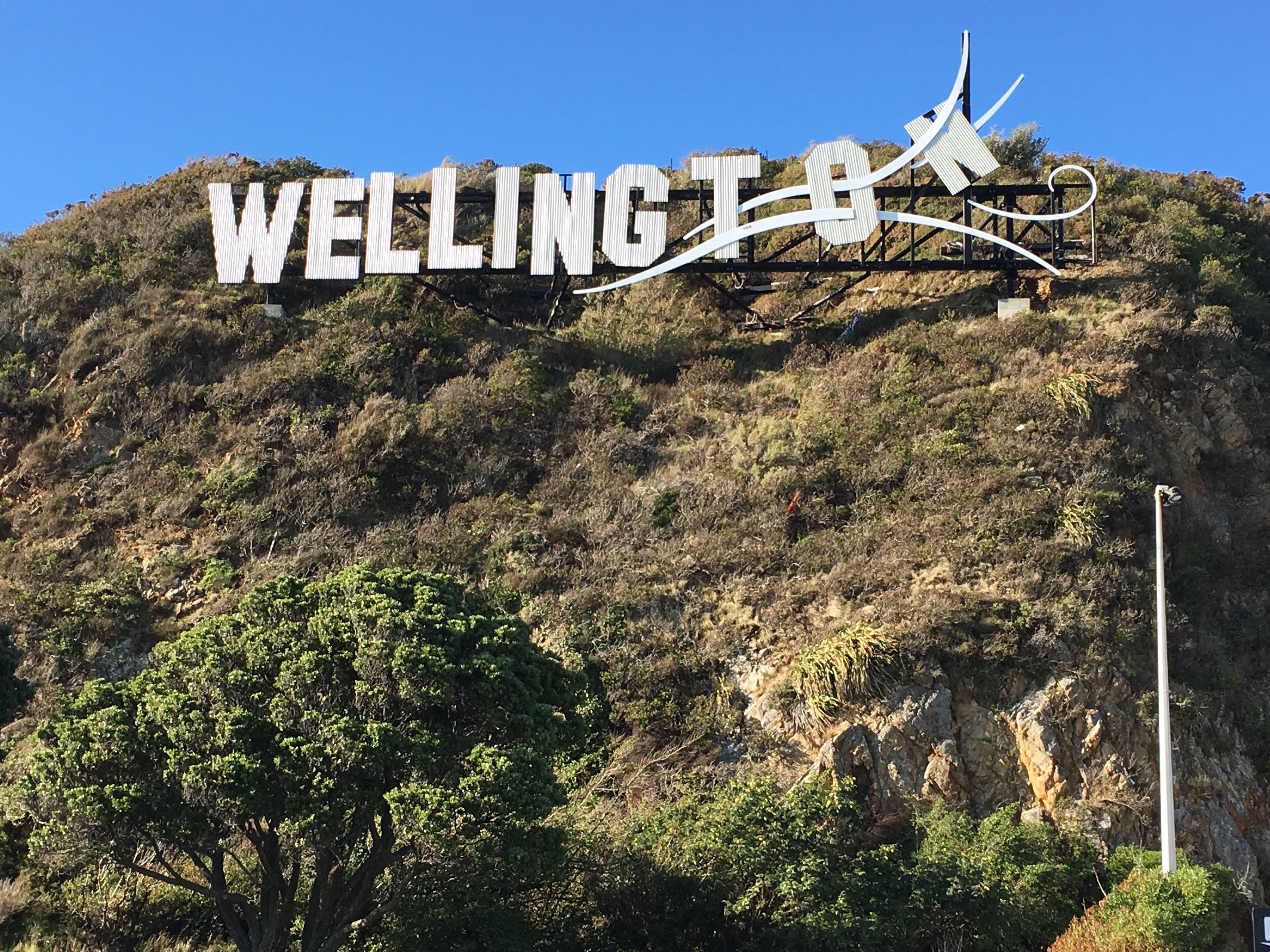
2016-06-03 10.22.20I spent the weekend in Wellington at a convention, but I have to admit that the best part of the weekend was walking around the city.

I could never live in Wellington—I’m just not a city gal, and it would kill me—but I love to visit. Yes, I enjoy Te Papa, and the Carter Observatory, the World of Wearable Arts show, and all the other indoor attractions. But mostly I like going there to walk.

And I have to think I’m not the only one who enjoys walking in Wellington. The streets are full of people walking—to and from work, during lunch breaks, to shops, to the bus stop…

You can walk along the waterfront, or through the residential neighbourhoods with their many finial posts, through the parks or the botanic garden, or along bustling Cuba Street. You can even walk to the airport, if you’ve got time and inclination—the city is compact enough that nearly everything is within a reasonable walk.

Well, reasonable by my standards.

Of course, when Wellington’s weather turns, it’s not a place you want to walk. I’ve been drenched by wind whipped waves on the waterfront, even when it’s not raining. But on a good day walking Wellington is a delight.

This past weekend’s weather was crisp and clear, with almost no wind. Perfect. I did about 10 hours of walking from Friday to Sunday, and would have happily done twice that much, had my schedule allowed.

So, if you’re planning a trip to windy Wellington, be sure to pack your walking shoes.

A Fondness for Finials

2016-06-05 10.31.13 smWellington is a city rich in finial posts.

And…um…what’s a finial post?

Finial posts are the ornamentation found on the gable ends of roofs. Roof finials have been used for millennia all over the world. They originally served the purpose of capping the point of a roof, where the tiles come together (think of the fancy post on top of a Japanese pagoda). You need something to cover the unavoidable hole where all the tiles meet. Many roof finials still serve this purpose, but they are also ornamental.

2016-06-05 10.29.42 smGable finial posts were popular in the New Zealand villas built between about 1880 and the beginning of World War I. They were just one of the many ornamentations (inspired by the new steam-powered woodworking tools of the time) used in these houses. The style (including the finial posts) was also popular during this time in America and England. Folklore in the eastern U.S. suggests that finial posts were not just attractive, but also prevented witches from landing their broomsticks on the roof.

At this point most of you are wondering why on earth I even notice finial posts. My appreciation of finial posts started when we did a major repair on our own house—a tiny villa built around 1880. The front gable was rotting and in need of replacement. It had been repaired in the past, and in one of the repairs the finial post had been sawn off at the roofline. This is a common fate of finial posts on old villas—re-roofing is much easier without finial posts in the way.

When we repaired our house, my husband insisted on restoring the house’s finial post, and this started a whole-family appreciation of finial posts. Now we can’t go anywhere without noticing good finial posts, or noticing when they’ve been removed.

And so, while in Wellington this weekend, I took several long walks, simply to admire the finial posts.

Of course, the question I have is, with so many finial posts in Wellington, do witches need to land at the airport instead?

Don’t be George Bush: Eat Broccoli

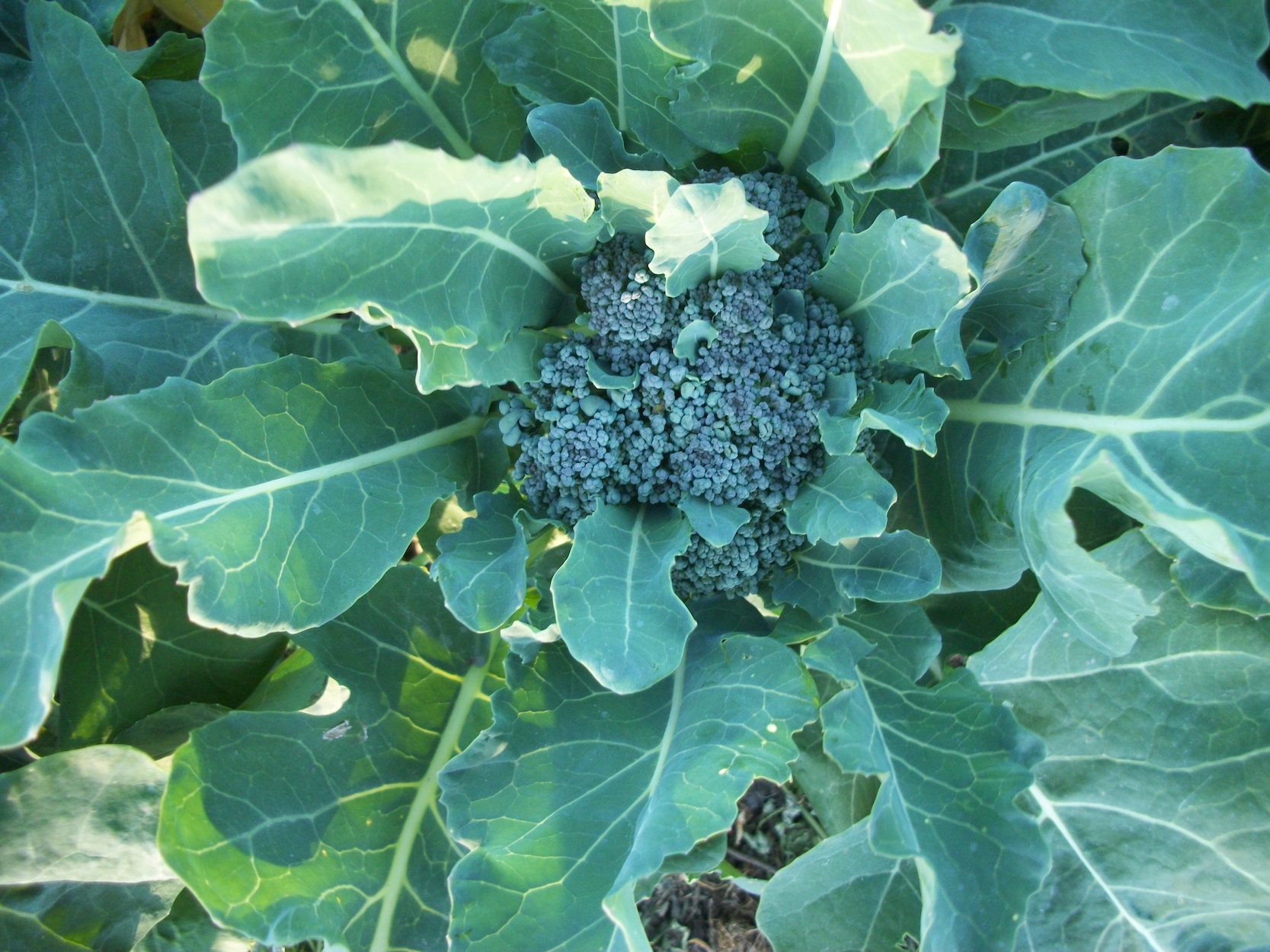
100_4038 smAs the cooler weather finally hits, we slip into winter eating. That means the stored foods like pumpkins and potatoes, but it also means the cool-weather crops, like broccoli.

Broccoli gets a bad rap, and anyone who has ever eaten overcooked, mushy broccoli has my sympathy. But it’s worth giving broccoli a second chance, even if your first experiences with it were less than delicious. Because it can be grown year-round here, it is a staple in our diet.

Broccoli can be good raw, lightly cooked, or well cooked—it’s all a matter of choosing the right level of cooking for the dish. Here are some diverse and delicious ways to eat this maligned vegetable:

Add raw or very lightly steamed broccoli to a green salad.

Dip raw broccoli florets in your favourite cheese dip.

Lightly steam long broccoli spears and serve with butter, salt, and a squeeze of fresh lemon.

Add chopped broccoli to pizza or pasta sauce, or layer it into a potato gratin.

If you’re feeling adventuresome, make a broccoli soufflé—the broccoli, cheese, and egg combination is delicious.

Marinate and grill long broccoli spears.

Roast broccoli florets along with other vegetables in the oven.

Saturday Stories: Ghosts

DSC_0005I always liked the early morning, before dawn. It was quiet. The kids weren’t clamoring for attention and hot chocolate. My husband wasn’t enlisting me in the frantic search for his car keys. The phone wasn’t ringing. Even the birds were quiet.

So it was natural, when we moved to the old farm out on Creamery Road, that I would tend to the livestock in the wee hours before daylight.

We kept a handful of dairy goats and a grumpy old steer named Bill, who came with the place. He’d run wild in the back forty, and only came down when winter set in, after we’d been there for six months. My daughter befriended him, and that’s how a family of vegetarians ended up with a beef cow.

But the cow wasn’t the only unusual thing that came with the property.

I saw the first ghost on an icy morning shortly after Bill arrived. We had made room for him in the barn alongside the goats. When I arrived in the barn that morning, I found Bill idly chewing an old wool blanket he had managed to reach from his stall.

“Are you taking lessons from the goats?” I asked him as I pulled the blanket away from him. I was about to toss it back into the corner when I saw the spinning wheel it had been covering.

The wheel was dusty. I wondered how many years it had sat in the barn, unused. I blew the dust off and tried turning the wheel with my hand.

“Use the foot pedal.”

I nearly jumped out of my skin at the sound of a woman’s voice. I looked up and there she was—a young woman in a long brown dress and white pinafore. She was clearly visible, but insubstantial, as though the dust had coalesced to make her form.

“Excuse me?”

“The foot pedal.” The woman pointed. “That’s what makes it go.”

I pressed the pedal and the wheel turned. I smiled.

“Was this yours?” I asked. The woman nodded, smiling.

“My husband ran two hundred sheep. I always kept back some of the fleeces—the best ones—for our own use. I had a loom, too, but it’s gone.”

“What did you make?”

“Dresses and trousers, jackets…and blankets and booties for the baby.” An insubstantial tear rolled down the woman’s ghostly face.

“The baby died?” I guessed.

The woman smiled.

“No. He lived, and grew up to be a fine man, but I never got to hold him or help him on his way. His first breath was my last.”

I took the spinning wheel into the house, cleaned and oiled it, and put a new drive band on it. I bought some wool and asked the neighbor to teach me to spin. The young ghost visited whenever I sat down to the wheel.

The next ghost appeared in springtime. The goats were out in the far paddock with their new kids, and I was coming back through the woods from an early morning visit to them .

She was an elderly Native American with deep laugh lines around her eyes. She beckoned me off the trail and showed me a patch of morels pushing through the leaf litter.

“I used to collect morels from this very spot. I taught my daughter how to find them, and she taught her daughter.” Her face clouded. “And then the White Man came. Before long, there was no one left to teach.”

“I’m sorry,” I said.

I picked the mushrooms, and have done so each spring since, savouring their earthy flavour in springtime meals.

Once I saw the first two, the other ghosts were easy to see. There was the boy floating sailboats on the farm pond—I taught my daughter to do the same. There was the doctor picking dandelion greens to nurse an invalid back to health—we began adding dandelions to our spring salads. There was the farmer building rock walls between fields—I added many stones to them over the years.

Everywhere I turned were the ghosts of those who had come before. My early mornings became a social time. I would greet the elderly man who milked his ghostly cow next to me as I milked my goats. I would share a joke with the girl who giggled in the oak tree. I would stop to hear a poem by the woman who sat writing on a mossy rock in the woods.

Bill is long gone. My kids have grown and moved away. My husband is buried in the churchyard in town. The ghosts stay with me all day now. They sit by my bedside when I wake in the night in pain.

I have claimed the milking stand as my own, when the time comes. The old man and his cow will have to make room for me.

Sunrise, Sunset

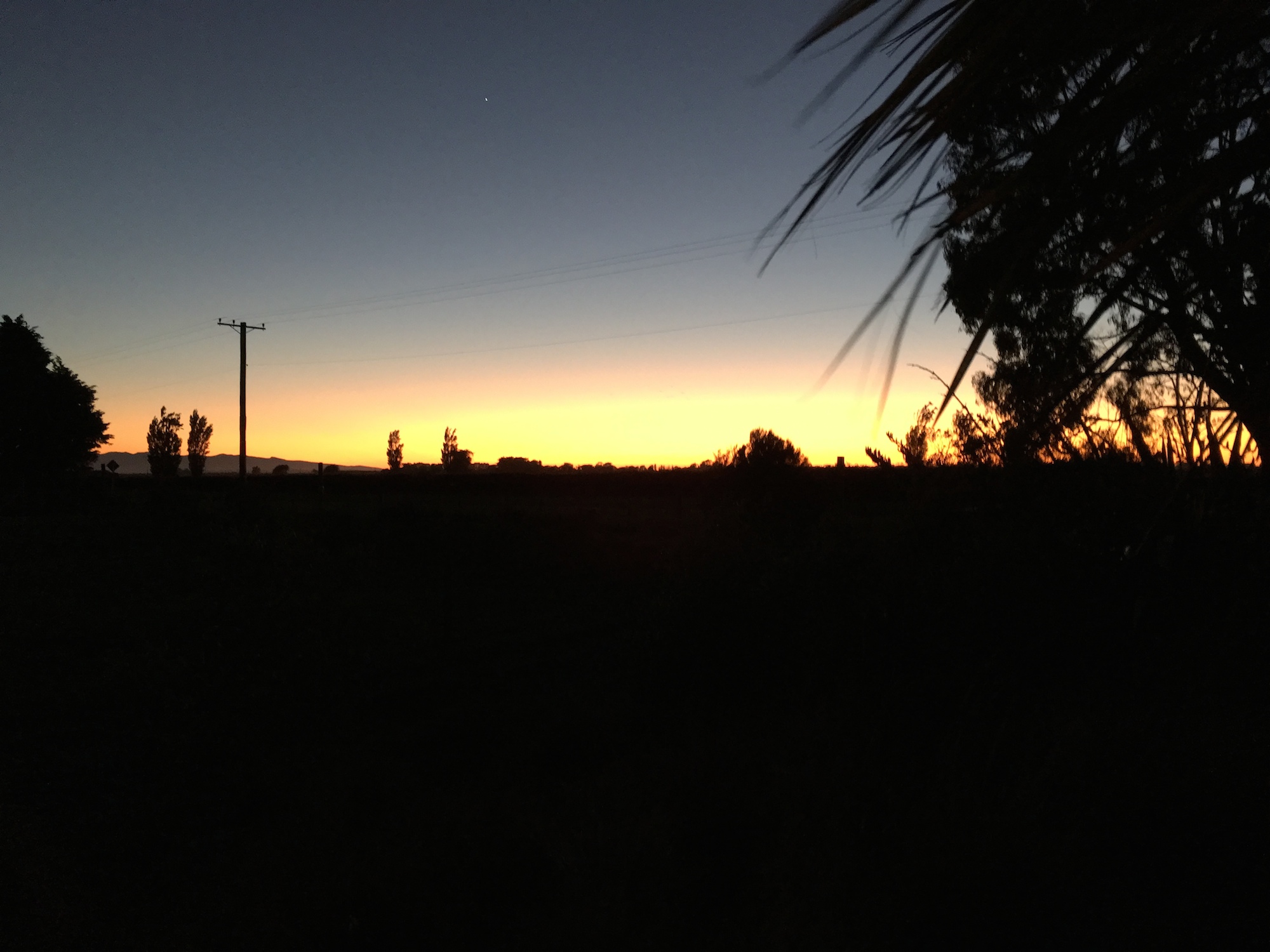
2016-02-04 05.55.27 smOne of the best things about living in the temperate zone is the long sunrises and sunsets we get much of the year.

When we lived in Panama, the sun would leap into the sky in the morning, and dive out of it in the evening, with little in the way of lingering twilight. It was like flicking on and off a light.

The more gradual appearance and disappearance of the sun in the temperate zone is far more picturesque, and there are few places on earth more picturesque than New Zealand when it comes to sunrise and sunset. Between mountains and wild weather, you can’t beat it.