Share the Love…or at least the seat

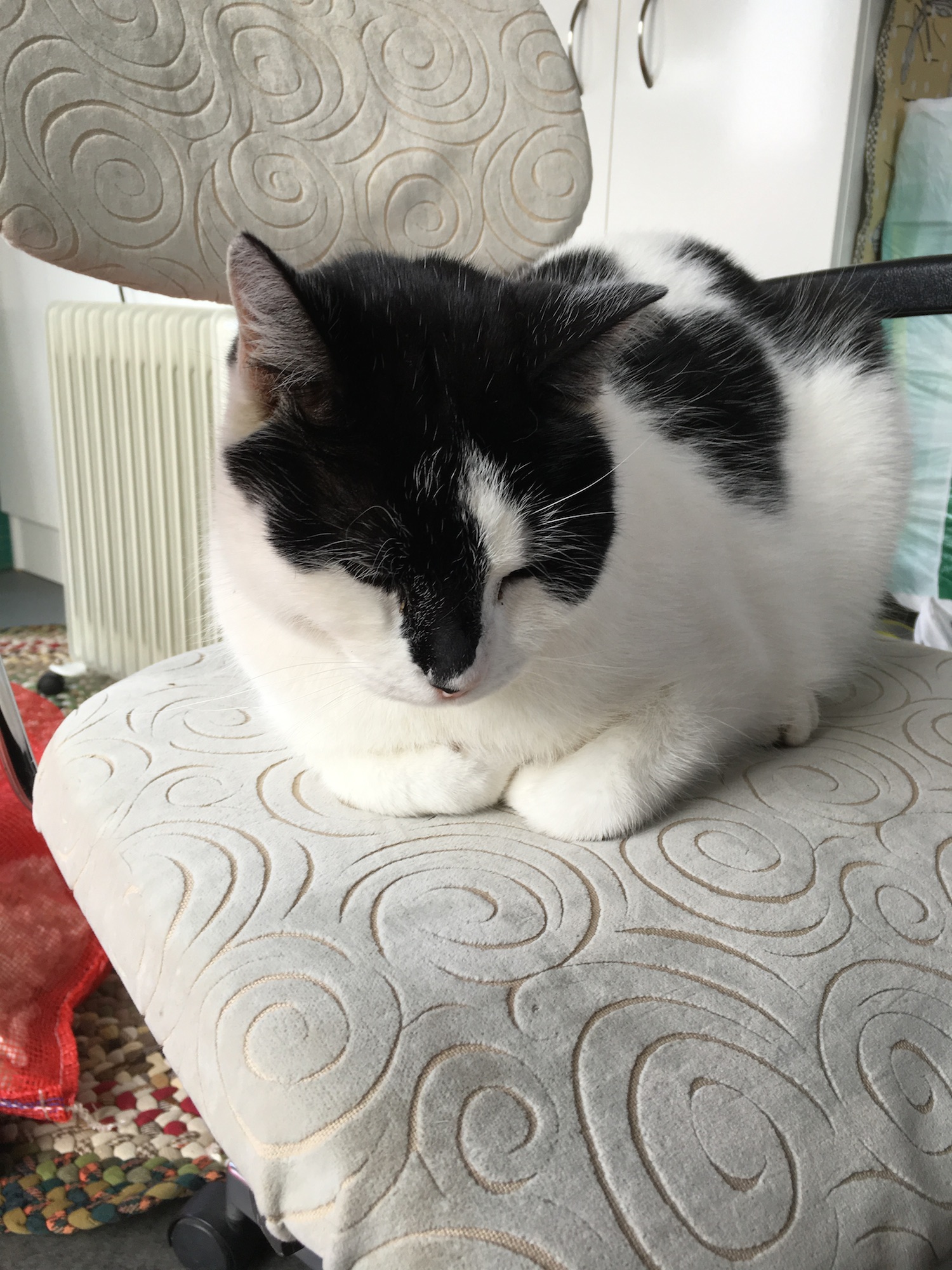
2016-10-02-17-20-40I have just one chair in my office. Sometimes I sit as I work. Much of the time, I stand. If I want to sit, though, I’ve got to get there quick, because the cat thinks that he has dibs on the chair. If I stand for even a moment—to grab a book off the top shelf, or to open the window—he’ll instantly leap from the floor (where he’s been happily asleep for hours), and take my spot.

He’s always very smug about it, too. He purrs in a self-satisfied way, knowing that he’s got something that I want. In fact, I think if I never used the chair at all, he would completely ignore it.

Nice to know he loves me.


A Delightful Day Hike in Canterbury

Looking toward Akaroa from Stony Bay Peak.

Looking toward Akaroa from Stony Bay Peak.

With the kids on school holidays, we took the day to go hiking. My daughter chose our destination—the Skyline Circuit, which starts and ends in Akaroa.

It’s an 800m climb to Stony Bay Peak, and down again, and makes a nice day walk.

It’s a typical Banks Peninsula track, climbing mostly through paddocks to a rocky gorse-covered peak. Not exactly a wilderness experience, but varied enough to be interesting, and there are some lovely pockets of native vegetation along the way.

You wouldn’t want to do this walk if the tops were shrouded in cloud—it’s the view from the top that makes the steep climb worthwhile. This morning was clear, and we could see all around the Banks Peninsula and across the plains to the Southern Alps.

Much of the downhill is on Stony Bay Road. I’m not generally fond of hiking roads, but Stony Bay Road isn’t much more than a nice wide gravel path that snakes down through a picturesque patchwork of bush and paddocks.

We ate lunch at the top, and were ready for an afternoon snack by the time we made it back to Akaroa. And, of course, that’s where the beauty of the walk becomes particularly clear—you can end it with a beer and chips at a café in Akaroa (we were even treated to live piano music on the waterfront today).

The clouds rolled in as we left Akaroa, and it was raining by the time we got home, but it was the perfect spring hike.

The Spotted Owl

2016-10-05-16-43-05Back in the late 1980s, during the time when I was going to university, there was a great deal of controversy around the Northern Spotted Owl. Conservationists were trying to use the bird as a tool to limit logging of old growth forest in the Pacific Northwest by encouraging its listing as an endangered species (it was listed as threatened in 1990). It was a hot topic in conservation at the time.

Home for Christmas one year around that time, I was presented with a gift specifically from my grandfather.

That was odd. It was the women of the family—grandma and mom—who shopped for gifts. What could Grandpa have for me?

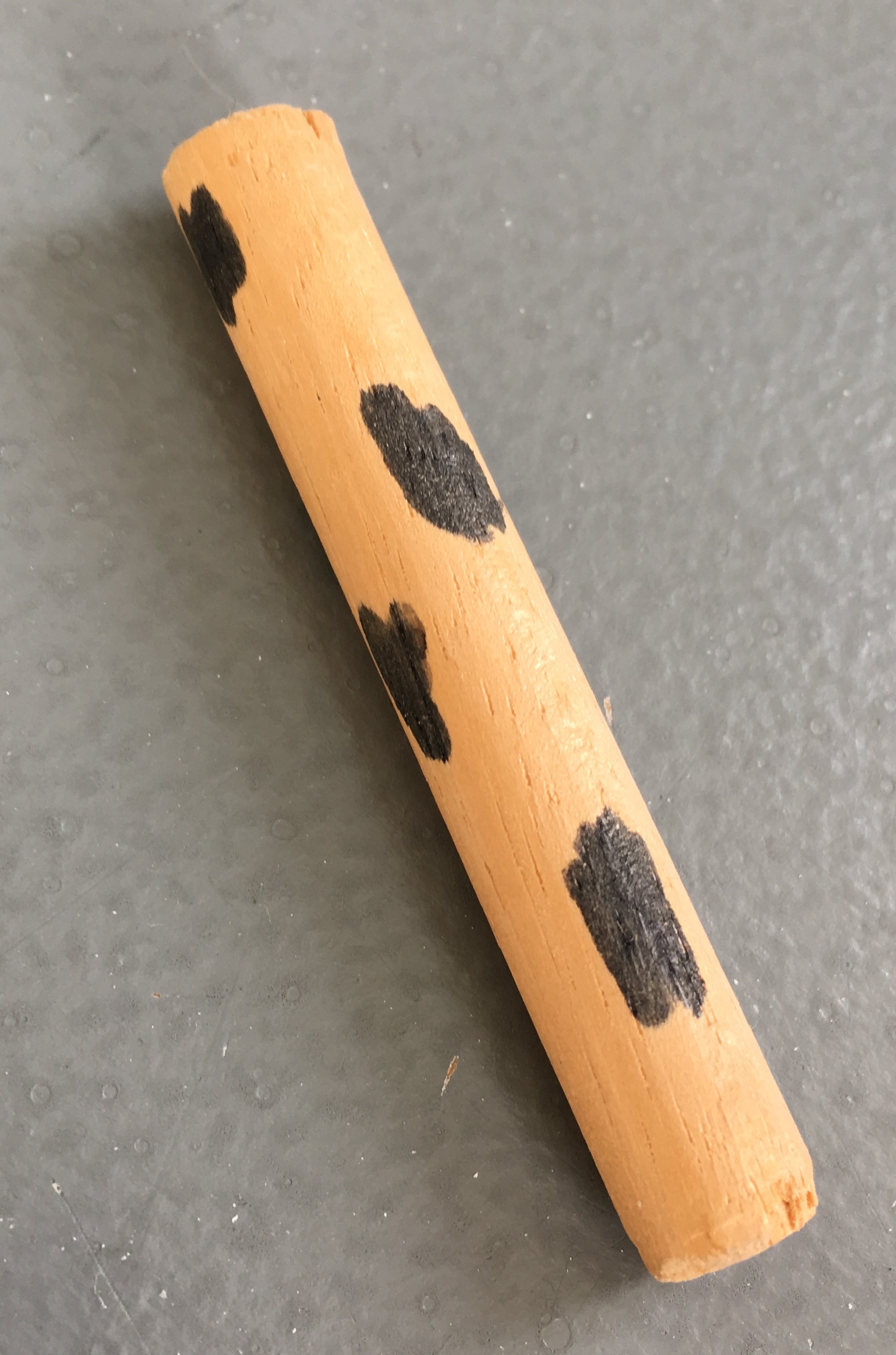
It was a small box. Inside, nestled in tissue paper was a small piece of wooden dowel with crude blotches drawn on it with a marker.

He watched me unwrap it, clearly struggling to hide a smile.

I pulled it out of the box and turned it around in my fingers. I was obviously supposed to figure out what it was. I wracked my brains. What was this spotted stick supposed to be?

It never occurred to me that it was a joke. I finally had to ask.

“It’s a spotted dowel!” Grandpa said, breaking into a grin.

I have no idea what other gifts I got that Christmas. No doubt, whatever they were, they’re long gone from my life.

But the spotted dowel has it’s own special place—its own little drawer in a small-parts organiser that holds all my buttons and beads and other odds and ends. I often run across it accidentally while looking for something else, and it still makes me smile.

A Concrete Solution

2016-10-04-12-35-55Whenever we mix concrete, we’re always left with a little extra. What do you do with half a bucket of concrete?

In the past we’ve made the odd decorative paver with the leftovers—scattered a few pretty shells in the bottom of a plant pot saucer and filled the saucer with concrete. But we don’t have many saucers, and they really don’t use much concrete.

Last time we poured concrete, however, we came up with a perfect use for the extra—garden weights.

It’s windy here. Very windy. I was forever grabbing rocks, firewood, and broken bricks to weigh down tarps, frost cloth, bird netting, and everything else light enough to blow away. But they’re inconvenient—awkward to handle and often not really heavy enough to do the job.

These garden weights are perfect, though.

I filled cheap plastic flower pots (from plants we bought at the garden centre) with concrete, but before it hardened, I added a handle made of high tensile fencing wire. The first batch I made, I just used the wire. They’re nice, and very useful, but the wire is tough on the hands when you’re carrying them. This time I added a short piece of irrigation pipe to the wire to make a comfortable handle (you could also use a bit of old garden hose).

The best thing about them is they’re entirely made of ‘waste’—leftover concrete, plant pots that would have ended up in the rubbish, wire salvaged from some other project, and used irrigation pipe.

No, that’s not true. The best thing about them is that they work great—they’re nice and heavy, uniform in size, and easy to lug around.

Vacation Day?

2016-01-22-14-08-29-smThe list of things I have accomplished today is plenty long enough—I prepared two garden beds, attended a virtual writers’ meeting, paid the monthly bills, entered six months worth of information into my cashbook, made a huge batch of cookies, cleaned and organised my office, took the lawnmower to the mechanic for repairs, finished and sent off a guest blog post…

But I’m sitting here at 4pm feeling guilty that I’ve lazed around today—practically took a day off and did nothing!

It only feels that way, I think, because I got up before 4am to take a cheese out of the press and make it to my meeting on time (it was scheduled at a reasonable hour…in the UK—4am my time). I’d finished preparing the garden beds before 9am, and had dropped off the lawn mower before my second cup of coffee before 10am.

I did a little of this, a little of that—no long hard slog on any one task. Only the cashbook was a drag of a chore (as you might guess since I had ignored it for six months)—the fact I did it at all makes me think I clearly didn’t do enough today, otherwise I would have been able to put it off again.

It would be nice if every day went like today—if I ticked off a whole raft of things from my list and ended the day feeling like I’d been on vacation. Of course, if it meant being up before 4am every day, I’m not certain I could manage. Pretty soon I’d feel like my vacation involved a long plane ride and serious jet lag.

Repeating Myself

2016-10-01-16-25-02-hdrThree quarters of the way through the second year of daily blogging, I begin to feel that I’m repeating myself. Yesterday I took a couple of photos of the beautiful asparagus coming up in the garden, and was all set to blog about it. But when I looked at the photo, I realised I blogged about asparagus last year. I did the same with artichokes last week.

Which is, of course, one of the joys of gardening. There is a rhythm to it. Its seasonality is guaranteed. Spring always follows winter, and spring brings asparagus and artichokes, lettuce and spinach, daffodils and tulips. Spring will eventually mature into summer, with eggplant, peppers, and zucchini. Summer will fade to autumn pumpkins and the last ears of sweet corn. And winter will bring cabbages and broccoli, and an excuse to stay indoors and bake cookies.

There is uncertainty, of course—there are hail storms, drought, and pests—but the fundamental rhythm is the same from year to year.

There is comfort in that. Though it means I may repeat myself from time to time on the blog, it is something I can count on. Life changes from day to day—the kids grow up, jobs change, we may move half way across the world—nothing is certain. But I always know where I stand in the seasons—always changing, but always predictable.


White Noise

robinneheadfuzzSit down to write
Nothing comes out but a hiss
Can’t think of anything
Thinking of everything
All at once.

Sentence fragments
The smell of lemons
A stubbed toe
What should I make for dinner?

The grass needs mowing
Pizza
Warm sun on bare feet
Itchy back
My desk is a mess

The cat wants in
The cat wants out
Words on paper
Spell check.

Freckles
Clean the house
Wet paint
Elephants

Meteor showers
Drifts of flowers
Girls and boys
White noise.

Washing Day

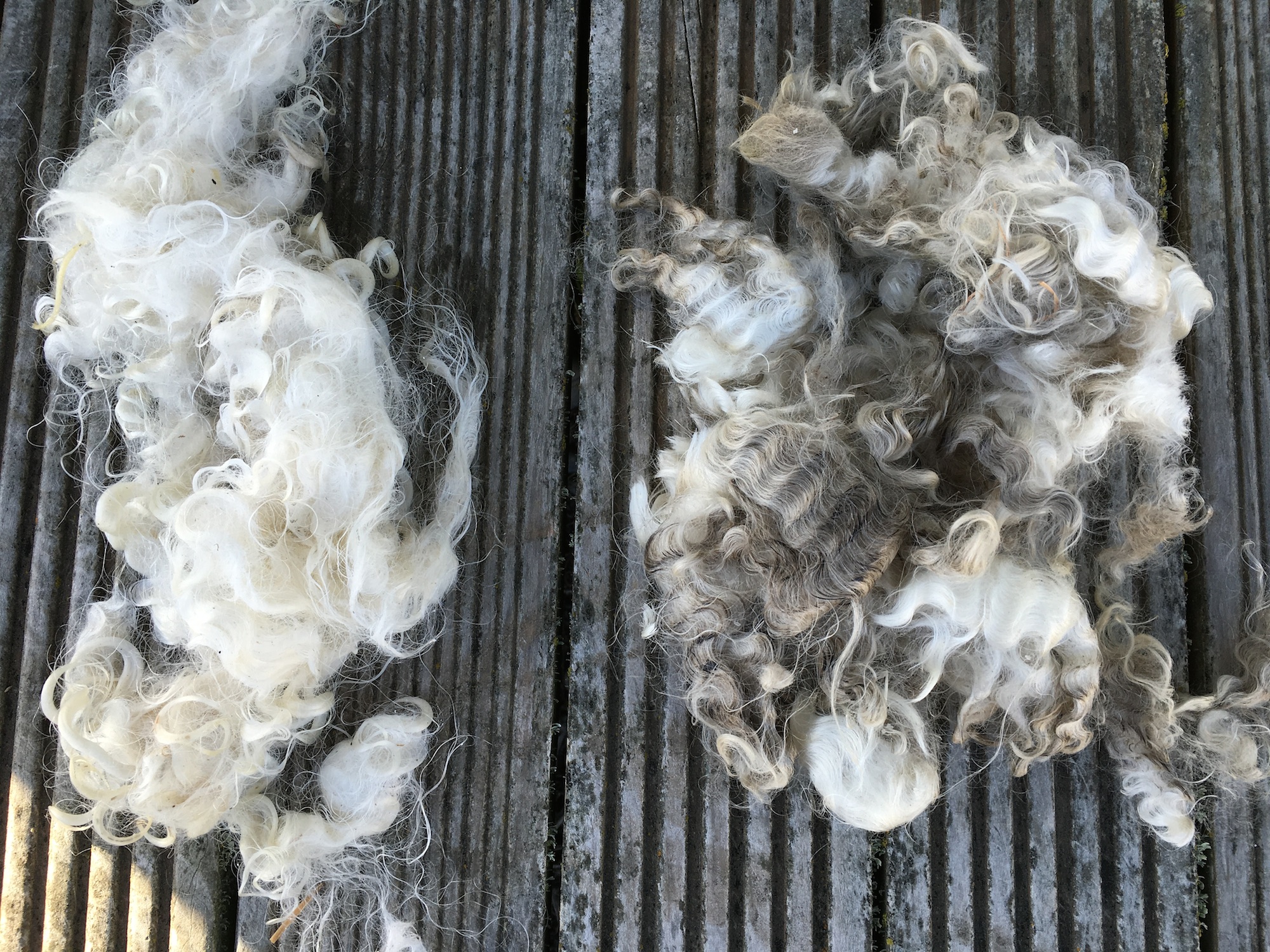
2016-09-30-08-29-27I finally had a nice sunny day to wash mohair. I only got a little over half of it cleaned before I was totally sick of washing it, but it’s been a fascinating process.

Stiff and grey with grease (yolk, it’s called) and dirt, I was dubious about my chances of ending up with useful fibre.

The first three washings, the water came up positively black, but little by little, the dirt and grease came out, leaving me with beautiful, shiny white locks of mohair. An amazing transformation!


Where the Sidewalk Ends

2016-09-29-18-24-21There is a place where the sidewalk ends
And before the street begins,
And there the grass grows soft and white,
And there the sun burns crimson bright
And there the moon-bird rests from his flight
To cool in the peppermint wind.

Many years ago, when my husband and I lived in State College, Pennsylvania, before children, we used to take long walks out of the neighbourhood and into a wild patchwork of agricultural fields and scrubby woods that stretched between the University and the sprawling suburbs of town.

At the edge of the neighbourhood, where the sidewalk gave way to a gravel path maintained only by the steps of those who walked their dogs there, someone had poured a small section of concrete containing a brass plaque inscribed with Shel Silverstein’s famous poem, Where the Sidewalk Ends.

Let us leave this place where the smoke blows black
And the dark street winds and bends.
Past the pits where the asphalt flowers grow
We shall walk with a walk that is measured and slow,
Add watch where the chalk-white arrows go
To the place where the sidewalk ends.

State College has no black smoke, and the streets are bright and lively, but the presence of the poem was magical, the sentiment perfect as one stepped away from the cars and buses and the music booming from student flats, and into the fields beyond, where grasshoppers and bees formed the loudest chorus. Town melted away. We could walk for hours, and always returned calm and refreshed.

When I was a student at the University of Michigan, my most prized possession was my bicycle. It was old and ugly, but it was my ticket out of town. When the streets and noise became overwhelming, I would hop on my bike and ride blindly until I reached the edge—the place where the sidewalk ended. Surrounded by fields of corn and wheat, I would throw myself into the grass at the side of the road and listen to the crickets until I regained my equilibrium, until I could face the city again.

Last year, when my daughter had band practice at an awkward time on a Friday—too early to go home after school, too late to go directly from school—we would take walks, always on the periphery of town, seeking those places where the sidewalk ended. We walked residential streets that gave way to sheep paddocks and parks, industrial zones that melted into agricultural crops.

For me, the place where the sidewalk ends is literal—my place for peace and reflection is invariably outdoors, far from cars, buildings, and other markers of civilisation. But I think Silverstein left the door open for the sidewalk to end in other places—places where moon-birds cool themselves in peppermint winds. The sidewalk can end inside us, too—in imagination, in meditation, in the green space we save for ourselves in our own souls. Wherever the sidewalk ends, our spirits refresh themselves—we reflect, we stroll, we find silence.

Where does your sidewalk end?