Random Acts of Kindness

2016-10-17-08-54-55I noticed this article in the news today, and thought it was worth sharing as an antidote to all the hate that’s on the news.

http://www.stuff.co.nz/travel/themes/adventure/85392553/How-kind-acts-by-strangers-renew-faith-in-peoples-goodness-the-world-over

In it, the author writes about several instances in which the kindness of strangers renewed her faith in humanity. Most the experiences she relates happened while she was travelling, and the kindness she was shown often required sacrifice and bravery.

I had a similar experience in Panama one day while waiting for the bus in Panama City. My husband and I were staying in a seedy part of town—Peace Corps volunteers have little money, so we stayed in the cheap hotels when we had to go to the city. We were headed from the hotel to the Peace Corps office, and waiting for the bus on a busy street.

We were wary, and prepared for pickpockets and the like, but we both froze when a huge man stalked over to me. A good 30 cm taller than me, he came right into my personal space and hung over me. Didn’t say a word, but glared at me with bloodshot eyes, his whole body screaming murder.

I blinked at him for a moment, waiting for him to say something, threaten me, whatever. When it was clear he wasn’t going to, I smiled and said good morning to him. This elicited a grudging good morning back, but didn’t soften his stance.

On the busy street, the confrontation didn’t go unnoticed. A pair of policemen began to saunter toward us. The situation was about to get ugly.

That’s when the little old lady selling lottery tickets on the sidewalk took matters into her own hands. Though she was easily another 15 cm shorter than me, she picked up her umbrella and began whacking the threatening man with it, scolding him for giving Panama a bad name.

She couldn’t possibly have been actually hurting him, but he withered under her attack, shrinking away and looking ashamed of himself, and finally slinking off.

The bus came, and we quickly hopped on. Life on the busy street returned to normal.

I’ve blogged before about other experiences I’ve had giving and receiving kindness from strangers. Whether the gesture is little or big, random acts of kindness make everyone feel good.

We could use a little more of it, by the sound of the news these days. Go ahead. Practice a little random kindness today.


Here we go again…

2016-10-16-16-04-30It’s a sight to strike fear in my heart.

October 16th and the temperature hit 30°C (86°F) and humidity is 33%.

Thirty degrees is supposed to be a height –of-summer oddity. It’s the day you drop everything and head to the beach, because there are only a handful of days this warm in a summer.

Except that it’s the middle of spring.

And this happened last year.

And the year before.

And it heralds a third year of drought for us.

A third year of deciding which plants will be watered (and survive), and which ones will not (and probably die).

It will be a third year of expensive hay that has to be brought in for the goats, because the grass will brown off in November.

A third year in which the vegetable seedlings grow too fast too early, then struggle to set fruit in the dry heat.

Just thinking about it makes me grim.

But I suppose it also means a summer of incredible hot days at the beach. A summer in which I don’t need a wetsuit to enjoy the ocean. A summer of ice cream and swimming.

I enjoy these things. I really do. It’s a good thing they come along with drought. If I go to the beach, I can ignore the shrivelling garden at home…sort of.


Peace Corps

2016-10-15-20-10-59Fifty-six years ago today, John F. Kennedy introduced a new public service challenge to the American people. That challenge would become known as the Peace Corps. While it is considered a foreign aid programme, Peace Corps’ value (and, in fact, it’s stated goal) is far more than the aid it provides to people in developing countries.

Peace Corps is about connecting people and cultures, one volunteer at a time. It is about cultural exchange, friendship, and understanding. It is about breaking down the ideas of ‘us’ and ‘them’. It is about promoting peace and understanding.

We need the Peace Corps as much today as we did fifty-six years ago. Perhaps more.

Twenty-four years ago, my husband and I, newly married, took up Kennedy’s challenge, becoming Peace Corps Volunteers in the Republic of Panama.

Those two years of service remain a defining time of our lives.

We left our homes and families in order to serve—to give of ourselves. In the end, we received far more than we could ever have given.

Nothing about Peace Corps service was easy. There were cultural misunderstandings, dangerous situations, language barriers, frustration, boredom, discomfort, failure, homesickness, and loneliness. But there were also laughter, friendship, curiosity, wonder, success, music, and dancing.

We watched our actions empower young farmers to become leaders, and they in turn empowered us. Together, we made a difference in our little corner of the world. Together, we learned that the colour of our skin, the language of our birth, our education, and the luxuries we either have or have not don’t matter. We are all alike inside, and it is the qualities of our hearts that matter.

If we give ourselves to the world, the world will give back and make us better. I entered Peace Corps as an American citizen, I left as a citizen of the world.

All Hail the Bucket

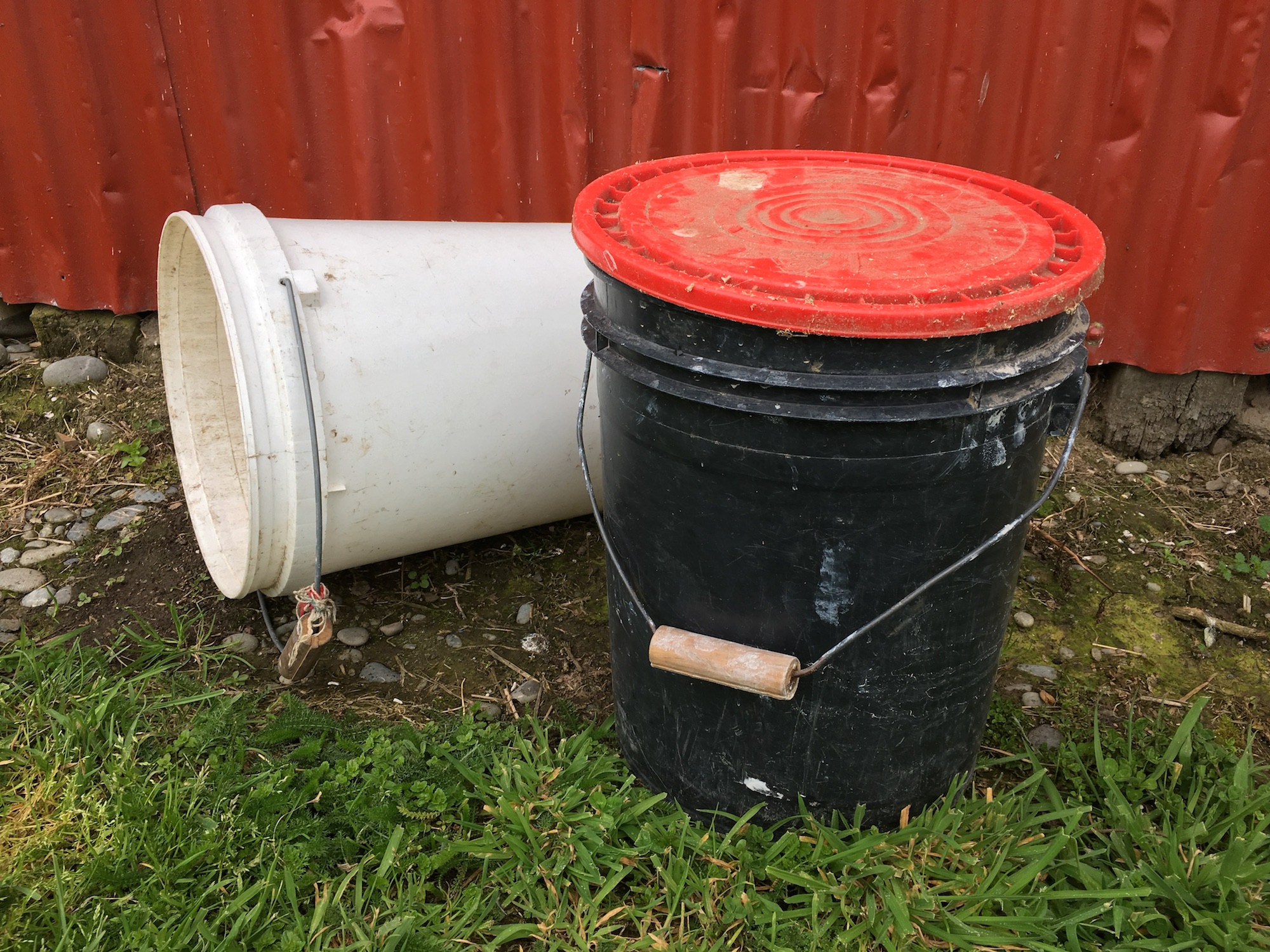
2016-10-14-10-44-19-hdrsmWhere would civilisation be without the 20-litre (5-gallon) bucket? We own seven of them, and it’s common for all of them to be in use simultaneously.

I can’t look at a 20-litre bucket without seeing a…

  • Washing machine—In Panama, we washed our clothes in a 20-litre bucket.
  • laundry-smShower—The bucket was also our shower in Panama. We would fill it with water and haul it out to our “shower” enclosure. Half a coconut shell made a scoop for pouring out the water for washing.
  • Brewery—Panamanians brewed and served the local corn alcohol in 20-litre buckets, and my husband brews beer in one.
  • Punch bowl—We used a bucket as a large punch bowl for parties in Panama.
  • Diaper pail—With tight-fitting lids, 20-litre buckets make great diaper pails for cloth nappies. They were an essential part of our baby gear when our kids were that age.
  • Watering can—Several of our current buckets have holes drilled in the bottom, and we use them to provide drip irrigation for the fruit trees.
  • Wheelbarrow—We use buckets to haul everything from rocks to weeds in spaces where the wheelbarrow can’t go.
  • Measuring cup—The 20-litre bucket is a handy unit of measure when mixing concrete.
  • Rubbish bin—A 20-litre bucket is the perfect size for a rubbish bin in the shop or shed, and it’s tough enough to handle the rough treatment a shop bin gets.
  • Grain bin—Tough plastic and a tight lid keep mice and rats out of the grain.
  • Stool—I regularly turn our buckets upside down to use as stools for reaching items on high shelves in the shed. I suppose you could also sit on them, if you were inclined to rest.

I could lose a lot of tools and get by easily without them, but I’d be hard-pressed to do without my buckets.

At the Penguin Spa

2016-10-11-14-40-35-cropIt was a week of endangered species for me. After being bitten by a kea on Monday, I was lucky enough on Tuesday to have a chance to see a Fiordland crested penguin / tawaki at Haast School, where I’d spent the morning teaching.

After lunch that day, a trio of Department of Conservation rangers arrived with a juvenile female tawaki that had been rescued off a nearby beach where she had been found emaciated. She was being nursed back to health in preparation for re-release, and the rangers took the opportunity to share her with the local school.

Tawaki are not quite as rare as kea, but they’re shy and tend not to frequent tourist areas like the kea do. This was the first one I had ever seen. There are about 2500 to 3000 breeding pairs remaining, and they’re one of only three penguin species that nest on mainland New Zealand.

Like many of our native birds, they are threatened by stoats, which eat eggs and chicks, and dogs, which can wipe out entire breeding colonies.

The children at Haast School named this particular penguin Ellen, and they had great fun watching Ellen take a warm saltwater bath. The water needed to be warm because Ellen wasn’t preening and waterproofing her feathers properly (because she was too weak to do so). Without waterproof feathers, she got waterlogged in the bath, rather than staying nice and dry as penguins usually do underwater. After her bath, the DOC ranger wrapped her in a fluffy pink towel to dry off, and put a hot water bottle underneath her.

A full spa experience, I would say.

It wasn’t quite the same as seeing a tawaki in the wild would have been, but it was closer than I’m ever likely to get to one of these birds in the wild.

Ellen will spend about four weeks eating and taking spa baths before she’s ready to fend for herself again. I wish her luck.

Time for Thyme

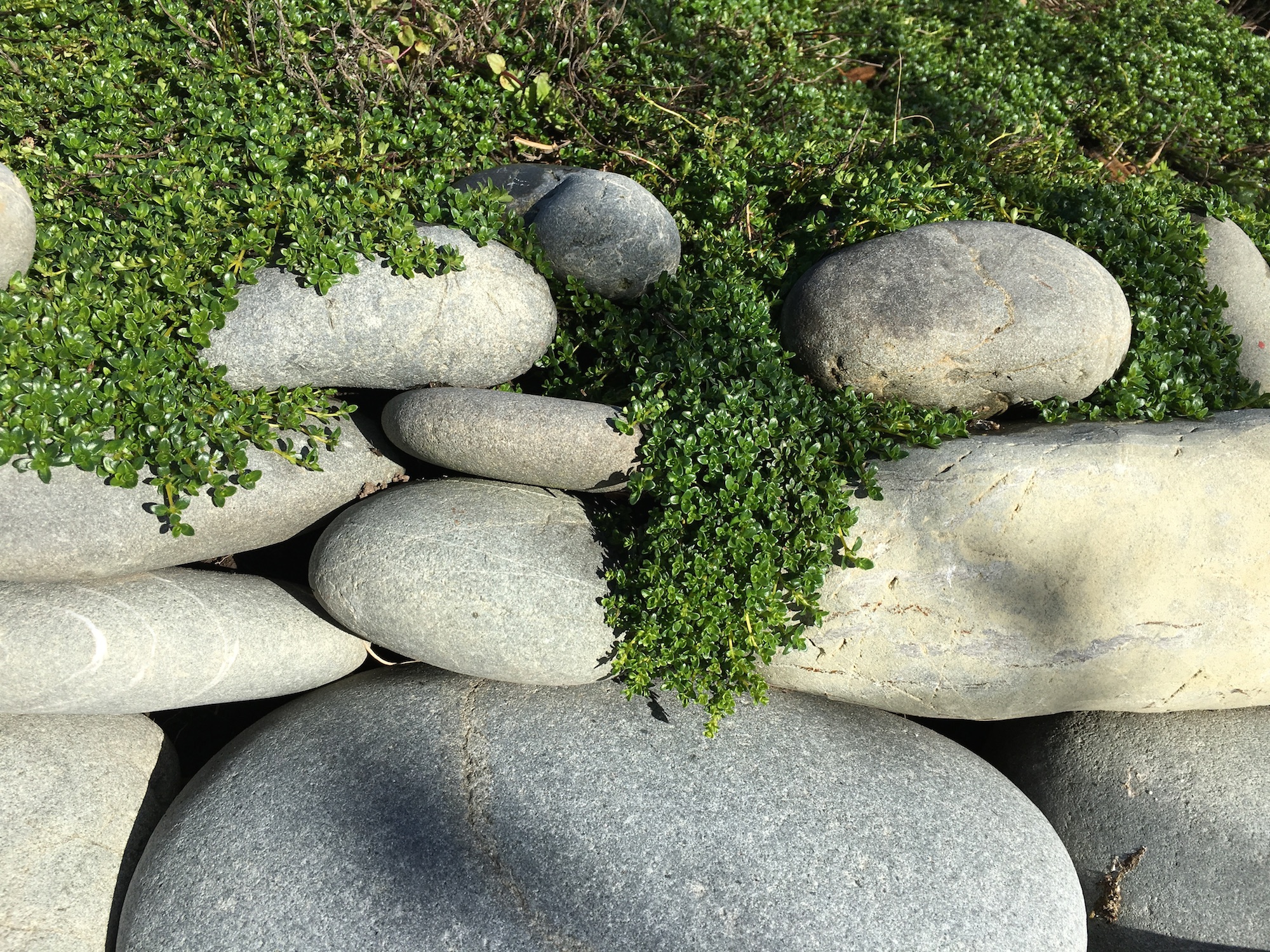
2016-10-10-09-15-06Thyme is one of my favourite herbs. In spring, its lush new growth encourages me to put it in almost everything. Nearly everything is better with thyme, but it is especially good with braised carrots, eggs, pumpkin, and mushrooms. Mixed with good olive oil, also makes an excellent marinade for bocconcini—little mozzarella balls.

It’s one of those herbs that we plant more of than we need for culinary use, because it’s so pretty in the garden. There are around 400 varieties of thyme. Some are more culinary, others are more ornamental. Some grow into 30 cm tall shrubs, others creep low to the ground.

Thyme is a tough little plant. It puts up with hot dry conditions, and recovers from even the most aggressive pruning. The low-growing varieties can even be used as a fragrant lawn (though at our house, there’s no stopping the couch grass coming up through it).

Its white, pink or purple flowers are attractive to a wide range of insects. On ours, we regularly have honey bees bumble bees, flower flies, and butterflies—and the preying mantids that eat them.

Truly, you can never have too much thyme.

Cheeky Parrots

2016-10-10-13-11-37-smIt’s not every day you’re bitten on the bottom by an endangered species.

Yesterday was one of those auspicious days, however. I was travelling through Arthurs Pass, headed to Haast with two colleagues to do a programme at the school there. We stopped to pick up lunch at the Arthurs Pass store, and three kea descended on us.

For those who don’t know, kea are large alpine parrots. Though there are only 2,000 of them left, they are bold and curious animals, unafraid of people. And they’re smart. They understand tourists—how they get so absorbed in taking photos of the parrots that they forget to shut their car doors, or leave a sandwich lying beside them.

They work in gangs—one bird coming in close to pose for pictures, while the others circle in from behind to ransack the vehicle.

We knew this, and had taken appropriate precautions. There were three of us and three of them. We should have been safe.

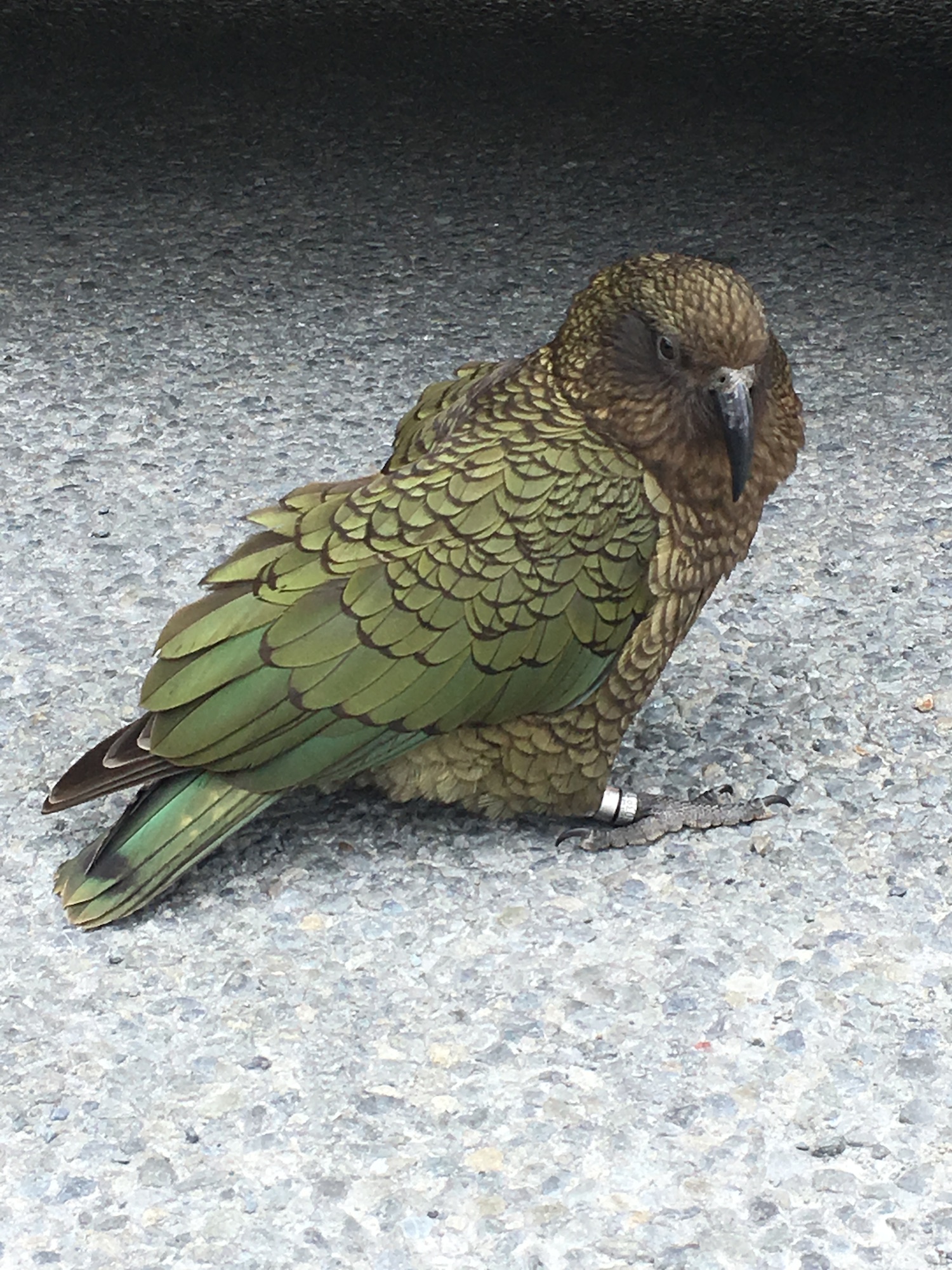
But, of course, we wanted pictures—you simply can’t not take pictures of them, no matter how many times you’ve seen them. We all crouched down beside the van to snap our photos. That’s when it happened. I was focused on one kea, and another came up behind me and bit me on the bottom. Cheeky bastard!

But I got a photo.

Spring Roller Coaster

rollercoaster_expedition_geforce_holiday_park_germany

Photo: Boris23; Wikimedia, public domain

The kids are back at school today after two weeks of school holidays. It’s the last term of the school year, and the start of what I always think of as a roller coaster ride.

For the past two weeks we’ve been slowly climbing the first hill. I could hear the tik-tik-tik of the chain winching us up, to perch at the top of the slope. Today we begin the descent to the end of the year. It will start slowly—I’ll be lulled into thinking I have plenty of time to do the gardening, get all the nagging spring DIY done, think about Christmas gifts, plan summer’s vacations. But before I know it, we’ll be hurtling along toward the end of the year, much faster than I anticipated. The garden will take longer that I’d hoped. The end-of-the-year school activities will start piling up. I’ll put off worrying about Christmas gifts until I’m frantic about it. Three DIY projects will balloon into ten. Late frost will keep me scrambling to protect plants. Livestock will get sick and require extra care. School will end much sooner than I’d like it to.

Time will compress. A month will be over in a week. A week will last a day. A day will be over in a blink of the eye.

Before I know it, we’ll be heading into the week before Christmas, and my Spring to-do list will be every bit as long as it is today.

I’ve learned to accept this state. I’ve almost learned to enjoy the frenetic insanity of the combination of the end of the school year, holidays, and spring gardening all at once.

But every year I sit here at the top of the roller coaster wondering if I really should have gotten on in the first place.

Spindle vs Garden

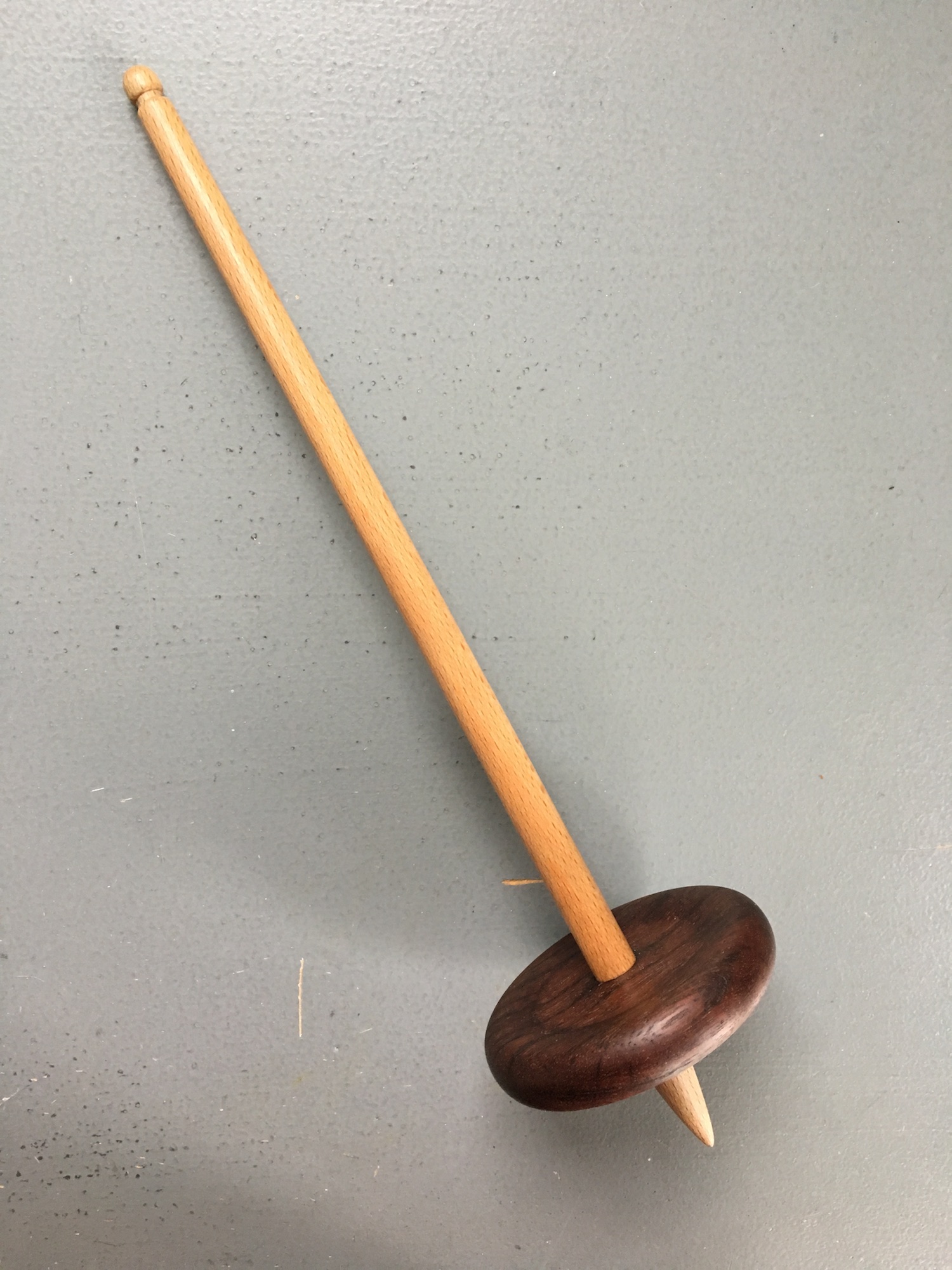
2016-10-09-11-01-27My husband presented me with this beautiful drop spindle that he turned for me this week. It’s practically a work of art—beautifully weighted and smooth as glass.

As if the pressure wasn’t already on.

At this time of year, crafts have to take a back seat to the garden, but with the goats newly shorn, I’m dying to actually work with the mohair sitting in my office. I picked up a pair of carders last week and have been slowly learning to use them. I have enough carded fibre to start spinning.

But the garden beckons—weeds grow rampant, seeds need to be planted, seedlings need potting up. And worse still, my hands are garden-rough; every time I touch the mohair, I end up with tufts of it stuck to the dry cracks in my hands.

So I may have to be content to just admire my new spindle for a while, until the spring garden rush is over.

Aesthetics vs Production

2016-10-08-16-01-56-smThere is tension in our garden—tension between the gardener who focuses on production and the gardener who focuses on aesthetics.

When the aesthetic gardener suggests a circular pattern to the vegetable garden, with a bench and sundial in the middle, the functional gardener rolls her eyes and asks how she’s going to manoeuvre a wheelbarrow around a bench and sundial. When the production gardener staples deer fencing onto her trellises instead of using the more attractive, but less functional jute, the aesthetic gardener shakes his head with dismay.

But production and aesthetics don’t have to clash. Indeed, they often go hand-in-hand. What makes for efficient production is often aesthetically pleasing.

Take the berry beds at Crazy Corner Farm, for instance. Three long rows with grass paths in between. Every spring, I spend days with a flat shovel re-establishing the edges of the beds—making them crisp and straight. It makes good sense from a production standpoint—it keeps the grass from creeping in to compete with the berries. It also makes it easier to mow if the grass doesn’t spread underneath the bushes.

Aesthetically, the crisp straight edges are perfect. They invite an evening stroll down the paths, and give a pleasing long view all the way from the front to the back of the property.

When the edges are tidy and the paths mown, both gardeners can relax and enjoy the view.