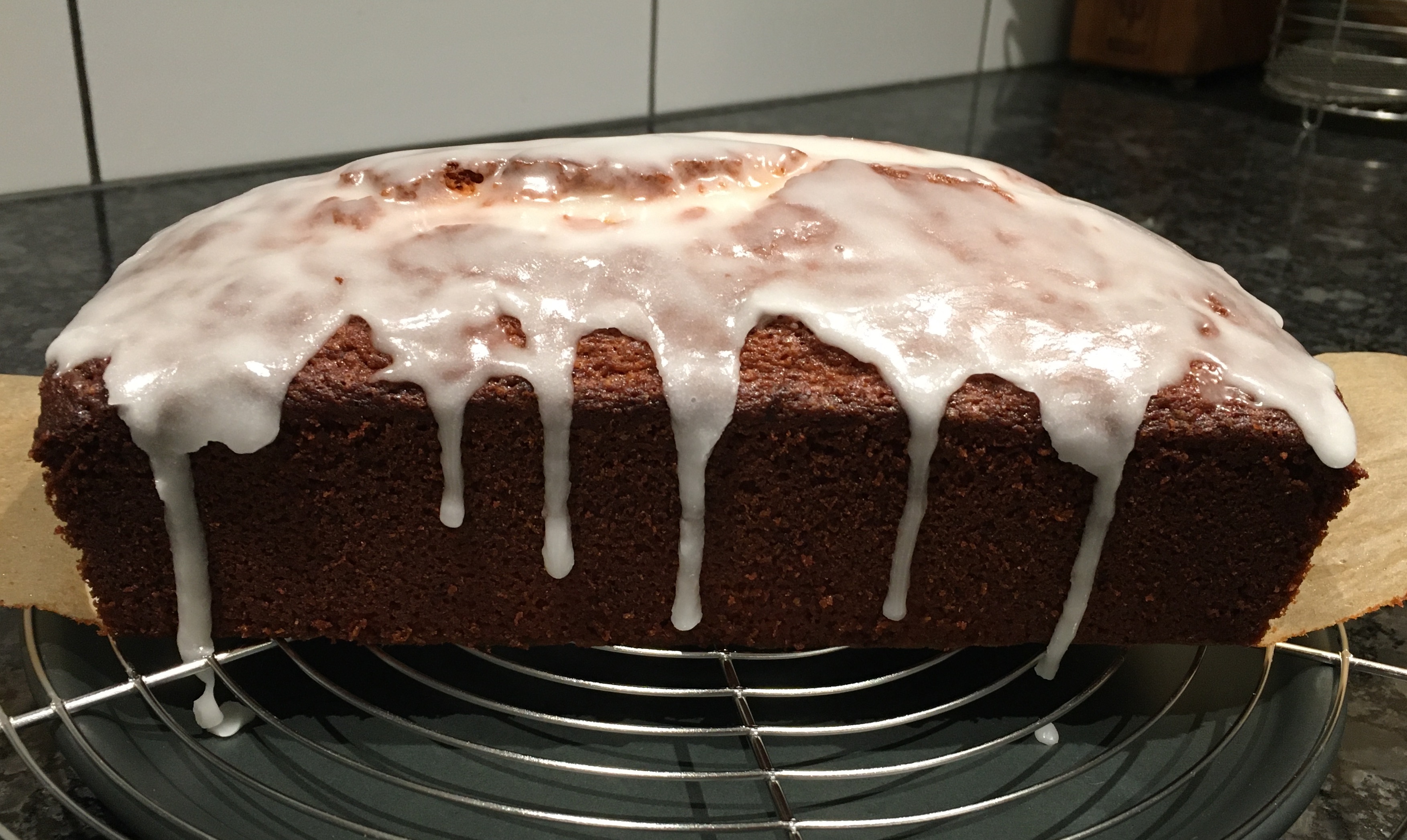
Lazy Lemon Cake

Sometimes you want cake, but don’t want to work for it.

A head cold this past week has left me craving cake, but without the energy to do much baking. Consoling myself with cookbooks from the library, I came across a recipe for Greek Lemon-Yoghurt Loaf Cake that was so easy, I couldn’t resist. Nothing else really caught my eye in the Great British Bake Off cookbook this came from, but I think this one is a keeper.

Here’s the recipe, in case you’re feeling lazy …

150 g plain flour
2 tsp baking powder
pinch of salt
50 g ground almonds
200 g caster sugar
finely grated zest of 1 lemon
3 medium eggs (I used 2 large)
125 ml Greek-style yoghurt
125 ml mild light olive oil (I used a mix of canola and extra-virgin olive oil, because I didn’t have light olive oil)

for the glaze:
125 g icing sugar, sifted
finely grated zest of 1 lemon
1 – 1 1/2 tbsp Greek-style yoghurt

Sift the flour, baking powder, salt and almonds into a mixing bowl (tip in any almonds remaining in the sieve). Stir in the sugar and lemon zest.

Combine the eggs, yoghurt and oil in a measuring jug and beat well with a fork. Pour into the flour mixture and stir until well combined.

Pour into a greased loaf pan lined with a strip of baking paper. Bake at 180℃ for 55-65 minutes until golden brown. When the cake is ready, cool in the pan for 5 minutes, then run a knife around the edges of the pan and lift the cake out by the lining paper and allow to cool on a rack.

Make the glaze by sifting the icing sugar into a bowl. Mix in the lemon zest and then add just enough yoghurt to make a smooth, shiny glaze with the consistency of double cream. While the cake is still hot, spoon the glaze over the top.

I have lots of ideas for variations on this cake—using a blackcurrant glaze, replacing half the flour with barley flour, stirring in frozen blackcurrants … it’s a recipe that invites you to make it again and again. 

Cover Reveal–Fatemaker

I’m thrilled to be able to show you the cover of Fatemaker, the third and final book of the Fatecarver trilogy! Fatemaker will be released later this year. A huge thanks to the awesome Jenn Rackham for the covers of this series!

There’s still time to read books 1 and 2 before Fatemaker is released. Get them here.

There’s No Place Like Home

I’ve been feeling a bit like Dorothy from The Wizard of Oz this week. Having been on a crazy whirlwind of a trip to the U.S. and Scotland, my overwhelming feeling since my return has been, ‘There’s no place like home’.

Don’t get me wrong—I enjoyed my travels. It was great to see family in the U.S. for the first time in six (!) years, and Scotland was new and exciting. I love traveling by train, and enjoyed every minute watching the Scottish countryside roll by. And I’d never set foot in a real castle before, so visiting four of them was a highly educational experience, and something I can’t do in New Zealand. The botanic garden in Glasgow was a real treat as well—I wandered through the massive greenhouses twice, because they were so marvellous.

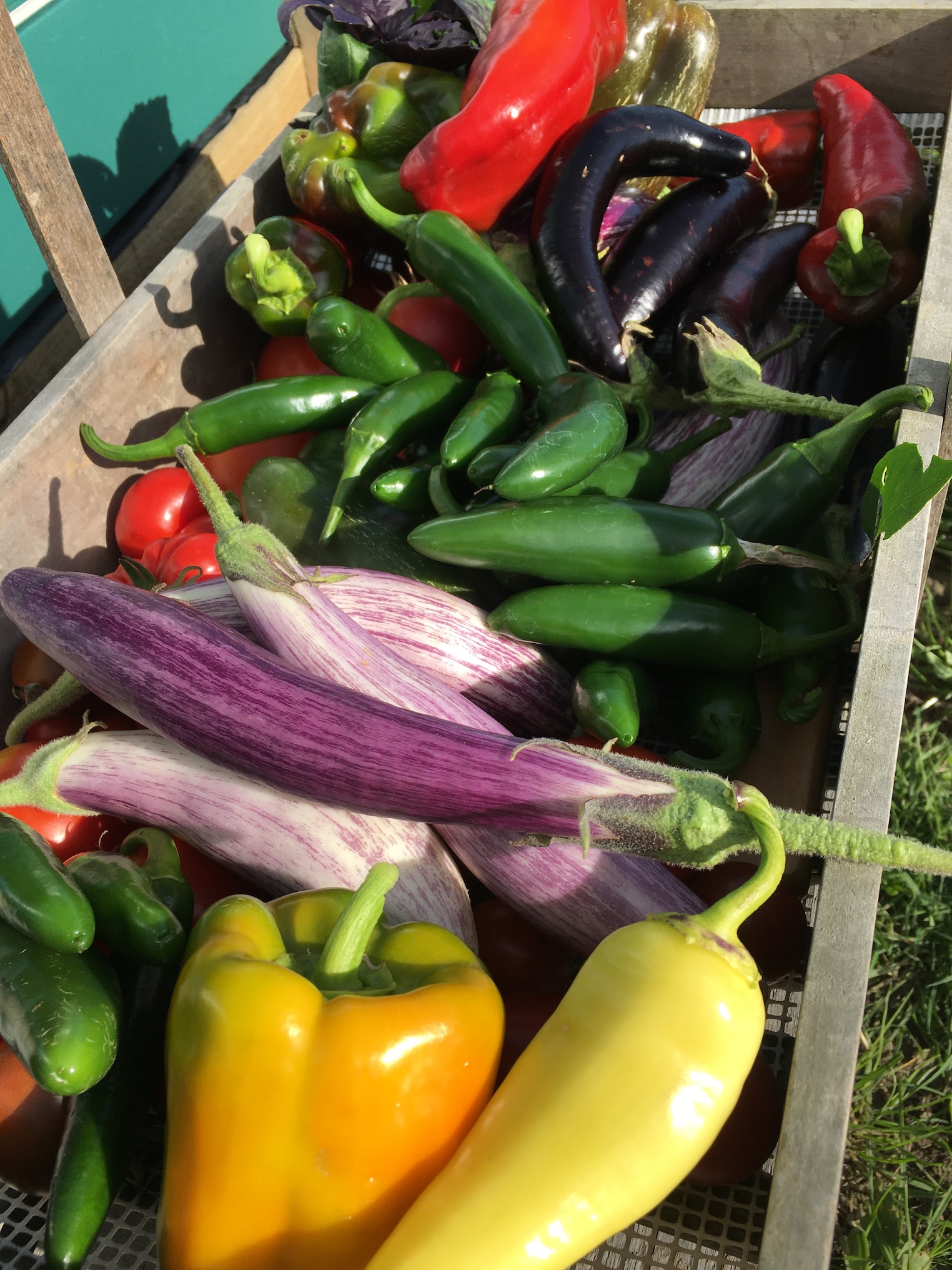
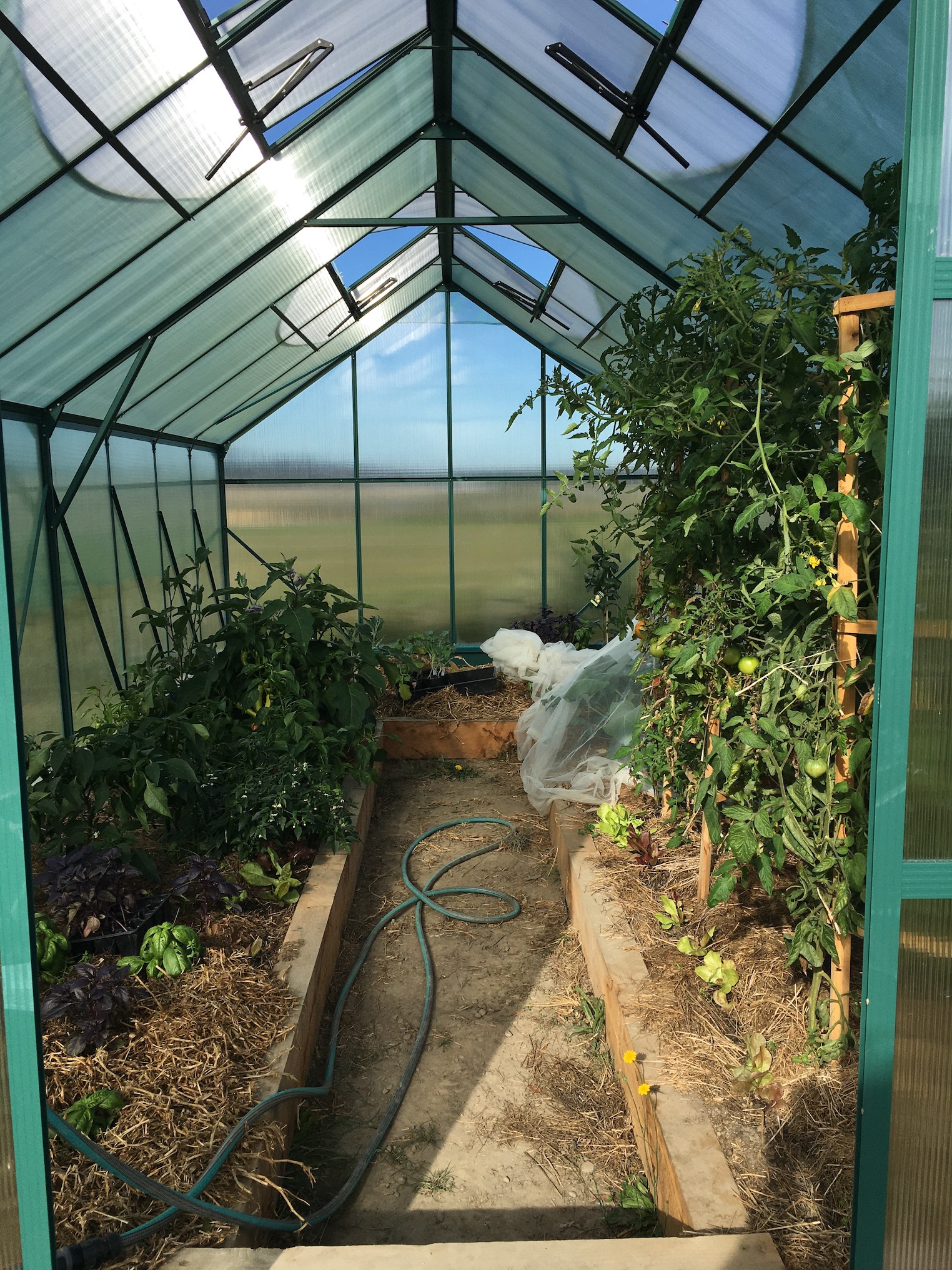
But I have to admit that the best part of the trip was coming home to my own greenhouse, bursting with vegetables.

Before we left, I set up automatic watering and shut the door, trusting to the automatic window openers to provide enough ventilation if the weather was warm.

Three weeks later, both summer and winter crops had obviously thrived in the warm, humid environment. A bit too humid, actually—the slaters had moved into the tomato plants (and apparently like to eat tomatoes) because it was too moist on the ground.

Aphids thrived, too, while we were gone, but all in all, I was pleased. To arrive home to fresh vegetables was an incredible gift, and it reminded me once again of how blessed we are to live where we do.

So I am happy to be home, pulling weeds, squishing aphids, and doing all the autumnal garden tidying I haven’t yet gotten to. It’s not a vacation, but it is home.

Introduction to Poetry–published!

A couple of years ago, I wrote a poem for my students. It was an introduction to poetry that I used when I started a poetry unit, and was a response to the groans and moans I got whenever I introduced a poetry unit. The poem has been a hit–I slide smoothly into it when the kids start complaining, and when they realise I’m speaking in verse, their whole attitude changes.

I hadn’t really planned on publishing it, but when I found the perfect fit, I couldn’t resist.

It has just been published in the literary journal Teach. Write.

You can download the e-version here.

Autumnal Assessment

April is upon us, and it’s time to assess how the garden year went.

In a word, it was disappointing. 

It started off bad, with my seedlings in fungal-infected seed raising mix. That problem was made worse when I contracted Covid and couldn’t move those seedlings into better mix quickly, so they languished for a while. Many were planted out late or small.

And the problems continued once plants were in the garden. Flooding last winter sucked the nitrogen out of the soil in about half the garden, leaving my pumpkins, corn, peppers and eggplants all looking anaemic. To be fair, I harvested pumpkins—enough to enjoy fresh, but not my usual quantity that lasts us all year. We also ate sweet corn, but had none extra to freeze. The peppers and eggplants were so slow to grow this year that they’re only now ripening fruits—just in time to be killed off by winter temperatures.

The tomatoes and peas grew well this year, but were decimated by birds.

The cucumbers and melons were slammed by phytophthora during an early summer wet period—most died, and those that survived grew slowly. The only cucumbers that grew well turned out inedibly bitter, and I tore the plants out of the ground.

On the positive side, the potatoes were great—died off a little earlier than I expected, but produced plenty of tubers, with little trouble in the way of pests and disease. 

The perennial fruits did well overall, too, and the freezer is stuffed with berries for the winter. Even the 3-year-old fruit trees gave us crops this year (small ones, but the trees are still tiny themselves).

So, as usual, there were wins and losses, and now I’m looking forward to how to increase the wins for next year. I spent the past several weekends digging a drainage ditch and soak pit to draw flood water off the garden this winter. Hopefully that will help retain the nutrients I’m hauling to the garden in the form of manure each week. My husband and I have also been discussing improving our bird defences before next spring—permanently netting an area of the garden for the most bird-ravaged crops. I’ve also identified some new varieties of bean that are doing better in the new garden than my standards from the old garden, and I’ll adjust next year’s planting to allow more space for the more vigorous varieties. 

That’s the best part of gardening, really. You always get another chance to do it better. So I head into autumn a little disappointed in last year’s garden, but with high hopes for what next year will bring.

Cheese and Quince Tart

Our quince tree gave its first harvest ever this year, which is exciting. I picked them today, and my husband went looking for some new (to us) recipes that use quince.

He came across Tarta de Queso y Membrillo con Almíbar de Cardamomo—Cheese and Quince Tart with Cardamom Syrup. How could I resist? 

It’s been a while since I followed a recipe in Spanish, so there was an added level of adventure for me making this recipe. I don’t think I ever bought or used azúcar flor (icing sugar) when we lived in Panama, so I had to look that one up.

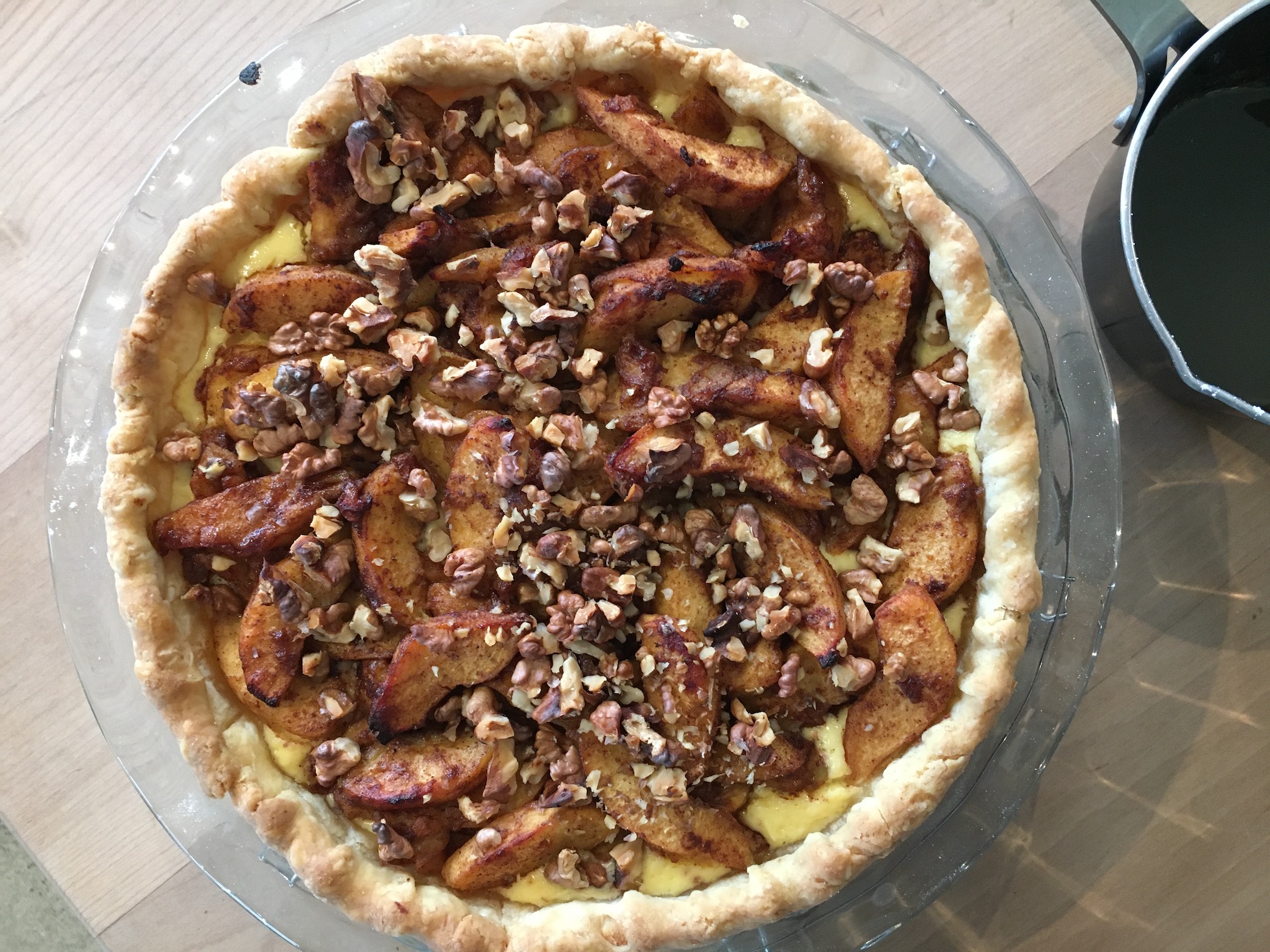
Even in your native language, this is not a tart you whip out quickly—nothing using quince is, and this has lots of different things to prepare—but it is delicious! It’s essentially cheesecake with caramelised quince in a pie crust. What’s not to like?

I modified the recipe slightly—here’s my version, in English.

Cheese layer:
1 package cream cheese
1/2 cup unsweetened yogurt
2 Tbs honey
1 egg
1 Tbs fresh lemon juice

Quince layer:
3 large or 6 small quince
1/4 cup brown sugar
25 g butter
1 Tbs cinnamon

Enough pie dough for 1 crust (see my pie dough recipe here)

1/2 cup chopped walnuts

Cardamom syrup:
3/4 cup icing sugar
3 Tbs fresh lemon juice
3 cardamom pods

Make your pie crust and refrigerate until needed.

Mix the ingredients for the cheese layer with a handheld mixer until well combined. Set aside.

Peel, core, and thinly slice the quince (you should have 7-8 cups of fruit). Place the quince, butter and brown sugar in a large skillet and cook on low heat for about 10 minutes, until the quince has softened. Stir in the cinnamon.

Roll out the pie dough and line a pie or tart pan with it. Pour the cheese mixture evenly over the bottom of the crust. Layer the caramelised quince on top, and sprinkle with chopped walnuts.

Bake at 190℃ for 40-45 minutes.

While the pie is baking, make the sugar syrup. Place the icing sugar, lemon juice and cardamom pods in a small saucepan and boil gently for 8 minutes. Remove from the heat and let cool. Drizzle over the pie when serving.

The recipe I used said to serve the tart warm, which is how we ate it this evening. But I’m looking forward to a second piece tomorrow, because I think it’ll be even better cold. 

Next time I make this (because there will no doubt be a next time), I’ll crush the cardamom pods so that the syrup is more strongly flavoured. I also think it would be even more spectacular with a cup of ugni berries (Chilean guava) tossed into the quince mixture.

If you don’t have quince, this tart would be lovely made with apple or pear, too.