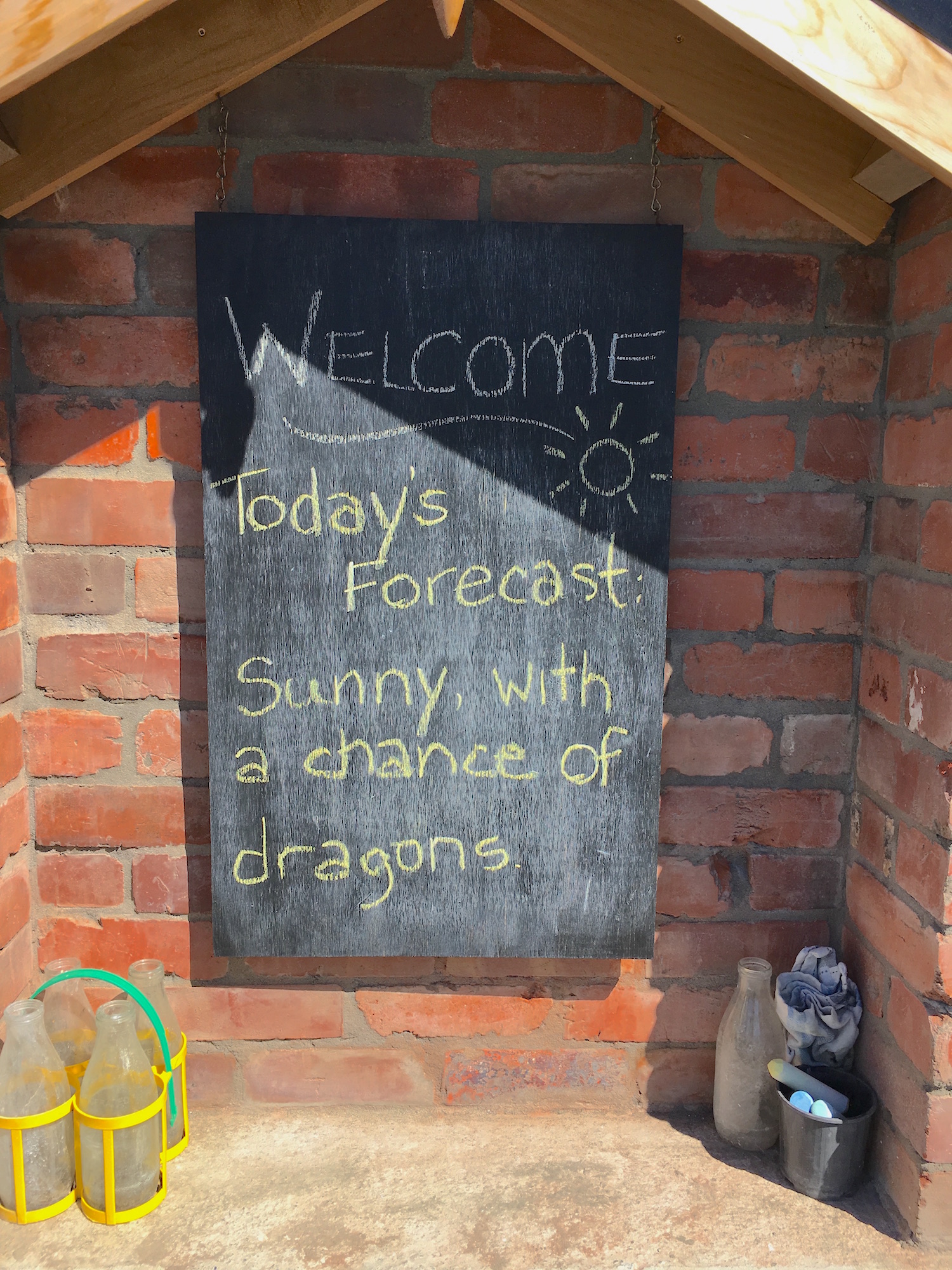
 Four friends,
A missing dad,
and…
Dragons.
I’m excited to announce the release of The Dragon Slayer’s Son. Available now at an online retailer near you.
Four friends,
A missing dad,
and…
Dragons.
I’m excited to announce the release of The Dragon Slayer’s Son. Available now at an online retailer near you.
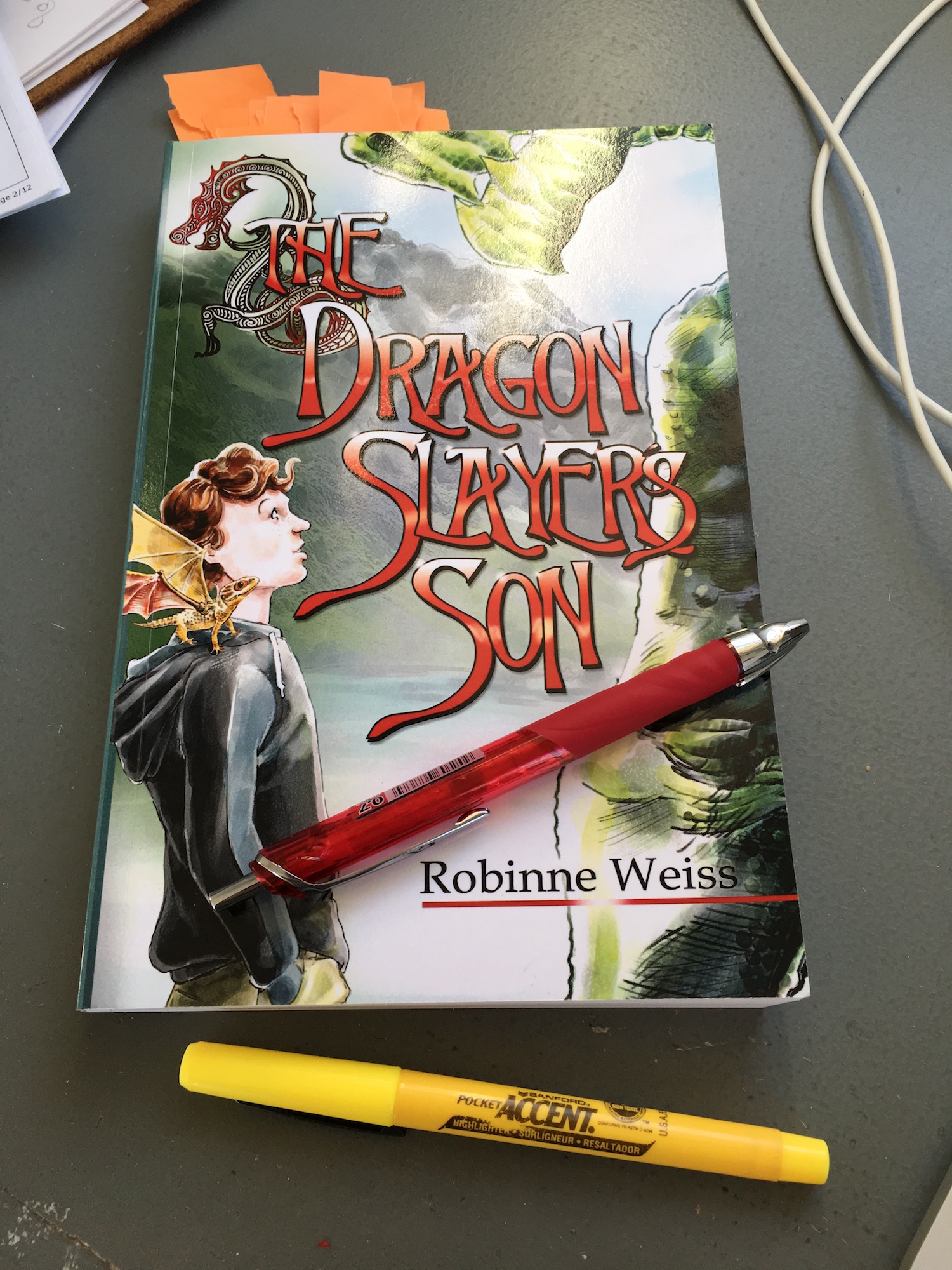
The edits are done. It’s ready to roll. Shh! Don’t tell anyone!
Late last year I made the decision to independently publish my books. I had self-published a book early in the year, just to become familiar with the process. It was easy…except for the crucial step. Once my book was available for everyone to buy and read, I was suddenly not able to tell anyone about it. I’d done some promotion in the lead-up to publication, but once it was out there, I was absolutely petrified to advertise.
So along with the decision to self-publish the next two books, I made a New Year’s resolution. I was going to promote my books. I was going to make phone calls and personal visits to get my books into bookstores and libraries, get them into the hands of readers. I was going to blow my own horn and not be shy about it, because no one else was going to do it for me. This was marketing. People went to school to learn how to do it, so it must be learnable. I would learn to do it.
Yeah…right.
For two weeks, I’ve been agonising over a media release and press kit. I’ve been finding every reason not to send the information out, not to put it on my website.
Not that I think the marketing information I’ve prepared is in any way faulty. The writing of promotional material isn’t rocket science. It’s writing. I’m actually pretty good at that.
No, my problem is the same thing that made me freeze last year; the intense aversion I have to self-promotion. It’s not the fear that someone will read my books and not like them–that’s going to happen, for sure, and it doesn’t worry me. I don’t think it’s the fear that, even after a lot of promotion, no one will read my books. It’s a fear of the marketing process itself. The fear of saying, “Hey, I’ve created something I think you’ll really like. Something that’s worth your time and money.”
It should be easy–I like my books, and I think they are worth people’s time and money. But it is proving to be the single hardest aspect of writing for me.
I started writing because I needed a new challenge. I thought having enough ideas, staying focused on my task, putting words on paper would be the challenges. Little did I know…
I have made the resolution. I will do it. I’ll send out that promotional material. I’ll hand out my advertising bookmarks everywhere I go. I’ll make all those necessary phone calls. I’ll walk into those bookstores…
But one at a time. With sweaty palms and nervous smiles. It’s unlikely to be pretty. It’s sure to be less effective than I’d like. But my bold pirate self is standing on deck with a sword at my back, and the timid self (the one afraid of sharks) is going to have to walk that plank.
 I love my office. The northeast and northwest walls are formed almost entirely by large sliding glass doors. I have sunlight in the office all day. On warm days I can throw open the doors and enjoy feeling like I’m working outdoors.
In winter, I rarely have to run my heater–even ten minutes of sunshine can heat up the room. The insulated and windowless south-facing walls keep the room cosy and draught-free, even in howling storms.
That’s all great…for most of the year…but when the outside temperature climbs above 30°C (86°F), all that sunshine becomes too much. No matter how nice the breeze through those open doors, sitting in the sun becomes unbearable. My attention starts to wander. My brain become sluggish. My hourly word count plummets. At some point I have to either give up work for the day or take it elsewhere.
A pool of shade, a grassy seat, and a clipboard, and I’m back in business. It’s officially autumn here, but it’s still hot enough to need to escape the heat. I’m looking forward to cooler days when I can appreciate my office again.
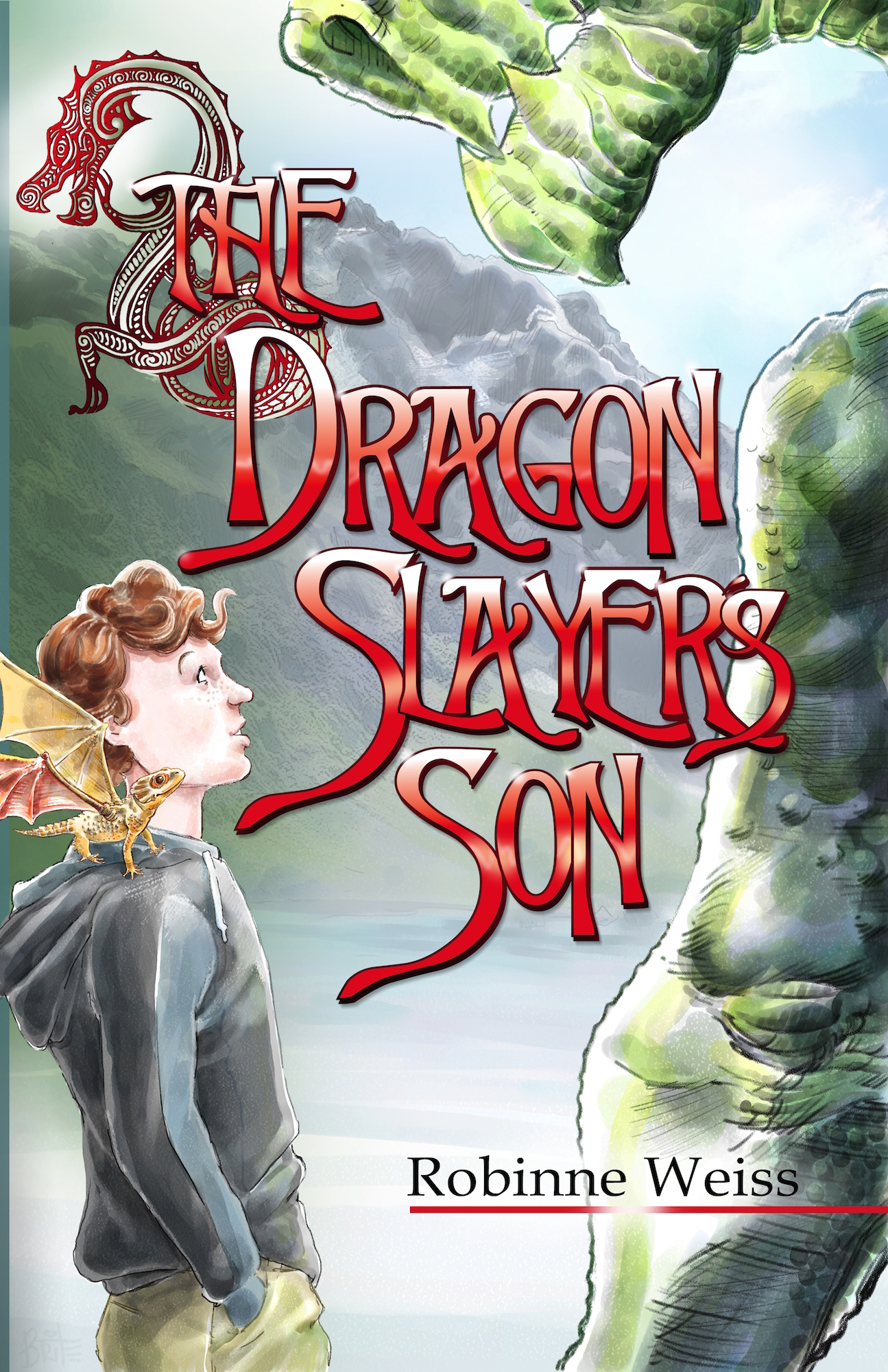
I’m thrilled to be able to reveal the cover of The Dragon Slayer’s Son–a middle-grade fantasy set in modern-day New Zealand…with dragons.
Nathan is shocked to learn that his father is dead, and even more shocked to learn that he died in the line of duty as a dragon slayer. Everything he thought he knew about his father was a lie. But he has no time to think about what it means before he is whisked away to the Alexandra School of Heroic Arts to train as his father’s successor.
At school, Nathan and his new friends soon learn:
Dragons are not what they thought.
Neither is the schoolmaster, Claus Drachenmorder.
And Nathan’s dad might not be dead…yet.
Nathan and his friends escape from school and embark on a journey through the mountains to find Nathan’s dad. To succeed, they will need to survive the dangers of the mountains, evade Drachenmorder’s henchmen, seek the aid of the dragons, and unravel an international ring of wildlife smugglers.
Coming soon to an online retailer near you…
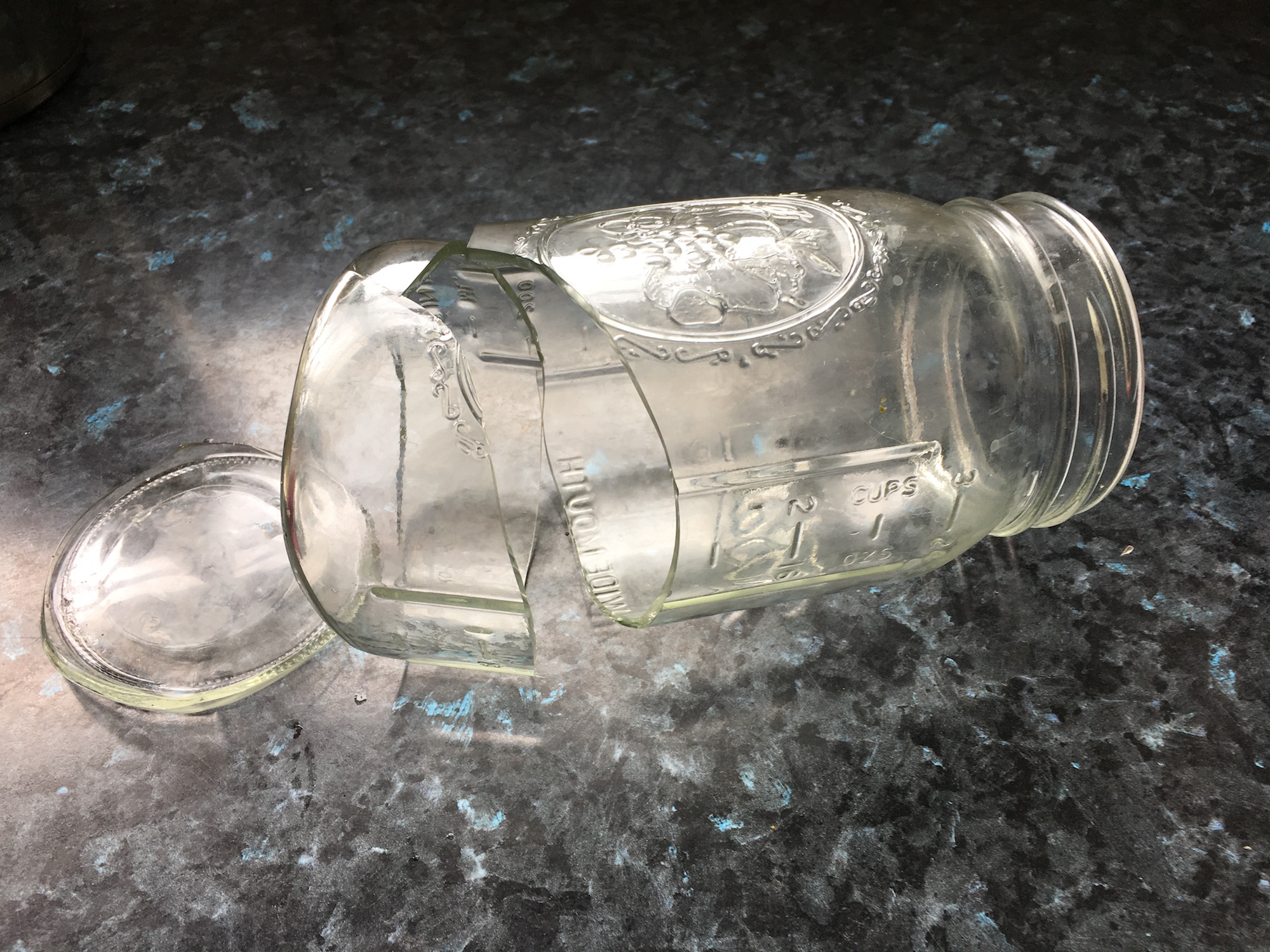 I’ve been in a veritable frenzy of pickling the past couple of weeks. Before that, there was a good stint of jam-making. I’ve had a brilliant run. I’ve been able to run a full canner-load almost every time, every jar has sealed, and the jam has been the perfect consistency.
Until two days ago, when a jar of dill pickles exploded when it was lowered into the canner. Then yesterday, I ran fifteen jars through the canner, and FIVE of them didn’t seal. What? FIVE? I never have that sort of failure rate. I did what I always do though, upon reflection, maybe my lids or jars weren’t quite as hot as they should have been, because I was doing two batches at once, and my attention was divided.
Today I reran the five unsealed jars, making sure they were nice and hot, and they all dutifully sealed.
But it made me think about failure and my response to it.
I fail a lot. I have hundreds of rejections of my writing from agents and publishers. I’ve thrown away entire rounds of cheese that just didn’t work properly. I’ve made loaves of bread that could be deadly projectiles. I’ve made birthday cakes that didn’t look anything like what they were meant to be. I’ve taught lessons that have flopped completely. I’ve made clothes that have gone immediately into the rubbish upon completion. The list of my failures goes on and on.
When we fail, we have a number of options.
Option 1: We can pout, blaming our failure on the weather, the phase of the moon, the person next to us, the wrong tools, millions of illegal immigrants, or whatever. This might make us feel good, because it allows us to pretend our failure was not our own fault. But it doesn’t make us likely to succeed next time.
Option 2: We can get angry, blaming our failure on our own stupidity, clumsiness, incompetence, or lack of innate ability. We can believe that, because we failed, we are a failure. This is an easy response, because it allows us to justify not trying again. “I’ve tried that, and I can’t do it.”
Option 3: We can critically analyse what went wrong. Maybe it was poor tools–I’ve had cheese fail when a thermometer was inaccurate. Maybe we got sloppy–I’ve ruined garments by rushing to finish them. Maybe we didn’t understand enough about what we were doing–the first time I taught preschoolers, they chewed me up and spit me out, because I had no idea how they related to the world. Analysing our failures takes time. It requires a willingness to critique ourselves in an honest and constructive manner. It requires us learn new things. It requires us to get back on that bicycle and try again.
It’s hard.
But it’s the only option that leads to success.
 My daughter’s birthday is fast approaching, and I still felt I hadn’t come up with a gift idea that was truly from me. I have often made special things for the kids for their birthdays, but they don’t always go over as I’d wish. Three years ago, I made her this awesome jeans jacket. I found an okay commercial pattern and modified it to fit my daughter’s tastes and frame. I spent ages searching for the perfect cool hardware bits to decorate the front. Then I had to order a zip from overseas, because I couldn’t find exactly what I wanted in country (because it had to match the hardware, of course). In the end, I was quite pleased with the results.
She has never worn the jacket. Not once. Not even for a few minutes.
The same thing happened with the skirt I made her four years ago (because the girl needed something other than shorts and T-shirts to wear). She’s worn the skirt…once or twice when I forced her to wear it to a formal occasion, and every time it’s led to tears.
That’s okay. It really doesn’t bother me. I had a blast making every homemade gift I’ve given the kids. If the kids don’t like them, I know that I’ll be able to give them to someone else who will. And some of them have gone over extremely well (all the stuffed animals, the jerseys and parkas, the zip-off pants, the slippers, the fuzzy bathrobes, the wizard costumes…).
I’ve received my fair share of awkward and excellent homemade gifts from the kids too. Because we all give and receive homemade gifts, we all understand and appreciate the time and love that went into each item, even if we wouldn’t be caught dead wearing it. It makes each gift special, regardless of what the item actually is.
And we learn from past mistakes.
This year, the homemade gift my daughter will receive is something I’m pretty certain she’ll appreciate and use–a list of 500 writing prompts, written just for her and categorised by genre. As usual, I’m having a fabulous time making it, and if she doesn’t end up using it, I expect to find it handy, myself.
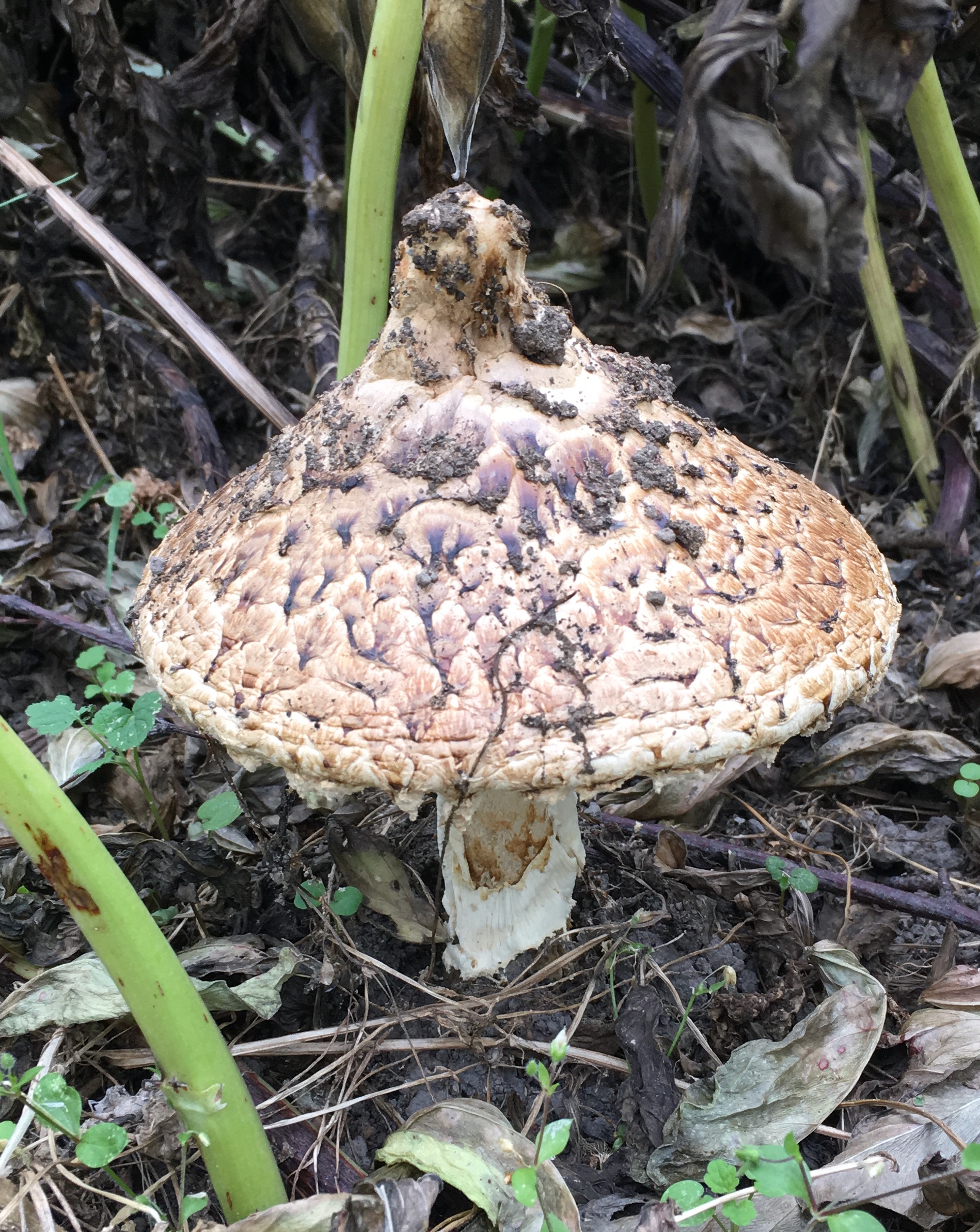 I was working in the garden this morning, and came across this stunning mushroom in the middle of the broad beans.
My first reaction was, “Oh, my! Fairies must have visited the garden.” I wondered if nature was trying to tell me I needed a little whimsy among the vegetables. I began to consider the possibilities. A few fanciful carvings on my trellises? Gargoyles atop the fence posts?
My next reaction was, “I’ve got to show this to my husband.” (He researches mycorrhizal fungi, and this looked to me a bit like an Amanita, which are usually mycorrhizal). He saw it, and said, “Oh!…Oh!…that’s a…no, wait…I won’t say anything until I’m sure…this could be important.”
He did some research and confirmed the mushroom as Noddy’s flycap–Amanita sp. 2–an unusual fungus recorded only from New Zealand, but thought to be introduced, as it is generally found among non-native vegetation. It has never been recorded this far south, and we’ve never seen it on our property before.
Geoff Ridley has written a nice blog post about this fungus and its odd distribution and mysterious origin.
And so, perhaps nature was, instead, telling me to keep my eyes open for scientific wonders, even in my own back yard.
And then, I learned that Noddy’s flycap is named for the Enid Blyton character, Noddy (and his pointy hat).
And at this point, the symbolism of this strange fungus in my garden got really weird. A whimsical-looking fungus of unknown origin, and not known to be present here, named after a character in a middle grade novel?
The message was loud and clear–this fungus has to show up in my next book. Excuse me while I go scribble down some ideas…
 I’m pleased to announce the release of Insects in the Classroom!
This collection of insect information and activities is the only one of its kind written specifically for the New Zealand classroom. Special features include:
The book is released in conjunction with a new outreach programme for schools–Bugs and Books–that uses science as the inspiration for writing.
 I’ve spent the last three days—11 hours each day—editing. I have no brains left to write a blog—they have all leaked out, stabbed by excessive punctuation, and strangled by curly quotes. If I see another comma, I will scream. I’ve had my fill of cut-and-paste errors. No dependent clauses can depend upon me this evening.
Instead, I will head to the garden, or to the piano. I’ll ignore infinitives, and banish adverbs. I will say whatever I please, and not worry about sentence fragments. Sentences without verb. Subject. Object.
The English language can take a holiday this evening. Tell the Oxford Style Manual to stay home. I won’t answer the door. Come back tomorrow.
 On our recent tramping trip to Mt Somers, my daughter and I whiled away the evening setting writing challenges. We chose three words at random from magazines in the hut, and used them in a story. The words that inspired this story: rhyolite, biodiversity, and me.
We hiked to the summit and set up our camp on a windy knob. I would have preferred to camp lower down, but the wētā we were studying lived in the cracks on the rhyolite cliffs just below the summit. We would rappel down from the top, our collecting jars in a sack attached to our harnesses, to gather our subjects.
“Caroline, you go first,” said Mark.
“Me?” I had hoped to watch one of the more experienced climbers descend first. I didn’t want to show the others how nervous I was about it though, so I stepped into my harness and tightened it.
At the brink I paused to make sure everything was ready. I knew if I glanced down even once I’d chicken out, so I kept my eyes on the rock in front of me as I slowly made my way down. I focused on admiring the beautiful, angular columns, the reddish colour. I looked for likely wētā hiding spots. I glanced up and saw Sophie coming down a second rope to my left.
I stopped at a small crevice and fumbled in my bag for a collecting jar and the bent wire ‘wētā tickler’ we all carried to nudge wētā out of their lairs. Focused on the insects, I forgot my fear, forgot the dizzying drop below. I fished out two wētā, then lowered myself a few more metres.
The rock was different here. Less columnar, more green than red. Did the wētā only live in the rhyolite? I didn’t know. I was curious to find out. I probed a near-circular hole in the rock with my wire.
The rock seemed to shiver.
I froze. Was that an earthquake? We’d never talked about what to do if we were on the cliffs during a tremor. All my fear of heights came rushing back.
I waited for a minute, eyes shut. Nothing happened. I opened my eyes and looked up at Sophie. She was poking intently at a crevice, as though nothing had happened. I took a deep breath to calm my nerves. Funny what your imagination can do. I laughed at myself and took a moment to relax my taut muscles and clenched fists.
Calm again, I poked my wire into the hole once more—it was the perfect size for a wētā.
There was no mistaking it this time. The rock moved. I yelped and pulled back my hand as a large yellow eye snapped open in the rock face to my right. There was a rumble, and suddenly a huge head detached itself from the cliff face in front of me. A huge, reptilian head. It snorted, and a wisp of smoke curled up out of its nostril—the hole I had probed for wētā.
Too startled and frightened even to scream, my mind lit on one thought: the biodiversity of Mt. Somers was greater than anyone had ever guessed. And unusual insects weren’t the most interesting things up here.
I wondered if we would make it home to tell anyone.
 Robinne Weiss