A New Jumping Spider

I met a new spider today–Phidippus whitmani. This one appears not to have a common name, though a related species is known as the red velvet jumping spider.

Yesterday, I noted that the red-spotted newt uses warning colouration to tell predators it is toxic. This jumping spider uses the same sort of colouration, but in this case, the warning is a lie.

Like other members of its genus, this spider protects itself by pretending to be a velvet ant with a powerful sting. Unfortunately for this spider, who had to put up with my attentions, I wasn’t fooled, and instead was quite taken by his fuzzy red velvet.

Red-spotted Newt

I was pleased to see today one of my favourite North American animals, the red-spotted newt (Notophthalmus viridescens). These colourful little salamanders have a complex life cycle that includes an aquatic larval stage, a terrestrial juvenile (eft) stage, and an aquatic adult. The terrestrial efts, like this one, are brightly coloured.

Like most bright colours in animals, the red skin and spots of the red-spotted newt are a warning. The red-spotted newt has toxic skin secretions that protect it from predators. This toxic defence gives red-spotted newts the ability to live in permanent bodies of water with fish in them, unlike many other salamanders which fall prey to fish, and rely on temporary pools.


Wool Sower Gall

Visiting America is always a rewarding experience from a naturalist’s point of view. Though New Zealand has some spectacular wildlife, it simply doesn’t have the sort of diversity one finds in North America.

This visit’s best find so far has been the wool sower gall.

This spectacular fuzzy ball, found on the twigs of white oak trees, is caused by the tiny wasp, Callirhytis seminator. The structure of the gall is reminiscent of a fluffy seed head of a plant. Small ‘seeds’ inside the fluffy exterior house wasp larvae.

Galls are fascinating structures. They are made by the plant in response to chemicals produced by an insect or mite. Galls are incredibly diverse in structure and location on the plant, but all provide food and protection to the insects or mites as they grow and develop. Essentially, the insect has hijacked the plant’s biology to create a perfect home with a built-in food source.

Gall-making evolved several times in different groups of insects and mites; it’s clearly a successful survival strategy.

But the plants aren’t entirely defenceless. In response to the gall insects, many plants produce chemicals that attract predators to eat the damaging insects.

In turn, some gall-inducing insects can turn off these chemical defences in their host plants. Host and insect are constantly evolving, each trying to get the better of the other. The galls are a spectacular result of their arms race.

Completing the Cycle

Back in early December last year, I posted an update on the preying mantids on my rosemary bushes that I’ve been following since mid-winter, when they were eggs.

Well, I haven’t forgotten them, and I’m pleased to report that they are all grown up now, and laying eggs of their own.

On the one hand, I’m thrilled (as I am every year) to watch the entire life cycle play out in the garden.

On the other hand, I’m getting a little worried.

Last winter, I didn’t prune the rosemary bushes because the bees depend on their flowers in late winter. Then in the spring I couldn’t prune them because the preying mantids hatched out. All summer I waited and watched the mantids grow. The rosemary plants grew, too, engulfing a bench on one side, and the path on the other.

And now the mantids are laying their eggs on the very branches I need to prune off…

We may soon see just how big rosemary can grow here.

Ecological Weeding

A parasitised aphid (the bloated brown one), and an unparasitised one (the green)

A parasitised aphid (the bloated brown one), and an unparasitised one (the green)

As much as I enjoy weeding, I can’t possibly keep up with them all. There are always weeds on the property.

In truth, I don’t try to eliminate all the weeds. I take a ‘live and let live’ approach with many of them. I also recognise the utility of many of the weeds on the property–or at least their utility to other organisms.

Except in the vegetable garden where they are, literally, a pain, I allow nettles to reside in the yard. They provide food for our native yellow admiral butterflies and, in a pinch, can be used to make rennet for cheese making. Even in the vegetable garden, I don’t mind seeing them–they hate dry soil, so they’re a good indicator that I’m watering the garden enough for the vegetables.

Weeds like yarrow, clover, and dandelions are good food sources for beneficial insects, so they, too, are allowed to grow wherever they’re not in direct competition with crops.

Weeds are also sometimes good ‘trap crops’, attracting pests to plants (themselves) I don’t mind pulling out and destroying to get rid of the pest.

Sometimes, though, the ‘trap crop’ idea backfires on me. Today I noticed that a sow thistle I’d allowed to grow was covered in aphids–it was a great opportunity to destroy thousands of pests. Except that as I bent to pull the weed, I noticed that a large number of the aphids were parasitised by wasps. I depend upon these wasps to deal with my springtime aphid problems. Short of painstakingly picking off every parasitised aphid and caring for them until the wasps hatch, killing the aphids on the weed is going to kill the wasps, too. What to do?

So the weed has gotten a temporary stay of execution. I’ll keep an eye on it. When the wasps have emerged from the parasitised aphids, I’ll pull it and kill the remaining aphids.

Mysteries of the Pond

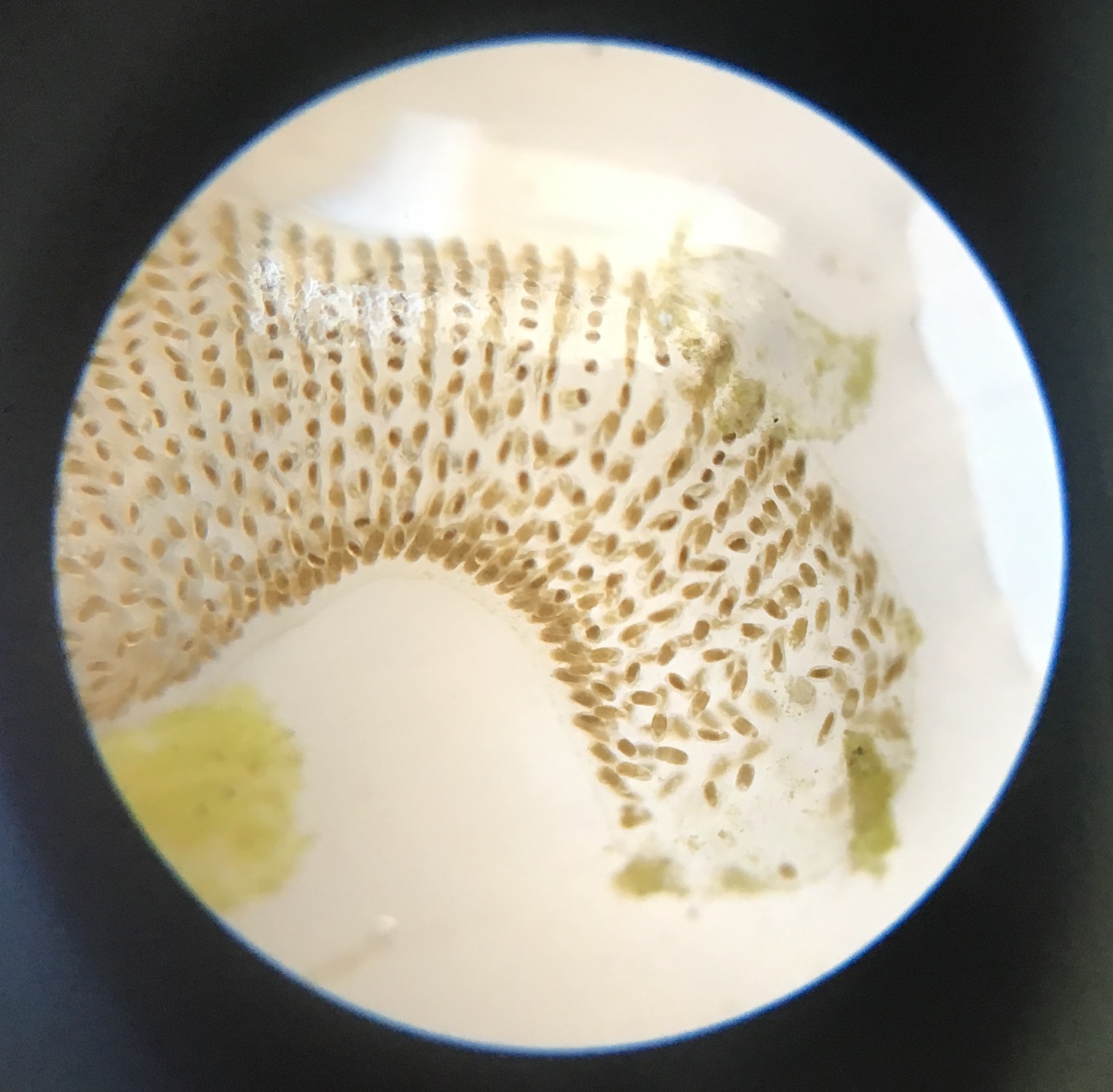
2017-02-11-15-04-42My daughter was hanging out at our little pond the other day and found the egg mass of some aquatic creature. At first I assumed it was a mass of snail eggs, because it had that look. But when we put it under the microscope, the eggs were arranged in perfect rings around the mass. I spent most of my childhood raising aquatic snails in little fishbowls on my windowsill (sorry, Mom!) and never saw an egg mass so orderly.

What could it be?

Neither of us had any idea.

But we have fish tanks…

The egg mass is currently in a small tank, and we’re checking daily. One of these days our mystery will be solved.

Thirsty Bees

img_3051When my husband created a pond in the yard, I expected the damselflies, mayflies, midges, diving beetles, and other aquatic insects to show up. I even expected the heron who occasionally drops by to sample the goldfish.

I didn’t necessarily expect the honey bees.

I wasn’t surprised when they showed up, though. What surprised me was the sheer numbers that have shown up this summer. The edge of the pond has been humming for weeks as hundreds of bees jostle for space on the best perches.

Honey bees, like all animals, need water–at least a litre a day per hive. The bees don’t just drink the water; they also use it to dissolve honey that has crystallised, dilute honey for larval food, and to cool the hive on hot days.

When scout bees find a good water source, they mark it with pheromones that tell the other bees it’s a good spot. I reckon by now, the edge of our pond is sticky with pheromones (or at least stinky with them), because there’s always a crowd there.

And after yesterday’s 31°C (88°F) temperatures and 130 kph (81 mph) wind, the pond was extra crowded today.

I’m happy to oblige the bees. I need them to pollinate my vegetables, and they’re not aggressive when they’re foraging away from the hive, in spite of the potentially frightening crowds. The arrangement is a win-win situation for all of us.

Get Outside—See Cool Stuff

The swarm--apologies for the image quality; I'm allergic to bee stings.

The swarm–apologies for the image quality; I’m allergic to bee stings.

I’m trying to make myself go out for a walk at lunchtime every day. I’ll admit that I can be a bit of a slave driver when I’m working, and I don’t always manage it. I have a tendency to simply work through lunch, and then suddenly discover it’s late afternoon.

In truth, the walks available to me from my front door aren’t necessarily all that inspiring—endless agricultural fields in every direction.

But you can’t experience anything if you don’t first go out. Yesterday, I took the most boring of the boring walks from my house—the one that doesn’t offer so much as a mailbox for the first kilometre. Don’t ask why I chose that way—maybe I wanted to clear my mind, as I’d been doing intense editing all morning.

On this most boring of walks, I happened to see something awesome—a honey bee swarm.

We are blessed with many nearby apiaries, and I always have a plentiful supply of bees to pollinate my garden vegetables, but even so, it’s unusual to spot a swarm. This one was hanging in a drooping mass off the neighbour’s fence.

Bees swarm to create a new colony. It’s usually the old queen who leaves her hive with a large portion of the workers. A new queen will hatch in her absence and take over the old hive.

The swarming bees leave the hive and gather nearby while scout bees search for a new hive location. This is what I saw—the resting swarm. It likely flew away to a new home within a few hours. Where those bees are now, I don’t know, but I hope they found a nice place nearby from which to visit my garden.

So, my most boring walk was amazing. That reminds me, I still haven’t gotten out for a walk today. Time to step away from the desk and get outside. Who knows what I might see?

Proof We’re Lame

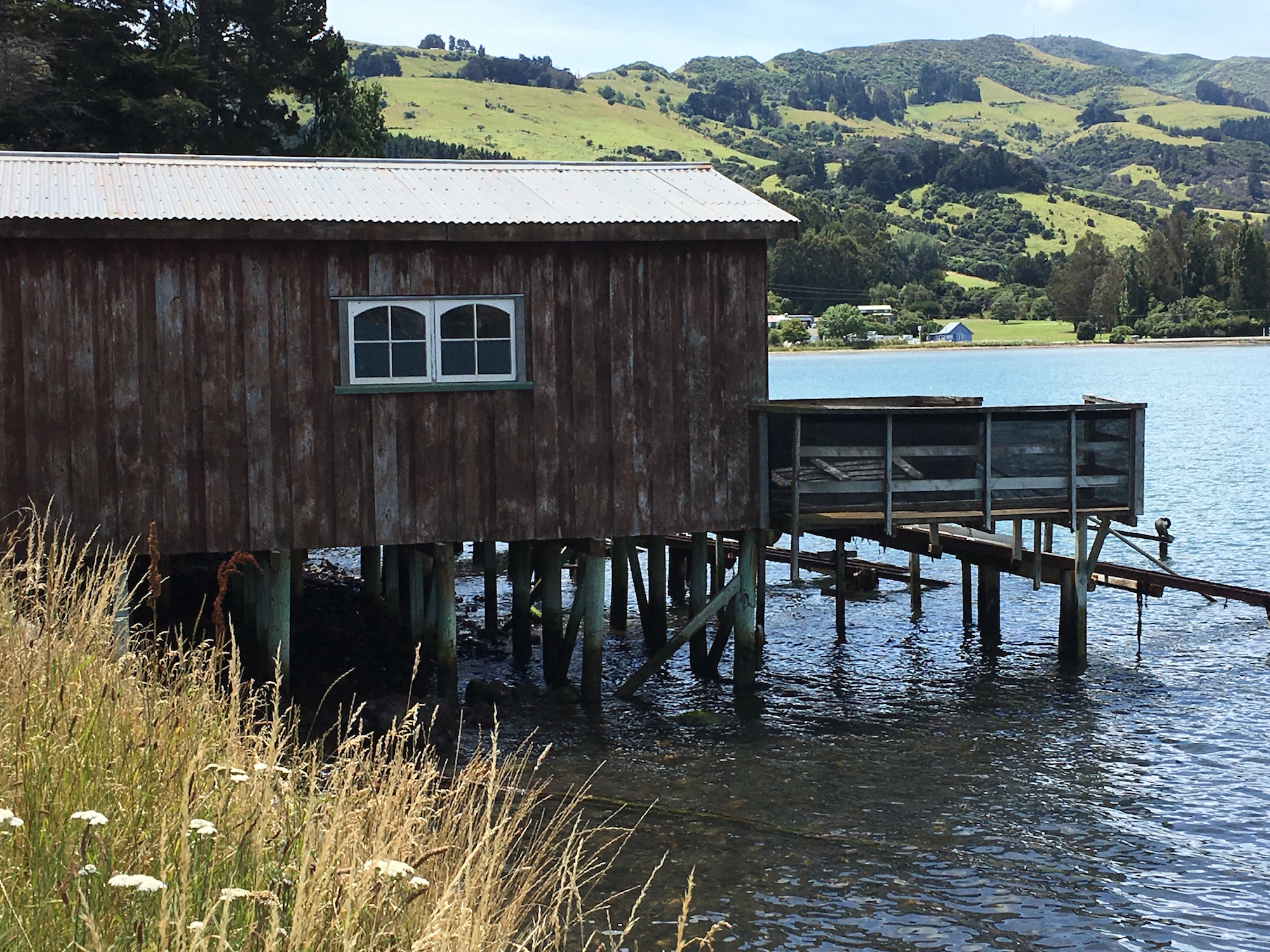
A boat shed in Duvauchelle

A boat shed in Duvauchelle

It was Mum and Dad’s annual day out today. We dropped the kids off at summer camp in the morning, then had the whole day together with no other obligations.

Yeah! Party time!

Or not.

We brought our wetsuits and snorkels, thinking we might do some snorkelling…

But it was cloudy and chilly.

We drove into Akaroa to visit a couple of art galleries and have lunch on the waterfront…

But a cruise ship had just disgorged 2,000 tourists into the town, and it was so crowded, we left.

We ended up having toasties, chips, and a beer on the deck at the pub in Duvauchelle, watching the wading birds and a luckless pair of hitchhikers. Then we went for a short walk and came home.

Lame, lame, lame.

It was a lovely day, but we could have done all that with the kids. In fact, our summer outings with the kids are usually more exciting than that.

Truth is, I wasn’t surprised. It happens most every year. We have a week with no kids in the house, and what do we do? We go to work, we weed the garden and mow the lawn. Sometimes we might go so far as to rent a movie.

No all-night dancing, no dinners out—just the normal routine, with less washing up needed afterward.

Is that lame? Perhaps. I like to think of it as an indication that our daily life is pretty darned good. I like to think of it as an indication that we enjoy spending time with our kids, and our kids don’t stop us from doing the things we enjoy.

So tomorrow, I’ll have a nice long work day (I have lots of editing to do!), and when my husband comes home from work, we’ll make a delicious dinner. We’ll spend the evening sitting on the couch reading, and then we’ll do it all again the next day. Not really too hard to take.


Saturday Stories–Biodiversity

2017-01-05-09-03-54-cropOn our recent tramping trip to Mt Somers, my daughter and I whiled away the evening setting writing challenges. We chose three words at random from magazines in the hut, and used them in a story. The words that inspired this story: rhyolite, biodiversity, and me.

We hiked to the summit and set up our camp on a windy knob. I would have preferred to camp lower down, but the wētā we were studying lived in the cracks on the rhyolite cliffs just below the summit. We would rappel down from the top, our collecting jars in a sack attached to our harnesses, to gather our subjects.

“Caroline, you go first,” said Mark.

“Me?” I had hoped to watch one of the more experienced climbers descend first. I didn’t want to show the others how nervous I was about it though, so I stepped into my harness and tightened it.

At the brink I paused to make sure everything was ready. I knew if I glanced down even once I’d chicken out, so I kept my eyes on the rock in front of me as I slowly made my way down. I focused on admiring the beautiful, angular columns, the reddish colour. I looked for likely wētā hiding spots. I glanced up and saw Sophie coming down a second rope to my left.

I stopped at a small crevice and fumbled in my bag for a collecting jar and the bent wire ‘wētā tickler’ we all carried to nudge wētā out of their lairs. Focused on the insects, I forgot my fear, forgot the dizzying drop below. I fished out two wētā, then lowered myself a few more metres.

The rock was different here. Less columnar, more green than red. Did the wētā only live in the rhyolite? I didn’t know. I was curious to find out. I probed a near-circular hole in the rock with my wire.

The rock seemed to shiver.

I froze. Was that an earthquake? We’d never talked about what to do if we were on the cliffs during a tremor. All my fear of heights came rushing back.

I waited for a minute, eyes shut. Nothing happened. I opened my eyes and looked up at Sophie. She was poking intently at a crevice, as though nothing had happened. I took a deep breath to calm my nerves. Funny what your imagination can do. I laughed at myself and took a moment to relax my taut muscles and clenched fists.

Calm again, I poked my wire into the hole once more—it was the perfect size for a wētā.

There was no mistaking it this time. The rock moved. I yelped and pulled back my hand as a large yellow eye snapped open in the rock face to my right. There was a rumble, and suddenly a huge head detached itself from the cliff face in front of me. A huge, reptilian head. It snorted, and a wisp of smoke curled up out of its nostril—the hole I had probed for wētā.

Too startled and frightened even to scream, my mind lit on one thought: the biodiversity of Mt. Somers was greater than anyone had ever guessed. And unusual insects weren’t the most interesting things up here.

I wondered if we would make it home to tell anyone.