Saturday Stories–Biodiversity

2017-01-05-09-03-54-cropOn our recent tramping trip to Mt Somers, my daughter and I whiled away the evening setting writing challenges. We chose three words at random from magazines in the hut, and used them in a story. The words that inspired this story: rhyolite, biodiversity, and me.

We hiked to the summit and set up our camp on a windy knob. I would have preferred to camp lower down, but the wētā we were studying lived in the cracks on the rhyolite cliffs just below the summit. We would rappel down from the top, our collecting jars in a sack attached to our harnesses, to gather our subjects.

“Caroline, you go first,” said Mark.

“Me?” I had hoped to watch one of the more experienced climbers descend first. I didn’t want to show the others how nervous I was about it though, so I stepped into my harness and tightened it.

At the brink I paused to make sure everything was ready. I knew if I glanced down even once I’d chicken out, so I kept my eyes on the rock in front of me as I slowly made my way down. I focused on admiring the beautiful, angular columns, the reddish colour. I looked for likely wētā hiding spots. I glanced up and saw Sophie coming down a second rope to my left.

I stopped at a small crevice and fumbled in my bag for a collecting jar and the bent wire ‘wētā tickler’ we all carried to nudge wētā out of their lairs. Focused on the insects, I forgot my fear, forgot the dizzying drop below. I fished out two wētā, then lowered myself a few more metres.

The rock was different here. Less columnar, more green than red. Did the wētā only live in the rhyolite? I didn’t know. I was curious to find out. I probed a near-circular hole in the rock with my wire.

The rock seemed to shiver.

I froze. Was that an earthquake? We’d never talked about what to do if we were on the cliffs during a tremor. All my fear of heights came rushing back.

I waited for a minute, eyes shut. Nothing happened. I opened my eyes and looked up at Sophie. She was poking intently at a crevice, as though nothing had happened. I took a deep breath to calm my nerves. Funny what your imagination can do. I laughed at myself and took a moment to relax my taut muscles and clenched fists.

Calm again, I poked my wire into the hole once more—it was the perfect size for a wētā.

There was no mistaking it this time. The rock moved. I yelped and pulled back my hand as a large yellow eye snapped open in the rock face to my right. There was a rumble, and suddenly a huge head detached itself from the cliff face in front of me. A huge, reptilian head. It snorted, and a wisp of smoke curled up out of its nostril—the hole I had probed for wētā.

Too startled and frightened even to scream, my mind lit on one thought: the biodiversity of Mt. Somers was greater than anyone had ever guessed. And unusual insects weren’t the most interesting things up here.

I wondered if we would make it home to tell anyone.

What We Don’t Know

dsc_0009We headed to Tumbledown Bay today, ostensibly to try out the new snorkelling gear Santa brought us for Christmas. The water was murky and absolutely freezing, so it wasn’t exactly the best snorkelling, but it was a great day at the beach, regardless.

The seals were probably the best part of the day. There were lots of them, and they were vocal and active most of the day. A couple of them were even body surfing. They’d catch a wave and leap along with it almost all the way to the shore, then swim out and do it again. It was great fun to watch

The rock pools were great, too, as they always are. We saw some starfish, lots of snails, limpets, and chitons. I never get tired of them. In the sandier pools there were lots of marine isopods (sea slaters). I sat for a while at one pool and watched them. Some were just 3-5 mm long and the colour of sand. Some of the sandy-coloured ones had a white diamond on their backs. One, almost 10 mm long, was rusty orange with a white diamond on its back. The most spectacular was about 8 mm long, and had red and yellow markings, reminding me, oddly, of a European goldfinch.

As I sat there, I realised I had no idea whether I was looking at one species of slater with many colour variations, or twenty species.

A little research at home revealed that I’m not alone in my lack of knowledge of New Zealand’s marine isopod fauna. There are just 211 aquatic isopod species described for New Zealand. Scientists estimate that there are about eight times that many species. It’s not just the deep-water types that are poorly known, but many of the easily seen intertidal species are also undescribed. It seems these common little scavengers have been largely overlooked by science.

So the mystery remains—how many different isopods did I see today? As far as I know, no one can tell me the answer. But rather than disappointing me, the knowledge that we just don’t know excites me.

Anyone who thinks we know everything about planet Earth and the only real frontiers are in space is sorely mistaken. There is so much to be discovered, not just in exotic locations like the Amazon rainforest, but on the beaches that thousands of people visit every year, in the rivers and streams we cross daily on our way to work, even in our own back yards. There is so much about which we understand so little. The scientist in me quivers with excitement.

Did I see one species of isopod or twenty? No one knows. Doesn’t it make you want to go to the beach and peer into tide pools to find out?


When the pests are cute

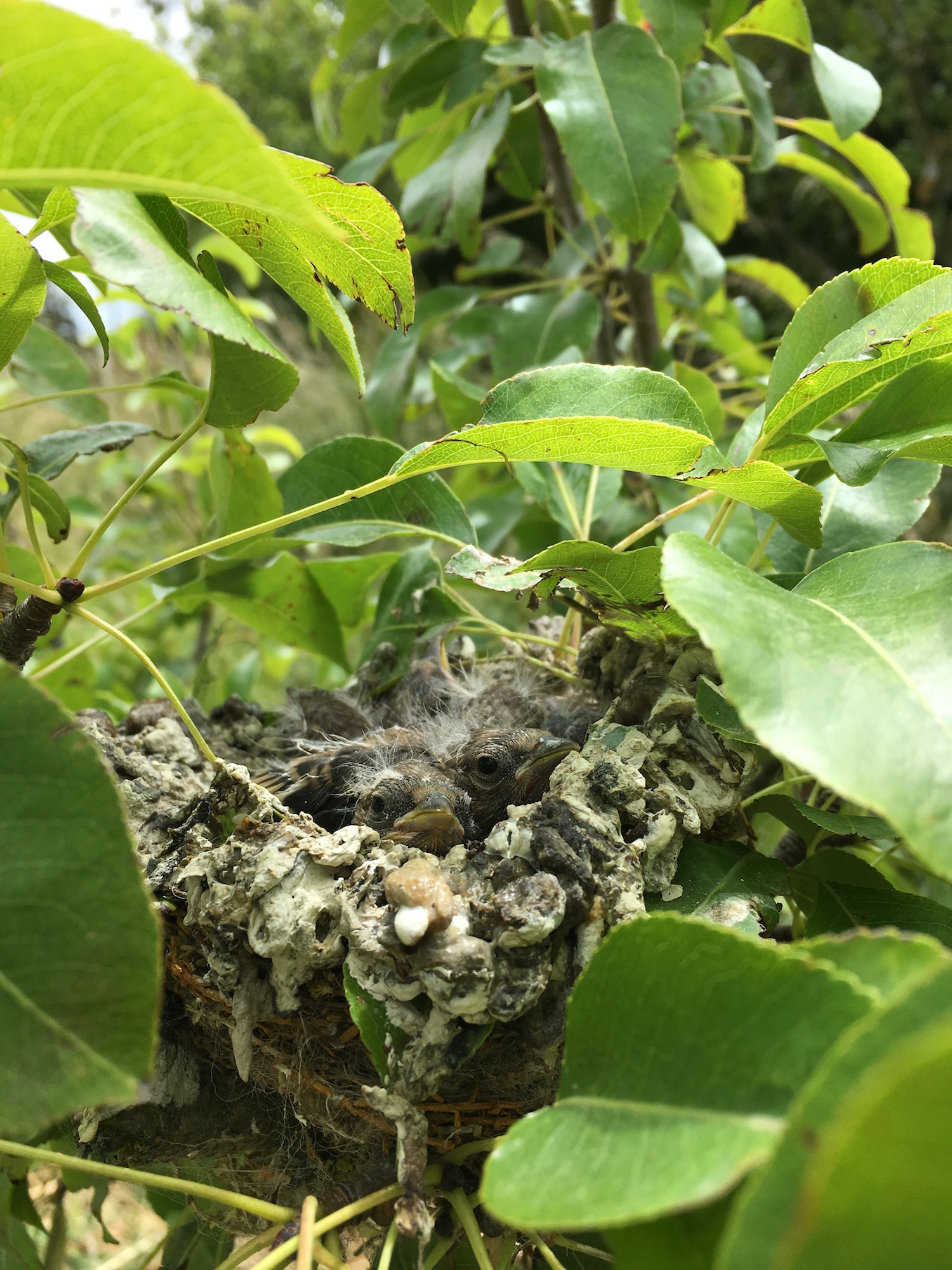
img_2765A month ago, I saw a perfect little bird nest in one of the fruit trees—incredibly tidy, and woven from grass and lichen. It was so pretty, I couldn’t bear to remove it, though I knew it must be the nest of a non-native bird (that’s about all we have here). Starling and house sparrow nests get the heave-ho as soon as I find them. This one…well, I couldn’t possibly disturb something so cute.

I forgot about the nest for several weeks, but today my husband noticed it was chock-full of chicks. Five grey fluffy European goldfinches (Carduelis carduelis)—so ugly they were adorable.

We don’t really need any more goldfinches, but since we don’t grow grain, they’re not much of a pest to us. These five chicks, though, will likely join the flock that descends on the neighbours’ fields in late summer. Sorry, guys. If you’d seen this cute nest of chicks, you’d understand.

Think Like an Entomologist

2016-12-21-12-45-56We went to the beach today. It was the perfect beach day—hot, and not too much wind (not at the beach, at least). The waves were big and great for body surfing and boogie boarding, and as usual, we ran into friends who also happened to be there, and had a good catch-up.

But the very best part of the beach today was the bees.

Thousands of native bees on the dunes just above high tide line. Swarming in the air, just 30 cm off the soil surface. I couldn’t help but watch, and I was rewarded with a fantastic show.

The bees almost all had loaded pollen baskets, and at first I wondered if they were feeding on something on the sand, because they would dip down to the surface, take a few steps, then fly away. I watched dozens of bees do this, but still couldn’t tell what they might be collecting.

2016-12-21-12-48-28Then I saw it. A bee landed, then quick as a flash, dove head first into the loose sand. It took her only a moment, and she had vanished, leaving nothing but a slight divot in the sand to show where she’d gone.

Then I knew. They were burrowing into the sand, provisioning nests for their larvae. They had dug the burrows earlier, and the brief touchdowns on the sand were to locate the right burrow. I watched for a long time, and saw several bees dive into their burrows. I even saw one go part way, decide she had the wrong spot, and scramble back to the surface to try again.

Then I saw another insect in the crowd—a wasp. It, too, was hovering over the sand and dropping down now and again to the surface. I surmised that it was a parasite, looking for the hidden bee burrows. I guessed it would enter a burrow and lay an egg on the bee larva, and the wasp larva would eat the bee.

These were all guesses based on my observations. I really didn’t know if there were dune-nesting bees here, or if they were parasitised by wasps.

At home, I was able to confirm my observations. My bees were the native Leioproctus metallicus, and they are parasitised by a gasteruptid wasp that lays its own eggs in the bee burrows.

I was pleased to have pieced together this puzzle by watching bees on the beach. (The only part I couldn’t see was that the bees try to fool the wasps by digging many burrows, not all of which contain larvae.) Entomologist Tom Eisner once wrote, “There is a saying that ‘5 minutes in the library can save you weeks in the laboratory,’ which has considerable merit. I prefer the naturalist’s version, which says that ‘weeks in the field can save you minutes in the library.'”

I’m with Eisner on that one. Watching those bees and trying to piece together what was happening was pure magic.

Poem on Moose

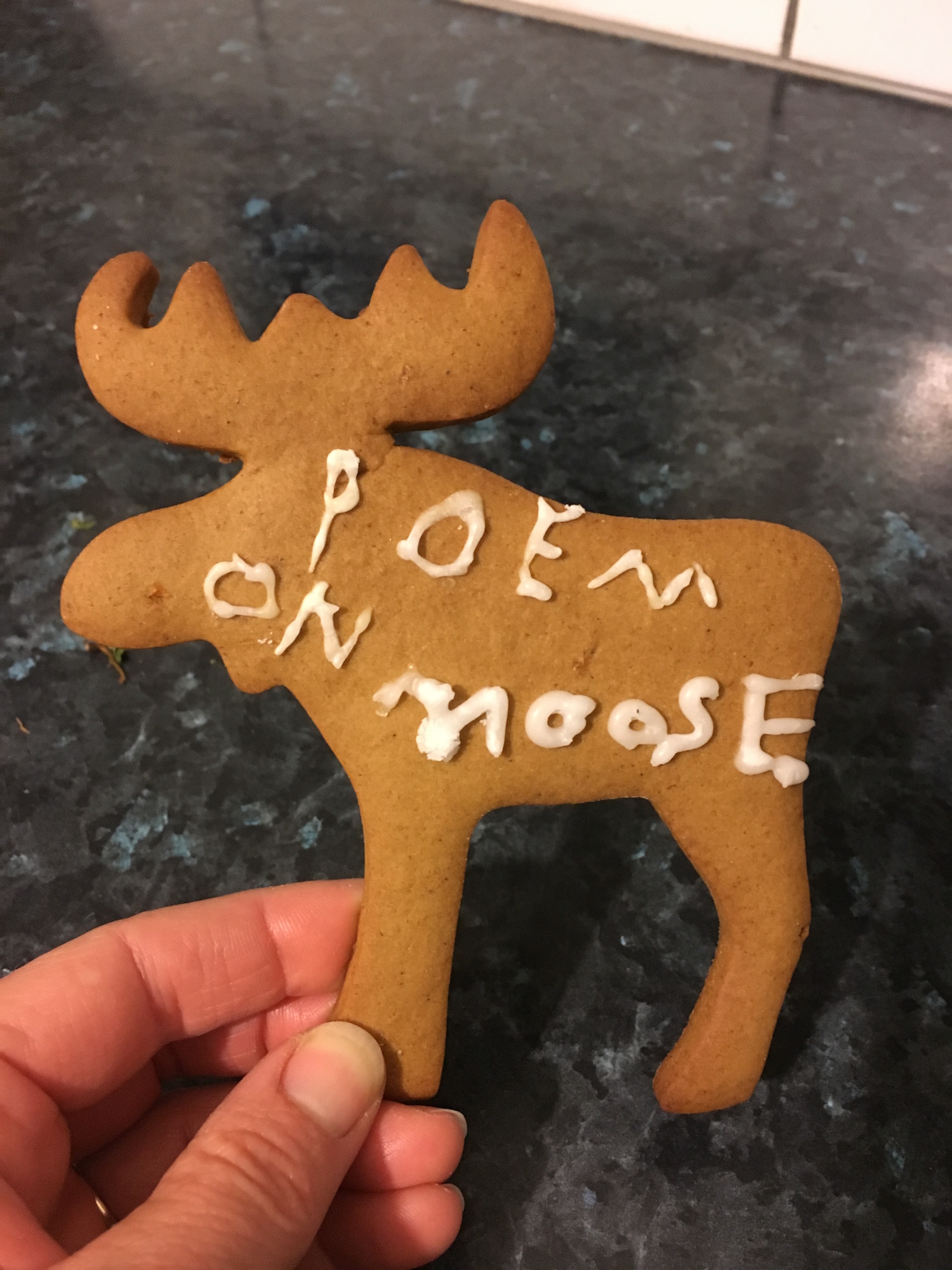
What happens when I let my daughter decorate Christmas cookies.

What happens when I let my daughter decorate Christmas cookies.

Literary ungulate
In gingerbread.

This poem is either
On a moose,
Or on moose,
Or both.

Your palmate antlers,
Distinctive,
Tell me you’re a bull.
They beg to be bitten off.

Then you would be a cow
Only your drooping nose
And your beard
Giving away your moosy nature.

But why a poem
On a moose
(Or on moose)?

I do not recommend
Writing poems on moose
(or is it mooses?)
Unless they are of the gingerbread variety.
The icing tickles
And moose (meece?) snort when they laugh.

But if you try,
I suggest a stepladder.

Takahē PDA

2016-12-11-11-49-22On a family trip to Wellington this weekend, we visited Zealandia, a predator-fenced wildlife sanctuary. A number of endangered native birds, reptiles, amphibians and insects have been introduced to the sanctuary, and many have done well there. Among the birds we saw were kākā, saddlebacks, and kākāriki. But my favourites of the day were a pair of geriatric takahē. Takahē are beautifully coloured, stocky birds about the size of a large chicken. They were thought extinct until 1948 when they were rediscovered in a remote area of the Murchison Mountains. In spite of protected habitat and a captive breeding programme, takahē remain critically endangered, with a population of around 300.

This pair were once part of the captive breeding programme, but at over 20 years old, they are no longer able to produce viable eggs. They were transferred to Zealandia to live out their retirement where they can be ambassadors for their species. They were certainly doing their job this weekend.

When we were there, the takahē were hanging out in a grassy clearing, feeding leisurely and basking in the sun. As we watched, the male walked over to join the female and groom her—a cute public display of affection. They talked to each other quietly as they fed, and completely ignored the half-dozen people standing around watching. They looked content and relaxed—just like a retired couple should.

I hope this unique bird can hold on, and flourish once again, if only in predator-free sanctuaries and offshore islands. It would be sad to lose it…again.

Watching My Babies Grow

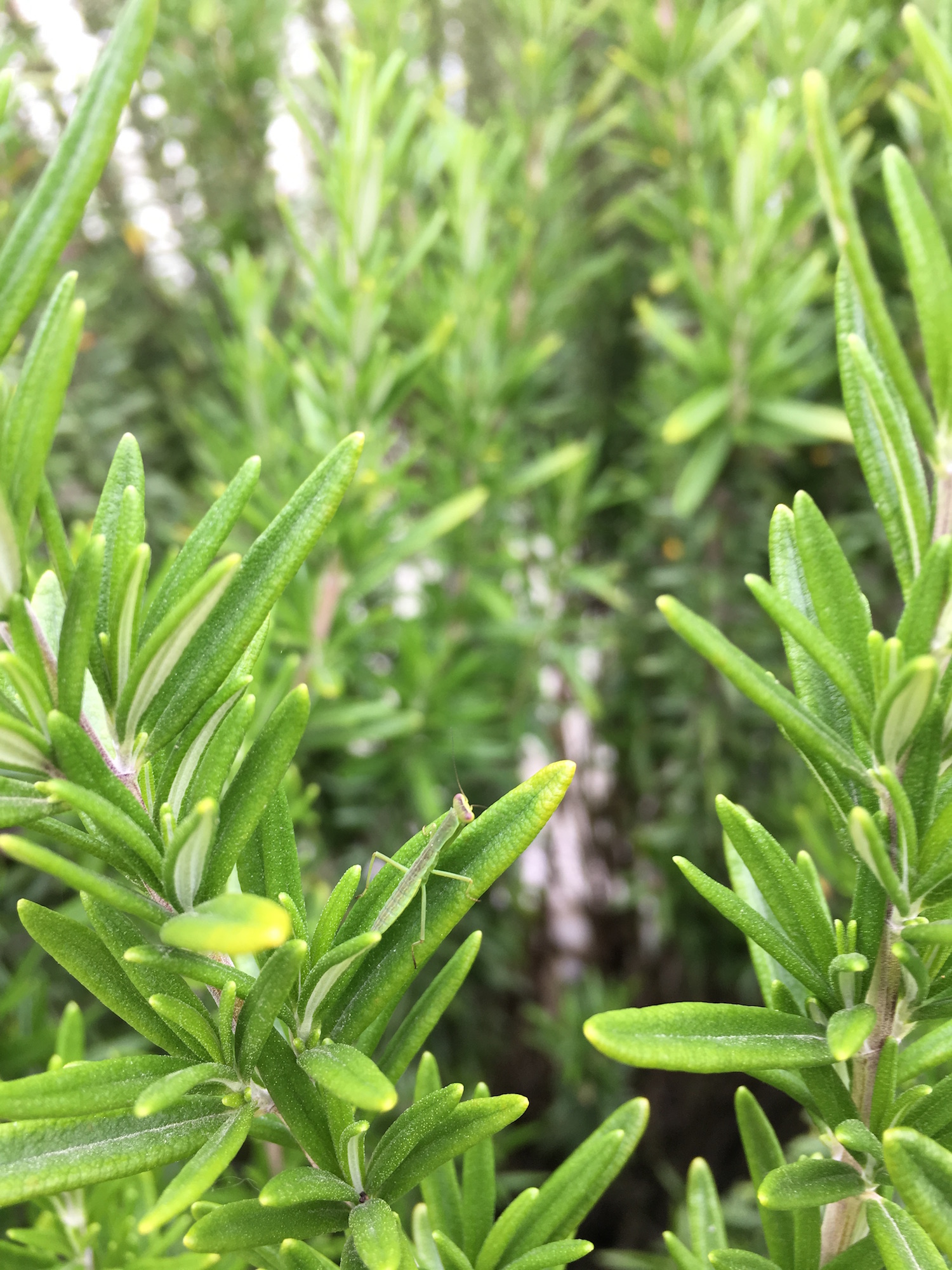
Recently hatched mantids--can you see them both?

Recently hatched mantids–can you see them both?

All winter I kept an eye on the eggs.

Now the preying mantids have all hatched, and I can’t help but watch them grow and develop.

They don’t tend to wander far, so it’s easy to keep tabs on them. Sometimes it takes a few minutes of staring before I see one, but then they start popping out at me until I’ve counted dozens of them.

I’m happy to report that they appear to be doing well. I’m sure that some are looking fat and sassy because they’ve eaten their brothers and sisters, but that’s the way it goes in the mantid world. Live by the raptorial front legs, die by the raptorial front legs.

This one is a bit older and easier to see.

This one is a bit older and easier to see.

Sometimes I wonder at myself, that I can watch this year after year, and still be excited as each new egg case hatches. I hope I never lose that wonder and joy.

Crane Flies

2016-11-29-07-27-59The crane flies are the largest family of flies in the world. There are over 15,000 species worldwide, with 1600 species in North America and 600 species in New Zealand.

The Māori name, matua waeroa, means ‘king mosquito’. You could be forgiven for thinking crane flies are giant mosquitoes—their body shape is similar. But crane flies cannot bite. The adults of many species don’t eat at all, and those that do sip nectar.

Crane fly larvae are sometimes called leatherjackets, because their exoskeletons are thick and leathery. They are aquatic or live in wet soil or rotting vegetation. Most feed on dead plants, though there are a few predators among the aquatic larvae.

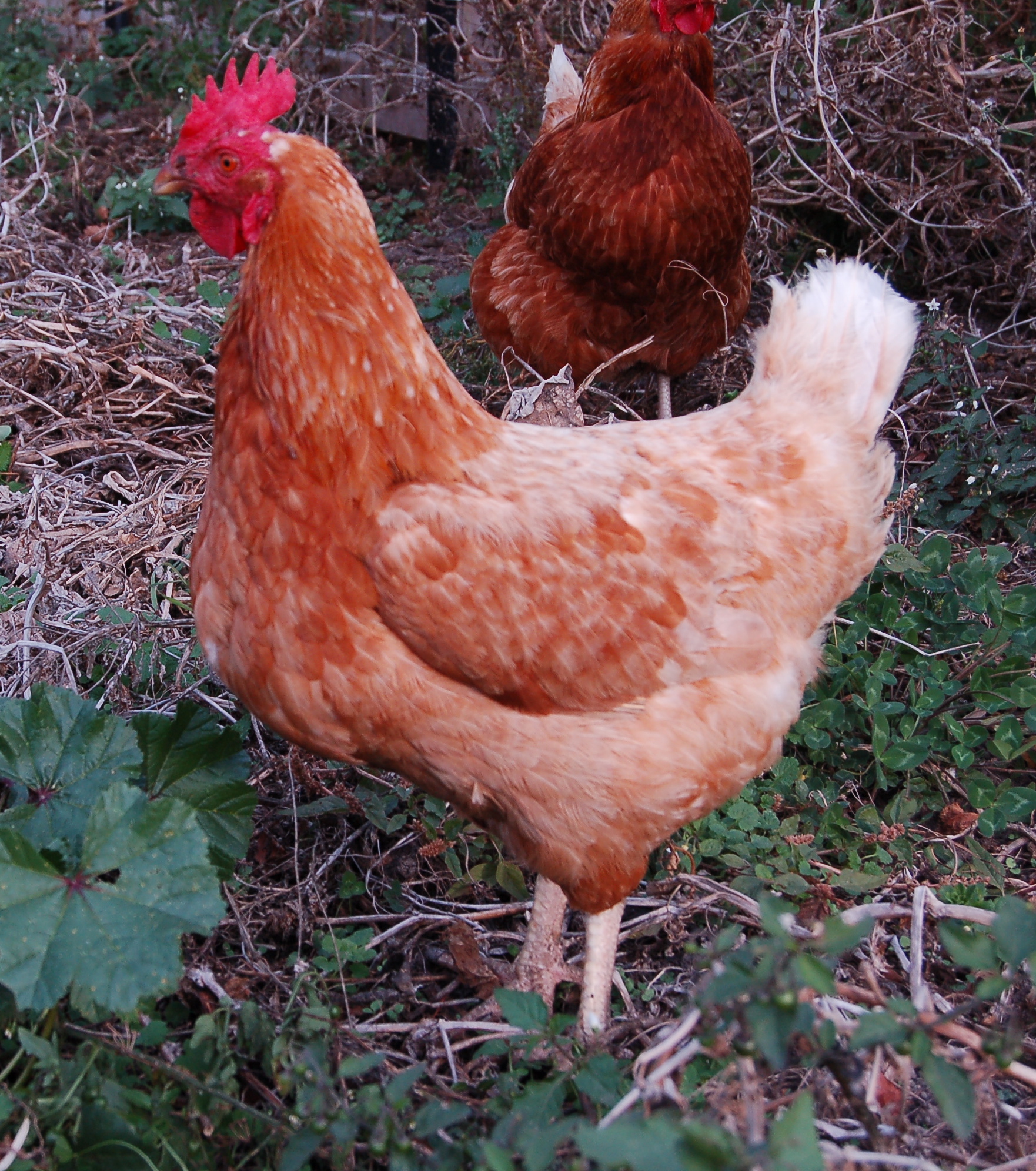
When we moved to Crazy Corner Farm, and I turned the vegetable garden for the first time, I found the wet end of the garden teeming with crane fly larvae. Hundreds and hundreds of them. Every shovelful of earth came up with at least ten larvae. It was truly impressive, and the chickens loved me for the handfuls of larvae I tossed to them that year. The larvae must not like cultivation, though, because I don’t find them in the vegetable garden anymore.

I find crane flies endearing—awkward and gangly, they remind me of teenage boys who’ve just gone through a growth spurt and aren’t quite comfortable with their larger dimensions. The analogy might not be so far off. Crane fly larvae are legless and live in confined spaces. When they become adults, they suddenly have six impossibly long legs, and are airborne. It must be terribly confusing.

I spotted this beauty on my office door this morning, sitting on the glass with the white curtain behind it. I couldn’t resist photographing it.


A Little Too Much Indoor/Outdoor Flow?

Fine in the paddock, not welcome indoors.

Fine in the paddock, not welcome indoors.

I always assumed, growing up, that window screens and screen doors were there to keep insects out of the house. It never occurred to me that other wildlife would want to get in, too.

Two nights ago, we woke at 2 am to the sound of the rocking chair on the porch thumping back and forth and claws raking the bedroom window. At first, I cursed the cat—who often sits on the rocking chair meowing in the middle of the night—and rolled over. But the raking claws didn’t stop. The cat never claws at the window. I opened my eyes, then had to get up for a closer look, because I couldn’t believe what I saw. An Australian possum was sitting on the back of the rocking chair, leaning out to scratch the window.

What the heck? Was it trying to get in?

It got me thinking about all the non-insect wildlife we’ve had in the house over the years.

In Panama, there were numerous mice, rats, scorpions, whipscorpions, windscorpions, and tailless whipscorpions…naturally. But there also were a few geckoes, and a skink who spent weeks living with us. We started leaving out water for him on the table, and named him Smaug.

There were the bats. Mostly they were small ones, but occasionally we’d get a massive one, with the wingspan of a pterodactyl. They’d swoop in between the top of the wall and the roof, wheel around the house, then swoop out again.

There were regular chicken incursions, even after we evicted the one brooding a clutch of eggs there when we moved in, and there was a cat who came inside and had kittens on our bookshelf.

The largest visitor was probably the dog, who came into the house chasing a rat, then regularly trotted in after that to see if we had more rats for her.

Here in New Zealand, we’ve had mice and rats, including one bold rat who sauntered into the kitchen through the front door while I was washing dishes one day. Sparrows and the odd starling are regular visitors in the summer—they come in, poo a few times, and leave. Chickens and feral cats are occasionally pop in for a visit, too.

For one magical season, we had a piwakawaka, who would flit into the house every day. He would zip around inside, eating flies, then land on a bird mobile hanging from the kids’ bedroom, bobbing up and down like just another wooden bird.

I can only imagine what mayhem that possum would have caused if it had gotten in last night. Earthquakes would probably seem tame to the havoc of a possum indoors. You can bet I’ll be making sure the windows are all closed tonight—I think I’d like to keep that one outdoors.


A New Gardening Lexicon

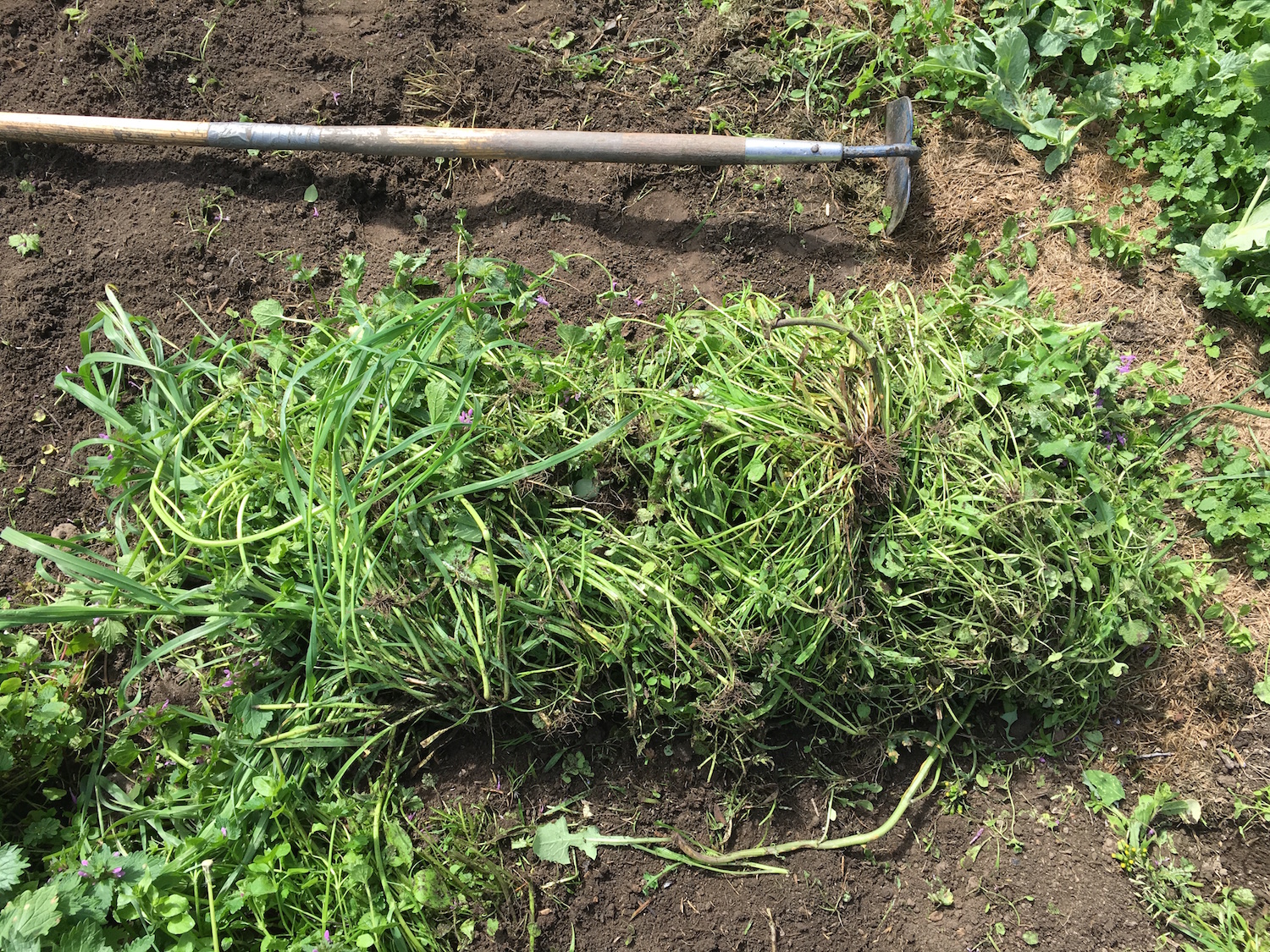
A nice tidy rolag.

A nice tidy rolag.

I’ve noticed that the world of extreme gardening doesn’t have a very good vocabulary. There just aren’t the words to express the particular situations, actions, and states one experiences.

So I’ve developed my own gardening lexicon, to try to fill that gap in the English language. Here are a few of my words:

Chook—verb. To toss something to the chickens. E.g.: Just chook those weeds—they like them.

Chookable—adjective. Suitable for the chickens to eat. E.g.: Those weeds are chookable.

Dinger—noun. A rock in the soil, accidentally struck by a gardening tool.

Goat—verb. To toss something to the goats. E.g.: Goat these branches—they like them.

Goatable—adjective. Suitable for the goats to eat. E.g.: Those branches are goatable.

Grunter—noun. A weed that requires significant effort (and usually a tool) to pull.

Hum-dinger—noun. A particularly large rock in the soil, accidentally struck by a gardening tool.

Pop bead—noun. Insect pest. Name comes from the sound it makes when squished between the fingers.

Rolag—noun. A term borrowed from weaving. Weeds that have been hoed into a tidy roll, ready to be lifted into the wheelbarrow or thrown on the compost heap.

Squeaker—noun. A nest of mice, when overturned accidentally by a shovel or spading fork.

Superman tree—noun. A tree or shrub that looks difficult to cut, but is actually easy to cut, making the cutter feel like Superman. (See also Wonder Woman weed)

Twitch light—noun. Couch grass with unusually fine runners.

Twitch-on-steroids—noun. Couch grass with unusually thick runners.

Twitch-headed—adjective. Having weeded so much that you see weeds when you close your eyes.

Wonder Woman weed—noun. A weed that looks like a grunter, but is actually easy to pull out, and makes the weeder feel like Wonder Woman. (See also Superman tree)