Wasp 1: Cleaning 0

I try to keep a clean and tidy house, but sometimes it’s just not possible.

I was going to dust this weekend, but the first spot I ‘dusted’ was the dining room windowsill. It’s a big window and, for some reason, most of the insects that get into the house seem to end up there when they die.

Next thing I knew, I had a handful of dead insects in a petri dish and was looking at them through the microscope. Most were insects I was familiar with—old friends I was catching up with—but this lovely lady was new. A tiny parasitic wasp, but I couldn’t quite place her family. Several hours, a couple of taxonomic keys, and a stack of entomology books later, I still wasn’t certain, but I tentatively put her in the family Pteromalidae.

Oh, and the cleaning was entirely forgotten.

Spittlebugs

Spring is spittlebug season. Just about the time I want to start picking and dehydrating the perennial herbs, the spittlebugs descend upon them. In bad years, it makes harvesting herbs a slimy task.

Spittlebugs are also known as frog hoppers. As adults, they are cute, squat, dun coloured insects with spectacular leaping abilities. They really do resemble frogs (with a little imagination).

It’s the nymphs that have the disgusting habit of spitting. Well, it’s actually not spit at all. The foamy slimy ‘spittle’ is a combination of fluid from the insect’s anus, and slimy gunk from glands on the insect’s abdomen. The insect sits head downward on the stem of a plant and exudes the ‘spittle’, letting it pour over its body and cover it completely. The resulting mass keeps the young insect protected from enemies and from drying wind and sun. Gross, but effective.

Like humans, who usually stop blowing bubbles in their milk as adults, spittlebugs leave off spittle production when they grow up. As adults, they use their hopping ability to avoid predators.

Some species of spittlebug can become significant agricultural pests, stunting the growth of herbaceous plants and some forestry trees, but in the home garden, they’re usually not much more than a minor nuisance.

Am I Weird?

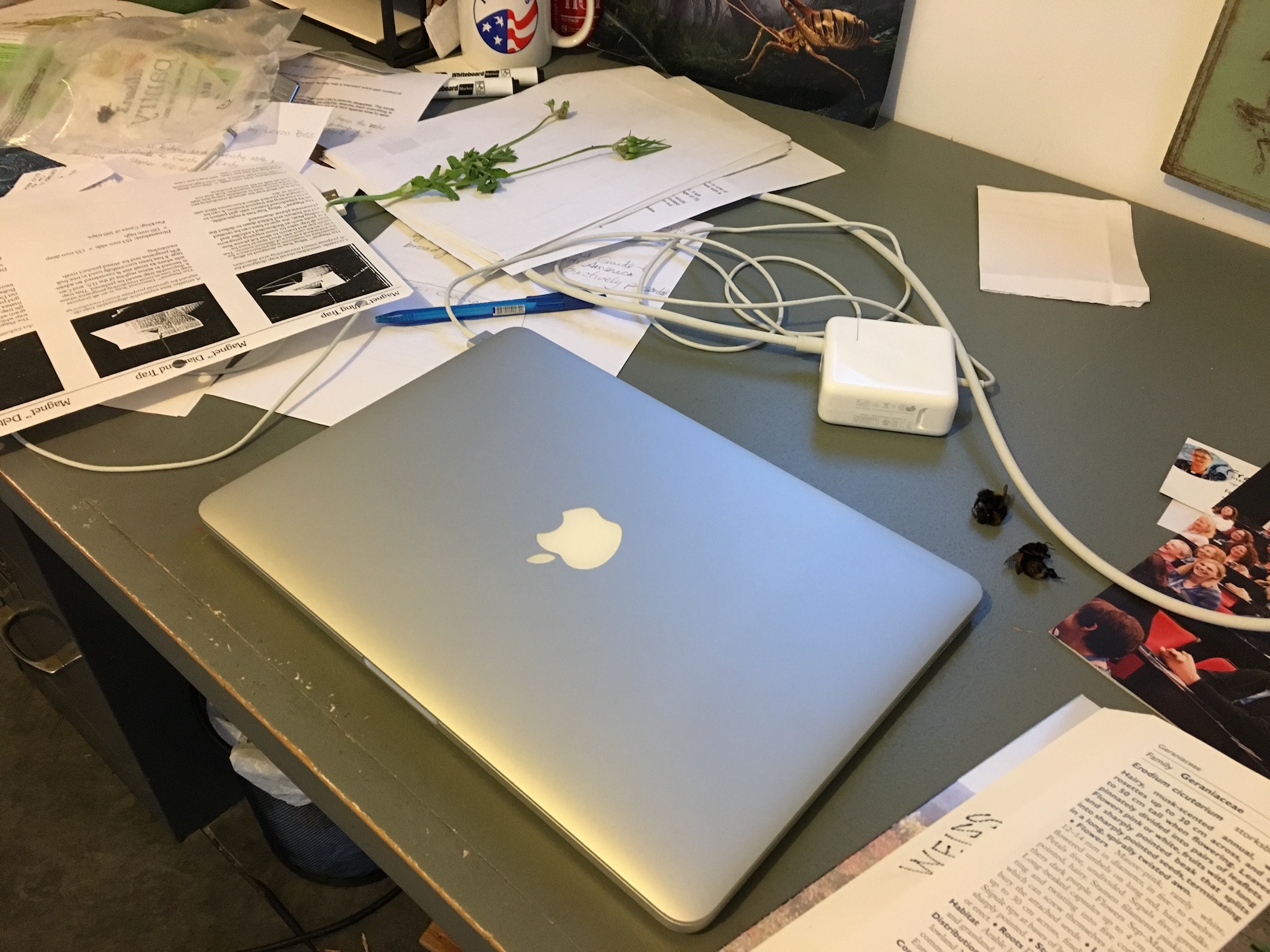
Stepping into my office the other morning, I had a moment of clarity, in which I saw my desk as a stranger might.

It was pretty scary.

The most obvious thing was the computer. Okay, that’s normal. But that’s where normality ended.

Strewn around the computer there were papers. There were notes for a non-fiction book proposal that included calculations for the intrinsic rate of increase of pea aphids, notes about parthenogenic reproduction, and a list of potential titles, many of which included the word ‘alien’. There were also a smattering of papers and notes from the workshop I attended last weekend, a note about my son’s shoe size, and the beginning of a short story set in New Zealand’s not so distant future.

That’s not too weird, though the story is a little bizarre…

Making a lump under the papers were three D&D dice. I use them for my students–they can roll the dice to choose a random writing prompt from the list of 500 prompts I’ve made for them. Honestly, I don’t roll the dice to see if a character lives or dies in a story (though that could be fun). The dice sit on my desk between classes because they’re fun to roll around in my hands while I’m thinking.

Well, that’s not too strange…

Also on the desk was a stem of the storksbill I’d blogged about the day before. It was still there, though I should have thrown it on the compost when I was done with it. It was interesting to look at…

And nearby was the Weeds of New Zealand book that I’d used for reference when blogging about the storksbill. I’d gotten sidetracked after the blog post was written, and spend a good half an hour perusing information about weeds. I left it sitting out because, you know, everyone needs a weed book on their desk.

And here’s where the tableau on the desk got…um…interesting…

Two dead bumblebees nestled together near one corner of the computer. They’d been there for days–ever since I found them on the floor and noticed that one of them had a drop of venom on her stinger. I put it under the microscope at the time for a photo shoot, but then kept the bees on my desk as…as…well, for no good reason really, other than that I enjoyed looking at them, especially as their parasites (mites) started to abandon their dead hosts and crawl all over my desk, questing for a new bee.

That’s not weird, right?

Over on the other side of the computer was a dead German wasp in a plastic bag. She was in the bag because I’d just taken her out of the freezer. Um…yeah. She was clearly a queen looking for a good nesting site (and she was a non-native pest that I’m deathly allergic to), so when I found her in the house, the only sensible thing to do was to kill her. But there was no point in wasting her. I popped her into the bag and into the freezer to kill her without damaging her, thinking I’d pin her later and keep her for teaching.

That’s definitely not weird. Everyone stores bugs in the freezer, right?

And thankfully out of sight inside a folded piece of paper was the dead mosquito I’d brought back from Auckland because it was a species I don’t see much of here, and when I saw it land on my ankle to bite me, I thought it would be a good specimen to keep.

Weird?

*Sigh*

It was definitely time to clean the desk before someone came to visit.

Spring Cuteness

‘Tis the season for growth and new life.

Unfortunately, that means lots and lots of weeds, birds nesting in the shed (and pooing on the car), and slugs multiplying like mad (and decimating the newly-planted lettuces).

But it also means the occasional cuteness overload, like this guy.

This newly-fledged magpie has been hanging out in various locations around the yard as he learns how to get around and hunt for himself. He’s quite tame at the moment, and you can even give him a little scratch without him fluttering away. I’m sure it won’t be long before he’s dive-bombing the cat with his cohort of teenage magpie thugs, but at least for now, he’s terribly cute.

Skink-scaping

Our property sits in the middle of an agricultural landscape. Not the quaint, woodsy sort of agricultural landscape favoured by jigsaw puzzle makers, but the scorched-earth type of agricultural landscape, where every square metre of land is ploughed, planted, sprayed, and sucked for all it’s worth. Not the sort of landscape that welcomes wildlife, particularly not native wildlife.

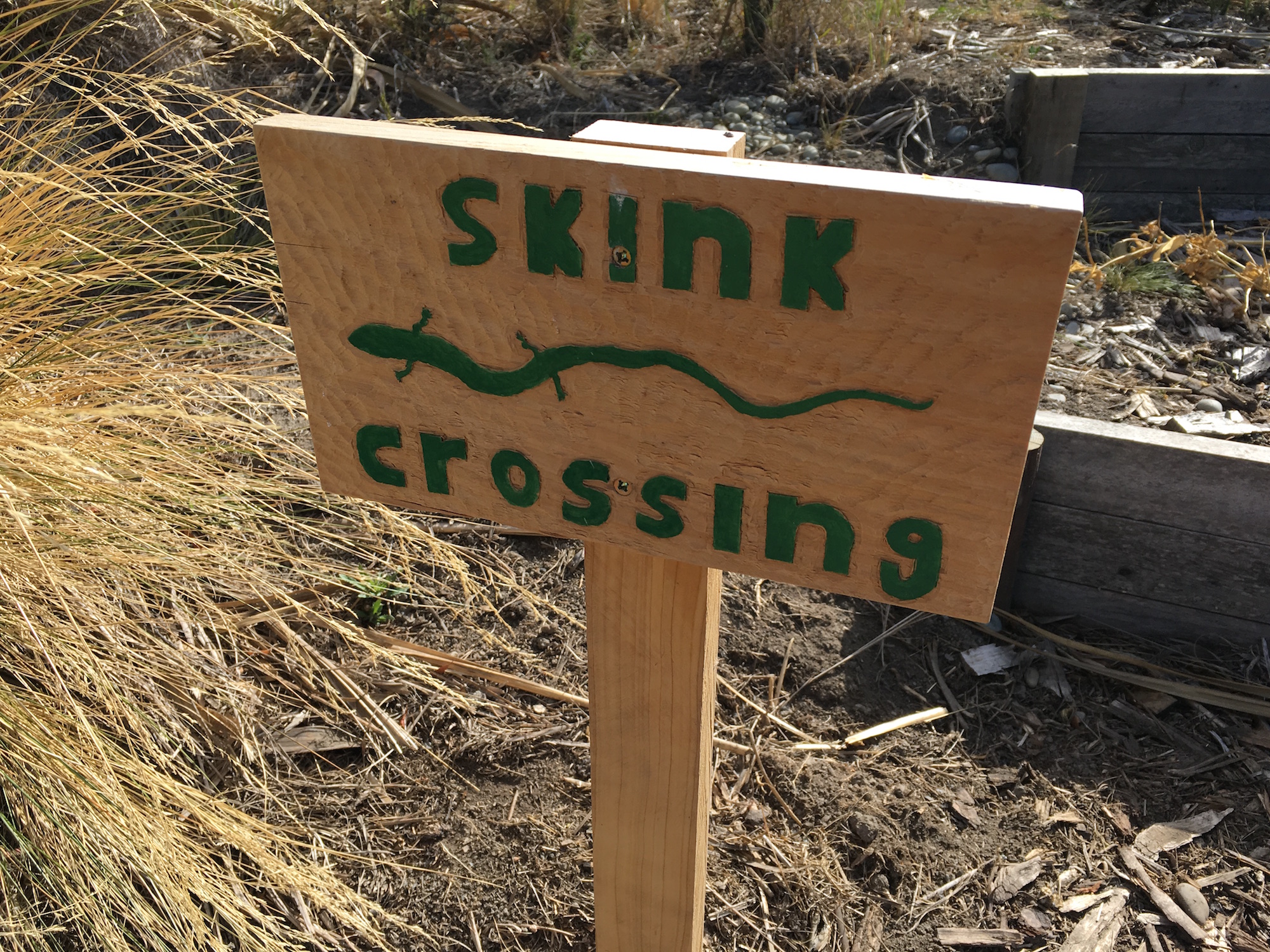
In spite of that, our property is home to native skinks (the common skink, Oligosoma nigriplantare). They stalk the vegetable garden and sun themselves on rocks in the flower garden. They rustle among the native grasses and slip into garden hoses left lying on the ground. I don’t know why we have so many skinks, but I aim to keep them here.

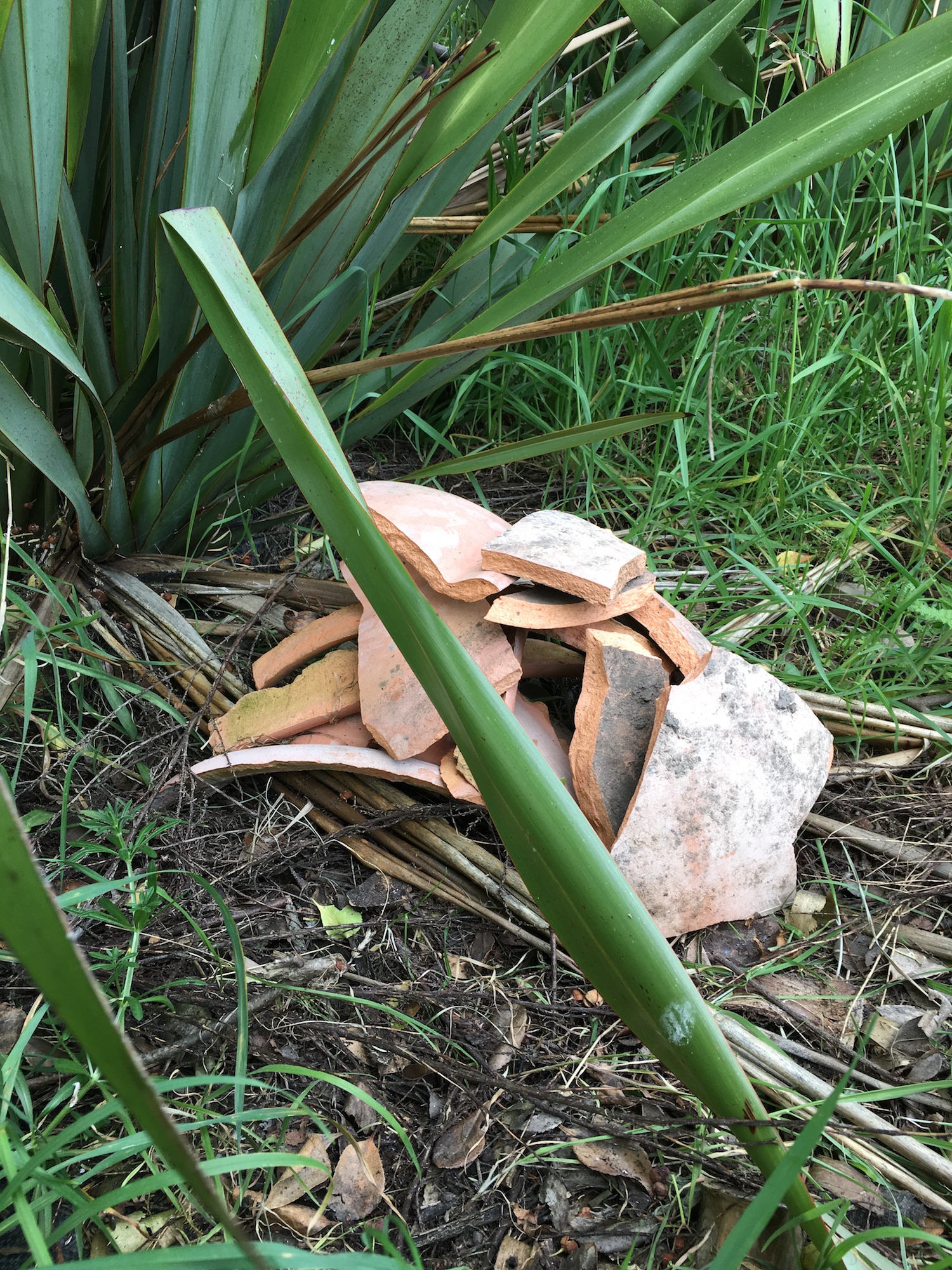
Habitat loss and predators are the main threats to skinks in New Zealand (though the common skink is not threatened, as many of our other lizards are). Skinks are preyed upon by cats, rats and stoats, all of which are plentiful around our place. We can’t eliminate all the predators, but we can provide plenty of hiding spots for the skinks. Dense native grasses, rocks, and even broken flower pots all provide shelter for skinks. The rocks and flower pots also make nice sunning spots.

Skinks eat mostly insects and spiders, along with the occasional fruit or seed snack. Our live-and-let-live attitude toward insect pests means there are plenty of arthropods for our skinks to eat. We’ve also planted a range of native plants to ensure there are berries available much of the year. (I also suspect the skinks of snapping up the currants that drop to the ground and taking the odd bite of my strawberries, but I’m happy to share.)

The end result is a healthy population of skinks on the property—welcome wildlife that makes me smile every time I see one basking outside my office window or rustling through the lettuces.

Beech Forest Hiking

I’m particularly fond of hiking in early spring. It’s not for the spring weather, which is often raw and windy, or for spring flowers, which aren’t particularly abundant in the bush. No, it’s for the lack of German wasps.

Much of the forest we hike through is dominated by beech (not the northern beech, but several species of Nothofagus). Beech is host to a fascinating ecosystem which has been invaded by non-native wasps.

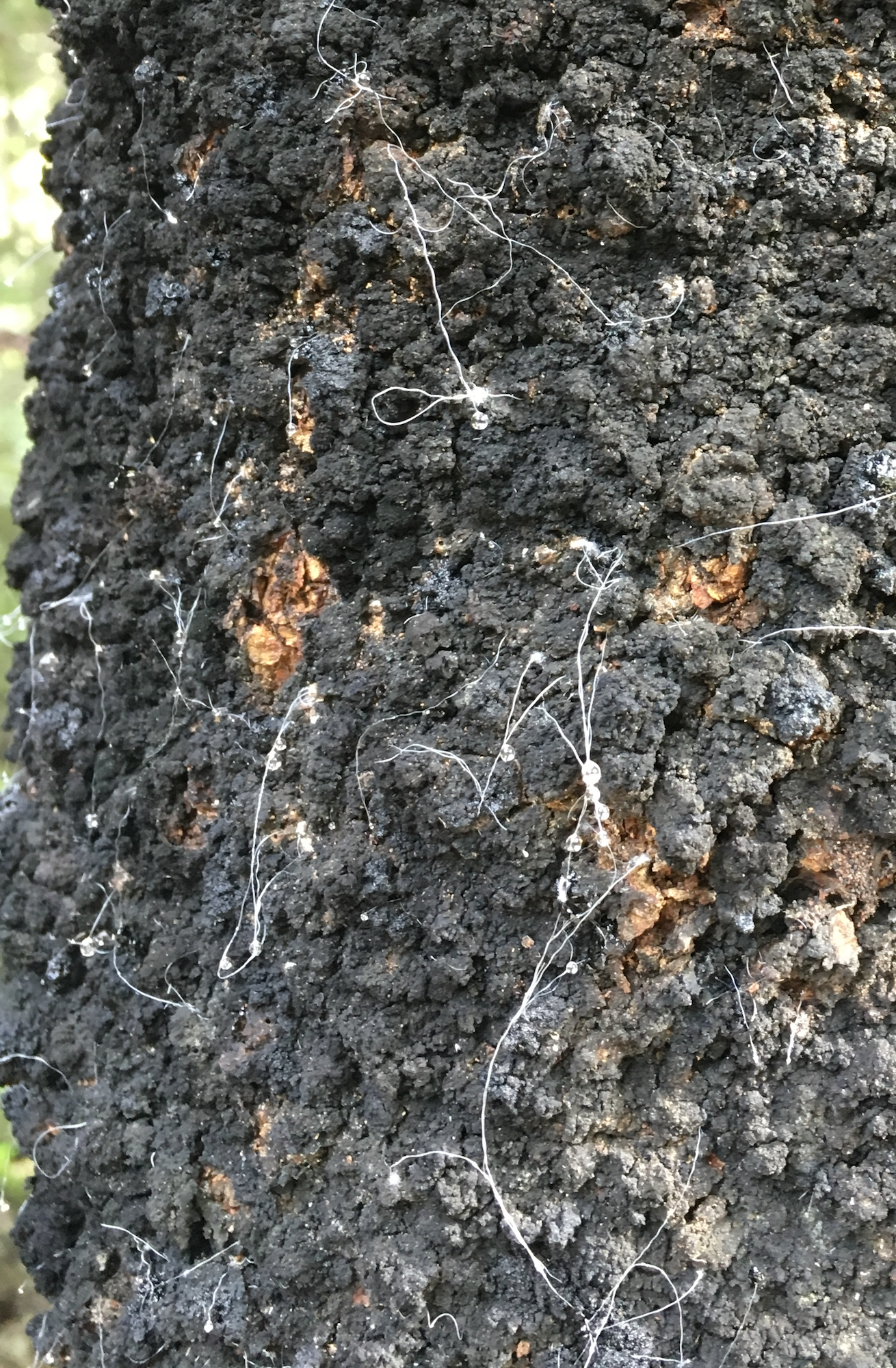
Throughout much of its range, beech is infested by scale insects. The scales live in the bark of the trees, feeding on sap. Because sap is low in nutrients and high in sugar, the insects need to excrete the extra sugar. Each insect has a long anal tube through which it ‘pees’ concentrated sugar water called honeydew.

Drops of honeydew form on the tips of the anal tubes and fall to the ground, tree, trunk, and branches around the insects. The entire area ends up coated in sticky sugar.

Sooty mould grows on the sugar coated surfaces, turning trees and forest floor black, and giving the beech forest a distinctive smell. The sooty mould is eaten by a variety of insects, including moths and beetles.

But not all of the honeydew simply drops to the ground. Native birds and insects (and hikers) drink the drops of water on the tips of the scales’ anal tubes. For wildlife, honeydew is an important winter food, when flower nectar is scarce.

German wasps enjoy honeydew, too, but only in the summer.

By mid-summer, the beech forest hums with the sound of millions of wasps collecting honeydew. For me—allergic to wasp stings—it means a hike requires constant vigilance lest I grab a tree trunk for balance and end up in anaphylactic shock. But in springtime, the wasps aren’t yet out and about, and I can enjoy the sticky smell of the beech ecosystem without worry.

Zombie Cat

A hapless zombie cat victim.

At this time of year, birds and small mammals are distracted. They’re busy fighting over territories, building nests, and mating. There are young, naive animals fluttering, scurrying and hopping about.

So it’s no surprise the cat catches more prey in spring. English sparrows, mice, rats, rabbits–he brings almost all the major vertebrate pests home and leaves them on the porch for us.

I don’t mind, really. It doesn’t bother me to have to dispose of his kills–I’m not squeamish about it, and I’m happy he’s dealing with at least some of the animals that destroy my garden and wreak havoc in the sheds.

But there’s something that worries me.

I’m afraid the cat is a zombie.

Rodents, birds, rabbits…they all show up headless. The cat doesn’t seem interested in eating anything except the head. Even on a succulent rabbit, he ignores the meaty legs and flank, and goes straight for the head.

Maybe it’s just the crunch he likes, but I think it’s more sinister than that.

Now every time he gives me his wild-eyed look, I can almost hear him say, “Braaaaaaaaaaaains.”

Spur-winged Plovers

Almost every year, a pair of spur-winged plovers (Vanellus miles, known as the masked lapwing in Australia) establishes a territory in the goat paddock. A few days ago, I was taking food to the goats, and noted where the plovers were making a ruckus at the other end of the paddock.

This afternoon, I took a walk out there. The plovers were nowhere to be seen, and I was worried–they’re not always successful nesters here. There are simply too many predators around our property.

I nearly turned around, but I decided to take a look anyway.

I was rewarded with the perfect plover nest. Two eggs, a little dried grass, and some rocks.

The spur-winged plover self-introduced from Australia in 1932. Since then, its population has grown dramatically. No surprise when you consider it likes open habitat, and is quite happy to set up house in paddocks, parks, and road verges (we once had a pair nesting in the middle of an intersection nearby).

It has done so well since it arrived in New Zealand that its protections as a native bird were removed in 2010 due largely to the problems it was causing for aircraft (airports are lovely habitat for it). It is one of only two native birds to not be protected under the Wildlife Act (the other is the black backed gull).

I enjoy the plovers. I love their harsh night-time cry, and their indignant posturing while defending territory and nest. I love the fact they cheekily nest wherever they want and expect everyone else to stay out of their way.

I’ll be watching these eggs closely. Fluffy plover chicks are even more fun to see than plover eggs.

A Look at Larvae

They’re just midges. If anyone pays attention to them at all, it’s to note how irritating they are when they swarm by the millions, here near Te Waihora/Lake Ellesmere. They are annoying at times, swarms so thick you can’t breathe without sucking in a few.

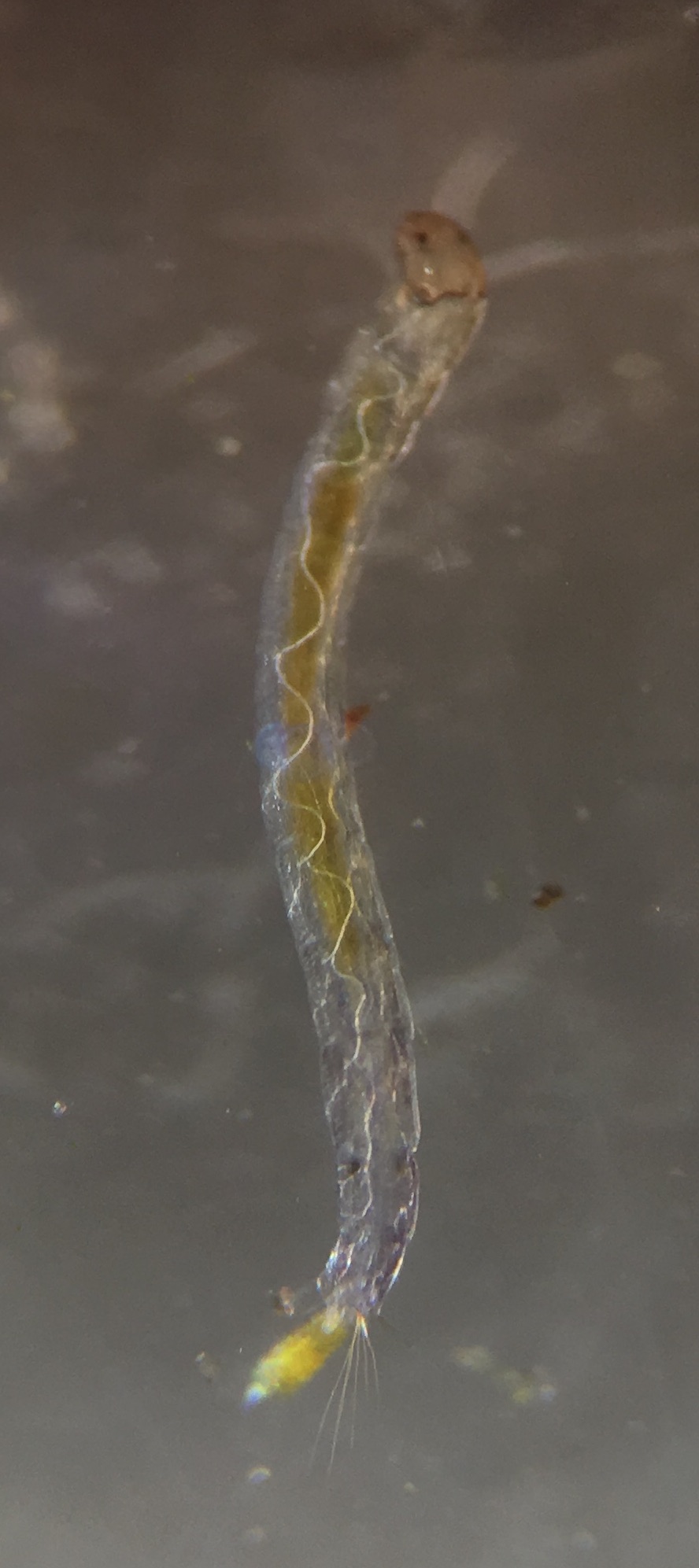
But there are few adults flying at this time of year. Most are still waiting out the winter as larvae underwater. Midge larvae are fun to look at under the microscope, as their exoskeletons are clear, allowing a great view of the inner workings of their bodies.

Seeing the inside of an insect larva helps one appreciate the job a young larva is tasked with—eat. Eat as much as you can and grow as fast as you can. A larva is little more than a mobile digestive system. The brownish streak you can see running the length of this midge larva is the animal’s gut, filled with the algae and other debris it has eaten. At the tail end, you can see, this little larva is having a poo.

Also at the tail end is a wee snorkel of sorts. These midge larvae can survive in low-oxygen water by sucking air from the surface using their snorkel. The silver lines meandering the length of the body are trachea that carry oxygen to all the insect’s cells.

This midge larva was tiny—about two millimetres long—it still has a while to grow before it’s ready to become an adult. But there are lots of other larvae out there getting ready to emerge with the upcoming warm days of spring.

Playing with Spiders

If you’ve read my blog for any length of time, you’ll know I love jumping spiders. I’m not alone. In fact, I know people who, in general, can’t stand spiders, but who are nevertheless fond of jumping spiders.

I think part of the reason people like jumping spiders is that they are such visual animals. Like us, they navigate their world using visual cues. They turn to watch something pass by. They walk around objects placed in their path. They react to stimuli in a way we can understand.

The other day, a jumping spider on the computer screen began stalking the cursor as though it were a tasty fly. My husband began to play with the spider in much the same way we dangle a string for the cat. It was terribly cute. I know the cat understands it’s a game, but I doubt the spider did. I’m sure it ended up frustrated it couldn’t catch that little dancing arrow.