Cilantro and Culantro

100_4228 smCilantro is an acquired taste. This strong herb is used in Asian and Central American cooking, and is one of those things you either love or hate.

When I first tasted fresh cilantro (Coriandrum sativum), I will admit I didn’t like it.

It wasn’t until I had culantro—Eryngium foetidum, also known as Mexican coriander—that I really learned to like the flavour (Never mind that the scientific name means ‘foul-smelling thistle’).

In Panama, both are eaten, and though they are only distantly related plants, they serve the same culinary purposes, with similar flavours. Panamanians consider Eryngium foetidum the ‘real’ cilantro, and call it simply culantro. Coriandrum sativum is called culantro Chino (Chinese cilantro).

Culantro grew wild in our lawn in Panama, and we weren’t long in the country before we were eagerly searching it out to flavour our dinners. It was a disappointment to return to the U.S. and find we could only get culantro Chino—positively bland in comparison to the foul-smelling thistle we grew to love.

But we’ve since grown fond of Chinese cilantro, too. It grows year round here. In fact, it’s as much a weed here as culantro was in Panama, and I find it cropping up all over the place. It does a lovely job of providing a year round crop without any work on my part at all. I just need to be open-minded about leaving the ‘weeds’ where they sprout.

Favourite Garden Tool–Machete

100_4045 smI learned to use a machete in Panama, where it became an extension of my arm. I learned my macheteing technique from greats such as Julián Valdéz and Onofre Gonzales. Not having been born with a machete in my hand as they were, I could never match their skill, but by the end of my two years, I could at least keep pace with a crew clearing brush for a new crop. Of course I could only do this because I’m ambidextrous, and when my left arm gave out, I could switch to the right. But, hey, that meant I was at least half as good as the farmers around me!

In rural Panama, a machete may be the only tool a farmer owns. It’s used for everything from taking down trees three feet in diameter to paring one’s toenails. Machetes are kept razor sharp, and if a farmer isn’t using her machete, she’s probably sharpening it. All that use wears them down. As a machete grows smaller and smaller, its use changes—from land clearing, to weeding tool, to kitchen knife. The smallest ones are given to little children, who proudly toddle around with machete in hand—able to help around the farm now they have a tool.

When I left Peace Corps, I sadly had to leave my “Collins”* behind—it was Peace Corps issued, and went to the next volunteer in my village. But I couldn’t live long without a machete, and soon had another upon my return to the United States. Actually, we had three…size is critical, and you have to get just the right one, so my husband has a long one, and I have a shorter one, and we have an even shorter one that fits neither of us well, but is useful for edge-destroying activities.

Those machetes came to New Zealand with us when we moved, and they are as useful here as they were every other place we’ve lived, though they get odd looks from the neighbours.

Here in the developed world, the machete is an anachronism of sorts. Its jobs are done by petrol-powered weed whips, chainsaws, saws and secateurs.

But there is something satisfying about a tool that can do just about anything. A tool that never breaks down, doesn’t need fuel, and requires only simple maintenance—sharpening—easily done with a file or even a chunk of concrete.

And of course, as the forerunner of the sword, a machete comes in handy if you happen to come across a dragon in the garden…

*Collins is a favoured brand of machete in Panama.

Overspray

100_4002Planting out, I scrutinise each plant for health. I discard damaged or poorly growing plants. I pick off pests.

But there are some problems I can’t do anything about.

The neighbour’s 2,4-D overspray is one of those.

2,4-D is a broadleaf herbicide that has become increasingly popular with our neighbours over the past five years. Unfortunately, it is extremely volatile, so if the wind is blowing our direction when they spray, we are enveloped in a cloud of herbicide.

It usually doesn’t kill our plants outright, but it has long-lasting effects on them. Grapes are particularly susceptible, but we’ve had damage to nearly every vegetable crop in some years. Some plants, like the green beans, seem to be able to ‘grow out’ of the damage. Others never do, and the effects of an early spring spray can still be seen at harvest time in late summer.

This year, the first overspray hit us in mid-October. Though the frost-tender crops weren’t in the garden yet, they were in the greenhouse, and didn’t escape damage.

I’d surveyed the damage in general as the plants were massed in the greenhouse, but as I inspected each plant at plant out time, I saw the full extent of the damage.

The most obvious early sign of 2,4-D damage is deformation of the leaves—they elongate and curl, and develop odd-looking venation. They can also bleach, sometimes looking nearly white. This year, the tomatoes were particularly hard-hit, with almost all the young leaves deformed. Eggplants, too. Thankfully, the peppers seem to have escaped, and many plants weren’t even up yet, so they made it, too.

I accept that my neighbours aren’t organic farmers, and that they have little control over when the contractor comes to do their spraying, but still it is discouraging to face the same overspray problems year after year.

Compost Pile

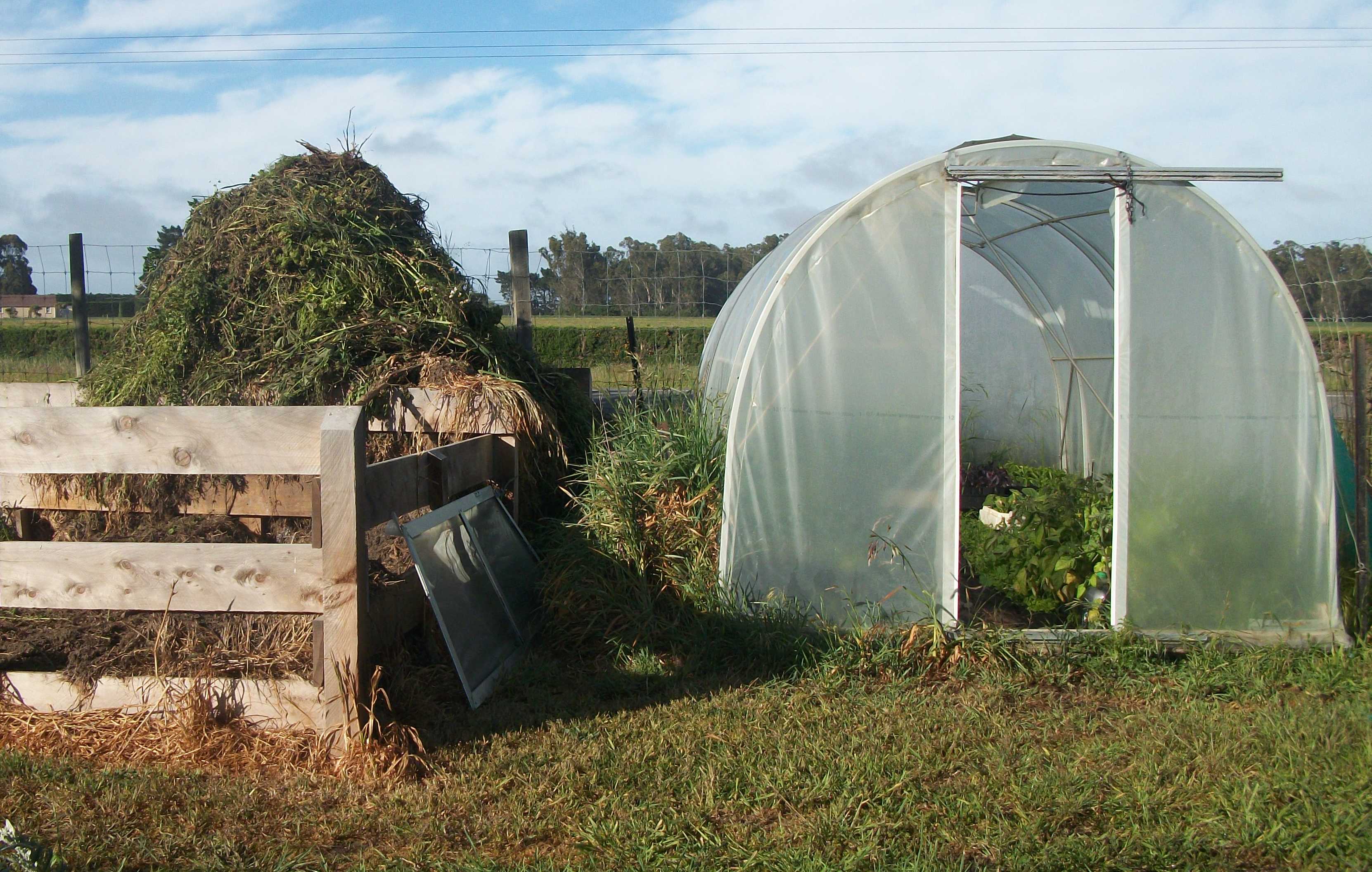
100_3973 cropMy husband calls it Mt. Robinne, and sometimes it feels like I’ve heaved an entire mountain onto the compost pile. This is my first spring with the new compost bins. They constrain the spread of the pile, forcing it upward.

Today I put the last of the winter weeds on the pile. From here on out, I’ll leave most weeds lying in the garden paths to act as mulch. This is as tall as the compost pile will get this year.

Good thing, as it reached the height of the greenhouse this morning. The pile will sit there sintering for a few weeks. When I’ve recovered from the springtime garden preparation, and when all the plants are planted out, I will move the mountain again, turning and watering the pile so that it composts properly.

For now, though, I’ll enjoy the respite from mountain building.

Siren Call

100_2141I fidget at the computer.

Perhaps the greenhouse needs watering.


I fling open the office door.

The smell of grass reminds me I need to mow.


I type a few words

Then delete them.

Do the goats need their hooves trimmed?

Maybe I should go have a look.


I check my e-mail.

I watch a pair of sparrows build their nest.


I should be working, but

You know, if I just did half an hour of weeding now

There would be less to do on the weekend.


Perhaps an early lunch.

I’ll sit in the sun, bare feet in the grass.


And then, perhaps…


I will give in, and follow the siren’s call

To the garden.

Grasp the Nettle

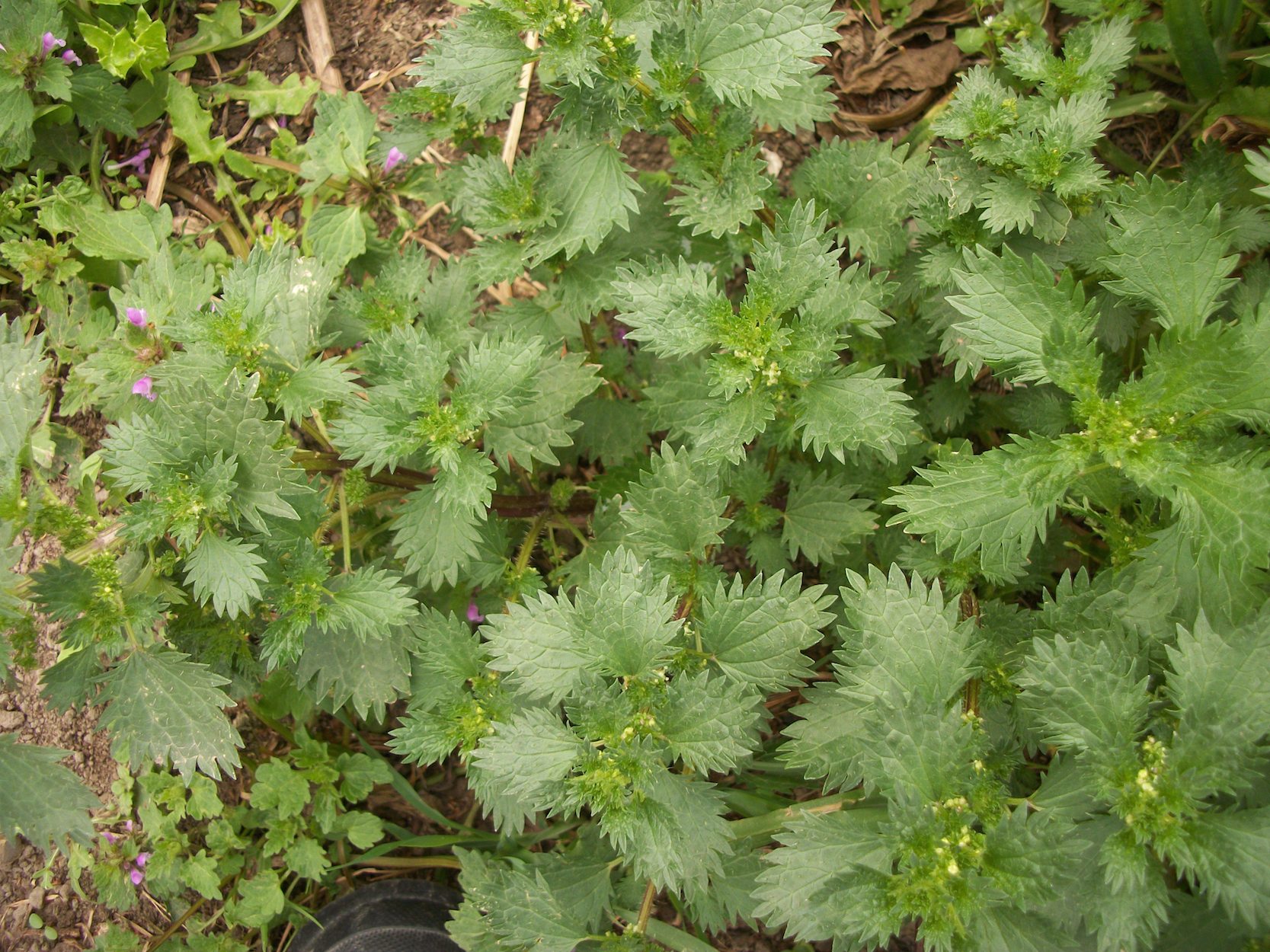
100_3950 smMy garden is blessed and cursed with an abundance of nettles. Blessed because they are the larval food plants for two attractive native butterflies—the red and the yellow admiral. I love watching the butterflies flit around the garden!

Blessed because nettles only thrive in good soil, and mine are the most vibrant and robust nettles anywhere.

Cursed because…well…they’re nettles. Careful as I may be, I can’t avoid being stung on a regular basis.

But like all problems, meeting them head-on is the best tactic. As they say, grasp the nettle. A nettle that brushes gently against your skin as you’re trying to avoid it will almost always sting. But grab a nettle firmly, even with bare hands, and you can usually pull it out without pain.

It really is a good metaphor for life (even if most people have no idea what it means).

And so I dive into the nettles of life like I dive into the ones in the garden—grappling them bare-handed and pulling them out with a quick, confident tug.

At least, that’s the theory, anyway…