Supreme Spring Salad

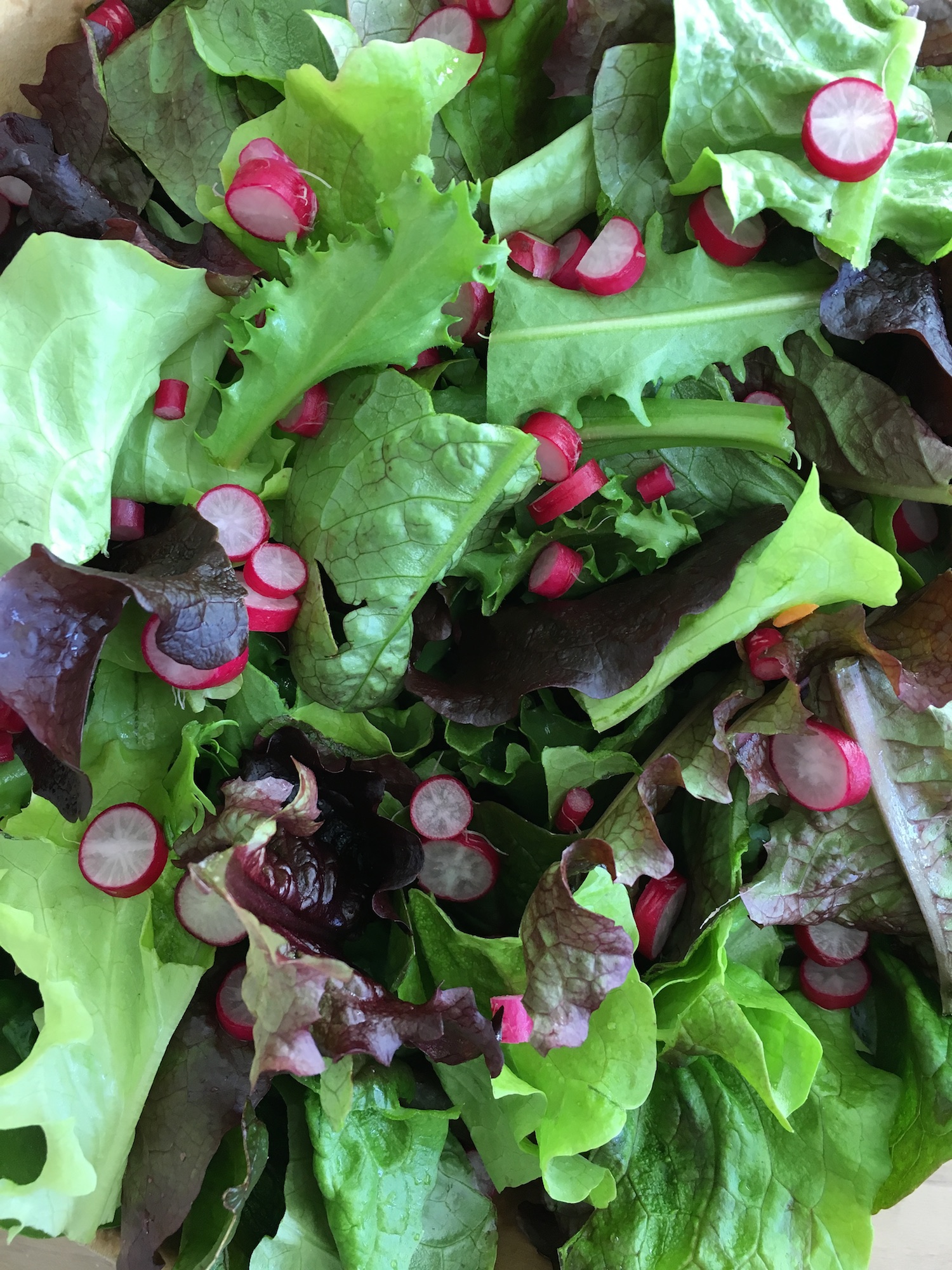
2016-10-21-17-49-45-smWe had occasional salads all winter, from the fall planting of lettuces and spinach. We’ve also had several salads from this spring’s lettuce planting. But all these salads have been small, and have required me to scrounge every available leaf to glean even a modest quantity.

Today’s salad was the first of the Supreme Spring Salads—salads for which I have so much lettuce, I can choose to pick only the best, most perfect leaves, and can adjust the proportions of each variety to perfectly suit the meal. I also had a few lovely radishes from my daughter’s garden to add to the salad, making it even more perfect.

And this was just the first. With luck (and a fair bit of weeding), we’ll have many more Supreme Salads to look forward to in the coming months.


All Hail the Bucket

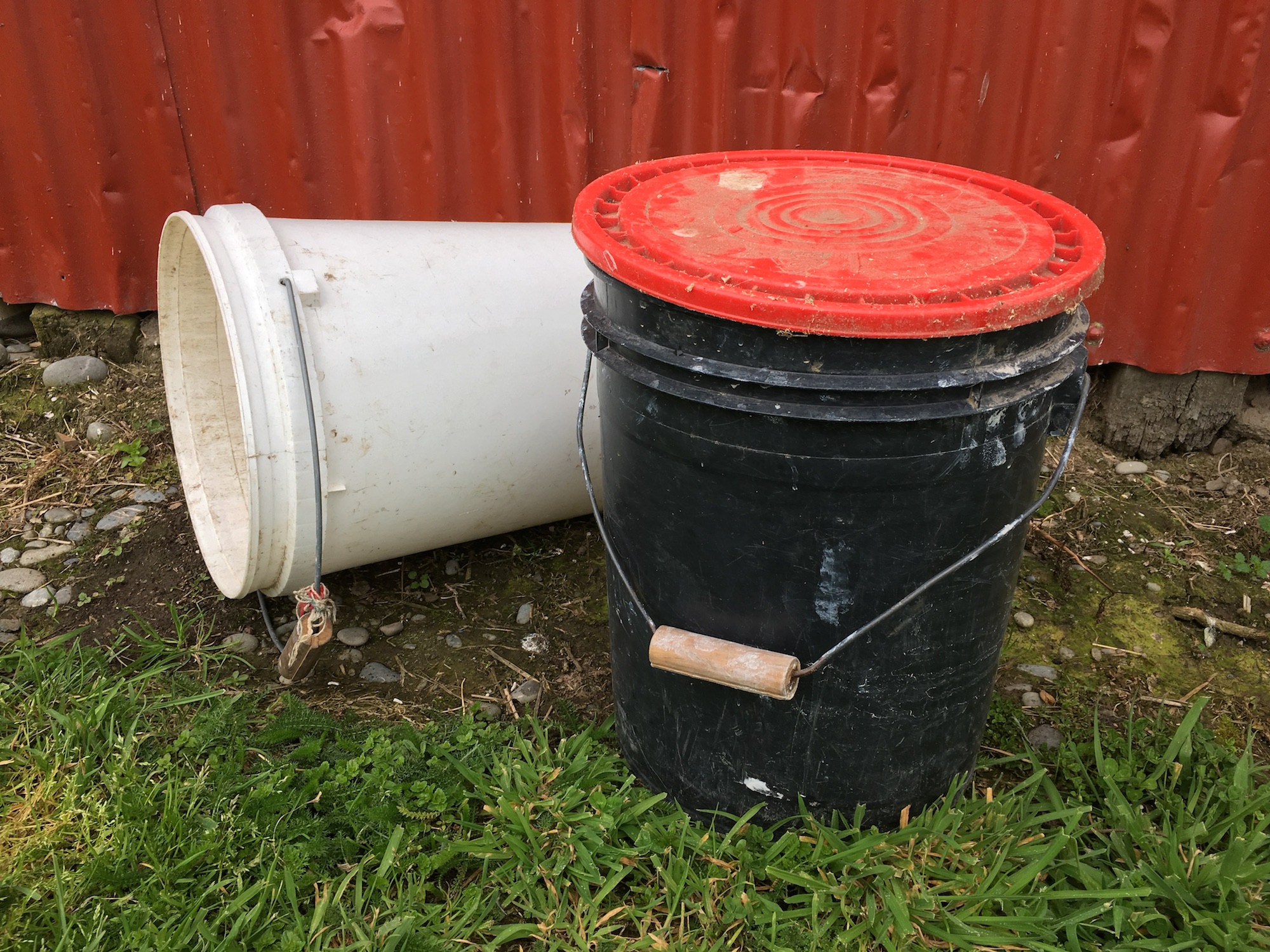
2016-10-14-10-44-19-hdrsmWhere would civilisation be without the 20-litre (5-gallon) bucket? We own seven of them, and it’s common for all of them to be in use simultaneously.

I can’t look at a 20-litre bucket without seeing a…

  • Washing machine—In Panama, we washed our clothes in a 20-litre bucket.
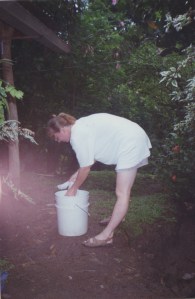
  • laundry-smShower—The bucket was also our shower in Panama. We would fill it with water and haul it out to our “shower” enclosure. Half a coconut shell made a scoop for pouring out the water for washing.
  • Brewery—Panamanians brewed and served the local corn alcohol in 20-litre buckets, and my husband brews beer in one.
  • Punch bowl—We used a bucket as a large punch bowl for parties in Panama.
  • Diaper pail—With tight-fitting lids, 20-litre buckets make great diaper pails for cloth nappies. They were an essential part of our baby gear when our kids were that age.
  • Watering can—Several of our current buckets have holes drilled in the bottom, and we use them to provide drip irrigation for the fruit trees.
  • Wheelbarrow—We use buckets to haul everything from rocks to weeds in spaces where the wheelbarrow can’t go.
  • Measuring cup—The 20-litre bucket is a handy unit of measure when mixing concrete.
  • Rubbish bin—A 20-litre bucket is the perfect size for a rubbish bin in the shop or shed, and it’s tough enough to handle the rough treatment a shop bin gets.
  • Grain bin—Tough plastic and a tight lid keep mice and rats out of the grain.
  • Stool—I regularly turn our buckets upside down to use as stools for reaching items on high shelves in the shed. I suppose you could also sit on them, if you were inclined to rest.

I could lose a lot of tools and get by easily without them, but I’d be hard-pressed to do without my buckets.

Aesthetics vs Production

2016-10-08-16-01-56-smThere is tension in our garden—tension between the gardener who focuses on production and the gardener who focuses on aesthetics.

When the aesthetic gardener suggests a circular pattern to the vegetable garden, with a bench and sundial in the middle, the functional gardener rolls her eyes and asks how she’s going to manoeuvre a wheelbarrow around a bench and sundial. When the production gardener staples deer fencing onto her trellises instead of using the more attractive, but less functional jute, the aesthetic gardener shakes his head with dismay.

But production and aesthetics don’t have to clash. Indeed, they often go hand-in-hand. What makes for efficient production is often aesthetically pleasing.

Take the berry beds at Crazy Corner Farm, for instance. Three long rows with grass paths in between. Every spring, I spend days with a flat shovel re-establishing the edges of the beds—making them crisp and straight. It makes good sense from a production standpoint—it keeps the grass from creeping in to compete with the berries. It also makes it easier to mow if the grass doesn’t spread underneath the bushes.

Aesthetically, the crisp straight edges are perfect. They invite an evening stroll down the paths, and give a pleasing long view all the way from the front to the back of the property.

When the edges are tidy and the paths mown, both gardeners can relax and enjoy the view.

Order from Chaos

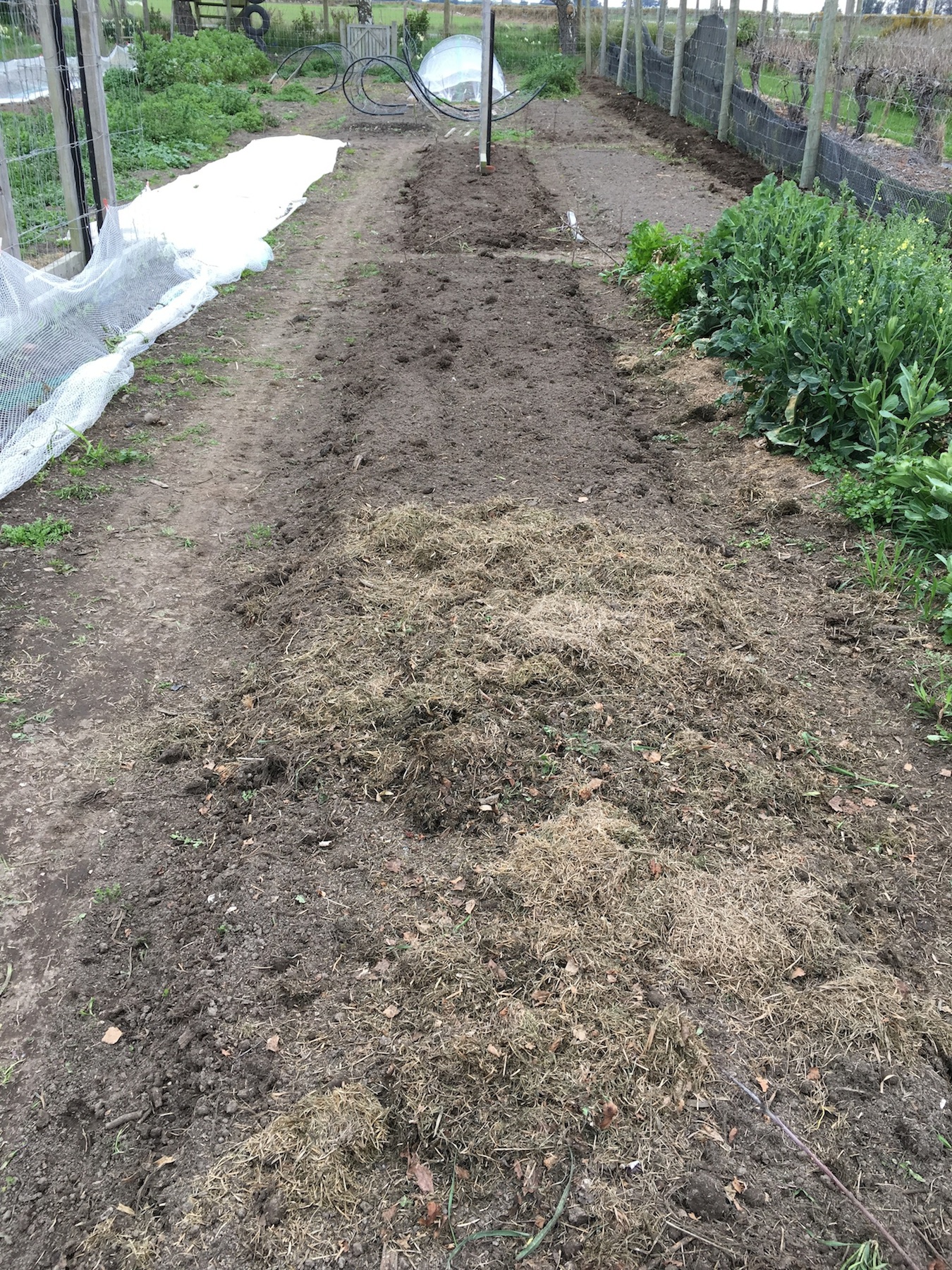
2016-09-24-15-04-00There’s something pleasing about the garden as I start to prepare the beds. I can’t prepare the whole garden at once—it’s simply too big—so I do it bed by bed. Two or four a weekend, until all thirty-two are done.

I’ve planned the garden over winter, so I know what will be planted in each bed. I choose which beds to prepare each weekend based on when each crop gets planted. So I end up with a patchwork of beds—some waist-high in weeds, others beautifully prepared and ready for planting, some already planted. Every weekend, the weeds are fewer and the tidy beds more numerous.

Little by little the work gets done, the garden gets planted, until that magical day in mid-November when it’s all done, and neat rows have replaced sprawling weeds.


Saturday Stories: Gardener’s Ballad

DSC_0003 copy

I couldn’t resist a story in verse this week…

A gardener’s life is full of shit
And compost is the best of it.
Now hear a tale of a gardener who
Rose to fame on a pile of poo.

T’was springtime when, as all do know
Young green things are apt to grow.
And Sally, your young gardener fair
Prepared the soil with skill and care.

She turned it with her spading fork.
And pulled the weeds, such heavy work.
Then went she to the compost pile.
Which had been rotting for a while.

Cow pies, weeds and chicken poo,
Mouldy hay she’d added, too.
It made a rick and crumbly mix.
The deficiencies of her soil to fix.

Into the soil her compost went.
She mixed, raked it, then she bent
And lovingly she planted seed
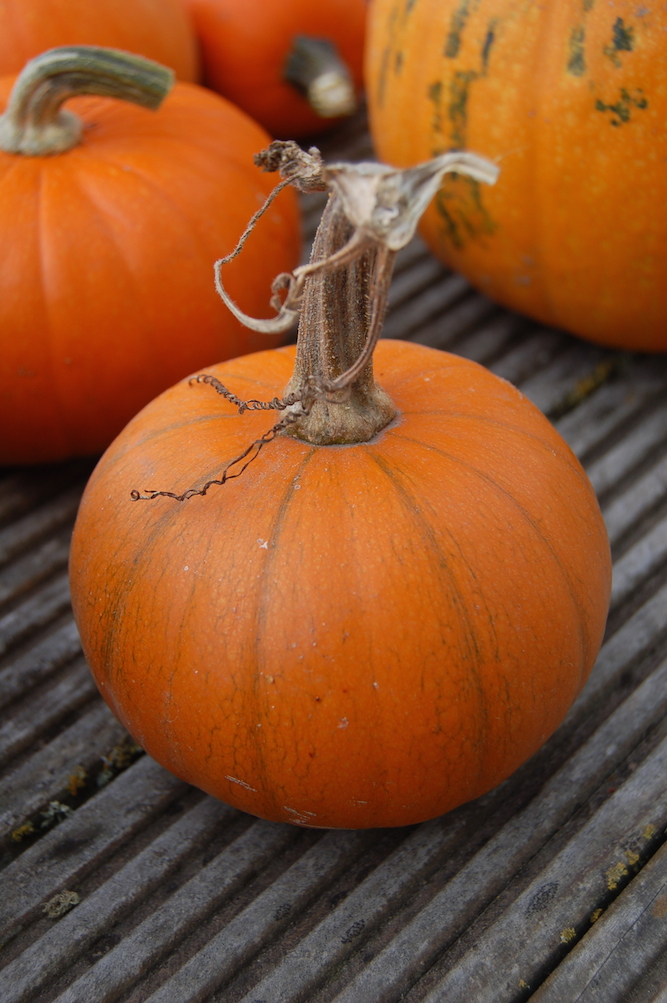
‘Atlantic Giant’, yes indeed.

For this year, she would beat them all
Win biggest pumpkin in the fall.
All summer she did weed and water
As though the pumpkin were her daughter.

The pumpkin grew, and grew, and grew.
Drawing nutrients from the poo.
And Sally grinned as the contest neared.
She thought of past competitors who jeered.

But this year, she would have last laugh.
She had the biggest pumpkin by half.
Fifteen hundred pounds it weighed.
A large blue ribbon on it laid.

Sally was famous, her gardening lauded.
And all the spectators loudly applauded.
And when she was asked, just what did she do,
She calmly replied, “I just fed it some poo!”

Be a Plantain

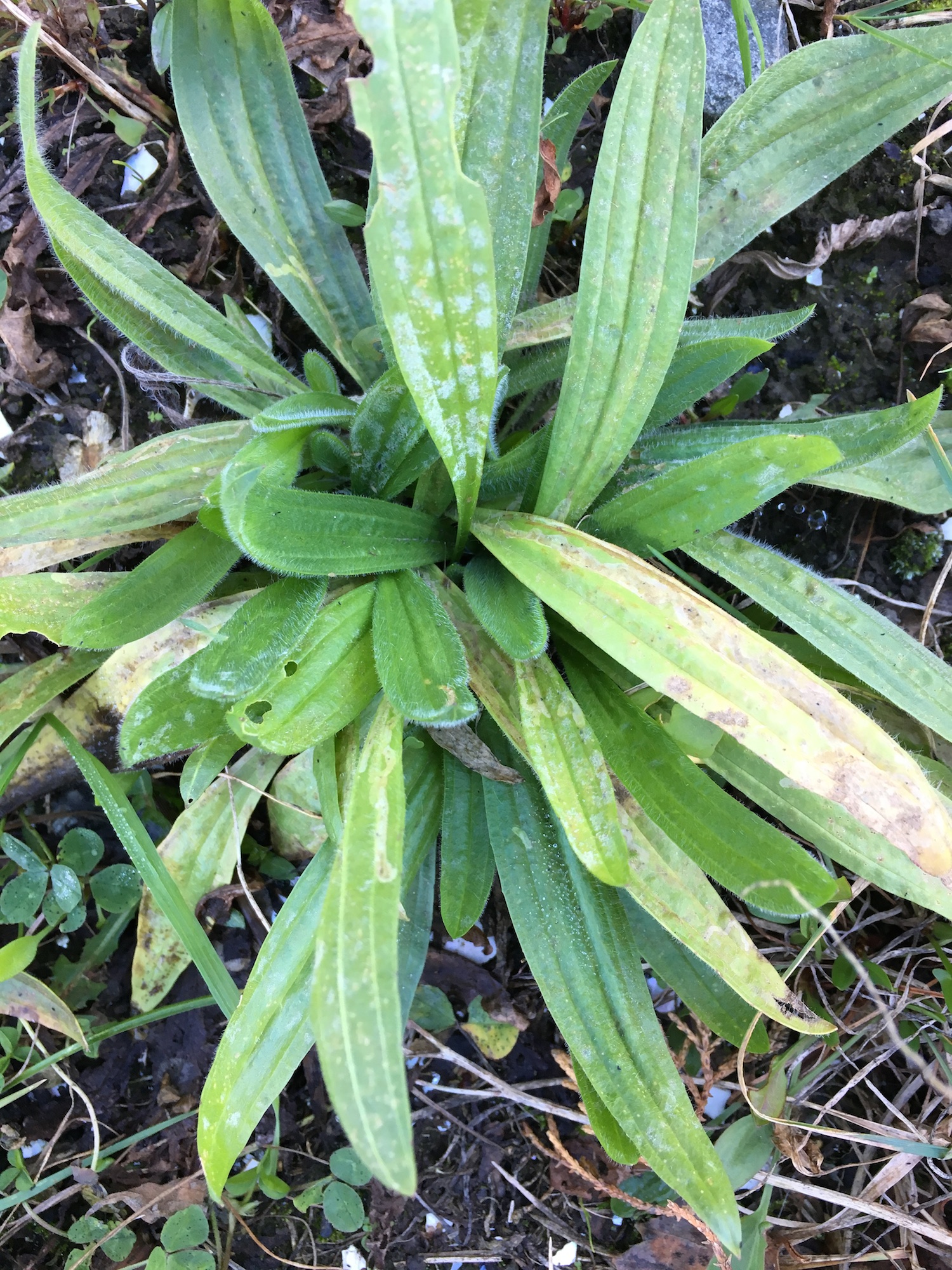
2016-06-29 14.01.15 smWeeds are survivors—that’s part of what makes them weeds—and none more so than the lowly plantain. This plant, carried throughout the world by European colonists for its medicinal uses, thrives in even the most inhospitable places.

It is common along roadsides and paths, in lawns, and even in the tiniest of cracks in pavement. It withstands trampling and mowing, and can resprout from pieces of root left in the soil.

It was known by the Anglo-Saxons as waybread or waybroad, for its habit of colonising roadsides, and it was revered for its tenacity.

And thou, Waybroad,
Mother of Worts,
Open from eastward,
Mighty within;
Over thee carts creaked,
Over thee Queens rode,
Over thee brides bridalled,
Over thee bulls breathed,
All these thou withstoodest
Venom and vile things
And all the loathly ones,
That through the land rove.

Anglo-Saxon poem about plantain, as reproduced in A City Herbal, by Maida Silverman.

As a gardener, I should despise plantain’s tenacity, it’s ability to invade and overtake my garden. Instead, I side with the Anglo-Saxons—I admire it. I might even say I aspire to be as tenacious myself.

Be tough. Be strong. Thrive in spite of the tramplings of life (or the bridalling of brides). Be a plantain.

My Love/Hate Relationship with Yarrow

2016-06-24 13.33.30Growing up, yarrow was a flower to be dried for arrangements. An innocuous plant that grew along the roadsides. I liked the flowers, and I loved the insects and spiders it attracted.

It wasn’t until I moved to New Zealand, where yarrow is a pernicious weed in my garden, that I began to consider yarrow more closely and learn more about it.

Yarrow is native to Europe and parts of Asia, but has been spread widely, because of its many uses.

It is referenced in Homer’s Iliad as being used for stanching wounds, and has been used all over the world for many other medicinal purposes—from reducing fevers and soothing earaches, to curing urinary problems and head colds.

Yarrow was probably originally brought to New Zealand as a medicinal plant, but it has other uses that are more valid than the medicinal ones.

Today yarrow is a common pasture plant. Its deep rhizomes make it drought resistant, and it is higher in certain key nutrients than either ryegrass or white clover. I discovered this when I began to worry about the goat paddock. After two dry summers, the yarrow was taking over a big swath of the paddock. I worried, knowing that to remove that much yarrow would be a Sisyphean task—dig it out and any bits of rhizome left in the soil will simply resprout. Even herbicides are largely ineffective against yarrow.

So I was thrilled to learn that its virtues went beyond pretty dried flowers, and that I could ignore it in the paddock.

Of course, it grows everywhere, and isn’t bothered by mowing. But that has benefits, too. This past summer, when all the grass of the lawn was brown and dead, the yarrow remained some of the only spots of green.

And then there are the insects it attracts, which I naturally love.

And so, I love yarrow…and I hate yarrow. Either way, I have to live with it.
Adventure on Kaitorete Spit

2016-06-11 11.10.09 smSaturday morning, we took advantage of the lovely weather to take a walk out on ‘our’ beach. Not just any old walk, but one that would take us beyond the lake opening onto Kaitorete Spit.

I can’t believe that in the eleven years we’ve lived here, we’ve never done this before. We’ve walked to the lake opening many times, but always when the lake was open to the sea, to see the dolphins and seabirds that congregate there eating the fish migrating in and out of the lake.

But our goal this time was the wild tip of the spit.

You would think that a mere couple of kilometres would make little difference in the beach, but the change was positively stunning.

On ‘our’ part of the beach, the dunes are covered in non-native shrubs and ice plant. Not a native plant to be found.

An hour’s stroll out onto the spit took us into a different world. Non-native plants all but gone on the dunes, replaced by pingao. Behind the dunes, native broom, Raoulia (vegetable sheep), and Muehlenbeckia.

The shape of the dunes was different. The whole effect less verdant and more windswept.

Naturally, we searched for kātipo spiders among the pingao, as this is one of the few places this endangered spider can be found. We found none, but we did find a number of other spiders, lots of spider egg cases, and a couple of sand scarabs (including an adult, which was a first for me).

We knew all this was out there, but knowing and having experienced it are two different things.

And now that we understand what’s out there, I’m sure we’ll be going back again soon.

The Winter Staff Have Arrived

Some of the girls, enjoying what's left of the peas and eyeing up the newly planted broad beans, protected by netting.

Some of the girls, enjoying what’s left of the peas and eyeing up the newly planted broad beans, protected by netting.

I don’t know whether I appreciate my chickens more for their eggs or for their winter garden maintenance.

I turned the girls out into the vegetable garden for the winter today, and was happy to see them rooting around for grass grubs, which were a serious problem this year, and eagerly grazing on weeds.

I used to injure myself every spring when it was time to clear the winter’s weeds and prepare the garden beds. Now I employ the chickens in the garden all winter, and my springtime bed preparation is a breeze (comparatively speaking, anyway).

They keep the weeds down and reduce the pest populations, and the love the rich foraging the garden offers, as their summer paddock is practically bare by now.

Of course, there’s always a risk—now and again the chickens will get into the winter crops—but the benefits are worth it.

The chickens think so, too.


Too Late

Newly sprouted, out-of-season apple leaves.

Newly sprouted, out-of-season apple leaves.

The weather finally turned last night. After five days of hot, gale-force winds, after seven months of summer weather, we finally got a hard southerly storm. Three centimetres of rain, a bit of hail, and howling winds—a proper ‘winter’ storm.

But it’s too little too late. By yesterday afternoon, half a dozen shrubs around the property had simply given up in the heat and dry. The apple trees, having lost their leaves to drought six weeks ago, had already flushed again with the unusually warm weather. Those leaves will almost certainly be killed by frost, if not tonight, than another night soon. The trees will struggle to leaf out in the spring, because of their wasted effort now.

The lawn is little more than dirt in patches. If anything resprouts, it will be weeds, not grass. And the winter crops in the garden had already bolted from the heat.

I’m thankful for the rain. I’m pleased to have a full rainwater tank, and the early spring crops that are just now putting on growth will benefit from the water now.

But for the sake of the groundwater, I hope it keeps raining, because we need a lot more.