Smells Like Spring

I know, technically it’s still winter. We’re still likely to have icky, cold, wet weather. There will be ice on the water troughs, and frost on the grass in the mornings. There are still plenty of weeks left in the skiing season. And I won’t even think about planting anything out in the garden for at least six weeks.

But yesterday smelled like spring.

That heady combination of lanolin, damp soil, and cut grass.

It sounded like spring, too, with magpies warbling in the trees, swallows chittering overhead, and lambs bawling in the paddocks.

It is not spring. Not yet. But the days are lengthening and the first daffodils are beginning to bloom. It’s time to finish all those indoor winter projects. Spring is on its way.

Happy New (Garden) Year!

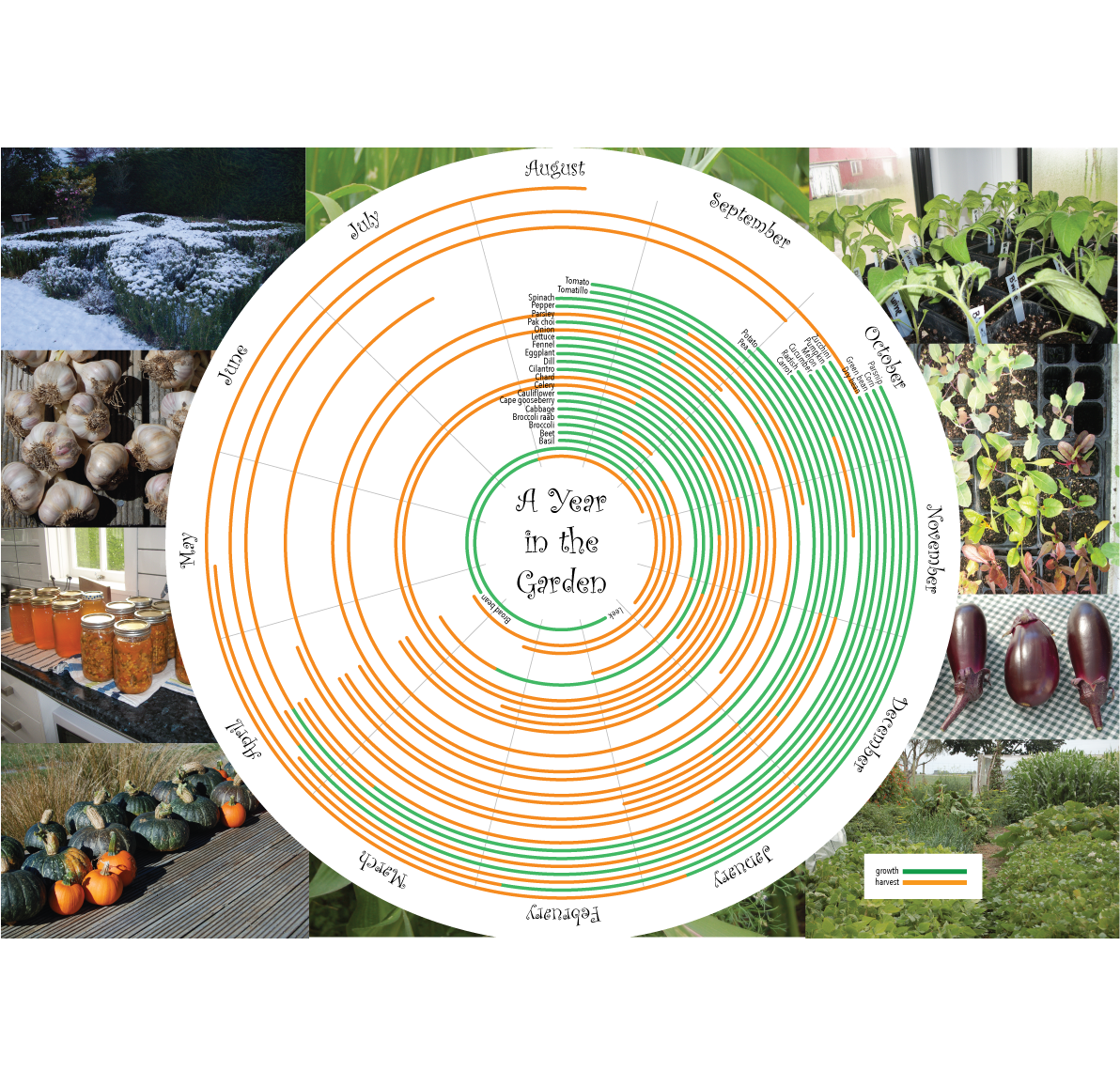
I love the month of July; it’s the beginning of the garden year in my mind, because it’s the month I plan the garden and order my seeds. It’s been a few years since I blogged about my garden year, so I figured it was time to do it again. I unearthed this little graphic my husband helped me create a few years back, showing my annual planting and harvesting schedule. It has changed a little since then, and I notice some crops, like garlic, are missing from it, but it’s still a fairly good indication of my year in the garden.

I struggled the first few years here. Coming from the Northern Hemisphere, I had no idea when I should plant things. And the idea of growing vegetables over winter was foreign to me, too.; gardening in Minnesota and Pennsylvania is sharply seasonal. It’s seasonal here, too, but much less dramatically so.

Instead of growing a ton of spinach over the summer and freezing it for winter, I learned to simply plant small quantities regularly throughout the year, for a perpetual supply of fresh greens. Same with lettuce, chard, broccoli, cabbage, and cauliflower.

Today my garden year ebbs and flows, but there is never a down time in the garden. There is always something to plant, weed or pick. The end of last year overlaps with the beginning of this year, so while I plan my seed order, I’m harvesting the lettuces, broccoli, leeks and other late crops planted in the autumn, and I’m weeding the garlic and broad beans that will be harvested in the coming spring and summer.

Sometimes I miss the complete downtime of gardening in Minnesota—the winter lull when there’s no need to go out and weed in the cold. But only sometimes. The never-ending garden year here has its perks in garden-fresh vegetables year-round.

Garden Shift

From one day to the next it happened.

The garden went from newly planted to bursting and full.

It will get much more crowded before summer is over—I usually lose most of my paths by mid-February—but it has lost the widely-spaced springtime look.

It is always such a surprise and a pleasure when it takes on the summer look. It’s like the moment when you look at your teenager and you can see the adult s/he is becoming. It’s a phase shift, and though it comes on gradually, there is a magical moment when you suddenly see it.

I walked through the garden today for no reason, just for the pleasure of walking among those wonderful, full rows of plants.

An Abundance of Artichokes

It’s a terrible thing, having excess gourmet vegetables. We are in our usual springtime artichoke excess. It’s not unusual for us to eat eight or nine artichokes five days out of seven.

A quick online search shows artichokes currently selling for anywhere from US$3 to 10 per pound (that’s NZ$9-31/kg). Given we easily eat a kilo per meal…Well, you get the idea. If we had to pay for them, we couldn’t afford them.

Of course, the problem remains–what do you do with that many artichokes? We preserve quite a few for use at other times of the year, but that still leaves plenty to enjoy during the season.

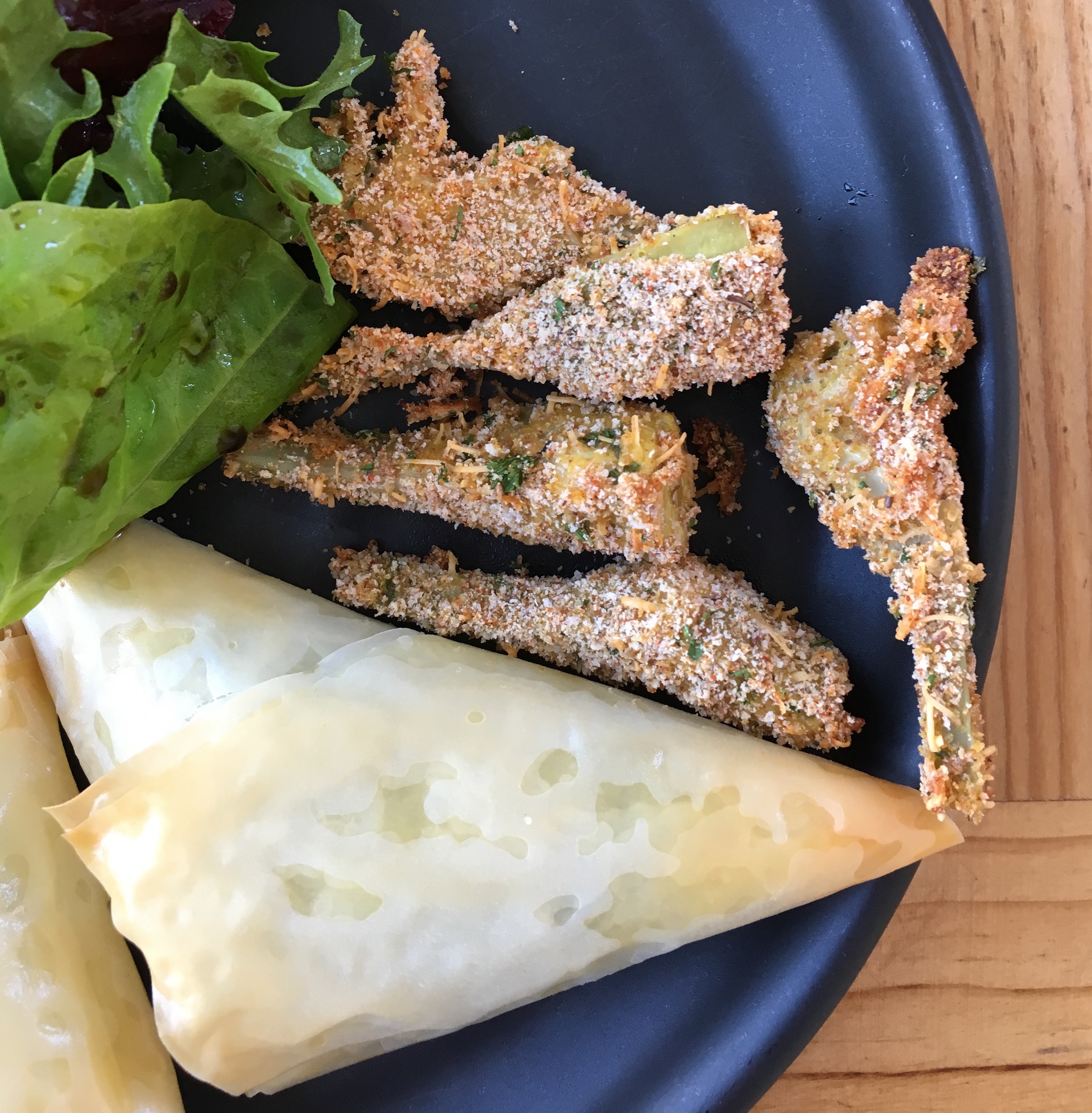
We eat a lot of artichokes in risotto, pasta, pizza, and gratins. The other day, I tried a new way of preparing them–crusted with parmesan and baked.

It’s simple, if a bit time-consuming (it would be trivial if you simply bought canned or frozen artichokes).

First, prepare the artichokes: snap off the outer leaves, peel the base and stem, trim off the top 1/3 of the leaves, remove the choke and any spines on the inner leaves, and cut the remaining heart into wedges. Drop wedges into a bowl of lemon juice and water as you go to avoid browning. Drain and steam for 3-5 minutes, until just tender, but not falling apart.

Then prepare the breading: mix in a medium bowl 1 cup bread crumbs, 1 cup grated parmesan cheese, 1/4 cup finely chopped parsley, 1 tsp salt, 1 tsp paprika, 1/8 tsp cayenne, and black pepper to taste.

In another bowl, beat two eggs.

Dredge the artichoke wedges first in the egg, then in the breading to coat thoroughly. Arrange in one layer on an oiled baking sheet. Bake for about 20 minutes at 190°C (375°F) until brown.

I served them plain, but they would be lovely with a dipping sauce like aioli or skordalia. They made a delicious accompaniment to the tiropitas (spinach and feta triangles) and salad that rounded out the meal.

Subterranean clover

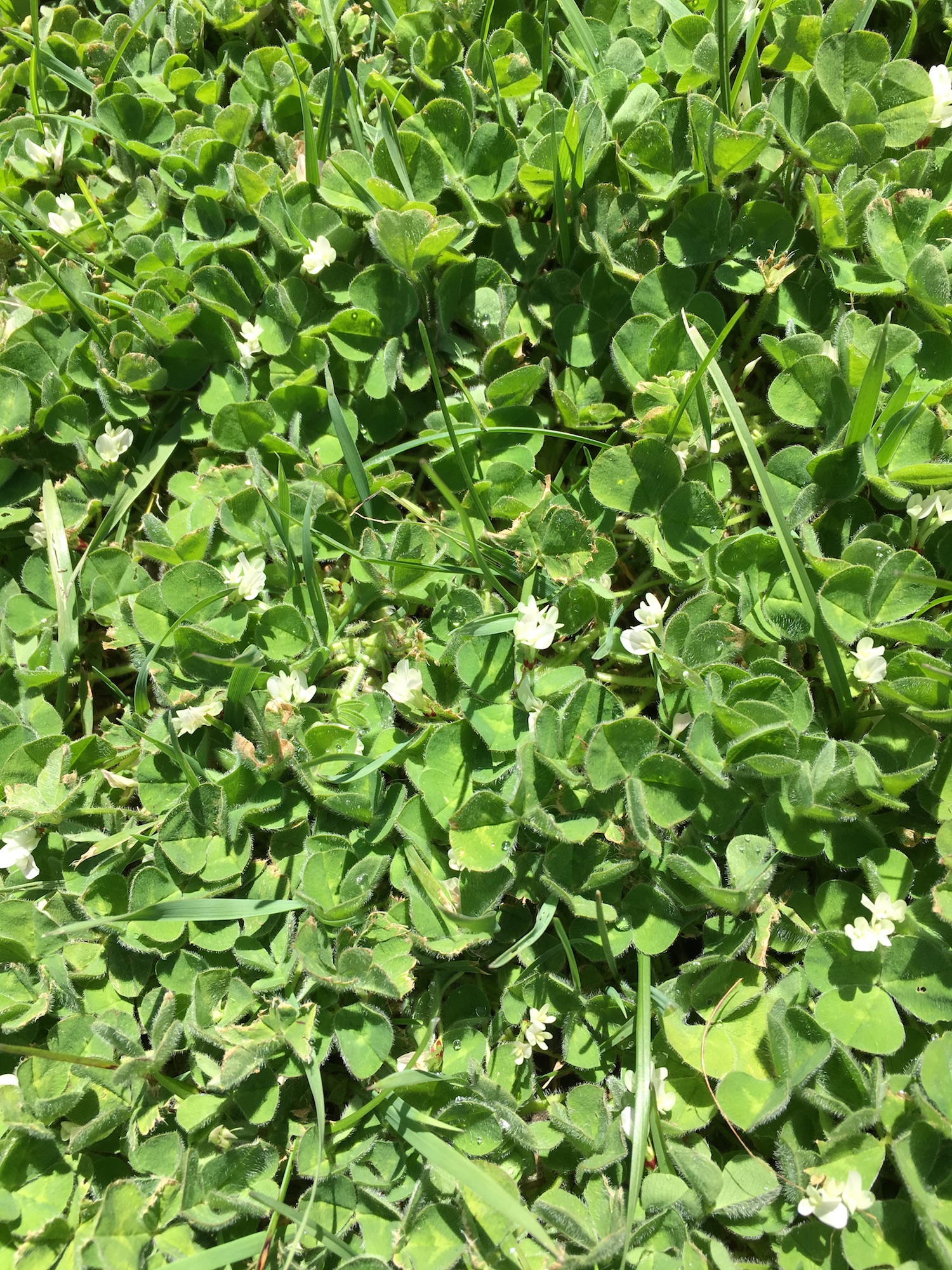
Subterranean clover (Trifolium subterraneum), like other clovers throughout the world, is an important pasture species. And it’s also a weed.

I’ve grown quite fond of ‘sub-clover’ as it’s often called. It’s much smaller than red or white clover, and the flowers form in clusters of only 2-5 in each head (as opposed to the large clusters that make up each ‘flower’ of other clovers). It also has the interesting habit of turning its flower heads downward after germination, so that the seed pods develop underground (hence, its name).

What I like most about subterranean clover is the thick mat of low-growing greenery it can produce, even in the dry rock where the old driveway used to be. Without it, some areas of the lawn would be bare year-round.

I also like the fact clover is a nitrogen-fixing plant. The clover in the old driveway is improving the soil for other plants as it grows and dies. With its help, grass might some day thrive there (though I’m not holding my breath).

Unfortunately, sub-clover dies. Dramatically. Just when we’re desperate for green. It’s a winter annual, meaning it sprouts with the autumn rain, grows through winter and spring, and flowers in early summer. When summer turns hot and dry, the plant dies, its life cycle complete. The lawn outside my office is composed almost entirely of sub-clover, so when it goes, it’s grim.

The only consolation is that the grass dies shortly after the sub-clover. Summer is simply brown here.

So for now I’m enjoying the lush greenery underfoot. It’s wonderful while it lasts.

Spittlebugs

Spring is spittlebug season. Just about the time I want to start picking and dehydrating the perennial herbs, the spittlebugs descend upon them. In bad years, it makes harvesting herbs a slimy task.

Spittlebugs are also known as frog hoppers. As adults, they are cute, squat, dun coloured insects with spectacular leaping abilities. They really do resemble frogs (with a little imagination).

It’s the nymphs that have the disgusting habit of spitting. Well, it’s actually not spit at all. The foamy slimy ‘spittle’ is a combination of fluid from the insect’s anus, and slimy gunk from glands on the insect’s abdomen. The insect sits head downward on the stem of a plant and exudes the ‘spittle’, letting it pour over its body and cover it completely. The resulting mass keeps the young insect protected from enemies and from drying wind and sun. Gross, but effective.

Like humans, who usually stop blowing bubbles in their milk as adults, spittlebugs leave off spittle production when they grow up. As adults, they use their hopping ability to avoid predators.

Some species of spittlebug can become significant agricultural pests, stunting the growth of herbaceous plants and some forestry trees, but in the home garden, they’re usually not much more than a minor nuisance.

Storksbill

Continuing my springtime obsession with weeds…

Most of my weeds are most weedy in the vegetable garden. That’s where my tolerance is lowest and the weeds’ damage is worst. In fact many of the plants I consider weeds in the vegetable garden are quite welcome in the paddock—yarrow, clover, plantain, and nearly all the grasses. And in the lawn, I don’t worry about weeds at all—as long as it’s green and can be mowed, it works for me as lawn.

But there are a few weeds that are worse in the paddock and lawn than in the garden.

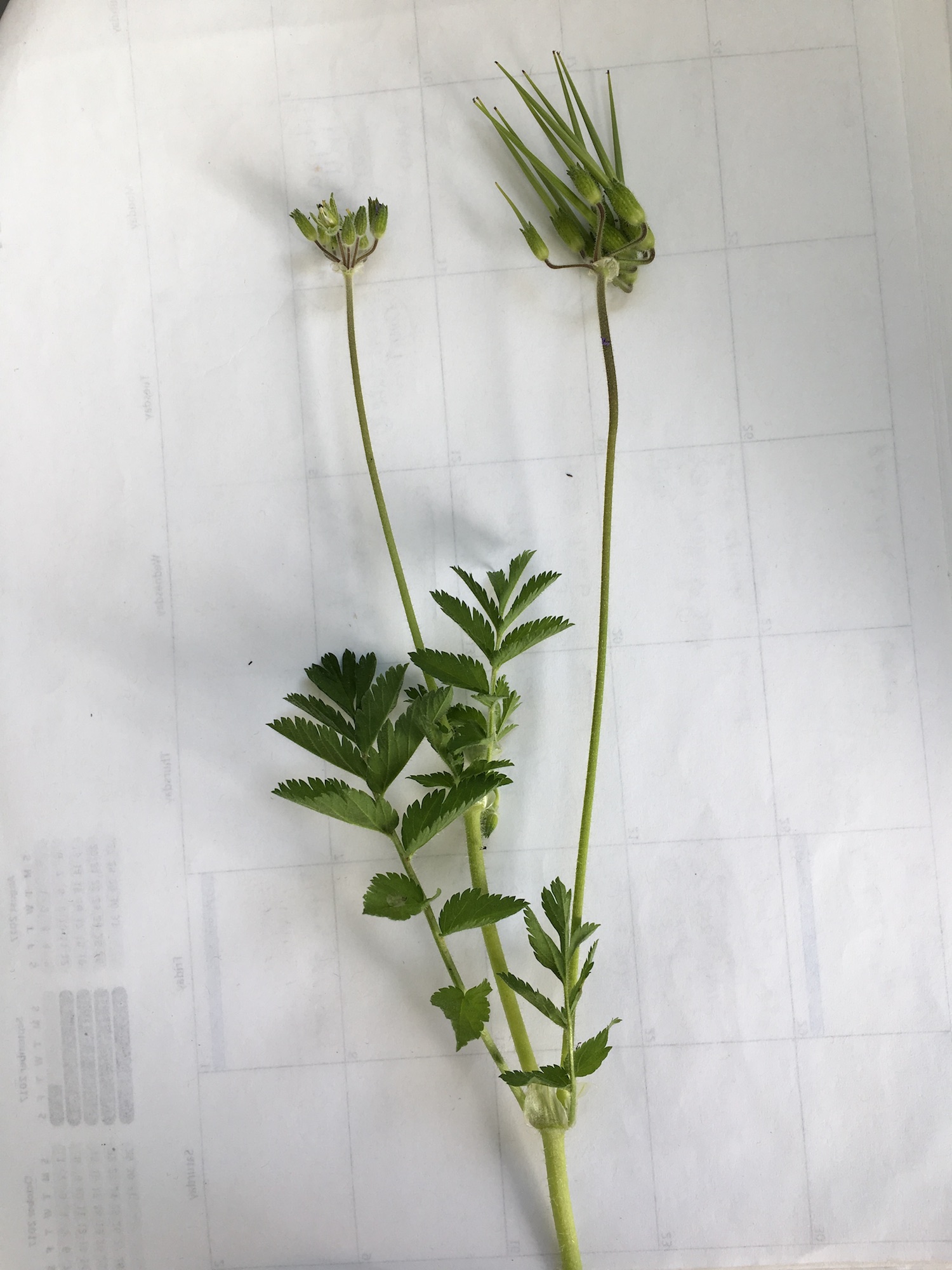
Musky storksbill (Erodium moschatum) is one of them. In the vegetable garden, the weed is aggressive and quick-growing as you would expect from a weed, but it’s pretty easy to pull out. It doesn’t resprout easily from the root, and doesn’t send out underground runners. It seeds prolifically, but the seedlings are easy to deal with along with all the other weeds.

In the paddock, however, it’s a different story. Theoretically, it’s a fine fodder plant when young, but once it sets seed, it can start causing trouble.

The long spiky fruits that give the plant its common name can work their way into animals’ flesh. I have, fortunately, never had to deal with storksbill fruits stuck in any of my goats, but it’s not something I ever want to have to do.

Keeping the storksbill out of the paddock requires constant vigilance. The plants grow quickly, and seem to go from tiny rosette to fully fruited overnight. And because I can never catch them all, for every one plant I pull, two seem to grow in their place.

In the lawn, those spiky seeds form just below mower height (instead of at about 50 cm like they do elsewhere), making barefoot walking in the heavily infested parts of the lawn an excessively exciting experience.

All in all, as weeds go, it’s not the worst. I can’t say I appreciate its charm, because it doesn’t really have any. It doesn’t appear to have any particular use (and I suspect it arrived here accidentally), but the seed heads do have a weird goofiness to their look that I have to admire while I yank them out of the ground.

Spring Cuteness

‘Tis the season for growth and new life.

Unfortunately, that means lots and lots of weeds, birds nesting in the shed (and pooing on the car), and slugs multiplying like mad (and decimating the newly-planted lettuces).

But it also means the occasional cuteness overload, like this guy.

This newly-fledged magpie has been hanging out in various locations around the yard as he learns how to get around and hunt for himself. He’s quite tame at the moment, and you can even give him a little scratch without him fluttering away. I’m sure it won’t be long before he’s dive-bombing the cat with his cohort of teenage magpie thugs, but at least for now, he’s terribly cute.

Spring Weeds–Dock

Springtime is weed season, and there are plenty in my garden–57 species at last count.

I grumble about weeds, but I also find them fascinating. Weeds are the opportunists, the survivors, the tough and persistent plants of the world. Some have been spread accidentally, through virtue of their mobile, sticky, or tough seeds, but many more have been introduced on purpose. They are plants we once considered useful, and it is our changing values that make them weeds today.

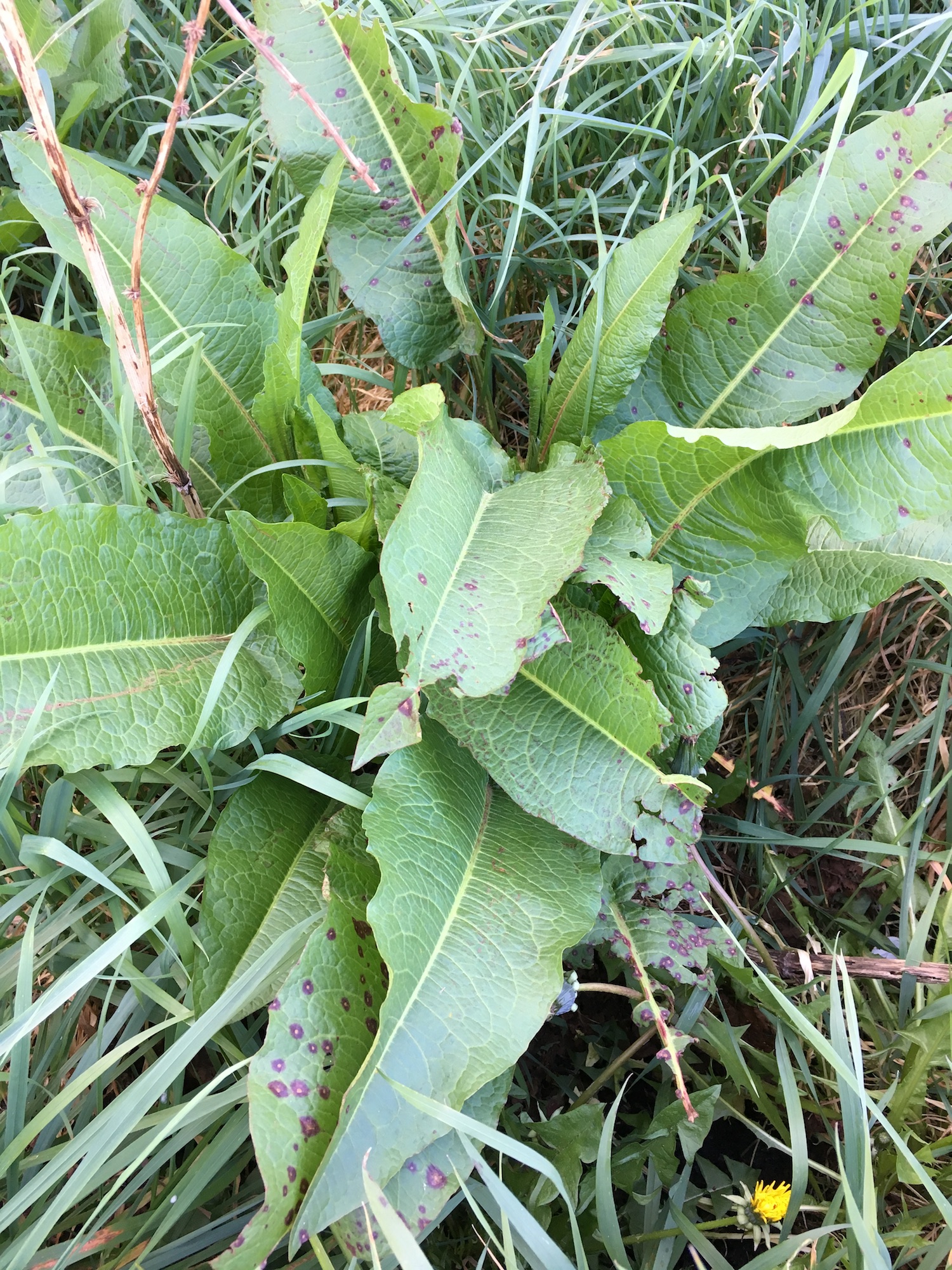
So I’ll be introducing some of my weeds over the next few weeks as they sprout and flower and generally annoy me. We’ll start today with a weed I love to hate–broad-leaved dock (Rumex obtusifolius).

Dock isn’t my worst weed. Not by a long shot. But it is persistent. Deep, branching taproots make it a struggle to pull out, and with each plant able to produce up to 60,000 seeds a year which can remain viable in the soil for up to 50 years, there is an unending supply of new plants. Still, dock struggles to compete with established plants, so it’s mostly a weed of disturbed soil.

The goats absolutely love it, so I can’t complain there. Dock is high in magnesium, phosphate, and potassium, and the tannins in the leaves can help prevent bloat in ruminants. Any dock I pull out of the garden goes directly to the goats.

It is likely dock was brought to New Zealand (from its native Europe) on purpose in the mid-1800s. Though the leaves are high in oxalates, which can irritate the stomach and bind to calcium, potentially leading to calcium deficiency, the plant was regularly eaten like spinach. It was also used to treat a variety of ailments, from coughs to cancer.

Dock often grows side by side with stinging nettle and, like many nettle associates, it can supposedly cure nettle stings. I’ve used dock for this purpose, and can attest that it seems to help, but then so does just about any fresh leaf rubbed on nettle stings.

I wouldn’t want to fight dock on a large scale–it scoffs at most herbicides, easily survives mowing, and can resprout from pieces of root left in the soil after ploughing–but for me, it’s a manageable weed that even has some utility.
 

Springtime Sensory Overload

We often think of springtime as an explosion of colour–white, yellow, purple, and pink flowers blooming, green grass growing. But spring is more than eye candy. Springtime is a sensory feast.

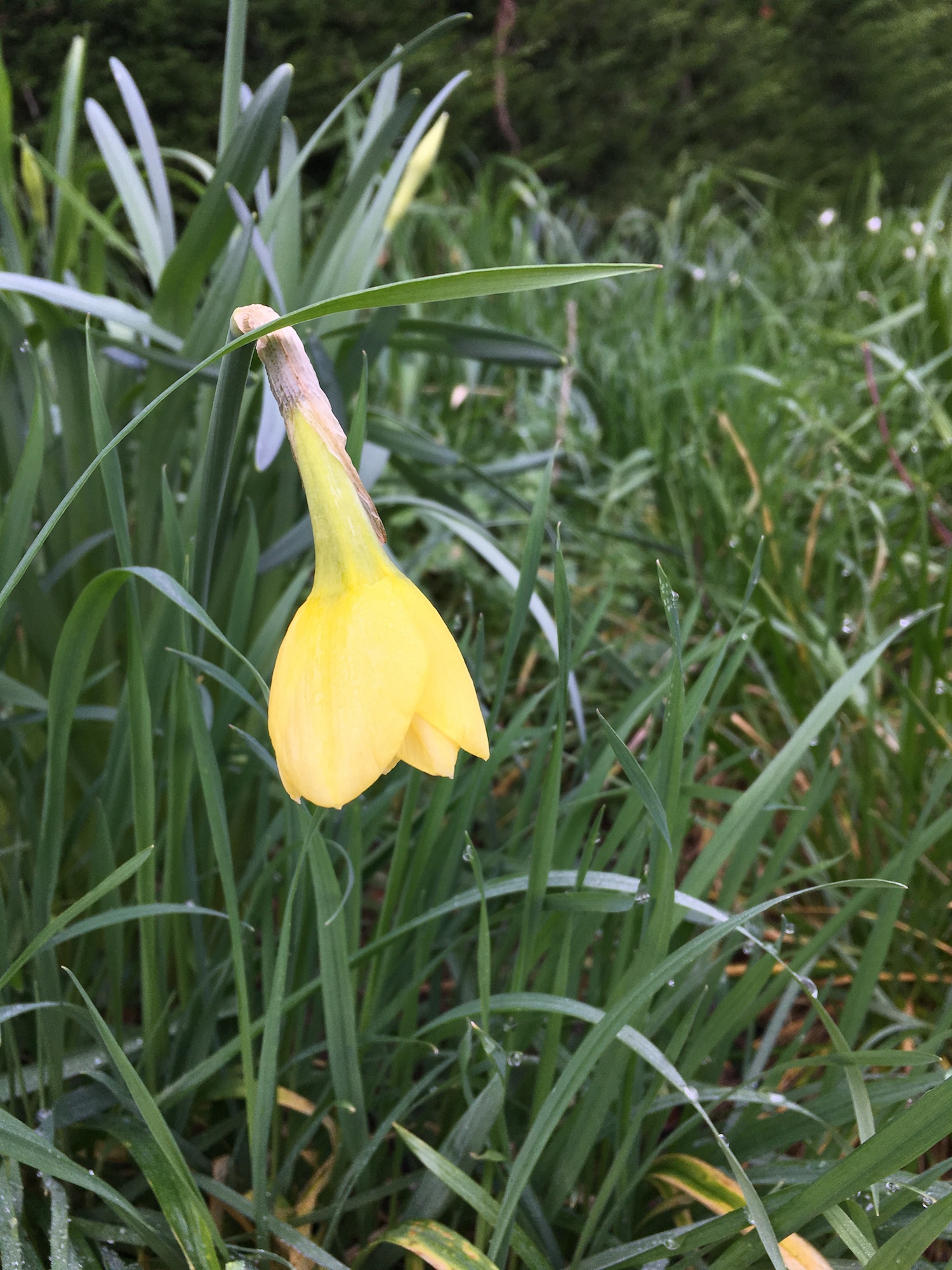
Springtime is the smell of lanolin and freshly turned earth. It is the cloying scents of blooming broad beans and daffodils. It is the smell of line-dried clothes. It is cut-grass and petrol mowers.

Springtime is the sound of lambs calling to their mothers, and the mothers’ deep, chuckling replies. It is the warbling of magpies before dawn, and the harsh call of spur-winged plovers at night. It is the throbbing rumble of tractors and the barking of sheep dogs.

Springtime is the feel of thick grass between the toes, the sting of nettles on bare legs. It is gritty dirt under fingernails, and sweaty hat brims. It is the buffeting of winds and the snarl of tangled hair afterwards. It is warm sun and cool shade.

Springtime is the bitter cucumber flavour of salad burnet. It is the rich umami of artichokes. It is the earthy taste of asparagus.

And springtime doesn’t end at our physical senses. Spring is the sense of well-being, the sense that all is not yet lost. That magic still lingers, in the rhythm of the honey bee’s wingbeats and the rustle of flight feathers, in the rain of apple blossoms and the quiet feeding of a caterpillar.