The Winter Staff Have Arrived

Some of the girls, enjoying what's left of the peas and eyeing up the newly planted broad beans, protected by netting.

Some of the girls, enjoying what’s left of the peas and eyeing up the newly planted broad beans, protected by netting.

I don’t know whether I appreciate my chickens more for their eggs or for their winter garden maintenance.

I turned the girls out into the vegetable garden for the winter today, and was happy to see them rooting around for grass grubs, which were a serious problem this year, and eagerly grazing on weeds.

I used to injure myself every spring when it was time to clear the winter’s weeds and prepare the garden beds. Now I employ the chickens in the garden all winter, and my springtime bed preparation is a breeze (comparatively speaking, anyway).

They keep the weeds down and reduce the pest populations, and the love the rich foraging the garden offers, as their summer paddock is practically bare by now.

Of course, there’s always a risk—now and again the chickens will get into the winter crops—but the benefits are worth it.

The chickens think so, too.


Too Late

Newly sprouted, out-of-season apple leaves.

Newly sprouted, out-of-season apple leaves.

The weather finally turned last night. After five days of hot, gale-force winds, after seven months of summer weather, we finally got a hard southerly storm. Three centimetres of rain, a bit of hail, and howling winds—a proper ‘winter’ storm.

But it’s too little too late. By yesterday afternoon, half a dozen shrubs around the property had simply given up in the heat and dry. The apple trees, having lost their leaves to drought six weeks ago, had already flushed again with the unusually warm weather. Those leaves will almost certainly be killed by frost, if not tonight, than another night soon. The trees will struggle to leaf out in the spring, because of their wasted effort now.

The lawn is little more than dirt in patches. If anything resprouts, it will be weeds, not grass. And the winter crops in the garden had already bolted from the heat.

I’m thankful for the rain. I’m pleased to have a full rainwater tank, and the early spring crops that are just now putting on growth will benefit from the water now.

But for the sake of the groundwater, I hope it keeps raining, because we need a lot more.


A Five-Alarm Waffle

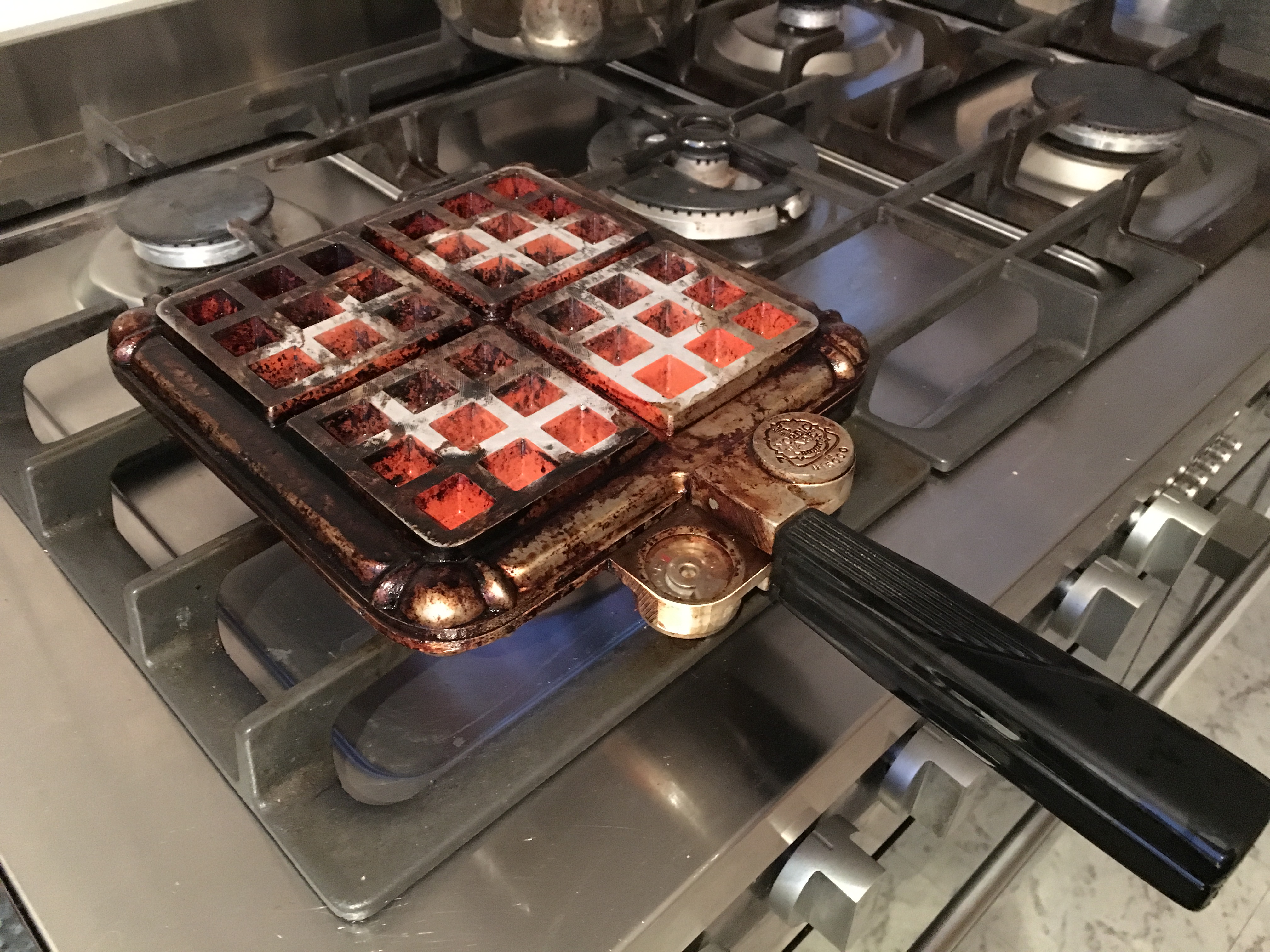
2016-05-15 07.33.29We love waffles at our house, but I make them only occasionally. There are two reasons for this—I don’t get to eat breakfast with everyone else when I make waffles, as I’m stuck tending the iron, and waffles have a tendency to set off the smoke alarms.

A well-seasoned waffle iron is…frankly, disgusting. It’s covered in a perfect layer of burnt butter. Unfortunately, that butter smokes every time you use the iron.

Even if I turn the extractor fan on, the smoke alarms go off.

So I’ve learned I can only make waffles on days it will be warm enough to open all the windows at 6.30 am. A good breeze blowing through clears the smoke and prevents the alarms from going off.

That usually means waffles only in summer, but since it’s been unusually warm, I decided to make pumpkin spice waffles on Sunday.

The morning was warm, so I opened the windows and turned on the extractor fan.

But the air was so still, the smoke hung indoors.

My son wasn’t yet out of bed when the alarms went off…

Well, no one was late for breakfast, at least.

Here’s a double recipe, so you’ll have waffles left over for breakfasts all week.

2 cups all purpose flour

1 ½ cups whole wheat flour

4 tsp baking powder

1 tsp salt

2 tsp ground ginger

2 tsp ground cinnamon

½ tsp ground nutmeg

¼ tsp ground cloves

2 cups cooked, mashed pumpkin

4 large eggs, separated

1/3 cup packed brown sugar

2 ½ cups milk

200g butter, melted

Combine all the dry ingredients in a large bowl. In a separate bowl, whisk together the pumpkin, egg yolks, and brown sugar. Add the milk and whisk until the sugar dissolves. Gradually whisk in the butter.

Pour the liquid ingredients into the dry and mix just until all the flour is moistened.

In a medium bowl, whisk the egg whites until they hold soft peaks. Fold the egg whites into the batter.

This batter is thick, and you will need to spread it with a spatula to get it evenly spread in the waffle iron.

Try them with warm applesauce!

Homeland

Lovely, but doesn't make me feel at home.

Lovely, but doesn’t make me feel at home.

When Europeans settled new lands, they had a habit of bringing all their favourite plants and animals with them. The result has been a plague of invasive exotic species all over the world. It’s easy to dismiss these settlers to as misguided imperialists, and I’ve done so myself.

But being a stranger in a strange land more than once in my life, I have to admit that I understand the desire to bring a little of the homeland to a new land.

Autumn is when I feel it most.

Most native New Zealand trees are evergreen. There are no native autumn colours, no piles of native leaves to be raked and jumped in. No smell of wet leaves carpeting the ground on crisp autumn mornings.

Last year my daughter and I found a lovely little path along a stream on one of our city walks. Dropping down to the stream edge from the street, I was first struck by the fact that all the trees were non-native oaks and maples. Then I was struck by the smell, and the rustle of fallen leaves on the path, and the glow of yellow that suffused everything. The familiarity of that little stretch of path lifted a weight I didn’t know I carried—the weight of being away from home. For the three minutes it took us to stroll through that little patch of Northern Hemisphere trees, I was in my element. The illusion came to an end all too quickly as we stepped back out onto the street.

So, while I still advocate native plantings, and whittle away at the non-natives on our own property as our young native trees grow, I don’t pass judgement on those early Europeans. They carried a weight in their hearts greater than mine—once they were here, there was no going back for most of them. Never to return to their homeland, they needed to bring a piece of it here. I can sympathise.

Any day now…

DSC_0060smOkay, it’s allowed to rain now.

Any day would be fine.

Just a little?

And maybe something a bit cooler than t-shirt and shorts weather to go with it?

Please?

Six years ago, the beginning of May looked like the picture above—we called it the black days of May. That was a bit too much rain, but normally we’ve had some good rain by the beginning of May.

Not so, this year. This year, it’ll be the brown days of May. We had plans to do a lot of landscaping this fall, but the soil is still bone dry—new plants wouldn’t stand a chance, even if we could water them. Almost every bit of promised rain has failed to materialise. The little that has fallen has evaporated within a day under summer-like heat.

2016-05-03 10.26.14It feels like summer will never end.

I’m still watering the garden, though the summer crops have mostly given up out of drought and exhaustion. The winter crops are likely to bolt in this weather, even with watering.

And who knows how long I’ll be able to water. It hardly rained last winter, and last summer was particularly dry, too. Canterbury water is over-allocated. The water table is dropping, and some people have already had to deepen their wells. How long before we run out?

Water is still being managed for short-term profit here—to ensure maximum output of dairy and crops. Environmental concerns and future supply are given lip service. That will come back to bite us. Climate change models predict less rain for Canterbury. If we keep on like this, at some point, we will run out.

Do we have the will to change before that happens? Experience in other parts of the world says no.

I do my best to conserve water here—using greywater to water plants, watering sparingly, mulching heavily, planting shrubs that can handle the dry—but I’m a tiny player, surrounded by farms hundreds of times the size of my property. The water I conserve is just a drop in the bucket.

A drop in the bucket would be nice about now. But the meteorologists are predicting no rain at all for the month of May in Canterbury.


Managing Water

2016-04-22 15.51.16 smMake hay while the sun shines, they say.

They could also say fix your roof while the sun shines.

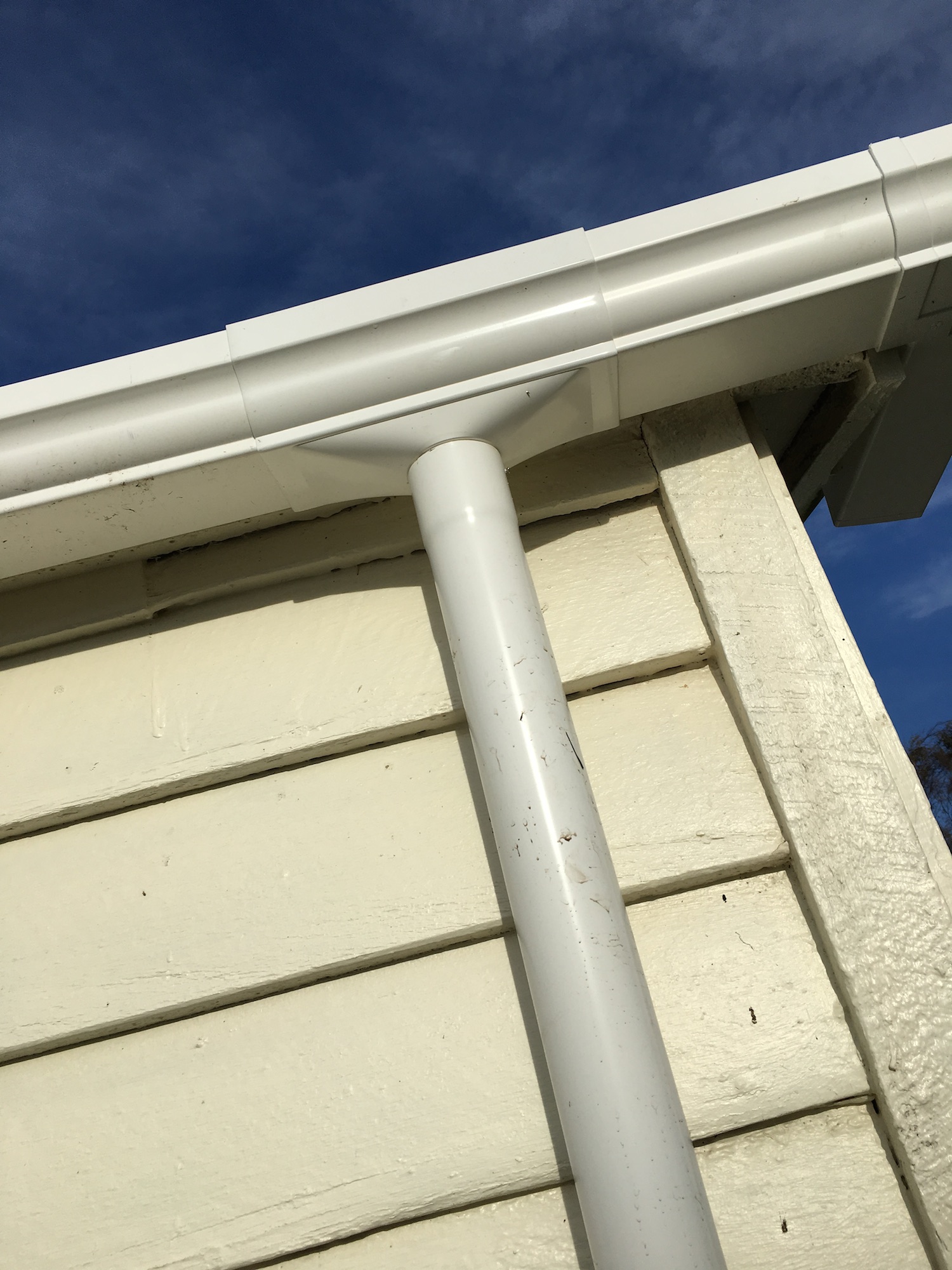
The sun shone so much over the summer (and now well into autumn), that it would have been easy to forget the leaky roof and broken gutters. And we did manage to ignore them both all summer, but one of these days (hopefully very soon) it’s going to start raining again. It was time to get the work done.

I enjoy being on the roof. But roof work is never fun—wrestling sheets of corrugated iron roofing around in the wind, pulling rusty lead-topped nails, dealing with rotting roof beams, and doing it all on an angle four metres above the ground.

Still, it is good to have roof and gutters repaired. And after we prepared for rain, I weeded the artichokes.

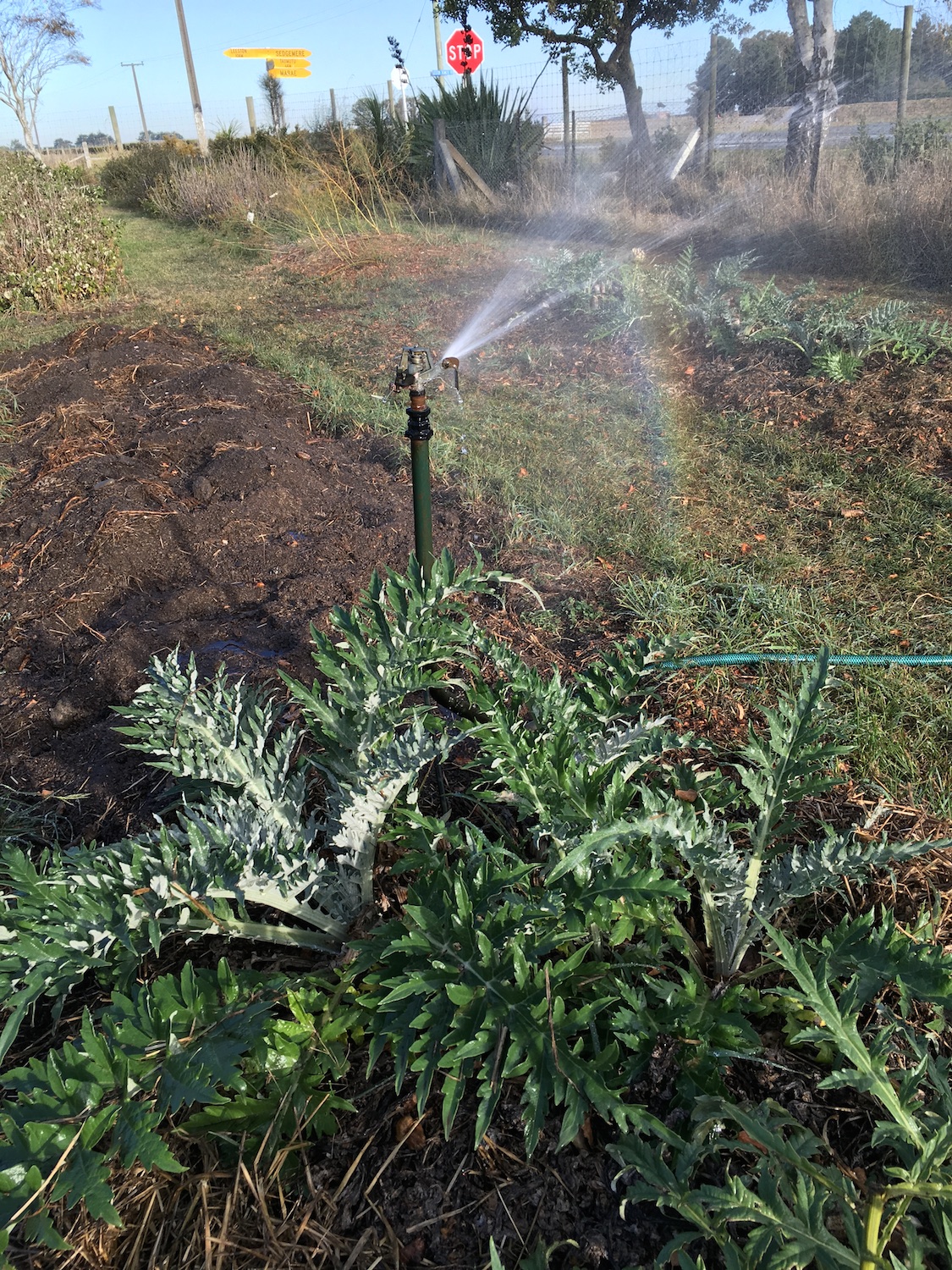
2016-04-22 15.50.14 HDR smIt was a lesson in dry—the ground was dust, and the poor water-loving artichokes were suffering. So I turned the sprinkler on them, dealing with an extreme lack of water after preparing for an overabundance of it.

Some day I do hope it begins raining again. It would be good to know if the roof and gutters are properly fixed, and it would be nice if we didn’t have to water the garden all winter. Either way, we’ll be managing water—either too much or too little of it.

When it rains, it pours, as they say.

Jack-o-lanterns

2016-04-17 11.17.03 smWhile you folks in the Northern Hemisphere are cleaning out your pools, dusting off the barbecues and planting seeds, we in the South are enjoying all that autumn has to offer.

And something we always look forward to is carving pumpkins. Growing up in the US, it was one of my favourite Halloween activities. Here pumpkin season falls inappropriately near Easter.

That doesn’t stop us from celebrating the season with jack-o-lanterns.

All my pumpkins are grown for food, but the edible part of the Austrian oilseed pumpkin is its seeds—the flesh is only suitable for goat food (and even the goats aren’t excited by it). So once I scoop out the delicious seeds, I have no problem using the shells for artistic purposes.

A nice crop of Austrian oilseeds this year means there is plenty of raw material for our artwork.

Naked Ladies

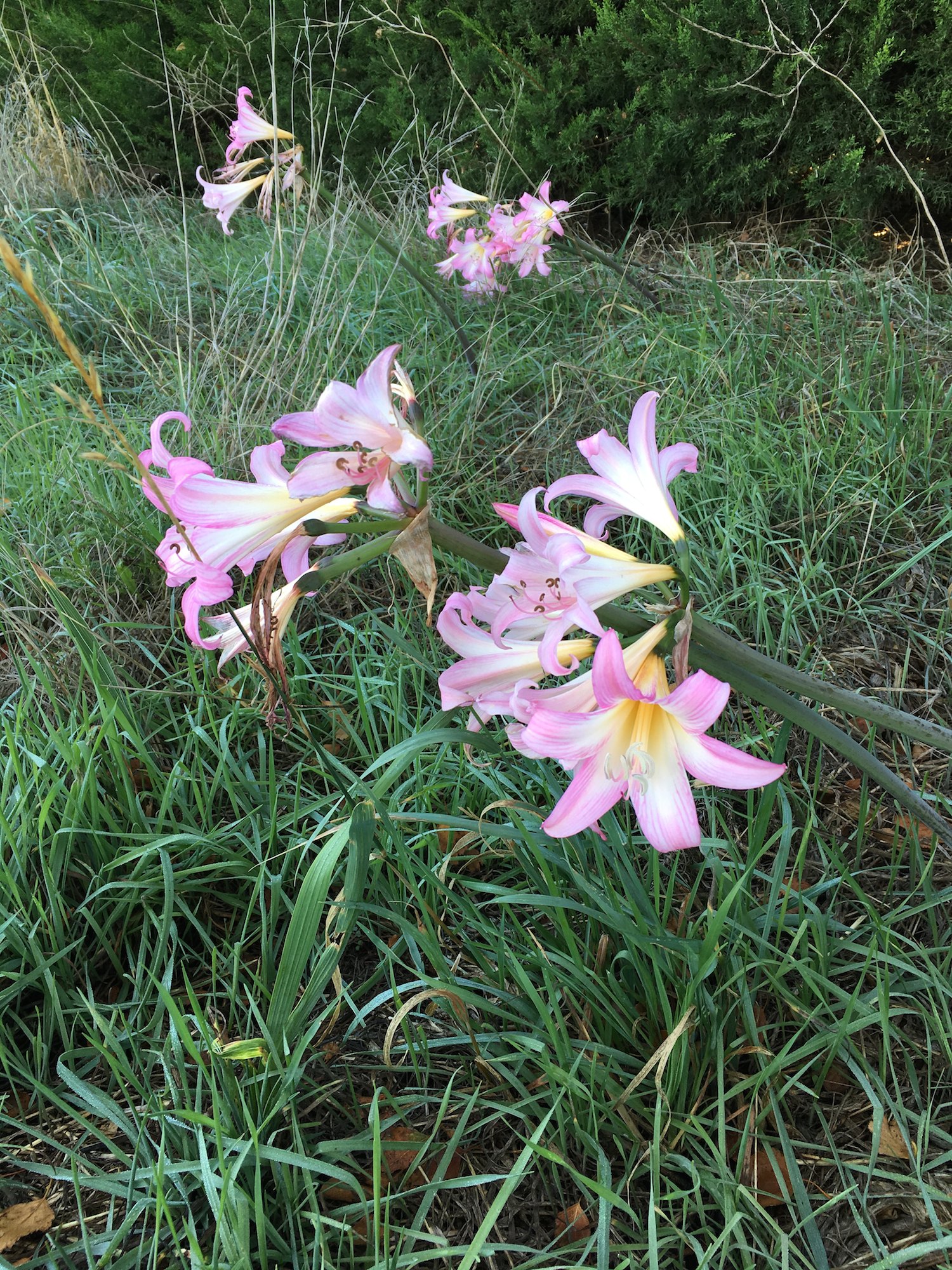
2016-04-14 08.43.56 smDo I need to say more?

These are some of the most delightful flowers in our yard. When we first moved in, there was a row of non-descript green plants in front of our hedge. They were uninspiring. I planned on removing them.

The plants died back over summer. We mowed the remains down.

Then one day I looked out to see a row of gorgeous pink blooms! What a lovely surprise! When I described them to my mother, she immediately said, “Oh! Naked ladies!” My response was, of course, to giggle. But the name is apt, as these lovely ‘girls’ bloom long after the leaves have died back.

We did end up removing the naked ladies…in order to put them in a better spot, as the hedge was smothering them. Every year, I forget they are there, and every year I have the joy of heading outdoors one day and finding them in bloom.

They make me smile. What more can you ask from a flower?

Touched by Frost

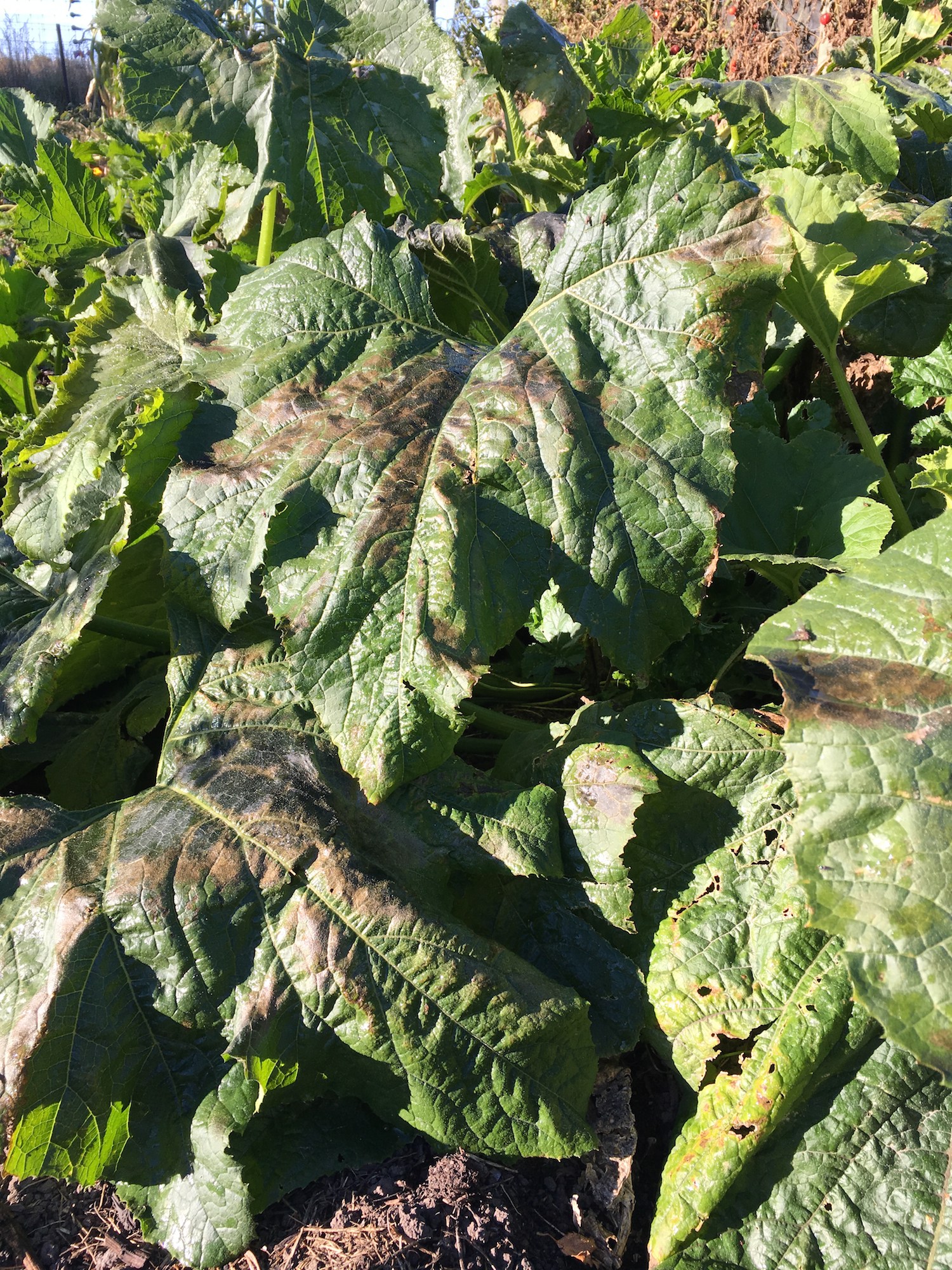
2016-04-14 08.42.53 smIt happened. The first frost hit the vegetable garden. Not hard, but enough to show. Most of the tender and unprotected plants were already done for the year, anyway—the tomatoes had largely succumbed to drought, the cucumbers had given up, the melons were done, the pumpkins were already harvested, and the basil had gone to seed. The summer squashes were only lightly touched—a few of the leaves browned, but most of the growing tips in good shape.

Of course, at this time of year, any day could be the last.

So we savour each day—enjoying the tastes of summer while they last.

Pumpkins

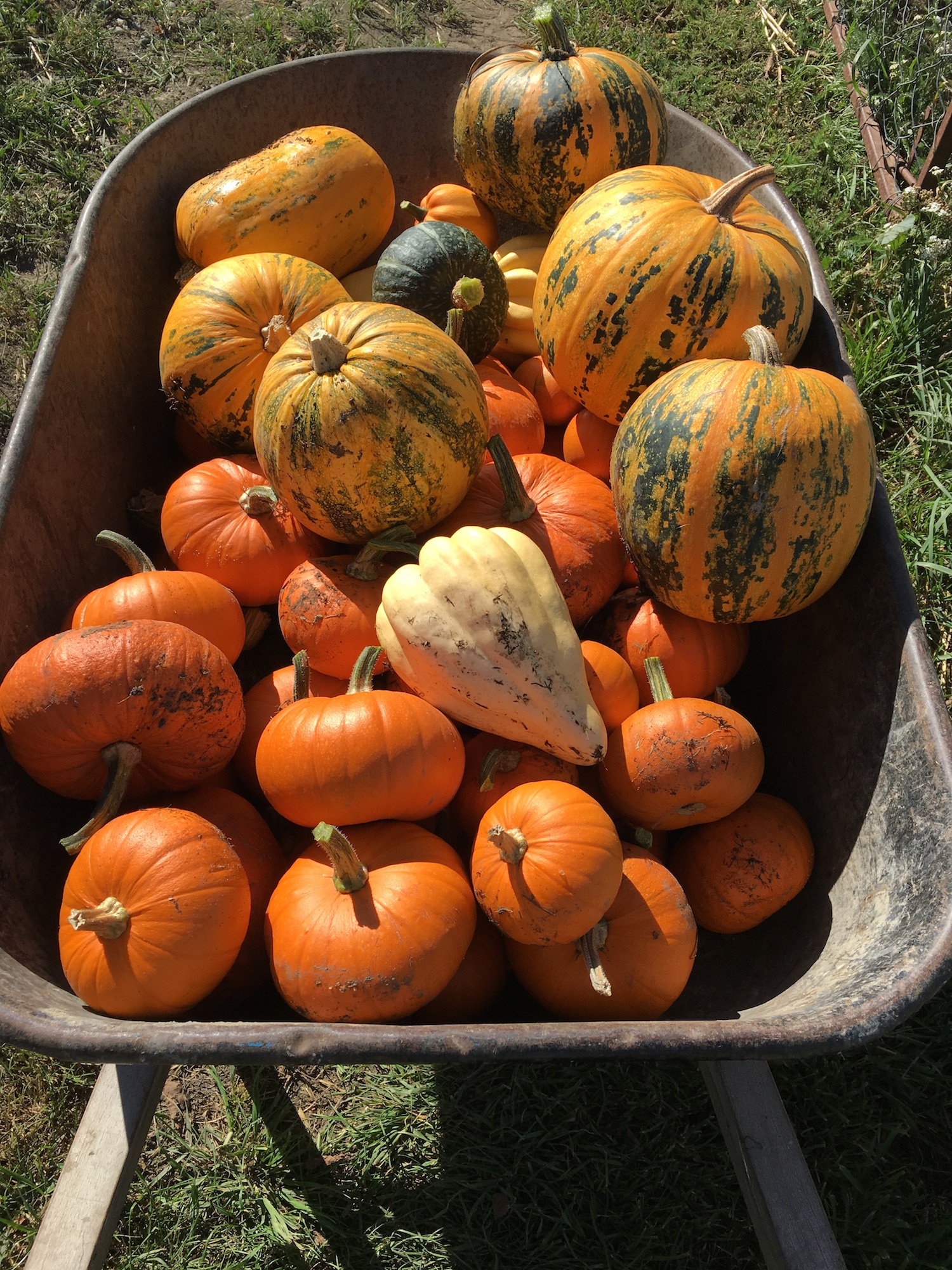
About a third of the harvest.

About a third of the harvest.

Autumn wouldn’t be complete without the requisite wheelbarrow loads of pumpkins and other winter squash. In spite of some late-frost drama this spring, the harvest wasn’t bad.

My kids ask every year, “Which are the pumpkins and which are the squash? What makes a pumpkin a pumpkin?”

The short answer is that a pumpkin is a squash that we call a pumpkin. There are four species and countless varieties that variously get called pumpkin and squash. Some fruits are known as pumpkins in one place, and squash in another.

I don’t bother with the distinction. The important distinctions are between varieties. Some are best made into soup, others make splendid pies. Some have robust, dry flesh that holds up well in savoury galettes. Some are just the right size for baking whole. Some keep well, and others need to be eaten quickly after harvest. Some have flesh only useful as goat food, but have naked seeds that are wonderful toasted with salt and spices.

Which is, of course, how I justify planting so many pumpkins of so many varieties. I need them all!