Autumnal Haiku

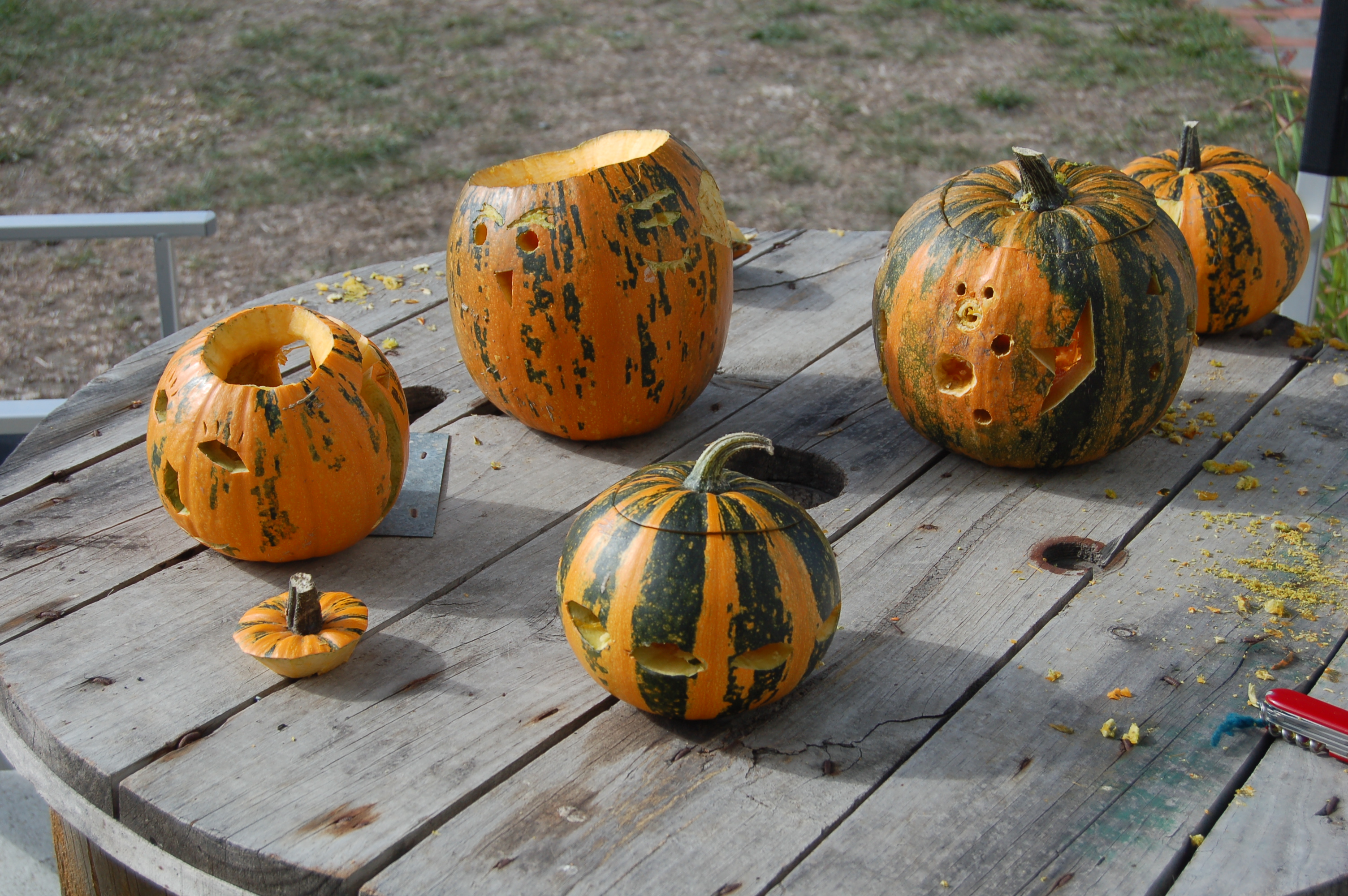
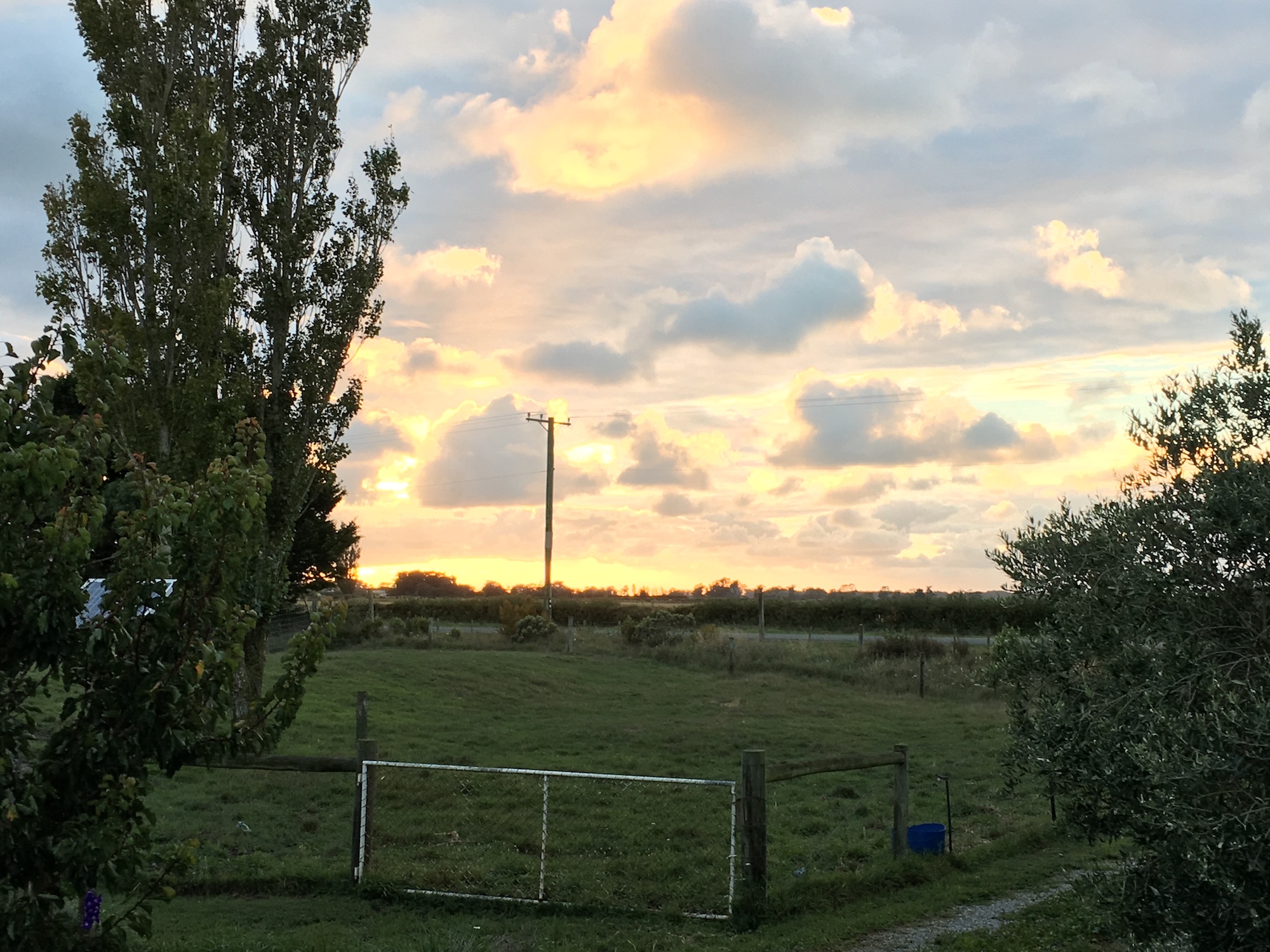
Yesterday was a gorgeous autumn day. It inspired a few haiku:

Rats tap out poems
On the ceiling at night while
Cats dream of sparrows.

***

Summer slips off to
Warmer climes, leaving autumn
To face winter’s scorn.

***

Summer cashes in,
Trades green for gold to spend on
Ice blocks and snow cones.

Equinox Accounting

Happy Equinox!

It is the autumnal equinox, and fittingly, our weather today has started out pure summer heat, and is predicted to turn to wintery wind and rain later on. I can see the clouds piling up to the south as the front approaches.

There are still plenty of summer crops coming out of the garden, but the equinox is a good time to evaluate what worked and what didn’t this past summer.

It was an extreme summer, so there’s no saying this year’s performance will hold in future years, but new varieties that did well include:

Tomato Indigo Apple—I blogged about this beauty when it first began to ripen. It has proven itself over the season, producing plentiful, delicious and attractive fruits that ripened early and continue to ripen as other varieties are giving up for the year.

Tomato Oxheart—This variety was also new to me this year, and it did well enough to deserve another go. The almost disturbingly heart-shaped (as in ox heart, not love heart) fruits were flavourful and plentiful.

Onion Pearl Drop—Cute and fast-growing. I’ll plant these again.

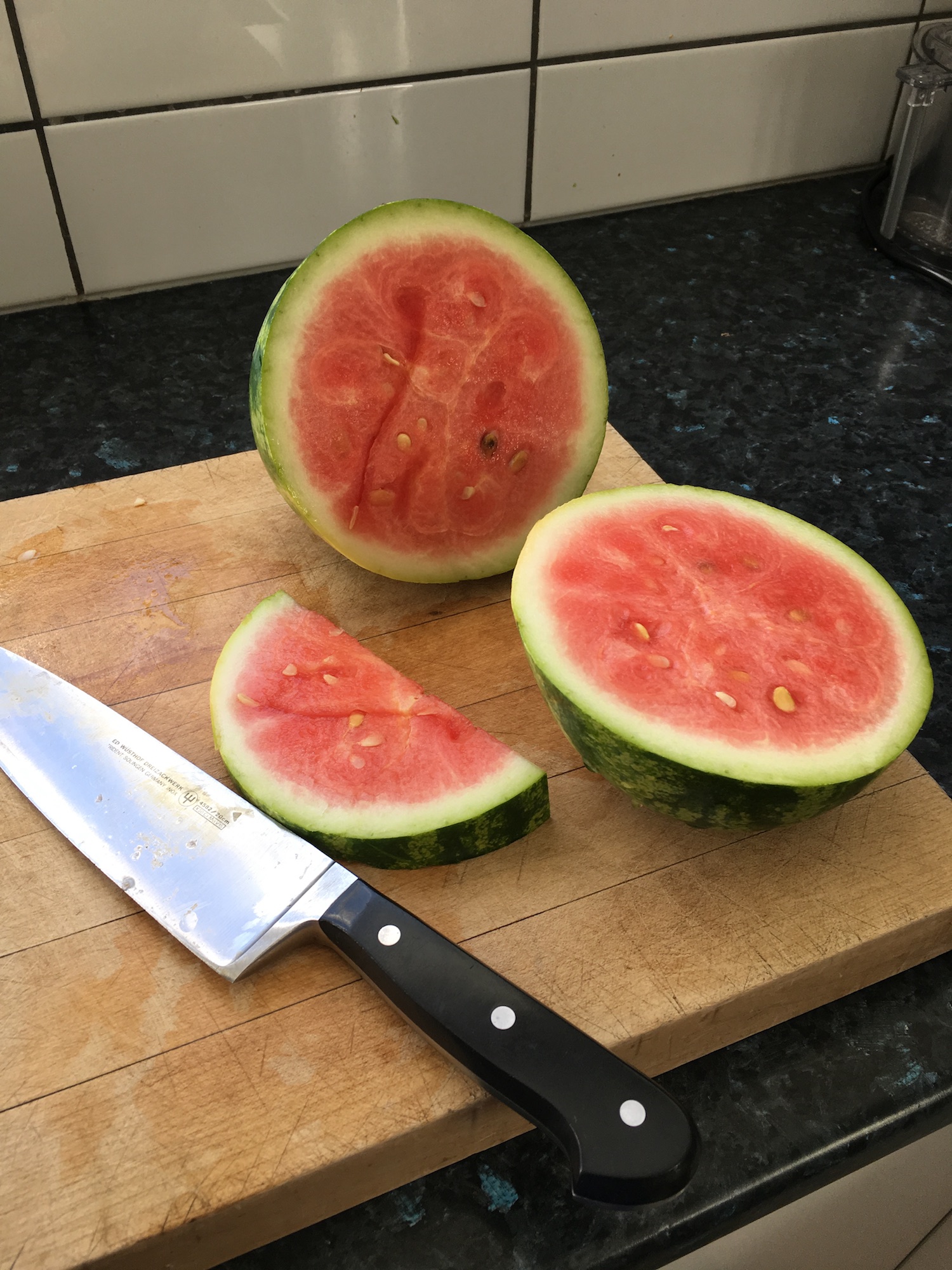
Watermelon Sweet Red—It might have simply been the weather this summer, but Sweet red matured more quickly and produced more fruit than Rapid Red, which I’ve planted in past years. I’ll be curious to see how it does in a cooler summer.

Varieties that didn’t grow so well:

Eggplant Container Pick—I was excited by this smaller variety of eggplant, as mine always end up pressed against the top of the low tunnel I grow them in, but these seeds didn’t even germinate.

Tomato Russian Red—This isn’t a new variety for me. Usually Russian Red, bred for its ability to withstand and produce well in cool temperatures, is my best producer. This year, the plants spent most of their energy on vegetative production, growing to massive leafy plants without actually producing much fruit. And the fruit they did produce was so hidden in all the greenery that I missed half of it. It won’t stop me from planting Russian Red in the future, but it emphasises to me the need to plant a mix of varieties, as year-to-year differences in weather can make a big difference in production.

Pole Bean Jackson Wonder—The jury is still out on this bean, but poor germination and slow growth mean I still haven’t harvested any of these lima beans. There are plenty of pods on the plants, but whether they will fill out properly before frost kills them is debatable. My guess is that in a normal summer here, they wouldn’t have a chance—they appear to need too long a growing season.

Watermelons Rule

Nothing says summer like watermelon—a seasonal fruit that matures during the hottest days of the year, and doesn’t keep.

Watermelon is an unreliable crop here. Twelve years ago, when we first arrived, I was told watermelon doesn’t grow in Canterbury. I’ve planted it every year, regardless, because I can’t imagine a summer without it.

Some years we get nothing. The plants don’t grow at all, or they grow too slowly to produce mature fruit before the first frost, or they’re nailed by herbicide overspray. Some years we get a few smallish fruits that we savour as rare delicacies.

This year we are awash in watermelon. The fruits aren’t big—even the largest hasn’t reached the weight the seed catalogue says this variety should—but they’re the largest watermelons we’ve managed to grow here. And most importantly, they’re sweet, crisp and delicious. And there are lots of them!

As I sit on my office deck spitting seeds, I am reminded of the magical poem by John Tobias—Reflections on a Gift of Watermelon Pickle Received from a Friend Called Felicity.

I wonder if my kids will remember this year of watermelon as Tobias wrote…

“…During that summer—
Which may never have been at all;
But which has become more real
Than the one that was—
Watermelons ruled…”

Ushering in Autumn


Thursday’s dawn farewell of Gita.

Gita blew through earlier this week, dumping 96 mm (nearly 4 inches) of rain on us. She also seems to have ushered in autumn. Sultry summer heat has given way to crisp air in Gita’s wake. The sun is still hot, but the nights have been chilly. The crickets sing their welcome to a new season. Even the garden has taken on an early autumn look, tired plants beginning to look tattered and yellow. Before Gita, I had ordered my firewood for the winter. It seemed too early at the time, but now, I’ll be happy to see it arrive.

Summer fruits and vegetables should still roll out of the garden for the next six to eight weeks, but the end is in sight. We’ll enjoy it while it lasts.


Hawksbeard: a Cheerful Weed

We’ve had recent, much-appreciated rain, and the grass is unusually green for January. But even with the grass growth, summer is weed season in the lawn.

More specifically, summer is weed flowering season.

Some of the weed flowers are uninspiring, and merely annoying—the dull greenish flowers of plantain, for example.

Others bring a splash of colour to what is normally a bleak time in the lawn.

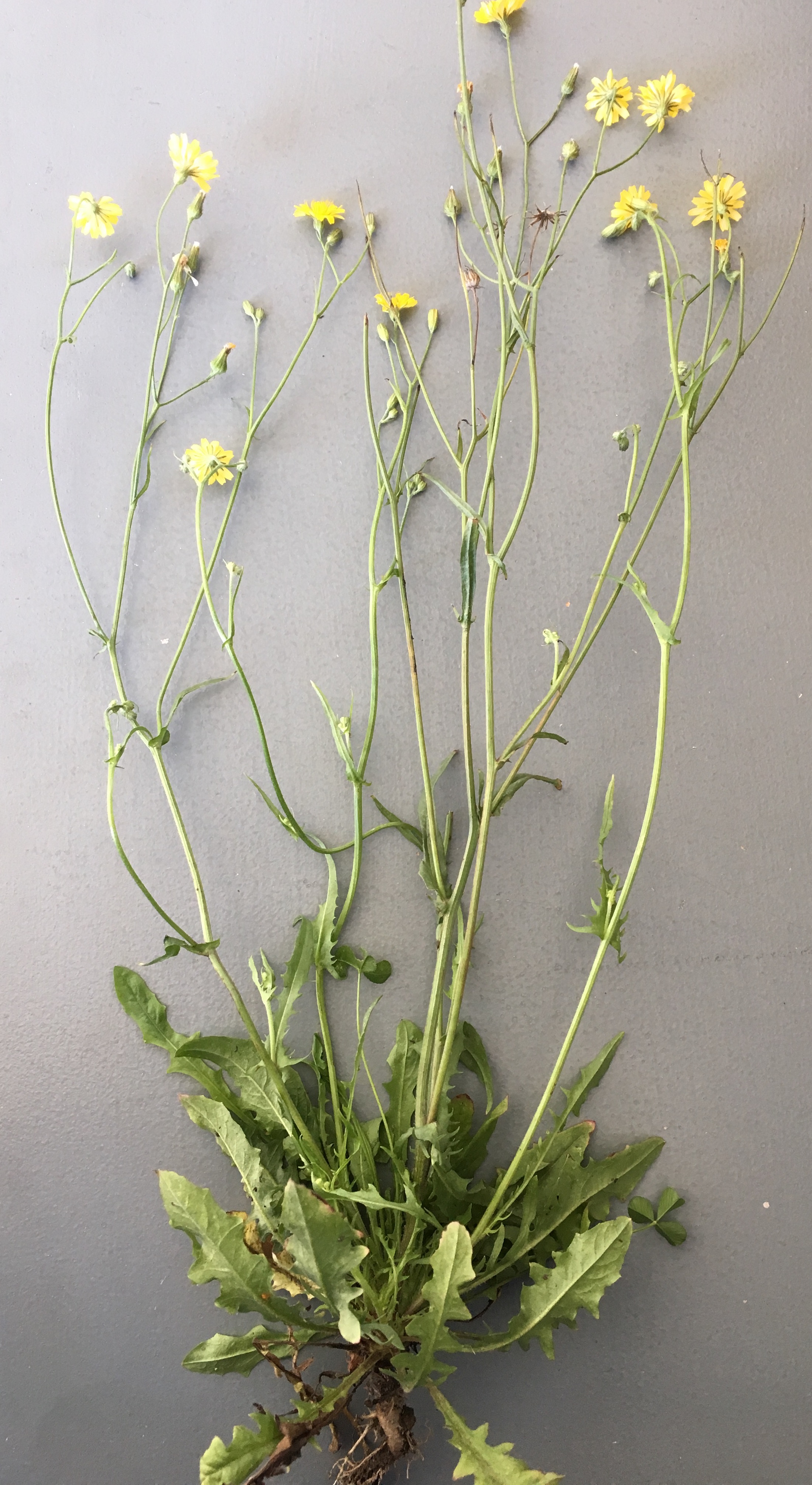
Hawksbeard (Crepis capillaris) is one of the more prolific colourful weeds in the lawn in summer. An annual or biennial member of the dandelion family, this plant bears small, cheery yellow blooms on tall, branched stems.

The NZ Plant Conservation Network shows hawksbeard as being naturalised in 1867 from Europe. Like its cousin dandelion, it was most likely brought to New Zealand on purpose as a food plant—it’s young leaves are edible. Like the dandelion, it is no longer valued as a food, but is considered a weed.

I will admit, the tall flower heads of hawskbeard can be annoying in the lawn. They seem to spring up overnight between mowings, and they slap against your legs as you walk through the yard. But I do appreciate their yellow blooms at a time of year when most other plants give up from the heat and drought. I have been known to use hawksbeard in flower arrangements, and their green rosettes are sometimes the only green to be found around the yard.

Rolling out the Welcome Mat

When we first moved to our house, most of the landscaping, at our place and at the neighbour’s, was non-native. Gorse, photinia, oaks, birch, macrocarpa…plants of little interest to native wildlife. We’ve slowly been replacing much of the non-native vegetation with natives. When the property next door changed hands, the new owner replaced the gorse hedges with natives. Our plantings are all maturing, and I’ve got my fingers crossed we’ll soon attract some native residents.

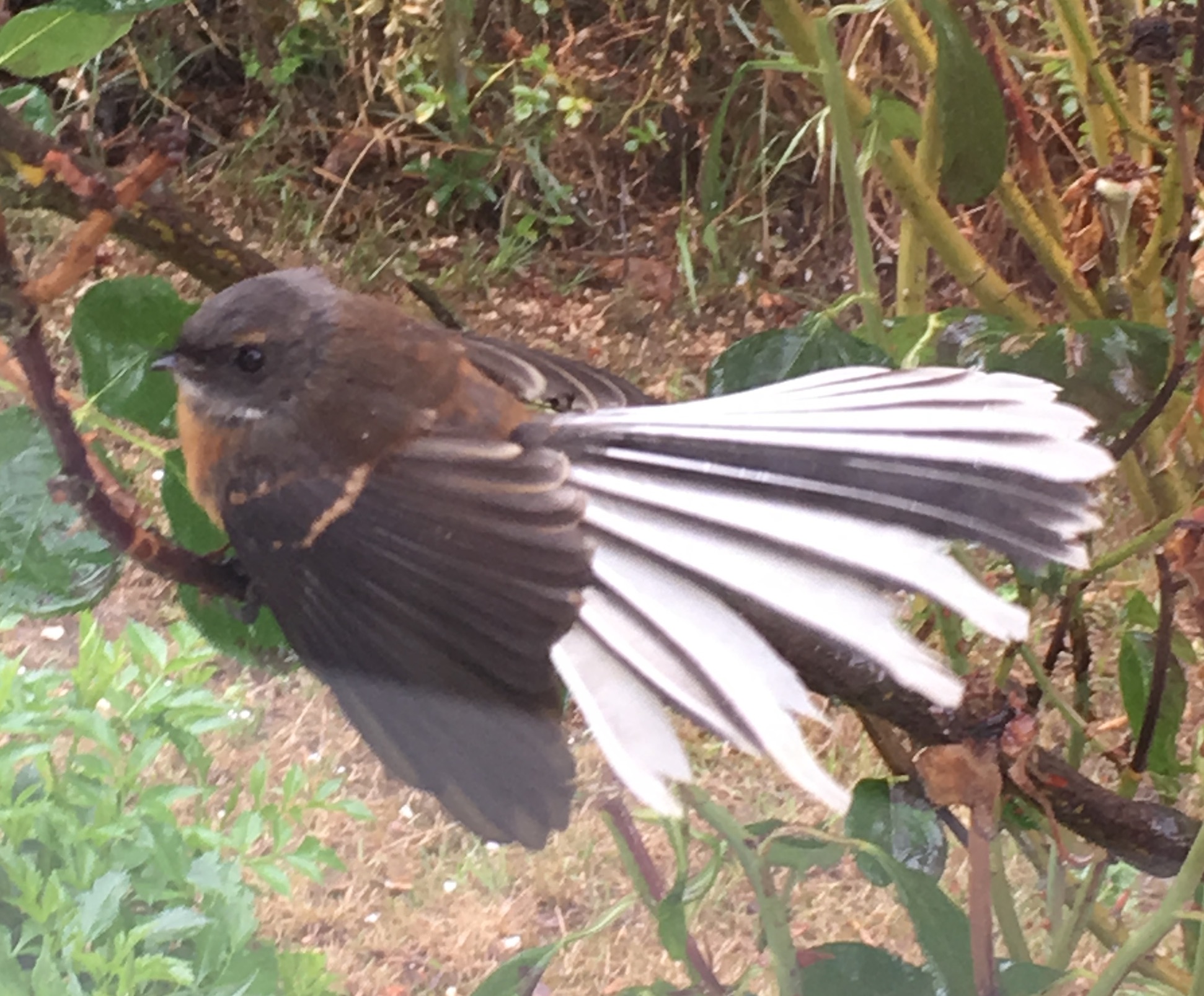
Over the years, piwakawaka (fantails) have shown up occasionally, usually in autumn, and only for a week or so before moving on. But this year, one has arrived in summer. He’s been flitting around for over a week now, chattering and declaring ownership of the place. I’m crossing my fingers, hoping he’ll stay.

Piwakawaka don’t stay still for photos, but he was talking to me through the kitchen window yesterday and, with the window as a bird blind, I was able to snap a couple of photos that weren’t just a blur of feathers. He’s a cute wee guy. I hope our welcome mat is acceptable to him.

Good Mum, Bad Mum

It rained all day today, as it did yesterday, and as it’s supposed to do tomorrow. The weather is fine by me–plenty of water for the garden, and I have lots of writing to do–but for the kids, three days of rain in the middle of the summer is hard to manage.

What can a mum do under these circumstances, but bake, and enlist the kids’ help? So we made soft pretzels and zucchini cupcakes (see previous blog post). It doesn’t take all day, now the kids are teens, but it gave them something to do for a little while, and treats to eat afterwards.

I felt like such a good mum…

Then I thought about the fact I let my kids eat soft pretzels, pickles and brie for lunch, with a big frosted cupcake afterwards (not to mention licking the bowl and beaters).

Such a bad mum!

All those times we’ve fed our children healthy, balanced meals…you know what they’re going to remember? Yep. Pretzels and pickles for lunch.

I know this, because the meals I most vividly remember my mother making when I was a kid were the naughty ones–hot apple pie with milk (for dinner–the whole meal!) and raspberry shortcake (again, the entirety of the meal). Those meals were legendary, precisely because they weren’t healthy and balanced. They were naughty and we knew it.

Such a bad mum!

Such a good mum!

Garden Shift

From one day to the next it happened.

The garden went from newly planted to bursting and full.

It will get much more crowded before summer is over—I usually lose most of my paths by mid-February—but it has lost the widely-spaced springtime look.

It is always such a surprise and a pleasure when it takes on the summer look. It’s like the moment when you look at your teenager and you can see the adult s/he is becoming. It’s a phase shift, and though it comes on gradually, there is a magical moment when you suddenly see it.

I walked through the garden today for no reason, just for the pleasure of walking among those wonderful, full rows of plants.

Advent List

It’s the silly season, with end-of-the-school-year stuff piling up with Christmas, summer vacation, and garden stuff.

Once again, lists take centre stage for me. The general to-do list gave way to a ‘before Christmas’ to-do list. That list has now been refined into a day-by-day list, a sort of sadistic Advent calendar counting the days to Christmas.

I’m afraid ‘write blog’ didn’t make it onto today’s list. It was bumped off when I failed to complete ‘pick and process peas’ on yesterday’s list, due to the unexpectedly large harvest.

So, I’m off to blanch and freeze peas. Hope you’ve all had a lovely day and completed everything on you to-do list. Just two more weeks, and we’ll get a day off!