To Pasteurize or Not To Pasteurize

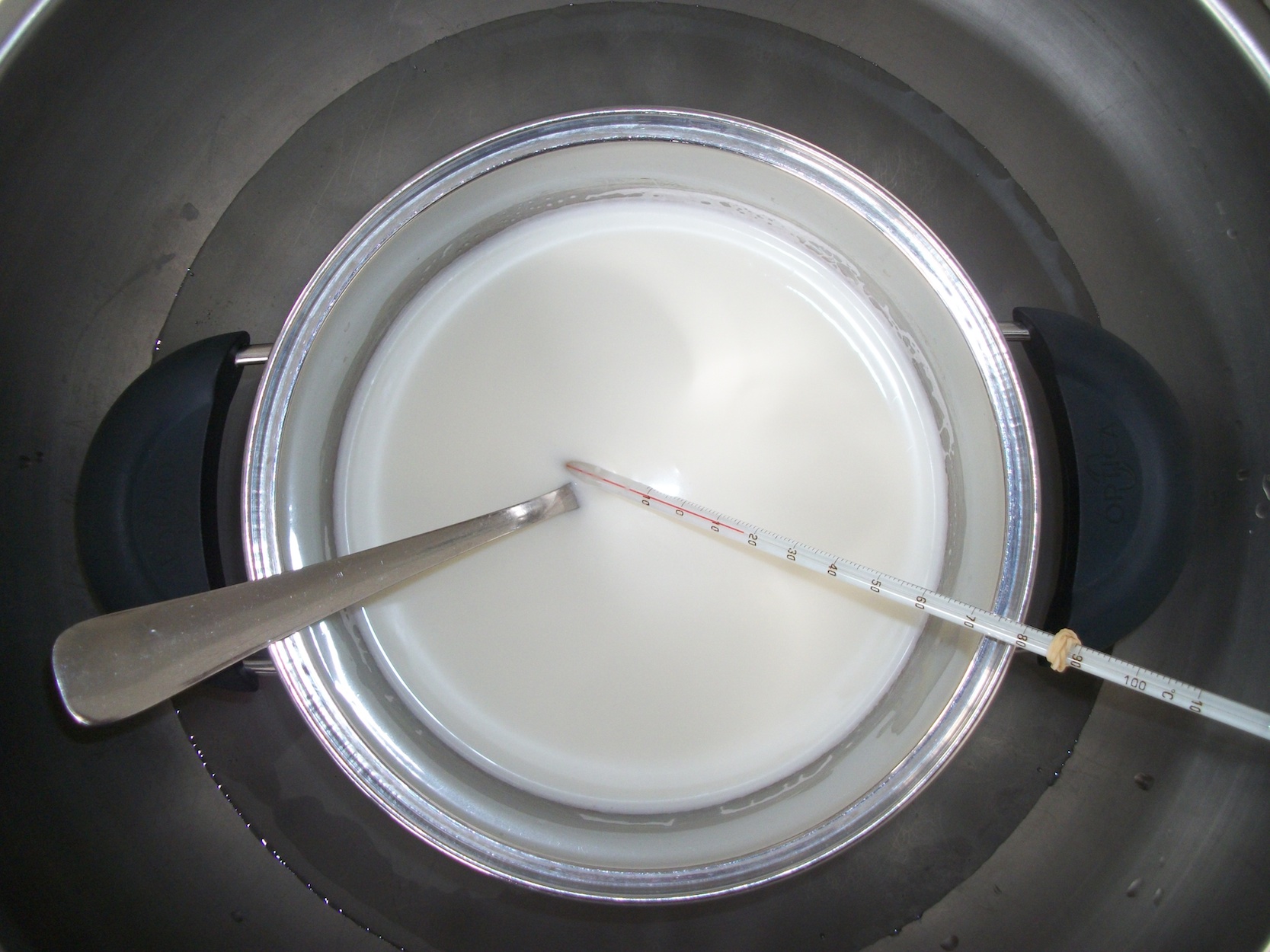
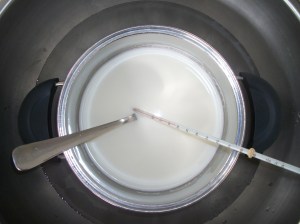
100_3960 smThis is the question, when you have your own milk-producing livestock. Pasteurization is the process of heating the milk to reduce the number of pathogens and increase the milk’s shelf-life. There are many different techniques for doing this, but they all involve raising the milk to a certain temperature and holding it there for a specific length of time (the higher the temperature, the shorter the time).

I have a number of friends and acquaintances who produce their own milk—some pasteurize, some don’t. There are certainly some strong opinions out there on both sides of the question:

“People have been drinking unpasteurized milk for thousands of years.”

“Yes, but people have been dying of diseases in unpasteurized milk for just as long. Raw milk is the perfect growth medium for all sorts of diseases.”

“It ruins the flavour of the milk.”

“I can’t taste the difference.”

“Cheese from unpasteurized milk is better.”

“I enjoy cheese from pasteurized milk just as much.”

“Unpasteurized milk is more easily digested.”

“I have no problem digesting pasteurized milk.”

“Pasteurization kills all the good bacteria and destroys nutrients in the milk.”

“It also allows milk to be kept for longer, and kills bad bacteria, too.”

The arguments go on and on.

So, what’s the truth?

Truth is that both sides have some valid points, and some points on which they grossly exaggerate or mislead. Yes, you can drink unpasteurized milk your whole life and never get sick. You can also drink pasteurized milk your whole life and never get sick.

I pasteurize.

Why?

Because I know exactly how clean I’m able to keep my milk while I’m milking. I know, from what’s left on my filter afterwards, that a few hairs, a little dirt, some dried skin flakes, the odd bug falls into the milk while I’m milking. Would bacteria from those things make us sick? Probably not. Does the idea of that stuff in my milk make me sick? Yep. Does the idea of drinking something that is the modified sweat of an animal that doesn’t even groom itself make me a little queasy? Yep.

So I pasteurize. For my peace of mind. For my sense of cleanliness.

But I gladly accept some of my non-pasteurizing neighbour’s milk when she has excess, and if for some reason I’m not able to pasteurize, I still use the milk. I don’t fret about it. Life is far too short to worry about whether your milk is pasteurized or not.

Relax and enjoy the cheese!
Trellis Trials

Trellis with jute

Trellis with jute

As a gardener, I’m always trying out new things, always trying to make my gardening easier and more productive.

Last year, I tried out a new trellis, and it worked pretty well. This year, I’m testing variations on last year’s trellis.

Trellis with fencing

Trellis with fencing

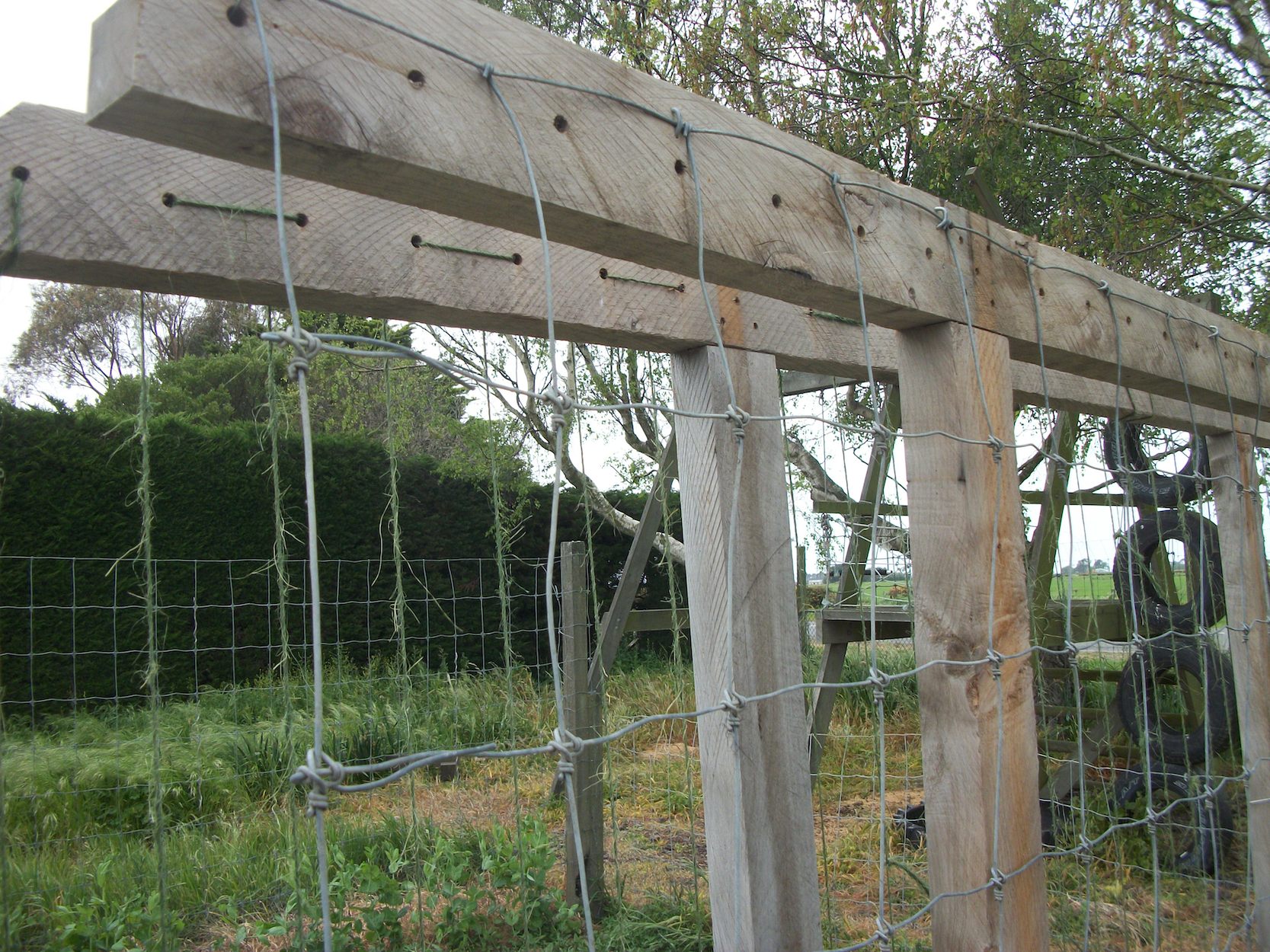
The trellis is a wood frame composed of two supports and a top and bottom bar. Holes in the top and bottom bar allow me to string the trellis with jute. Last year, the jute worked well for peas and beans, but wasn’t strong enough for tomatoes. It was also a bit of a pain to string and clean up at the end of the year.

Trellis with wire

Trellis with wire

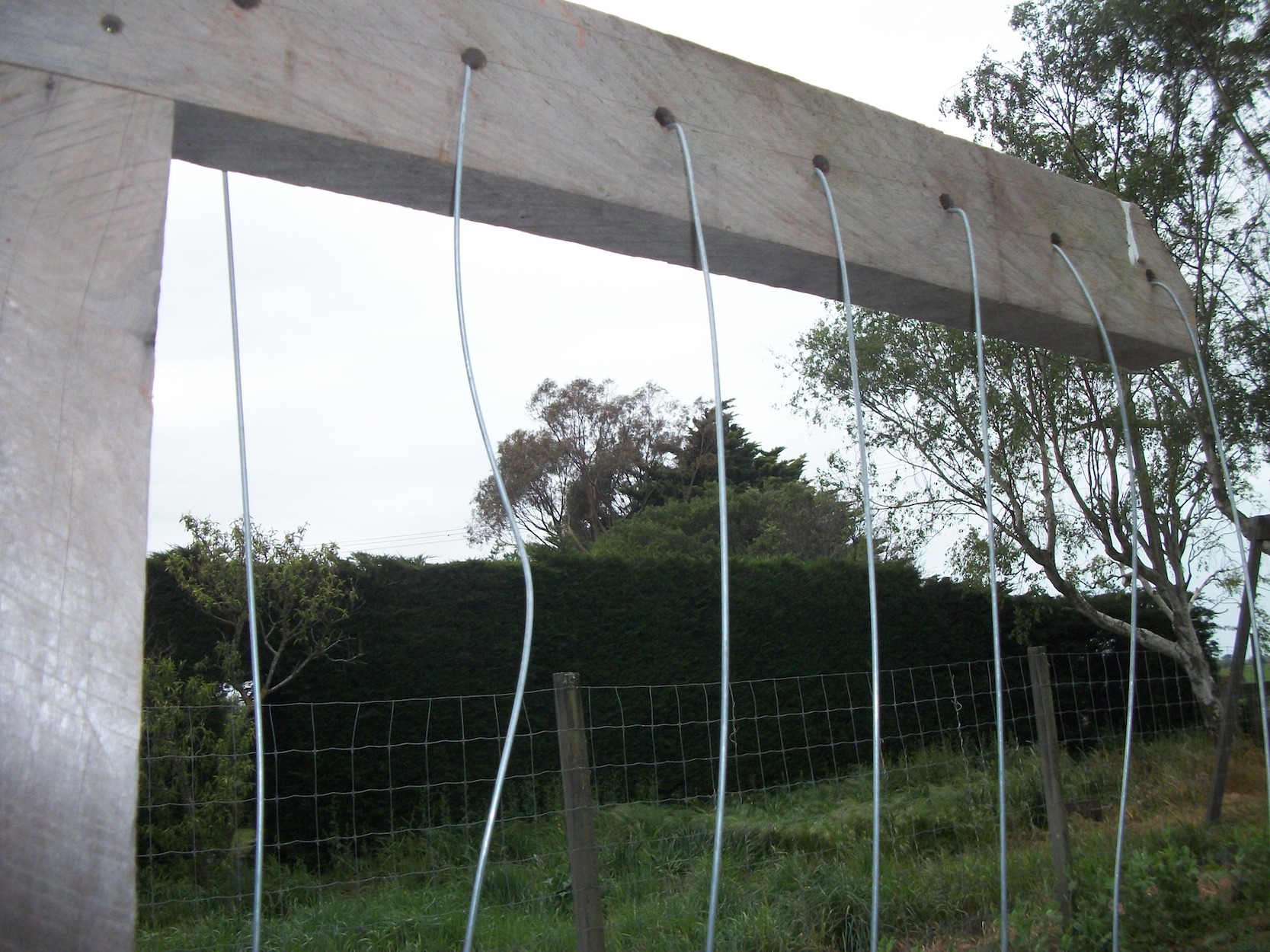
So this year, I’ve strung some of them with jute again, but I’ve also stapled deer fencing to one of them, and strung the tomato trellis with high-tensile wire (both of which were left over from other projects). Neither fencing nor wire looks as nice as the jute, but I’m hoping they are stronger, and they have the bonus that they won’t need to be replaced every year, saving me time and money in future years.

Omelettes

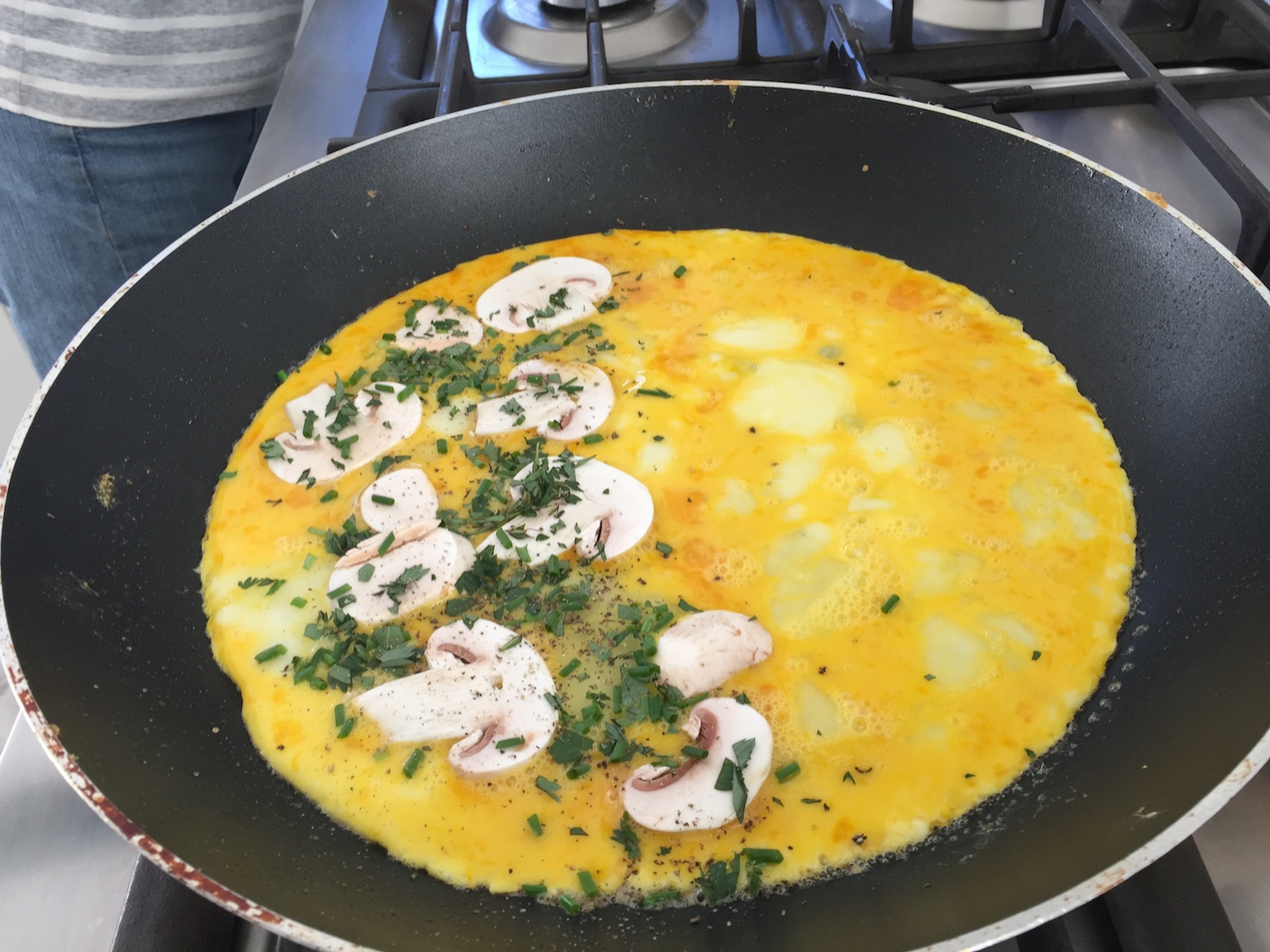
IMG_3731 smIt’s funny how quickly we can go from being desperate for eggs to having more than we know what to do with. My new chickens have all started laying now, and so this afternoon when I was looking for a quick dinner after getting home late, I found a fridge full of eggs.

Of course, that meant omelettes! Filled with cheese, mushrooms and herbs, they’re a delicious, quick-to-make, high protein meal that everyone loves. I served ours tonight with roast potatoes slathered in ketchup.


Ellesmere A&P Show

ellesmereA&Pparade1Today was the Ellesmere A&P Show (that’s Agricultural and Pastoral Show—Farm Show to you Americans). In true Ellesmere Show fashion, it rained, but we headed to the show mid-afternoon when it cleared somewhat.

We have a routine at the A&P show—the same every year. First stop is Karikaas Cheese.

When we first arrived in New Zealand, we could only get Karikaas cheeses at the A&P show. Now, nearly all the supermarkets carry their cheese. Still, we always make sure we buy a few wedges at the show.

Then, of course, we had to pick up a bottle of our favourite olive oil—South Lea, which I’ve blogged about before—if only to say hello to Frances Baylis.

Of course, there are the obligatory mini-donuts. It wouldn’t be an A&P show without them!

The highlight of my trip to the show is usually the sheep shearing competition. Not that it’s exciting—indeed, this year, even the caller seemed bored with the action (though it was a pretty lopsided contest we caught—no exciting race to the finish)—but because it’s just such a Kiwi thing.

We admired the poultry (some particularly handsome roosters this year), the baked goods (our neighbour, Suzie, swept the baking section as usual), the giant swedes, and the radish seed (Suzie’s brother-in-law, also a neighbour, placed second there).

We watched the wood chopping competition (another favourite stop at the show), and the kids considered a carnival ride, but found them uninspiring.

ellesmereA&Pparade2A new find this year was Emilio’s Cheese, a real Italian woman selling serious Italian cheeses, including some that could probably be classified as biohazards. We came home with two—a lovely provolone, and another whose name I can’t remember, but that oozes and smells like dirty socks (that one was double bagged before being put in the fridge!).

We stayed long enough to watch the grand parade, with the Ellesmere Pipe Band marching sedately ahead while a lurching band of livestock and their handlers followed behind.

An exciting day out, for sure.

Blue Sky Blues

Are we in for another dry summer?

Are we in for another dry summer?

We had our first “dry southerly” today—a storm that is forecast to bring rain, but doesn’t. I fear it is a harbinger of the season to come.

Our rain comes primarily from southerly storms rolling in off the ocean. When the wind shifts to the south, we expect rain.

But during the summer, those southerly shifts often arrive without rain. The weatherman might forecast showers, but they never materialise.

A dry southerly at this time of year is not unheard of, but it’s not particularly common, either. With a dry year behind us, I worry about what an early dry southerly means for the spring and summer ahead.

A strong El Nino is predicted for this year. For us that means a parched summer. If we start off dry…well, there’s the grumpy farmer in me talking.

But I’m thankful to have the new water tank full. All I can do beyond that is mulch well, water while I can, and pray for rain.

Bienestar

100_3810 cropThe day’s wind has died

Dust rises from my hoe

And falls in place.

The body is tired,

But at peace

In the rhythm of work,

In the calm setting of the sun

In the midges wafting like ghosts

Through the silence.


Heat gives way to cool air

And the scent of the sea.


Purple clouds glow orange

At the edges

In a turquoise sky.


I pause to rest,

To listen

To breathe

The smell of my garden.


I should stop,

Go inside,

Wash the dirt off my arms and legs.


One more minute.

A few more weeds.

Then one last gaze.


The peas glow in the gold

Of the evening sun.

The onions stand proud.

The lettuces reach up in supplication.

I see it

And declare it good.

A Real Farmer

100_1931smIt said it right on the form, right where I signed: Farmer’s name.

And at that moment, I felt like a farmer.

I’d just spent hours with a goat as she tried and failed to deliver a kid. I was covered in blood and dirt, and at the end of my midwifing skills.

The emergency after-hours vet—Olivia was on call yesterday evening—did a lovely job, but even she struggled to extract the huge dead buck stuck like a cork in my little Toggenburg doe.

While Olivia washed up, I deposited the dead kid in a bucket and wearily trudged out of the paddock with it, leaving my doe toked up on painkillers and antibiotics. I thanked the vet, smiled, and apologised for dragging her out on a Friday evening. I made small-talk as she filled out the paperwork. I signed the form.

All the while, what I wanted to do was cry. Out of exhaustion, out of compassion for what my doe had endured, out of sadness for the loss of a kid.

A real farmer.

Fennel Salad

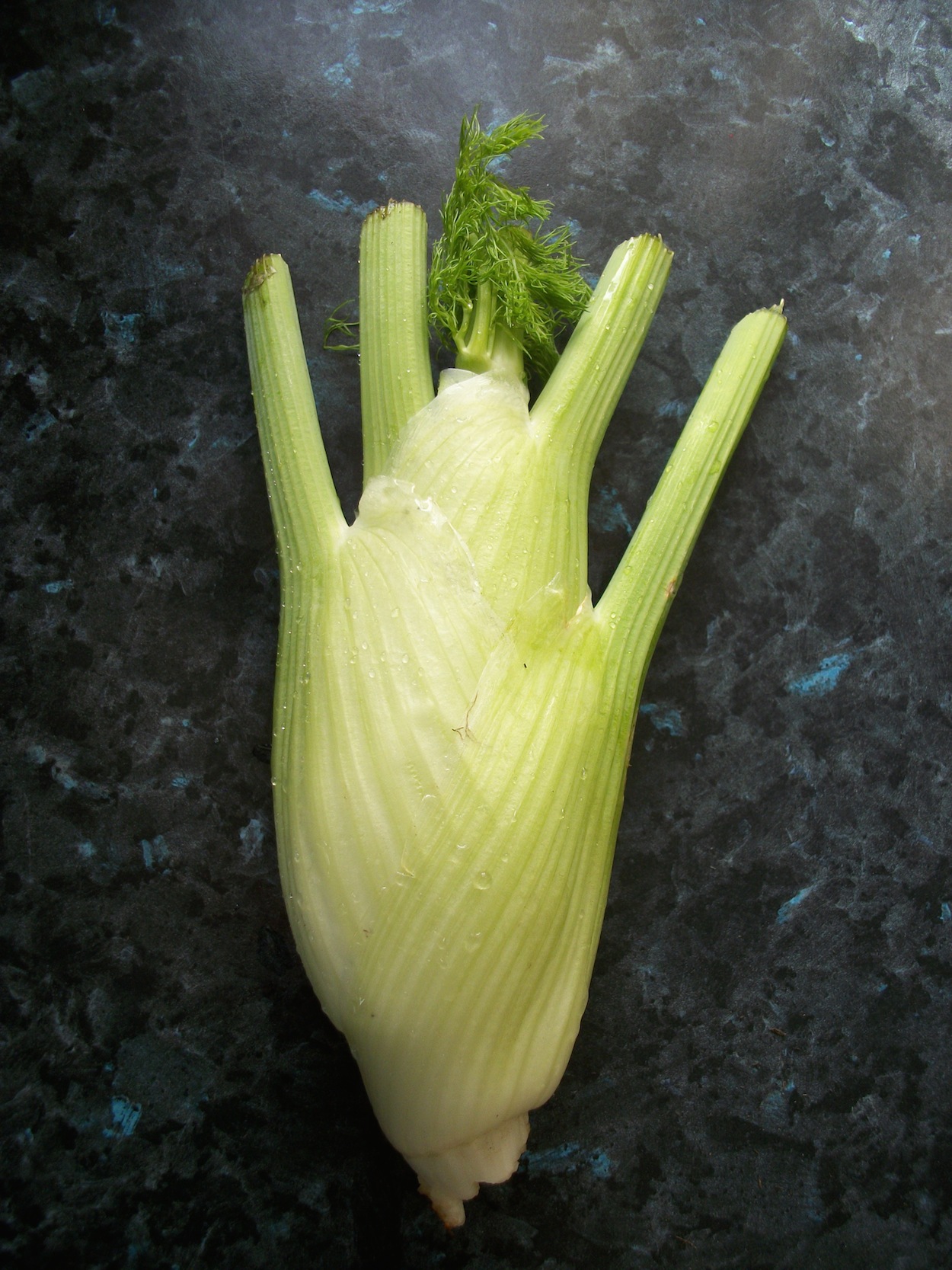
100_3864 smIn the course of clearing the winter weeds from the garden every spring, I always find some volunteer fennel that’s perfect for the picking.

With our summery weather this week, I decided to make a simple fennel salad with my find. It was perfect with a light pasta for a hot day, but would also be excellent as a side dish to lighten a heavy winter gratin.

4 fennel bulbs, plus a few fronds

4-5 sprigs flat-leaf parsley

1 ½ Tbsp each olive oil and white wine vinegar

salt and pepper to taste

Slice the fennel as thinly as possible, and coarsely chop a small amount of the frond. Pull the leaves off the parsley. Whisk together the oil and vinegar, and add salt and pepper to taste. Toss the fennel and parsley with the oil and vinegar.


Asparagus!

100_3847The long winter wait is over! The first of the spring crops is here! We’ve been watching carefully for weeks now, hoping, waiting…

And yesterday the first asparagus pushed up through the mulch (and, yes, these are purple asparagus. We have green, too). Asparagus and artichokes are the two perennial vegetable crops that get us through the end-of-winter gap. They always show up just in the nick of time (just a few freezer-burned bags of summer veggies left). That they are delicious, gourmet foods is a special bonus to the spring season. While we wait on the early lettuces, spinach, broad beans, and other crops, we will gorge on asparagus and artichokes.

Asparagus has been eaten for at least 5000 years, and I can imagine that it was an even more welcome springtime sight in the days before our modern food system did away with the lean periods of the year for many of the world’s inhabitants. Full of nutrients, it would have served to bolster people’s health in spring, just like the spring herbs like dandelion.

We always have plenty of food, with the supermarket making up any deficiencies in our own production, but we still feel that lean season. We crave fresh greens and fresh green vegetables. We’re tired of potatoes and pumpkin. So when the asparagus comes on and the artichokes begin to put up flower buds, it’s a cause for celebration.

So happy spring to everyone!

Dust bowl

hay5 sm

On a relatively clear day, we can see the Southern Alps.

Sustained winds of 63 kph (39 mph) today, with gusts to 150 kph (93 mph). That’s not unheard of here, but it is severe. Though it is warm and sunny, we are largely spending the day indoors—it’s just not very pleasant out there!

Today, we can barely make out the neighbour's hedge.

Today, we can barely make out the neighbour’s hedge.

I watered the garden well before the wind picked up, to give it the best possible chance to survive the day, and I added an extra tether to the greenhouse, lest it blow away entirely. So far, most everything seems to be holding up.

It’s really the dust that’s most bothersome. Visibility is poor—even the neighbour’s house looks vague and hazy. Indoors, a fine grit settles on everything. My mouth feels gritty, and I find myself wiping off the computer keyboard every few minutes. It’s nothing like the dust storm we had late last summer—the ground is relatively moist still—but it’s an impressive show, nonetheless.