Strawberry Secrets

2016-11-16-14-50-36-smShhh!!

Don’t tell my family.

I ate the first strawberry of the season!

It was delicious!

I’m usually quite generous with my garden produce—everyone gets a fair share of the goodies. But when it comes to the first strawberry of the year, I turn selfish.

I always get the first strawberry.

I get it, because I plant, and weed, and water, and weed again. Because in two weeks, I’ll be spending an hour a day just picking berries, then countless hours processing them into jam and other yummy treats for everyone to enjoy.

It’s my sweet reward for a year of work.

The secret will out in a day or two. When I come in with three berries, and give one to everyone else in the family, saving none for myself, they’ll know. They’ll know I ate the first one already.

But by then it won’t matter. I will have gotten the first one.


Ripgut Brome

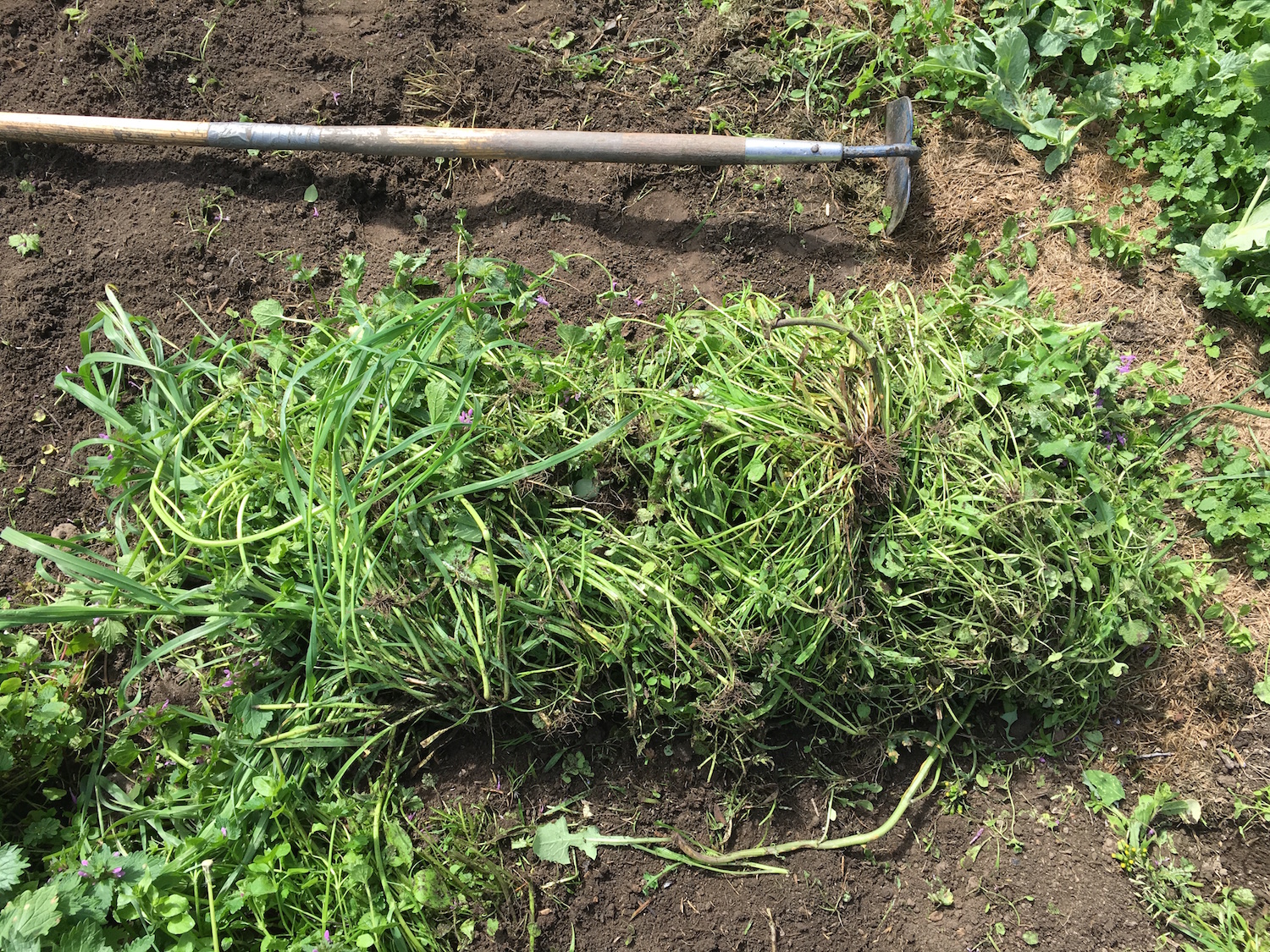
2016-11-08-16-14-49Ripgut brome. How can you not be curious about a plant named ripgut brome?

I was certainly curious, after it took over my yard this spring. I’ve hauled countless wheelbarrow loads of ripgut brome to the compost pile, and I’m still finding it everywhere.

Ripgut brome (Bromus diandrus) is an annual grass native to the Mediterranean region. It probably arrived in New Zealand as a contaminant in grain, or in the wool of imported sheep. It’s a tall, sprawling plant, and seems to spring up overnight to suddenly form a dense thicket anywhere that isn’t regularly mown or grazed.

The leaves of ripgut brome are rough, and feel like sandpaper on bare legs and arms. They leave countless, fine scratches like paper cuts on the unwary weeder.

But the worst part of ripgut brome is the seed. Sharp, and covered in little hooks, the seeds catch and burrow into animals’ fur, eyes, skin, feet and intestines (I assume that’s where the name ripgut comes from).

And like all good weeds, it produces copious seeds (over 3000 per plant), aggressively outcompetes other plants, and is drought tolerant. It has also evolved herbicide resistance in some areas.

There’s only one thing for it on our property—to pull it up before the seeds mature. The good news is, that it’s got a shallow root system, so it’s not difficult to pull. The bad news is that it covers almost every inch of our acre and a half.

Sisyphus had it easy…

Rain

2016-02-24-20-57-32I wake
To the sound of rain.

It is not morning.

It is the rain
That has dragged me from sleep.

No.

Not dragged.

It has nudged me awake
Accidentally
Like my husband does
When he comes to bed
(Night owl that he is,
And me an early riser).

Like my husband,
The rain has lain down beside me.
A comfort,
Knowing he is there,
Knowing the rain is there
Watering the garden,
Making the grass grow in the paddock,
Tamping down the dust.

The Best Laid Plans…

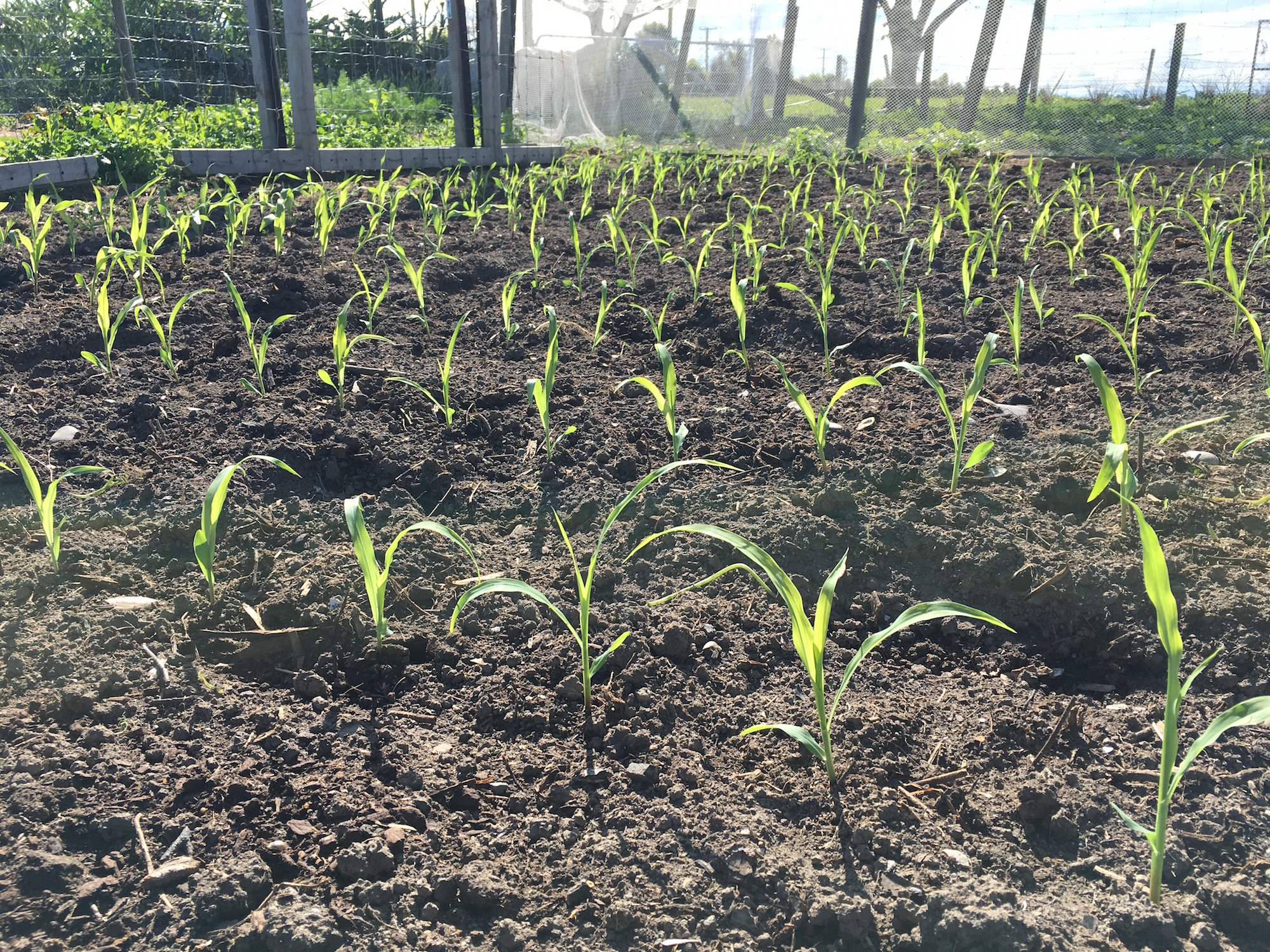
2016-11-05-16-46-35-smBack in mid-August, I blogged about the to-do lists that get me through spring. I make a list and stick to it. That way, everything gets done.

But what if the plants don’t pay attention to the list?

I try to maintain consistency from year to year, and I document planting dates, plant-out dates, potting-up dates. So I know that if I plant my first batch of corn in trays on the 15th of October, it will be just ready to plant out on Canterbury weekend (around the 15th of November).

But this year, the corn was ready to plant out by the 30th of October.

The corn bed wasn’t ready yet. It’s always the last one I prepare, because it’s usually the last one to be planted out. I took the trays of corn seedlings out of my office, so they would have chilly nights to slow down their growth.

It didn’t help. The corn kept growing at a ridiculous rate.

I considered planting the corn in the beds designated for pumpkins, because they were ready. But that would have meant planting pumpkins in the same beds they were in last year. I had a lot of pest problems in those beds last year—I’d be foolish to plant the same crop there again this year.

Last weekend I got frantic. If I didn’t get the corn out to the garden in the next week, it would die in those trays.

Wednesday, I quit work at 2 pm and started preparing the beds. I got them weeded, and the soil turned. Then I realised I was going to need to turn the compost pile in order to get compost for those beds.

Turning the compost pile usually takes at least two weekends of back-breaking work.

This morning, I started on the compost pile around 6.30 am. By the time I’d turned a third of it into the empty compost bay, I was completely exhausted. And I’d only managed to get five wheelbarrow loads of compost for the corn (I really wanted nine).

So I compromised. Five loads of compost would have to be enough. I turned it in, raked the soil smooth and called the beds done. The corn was all in the ground before lunch. Whew!

Of course, it’s a week early. I have learned the hard way not to plant out too early here. My garden sits in a frost pocket. Chances are, the corn will get nipped by frost, but it was either that or watch them die in trays. Crossing my fingers and hoping for warm weather!

On-the-Fly Spinach Tart

2016-11-04-18-25-58-smMy plan was an easy dinner tonight. I’d been saving a few artichokes—letting them get big, so we could have steamed whole artichokes. I figured I’d make a salad with some leftover cous cous in the fridge, and maybe fry up some tofu crusted with herbs and parmesan cheese. Quick and easy.

Then I went to the garden and saw the spinach. Beautiful, glossy leaves, loving the bit of rain we’ve had recently. There was so much of it, I couldn’t resist.

So instead of a quick, easy meal, I made a spinach tart to go with those artichokes.

Dinner was a little late, but it was well worth it. There wasn’t a crumb left when we were through.

Trying to work quickly, I didn’t bother looking for a recipe. Here’s what I did.

I made a standard pie crust—enough for a single-crust pie. I rolled it out and lined my tart pan, then put it in the fridge to chill while I prepared the filling.

For the filling, I used:

Fresh spinach (maybe 1kg (2 lbs), coarsely chopped)

Fresh chives (a good handful, chopped)

Fresh dill weed (4 Tbsp, chopped)

1 cup grated goat cheddar

4 large eggs

salt and pepper to taste

I cooked the spinach and chives with a few tablespoons of olive oil until the spinach was well cooked, and most of the water had boiled off. I removed it to a bowl to cool. When it was cool enough to handle, I squeezed more water out of the spinach, and drained it off. (You want the spinach pretty dry, to keep the crust from getting soggy.)

I mixed in the dill, cheese, eggs, and salt and pepper, then poured the mix into the prepared crust. I baked it at 190°C (375°F) for about 40 minutes. I let it cool ten minutes before serving.

A New Gardening Lexicon

A nice tidy rolag.

A nice tidy rolag.

I’ve noticed that the world of extreme gardening doesn’t have a very good vocabulary. There just aren’t the words to express the particular situations, actions, and states one experiences.

So I’ve developed my own gardening lexicon, to try to fill that gap in the English language. Here are a few of my words:

Chook—verb. To toss something to the chickens. E.g.: Just chook those weeds—they like them.

Chookable—adjective. Suitable for the chickens to eat. E.g.: Those weeds are chookable.

Dinger—noun. A rock in the soil, accidentally struck by a gardening tool.

Goat—verb. To toss something to the goats. E.g.: Goat these branches—they like them.

Goatable—adjective. Suitable for the goats to eat. E.g.: Those branches are goatable.

Grunter—noun. A weed that requires significant effort (and usually a tool) to pull.

Hum-dinger—noun. A particularly large rock in the soil, accidentally struck by a gardening tool.

Pop bead—noun. Insect pest. Name comes from the sound it makes when squished between the fingers.

Rolag—noun. A term borrowed from weaving. Weeds that have been hoed into a tidy roll, ready to be lifted into the wheelbarrow or thrown on the compost heap.

Squeaker—noun. A nest of mice, when overturned accidentally by a shovel or spading fork.

Superman tree—noun. A tree or shrub that looks difficult to cut, but is actually easy to cut, making the cutter feel like Superman. (See also Wonder Woman weed)

Twitch light—noun. Couch grass with unusually fine runners.

Twitch-on-steroids—noun. Couch grass with unusually thick runners.

Twitch-headed—adjective. Having weeded so much that you see weeds when you close your eyes.

Wonder Woman weed—noun. A weed that looks like a grunter, but is actually easy to pull out, and makes the weeder feel like Wonder Woman. (See also Superman tree)


Cat Behaviour

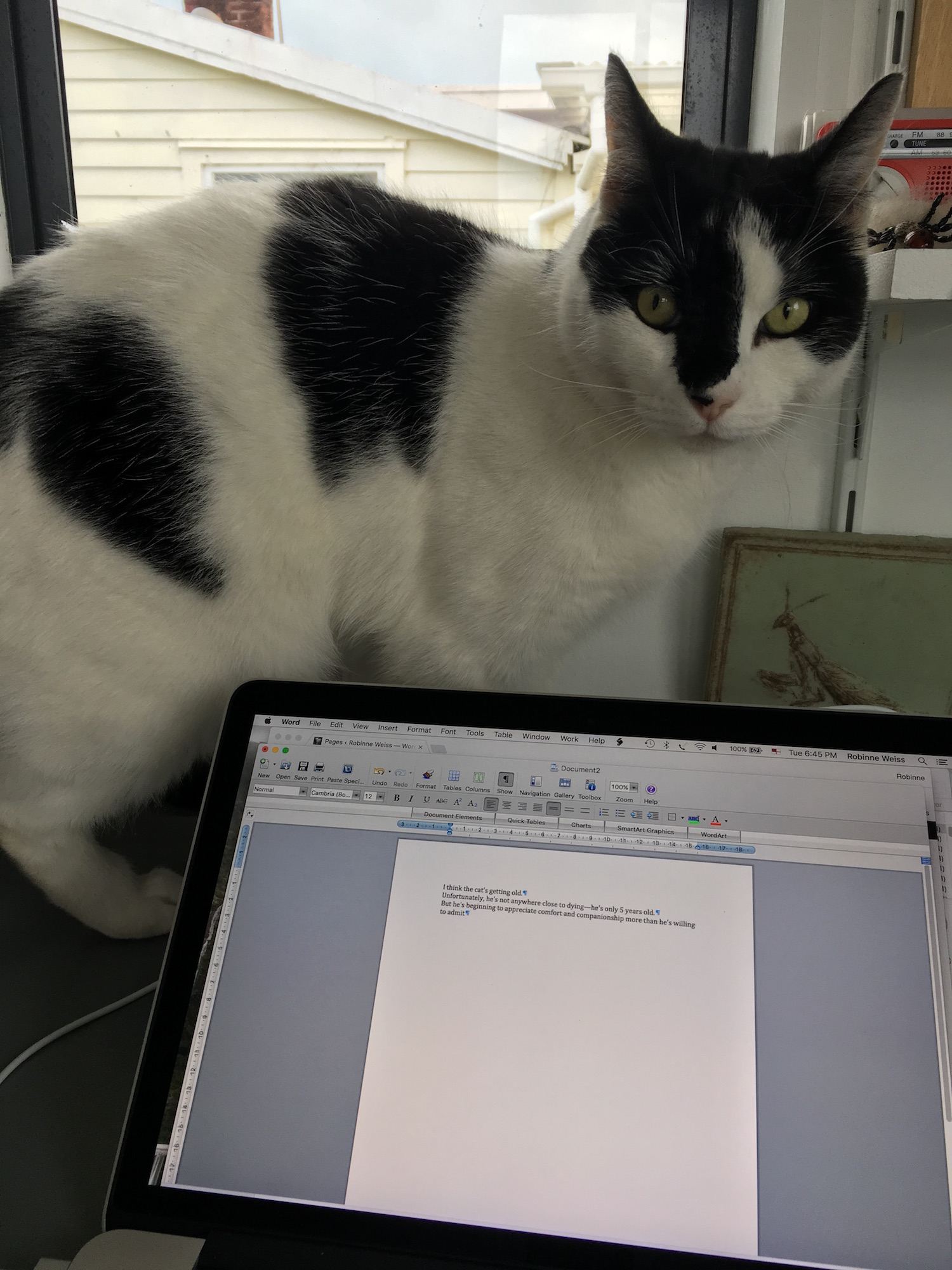
2016-11-01-18-45-54-hdr-smI think the cat’s getting old.

Unfortunately, he’s not anywhere close to dying—we’re likely to have to put up with him for another 10-15 years.

But I think the Malevolent Beast from Hell is beginning to appreciate comfort and companionship more than he’s willing to admit.

As I type, he is sitting on my lap—a place he has steadfastly refused to ever spend any time before.

And a couple of weeks ago, the evening after I came home from several days away, he jumped up onto the couch with me, and curled up as close as he could—practically on my lap–purring loudly.

This from the cat who has always viewed humans as unclean. He usually tolerates being picked up, but clearly hates the experience, and struggles to get down after just a few seconds.

If he didn’t appear entirely healthy otherwise, I’d think he was sick.

But, then, just this morning he ambushed me in the yard and tried to disembowel me, and he did give me the evil eye when I picked him up, so he must be feeling okay.

But he’s going soft. Next thing you know, he’ll be choosing to be in our presence, maybe even jumping into our laps unbidden.

Or, maybe he’s just lulling us into a sense of security before he eats us…

Aquilegia

2016-10-31-19-37-18One of my favourite flowers is blooming—Aquilegia, also known as columbine and granny’s bonnet.

I can’t tell you why I like Aquilegia so much. I’m generally not a fan of frilly flowers. Perhaps I like it because, though the flowers look delicate, the plant is tough as nails. This particular specimen is growing in what used to be the driveway—a hopelessly compacted combination of clay and rock, dry as a desert most of the time—and is all but shaded out by the pittosporum behind it. It thrives, and has even seeded itself into other places in the old driveway.

Or maybe I like it because, in the Eastern US where I grew up, the native columbine, Aquilegia canadensis, attracts hummingbirds and hawk moths. Here, the bumble bees visit it, but little else. Apparently, of the 60-70 species of Aquilegia, several have evolved exclusive relationships with particular pollinators.

Whatever the reason I like them, the flowers make me smile every time I pass them.

Apologies, I’m tired…

winepeppers-smWhen the day’s work is done
And exhaustion kicks in
And you want to collapse
You know you can’t win.

The blog must be written!
It doesn’t matter
That your hands are all blistered
And your mind is a tatter.

Just put down some words
Your readers won’t care
If you spell a few wrong
No need to rip out your hair.

Just type a few rhymes
They don’t need to be good.
Explain that you’re tired,
You’ll be understood.

Just whip out that blog post
In record time.
Then take a hot shower,
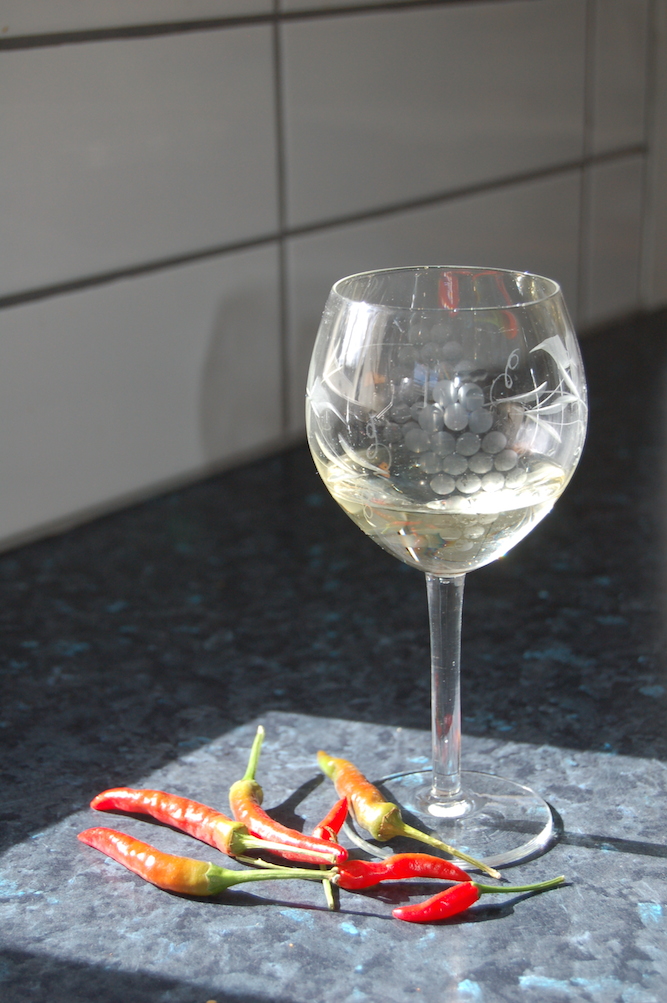
And a nice glass of wine.


You say Iris, I say Orris

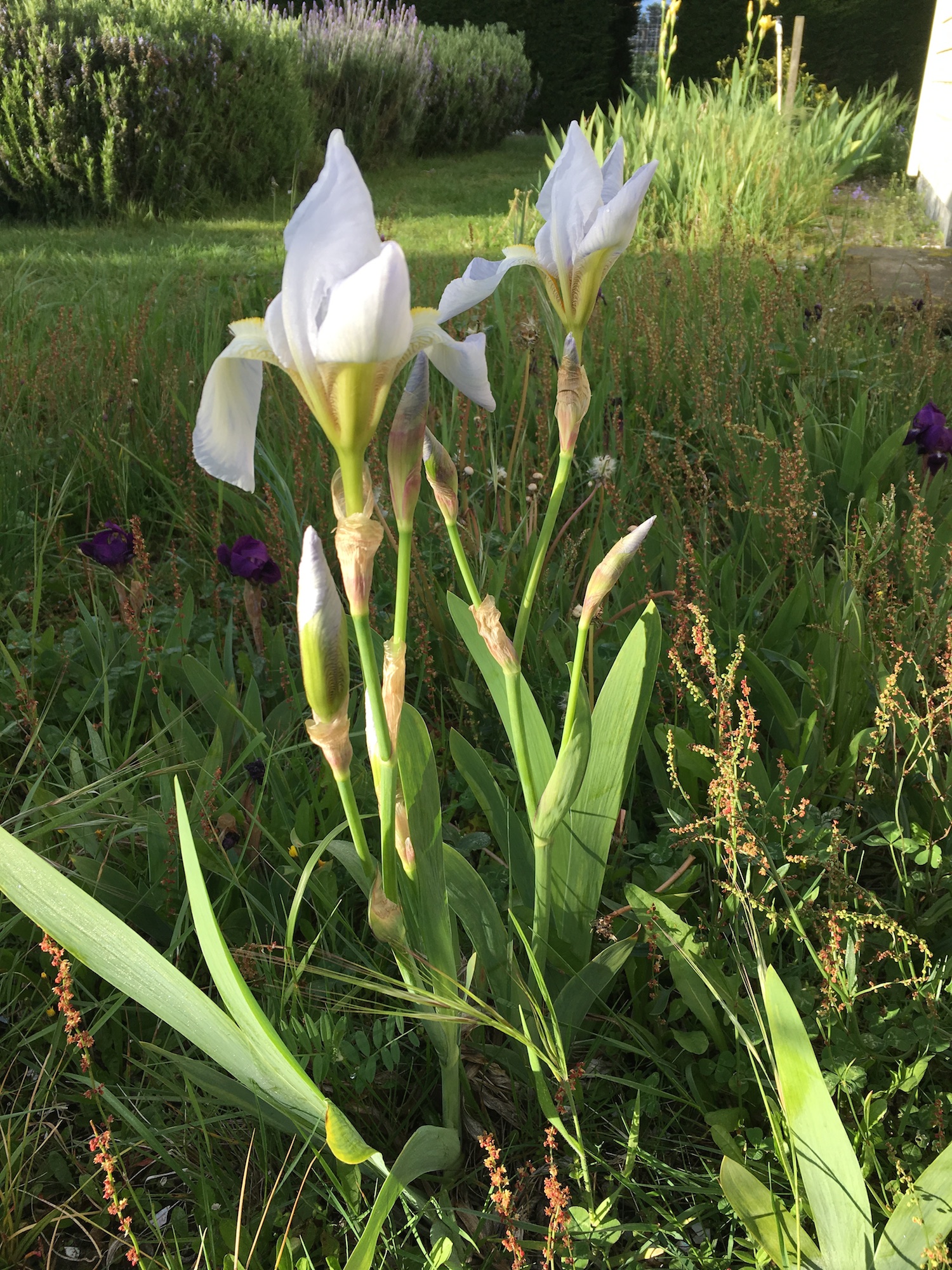
2016-10-28-07-33-39-smWhen we first planted our herb garden, nearly ten years ago, we planted a ‘knot’ of rosemary and lavender. In all the spaces inside the knot, we planted other herbs—a wide range of thymes, oregano, salad burnet, chives, etc. This iris was one of them (though we’ve since rescued it from being smothered in the knot). It is not a herb we ever intended to use—we just thought it was interesting. It is Iris pallida—the iris that is the source of orris root.

Orris root used to be used medicinally, but today its main attraction is its smell. It is used in perfume and potpourri, and in a Moroccan spice mix called Ras el harout.

I love the word orris, because it’s so clearly a case of dialect confusion. Say ‘iris’ with your teeth clenched, and you’ll get ‘orris’.

I can just imagine how it happened…the doctor calls on a patient in a remote village. He examines the man, and asks the family, “What have you done for him so far?”

“We’ve given ‘im a bit of iris root.”

“What? Orris root?”

“Yep, iris.”

“What is orris? I’ve never heard of it.”

“It’s this plant, blue flower, grows down by the creek. I’m sure ye’ve seen it before.”

“Hm.” The doctor scribbles orris root into his notebook, and forever after iris root is known as orris root.

Â