The price of the beach

img_3170We spent yesterday at the beach–sun, sand, and surf!

It was glorious.

Today I paid for it.

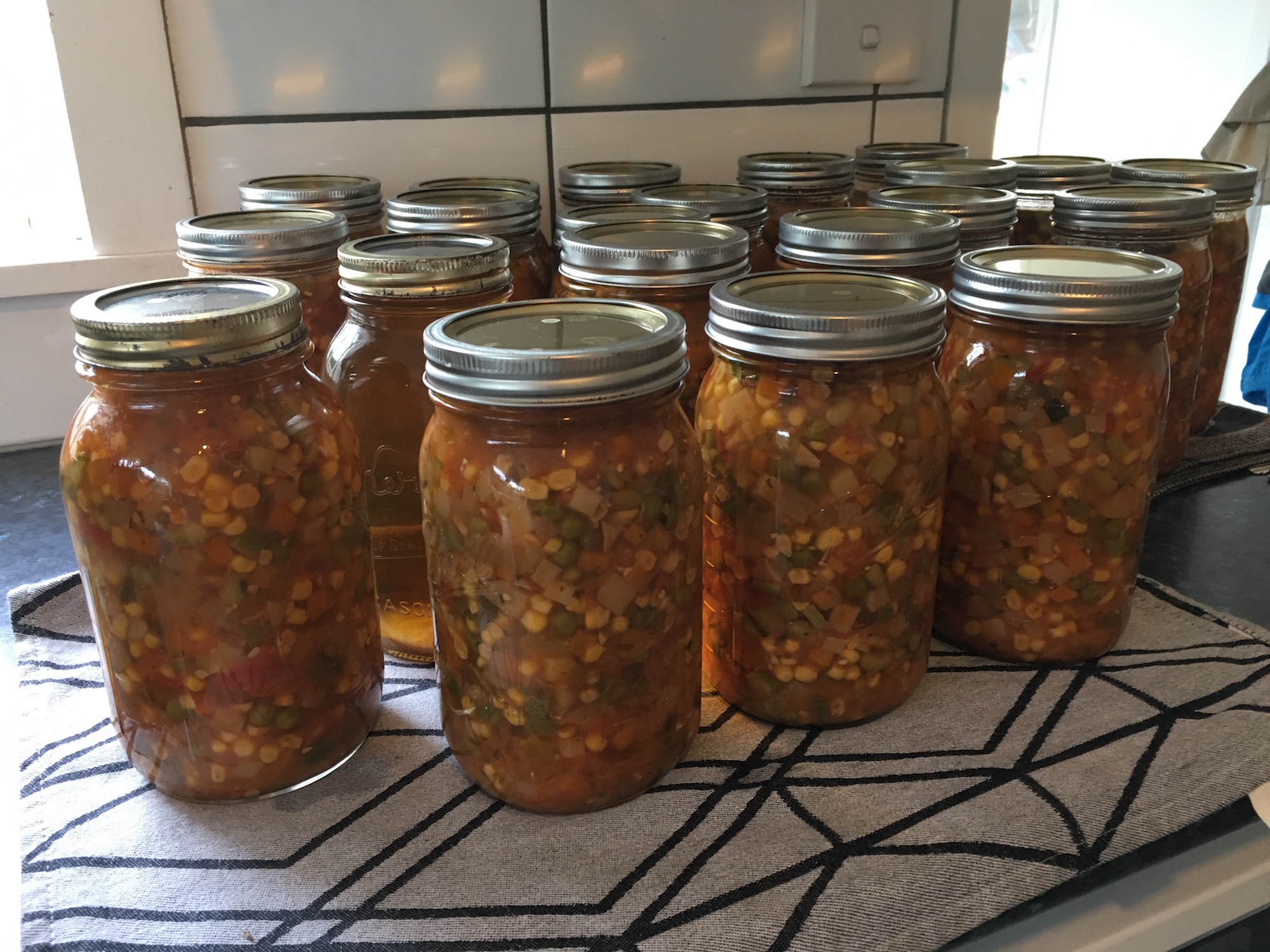
Not in sunburn or sand in my shorts, but in work. It was time to make our annual vat of summer soup, I was milking for the neighbour this weekend, and I had a weekend of cleaning and animal care to do–all in one day.

While I milked the neighbour’s goats, the rest of the family started picking and chopping vegetables. When I got home with a pot of milk, I made cheese around the vegetable prepping, then I joined in.

As the pot of soup came together, we started calculating how many jars we needed to hold it all. It was several more than we had empty.

So I made apple crisp, freeing up two jars (which still held last year’s apples). I baked that while the first load of jars was in the canner.

I had also planned on baking lunchbox desserts this weekend, so after putting the second load of jars in the canner, I made cookies.

I also took down and folded the laundry (and patched a hole in my daughter’s shirt), and washed a ton of dishes.

While the third load of jars was in the canner, I cleaned the house (mostly), and milked my own goat. Before that batch of jars was finished, it was dinnertime. I sat down for the first time since breakfast.

Whew!

The final tally for the day was 23 quarts of soup, 6 quarts of vegetable stock, 6 dozen cookies, one beautiful apple crisp, and a batch of chevre (and a clean house and laundry).

Unfortunately, the chicken house hasn’t gotten cleaned yet, nor has the bathroom. I could probably manage them yet today.

Or I could pour myself a glass of wine and worry about them tomorrow…

Ecological Weeding

A parasitised aphid (the bloated brown one), and an unparasitised one (the green)

A parasitised aphid (the bloated brown one), and an unparasitised one (the green)

As much as I enjoy weeding, I can’t possibly keep up with them all. There are always weeds on the property.

In truth, I don’t try to eliminate all the weeds. I take a ‘live and let live’ approach with many of them. I also recognise the utility of many of the weeds on the property–or at least their utility to other organisms.

Except in the vegetable garden where they are, literally, a pain, I allow nettles to reside in the yard. They provide food for our native yellow admiral butterflies and, in a pinch, can be used to make rennet for cheese making. Even in the vegetable garden, I don’t mind seeing them–they hate dry soil, so they’re a good indicator that I’m watering the garden enough for the vegetables.

Weeds like yarrow, clover, and dandelions are good food sources for beneficial insects, so they, too, are allowed to grow wherever they’re not in direct competition with crops.

Weeds are also sometimes good ‘trap crops’, attracting pests to plants (themselves) I don’t mind pulling out and destroying to get rid of the pest.

Sometimes, though, the ‘trap crop’ idea backfires on me. Today I noticed that a sow thistle I’d allowed to grow was covered in aphids–it was a great opportunity to destroy thousands of pests. Except that as I bent to pull the weed, I noticed that a large number of the aphids were parasitised by wasps. I depend upon these wasps to deal with my springtime aphid problems. Short of painstakingly picking off every parasitised aphid and caring for them until the wasps hatch, killing the aphids on the weed is going to kill the wasps, too. What to do?

So the weed has gotten a temporary stay of execution. I’ll keep an eye on it. When the wasps have emerged from the parasitised aphids, I’ll pull it and kill the remaining aphids.

Losing Soil, Making Soil

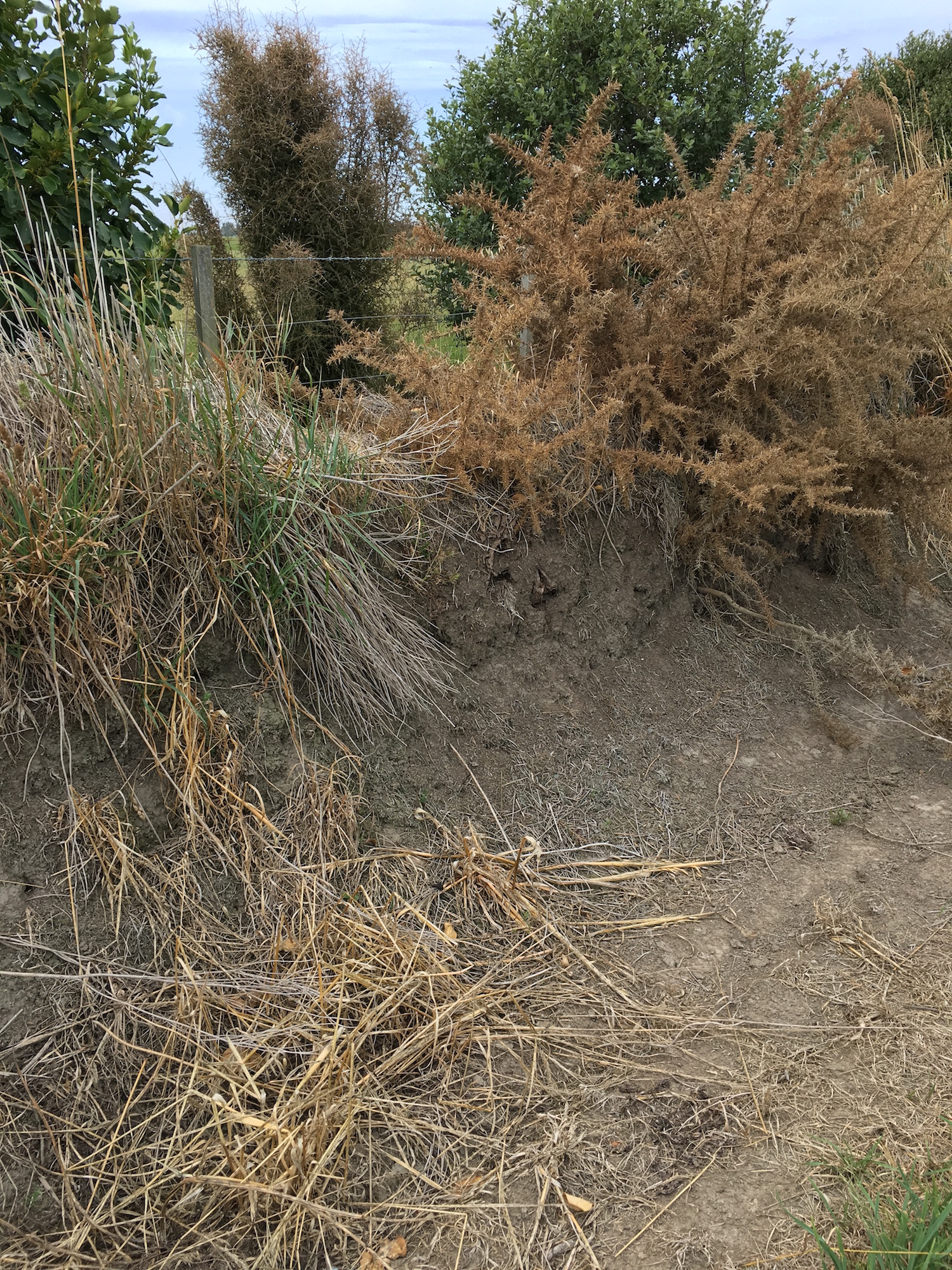
img_3148This time of year is always dusty. The soil is dry. The air is dry. Farmers harvest the summer crops and turn the soil to plant the winter’s grass. It’s not unusual for a wind to kick up, sending newly-turned soil into the air.

I don’t know how much soil farmers in Canterbury lose this way (they’re also getting soil from the farms upwind and loess blown off the mountains), but I do know that where my back yard meets the neighbour’s field, my property is significantly higher. At least some of that soil is being lost.

Interestingly, there seems to be a place on the neighbours’ farms where soil is being made.

A hundred and fifty years ago, farmers in Canterbury were planting gorse hedges for shelter and fencing. Many of those gorse hedges remain (indeed, they’re hard to get rid of). The original plants are almost certainly long gone, as gorse is a short-lived shrub, but new plants are continuously growing from seeds cast by the mature plants.

It’s quite possible that my neighbour’s gorse hedges have been here since Joseph Price took up the original 5000-acre run number 79 in 1853.

Gorse is dense when pruned into a hedge. New outer growth shades out growth in the middle of the hedge. Thorns and branches fall and form a dense, prickly mass at the base of the plant. Over time, this detritus breaks down and forms soil.

Quite a lot of soil, by the looks of it.

Some gorse hedges were planted on ridges–ditch and dyke, it was called–the farmer dug a ditch to help drain the land, and planted a hedge on the resulting pile of soil scooped out of the ditch. Some hedges were just planted on the level ground. This is how the hedges along my lunchtime walk were planted, but today it looks like they were sown on a tall, narrow wall of soil.

The build-up of soil under the gorse hedges is impressive. In some places, it is as high as my waist. It is most visible where the gorse has been herbicided off to make way for native hedging plants. There you can see how the twisted trunks and branches have caught the detritus and held it in place, even after it has rotted.

How important are these ridges of new soil in a landscape that is losing soil? Probably not terribly important–they cover just a tiny fraction of the landscape–but I find them intriguing, nonetheless. Our agricultural landscapes–as modified, controlled and cultivated as they are–still hold interesting stories.

She Just Wants To Be Useful

Artemis in her younger years.

Artemis in her younger years.

Seven months ago, I blogged about my 12-year-old dairy goat who had been diagnosed with heart trouble. The vet clearly was trying to tell me she ought to be put down at the time. I heard the message, but couldn’t bear the thought, provided she wasn’t uncomfortable.

I got a prescription of diuretics for her to try to clear the fluid from her lungs. It seemed to help a little…until she got wise to the medicine and began to refuse it. By then it was springtime, and I thought she might just be okay without the medicine. I stopped giving it to her, and she was fine. With the spring grass growth, she put on condition, and toward the beginning of summer, her udder started to fill out.

Artemis has always been a strong milk producer. In years when she’s kidded, her udder gets so full, it drags in the grass, and her kids have trouble finding the teats. I haven’t actually gotten her in kid for two years, and she still gives milk every year.

This year, she was supposed to be officially ‘retired’. I replaced all my other dairy goats with fibre goats so I wouldn’t have to be tied to daily milking.

Artemis had other ideas. In spite of her dicky heart, in spite of her age, her body decided to produce milk.

At first, I ignored it. If there was no demand for the milk, she’d stop producing. At least, that’s what the textbooks say. It’s never worked for Artemis in the past (drying her off in winter has always been challenging)–I don’t know why I expected it to work this time.

Eventually, I had to milk her. And once it milked her one time, her body responded by producing more milk. It was a vicious cycle–the more I milked, the more she made.

I’m now milking her twice a week. Not much, really, compared to the usual daily milking. I have to say I appreciate the milk, but more importantly, Artemis appreciates the milking.

She knows the signs I’m coming to milk her. When she realises that’s what’s happening, she saunters over to the gate, full of self-importance, nipping haughtily at the fibre goats. She slips out the gate when I open it and trots to the milking stand. She talks to me a little bit as I milk her, as if to bring to my attention what lovely milk she’s made for me.

When I release her from the stand, she leaps off and scampers like a kid back to the paddock, kicking her heels in the air. When I let her back into the paddock, she skips around the other goats, as if to say, “See, I’m useful, unlike some around here.”

It clearly gives her so much pleasure, I feel bad that I hesitated to start milking her.

Maybe producing milk will be the last straw for her heart–just too much to ask of her body–but I believe it makes her happy.

And so, I will milk her. For as long as she wants. After all, isn’t that what we all want? To be useful? To be needed?

Technological Stress Relief

Our smoke-red sky

Our smoke-red sky

It’s been a tense day here. For those who don’t pay attention to the New Zealand news (I don’t blame you–one of the top stories today was that a police officer in Queenstown pulled a plastic cup off of a hedgehog who was stuck in it), there have been two bush fires burning in the Port Hills, just outside of Christchurch for the past two days. We’ve been able to see the flames from our house 30 km away–they’re serious fires. Yesterday I worked at a library not far from where the fires were burning, and watched as helicopters with monsoon buckets circled.

Today the wind shifted and is pushing the fire toward the city. As evacuation orders started coming in, my kids were somewhere on a bus, caught up in a snarl of traffic. People fleeing the flames, people trying to get back to their homes from work, people coming to see the spectacle of the hills above town on fire–it was pretty chaotic.

I was safely at home, watching the smoke plume burgeon, listening to the radio. It all felt so familiar–a natural disaster, and I was in one place, and the people I love were in another. We’ve been here before.

The difference was that this time, all four of us own cell phones. Last time, we didn’t know the status of our loved ones until we actually saw them. This time, I knew pretty well where everyone was all afternoon.

It didn’t stop me from worrying–my kids were still too close to the fire and too far from me for comfort–but it prevented me from envisioning the worst.

I admit, there are times when I want to say to at least one of my children (or to myself), “Put down the phone!” But the trade-off of being able to communicate with them on days like today is worth it.

I’ve been accused of being a Luddite, and the accusation has some merit–I don’t like technology for technology’s sake. New technology tends to stress me out. But I certainly appreciated it today–it relieved a great deal of stress.

Mysteries of the Pond

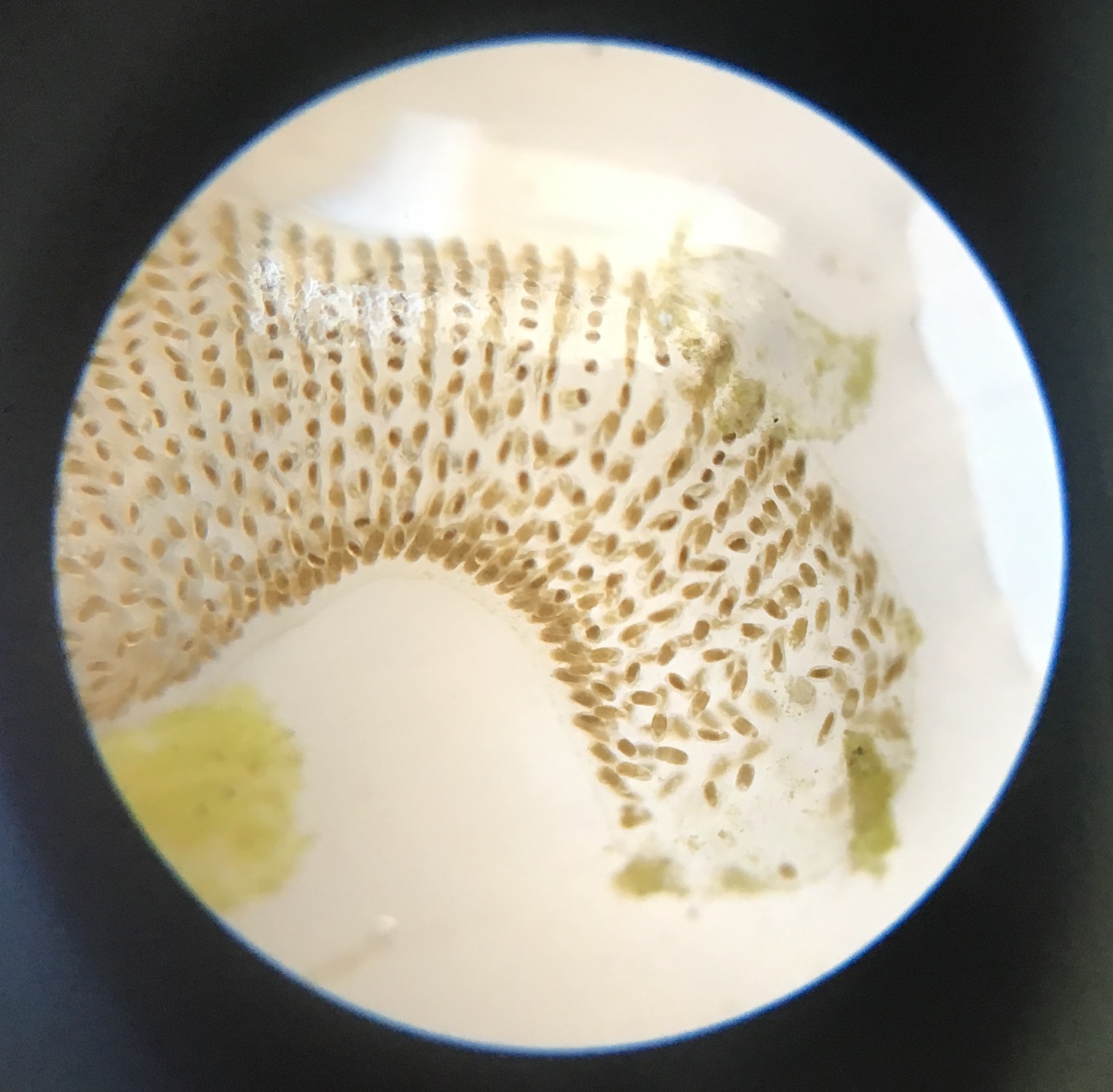
2017-02-11-15-04-42My daughter was hanging out at our little pond the other day and found the egg mass of some aquatic creature. At first I assumed it was a mass of snail eggs, because it had that look. But when we put it under the microscope, the eggs were arranged in perfect rings around the mass. I spent most of my childhood raising aquatic snails in little fishbowls on my windowsill (sorry, Mom!) and never saw an egg mass so orderly.

What could it be?

Neither of us had any idea.

But we have fish tanks…

The egg mass is currently in a small tank, and we’re checking daily. One of these days our mystery will be solved.

Bittersweet Sweet Corn

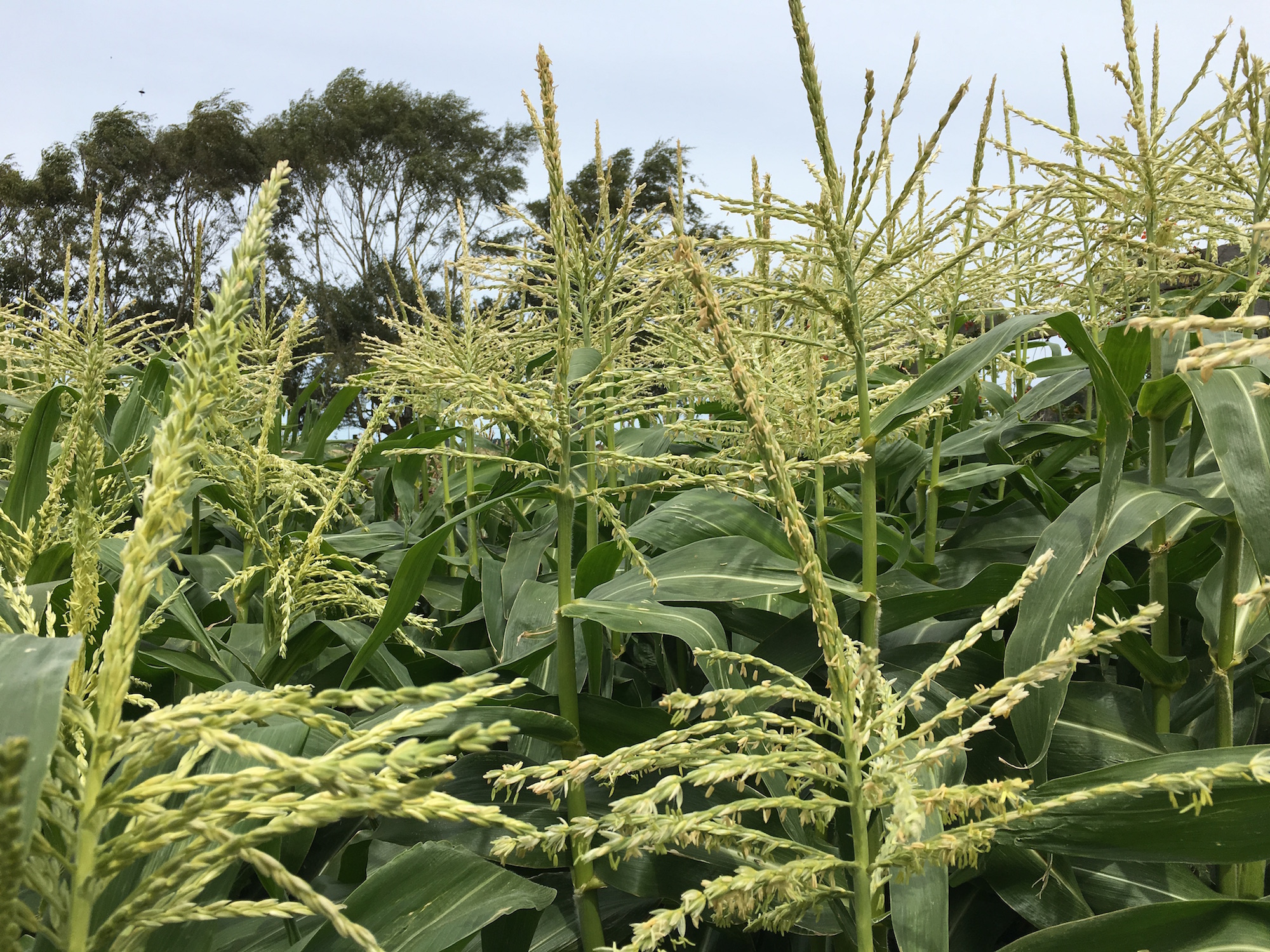
2017-01-24-15-16-41-smYou wait for it all summer. You watch it grow taller and taller. You marvel when it overtops your head. You cheer when it starts to flower, and you impatiently poke the ears as they grow and fatten.

Then one day–finally–the first ears of sweet corn are ready to pick. Always eaten as corn-on-the-cob, the first ears are celebrated and savoured. They cry out Summer!

They are the beginning of the end, of course.

Once the sweet corn is coming on, the green beans will start to slow down. The peas, already on their last hurrah, will give up. February’s heat and dry will begin to take its toll on all the plants.

There is still plenty of time to enjoy summer’s bounty–the deluge of vegetables won’t be over until mid-April. There is still ketchup to make, and summer soup to bottle. And lots and lots of corn-on-the-cob to eat.

But once the corn is ripe, the clock is ticking. From here on out, the garden will look a little worse each day. I’ll start pulling plants out, clearing beds, harvesting storage crops.

And in a shady corner of the yard are two trays of seedlings, sheltering from the heat and harsh sun. Waiting for the end of the sweet corn. Winter crops.

Because every season’s end is another’s beginning.

Thirsty Bees

img_3051When my husband created a pond in the yard, I expected the damselflies, mayflies, midges, diving beetles, and other aquatic insects to show up. I even expected the heron who occasionally drops by to sample the goldfish.

I didn’t necessarily expect the honey bees.

I wasn’t surprised when they showed up, though. What surprised me was the sheer numbers that have shown up this summer. The edge of the pond has been humming for weeks as hundreds of bees jostle for space on the best perches.

Honey bees, like all animals, need water–at least a litre a day per hive. The bees don’t just drink the water; they also use it to dissolve honey that has crystallised, dilute honey for larval food, and to cool the hive on hot days.

When scout bees find a good water source, they mark it with pheromones that tell the other bees it’s a good spot. I reckon by now, the edge of our pond is sticky with pheromones (or at least stinky with them), because there’s always a crowd there.

And after yesterday’s 31°C (88°F) temperatures and 130 kph (81 mph) wind, the pond was extra crowded today.

I’m happy to oblige the bees. I need them to pollinate my vegetables, and they’re not aggressive when they’re foraging away from the hive, in spite of the potentially frightening crowds. The arrangement is a win-win situation for all of us.

Greengages

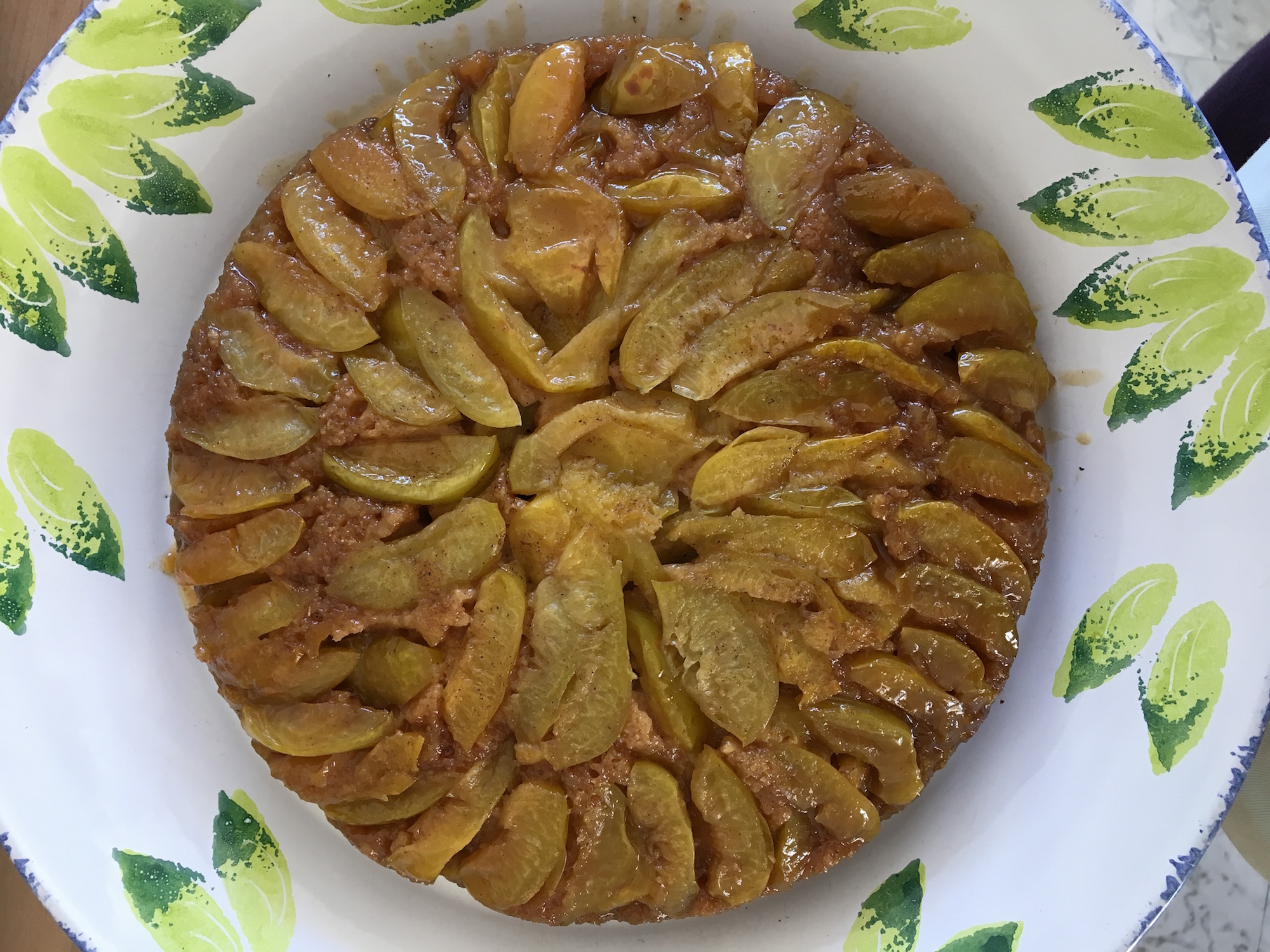
2017-01-25-14-58-09-smWe don’t often get many greengage plums. Our tree is small, and it sits in a windy location, so many fruits blow down before they are anywhere close to ripe. This year wasn’t too bad–we harvested about three kilos of fruit. Plenty to enjoy.

One of my favourite things to do with summer stone fruits is to make upside down cake. Indeed, I’ve blogged about it three times in the past two years. So today I’ll ignore the cake, and mention the plum, instead.

I didn’t know a lot about greengages before coming to New Zealand, where I found a fair number of people had them growing in their yards.

Greengages are named after Sir William Gage, who imported them to England from France in 1724. The cultivar he imported had another name, but apparently the tag was lost in transit (These were the days before anyone considered biosecurity…Importing a strange plant? Whatever). They were popular in America in the 1700s, but fell out of favour in the 1800s.

According to a 2004 article in the New York Times, there’s good reason greengages fell out of favour. The trees take longer to mature than other plums, they fruit erratically (I thought it was just our tree), the ripe fruit is fragile, and they’re prone to cracking and rotting on the tree. Not exactly an easy plum for commercial production.

But the greengage is considered one of the finest plums for flavour. Grown commercially, it fetches a high price. According to the New York Times article, in 2004 fewer than 100 greengage trees were harvested commercially in the United States. They are more common in Europe and New Zealand. New Zealand exports a small quantity of greengages to the US each year, where they are sold in specialty markets.

So I feel much better about my 3 kilo harvest of greengages. They are wonderful, and if they’re a bit finicky to grow? Well, that just makes them all the more special when we have a good year.