Delicious Disaster

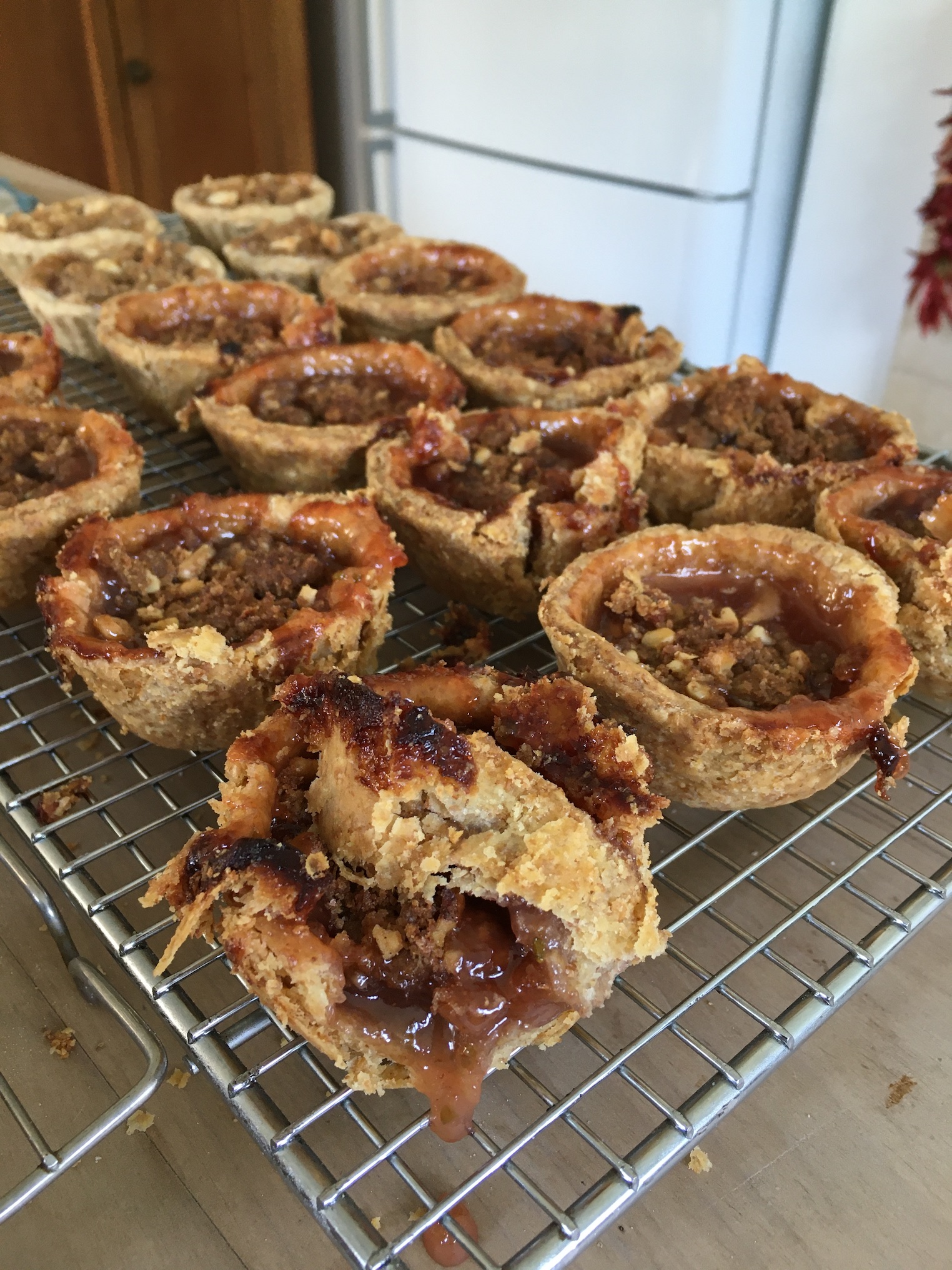
Ugly but delicious.

Gooseberries are ripening by the bucketful right now, so when I was planning dessert for a party last Saturday night, I naturally turned to gooseberries for inspiration. 

I made a large batch of gooseberry pie filling and baked up dozens of gooseberry tarts. Unfortunately, the fruit bubbled over, creating a sticky mess that glued the tarts into their pans.

Almost every one broke when I tried to take them out of the pans. One was so crumbled I had to spoon it out …

… right into my mouth. It was a sublime experience. Deliciously sweet and sour with a flaky crust, I thought I’d serve them anyway. I requested a second opinion from my husband and kids, giving them each the most broken tarts. They moaned in pleasure and nodded.

No one at the party mentioned how the tarts looked. I’m not sure they sat on the tray long enough for anyone to examine them—one taste and they vanished.

A delicious baking disaster. I’ll definitely have to do it again.

Gooseberry Pie Filling (enough for two full-size pies)

8 cups fresh gooseberries
4 cups sugar
2 Tbsp corn flour (cornstarch)
enough water to prevent sticking (less than 1/4 cup)

Combine all ingredients in a saucepan. Bring to a boil and cook 1-2 minutes, until berries soften. Crush berries in the pot with a potato masher. Boil about 5 minutes longer until the mixture begins to thicken. 

The pie filling can be baked in a double or a single crust. If you choose a single crust, top with streusel topping:

2/3 cup flour
2/3 cup finely chopped walnuts
2/3 cup brown sugar
1 tsp cinnamon
5 Tbs (80 g) melted butter
Blend all ingredients with a fork until crumbly.

I baked my tiny tarts for 35 minutes at 190ºC (375ºF). A full pie should take 45 – 60 minutes.
Obsessive Gardening Strikes Again

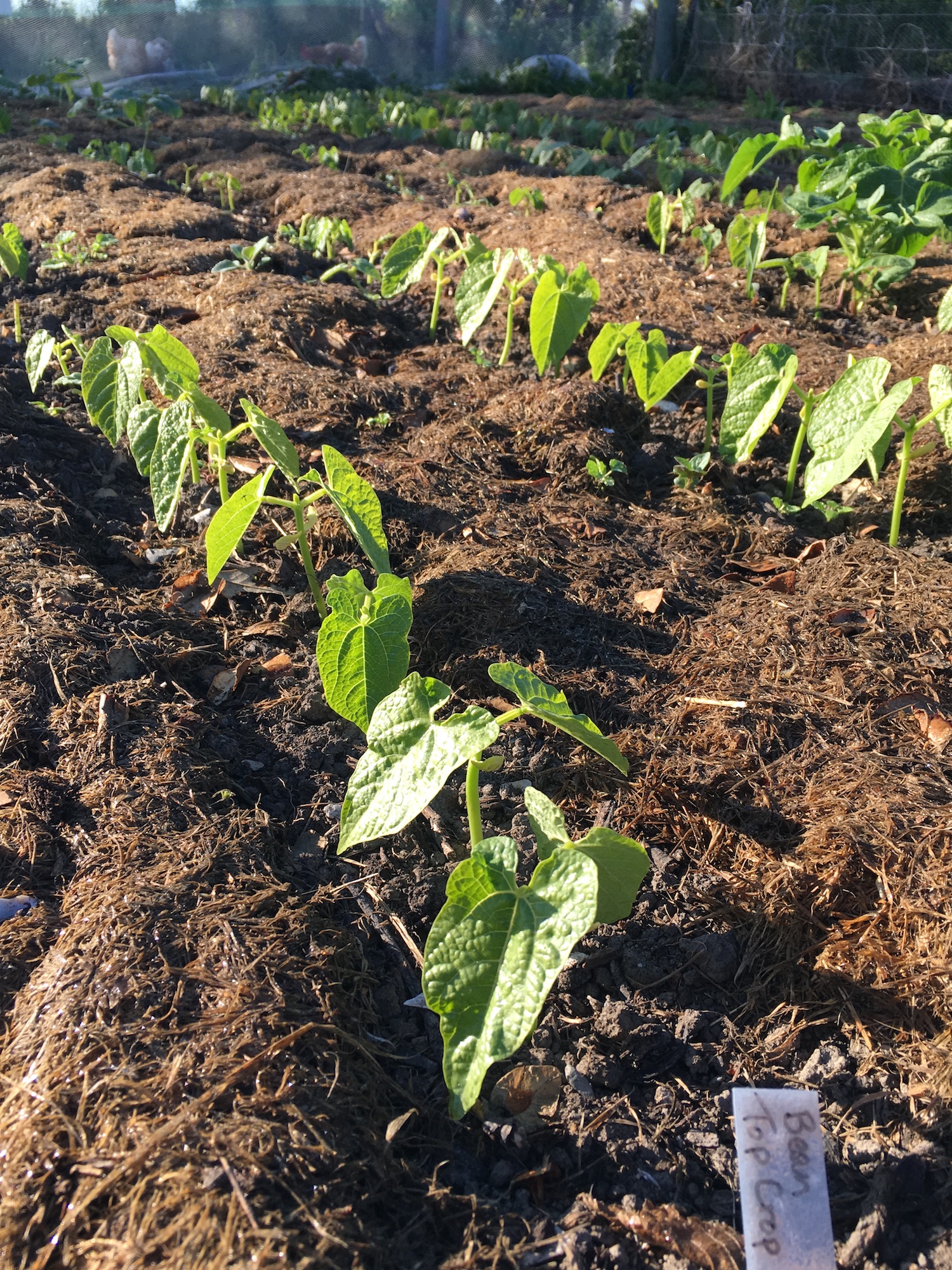
It’s done! I finally finished planting out vegetables this past weekend. At both houses. And though I said I wasn’t going to, I ended up with nearly full gardens on both properties (never mind how I managed to start so many seeds in the first place…). 

Of course, I justified it with the observation that plants won’t grow well in the new garden—neither the weeds nor the vegetables—so it’s not like that garden will be too much work (yeah, right). 

And it would be a shame not to plant in the old garden one last time and reap the harvest from fifteen years of work on that patch of land (even if I won’t get to harvest it all). It was only logical to plant two full gardens, right?

Logical only if you’re a problem gardener like me. Once again, I’ve proven I have no self-control when it comes to plants. I can already hear my justifications for excessive gardening next year … The soil is so bad at the new place, I’ll have to over plant just to get enough vegetables to eat. I’ll just plant green manures and till them in to improve the soil. I don’t know which varieties will do well in the new garden, so I’ll have to plant lots of different ones … I’m sure I’ll come up with plenty of other justifications, too. It’s hopeless, really. If you put me in an apartment on the twenty-third floor, I’d find some way to grow excessive plants.

At least I know I’m not alone. Just look at the number of gardening blogs out there. And the number of people I see in the garden centres loading up their cars with bags of potting mix and potted plants. And in a few months, the multitude of gate sales of excess vegetables. And the number of people who post proud pictures of their first tomatoes or strawberries of the season on social media. There’s a whole community of obsessive gardeners out there. Come on, pick up your hoe, spading fork, or trowel and join us. We’re always partying in the garden, and there’s usually great food afterwards.

Marinated Artichokes

The online recipes for marinated artichoke hearts tend to be for small quantities—enough to make a small jar. So when I decided to make marinated artichoke hearts with eight large artichokes left over from dinner, I took those recipes as a general guide, and made it up as I went.

Into the bowl with the cooked artichokes went equal quantities of cider vinegar and water until the vegetables were mostly covered. Then I added a sprinkling of red pepper flakes, some ground dried garlic (because I had none fresh), and a handful of chopped fresh oregano. I poured olive oil over the whole thing until the artichokes were completely covered by liquid, and then I stirred to mix it all.

The result was a beautiful vat of marinated artichoke hearts so good, they need a fancy dinner party to go with them.

First Fruits

The new property isn’t quite gushing berries like the old, but it’ll get there.

The family spent much of last Sunday gardening at the new property. It had been several weeks since I’d worked in the garden there, and the weeds had been busy. The list of weed species on the property continues to grow, with cleavers and field madder the newest unwelcome volunteers. I found convolvulus too, scrambling along the perimeter fence through a clutch of gorse seedlings. At least the convolvulus will have pretty flowers.

There were nice surprises, too. The artichokes we transplanted are growing well. And nearly all of the cuttings of gooseberry, red currant, black currant, and blackberry have survived and are flowering. The strawberries have done well, too. One of them even offered me a ripe berry—the first fruit of the new property. It wasn’t the best strawberry ever, but it was the flavour of possibilities, the flavour of things to come.

Garden Gifts

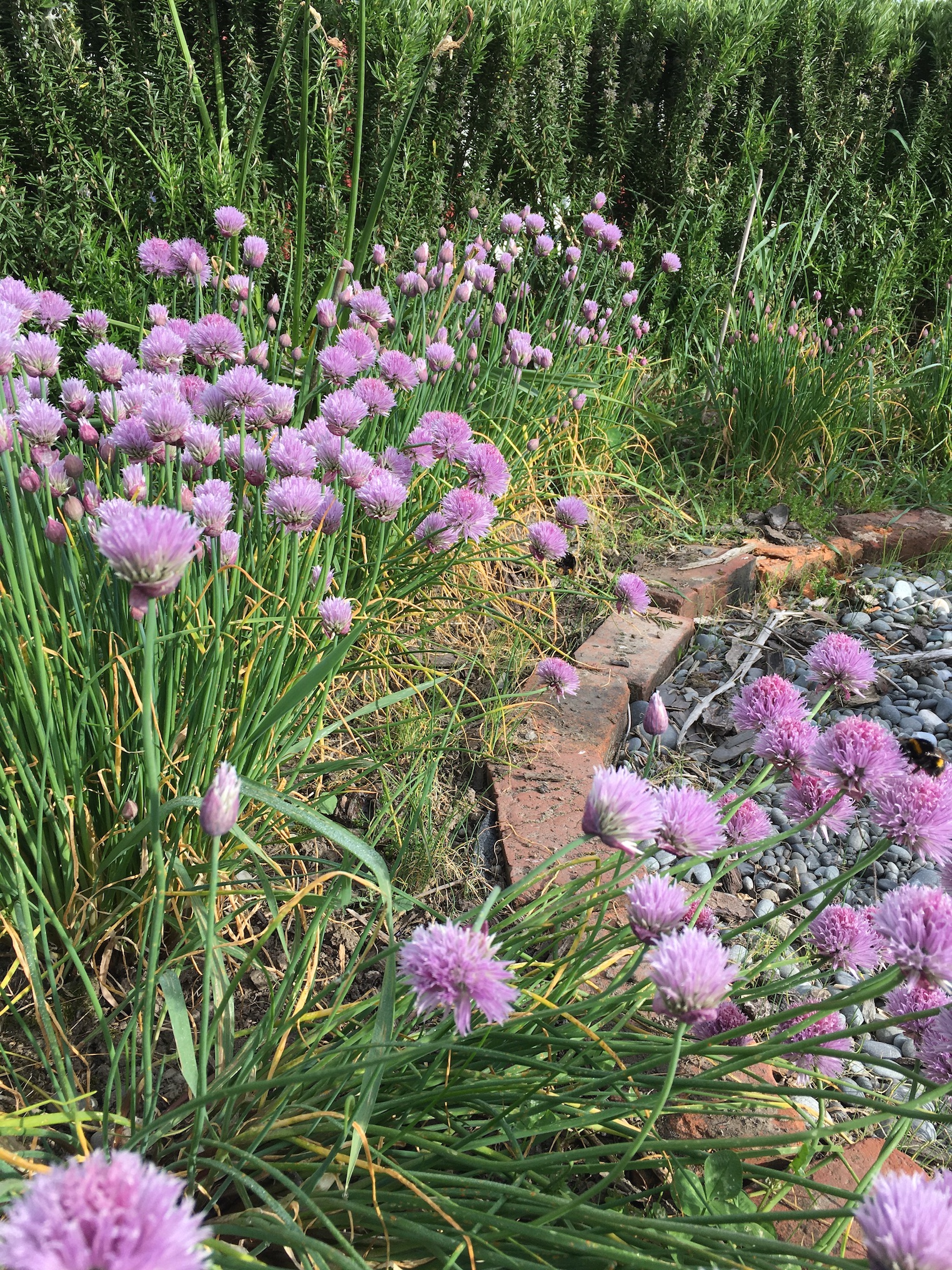
Our house went on the market today. We’ve spent the past several weeks painting, tidying and weeding to make the place look its best. On Sunday evening, after a hard three days of work, I wandered around the yard. The air was sultry—oppressive heat slowly giving way to the comfort of a lazy summer evening. The freshly cut grass was soft and cool underfoot as I padded past purple baubles of blooming chives, snow-in-summer spilling onto the path in frosty profusion, multi-hued pansies nodding in the light breeze, and pale irises standing tall. I strolled the rose garden, only just beginning to flower. A lone peony sported golf-ball-sized burgundy buds. The last of the pittosporum flowers perfumed the air.

In short, the garden was at ease in its lush maturity—the result of fifteen years of hard work, on top of the botanical history of a hundred years of landscaping. I thought of all the plants the property had gifted us with—roses, dahlias, naked ladies, camellias, irises, and others. Discovered among the overgrown gardens, often nearly choked out by weeds, the plants responded well to love and care, and formed the core of what we’ve done with the yard.

Then I thought of our new property, a bare paddock, its botanical history limited to pasture grasses and clover. There will be no gifts, discovered among the weeds. No heirloom plants needing only a little love to bloom and thrive.

The thought was depressing as I strolled the mature plantings we will leave behind. Starting from nothing but rock and clay is a daunting prospect.

But this property will gift us plants yet again—hundreds of seedlings, cuttings, bulbs and divisions sit in pots, awaiting transport to their new home. One day, they will be the botanical history of the new property. One day, I will stroll among them in contemplation, just as I did among their predecessors at the old house.

Inspired Cooking

A few days ago, after a busy day, I couldn’t be bothered to cook. I decided to throw together a quick pasta, so I headed to the garden to pick a few vegetables.

But when I arrived in the garden, the sight of the winter spinach, growing like a weed and thinking about bolting, inspired me.

All that spinach would make an excellent spinach quiche. I even had some feta in the fridge, and there’s nothing better than spinach with feta.

Of course, a quiche is a whole lot more work than pasta …

And it really would need dill, too …

I scoured the weedy parts of the garden for volunteer dill, because my seedlings weren’t ready to pick yet. The weedy dill plants clinched it.

No longer tired, but inspired, I set about cooking. The result was worth the effort (as I knew it would be).

And that’s what I most enjoy about gardening—when the daily grind gets me down and I just want to order takeaways, it provides the inspiration to instead make a glorious meal.

A Day Off

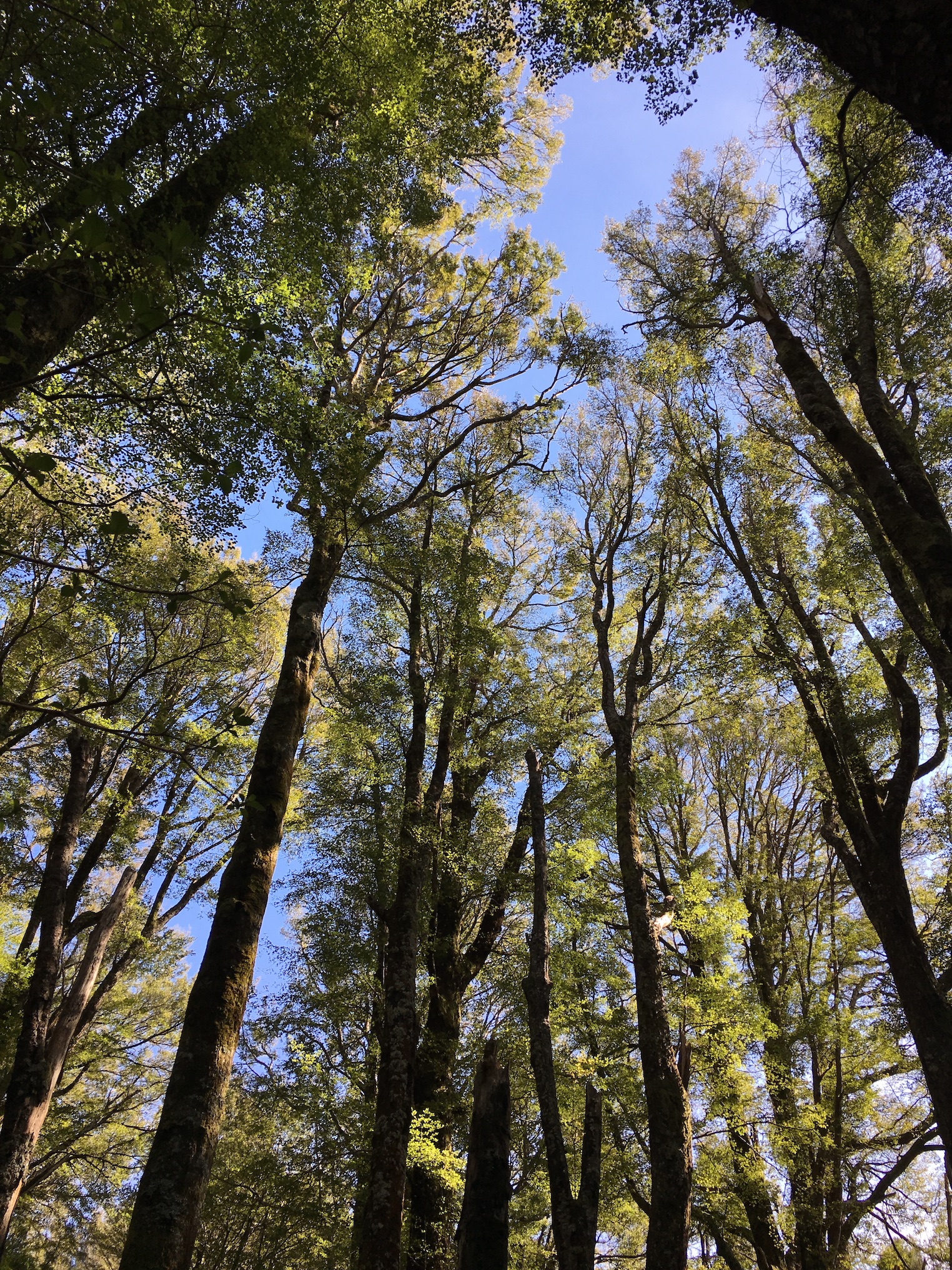
Cathedral of red beech

Sunday dawned warm and sunny, and I prepared myself for another day of hard work in the garden, in spite of my aching back. It would be a crunch to finish what I needed to stay on track—my garden to-do lists get longer each week, and I don’t dare fall behind at this time of year.

Meanwhile, my husband was fretting about the lectures he still needed to prepare for this week. But he’s much better at relaxation than I am. Before I had a chance to gather my tools, he suggested a hike instead of a day of work.

So we ignored our pesky to-do lists and enjoyed a day at Hinewai. 

Hinewai Reserve is privately owned, and encompasses 1250 hectares of the outer Banks Peninsula. It includes a glorious mix of vegetation types.

The track forms an avenue within a dense kānuka stand.

Probably the most impressive are the 50 hectares of old growth forest. The red beech create a green cathedral, shading out much of the undergrowth. The effect is in stark contrast to the dense kānuka stands that blanket other parts of the reserve.

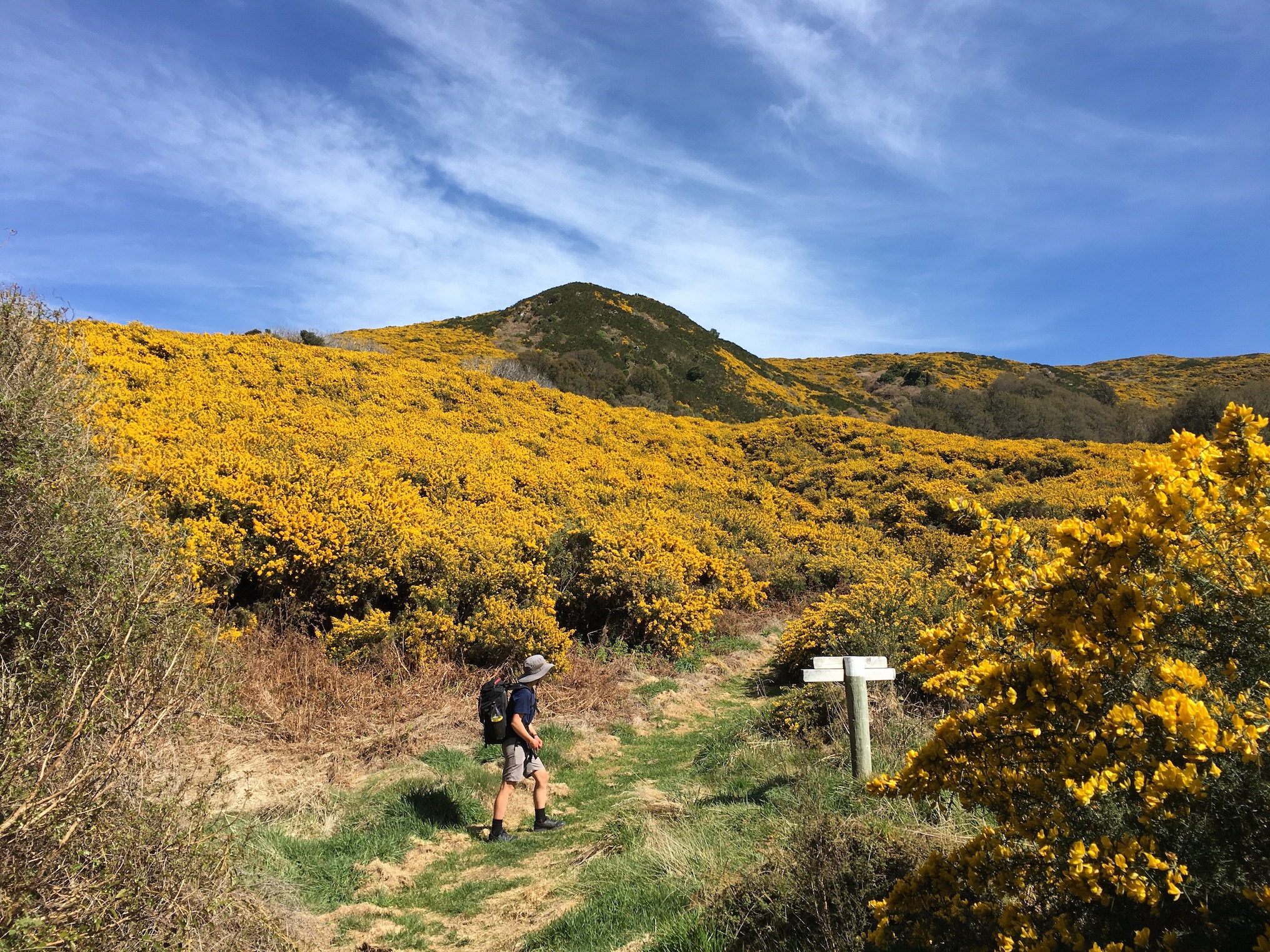
At this time of year, the gorse is in full bloom. Management at Hinewai allows this invasive weed to grow, because it provides an effective nursery for native trees. Eventually, the native plants will overtop the gorse and shade it out, but in areas recently disturbed by fire, the gorse is thick. On Sunday, the tops of the hills looked like they’d been capped with bright yellow snow, for all the gorse.

Gorse in full bloom in a recently burned area.

With 330 species of native vascular plants, and 60 species of fern (including six species of tree fern), Hinewai is probably the most diverse site on the Banks Peninsula. We never fail to see interesting things when we visit. This visit was no exception. A bright purple fungus creeping along a rotting branch was probably the most unusual find on Sunday, but we were treated to tree fuchsia in bloom, kererū swooping overhead, and pīwakawaka and tomtits flitting around among leafy lacebarks, kahikatea, tōtara, and kōwhai. I enjoyed seeing my favourite filmy ferns, with their translucent fronds. Large quantities of ongaonga (tree nettle) supported the red admiral butterflies that were enjoying the warm day along with us, flitting through the dappled light in the forest.

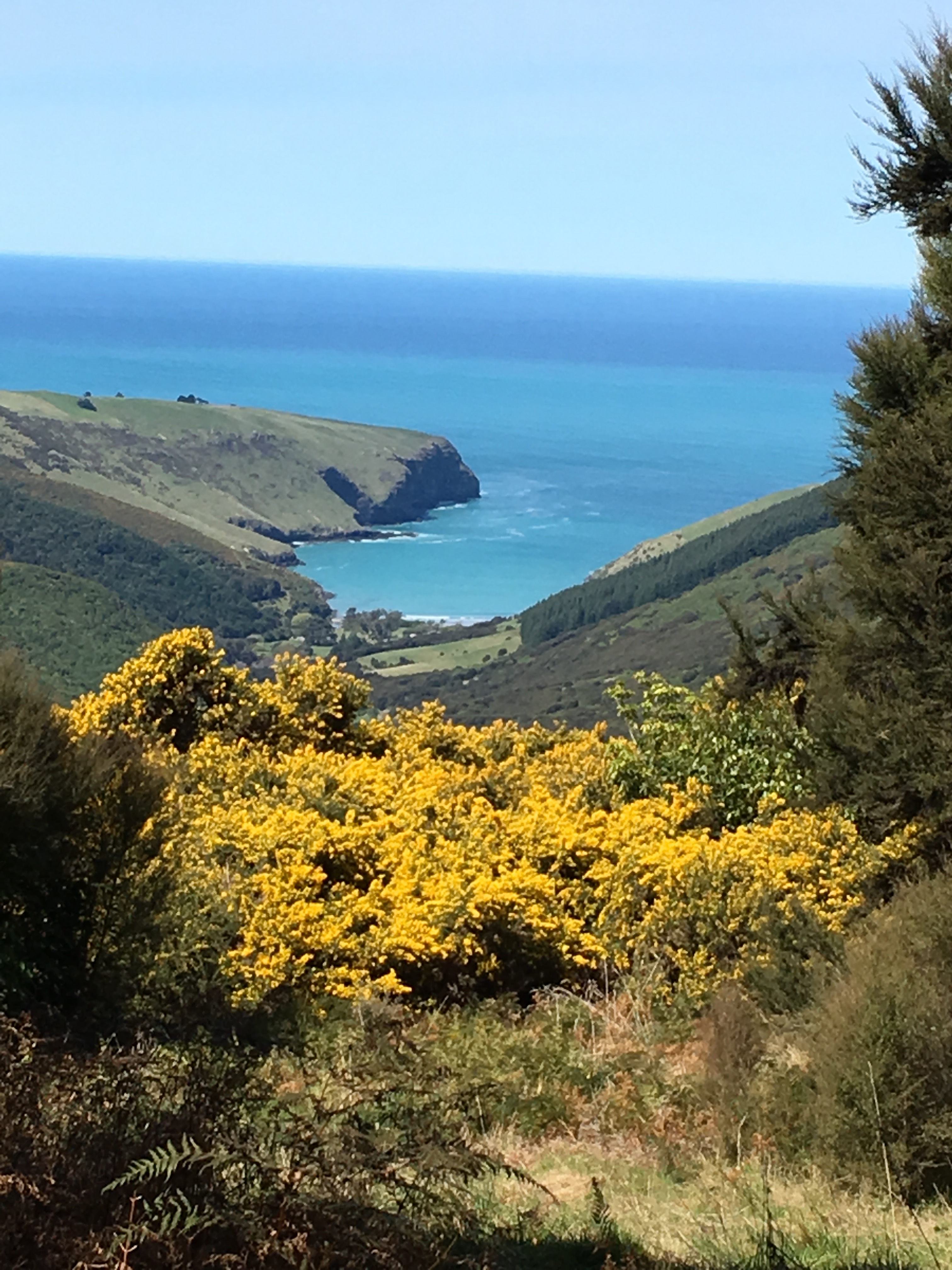
View down to Otanerito/Long Bay

And, of course, as with most spots on the Banks Peninsula, the views from the clearings at Hinewai were spectacular. 

My weekend to-do list forgotten, I had a lovely day enjoying the outdoors. Next weekend’s list is necessarily longer now, but it was good to take a day off. I must remember to do that more often.


Too Good Not to Share

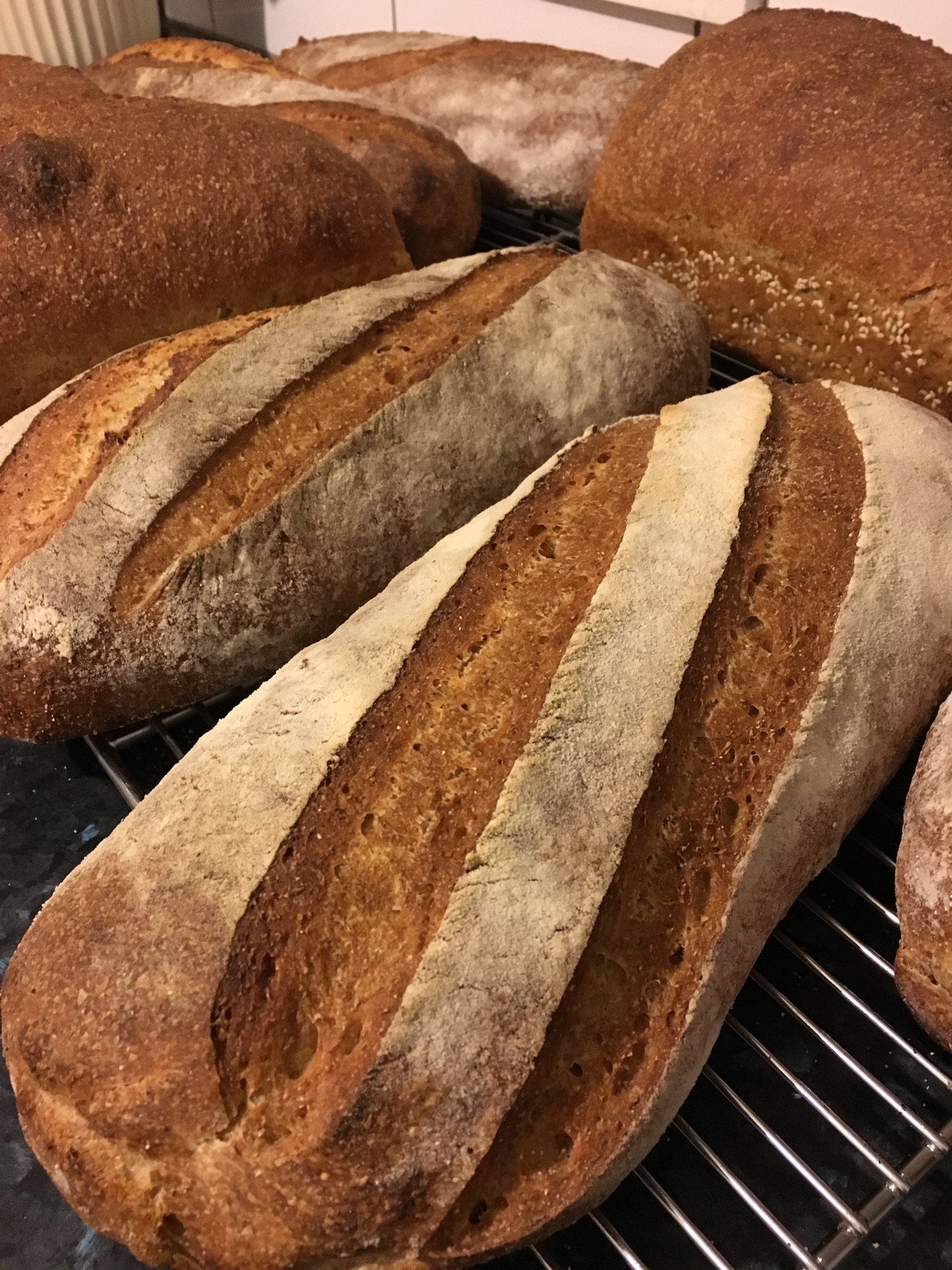
A few of the two dozen or so loaves from Saturday.

Saturday was a bread day, so while I headed to the garden in the morning, my husband began making up the dough and getting the fire lit in the oven. As I worked, the familiar scent of wood smoke wafted across the yard. The bread oven smell is different from the smell of the wood burner or a brush fire—from the first wisp of smoke, it declares itself a cooking fire. The smell always gives me a sense of well-being. It tells me that soon there will be a bounty of baked goods, and we will eat well for days on the delicious things we’ll bake.

Bread days are always busy—baking is done on top of the gardening, mowing, and cleaning on the weekend’s to-do list. By mid-day Saturday, I had planted out my peas and hauled a dozen loads of compost to the garden, and the kitchen was full of rising loaves in a variety of shapes and sizes. It was time for me to join the baking. While my husband managed the bread, I chopped vegetables for what would become dinner. 

It was an especially hot oven Saturday. Pitas baked in seconds, kaiser rolls in a handful of minutes, the vegetables came out beautifully caramelised in no time, and focaccia bubbled up quickly and came out sizzling. While the larger loaves baked, I mixed up pound cake and hazelnut biscotti to slip into the oven after the bread was through. 

Dinner was a feast of roast vegetables and salad greens stuffed into fresh pita breads followed by pound cake and biscotti—a celebration of good food after a day of intense work. The only problem with it was there was no one besides us to share it with.

(For those of you who missed it a few years ago, you can check out our kitchen during a bread day in this time lapse video.)

First Day of Spring

Last Sunday was the first day of spring, and it was as if all of nature wanted us to know it.

The day dawned crisp and sunny, and by mid-afternoon the temperature had climbed to a summer-like 27ºC.

The weeds in the garden seemed to have put on extra growth, and I hauled almost a dozen wheelbarrow loads of them to the compost pile as I began preparing the garden for the upcoming planting season.

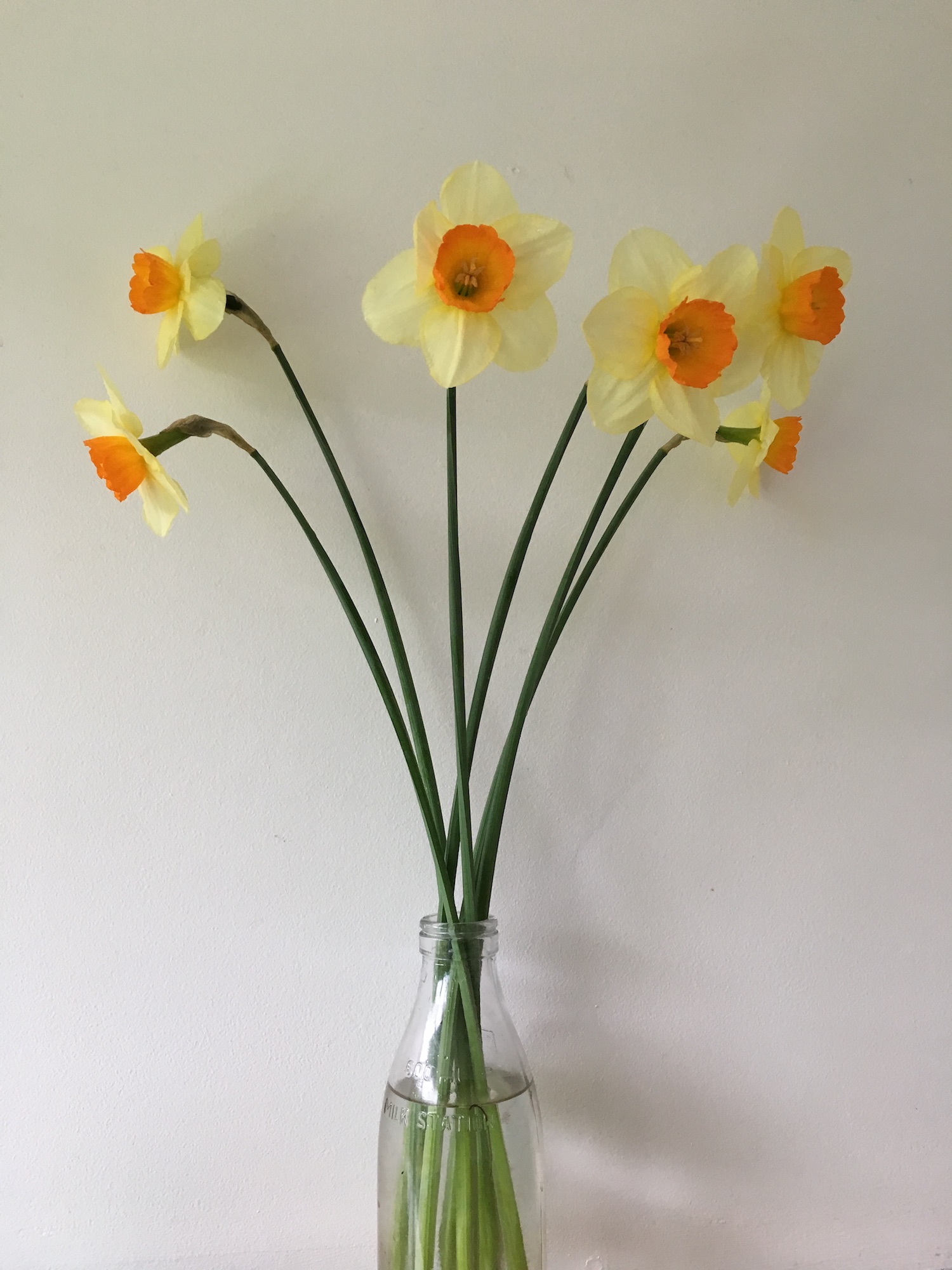
Daffodils, snowdrops, and bluebells nodded in the sunshine, carpeting the yard with colour.

Willows everywhere suddenly burst into leaf, the fresh green of their branches like a beacon.

Bees hummed in every flower, and midges danced in lekking storms that sounded like rain against the windows.

We spent the day outdoors, threw open the windows, and drank in the warmth, going inside only when hunger drove us in to dinner.

Even the sun seemed to linger, painting the evening with golden streaks of promise.

Once a Gardenaholic, Always a Gardenaholic

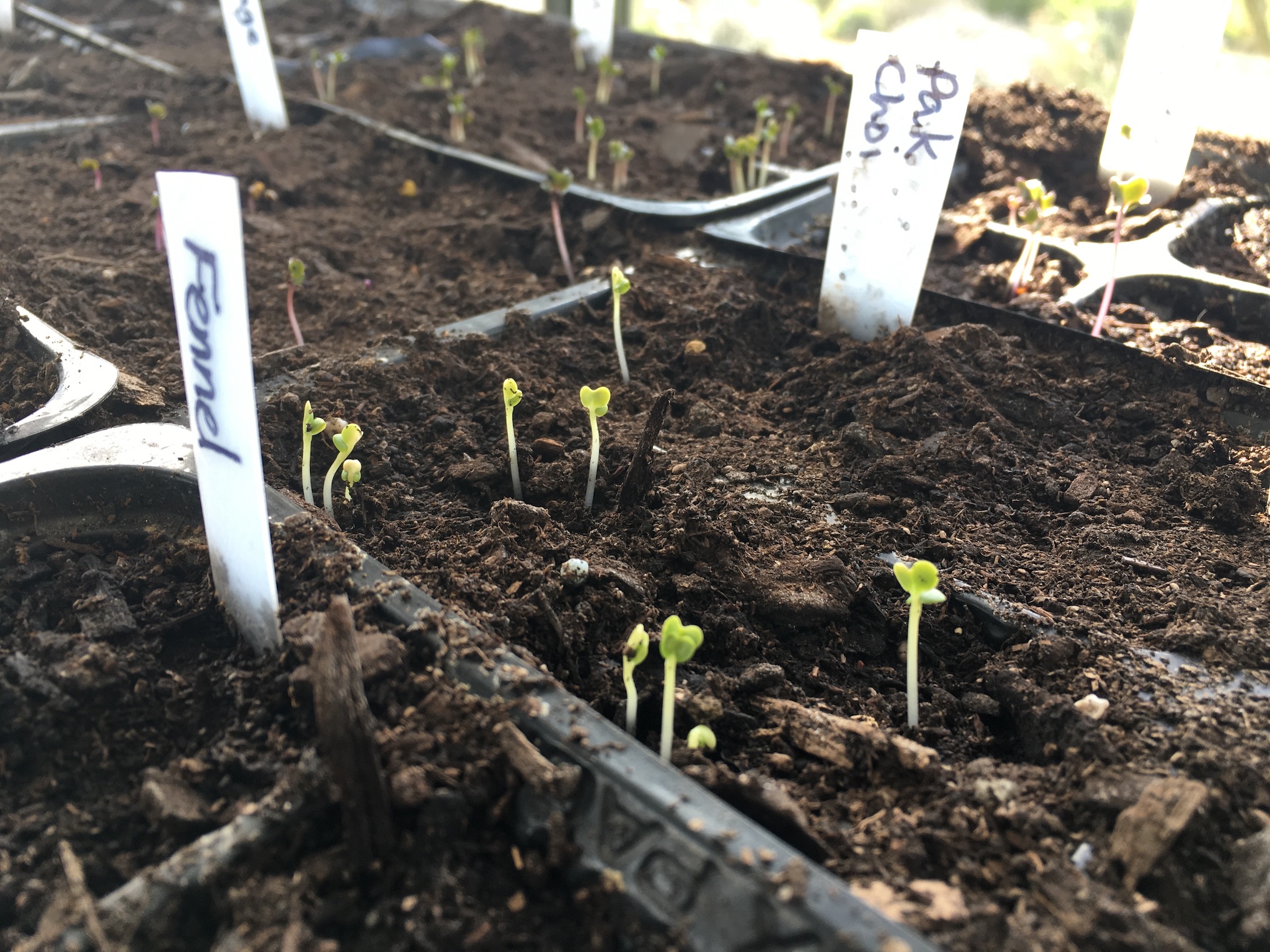
This past weekend was the beginning of the gardening year. The first of the seeds are in flats in my office. My plan was for a minimal garden this year, since I’ll be splitting it between the old and new places—caring for so many plants on two properties is a daunting prospect.

But of course, when I started planting, all thoughts of restraint evaporated. I’d splurged when buying seeds—that purple cauliflower looked gorgeous in the catalog, and who could resist a small-stature eggplant with glossy dark fruits? And once I had the seeds, there was no question I’d plant them, along with all the regular varieties, of course. Never trust a new variety until it’s proven itself.

So here I am, one weekend into the new garden year and already overdoing it.

Some things never change.