A New Weed!

I found a new weed in the garden the other day. I don’t know whether to be excited or dismayed.

This one is beaked parsley, also known as bur chervil (Anthriscus caucalis). This weed is native to Eurasia, where it appears it is pretty much ignored. It’s listed by the UK Department for Environment, Food, and Rural Affairs as an indicator species for high value arable margins, but beyond that, it rates little mention in its homeland. It is apparently neither particularly tasty, nor poisonous. It is apparently not used for any medicinal purposes. It’s just a plant that’s neither particularly common, nor particularly rare.

Nor is it mentioned often in the many countries where it is a weed. If it is mentioned at all, it’s usually lumped with its close relative, wild chervil (Anthriscus sylvestris), which appears to be more of a problem. It apparently prefers riparian zones, but is quite happy to live in drier areas, too.

The seeds are covered in curved spines and hairs that cling to fur. The plant almost certainly arrived in New Zealand on the back of an imported sheep.

With so little information about the plant available, I am naturally intrigued. What secrets is this unassuming plant harbouring? Its family–Apiacea–includes such well-known plants as carrot, poison hemlock, fennel, parsley, coriander, dill, caraway, parsnip, celery, anise, lovage, and many others. Many of these plants produce defensive compounds, some of which are incredibly toxic to humans, and some of which are sequestered by caterpillars in the genus Papilio (swallowtail butterflies) for defence.

So I can’t help thinking that bur chervil might harbour some interesting chemistry and ecological connections, if only someone would have a look.


Spring Cuteness

‘Tis the season for growth and new life.

Unfortunately, that means lots and lots of weeds, birds nesting in the shed (and pooing on the car), and slugs multiplying like mad (and decimating the newly-planted lettuces).

But it also means the occasional cuteness overload, like this guy.

This newly-fledged magpie has been hanging out in various locations around the yard as he learns how to get around and hunt for himself. He’s quite tame at the moment, and you can even give him a little scratch without him fluttering away. I’m sure it won’t be long before he’s dive-bombing the cat with his cohort of teenage magpie thugs, but at least for now, he’s terribly cute.

Springtime Sensory Overload

We often think of springtime as an explosion of colour–white, yellow, purple, and pink flowers blooming, green grass growing. But spring is more than eye candy. Springtime is a sensory feast.

Springtime is the smell of lanolin and freshly turned earth. It is the cloying scents of blooming broad beans and daffodils. It is the smell of line-dried clothes. It is cut-grass and petrol mowers.

Springtime is the sound of lambs calling to their mothers, and the mothers’ deep, chuckling replies. It is the warbling of magpies before dawn, and the harsh call of spur-winged plovers at night. It is the throbbing rumble of tractors and the barking of sheep dogs.

Springtime is the feel of thick grass between the toes, the sting of nettles on bare legs. It is gritty dirt under fingernails, and sweaty hat brims. It is the buffeting of winds and the snarl of tangled hair afterwards. It is warm sun and cool shade.

Springtime is the bitter cucumber flavour of salad burnet. It is the rich umami of artichokes. It is the earthy taste of asparagus.

And springtime doesn’t end at our physical senses. Spring is the sense of well-being, the sense that all is not yet lost. That magic still lingers, in the rhythm of the honey bee’s wingbeats and the rustle of flight feathers, in the rain of apple blossoms and the quiet feeding of a caterpillar.

Nettle Season

It’s stinging nettle season and, as I’ve mentioned before, my garden is host to an irritating quantity of nettle—quite literally.

But though it is a stinging weed, I’ll admit to a certain fascination with nettle. Look at the stinging hairs (trichomes) under the microscope, and you’ll find beautifully wicked structures like fine hypodermic needles. Those syringes are full of an irritating mix of acetylcholine, histamine, serotonin, moroidin, leukotrienes, and formic acid to irritate your skin.

But the triggering mechanism for the trichomes depends upon turgor (water pressure), so once a nettle wilts, it can’t sting.

And once it wilts, nettle is an incredibly useful plant. It is edible and quite nutritious for both humans and livestock. The cooked greens are used in traditional dishes throughout the Northern Hemisphere where it is native.

It can be used to make a vegetarian rennet for cheesemaking, and is used to flavour and decorate some cheeses. I’ve made nettle rennet myself as a substitute for commercial rennet when I’ve run out.

Nettles can be used to make tea, cordial and beer.

The fibrous stems can be used to make linen-like textiles. The roots can be used to make a yellow dye.

Fed to chickens, nettle is an effective egg colourant, which may explain the deep orange colour of my chickens’ egg yolks at this time of year.

All in all, stinging nettles don’t deserve their bad reputation. Like many of our weeds, they’re useful plants that we’ve forgotten how to use.

Happy Spring

It’s the first day of spring!

Naturally, it’s cold, windy and rainy–day to be curled by the fire with a cup of tea, not a day to be out in the garden enjoying the flowers.

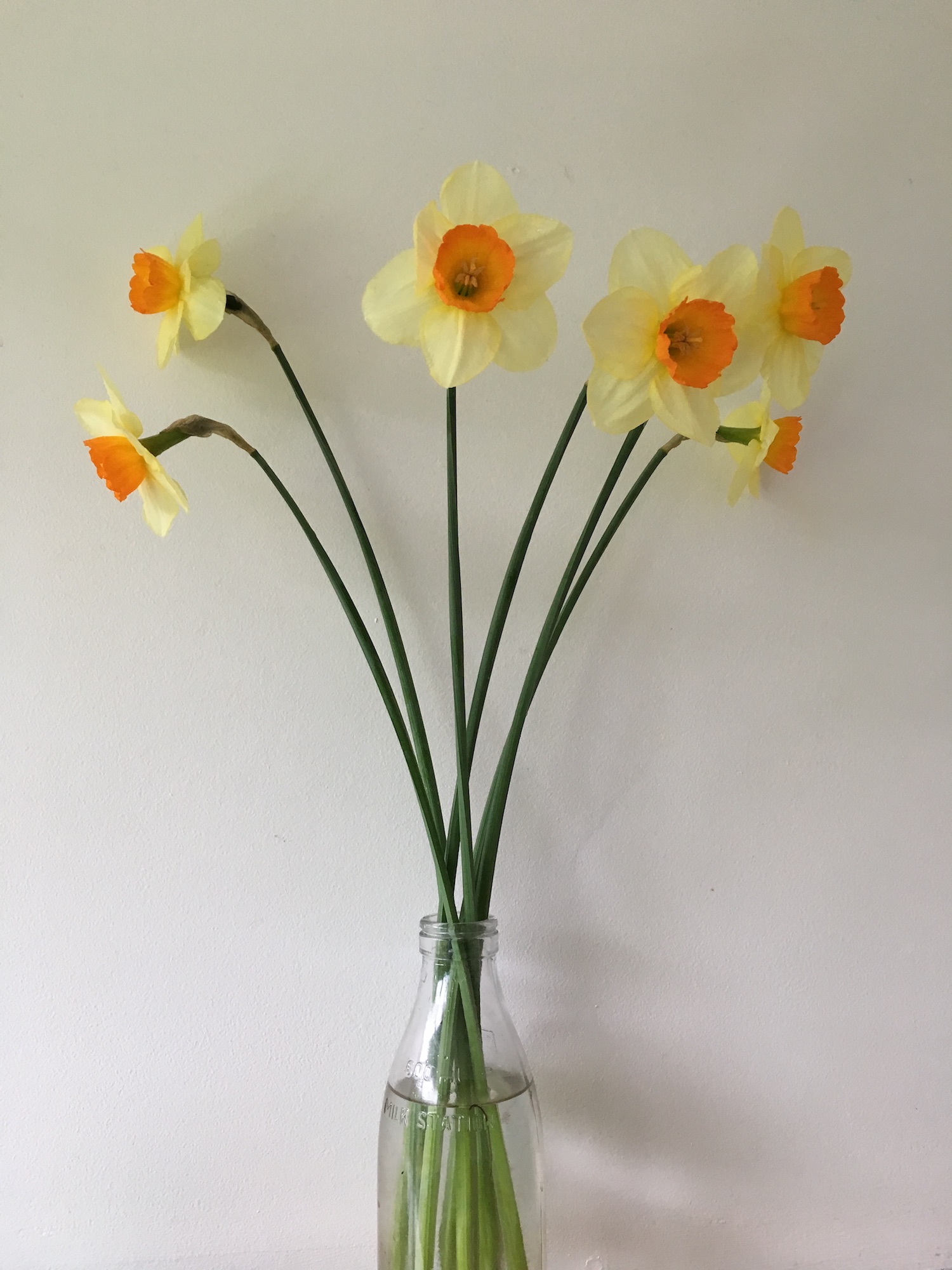
So I braved the rain to pick flowers and bring them inside.

Forget the weather. It’s spring indoors.

A Look at Larvae

They’re just midges. If anyone pays attention to them at all, it’s to note how irritating they are when they swarm by the millions, here near Te Waihora/Lake Ellesmere. They are annoying at times, swarms so thick you can’t breathe without sucking in a few.

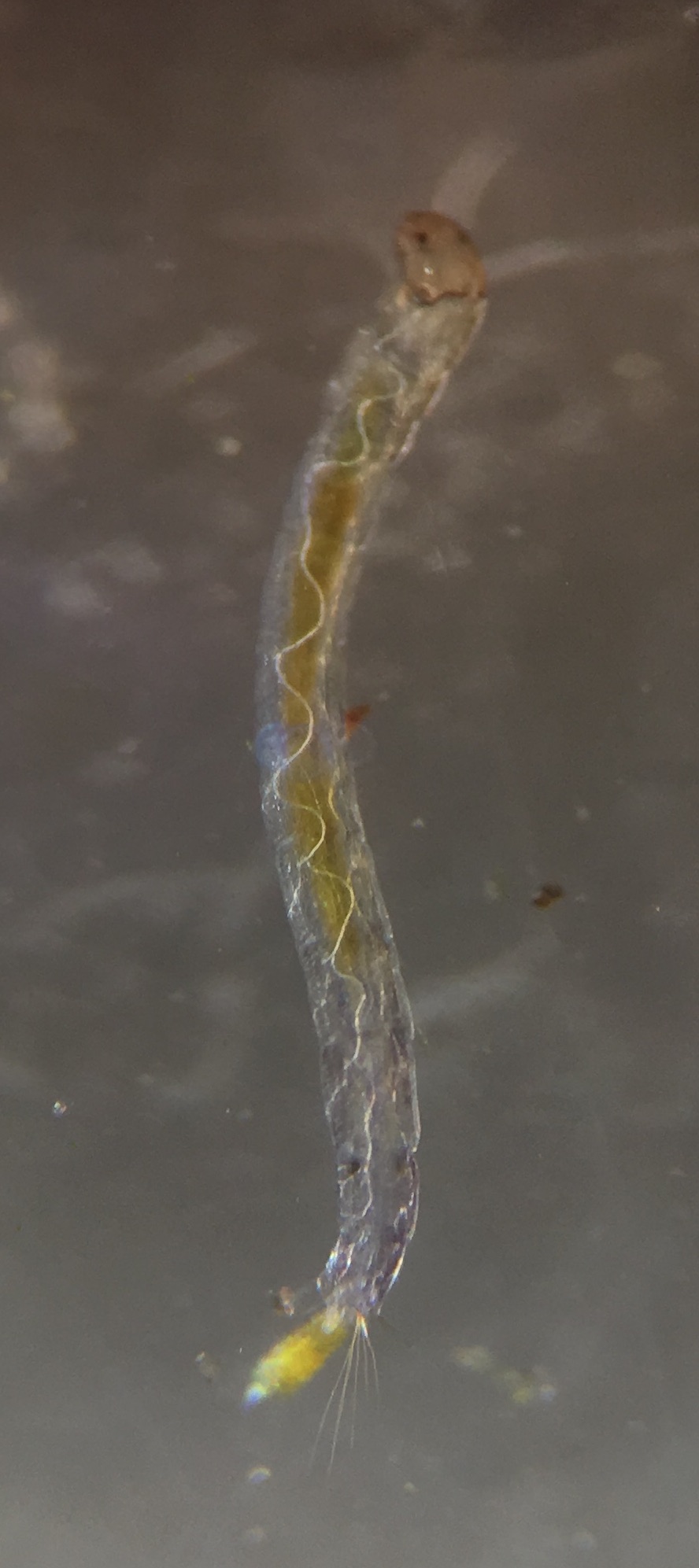
But there are few adults flying at this time of year. Most are still waiting out the winter as larvae underwater. Midge larvae are fun to look at under the microscope, as their exoskeletons are clear, allowing a great view of the inner workings of their bodies.

Seeing the inside of an insect larva helps one appreciate the job a young larva is tasked with—eat. Eat as much as you can and grow as fast as you can. A larva is little more than a mobile digestive system. The brownish streak you can see running the length of this midge larva is the animal’s gut, filled with the algae and other debris it has eaten. At the tail end, you can see, this little larva is having a poo.

Also at the tail end is a wee snorkel of sorts. These midge larvae can survive in low-oxygen water by sucking air from the surface using their snorkel. The silver lines meandering the length of the body are trachea that carry oxygen to all the insect’s cells.

This midge larva was tiny—about two millimetres long—it still has a while to grow before it’s ready to become an adult. But there are lots of other larvae out there getting ready to emerge with the upcoming warm days of spring.

Spring is Coming

Last weekend we were hit by a major winter storm. The weekend before, another storm dropped snow almost to sea level. A third storm is forecast to blow in over the next couple of days.

But John Snow needs to change his tune.

Spring is coming.

No question about it.

I’ve felt it.

The plants have felt it.

The birds have felt it.

Spring is coming.

Get ready.

Spring is coming.

Winter Roses

It was -3°C (27°F) yesterday morning, and only 8°C (46°F) in the house when I got up to light the fire. The days are short and often rainy. Nights are long. Towels in the bathroom never dry.

Sometimes it can feel miserable.

But over the weekend, I picked roses.

And I have to remind myself that at the winter solstice in Minnesota, I was hacking parsnips out of the frozen ground with a pickaxe, and months would go by without the temperature rising above freezing. The day my daughter was born, the noontime temperature was -31°C (-23°F). I used to teach snowshoeing. The winter we moved to New Zealand, the ground froze to 3 metres (10 ft) deep–froze people’s septic systems for months. Winter was real and deadly.

By contrast, I have not worn a winter coat since we moved here twelve years ago.

The lawn needs mowing year round.

I grow a winter garden (and the vegetables don’t freeze solid).

I pick roses.

Hard to complain about that.

Geeky Pruning

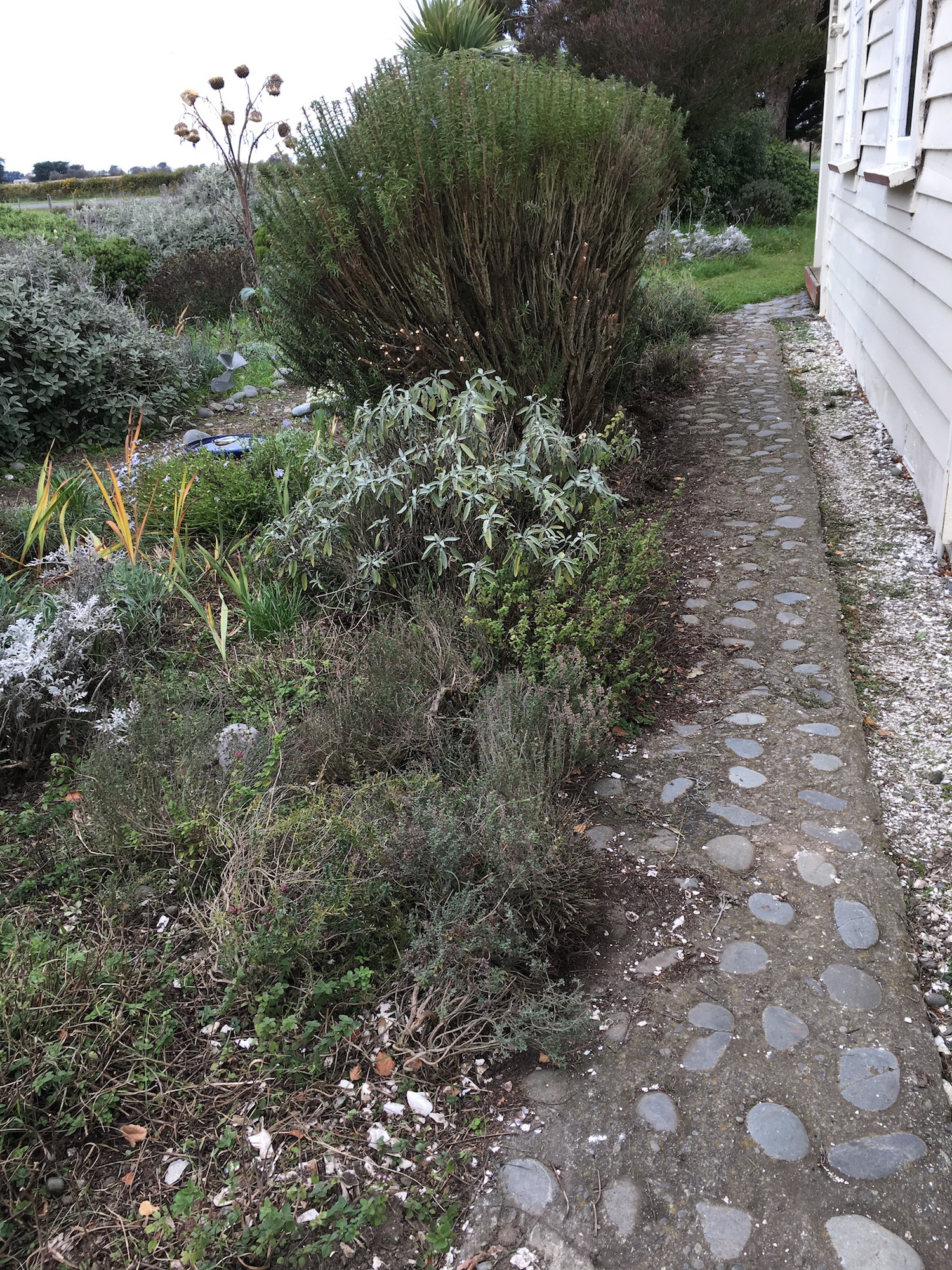
The newly cleared path and scalped rosemary.

The job had been hanging over me for two years. Every time I went to trim the rosemary bushes by the side of the house, I found them being heavily used by insects and couldn’t bring myself to disturb them. I finally had to admit that there was never going to be a good time to prune them.

So this weekend, when I found I could no longer use the path between rosemary bushes and house, and the bushes were nearing two and a half metres tall, I decided it was time to prune.

Pruning the rosemary is never a fun job—the wood is hard as nails, and every branch seems to need a different size pruning tool than the last one. To make it worse, this time the job took twice as long as it might have, because I checked every branch for preying mantids and mantid egg cases.

I shifted six adult mantids to other plants and collected eleven egg cases by the time I was done. I’m sure I missed some, but I’ve tucked the egg cases into a cage to protect them over winter, and when they hatch out in springtime, I’ll release them back to the rosemary.

A bit geeky? Yeah, I suppose it is. But there was never any question about me being an entogeek. This way, I get my path back, and I get to keep my bugs. Everyone’s happy.

Colours of Autumn

Growing up in eastern North America, autumn meant colourful leaves, fading to brown, bare branches. Green fields gave way to gold, then brown.

So it was a lovely surprise to find when we first moved here that in Canterbury, the opposite is true. Summer has its green bits, but because there is little summer rainfall, the summer landscape is predominantly brown.

But with autumn come cooler temperatures and more rain. Grass begins to grow again. Plants that were dormant through summer sprout new leaves. Autumn is a time of lush green—a time of life, not death.

For certain, the days are shortening, and the growth won’t last. Soon there won’t be enough sunlight hours to fuel plant growth. But winters are mild, and the green will remain all the way through until spring.

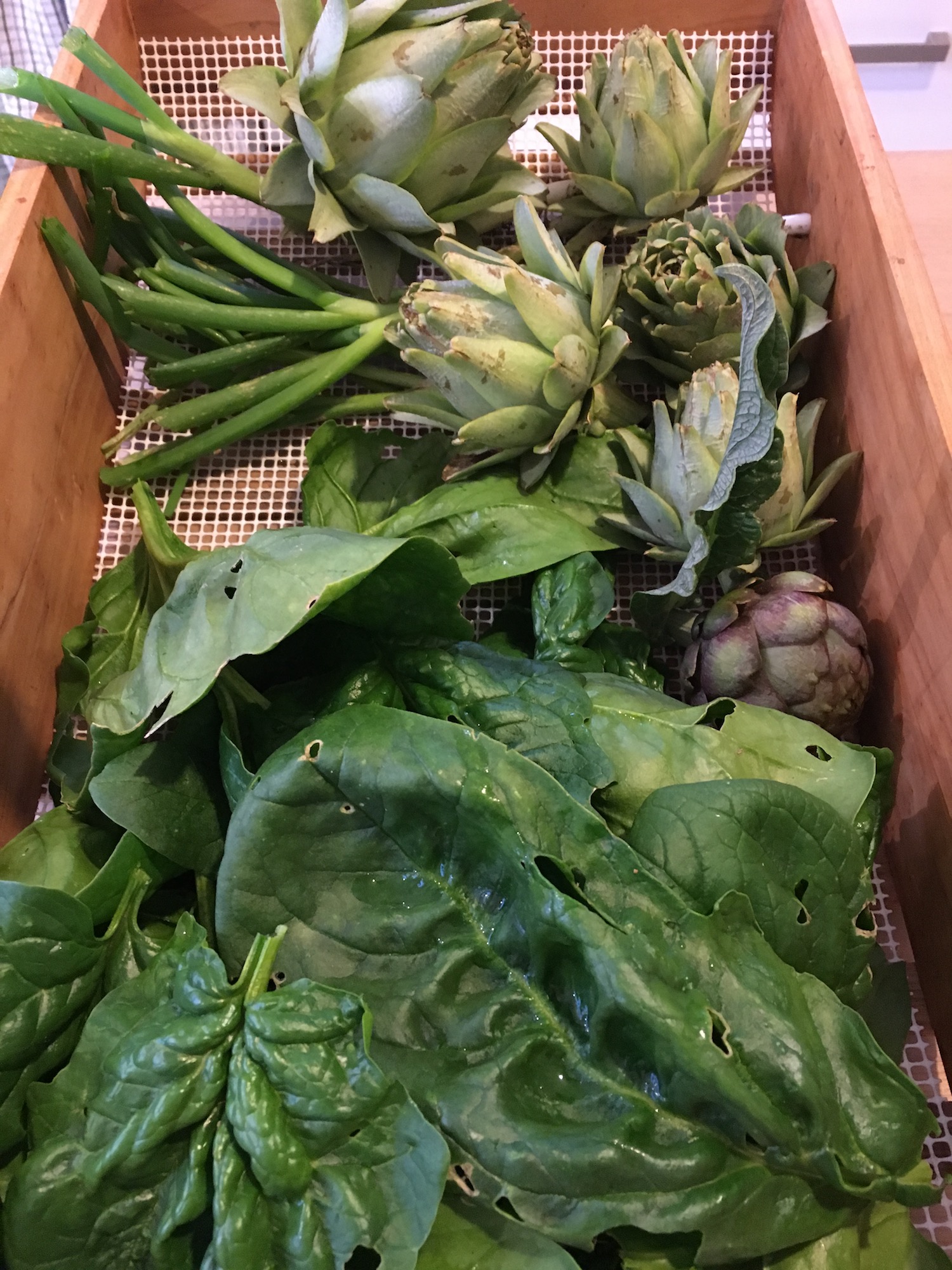
Today I picked a basket of autumn crops for dinner—all in shades of green.