Appreciate the season

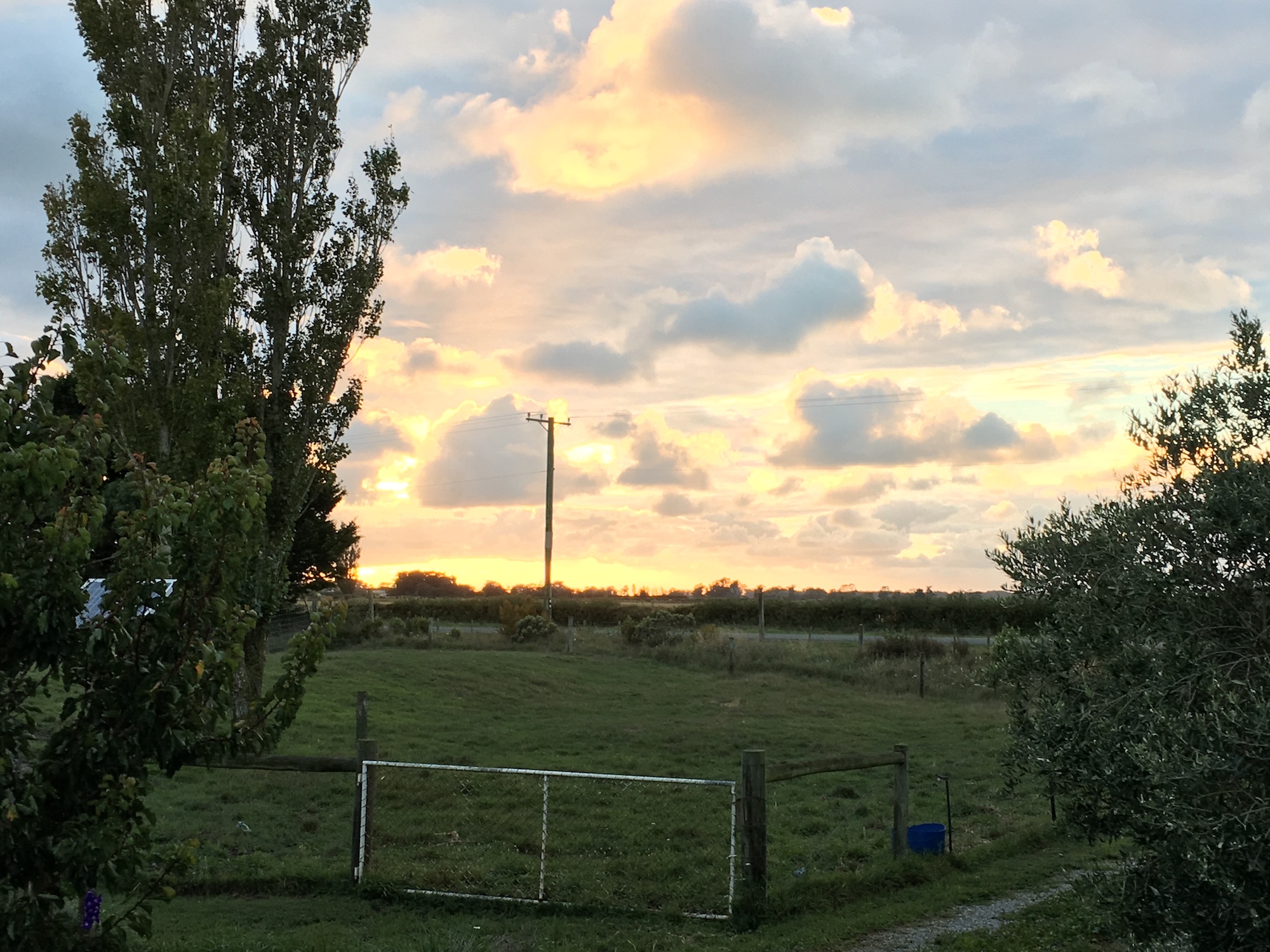
Drizzle-soaked hebe.

It’s another grey, damp day in a string of grey damp days. We’ve had little rain, but almost no sun, either. Though my last blog was about spring, this weather reminds me it’s still winter.

I’m itching to get out into the garden, to plant seeds, to get on with the business of springtime. The weather hasn’t been cooperating.

In a way, that’s good. It is too early to plant, to early to turn the soil. The weather reminds me to appreciate what winter has to offer—the excuse to stay indoors and sew, the opportunity to play board games and read books, a reason for a mid-afternoon cup of tea. I forget to value these things when I have them, instead looking forward to the next season of frenetic activity. Sometimes I need a week of fog and drizzle to remind me.

Smells Like Spring

I know, technically it’s still winter. We’re still likely to have icky, cold, wet weather. There will be ice on the water troughs, and frost on the grass in the mornings. There are still plenty of weeks left in the skiing season. And I won’t even think about planting anything out in the garden for at least six weeks.

But yesterday smelled like spring.

That heady combination of lanolin, damp soil, and cut grass.

It sounded like spring, too, with magpies warbling in the trees, swallows chittering overhead, and lambs bawling in the paddocks.

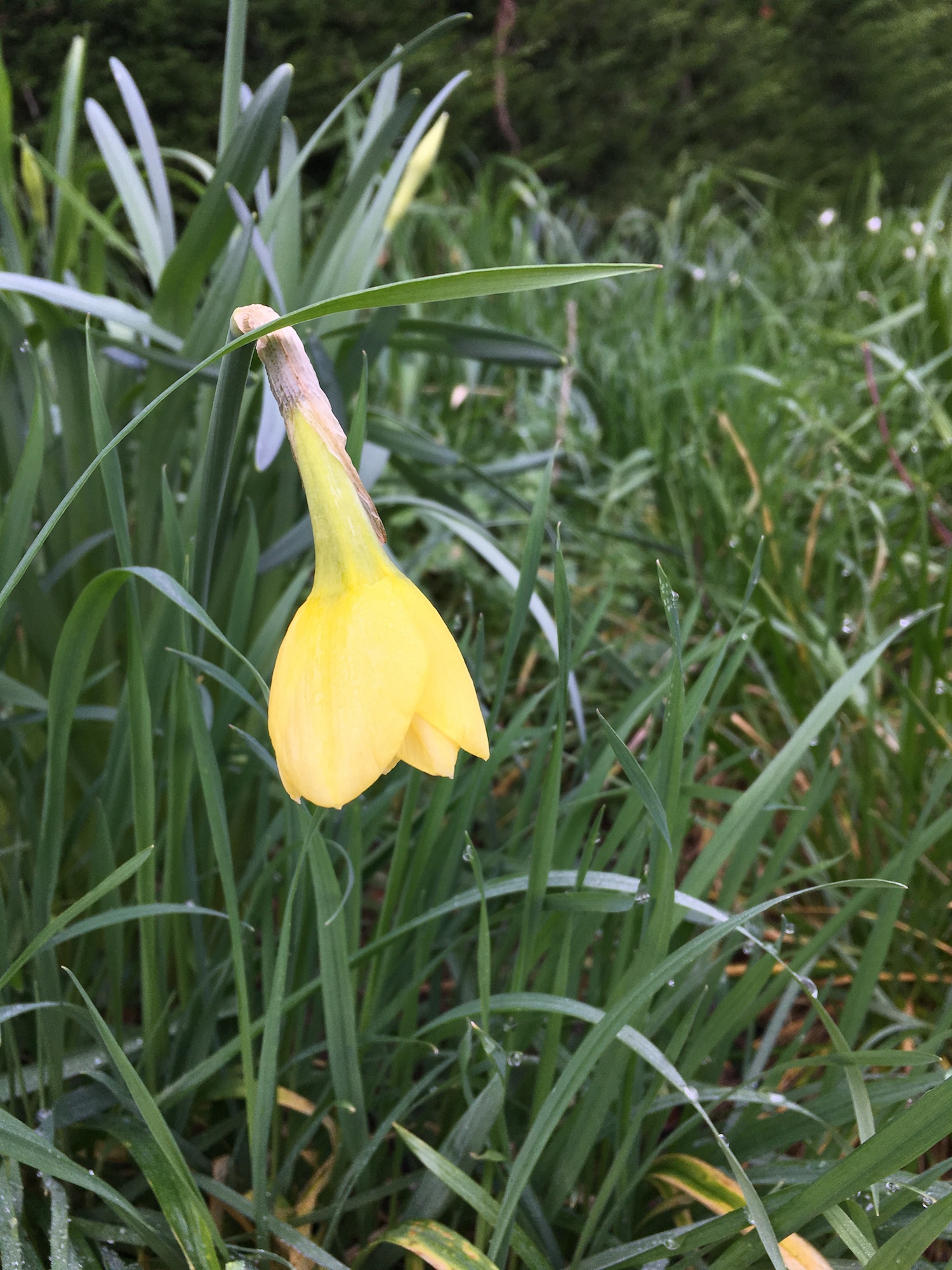
It is not spring. Not yet. But the days are lengthening and the first daffodils are beginning to bloom. It’s time to finish all those indoor winter projects. Spring is on its way.

Happy New (Garden) Year!

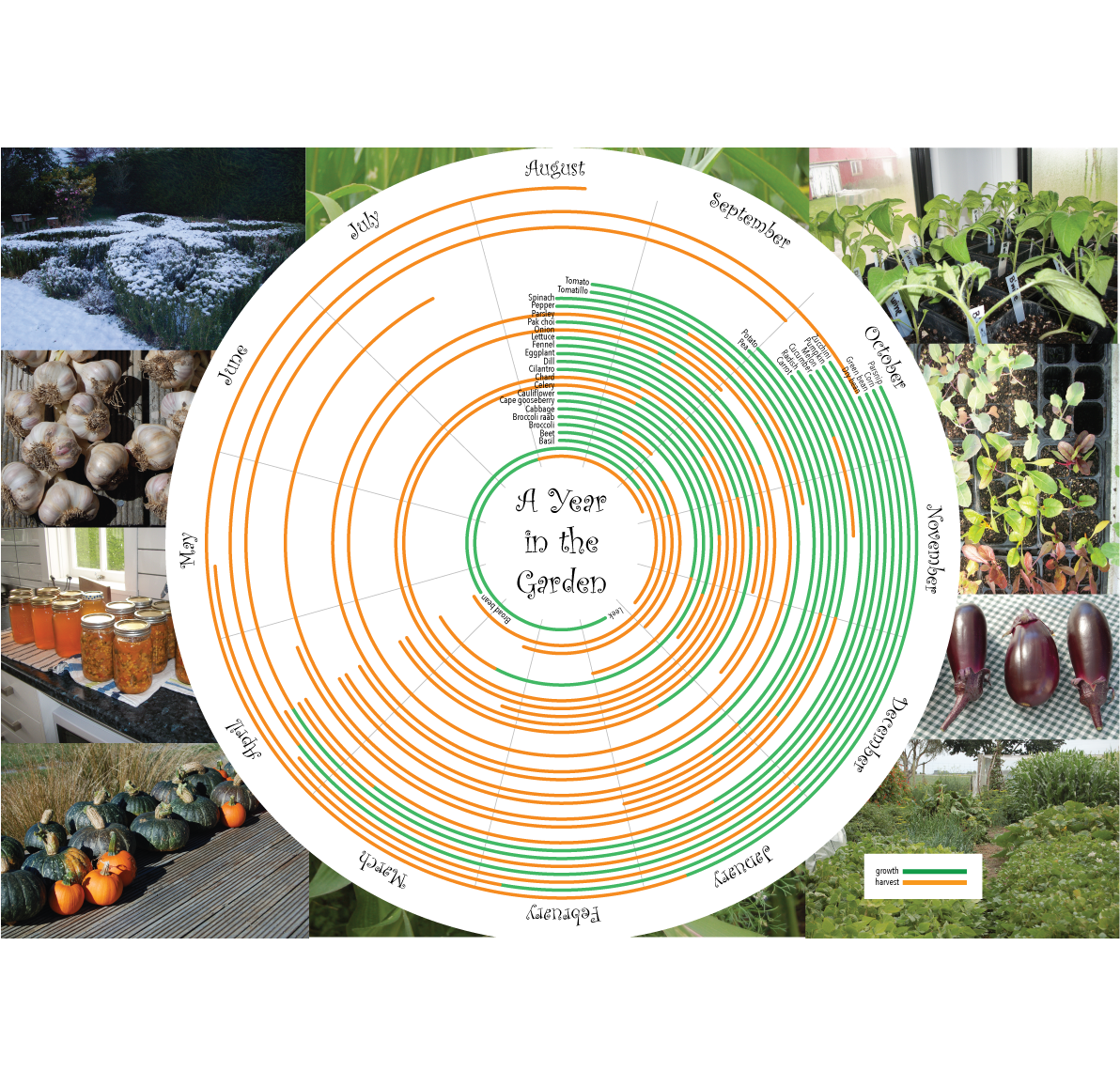
I love the month of July; it’s the beginning of the garden year in my mind, because it’s the month I plan the garden and order my seeds. It’s been a few years since I blogged about my garden year, so I figured it was time to do it again. I unearthed this little graphic my husband helped me create a few years back, showing my annual planting and harvesting schedule. It has changed a little since then, and I notice some crops, like garlic, are missing from it, but it’s still a fairly good indication of my year in the garden.

I struggled the first few years here. Coming from the Northern Hemisphere, I had no idea when I should plant things. And the idea of growing vegetables over winter was foreign to me, too.; gardening in Minnesota and Pennsylvania is sharply seasonal. It’s seasonal here, too, but much less dramatically so.

Instead of growing a ton of spinach over the summer and freezing it for winter, I learned to simply plant small quantities regularly throughout the year, for a perpetual supply of fresh greens. Same with lettuce, chard, broccoli, cabbage, and cauliflower.

Today my garden year ebbs and flows, but there is never a down time in the garden. There is always something to plant, weed or pick. The end of last year overlaps with the beginning of this year, so while I plan my seed order, I’m harvesting the lettuces, broccoli, leeks and other late crops planted in the autumn, and I’m weeding the garlic and broad beans that will be harvested in the coming spring and summer.

Sometimes I miss the complete downtime of gardening in Minnesota—the winter lull when there’s no need to go out and weed in the cold. But only sometimes. The never-ending garden year here has its perks in garden-fresh vegetables year-round.

Here Comes the Sun

After weeks of grey, unending drizzle, we’re finally seeing a bit of sun. Mushrooms abound in the yard, revelling in the dank mist we’ve been swimming through for a fortnight. We are all eagerly awaiting passing of the solstice and the lengthening of the days.

Though it is still pretty dark and drear, and the days will still be short for some time, there are signs of the spring to come.

Lambing has started. This is the time of year when the neighbours grow noisy, with lambs and ewes calling to one another day and night.

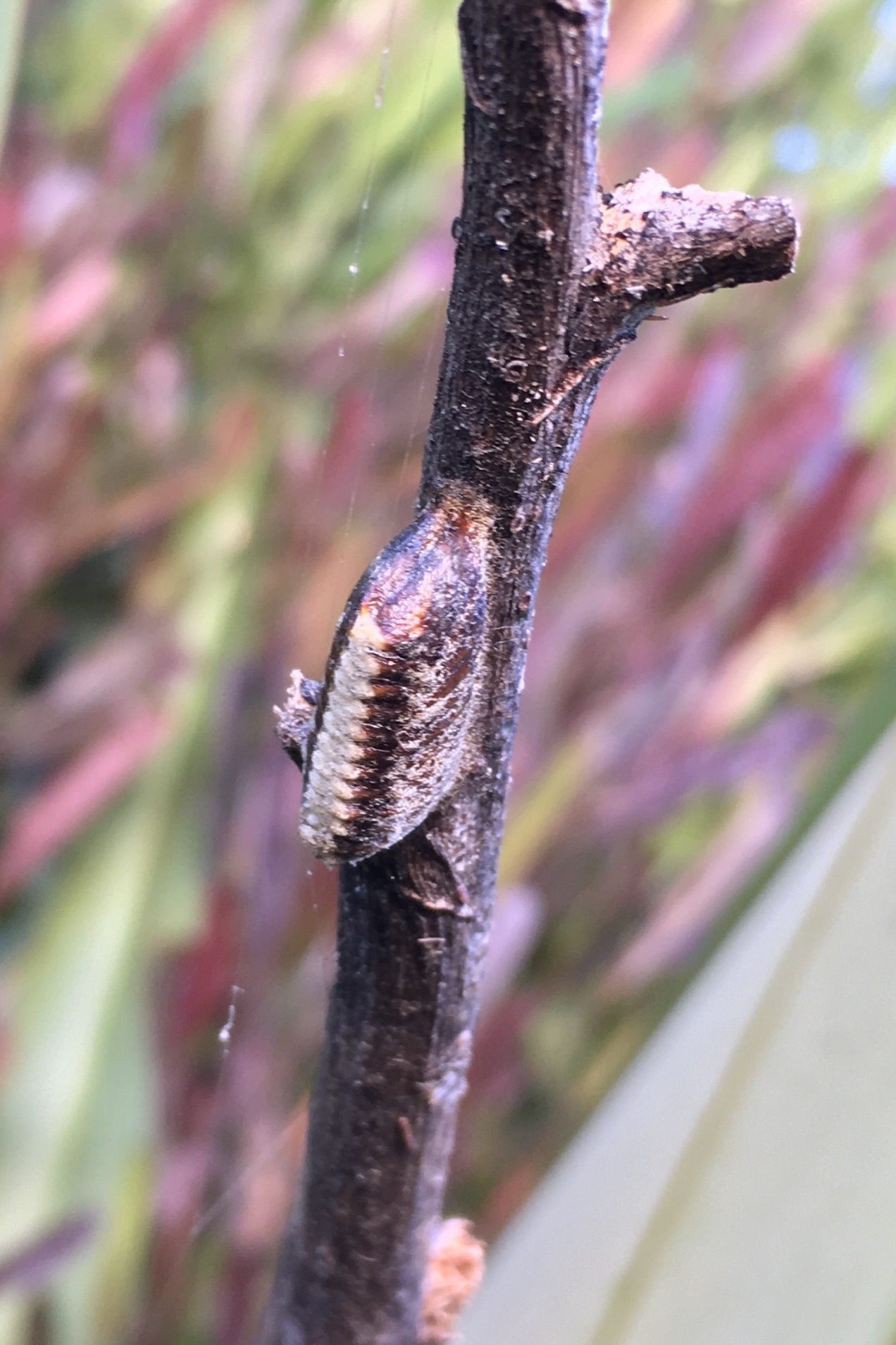
The preying mantids are gone, but their egg cases are dotted around the yard, promising a healthy population of my favourite predators come spring.

The daffodils and snowdrops are coming up, and I’ve even seen them blooming in other people’s yards.

And tomorrow is the solstice. Friday, the sun will remain above the horizon fractionally longer than it did the previous day. We’ll be on the upswing.

Beautiful Basket Fungus

Mature fruiting body

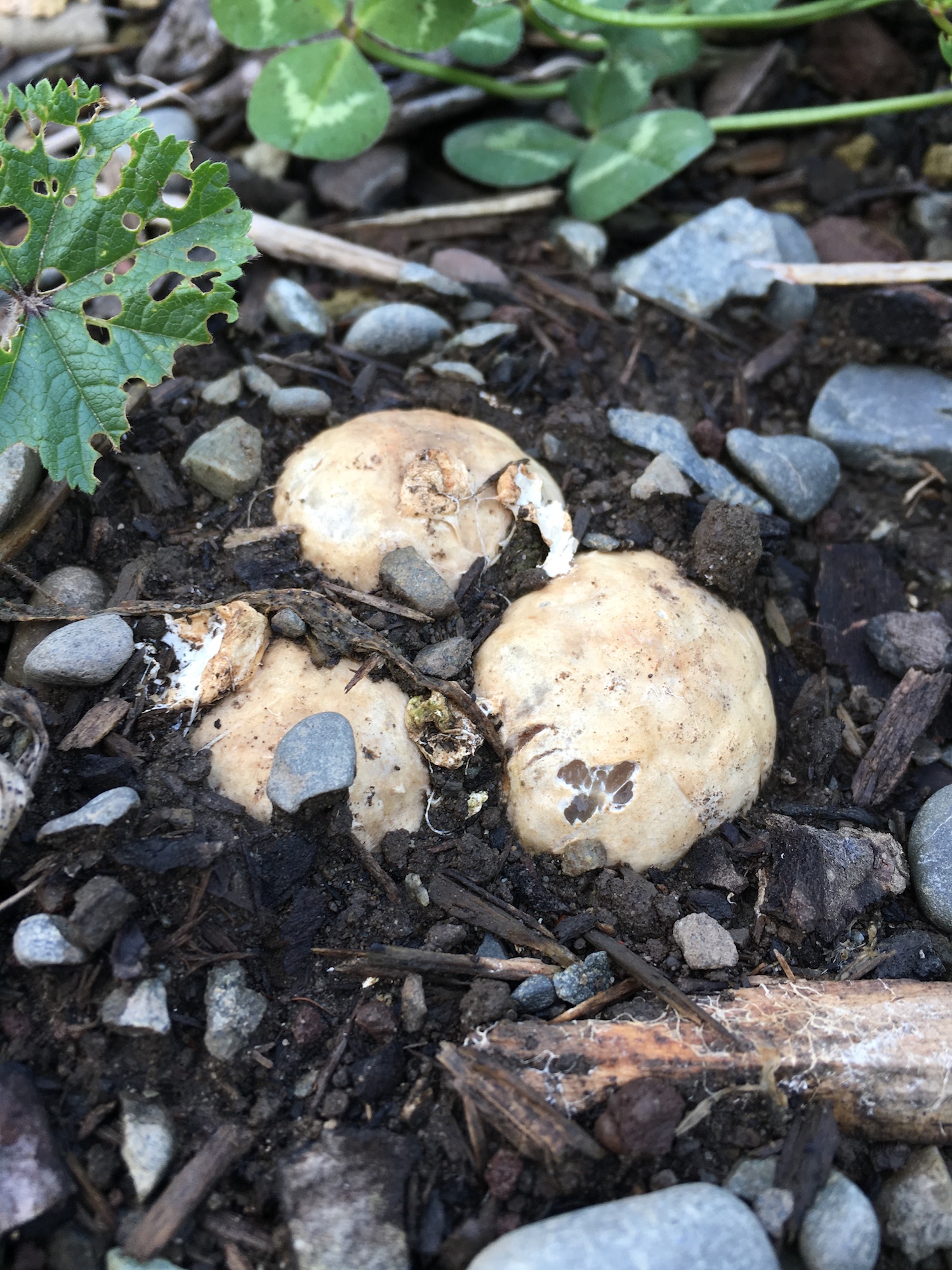
One of my favourite fungi is Ileodictyon cibarium, the basket fungus, native to Australia, New Zealand and Chile. We have been treated this year to an amazing display of these fungi in our recently wood-chipped pond garden. Usually we don’t notice them until the fruiting bodies are fully formed, but because there are so many this year, we’ve been able to watch their whole emergence, from egg-like volva to lacy soccer ball.

Aside from their striking look, there’s nothing particularly lovely about these fungi. The basket fungus is in the family Phallaceae, also known as the stinkhorn fungi. Members of this family—you guessed it—have a foul odour (and many are phallus-shaped). The carrion or dung-smelling fruiting bodies attract flies to disperse the spores. Supposedly, the young fruiting bodies are edible … but not very tasty, as you can imagine.

Immature volvae

In spite of their smell, basket fungi have a certain celebrity status, owing to their remarkable structure. In fact, in Hagley Park in Christchurch there used to be a play structure in the shape of a giant basket fungus. I’m not sure if it’s still there—my kids don’t frequent playgrounds anymore—but it was always a favourite with my kids.

Noddy’s Back!

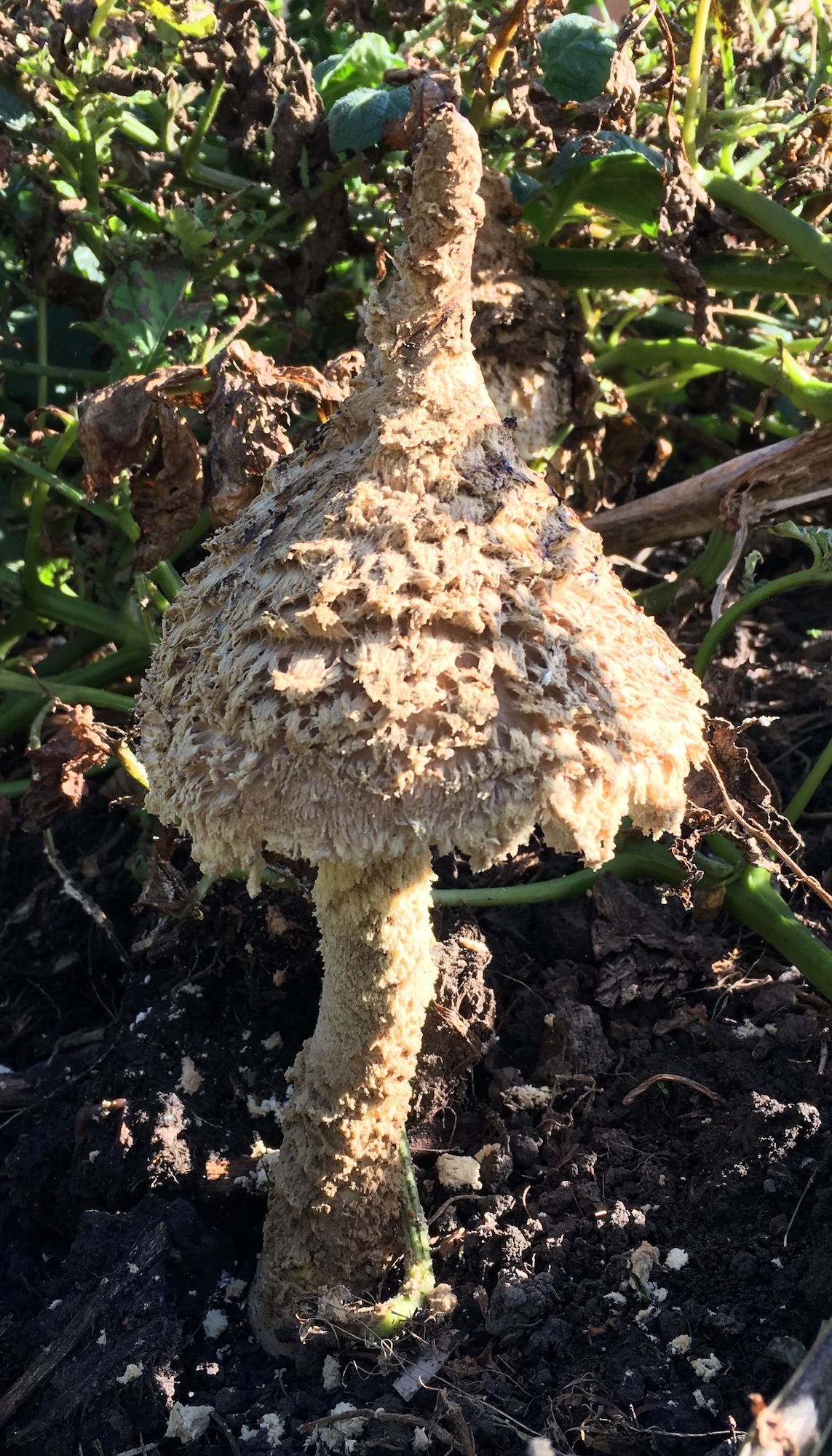
Okay, call me a complete geek, but I’m inordinately pleased about today’s find in the vegetable garden—Noddy’s flycap. This striking and mysterious mushroom showed up last year, causing great excitement and a blog post. The word from the scientific community was we weren’t likely to see it again for a long time, as it doesn’t seem to fruit every year.

Ha! Another thing we can tick off as an unknown for this fungus. Second year in a row Noddy’s has popped up in the garden.

As far as I know, the fungus still has no official scientific name, and its origin remains as mysterious as it was when I wrote about it last year. So for now I’ll simply enjoy the whimsy of this most delightful of fungi.

Ushering in Autumn


Thursday’s dawn farewell of Gita.

Gita blew through earlier this week, dumping 96 mm (nearly 4 inches) of rain on us. She also seems to have ushered in autumn. Sultry summer heat has given way to crisp air in Gita’s wake. The sun is still hot, but the nights have been chilly. The crickets sing their welcome to a new season. Even the garden has taken on an early autumn look, tired plants beginning to look tattered and yellow. Before Gita, I had ordered my firewood for the winter. It seemed too early at the time, but now, I’ll be happy to see it arrive.

Summer fruits and vegetables should still roll out of the garden for the next six to eight weeks, but the end is in sight. We’ll enjoy it while it lasts.


Hawksbeard: a Cheerful Weed

We’ve had recent, much-appreciated rain, and the grass is unusually green for January. But even with the grass growth, summer is weed season in the lawn.

More specifically, summer is weed flowering season.

Some of the weed flowers are uninspiring, and merely annoying—the dull greenish flowers of plantain, for example.

Others bring a splash of colour to what is normally a bleak time in the lawn.

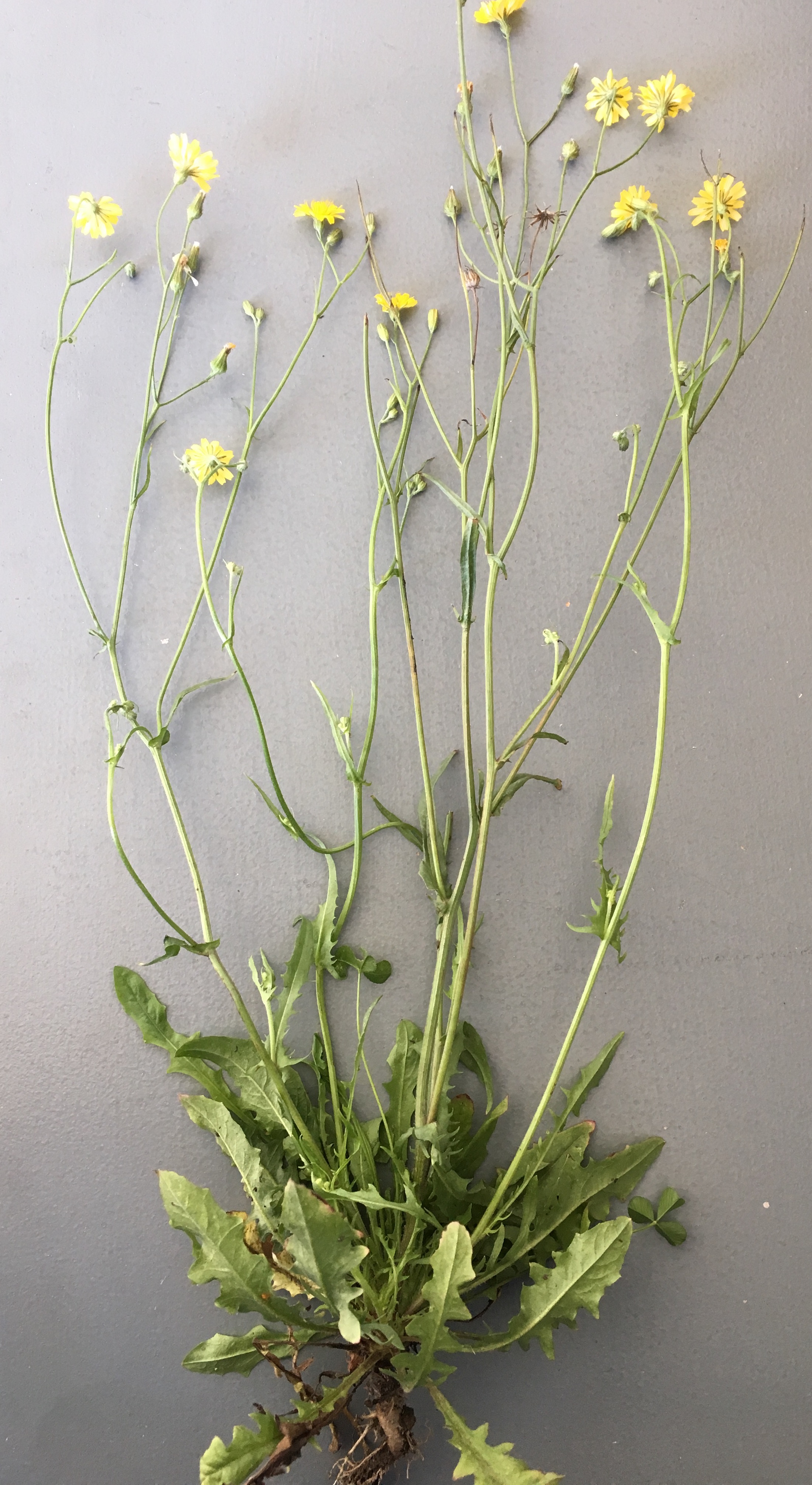
Hawksbeard (Crepis capillaris) is one of the more prolific colourful weeds in the lawn in summer. An annual or biennial member of the dandelion family, this plant bears small, cheery yellow blooms on tall, branched stems.

The NZ Plant Conservation Network shows hawksbeard as being naturalised in 1867 from Europe. Like its cousin dandelion, it was most likely brought to New Zealand on purpose as a food plant—it’s young leaves are edible. Like the dandelion, it is no longer valued as a food, but is considered a weed.

I will admit, the tall flower heads of hawskbeard can be annoying in the lawn. They seem to spring up overnight between mowings, and they slap against your legs as you walk through the yard. But I do appreciate their yellow blooms at a time of year when most other plants give up from the heat and drought. I have been known to use hawksbeard in flower arrangements, and their green rosettes are sometimes the only green to be found around the yard.

‘Tis the Season

And So It Begins…

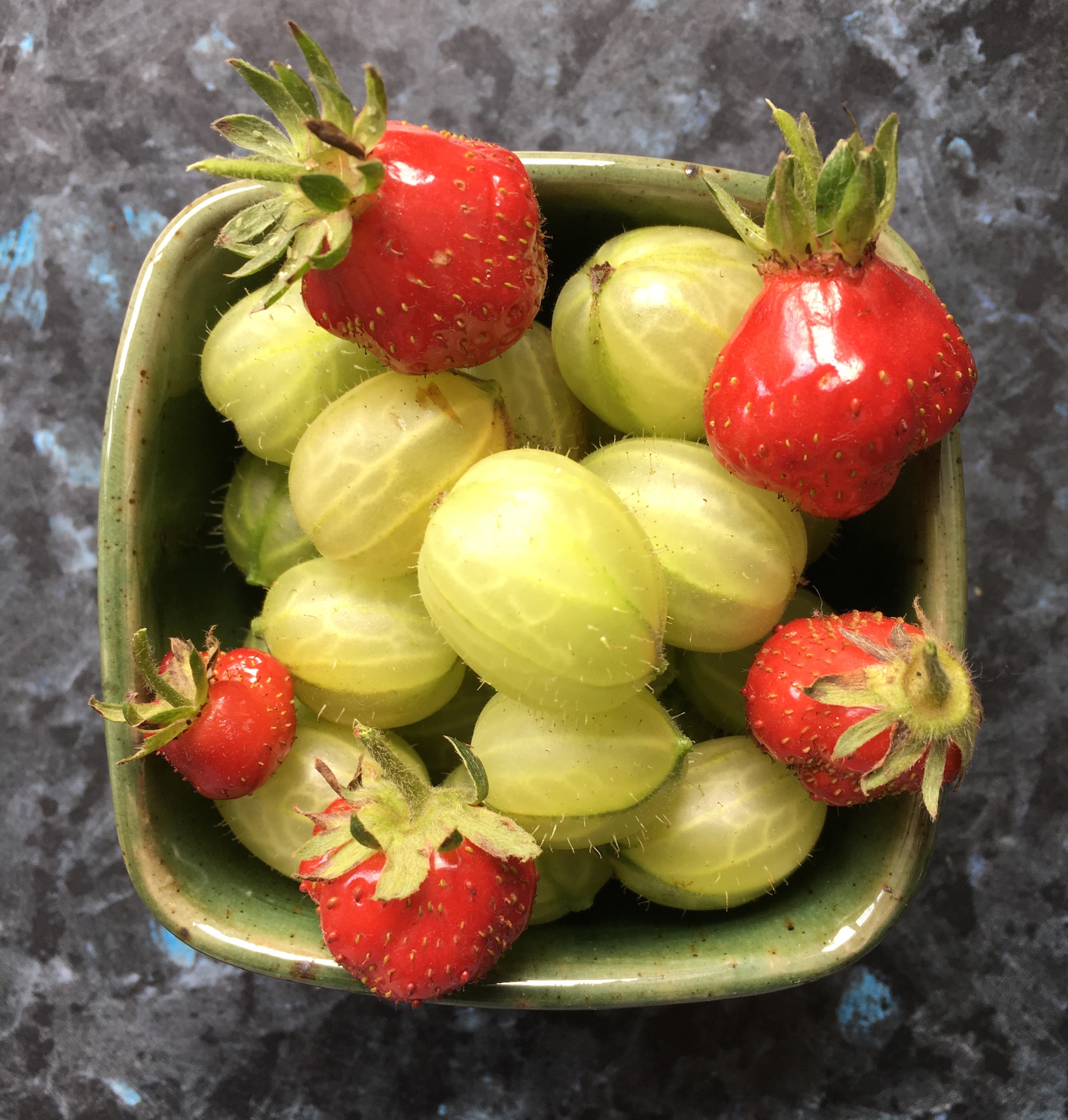
We’ve been watching the berries for weeks, and the signs have been promising. The gooseberry bushes are dripping with fruit. The currants, too, promise a good harvest. In spite of a viral infection, even the strawberries are managing a crop. The raspberries are humming with bees, attracted to a plethora of flowers.

The first harvest was tiny—a handful of berries—but it marks the beginning of my favourite season on the property. The season of fresh fruit. It begins with strawberries and gooseberries, moves on to currants, cherries and raspberries, and ends with apricots and plums. Watermelons, apples, and peaches come late in the year, and they’re lovely, but nothing compares to the early summer fruits. Their season is short, but bountiful. It’s the season of jams, fruit pies, and fruit ice cream. The season of gooseberry fool, strawberry-smothered waffles, and apricot upside down cake. It is the season of plenty.

In festive red and green, ’tis the season, indeed.

Summer Rock Concert

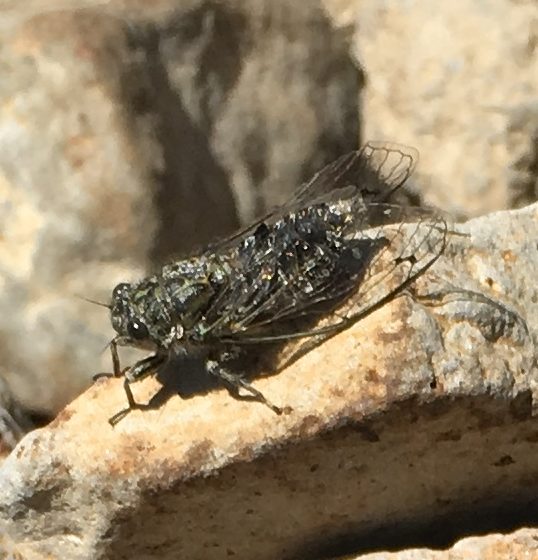
It’s a cicada; it must be summer.

The main cicada season doesn’t really start until the chorus cicadas (Amphisalta zealandica) come out after Christmas, but two weeks ago, we found a few chirping cicadas (Amphisalta strepitans) on the rocks around Okains Bay.

Cicadas are largish, as insects go, but they’re well camouflaged. Usually, you find them by sound. As with most insects, it’s the males that do the singing. The main part of a cicada’s song is made by flexing plates (tymbals) on top of the body. Built-in amplifiers (opercula) pump up the volume to an astonishing level. Cicadas are noisy. I don’t know if any of the New Zealand species have been tested, but the calls of some North American cicadas are over 105 decibels at a distance of 50 cm. That’s nearly as loud as a rock concert (115 decibels). When the chorus cicadas here in New Zealand come out in large numbers, they can be so loud in some places that it’s impossible to carry on a conversation.

Some New Zealand cicadas add an extra feature to their song—a bit of drumming called clapping. The cicada snaps the leading edge of its wings against a branch to make a sharp click. Females also clap, and I’ve read (though I’ve never tried it) that you can call the males to you by snapping your fingers.

There are about 2500 species of cicada worldwide. Because of their size and volume, they seem to be culturally important wherever they live. They are eaten as food in many areas, and sometimes used as fish bait. Growing up, my siblings and I used to collect the shed exoskeletons of cicadas and attach them to our clothing like jewellery. When I lived in Panama, the children would catch cicadas and tie strings to their feet, then carry them like helium balloons, flying on the end of the string.

Wherever they live, they mark the seasons. Here in New Zealand, and in America where I grew up, summer hasn’t really started until the cicadas sing.

Loud singing? Drumming? Must be a summer rock concert!