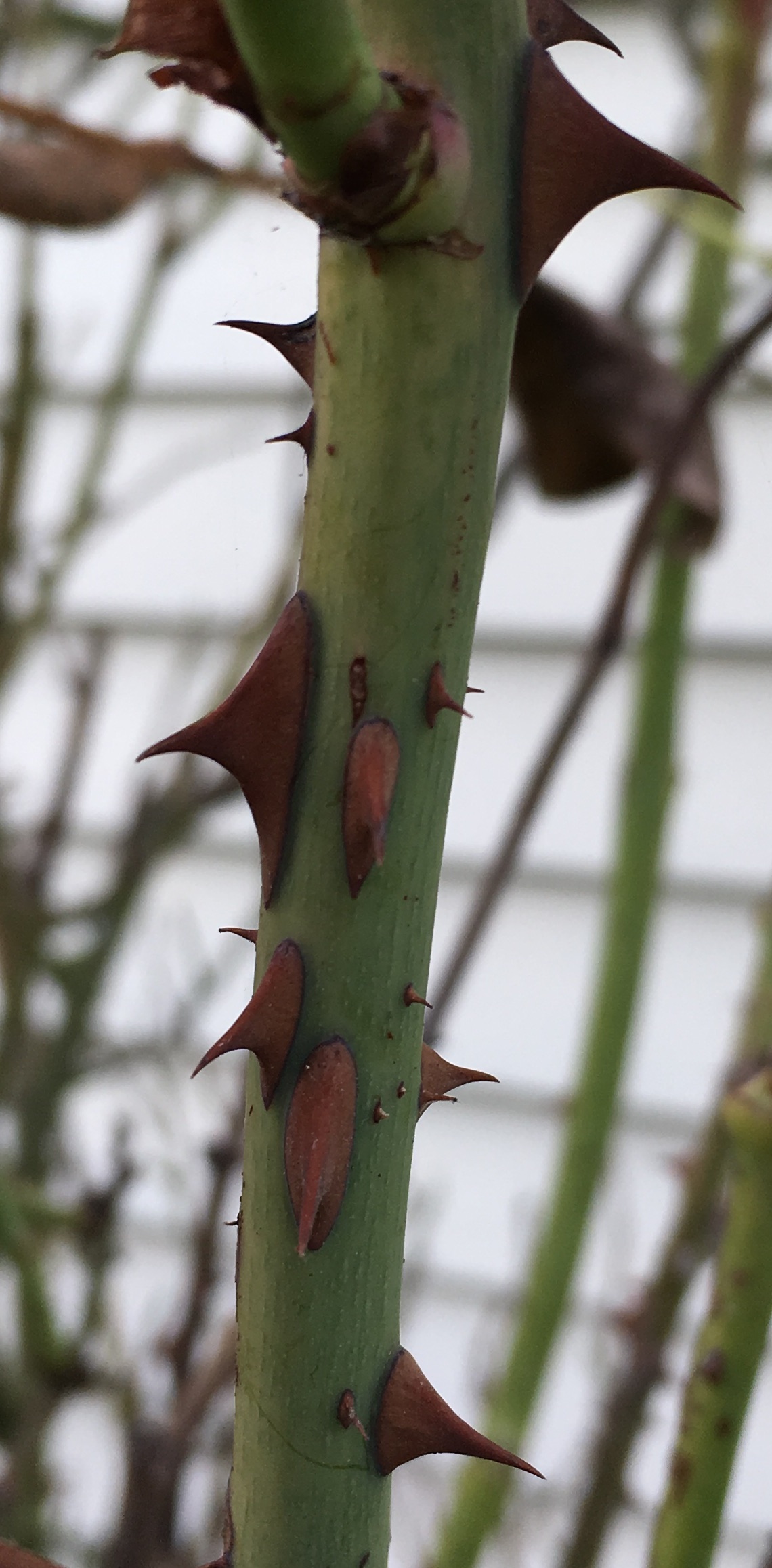
 Young rose
Be careful.
Grow those thorns.
Protect yourself.
But
Don’t grow too many.
Let your beauty shine
Sometimes.
Leave vulnerable spaces.
Not everyone
Wants to eat your leaves.
Some
Come only to admire
Or to know you better.
Let them in.
Young rose
Be careful.
Grow those thorns.
Protect yourself.
But
Don’t grow too many.
Let your beauty shine
Sometimes.
Leave vulnerable spaces.
Not everyone
Wants to eat your leaves.
Some
Come only to admire
Or to know you better.
Let them in.

Today’s massive, whole-family sandcastle effort.
We spent the day at the beach today, doing what most parents do at the beach—building sand castles with the kids, throwing frisbee with the kids, jumping in the waves with the kids, flying kites with the kids, rock pool fossicking with the kids.
Do you sense a pattern?
Beach activities always seem to be “with the kids.” So, what do adults—without kids—do at the beach?
Today at Okains Bay, an elderly couple lay in the sun. Another older couple walked the beach together. A young gay couple swam in the waves, then made sand castles. Tourists photographed children playing.
Though my husband and I were married for ten years before having children, it’s sometimes hard to remember life before kids.
But now that the kids are both in high school, it’s time to start looking ahead to that light at the end of the tunnel—that glorious day when the kids leave home. It’s time to start figuring out what we want to do when we grow up.
Why not start my plans with the beach?
I, for one, still plan to jump in the waves. And I’ll always peer into the rock pools. And you might even catch me with a frisbee…
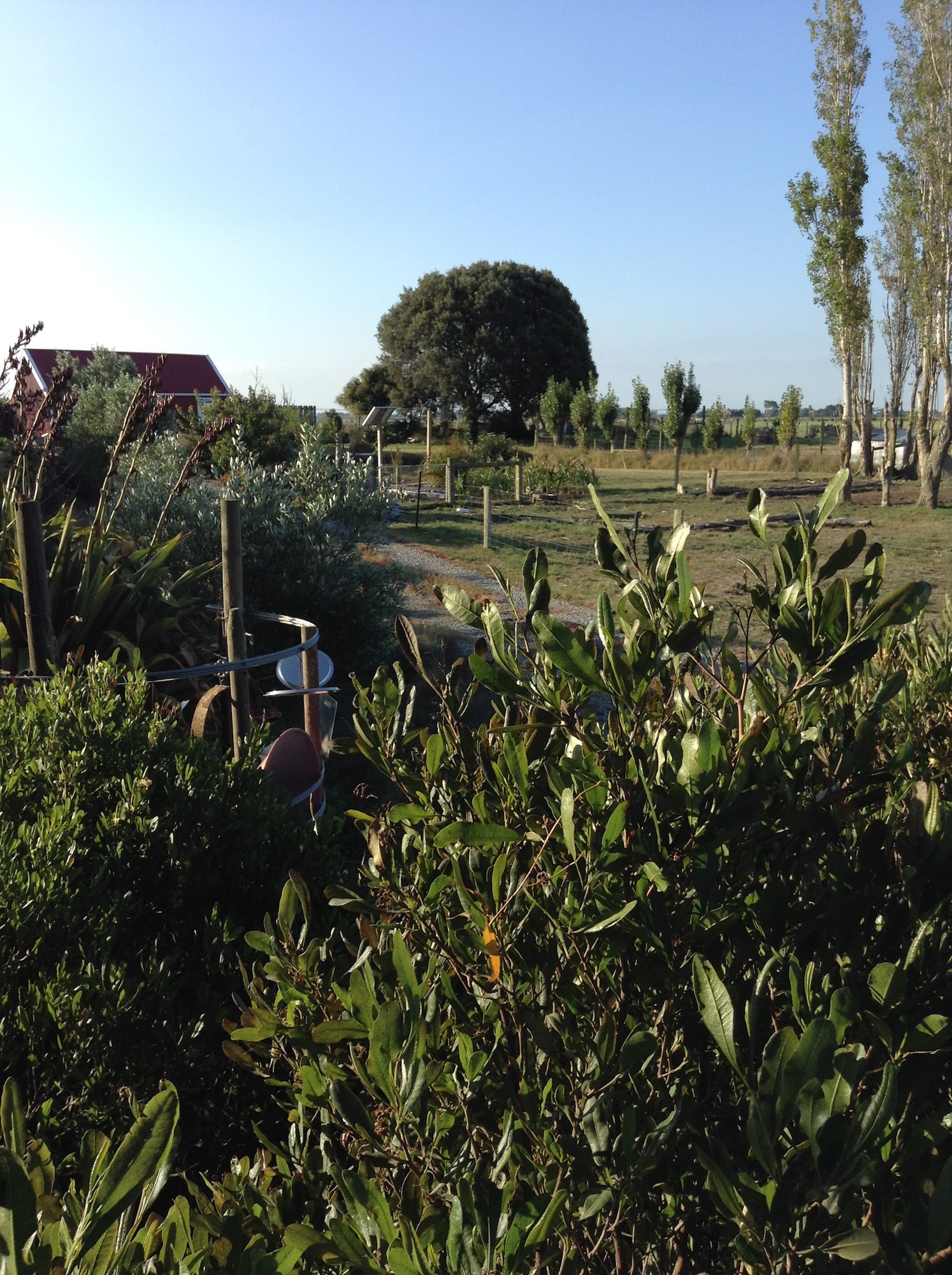 My daughter’s homework today involved exploring the idea of gratefulness.
One of the questions asked her to photograph the thing she was most grateful for.
This is the photograph she took. It is of our property, and includes a bit of everything here—trees, paddocks, sheds, gardens, and art.
Her answer doesn’t surprise me, and I echo her sentiments. I, too, am grateful for this piece of land that feeds us, shelters us, and provides us the vast majority of our entertainment.
And though some parents might have wished for her to say that she was most grateful for her family, I am pleased that my daughter has put her roots into the soil. I am pleased that she has developed a strong sense of place. In fact, I would have expected nothing less from the girl who spends every waking minute outdoors.
We develop relationships with places, just as we develop relationships with people. Those place relationships help us shape our identity, and place us in context in the larger world around us. They provide us an anchor, a whakapapa (cultural identity), and a homeland.
Our sense of place gives us a solid foundation from which to explore and learn to love the rest of the world. It makes our relationship to the entire planet more personal.
In order to care about the earth in general, we must first care about a special place.
In order to understand the tragedy of the loss of a rainforest, we must first understand the tragedy of the loss of our favourite climbing tree.
In order to understand the magic of an unknown place, we must first feel the magic of our own special place.
And so, for today, I am most grateful for this piece of land that has rooted my daughter’s sense of self, family and community in the earth.
 My daughter started high school last week.
I don’t know who was more terrified about that—her or me.
She had been attending a special character school in which she had a great deal of freedom about where she did her work, she could climb trees at lunchtime, and which didn’t assign any homework.
She still attends a special character school, but one with a different philosophy.
Her classes are almost entirely indoors, tree climbing on campus is forbidden, and she has homework.
For a girl who NEEDS to be outdoors and moving, I’m sure the transition is going to be rocky.
But she recognises her needs, and she’s getting better at asking for what she needs.
So when she came home with her first homework yesterday, instead of bemoaning the fact she couldn’t go run around outdoors after school, she came to me with a suggestion.
“Mum. We need a table outdoors in the shade somewhere so I can do my homework outside.”
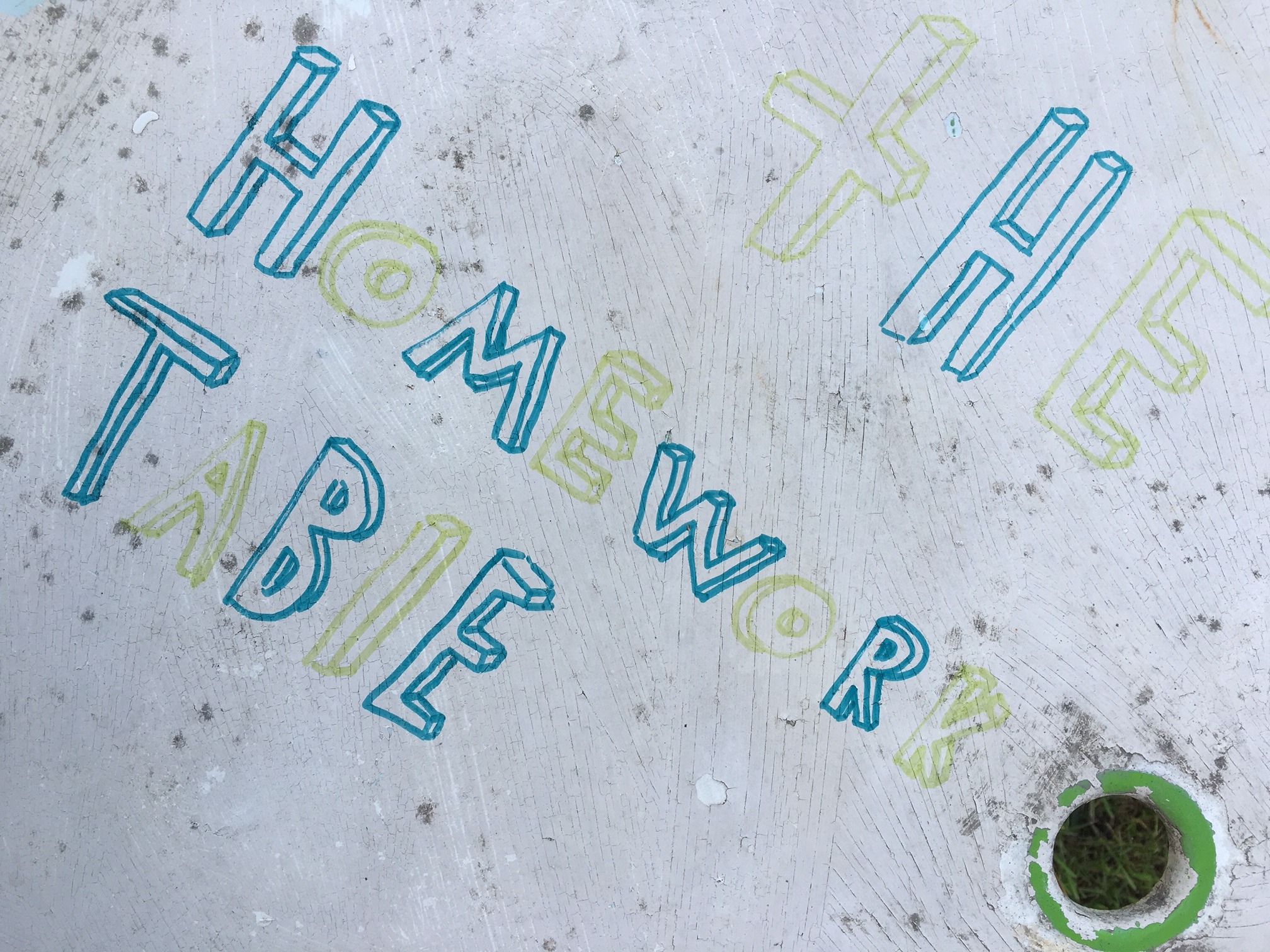
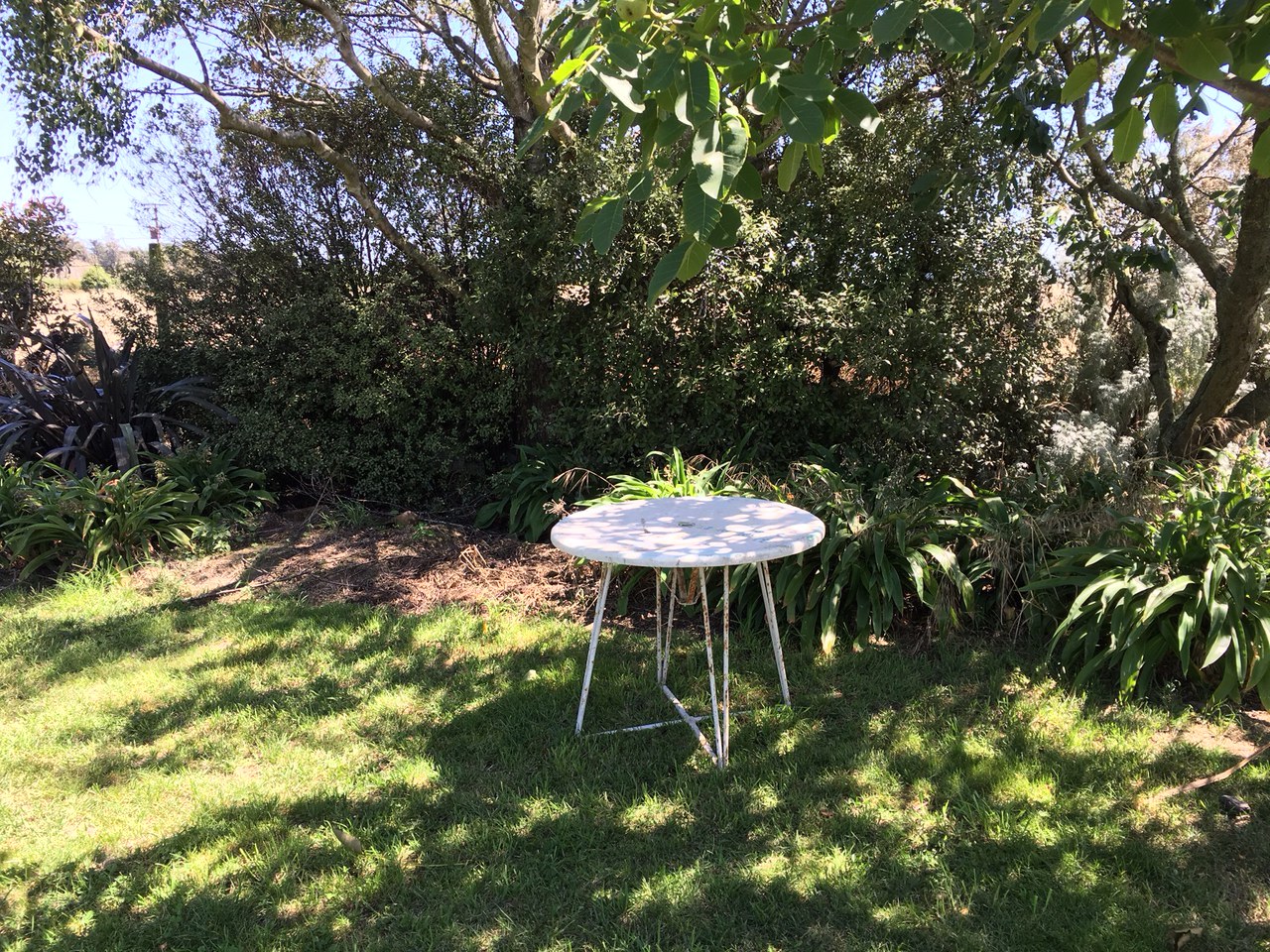 As it turned out, we had a table that fit the bill perfectly—an old picnic table that I’d recently banished from the shed because it was in the way. She scrubbed it up, dubbed it the homework table, and brought her desk chair outside to complete her homework.
No grumping, no tears, no stress.
If the whole school year goes like that (yeah, right), it’ll be a fantastic year!

Physarum cinereum
About eight months ago, my daughter did a school project on slime moulds. Along with internet research on slime moulds, she searched for live slime moulds in various habitats, and even tried keeping one as a pet. Unfortunately, the weather was particularly dry and warm, so slime moulds were scarce, and her pet died. We considered the project somewhat of a failure.
Except that she has been tuned in to slime moulds ever since, so when she noticed a funny grey substance covering blades of grass in the yard a few days ago, she was primed for it. She brought it inside to look at under the microscope, and correctly identified it as Physarum cinereum, a type of slime mould.
She posted a photo and her identification on Nature Watch NZ, and had her identification verified by several scientists.
Today, she found a similar slime mould, but this one was a mustard yellow colour. In form it was very like Physarum cinereum, but altogether the wrong colour.
She pulled out her iPad to search for it online. No luck…
But…
While she was searching, the sample under the microscope changed colour, from yellow to grey. Based on her knowledge of slime mould biology, she reckoned the grey colour must be spores. She has posted her new photo and identification to Nature Watch NZ, and is waiting to see what the experts think.
Could I ever have devised a better science lesson? Not in a million years. She made an observation, used her research skills and prior knowledge to make sense of what she saw, and got corroboration from an expert.
The resources available to kids (and bigger kids, too) these days are amazing—the opportunities to engage directly with the scientific community, find current information about things (no more 20 year-old World Book Encyclopaedias), and record their observations are so far beyond what I had as a child, it still feels a bit like magic to me.
But of course none of that is possible if we don’t nurture our children’s curiosity and teach them how to use the tools available to them. None of it is possible if we don’t give our kids time to watch the world go by, time to get bored and lie down in the grass. Tom Eisner (famous entomologist, for those who don’t know him) wrote in his book For Love of Insects, “How is it, I am often asked, that I make discoveries? I always feel a bit awkward about answering the question, because I do not have a particular method. The truth is that I spend a fair amount of time looking around.”
So go on. Get out there. Look around. Who knows what you might discover.
 I had a lot on my to-do list today—Painting the office, washing the house, fixing a tap, weeding the garden, laundry…
I also hoped to have a chance to work on a new short story, a jeans jacket, and a rug.
But when it hit 33˚C (91˚F) by 10 am, and my paint was skimming over in the can and drying instantly on contact with the wall, I knew something had to be done.
Something drastic.
I called the kids for a meeting.
“It’s hot,” complained my daughter.
“Yes. It is. Should we go to the beach?”
The vote was unanimous, so while I put away paint brushes and ladder, the kids gathered boogie boards, towels and togs.
In five minutes, we were on the road.
It was a brilliant day for swimming—big waves, a gentle sea breeze, sand hot enough to peel skin…
And the chores will be there tomorrow.
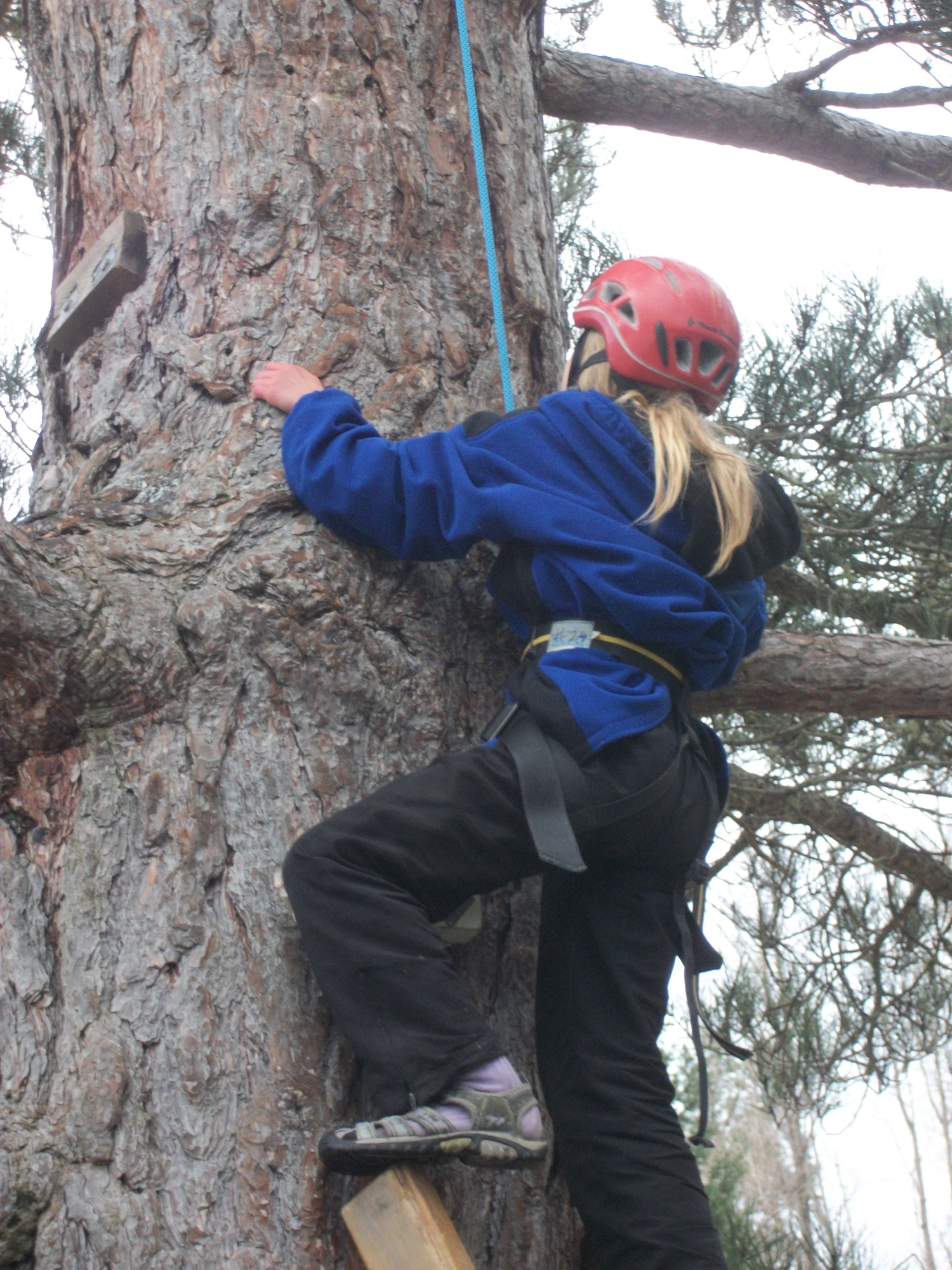 I never went to a sleep-over sort of summer camp until I attended the Governor’s School for Agricultural Sciences just before my senior year in high school. So I admit I was a bit reluctant to send my kids to a week-long summer camp when my husband first suggested it. Who needed summer camp? We did all those camp activities as a family anyway. And a week of summer camp isn’t cheap, either.
But my husband, who had done those sorts of camps as a kid was insistent, and the kids were eager, so four years ago we packed them off to camp for a week.
We’ve been doing it every summer since, and they’re agitating to go to the spring and fall school holiday camps, too.
And I have been won over to the idea of sleep-over summer camp.
Every year, the kids leave camp exhausted, but bubbling over with excitement. Full of stories about what they did (some of which we as parents really don’t want to know about), what they ate, and who they knew from the previous year.
They come home sunburnt, bruised, and smelly, with band-aids on their knees. They come home having worn the same socks for a week and not having combed their hair since they left.
I know there are tears at camp. Frustration. Loneliness. Injuries.
But the kids come home older and more confident than when they left. They stand taller. They take more responsibility for themselves.
So, though I may jokingly say that we send the kids to camp so we can have a break, that’s not really why.
We send the kids to camp so they can struggle and succeed, so they can push themselves, be someone new, learn to create a community from strangers, and explore the world with new friends and mentors.
Of course, the week off is really nice…
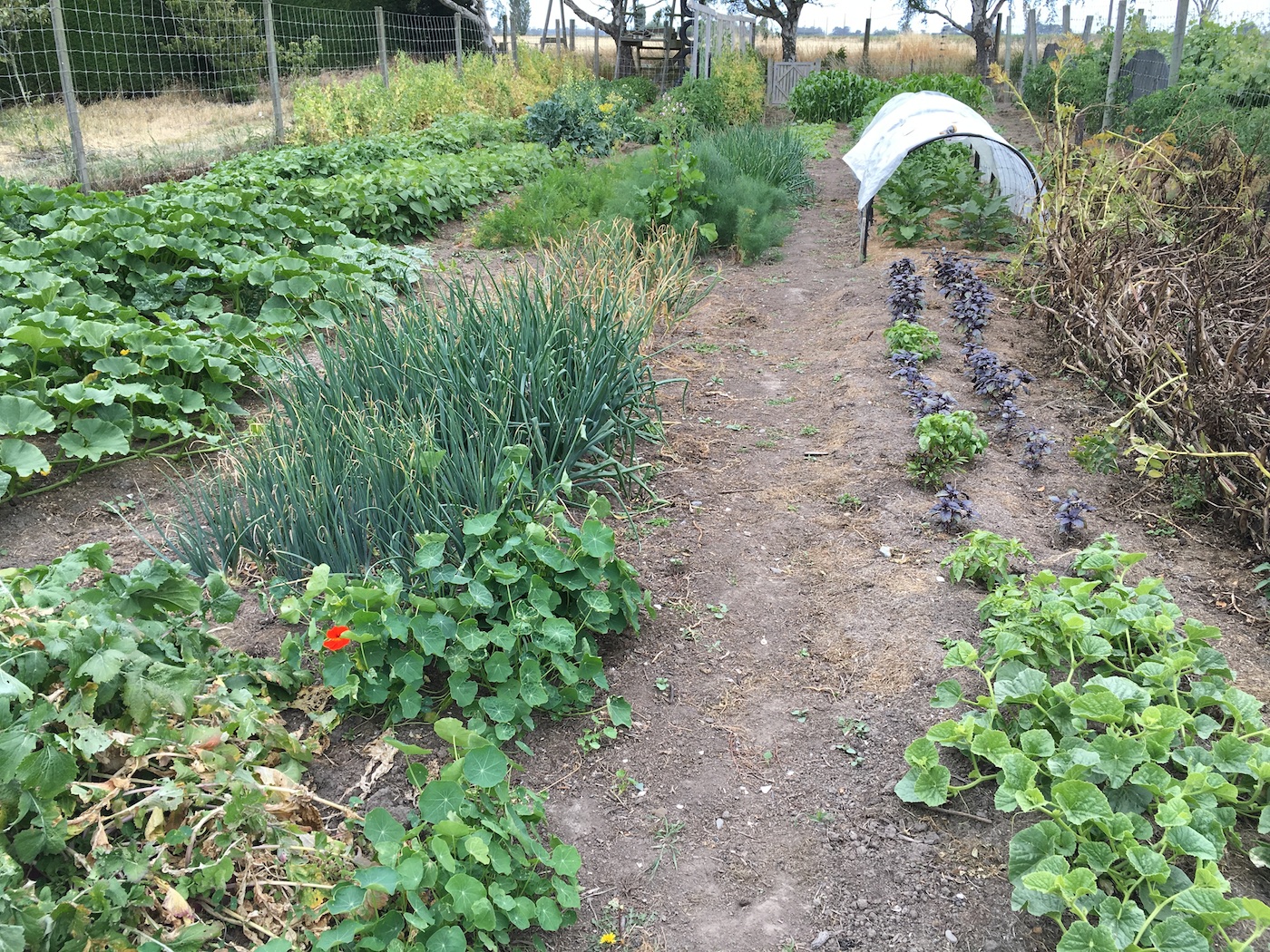
Kids or no, I’ll be here…
The kids are at summer camp. An entire week with just my husband and me in the house. No children lingering at my office door with the “Mum, I’m bored” look. No teenager hiding in his cave with his earphones on, to be prodded into activity.
We’re free to do whatever we want!
So, um, I’m cleaning the house, my husband is making the week’s bread. Later I’ll milk the goats and do some weeding…
We tried to go out for lunch and a stroll on the beach after dropping them off at camp, but…well…there was work to be done at home, and the weather wasn’t great, and we weren’t really hungry for lunch…
I reckon it’s a sign we’ve managed parenthood reasonably well so far that when we’re free of the children, we don’t rush out and party. We pretty much carry on as usual, because we pretty much do what we want when the kids are here, too.
Oh, we’ll do a few things differently. Tonight’s dinner will be bread and cheese with a glass of wine on the porch instead of some healthy cooked affair. But we’re unlikely to go out at all, and the week will proceed pretty much the same as if the kids were here.
Perhaps we’ve been selfish parents—the kids have always known that mum and dad need their space. Bedtime has always been strictly enforced, so that the adults have ‘their’ time at the end of the day. And from the beginning, the kids have gone to art museums, historic sites, etc, with us. We’ve included them in our adult lives, and they’ve happily come along for the ride.
Yes, we spent many hours bored, watching them at playgrounds when they were younger, but we made sure that they also spent time bored at ‘adult’ things, too.
It wasn’t long before they became interested in those adult outings—the art museums, the historic sites, the tramping trips. Just as we learned to appreciate the subtleties of playground design, they learned to appreciate the play of light on a sculpture, or the patterns of wear on an artefact.
And so, when the kids are away, we feel no need to get our fill of ‘adult’ things or to make up for lost ‘us’ time. We will certainly enjoy our week of relative quiet, and fewer articles of clothing to pick up off the floor. But we enjoy spending time with the kids, doing the things we all like to do.
 For those unfamiliar with Down the Back of the Chair, The Great White Man-Eating Shark, and The Man Whose Mother Was a Pirate, Margaret Mahy was a prolific author of children’s books and young adult novels. She lived just over the hill from Christchurch, in Governor’s Bay from the late 1970s until her death in 2012.
Her books are quirky, adventuresome, and often wildly creative.
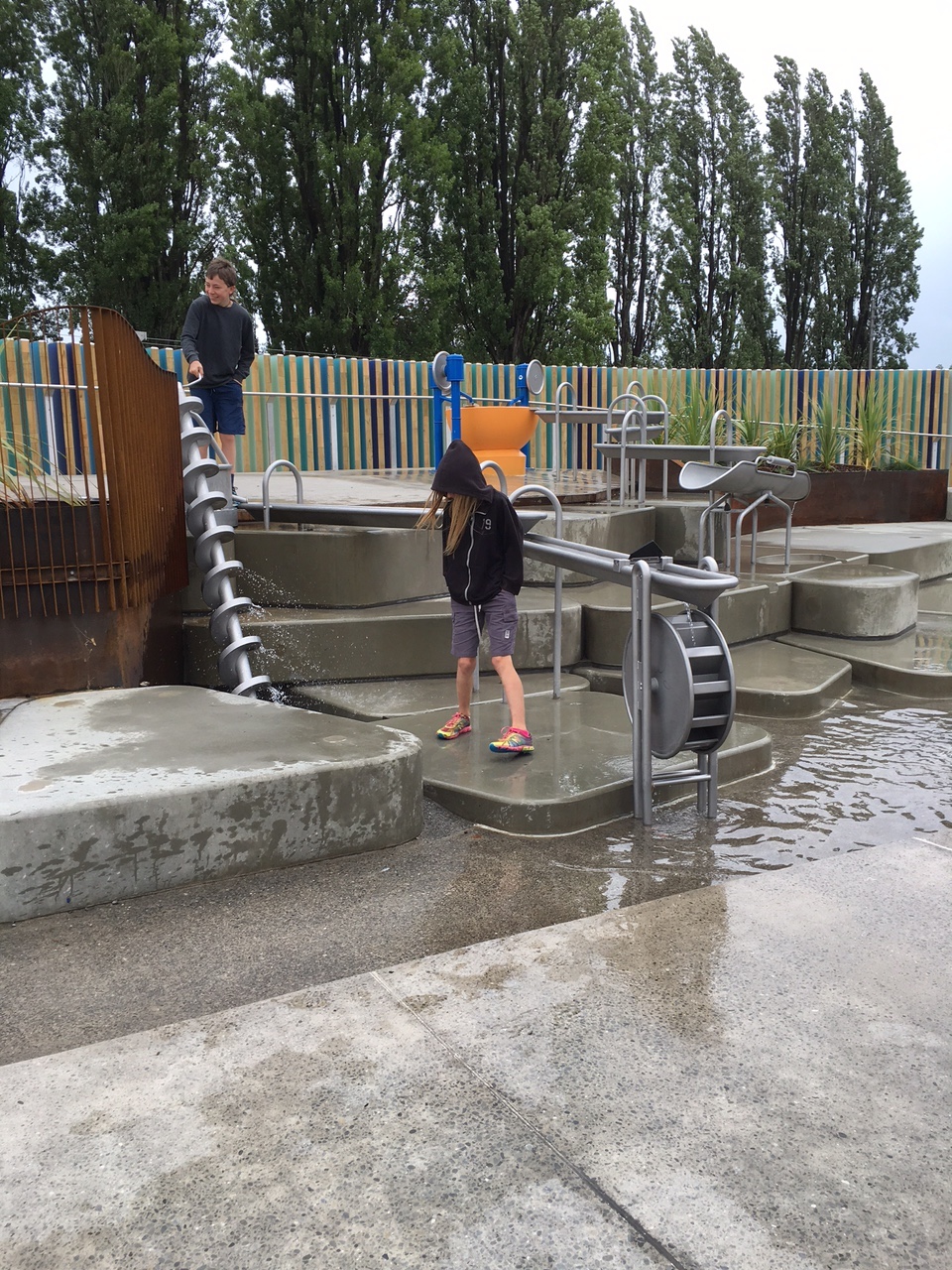
The recently opened Margaret Mahy Playground is also quirky, adventuresome, and creative.
We don’t frequent playgrounds anymore—our kids are mostly past the age where they insist on playground stops—but when we were in town the other day to visit the (finally) reopened art museum, we decided to check out the new playground.
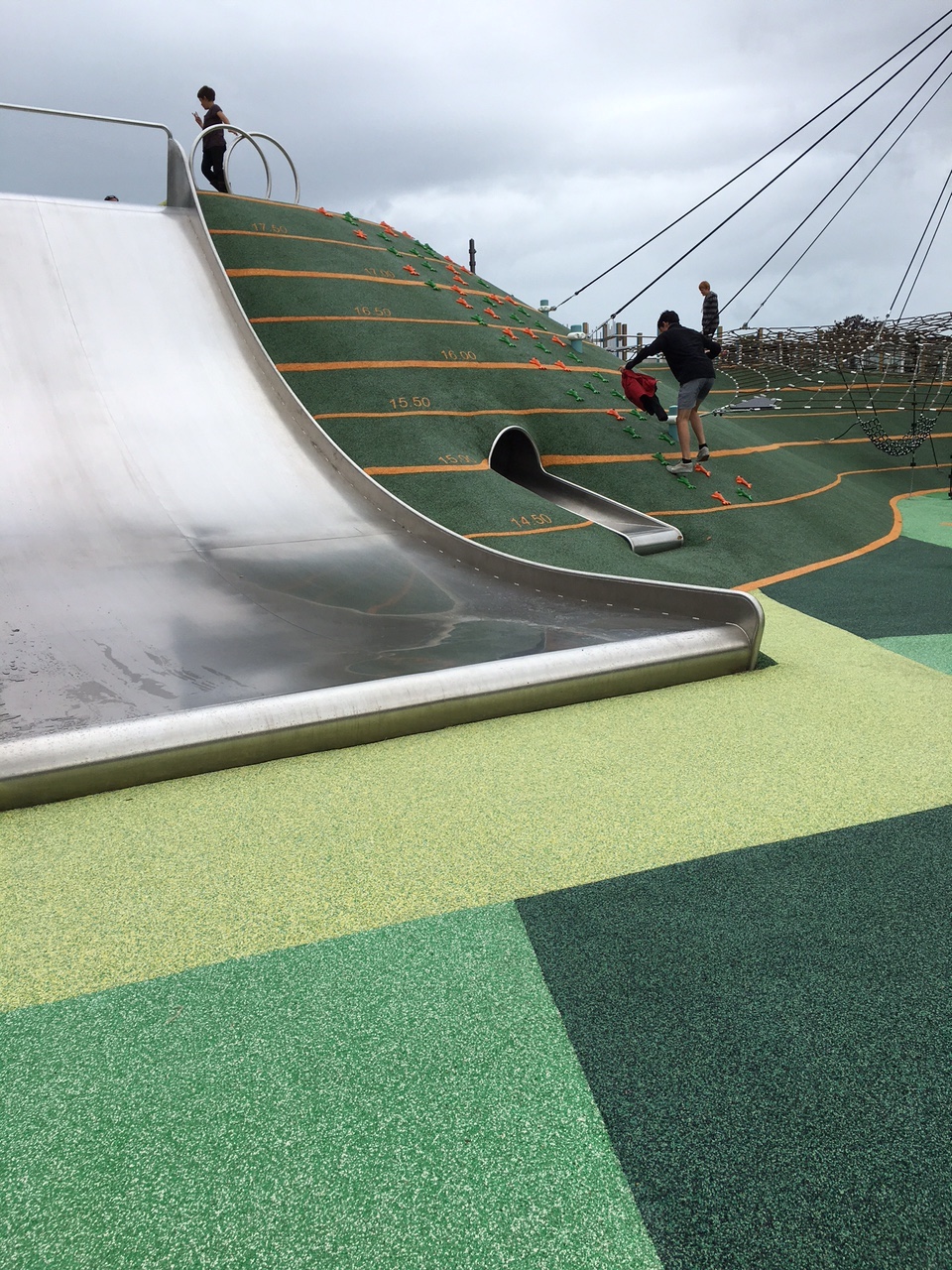 Water, sand, a flying fox, climbing structures, the “fastest slide ever” (according to my daughter who flew off the end of it like a champagne cork), and a hill marked with contour lines…Horrakapotchkin! The playground was awesome. Even my too-cool-for-playgrounds teenage son went down the slide (twice), sent water through the sluice system, and delighted to find the sensors that turned on sprays of water.
Best of all, there is a path out the back of the playground down to a dock on the river.
The only downside to the playground is that all the surfaces are concrete or rubber mat. A necessary choice of materials, I’m sure—even on the chilly, rainy day we visited, the playground was crowded. Grass would be trampled to death in a day.
One of the best playgrounds I’ve ever seen, and a great tribute to Margaret Mahy.
 At the festive time of year, it seems right to blog about family meals.
There has been a great deal of hoopla over the past ten years or so about family meals. Some researchers have claimed they reduce childhood obesity, raise GPAs, reduce depression, reduce delinquency, and a host of other benefits.
The truth isn’t quite so amazing. When factors such as socioeconomics, family structure and other demographics are controlled for, it appears that family meals slightly reduce childhood depression, and that’s it. All the other ‘benefits’ are simply correlated with the other features that contribute to a family that sits down together for a daily meal.
But I like to think that, just as smiling makes you happier, sitting down to a family meal every day makes the family better. It makes it more likely the family will have the other characteristics that lead to higher GPAs, lower obesity, etc.
A family meal is a time to talk to each other, to discuss current events, ideas, and feelings. It’s a time to teach children manners and respect for one another. It’s a chance for quality time with the people we love—why not take advantage of it? You’ve all got to eat—make the most of it.
We eat dinner as a family every day, and on weekends, we eat lunch together. Sunday, we even sit down together for breakfast. Sometimes I’m reluctant to take the time for a family meal, particularly lunch, when I’m in the middle of the day’s work, and would prefer just to grab a quick bite and be on my way. But a family meal forces me to slow down. It forces me to check in with my family and see how their day is going. A family meal reminds me that my work is less important than my family, and I regularly change my day’s plans based on what I see the family needs when we sit down to eat.
Because we eat together, I not only talk to my family more, but I play more games with the kids, I do more projects with them, I go to the beach more often, and I stress less about life.
So pull up a chair. Fill your plate. Sit down, and tell me about your day.
 Robinne Weiss