Diverse cultures, diverse food

Three unnamed ducks. Photo: Eric Weiss

Three unnamed ducks. Photo: Eric Weiss

I was delighted by this post on the Peace Corps Facebook page. The post and the hundreds of responses showcase the wonderful diversity of the human diet.

Food in Panama is generally not so…leggy as it is in many places around the world, but cow brains and chicken feet were regular menu items in our village.

Our landlord, Julián, loved to tease us about our vegetarian diet by introducing us to the carnivorous aspects of Panamanian cuisine.

One day he walked carefully down the path between our houses with a plate in his hands and a wicked smile on his face. As he grew close, we could see that, on the plate was the head and neck of a large duck, plucked and cooked, but expertly posed, as though it was casually resting on the plate while the remainder of its body went for a nice swim.

Julián explained that stuffed duck head was prepared for pregnant women near their due date. The dish was supposed to facilitate an easy delivery.

When Julián had returned home with his duck head, my husband and I turned to each other in horror, exclaiming in unison, “That was Dave!” Dave was a drake who frequented the drainage ditch by our porch. He had an unmistakably gnarled face.

We never named another duck again.

Westland

100_3393 smI’ve been on the West Coast with friends this weekend. The South Island’s west coast always reminds me of Panama. Though one is a temperate zone in a modern, developed country and the other is a tropical, developing country, there are striking similarities in the landscape.

Both are landscapes in which agriculture struggles to hold its own against encroaching rainforest (or the other way around, depending on your point of view).

Giant trees in the middle of paddocks clearly grew up in the middle of the forest and were left for stock shelter. Stumps dotting the farmland attest to the recent clearing of the forest. Drainage ditches rush with water, and the lush vegetation defies a climate harsh in its abundance.

Towns and villages cling precariously to the wet slopes. Lichens and moss encrust rotting weatherboards. Sheds are engulfed by vines. Human sounds are drowned out by a cacophony of raucous birds. Nature dominates the human world. One good storm, one bad decision, and nature will reclaim what people have temporarily usurped.

Of course, this is where the similarities end. Panama’s sweltering heat, its humped Brahman cattle, and volcanic clay soils are nothing like the West Coast, where glaciers reach the rainforest, and black and white Holstein-Friesians graze the paddocks.

I love visiting the West Coast, with its unkempt abundance. It is a sparsely populated frontier, where only the hardiest survive. Lush and lovely and harsh.

A Culinary Adventure

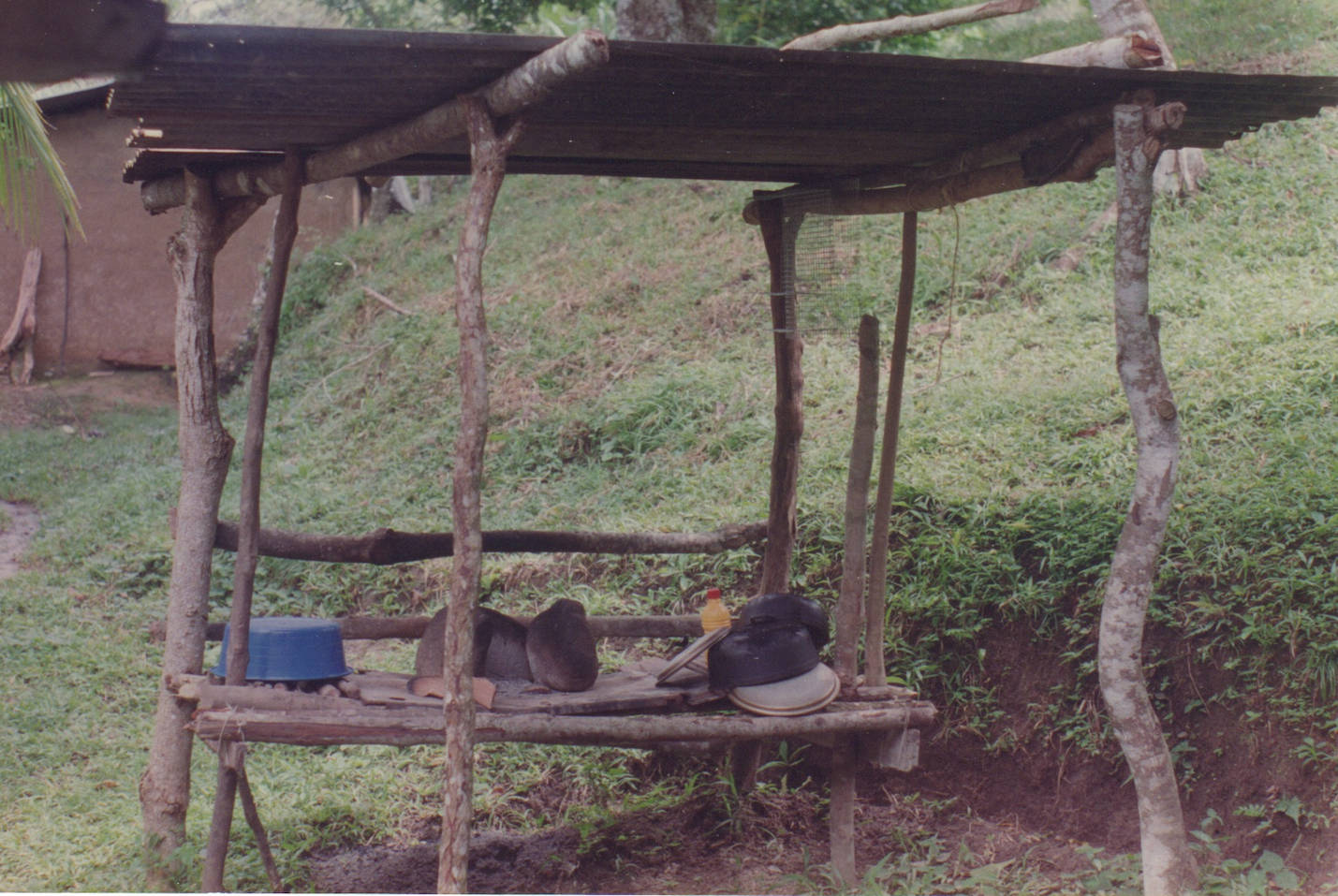
The kitchen, with 3-rock fire.

The kitchen, with 3-rock fire.

I spent a couple of hours today going through the letters I wrote home from Panama when we were in Peace Corps–trying to decide if there’s a book in that mass of experiences. As I went through, I noted that, in almost every letter, there is something about food. Life in rural Panama was a nutty mix of plenty and famine, luxury and squalor. We had no electricity, and only rudimentary water, but we had fresh hot bread delivered to our door every morning. Sometimes we ate nothing but rice with a spoonful of chutney for dinner, and other times we stuffed ourselves with fresh produce and tropical fruits.

Every week, I had something to say about food:

“Last night’s dinner was actually pretty good. The rice and beans and juice they brought us tasted fine as long as you ignored the dead bugs in both. Same with the soup for lunch today and the mouse droppings.”

“Tonight our dinner was 25 cents worth of bread and a little peanut butter. After eight hours of walking I would have liked more…oh well, we won’t starve to death.”

“6:15 am–I’m sitting here enjoying a delightful warm roll that was just delivered to our door a minute ago.”

“Thanksgiving dinner didn’t quite turn out as planned—the papaya we were planning on for the bulk of our fruit salad was full of worms—but it was very good.”

“We each ate about four oranges yesterday…and the citrus season still isn’t in full swing! We’re hard pressed to eat all the citrus we’re getting now! Guess we’ll just have to suffer.”

“We stopped by a kiosko (little store) on the way home this afternoon for a Coke (warm, of course).”

We grew to love the local lentils and rice, boiled yuca lightly salted and served with a slice of tomato, and thick sweet oatmeal drink that substituted for a meal in the fields. We perfected the art of straining ants out of the coffee with our teeth. We learned how to make lasagne and pizza on our 3-rock fire. It was a culinary adventure!


Ojaldre

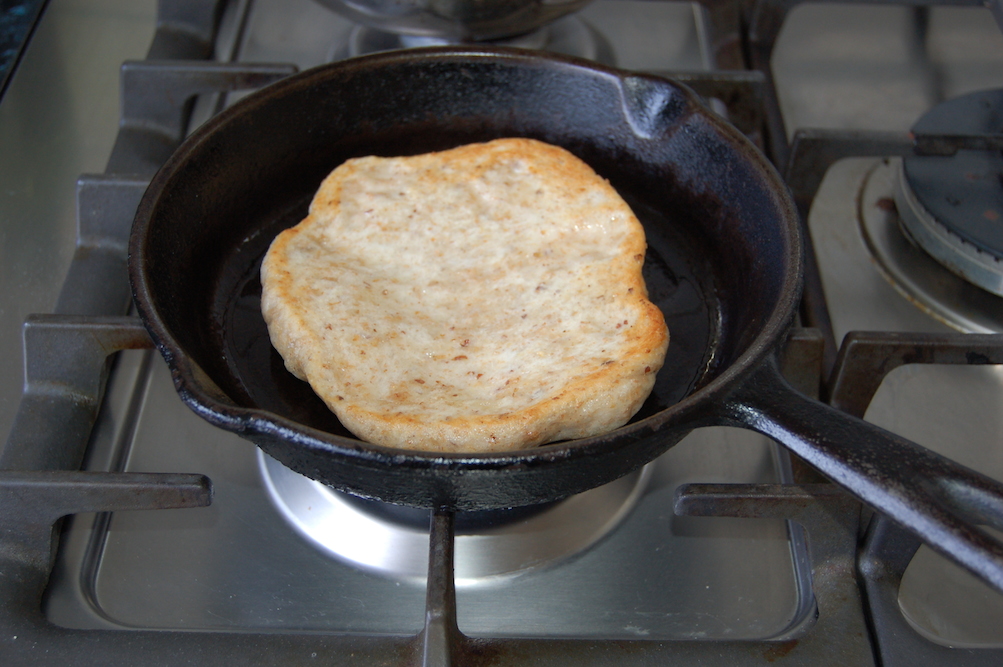
ojaldre smWhile I’m talking about fried food, I thought I’d share one of my favourite Panamanian foods—ojaldre.

Ojaldre is fried bread. It’s something we used to eat at fairs and festivals, like you’d eat French Fries.

I make ojaldre almost every time I make bread (which isn’t that often, as Ian usually bakes the bread). I always hope for a little extra dough—a little too much to put in that last loaf.

Take that extra dough, pat and pull it into a flattish, roundish sort of shape, and slap it into half an inch of hot oil until it’s brown and crispy on both sides. Shake a little salt onto it, and you’ve got a snack that reminds me of rodeos and terrifyingly decrepit carnival rides.

Eating Local

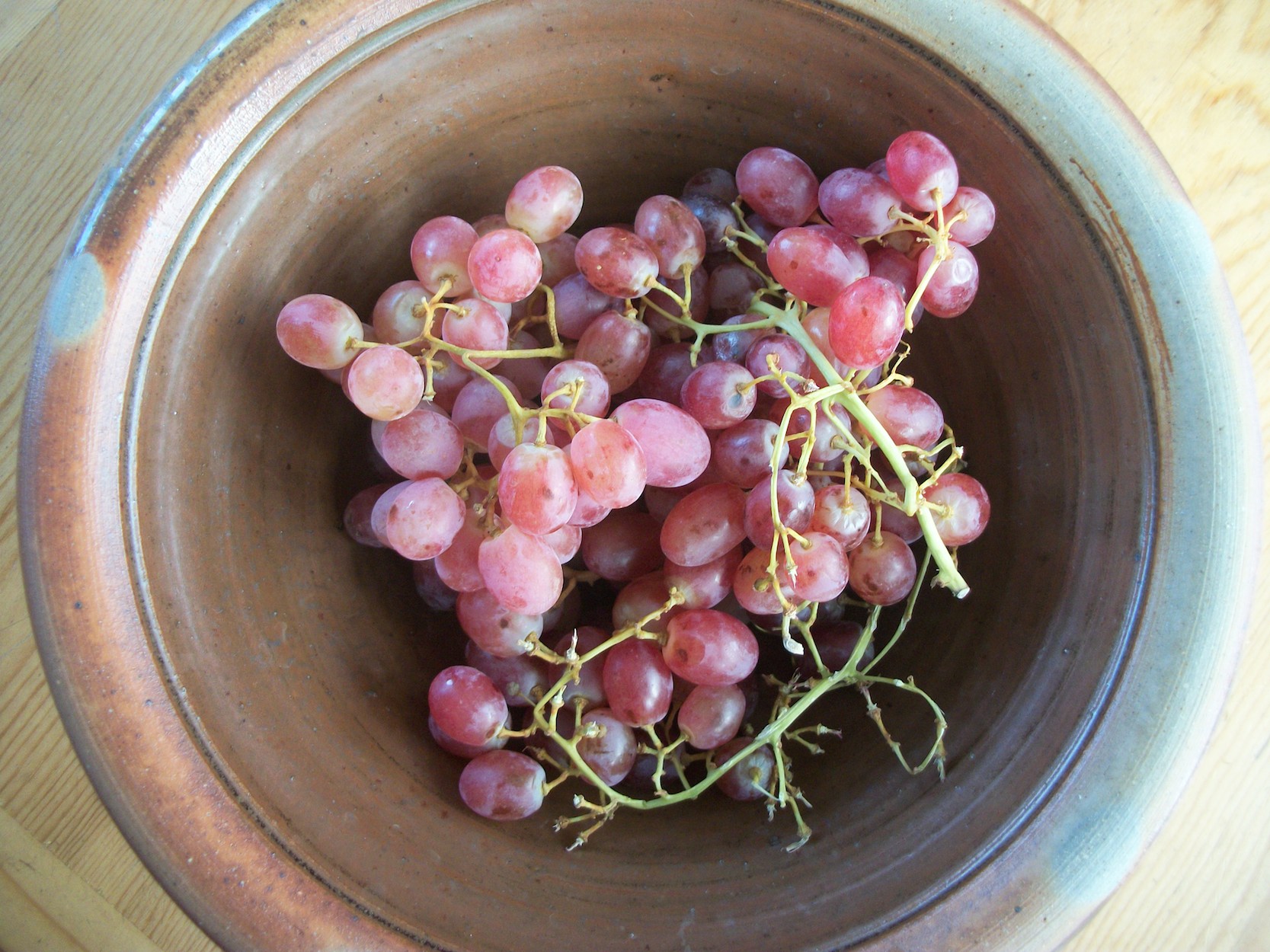
100_3263 copyThere was excitement in the house this week when I brought home the groceries. I had bought grapes! It generally only happens once a year, during the short Australian grape season. By the time I next go to the store, in three or four weeks, the season will be over, and the grapes will be from California.

There’s nothing wrong with Californian grapes, but I cringe at the idea of buying fresh produce that’s been transported all that way. True, the Australian grapes have travelled quite a distance, but they are the closest commercial table grapes available, and I reckon once a year I can splurge on them.

I’m not a locavore zealot, but I try to minimise the environmental impact of my food choices, and minimising the distance my food has travelled is part of that. So I gaze dreamily as I pass by the Ecuadorean mangoes and American pecans in the store. I use the Canadian maple syrup sparingly, and spend twice as much to buy canned tomatoes from New Zealand rather than Italy. When I do buy food from distant lands, I try to make my purchases as responsible as possible, mentally making up for the food miles expended—buying fair trade, organic products wherever possible.

In making these choices, I’ve discovered some wonderful things. Homemade jam and fruit butters are much better on pancakes than maple syrup. Locally produced olive oil is among the best I’ve ever tasted. Honey is a nicely flavourful substitute for cane sugar. And New Zealand oranges knock the socks off anything grown by Sunkist.

Would I still love a big, meaty mango? Yep, and some days I’m sorely tempted by them. But I’ve eaten mangoes in Panama, where they grew on a tree overhanging the house. My memory of mangoes is almost certainly better than a mango that was picked several months ago and hauled half way round the world. Do I long for grapes more than once a year? Of course, but perhaps, by restricting myself to the most local grapes possible, I enjoy them more when I do have them. And do I occasionally just say, “to hell with it,” and buy a pineapple from who knows where? Absolutely, but I like to think of those environmentally costly things as the treats they probably should be, and spend most of my time enjoying my local riches instead.

Hunger

My son is participating in the 40 hour famine this weekend. This is his second year doing the famine, and I am proud of his commitment and effort. It seems fitting, then, that I should blog about hunger and malnutrition today. I’m not going to reiterate the statistics you can easily find on the web. You can look those up if you’re so inclined.

My story is more personal.

As a Peace Corps Volunteer, I lived in a community of artisans and subsistence farmers in rural Panama. One of my roles in the community was to teach soil conservation and improvement techniques to help farmers get more out of their land and their effort.

Subsistence farming is brutal. Our neighbours in Panama aged quickly, and many bore the scars of their difficult lives. In our village, most people farmed in the morning, then wove baskets and hats or carved soapstone in the afternoon. On market day, they would shoulder huge baskets full of their work and hike three hours up the mountain to sell. By many standards, farmers in our village were rich, because of their craft sales. But rich is relative, and even the most productive villager had precious little money to buy food. Mostly, they ate what they could grow.
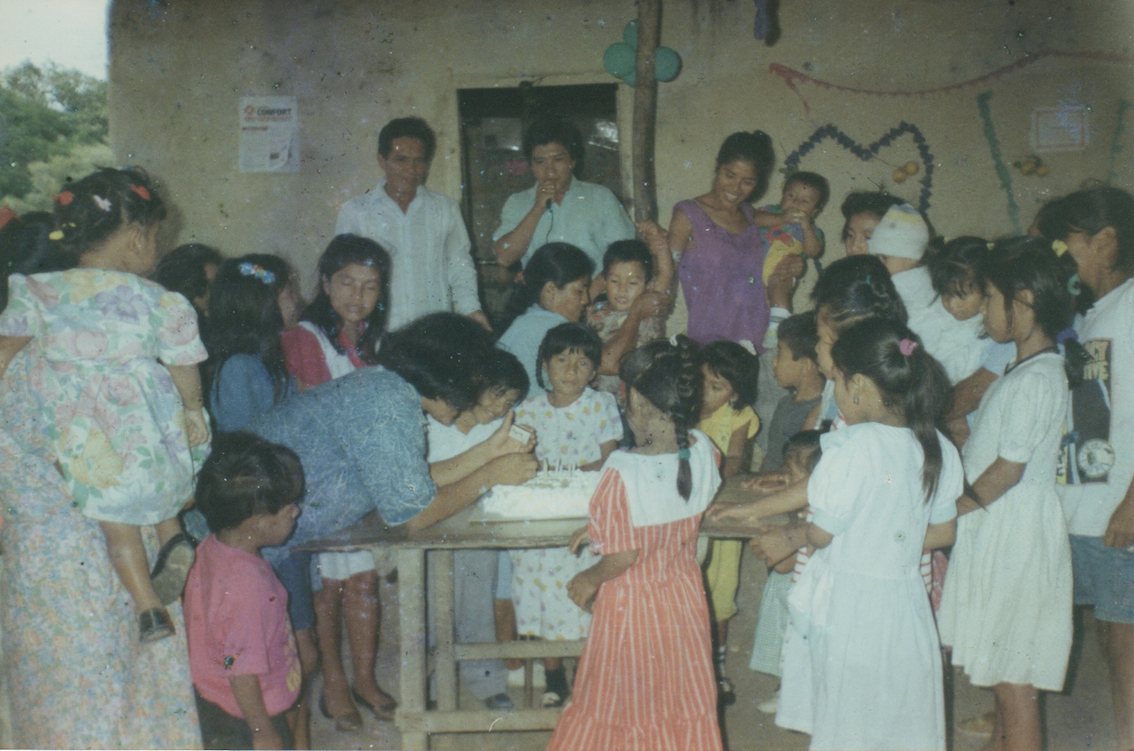
Children at birthday parties brought a bag to take food home for their families.

Children at birthday parties brought a bag to take food home for their families.

Panama has a four month dry season, during which almost no rain falls at all. By the end of the dry season, the air is like a furnace, and any crops that aren’t watered daily are long gone. New fields are cleared at the end of the dry season, and the brush is burned to make way for new crops. With the first rains, the farmers plant corn, beans, and rice. The new crops need much tending—weeds grow fast in the tropics—and there is much work to be done at the beginning of the rainy season.

Unfortunately, the farmers are doing that work at a time when they have the least amount of food to fuel the effort. Though most people manage to fill their stomachs with something every day, it is rarely enough, and often little more than plain rice. Malnutrition is rife during this lean time of year, and during my time in Panama, it was not uncommon to hear of young adults—generally strong and resilient—dying from simple illnesses because their bodies had no reserves to draw on.

This subtle starvation was nearly invisible to the outside world. Even in the city, the “ricos” had no idea that people starved to death in the surrounding countryside. “But there’s always something to eat in the campo! There can’t possibly be hunger there!”

It is not enough to fill one’s stomach. We all need to eat nutritious and diverse food that provides our bodies all the nutrients they need. Subtle starvation—malnutrition—happens nearby, no matter where you live. There is enough food on earth to feed us all. Let’s all do our part to make sure everyone has enough.

Surprises

DSC_0003 copyWe have been eating jalapeños from the garden for months now. I’ve pickled tons of them, we’ve had them on burgers, in pasta sauce, in burritos…so the other day, as I was slicing one for on pizza, I popped a generous slice in my mouth, expecting the mild heat of all the others we’ve eaten.

Boy, was I in for a surprise! I may as well have eaten a Thai hot pepper! For some reason, this jalapeño was screaming hot. My eyes began to water, I started to hiccup from the heat, all the while laughing at myself. It was half an hour before my mouth settled down to a mild tingle from the fiery pain of that pepper.

The remainder of the pepper went straight into the compost—I didn’t want any spice at all on my pizza that night! I have treated the jalapeños with more respect since then.

It’s not the first time I’ve been surprised by spice. In Peace Corps, we regularly had training events at a nearby Girl Scout camp. The camp cook always set a huge jar of homemade hot sauce on the table. The size of the jar was deceptive—served in that quantity, it couldn’t be very spicy, right? The first time, I took a large spoonful and stirred it into my beans. I wondered if I’d ever recover! A tiny bit of that hot sauce was enough to bring tears to my eyes—it was nothing but ground up habañeros. I have to wonder if the cook didn’t do it on purpose in order to laugh at all of us with smoke coming out of our ears! It was a good joke, but not a surprise I want frequently.

Recipe Reminiscing

DSC_0001 copyBren’s Quince Paste

Vilma’s Marinated Eggplant

Mrs. Cassel’s Mint Tea


Recipes linked to a person. Old friends, neighbours, family members.


Susan’s Tofu Meatballs

Ray’s Potato Bread

Mom’s Cheesecake


Each recipe is a story, a memory.


Virginia’s Chocolate Shortbread Hearts (made for our wedding party)

Lisa’s Orange Biscotti (first eaten at her house while her husband, Pete, taught me to knit)

Granny’s Tabouli (granddaughter Rhian, one of my housemates at Uni, collected bras)


Other recipes evoke a place.

DSC_0004 copy

Donuts (Camp Tamarack, where we made them with children during cultural history lessons)

Rosti a la Grenada (Grenada, eaten while visiting friend Ginger during her Peace Corps service)

Ricotta (Panama, made with Klim powdered milk; it was the height of luxury in our mud house life)


You could read our life story, know our friends, just by flipping through our recipe book. As good as a photo album; every turn of the page is another image, another taste of from our past.

Sitting ‘Round the Cauldron

tamalesboilingBubble, bubble, toil and trouble

Fire burn and cauldron bubble!

It’s the third weekend in a row I’m standing over my 20 litre stock pot filled to the brim with something to be canned or frozen. Maybe I need a proper cauldron…

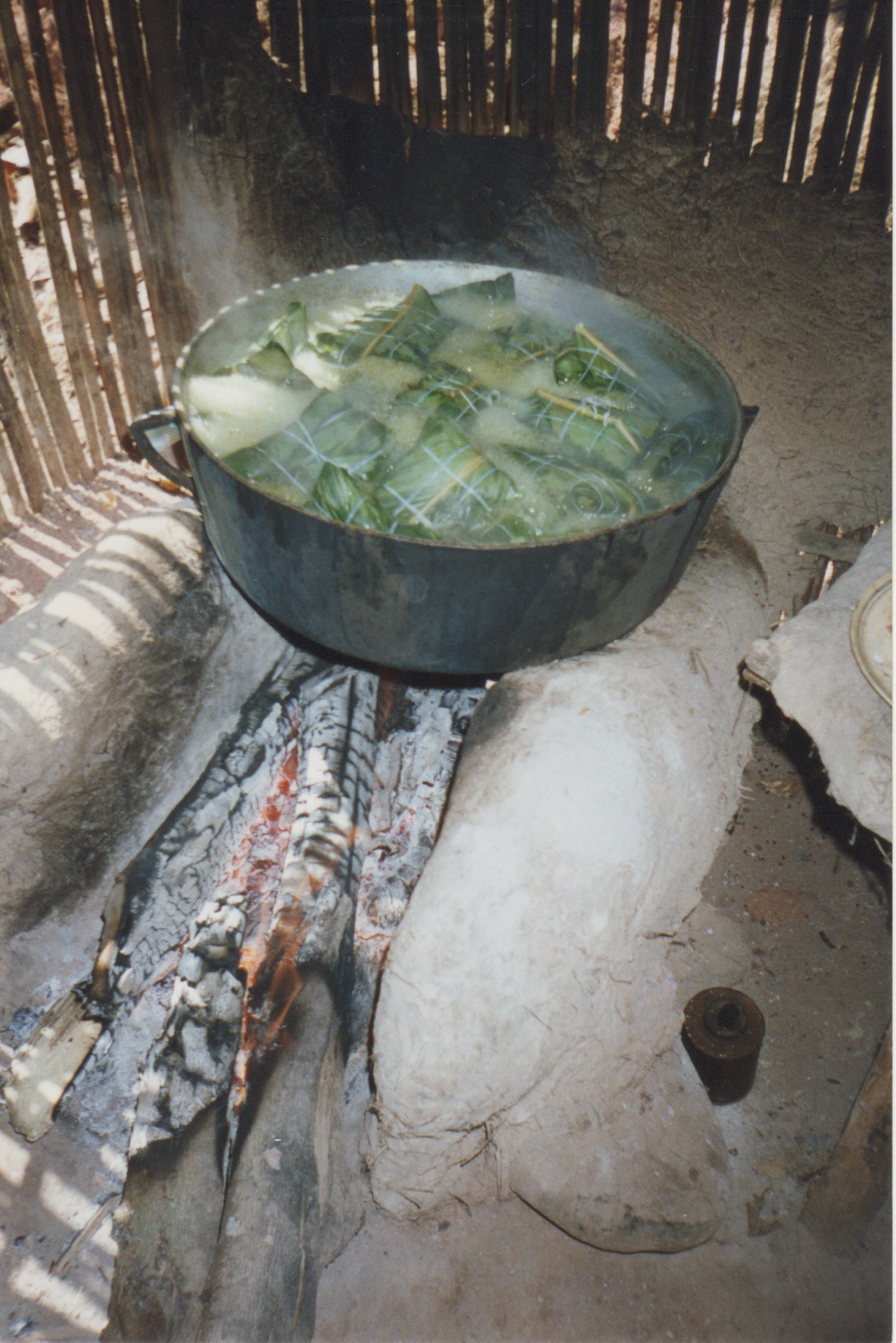
The women I worked with in Panama had incredible cauldrons. Cauldrons that made my 20 litre stock pot look like a mere saucepan. The big cauldrons didn’t necessarily get used every day, but they came out for the making of tamales when the corn was ready.

MakingtamalesAnaMagallonandLaurianaSoto'sdaughterPaulaTamales were a favourite fundraiser for the Amas de Casa group I worked with. We’d gather at one of the women’s houses, each bringing ingredients. We’d spend the whole day grinding corn, plucking chickens, cutting vegetables, and forming the tamales. Tamales are a mixture of meat, onions, and “guisos” (flavourful things like celery and cilantro), surrounded by a thick corn mash. The mass is wrapped in a leaf and boiled to set the corn into a dense, polenta-like cake. That’s where the making tamalesSebastianagiant cauldron came in. We’d cook dozens of tamales at once in one of those vast pots, set over a raging fire.

Once the tamales were finally in the pot, one of the women would produce a small bottle of seco (distilled from cane sugar, and clocking in at 70 proof), and pass it around. It was the only time I ever saw the women drink—sitting around watching the big cauldron boil.

Hmm…now there’s an idea! Sure would make stirring this tomato sauce more pleasant…

Water

waterglasssmI was most of the way through a pond life lesson and leading 30 kids back to the nature centre when I had my first real lesson in dehydration. My world went black. I fainted. When I came to, I retched until long after my stomach was empty. Years later I watched a fellow Peace Corps Volunteer do the same after a long hot day in the field.

For a while, a small skink lived in our house in Panama. We named him Smaug. One day we found him listless and dull. It was the dry season, and we wondered if he might be thirsty. We offered a jar lid of water. He instantly pounced on it and began to drink. He was pert and perky the next day.

Last week, our son was complaining about helping with a garden task. He was dragging his feet and grumbling. “Have you had anything to drink today?” asked Ian. No. A glass of water, and he was a different boy—energetic and helpful.

Water.

Taken for granted when it’s there, terribly missed when it’s not.

I’ve been thinking a lot about water lately—naturally so, since it’s in such short supply here at the moment. I am ever grateful for the new well, and its ability to keep the vegetable garden green and our water glasses full.

We lost the old well in the September 2010 earthquake. When the power came back on, after four days of near-constant shaking, the pump poured out a slurry of sand instead of water. We spent five months trying to salvage the old well. They were five months of not knowing whether we’d have water or not each day; of carefully filling every vessel we could on the “wet” days, so we were sure to have water on the “dry” ones; of daily conversations with the technicians at Allied Water, who began to feel like family, they were here so often. More than once, I washed the laundry with rainwater in a 5-gallon bucket, just as I used to do in Panama. The garden went without, so we and the animals could drink.

It was a relief when the new well was dug, and we could again count on water for drinking, cooking, washing and irrigating. The careful habits stuck, though, and I try to make every drop count. And just in case, a week’s worth of drinking water sits in the shed, and a barrel of rainwater stands ready for watering and washing.