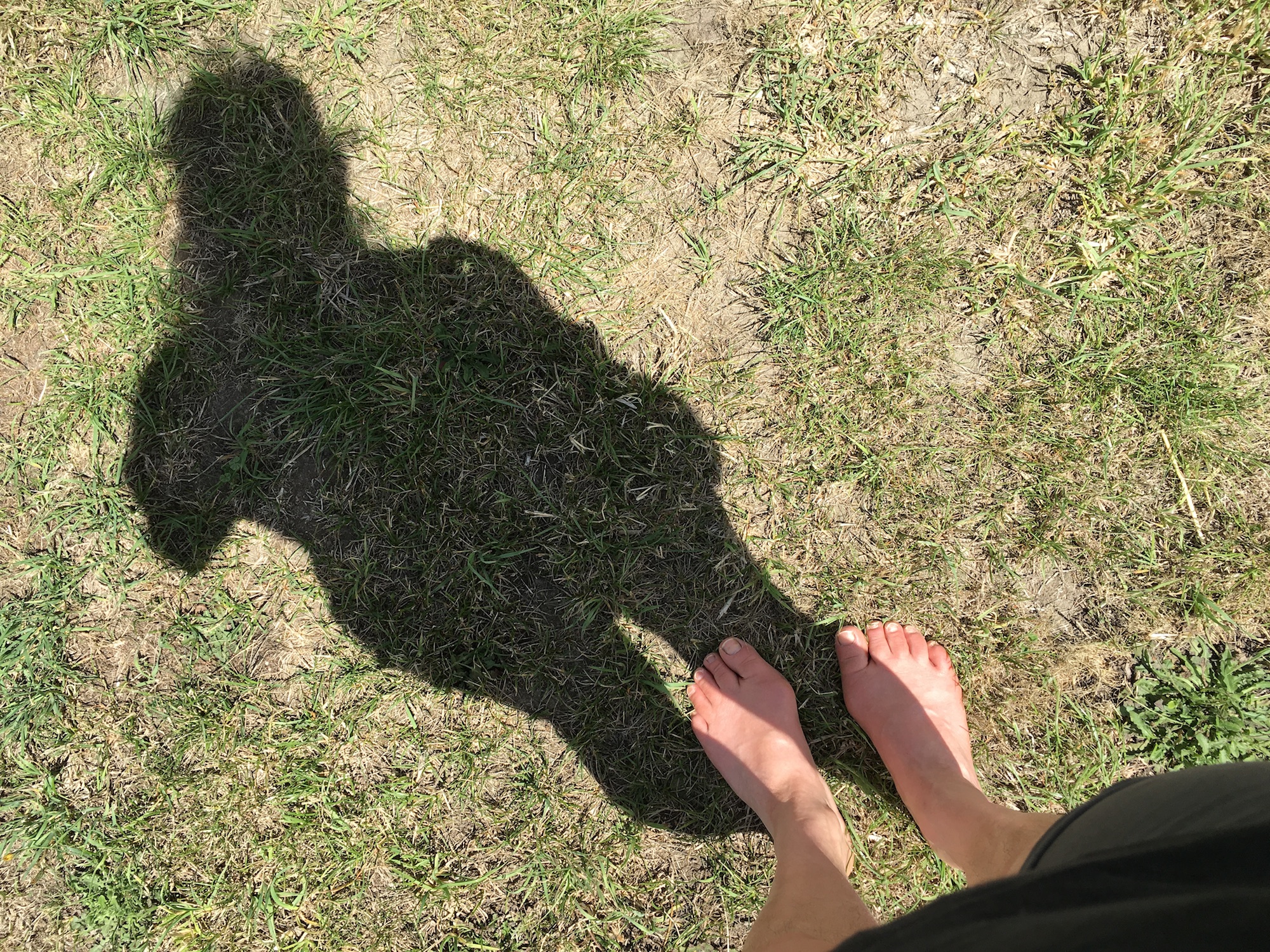
 Middle-aged woman,
Five foot two and three-quarters.
Hot.
Enjoys ice water,
Swimming, and
Standing with my head in the freezer.
Fleeing
Scorching summer sun.
Seeks
Shade.
Middle-aged woman,
Five foot two and three-quarters.
Hot.
Enjoys ice water,
Swimming, and
Standing with my head in the freezer.
Fleeing
Scorching summer sun.
Seeks
Shade.
 I had a lot on my to-do list today—Painting the office, washing the house, fixing a tap, weeding the garden, laundry…
I also hoped to have a chance to work on a new short story, a jeans jacket, and a rug.
But when it hit 33˚C (91˚F) by 10 am, and my paint was skimming over in the can and drying instantly on contact with the wall, I knew something had to be done.
Something drastic.
I called the kids for a meeting.
“It’s hot,” complained my daughter.
“Yes. It is. Should we go to the beach?”
The vote was unanimous, so while I put away paint brushes and ladder, the kids gathered boogie boards, towels and togs.
In five minutes, we were on the road.
It was a brilliant day for swimming—big waves, a gentle sea breeze, sand hot enough to peel skin…
And the chores will be there tomorrow.
 We are blessed with a wild, pebbly beach just four kilometres away from home. On that beach is a sampling of the geology of New Zealand, polished and rounded from the sea.
At first glance, the rocks are all nondescript greywacke.
Look more closely, down by the waterline, and you find a veritable rainbow of metamorphic rocks.
Brick red rocks laced with white,
Green serpentine, mottled to look like miniature Earths,
Translucent quartz,
Smooth pebbles black as night,
Chalky white rocks like petrified marshmallows,
Improbably pink rocks flecked with sparkling quartz (said to be the sweat of one of the early Maori chiefs in the area, produced when he challenged the taniwha in the Rakaia River).
When we first moved here, I brought home a pocketful of colourful stones every time we went to the beach.
I quickly realised I couldn’t keep doing that, or I’d end up with hundreds of jars full of rocks.
Now I allow myself one rock each beach visit. One rock that speaks to me. A rock that is more than all the other rocks on the beach.
The rock might bounce around in my pocket for a few weeks after I pick it up. I’ll pull it out and look at it, finger it in the pocket, feeling it’s shape, weight, and imperfections.
Most rocks then find a home in the cobble-lined drainage ditch that carries rainwater away from the house.
The very best rocks—those that whisper stories to me and fit my palm perfectly—become my writing rocks. These pebbles sit on my desk and occupy my hands while I’m contemplating a new plot or considering a character’s strengths and weaknesses. They capture the churning crucible of the earth’s crust, the rush of mountain streams, and the wildness of the sea. They tell me their stories, and I tell them mine.
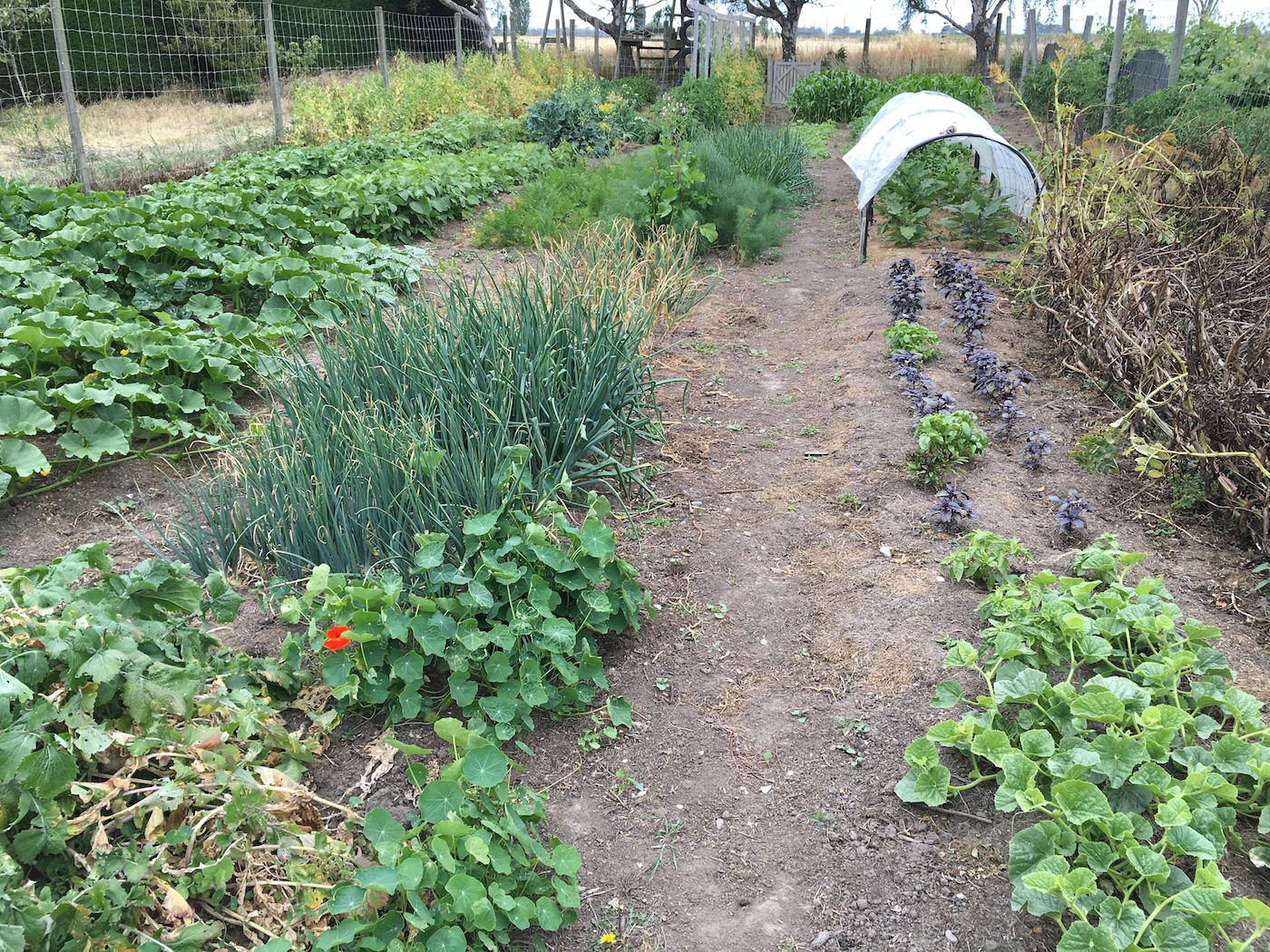
Before the rain…
A week ago, I was looking at a garden struggling to stay alive, even with my regular watering and mulching. Relentless days of hot sun and no rain to speak of since early spring—things were grim.
Then, last Friday night it rained. Saturday was cloudy and rainy. Sunday, Monday and Tuesday were cloudy and misty. Four days of relief.
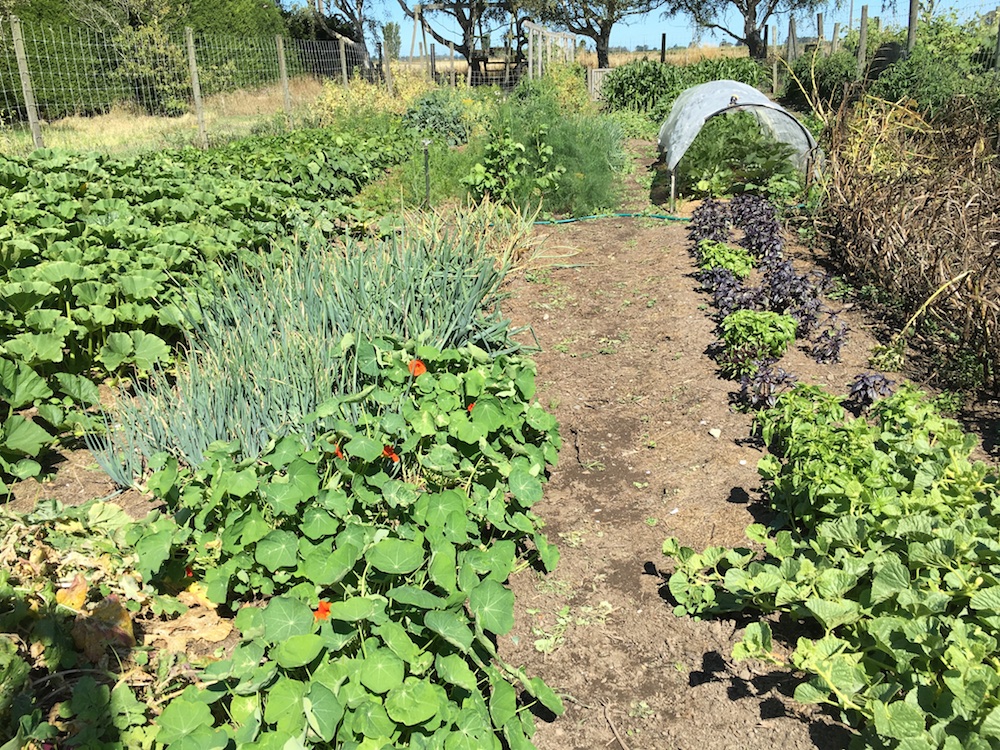
After the rain.
The garden responded. Many plants doubled in size in the past week. Zucchinis matured, pumpkin runners snaked into neighbouring beds, peas began a second flowering.
It will dry out again. The rain wasn’t nearly enough to make up for the drought. Already this afternoon, the temperature is back in the low 30s (nearly 90˚F).
But I’m thankful for the respite. It made all the difference to this week’s garden, and it will continue making a difference for weeks.
Sometimes that’s all we need—a vacation, a respite, a little time for recuperation, time to grow and fortify ourselves before we are plunged back into a struggle.
And now that it’s rained, my respite from weeding is over. The weeds responded as much as the crops did, and it’s back to the grindstone for me.
But I will do so with more cheer, knowing that the plants have had a break, too.
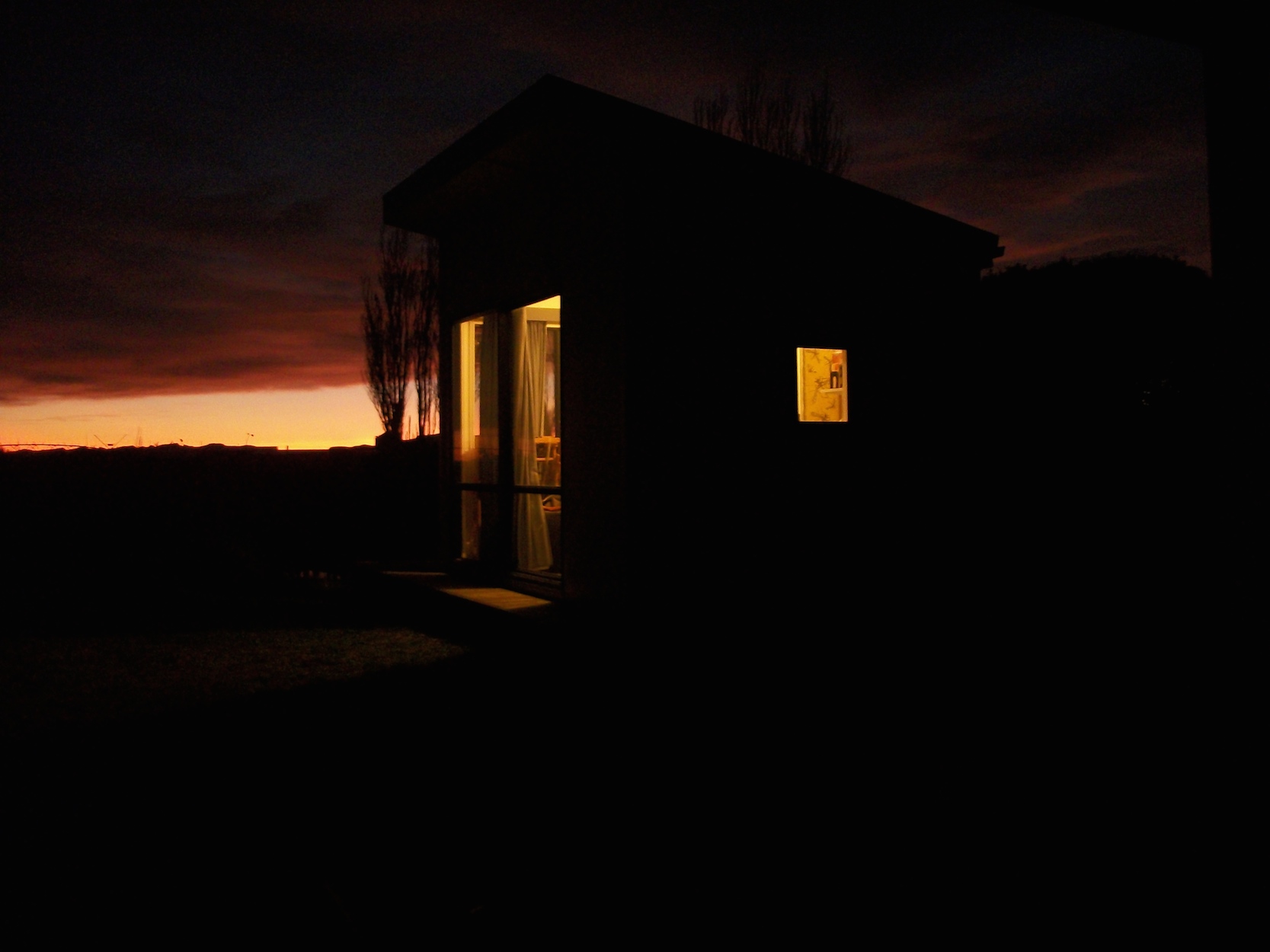 The days are getting shorter.
You might not notice unless you push the daylight as hard as I do. Because I get up so early, I can feel the shrinking days by early January.
It starts with me oversleeping. I don’t use an alarm, so as the days get shorter, I find myself sleeping longer. Just by a few minutes at first, but by now I don’t open my eyes until 5.15 am, and don’t bother getting up until 5.30—the animals tell time by the sun and won’t look for me until then anyway.
At some point, I’ll have to switch to getting up in the dark. At some point, the days won’t be long enough.
But for now, I’ll enjoy the extra sleep.
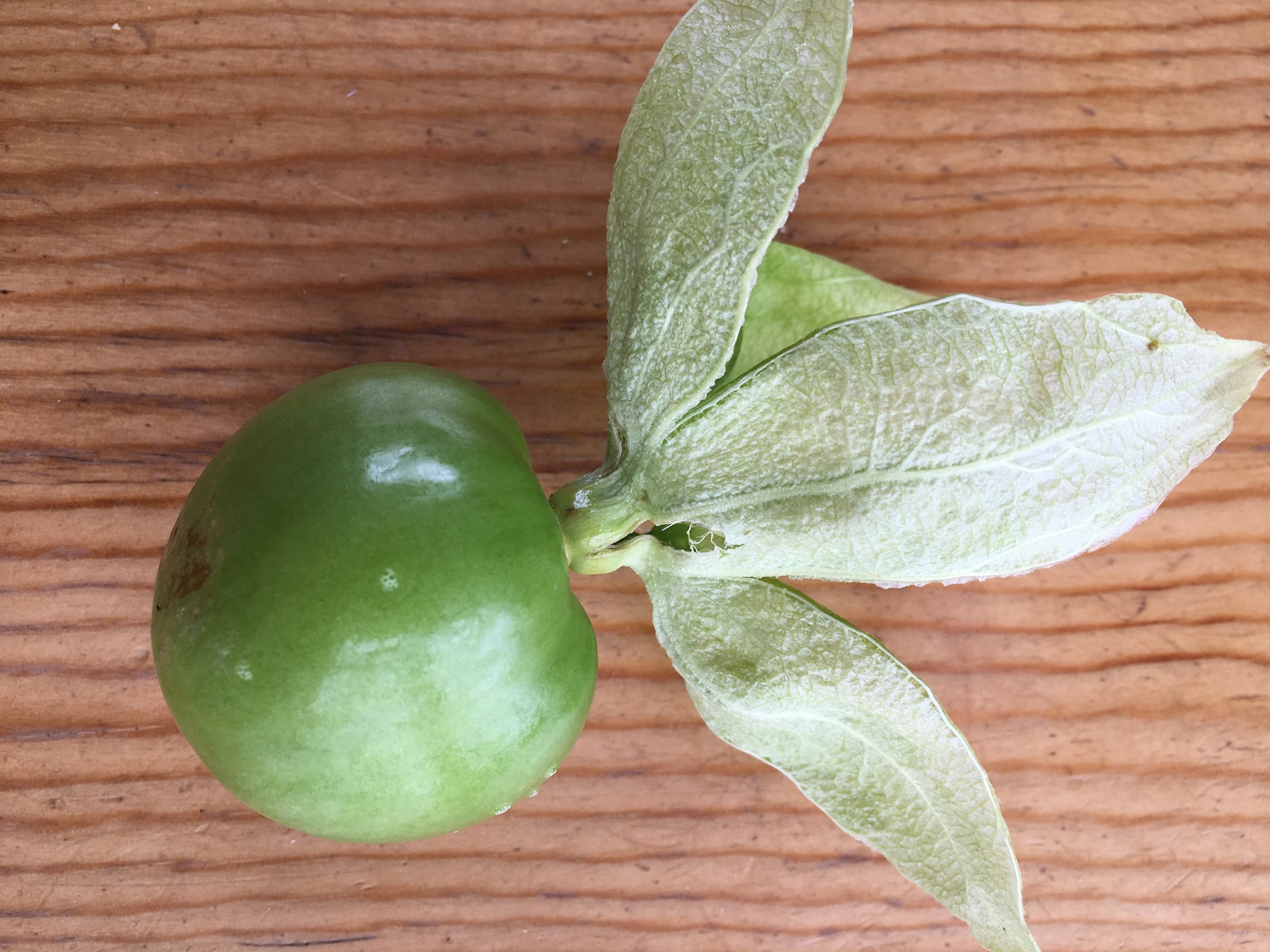
Tomatillo
Solanaceae—one of my favourite families of plants.
There are more than a few members of this family in the vegetable garden:
Tomatoes, potatoes, eggplants, cape gooseberries, capsicum (peppers), and tomatillos are all solanaceous plants.

Nicotiana
But they don’t end there. In the flower garden there are petunias and nicotiana, among the perennial fruits are gogi berries, and in the native garden there is poro poro.
And, of course, growing as weeds everywhere are black and hairy nightshade (these don’t get my favourite plant vote).
This diverse and sometimes tasty group of plants also includes many containing medicinal, poisonous or psychoactive chemicals (tobacco, mandrake, and deadly nightshade among them). Indeed, it’s best to be careful with the Solanaceae—even the edible ones contain poisons in the non-edible portions of the plants, or, as in the case of green potatoes, even in the edible parts. Solanine is the culprit in green potatoes—it causes diarrhoea, vomiting and hallucinations, and its bitter taste prevents herbivores from eating the potatoes. Other chemicals in the Solanaceae can have the opposite effect—reducing nausea in chemotherapy patients, and reversing the effects of poisoning by certain pesticides and chemical warfare agents.
And we’re still discovering more uses for these pharmacologically rich plants.
What’s not to like?
 It’s that time of year, I can’t seem to get out of the garden. The recent, much needed rain has made everything grow—I swear the plants are twice the size they were last week.
Which, of course, means that the tiny zucchini (courgettes) we were scrounging for three days ago have turned into monsters. We’ve gone from not quite having enough to overwhelmed overnight.
That’s usually the case, (see last year’s zucchini post) and you would think I’d learn…
But, of course, when you’re a Problem Gardener like I am, you just can’t resist. You can’t have just one variety of summer squash. Once you have one, you need to have another, and another…
I have five this year—Gold Rush, Costata Romanesco, Black Coral, Ambassador, Pink Banana Jumbo, Flying Saucers, and Sunbeam…Okay, that’s seven, but Black Coral and Ambassador are for all practical purposes the same, and I didn’t plant any more plants just because I planted two yellow patty pan type squash (who could resist a vegetable named Flying Saucers?).
And once again we will eat zucchini until we’re sick of it, and I’ll swear that I will only plant one (or maybe two?) varieties next year.
And once again, I’m sure I’ll come up with half a dozen excellent reasons why I need to plant five (er…seven) varieties.
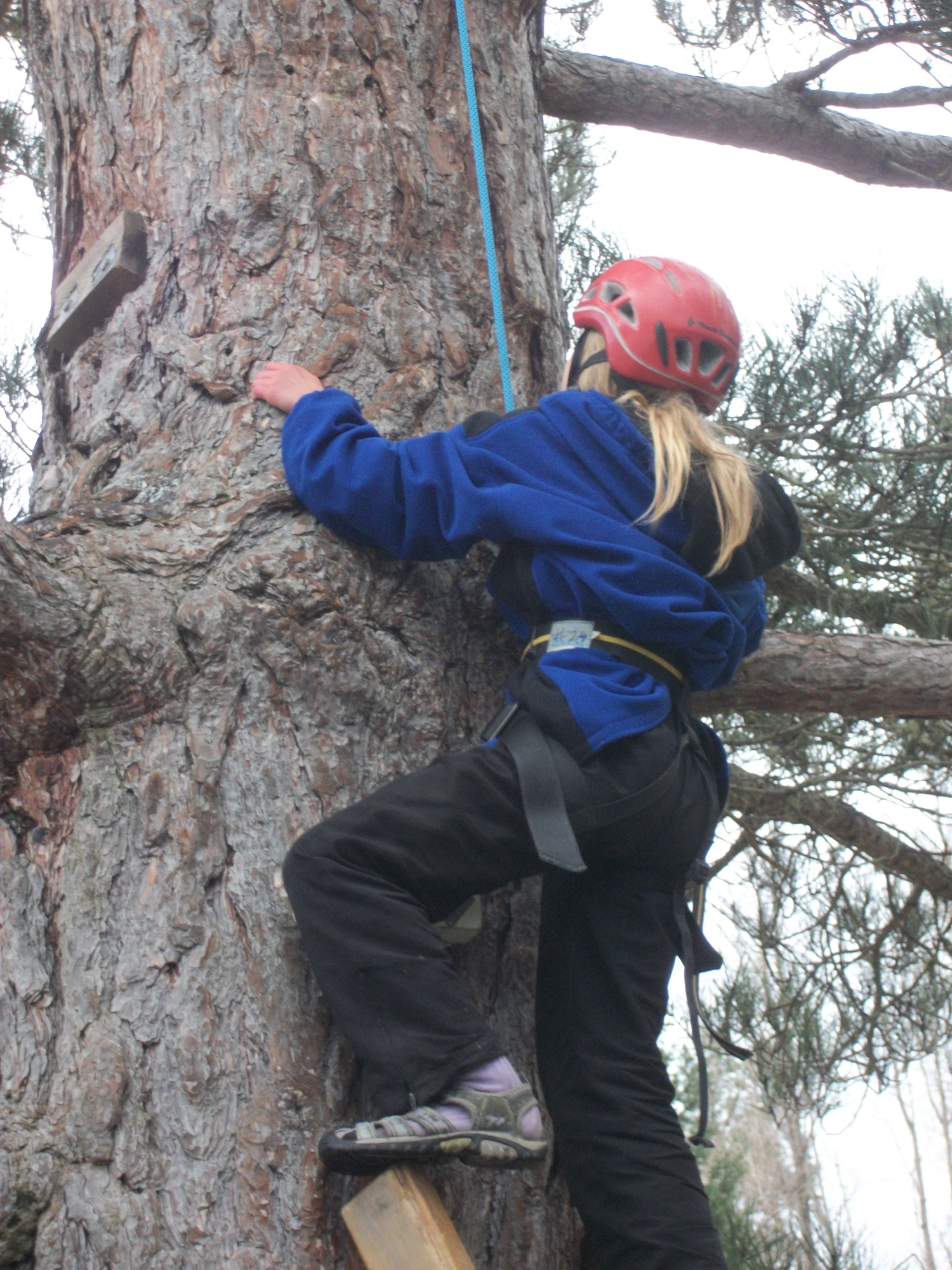 I never went to a sleep-over sort of summer camp until I attended the Governor’s School for Agricultural Sciences just before my senior year in high school. So I admit I was a bit reluctant to send my kids to a week-long summer camp when my husband first suggested it. Who needed summer camp? We did all those camp activities as a family anyway. And a week of summer camp isn’t cheap, either.
But my husband, who had done those sorts of camps as a kid was insistent, and the kids were eager, so four years ago we packed them off to camp for a week.
We’ve been doing it every summer since, and they’re agitating to go to the spring and fall school holiday camps, too.
And I have been won over to the idea of sleep-over summer camp.
Every year, the kids leave camp exhausted, but bubbling over with excitement. Full of stories about what they did (some of which we as parents really don’t want to know about), what they ate, and who they knew from the previous year.
They come home sunburnt, bruised, and smelly, with band-aids on their knees. They come home having worn the same socks for a week and not having combed their hair since they left.
I know there are tears at camp. Frustration. Loneliness. Injuries.
But the kids come home older and more confident than when they left. They stand taller. They take more responsibility for themselves.
So, though I may jokingly say that we send the kids to camp so we can have a break, that’s not really why.
We send the kids to camp so they can struggle and succeed, so they can push themselves, be someone new, learn to create a community from strangers, and explore the world with new friends and mentors.
Of course, the week off is really nice…
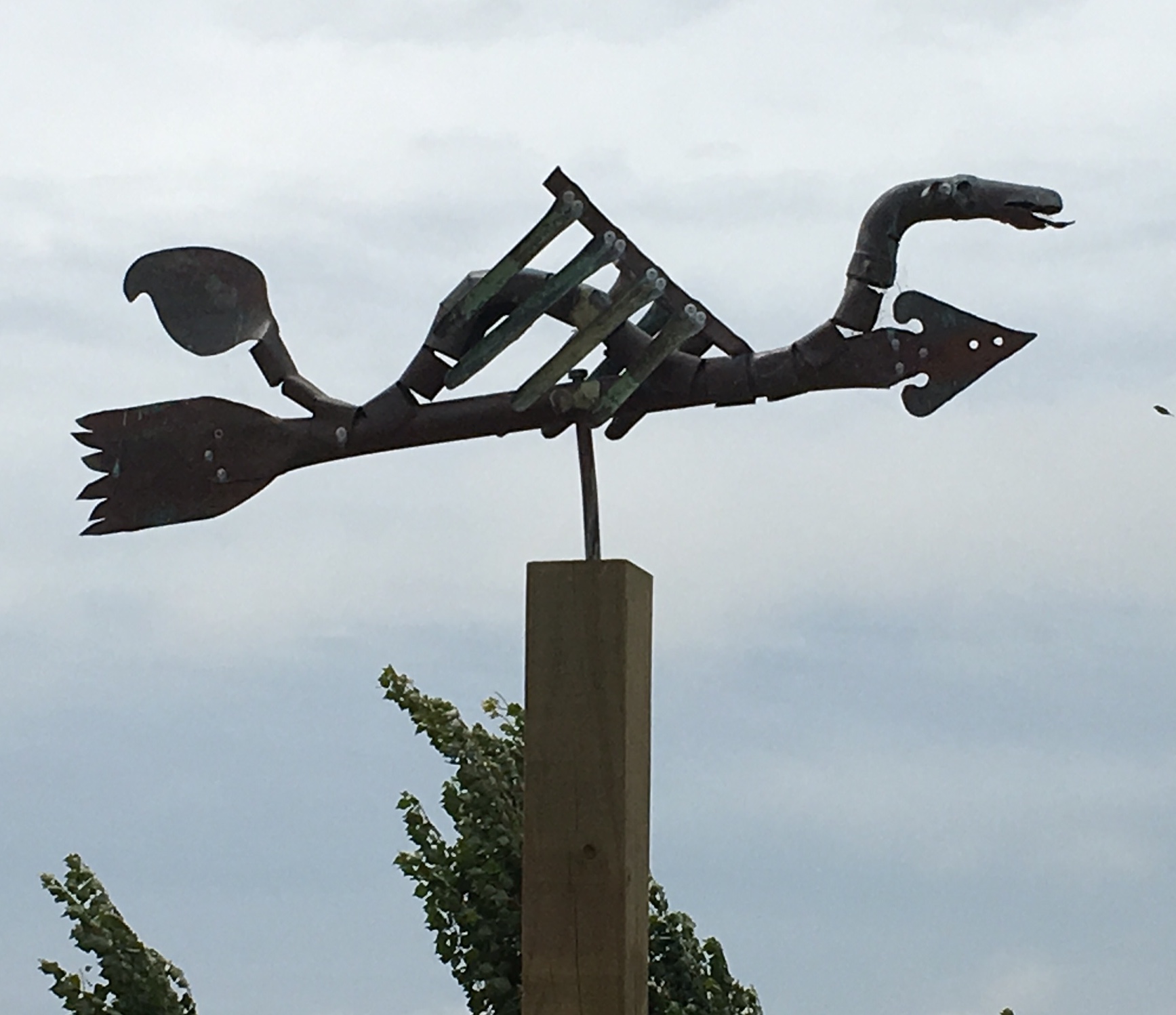
“Fred” the weather vane braving the wind.
The satellite images showed a band of clouds stretching diagonally across the Tasman Sea, from Australia to New Zealand and out into the Pacific.
All morning, we felt that front, as it pushed the wind ahead of it.
An empty rain barrel tipped and rolled away. Hay bales set up for archery toppled. Bird nests flew out of the oak trees like cannonballs, spilling eggs and chicks across the yard. Plums, apricots, apples and figs rained from branches heavy with fruit. The office shook as 100 kph gusts hit it. I watched as the windows flexed. The air was hot and gritty, filled with dust and flying debris.
Then I smelled the sea.
The wind shifted 180 degrees in a moment. The air cooled, became moist. The plants, bowed all day to the south, tipped to bow northward, limp and compliant. The dust that had finally settled on the south side of every rock and building, lifted again to find new harbourage on the north side of something.
That band of clouds sits over top of us now. If we are lucky, it will deliver a few drops of rain.
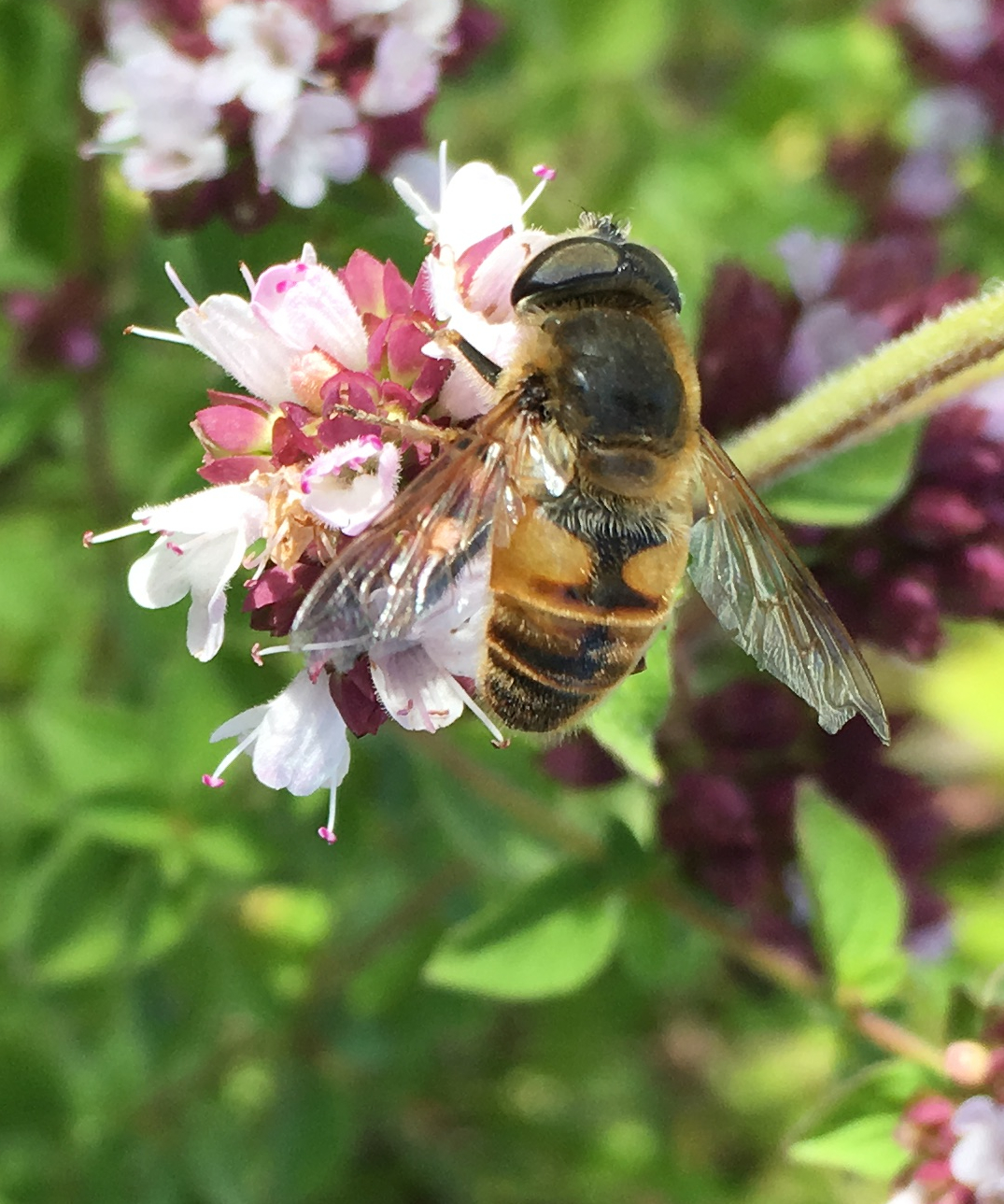 Stock photos are terrible things. Not just because they’re often lousy, vapid images, but because they lead to errors of identification. If I had a dollar for every insect misidentified in a stock photo, I’d be a rich woman.
Take this lovely insect (not a stock photo, by the way, but one of my own). Sipping nectar from flowers, black and yellow stripes, must be a bee, right?
Wrong.
Look more closely.
Bees have four wings, flies have two.
Bees have generously sized, usually elbowed antennae. Flies either have long, filamentous antennae, or short bristle-like antennae.
Bees’ eyes never cover their entire head. Flies’ eyes often do.
Bees are usually quite furry. Flies are often hairless.
Yes, this is not a bee, but a fly. This is a narcissus bulb fly—a type of syrphid or flower fly. It is an excellent honeybee mimic. Not only does it look like a bee, but it acts like one, too, down to the pulsing abdomen and the hanging pollen baskets in flight.
The disguise keeps the fly safe—potential predators assume it is a honey bee and leave it alone. Of course, it lacks the sting of a honeybee, so it would make a tasty snack for any predator who can identify it.
Fortunately for the fly, most predators, like most people, won’t give it a second look, and will steer clear of it.
Which gives rise to one of my favourite “party tricks”—grabbing the “bee” in my bare hand, and then releasing it, neither of us harmed.
But of course, now that won’t work on you…
Now you know…
To bee or not to bee?
 Robinne Weiss