22 February 2011

100_0076 smToday is the fifth anniversary of the Christchurch earthquake that killed 185 people and brought life as we knew it to a grinding halt.

It was the day my husband insisted we get cell phones.

It was the day I started posting details of my whereabouts on the fridge every morning, just in case I didn’t make it home.

Our house was fine (anything vulnerable to quakes had been destroyed by the September 2010 quake), and we watched in dismay as news of the destruction and death in town trickled out to us. We watched the rescue helicopters fly over, ferrying patients to Dunedin.

When we loaded the car with tools and food and drove to the eastern suburbs two days later to do what we could to help, we were stunned by the destruction.

Five years later, those eastern suburbs are still struggling, and life for all of us is fundamentally changed.

New Zealand sits on the Ring of Fire. It was built by the Ring of Fire. Earthquakes and volcanoes are simply what happens here.

Do earthquakes frighten me? I don’t know if frighten is the right word, but I will admit to a surge of adrenaline with every tremor. I admit that whenever I enter a new room or building now, I immediately assess earthquake hazards, shelter, and exits. I’ve lost my love of cliffs and caves, replaced by wariness and visions of falling rocks. I still pause at the sound of a loud rumble, poised to dive under the table until it resolves into the sound of a truck.

I suppose we could leave New Zealand. We could move back to the U.S., to live on firmer ground.

But, much as I hate to admit it about my homeland, there is an ugly culture of fear in the U.S. When a presidential candidate can preach a doctrine of hatred, misogyny, and racism and gain in the polls, that feels like a betrayal. When schools are patrolled by armed guards, it is an outrage. When violence against each other is considered normal, there has been a failure of humanity and society.

But in an earthquake, there is no malice. Though it may cause great destruction, it is impersonal. It is simply the earth doing what the earth does. An earthquake is not a betrayal. It is not an outrage. It is not a failure of humanity and society.

Not that bad people don’t do bad things in New Zealand—there is racism, sexism, and violence here, too. But here I need not wonder who is packing heat on the street. Children walk to school. Fear of each other does not pervade life.

And so I choose earthquakes. I choose the destruction and stress, the uncertainty, and the inconvenience. And if someday the earth should shrug me off as it shifts to a more comfortable position, I’m okay with that.



Sing to Your Plants

DSC_0006smMy plants are fond of show tunes—Oklahoma!, Pirates of Penzance, The Music Man.

At least, I hope so, because I sing show tunes in the garden.

Sometimes I switch up the words so the song is appropriate to the moment:

Oh what a beautiful eggplant!

Oh what a beautiful bean.

I’ve got a wonderful feeling

I’m going to eat like a queen.


I sing to the chickens and goats, too, though they prefer folk songs.

Oh my chickens, oh my chickens,

Oh my darlin’ little birds.

You’re revolting, you’re disgusting,

You’re obnoxious little turds.


I don’t know if any of my charges like it. I don’t believe that my singing will actually make my plants grow better. But when I’m pulling stubborn weeds, mucking out the chicken house, or trimming goat hooves, I can either grumble or sing. I choose to sing.

Feijoa

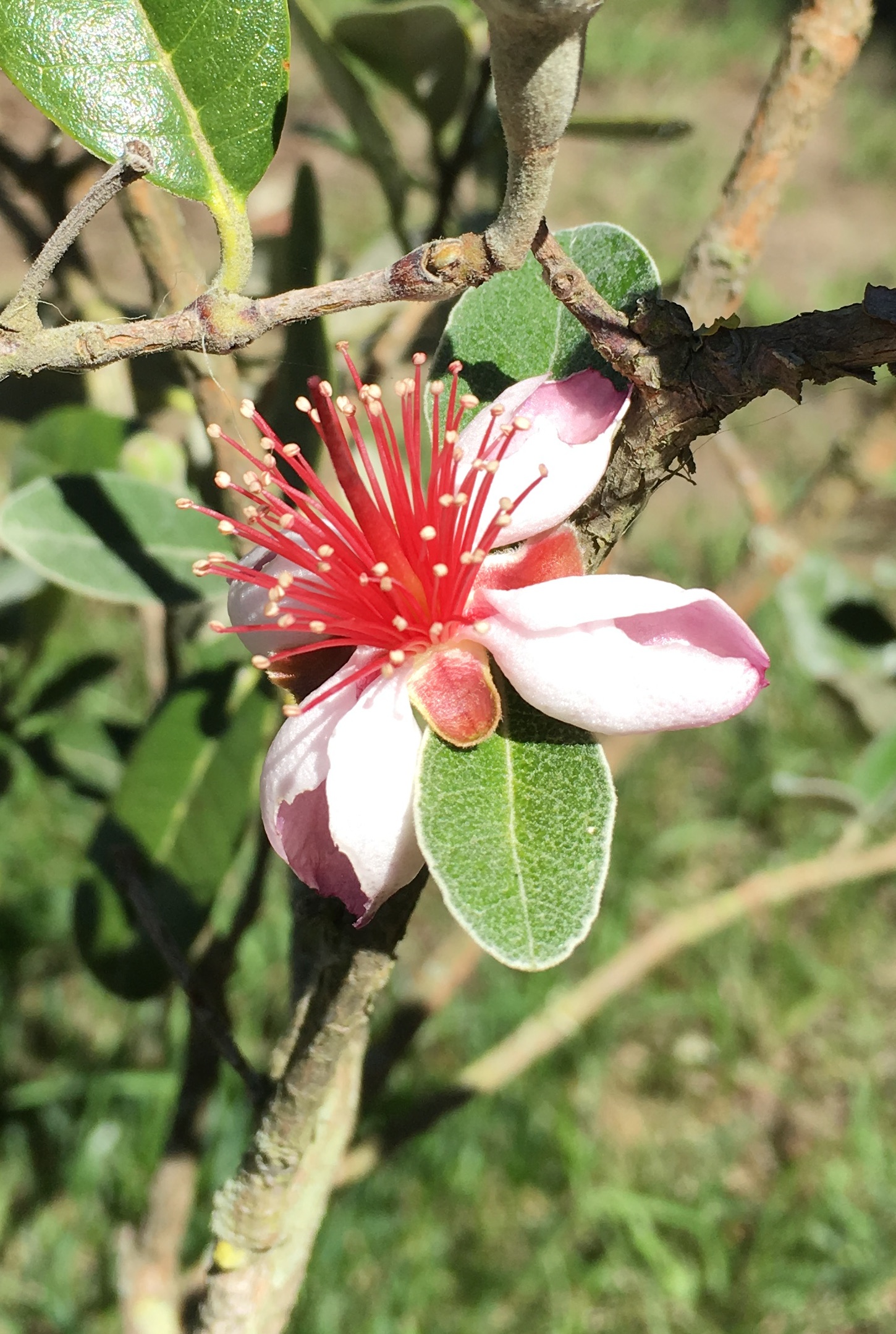
2016-02-01 15.35.52 cropI had never heard of the feijoa before arriving in New Zealand, though it is native to South America and is grown in various locations around the United State. I’m afraid that even after eleven years, I’m still not fond of feijoas. In fact, I can’t even stand having them in the house—the smell alone makes it hard for me to breathe.

Wikipedia says, “Feijoa fruit has a distinctive, potent smell that resembles that of a fine perfume.” Which may explain my response to the smell and the taste, as I have to walk out of the room if anyone enters wearing perfume.

Still, we have two small feijoa trees. Planted too close to our macrocarpa hedge, they have never produced fruit (for which I am grateful), but they do flower. Their flowers are stunning, and I’d grow feijoas any day, just to see these tropical-looking beauties.

Throwback Thursday—Amas de Casa

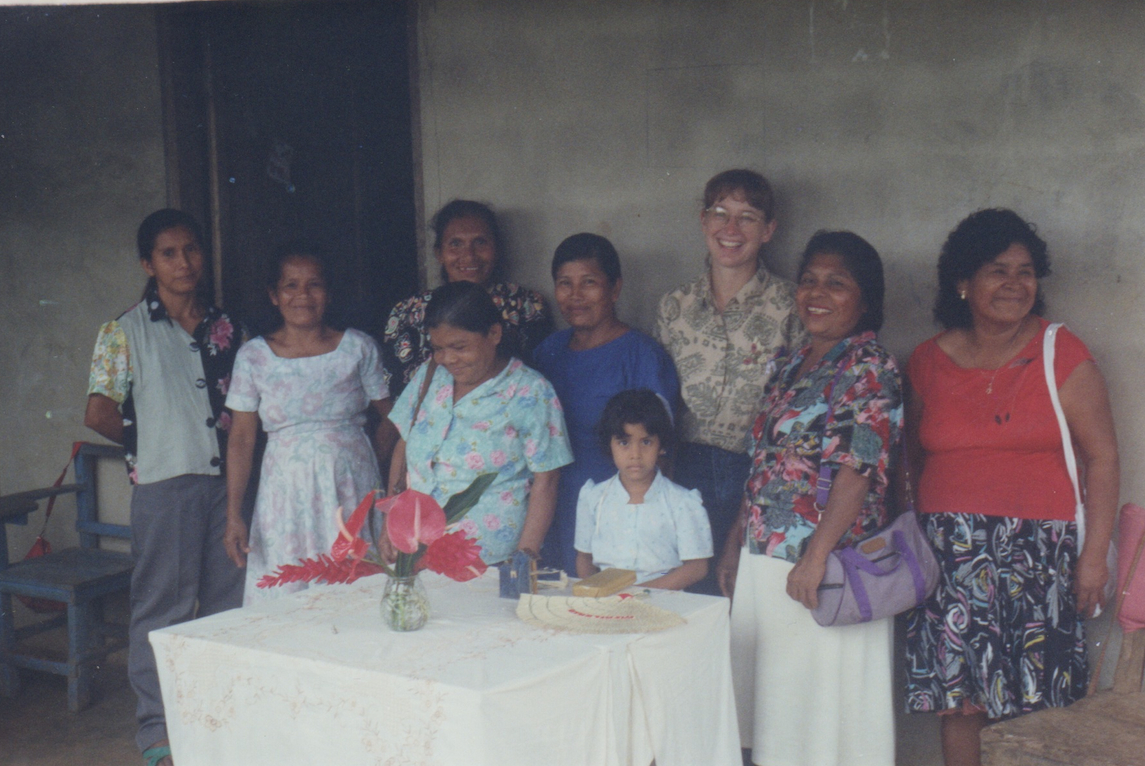
AmasdeCasasmI thought I’d take a trip down memory lane today and share this photo of some of the women I worked with as a Peace Corps Volunteer in Panama.

I regularly joke that this is my favourite photo ever, because it’s the only one in which I look tall (at 5-foot 2, I towered over most everyone in my village). But that isn’t really why I love this photo. I love it because of who is in it.

These women were all part of the Membrillo Amas de Casa (housewives) group. These women welcomed me into their group, and taught me so much. Together we created a tree and medicinal plant nursery. We created a demonstration garden using soil conservation techniques. We made bollo for Carnival. We laughed, we drank coffee, we shared our lives.

Two of the women were particularly special to me.

Onofre Gonzalez, the woman to my right, taught me that when it comes to using a machete, it’s attitude that matters, not size. Onofre could take down a tree in seconds with her little, wickedly sharp blade. She once snicked a palm viper’s head off right in front of me with her machete before I even saw the snake. She carried loads on her head, feeling the path with her bare feet like a cat.

To my left is Francisca Chirú. She and her husband, Cándido, adopted me and my husband into their family, though we did not live with them. They embraced us as though we were long lost friends, and we became a regular fixture at their house. They taught us to weed, included us in their family celebrations, and shared their lives with us.

All these women were incredibly strong, creative, and loving. Even 22 years later, I am still honoured and humbled by their acceptance of the tall white stranger among them.


Fire!

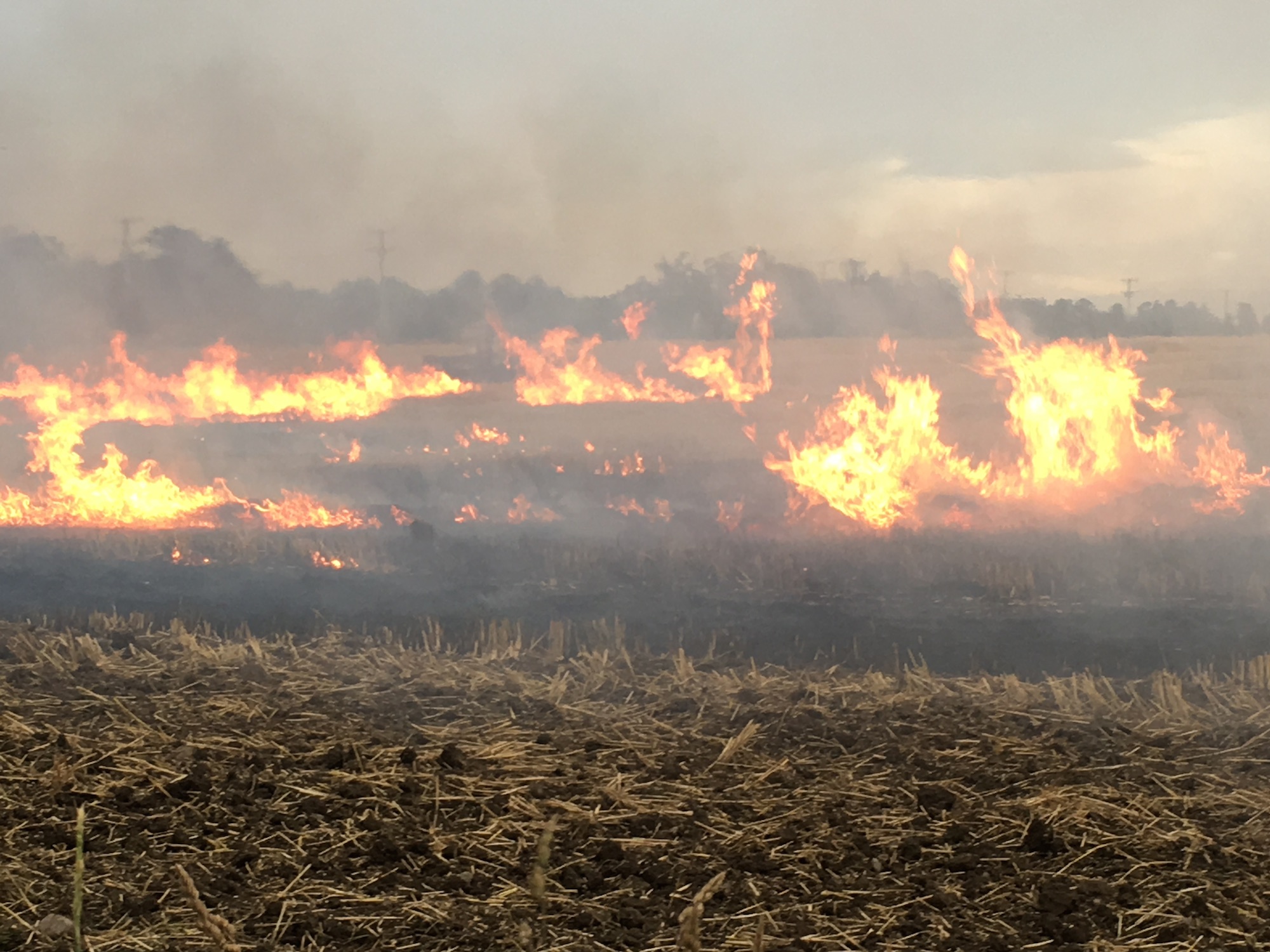
2016-02-17 08.58.04 smPreying mantises were leaping out of the flames, scaling the fence and jumping on my face in panic.

And rightfully so. The neighbour (the one who harvested yesterday) burned off the stubble today to prepare the field for replanting.

I have to say, that though I hate the practice of burning off stubble—it mostly ends up sending nutrients into the air as pollution, rather than back into the soil—I still love to watch a good burn-off. Something about fire…

I had extra incentive to watch this one, as the fire was lit five metres from our fence line, and the wind was blowing towards our property.

It was while I watched that the preying mantises began landing on me. I’m sure there were other insects (and probably a whole lot of mice) fleeing the fire, but I only noticed the mantids.

It won’t be long, though, before they’re back in the neighbour’s field. By this afternoon, it will be planted in grass, to provide winter grazing for his sheep. In a week, you’ll hardly be able to tell it was burnt.

Harvest

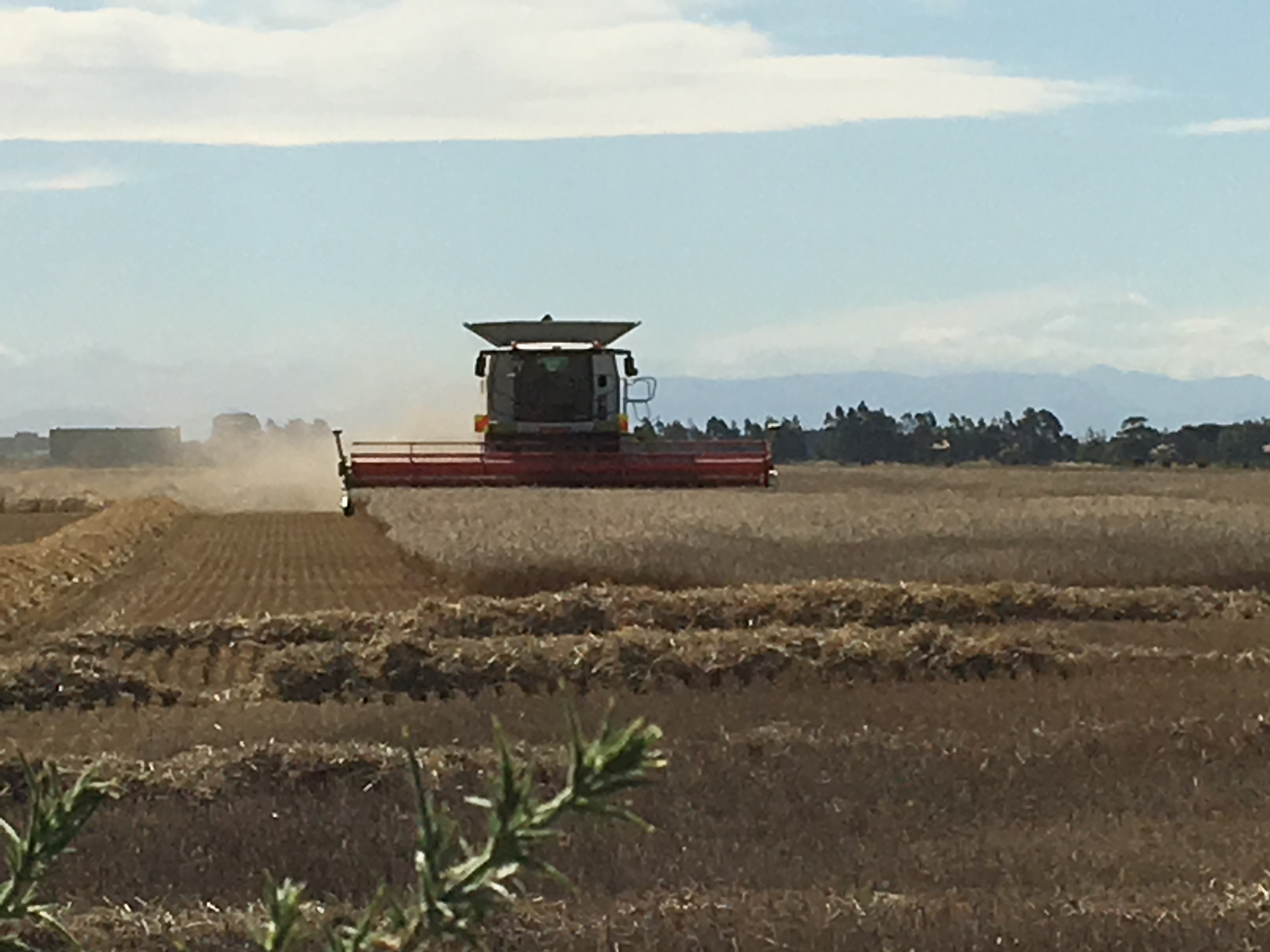
2016-02-16 16.41.47It’s time to harvest barley.

For us that means the rumble of combine harvesters all day and long into the night.

And it means realising how tiny our property is. Never does our property feel so small as when the neighbour harvests next door.

He’s been harvesting for weeks—distant fields—but today he cut the barley behind our house. The harvester dwarfs every building on our property. If I planted every inch of our land in barley, he’d be able to harvest it in just a few passes.

When he drives down the road between fields, the machine fills the road entirely—good thing there’s little traffic out here.

It’s a reminder of the massive scale modern agriculture works on. And these Canterbury farms are nothing compared to the ones in the Midwestern US.

It’s also a reminder that my view of agricultural life, as a “subsistence” farmer is entirely different from my neighbours’ views.

I count my plantings by the square metre or by the plant, they measure theirs in the tens of hectares.

I measure the harvest by the colander, they by the truckload.

My tools are a hoe, a spade and a knife—at a garage sale, you might buy them all for under $20. His tools include multiple machines clocking in at over $100,000 each.

I can produce $50,000 worth of food over the course of a year. He can lose twice that amount in a bad storm.

My soil and water conservation strategies—mulching with grass clippings, using drip irrigation, composting everything—don’t scale up to two hundred hectares. Nor do my planting, harvest and storage techniques.

There is very little resemblance, in fact, between what I do and what my neighbours do, though we both produce food.

And so, I stand and watch in awe as the harvester roars by and the trucks fill up with grain.

And he marvels at the variety and quality of my summer squash and beans.

And we find our common ground in the sun, wind and rain that rules us both.

Water gardens

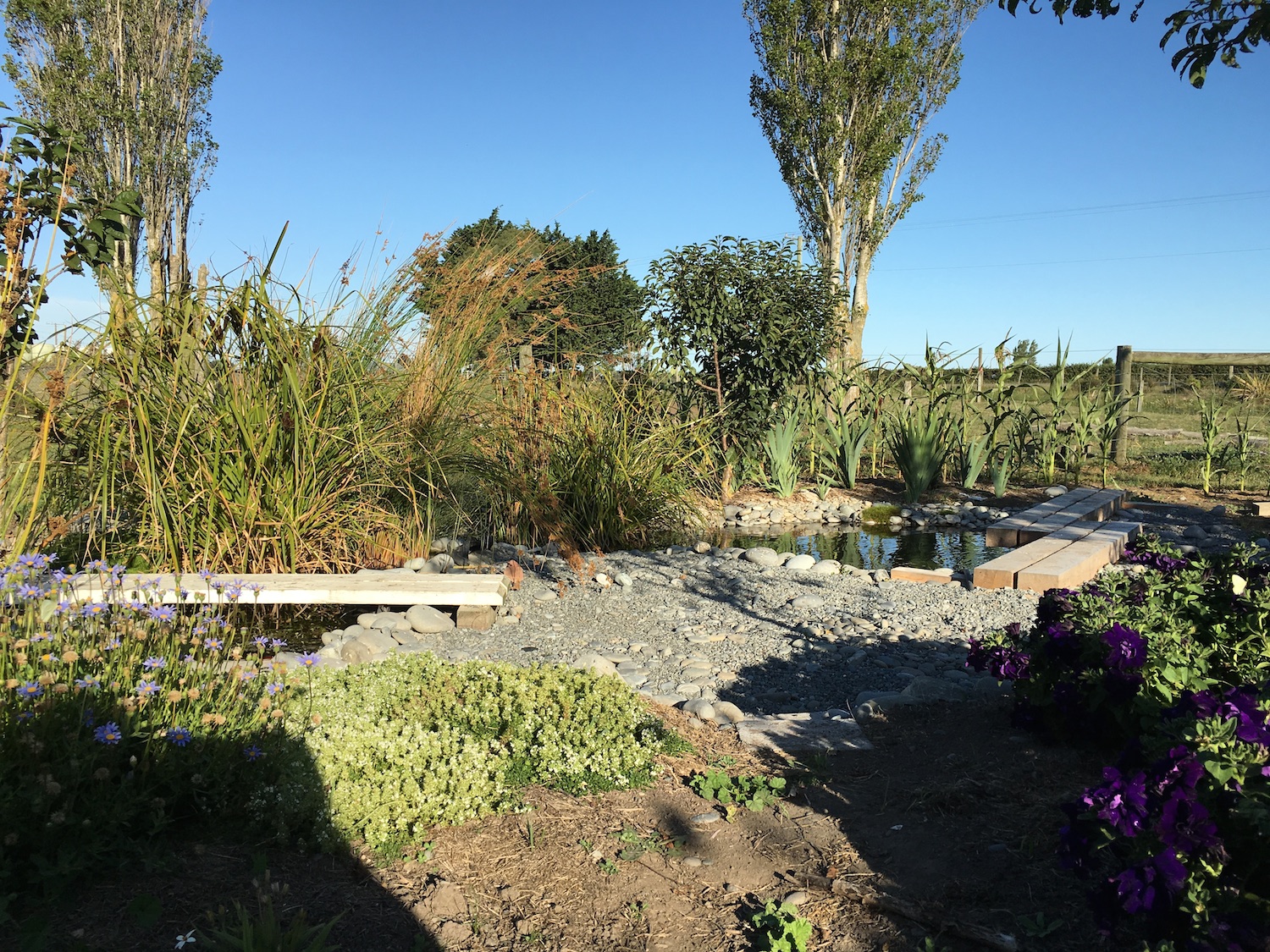
2016-02-15 18.46.03 smMy husband always wanted a water garden. In our pre-children days when we rented, he put a tiny fountain in a half-barrel, but it didn’t really satisfy him.

Within minutes of moving in here, he was scheming a “real” water garden.

It took about eight years for him to get to it. It was necessarily lower on the to-do list than re-piling the house, replacing weatherboards, remodelling the kitchen and bathroom, creating a third bedroom, and a host of other tasks.

And then when he started it, it took a lot of planning, digging, refilling, and digging again to get the basic structure right.

Then there were countless trips to the beach to collect the rocks to line it and complete the landscaping around it.

Then two years to kill off the twitch around it so he could even think about planting perennials there.

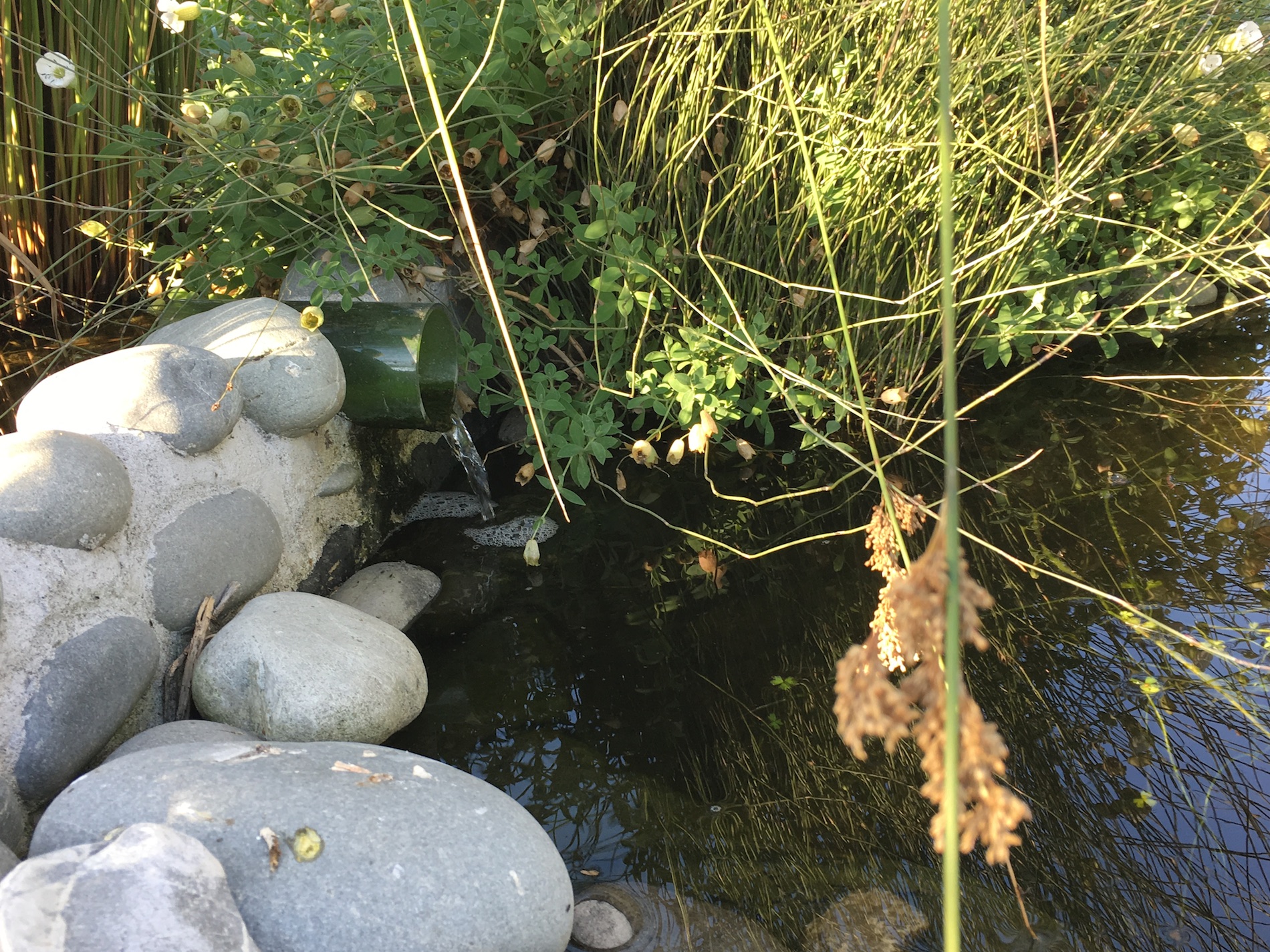
2016-02-15 18.48.44 smAdd dozens of broken wine bottles in his attempts to create the little waterfalls coming down the hill toward the pond.

A solar pump to keep the water flowing, nine goldfish (now blossomed to a standing population somewhere around 40), two bridges, and a whole lot of plants, and it’s looking quite settled into place.

We all enjoy the garden. I could sit for hours watching the fish and the invertebrates in the water. The birds love to bathe in it, and the cat loves to prey on the birds bathing in it (he likes to drink from it too—must taste fishy). Herons come and snare fish, and the plovers hang out around it in springtime.

The pond garden has become something of a potager, too, with fruit trees, herbs, vegetables, and annual flowers nestled together with an eclectic mix of native and non-native perennials. A lovely change from the rank grass that filled the space for the first eight years we lived here!

Sounds of Summer

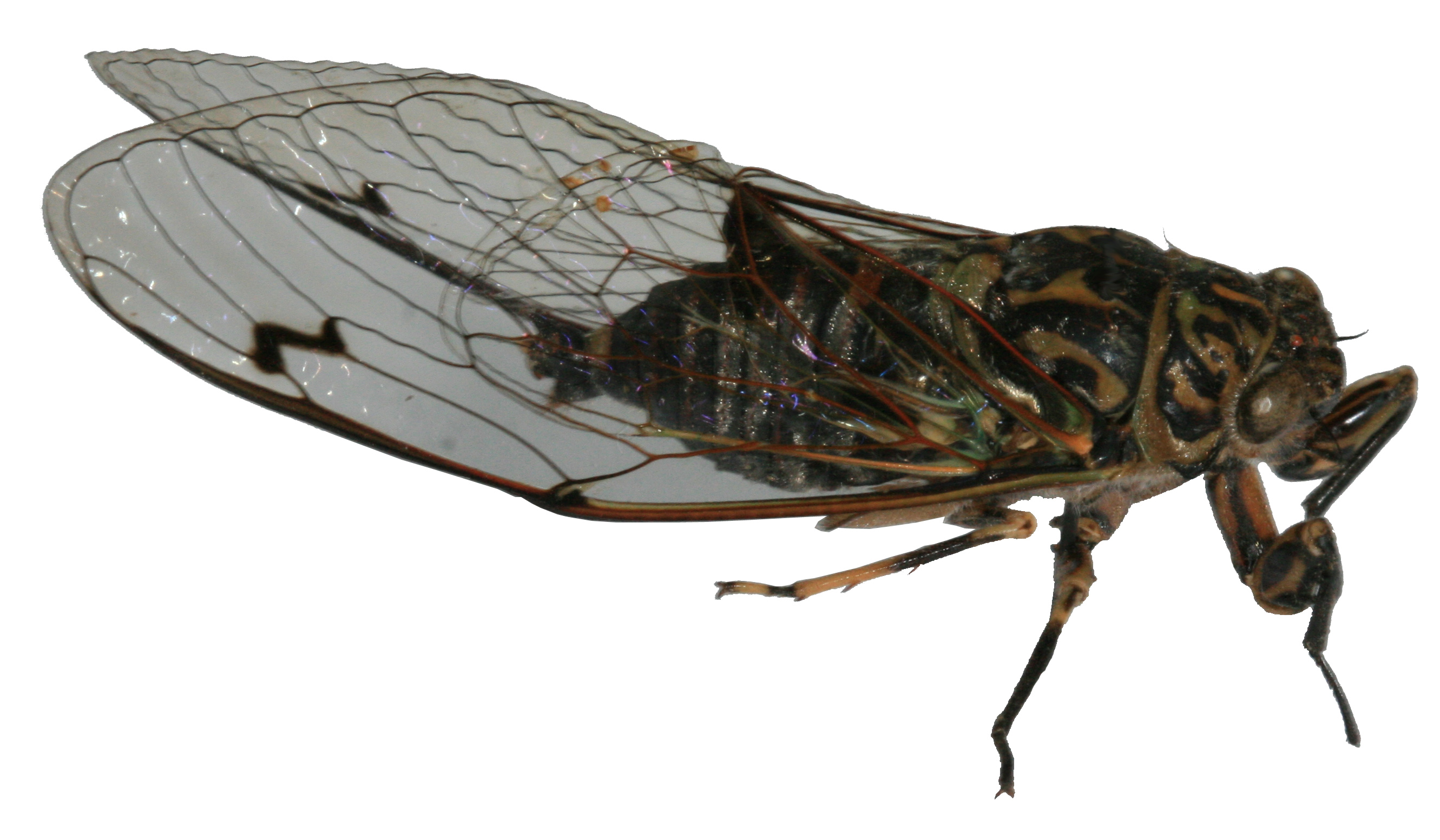
cicada2As we drove to the beach this afternoon, we passed out of the agriculturally blasted plains to the slightly less blasted Banks Peninsula. As we drew closer to the remnants of bush on the Peninsula, the decibel level outside the car rose dramatically. The culprit was the chorus cicada/kihikihi wawā (Amphipsalta zealandica). Wawā means roaring like heavy rain, and it’s an excellent description of the noise the males make en masse from every bush and tree. In some places, they are so loud, that conversation is completely impossible.

But their chorus is summer here. The season hasn’t really arrived until the cicadas start calling in January. As my husband noted today as we drove, “It just feels warmer when the cicadas are calling.”

And for as long as they call, we will believe it is summer. For as long as they call, we will feel we are on vacation, and the work week is simply a temporary interruption between trips to the beach.

Outside In

2016-01-01 16.46.05Window screens are uncommon in New Zealand.

It’s not that there is no need for them. This time of year I struggle to keep the outside out of the house.

Flies, bees, wasps, mosquitoes, and moths all find their way in, to buzz, bite, and generally be a nuisance. Leaves and seeds blow in on the ever-present wind. And the occasional escaped chicken or feral cat wanders in, too.

So why no screens?

It makes sense if we look at why window screens are found elsewhere in the world.

In the United States, window screens were uncommon until the early 1900s, when they were suddenly mandated by local governments all over the country. An important advance of science was the reason for the new laws.

Today, with think of malaria, yellow fever, dengue, and a host of mosquito-borne diseases as tropical. But these “tropical” diseases, especially malaria, used to range all through Europe and North America. The ancient Romans invading Scotland, lost half their soldiers to Scotland’s local strain of malaria. Yellow fever and malaria were common in Boston and London. Philadelphia was decimated in 1793 by a yellow fever epidemic.

The connection between mosquitoes and malaria was discovered by entomologist Ronald Ross in 1897, and by 1900, mosquito control efforts were underway all over the world. Within a few years, window screens were being mandated by law in disease-hit areas. Most of those laws are still in place, as there is nothing preventing those mosquito-borne diseases from returning.

Here in New Zealand, we are remarkably free of mosquito borne diseases. Malaria, and yellow fever have never gained a foothold, though they almost certainly have shown up now and again in the form of sick travellers.

With no mosquito borne disease, the biters that slip in through my windows every night are just a nuisance, so screens haven’t been written into the building code.

But they would be nice to have…