Small Town Celebration

2016-03-26 10.31.51 smWe spent Friday and Saturday nights last week at the Okarito campground. As it happened, Saturday was Okarito’s 150th anniversary celebration. Okarito used to be a town of about 4000 people, back in the late 1800s when the West Coast gold fields were booming. The town sported a 25 hotels, 3 theatres, two banks, several general stores, and a public swimming pool, Today it has a year-round population of about 30. Most of what was once bustling streets has been reclaimed by the rainforest. There are no hotels (though many of the baches are rented as holiday homes), no banks, no pool, and the only remaining general store serves as a tiny museum and event venue seating 40. You can buy a coffee and insect repellent at the local kayak rental company.

Okarito is 30 minutes drive from the township of Franz Josef Glacier, and 3 hours from Hokitika. In the middle of nowhere, I was curious to see how many people would actually show up to the town’s 150th celebration.

It started off slow…

The festivities were scheduled to start at 9 am and run through to 10 pm on Saturday. At 9.00, there were a few people setting up in the marquis…

About 10.30, the bouncy castle was inflated, and half a dozen kids tumbled around on it. We bought a coffee from a food truck that had parked on the edge of the commons and some baked goods from some girls who had set up a table on the lawn. There was a woodworker, the local scout troupe, a few Department of Conservation staff, some locals selling second-hand goods, a knitter selling baby sweaters, a woman selling jam and goat cheese…And very few customers.

By the time the auction started, there might have been 50 visitors, most locals. A good proportion of the items up for auction were purchased by the auctioneer.

A couple of dozen people enjoyed the barbecue dinner.

When the band started playing at 7pm, there were maybe 30 people in attendance. But the music brought out a surprising number, and within half an hour, there was an audience of 125.

Most of that 125 knew one another. They were local farmers, residents, bach owners, regular visitors, and young people working the local tourism industry. Everyone knew each others’ dogs by name, and the dogs chased each other around the crowd like young cousins at the annual Labour Day get-together. It was a lovely atmosphere—more like a family reunion than a public event.

I don’t know whether the Community Association had hoped for a larger crowd, or if it exceeded their expectations. I don’t know if they made back the cost of the marquis rental. But I do know that those who were there smiled, laughed, and enjoyed the day.

Otira Valley

2016-03-25 10.41.03 smWe spent the past three days on the West Coast. On the way over the mountains, we stopped for a hike up the Otira Valley.

The track goes through stunning, diverse alpine vegetation, much of which was in seed at this time of year—lots of weird and wonderful berries to be seen! Though we were lucky to avoid being rained on ourselves, there had been recent rain, so the track was wet, and every little rivulet was running. The Otira River roared below us.

The day was moody, and low clouds shrouded the mountain tops around us.

2016-03-25 11.19.21 HDR smI love the alpine environment. One of the most wonderful things about it is that its beauty lies both in the minute plant life clinging to the rocks, and in the grand vistas—one must view the landscape at both scales to fully appreciate it. We spent our time divided between marvelling over some tiny plant, and admiring the peaks and waterfalls around us.

The Shark


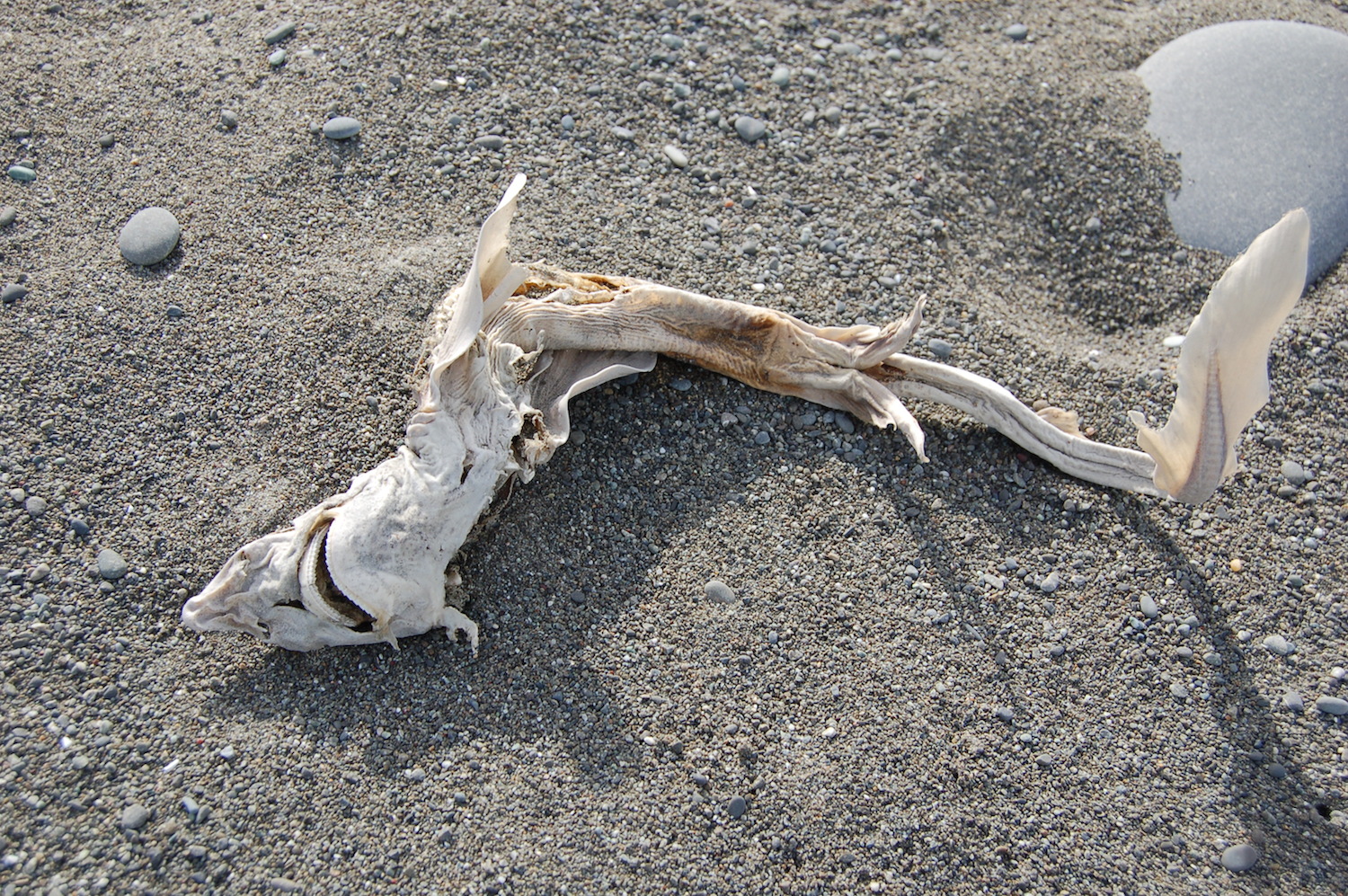
DSC_0035 smThe desiccated body grimaced.
Mouth agape
Spine twisted
As though frozen in mid-thrash.
Fins, resistant to shrivelling, looked too big
For the small form
Once so sleek and streamlined
Once the terror
Of small fish in the surf.
Brought to this ignominious end
By the bright tip of a hook
Hidden in some tasty morsel.
Rejected
By the fisherman who reeled him in.

Diptera—the Flies

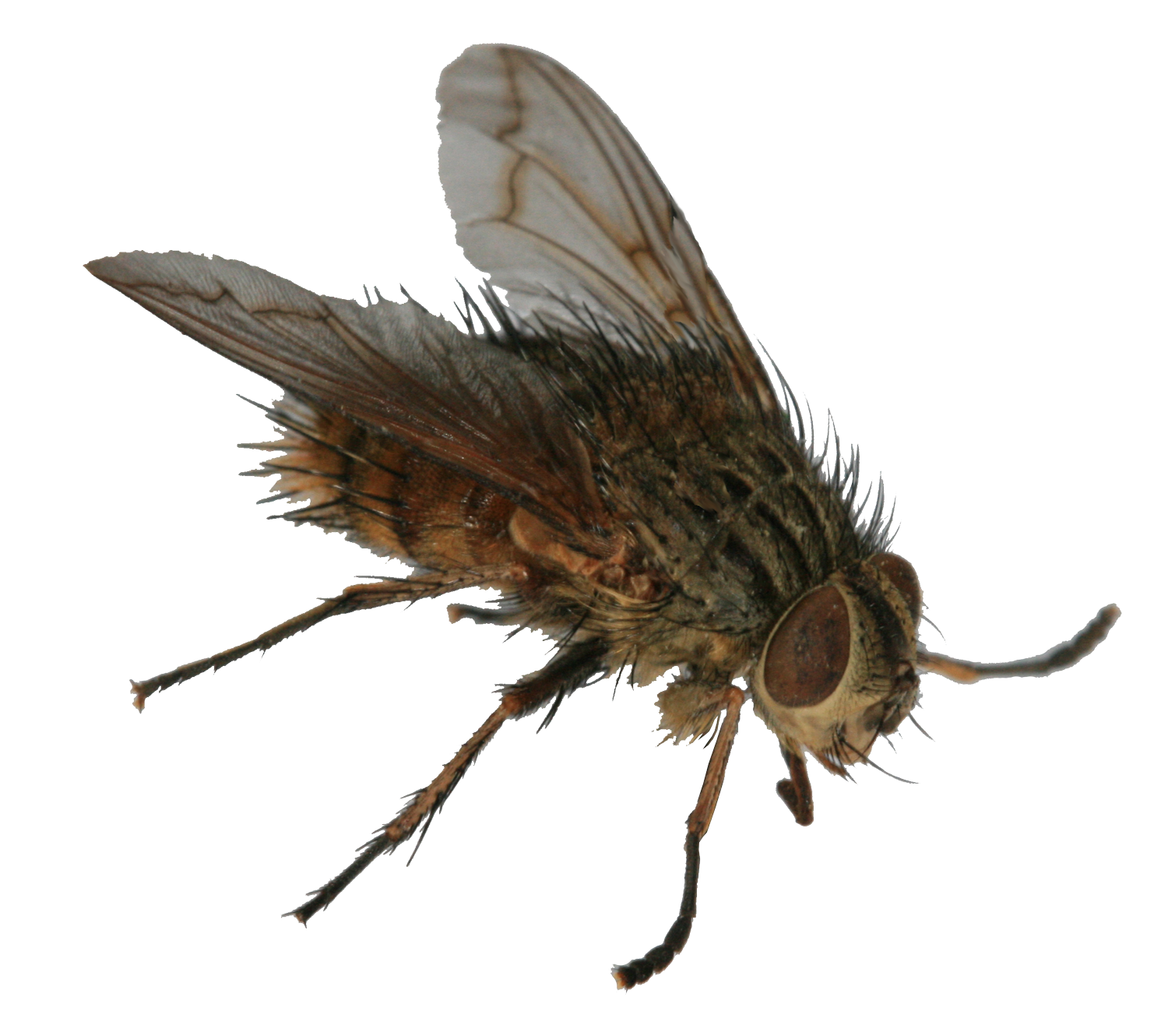
tachinid2With several thousand sheep as neighbours, it’s no surprise the house is full of flies all summer.

There are, of course, house flies, but the Dipterans don’t stop there, and not all of them are around for the sheep poo. We also have lesser house flies, crane flies, fungus gnats, midges (which I’ve mentioned before), several species of blowfly, drone flies, striped dung flies, ginger bristle flies, two species of soldier fly, robber flies, longlegged flies…and those are just some of the flies that find their way into the house.

Not all of the flies are pests, though none really belong in the house. Some are important pollinators, many are decomposers breaking down plant and animal material, some prey on pest flies, and all are food for other animals.

And, like all insects, they are inspiration for doggerel…

The order Diptera
Known as the flies
Have one pair of wings
(I tell you no lies)

They’re often seen flying
‘Round garbage and such
And generally people
Don’t like them too much.

Throwback Thursday: Panama Nights

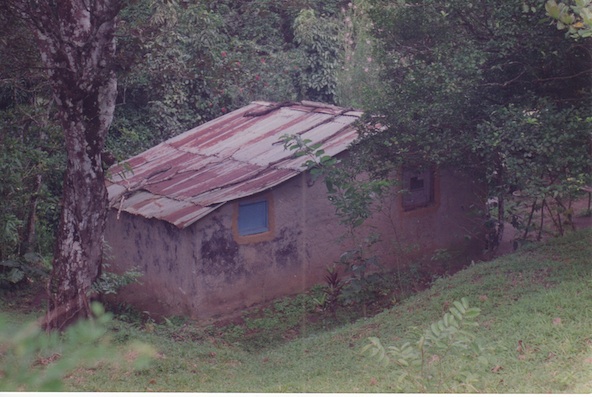
HousePmasmI recently ran across a series of haiku I wrote by lamplight, sitting on the porch of our house in Panama many years ago. I still think they capture those evenings, full of water, wildlife, and the sounds of the village around us.

I.
Rats’ tin nights.
Dancing rooftop rodents
Steal my sleep.

II.
Muggy night
Love in stagnant puddle
Mud. Eep! Mud.

III.
Rosary
Evening chant for the dead.
Do they hear?

IV.
Lightning strike
Shatters bones and makes the
Cat lie low.

V.
Frogs clatter
Loving neck deep in
Calm wet nights.

VI.
Keep a calm
Ear listening. You may
Hear trees sing.


Hedge trimming

Trimmer looming out of the early morning fog. Note the circular blade to the left--he switched to that later.

Trimmer looming out of the early morning fog next door. Note the circular blade to the left–he switched to that later.

THWACK! THWACK! THWACK! THWACK! THWACK! THWACK!

The sound, like a helicopter crashing into a stand of trees, is unmistakable, though the first time I heard it, I had no idea what it was—a giant hedge trimmer.

Hedges are a necessity here on the windswept Canterbury Plains, and autumn is hedge trimming season.

Our hedge, hemmed in by fruit trees and the septic system, has to be trimmed by hand—a full-day job for my husband and me, and one we put off as long as we can every year.

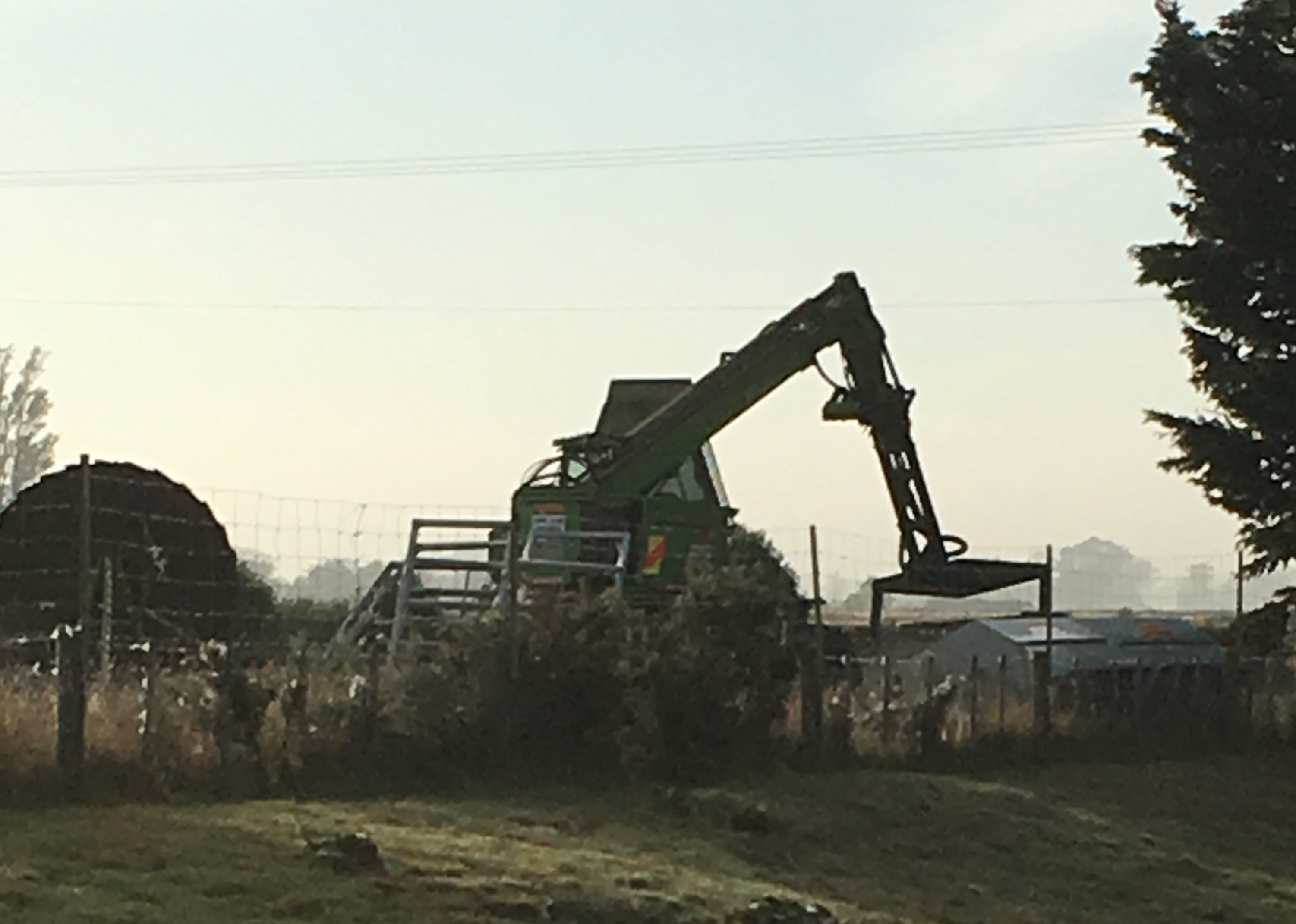
Here's another, snapped along the roadside on the way to town.

Here’s another, snapped along the roadside on the way to town.

Our neighbours, however, have their hedges trimmed by professional hedging contractors. The hedge trimming machines they use are terrifying—giant, armoured vehicles with a long crane arm bearing any one of a number of wicked-looking cutting devices.

There are circular saw blades the size of a man, two-metre wide lawn mower blades, heavy chains that just beat the branches off the hedge. The machines must be Occupational Safety and Health’s worst nightmare. Some have an 18 metre reach, and the result is perfectly trimmed hedges the size of castle battlements.


Cape Gooseberries

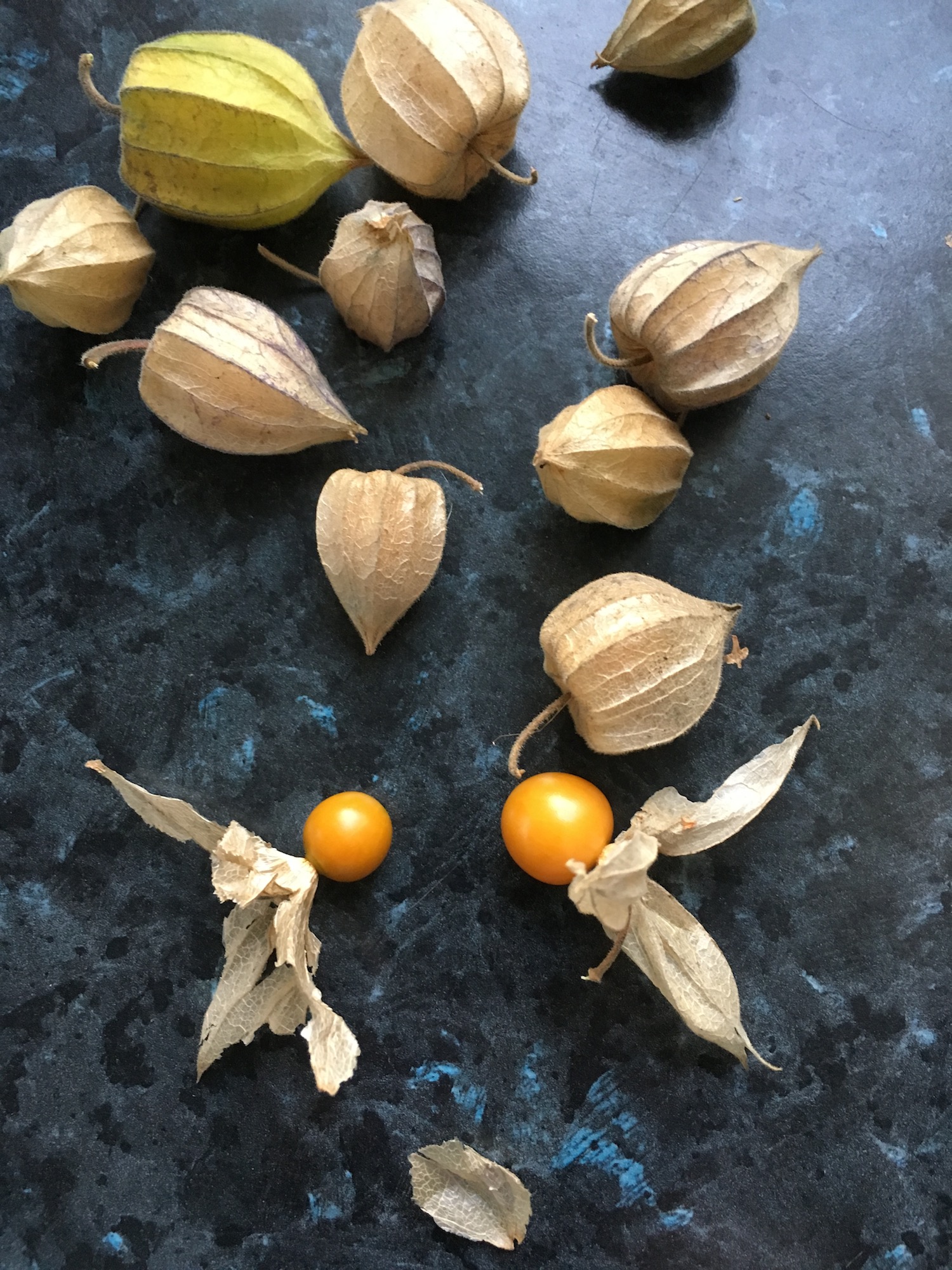
2016-03-22 19.08.56 smCape gooseberries (Physalis peruviana) are not something you’re likely to find in the grocery store. The plant is native to Peru and Chile, and has been introduced into most temperate and tropical climates around the world as a fruit for home gardens. It has been only sporadically commercially grown, however.

The fruit’s flavour defies categorisation. It is like a sour grape crossed with a tomato—not entirely surprising, as it is related to tomatoes. The initial sensation is the sour, and then they leave a lingering fruity tomato flavour in the mouth.

Cape gooseberries grow reasonably well here—some years they grow too well, actually. I’m still learning how to use them and how to enjoy their odd flavour. This year we got only a handful, as I wasn’t able to water them as much as they needed in this hot, dry summer.

Their tartness goes well in jams, chutneys, pies, and fruit salads. They’re also good eaten right in the garden—the papery husk acts as a handle, so you can snack on them even with hands dirty from gardening!

In temperate climates they are an annual, though here they often overwinter, if the weather is mild. In tropical climates they are perennial.

They’re definitely a plant to try, if you’ve never grown them.

The Dark Side

Near-full moon means bright evenings, but dark mornings.

Near-full moon means bright evenings, but dark mornings.

Today we tip to the dark side. Tomorrow, night will outstrip day for the first time in six months.

It seems the equinox should be momentous. Autumn should sweep in, chilly and dark, leaving summer behind.

But yesterday, the temperature reached 33 degrees (91F). Today is on track to be even warmer, and tomorrow, the same. Though darkness creeps up on us, the sun has not abandoned us yet.

Still, it is time to remember to appreciate the dark.

This morning, I milked and fed the animals in the dark, as I’ve done for the past month. But before I went back inside and turned on the lights, I paused to appreciate the night sky. The milky way slashed from northern to southern horizon, southern cross glinting in its midst. Pavo, Scorpius, and Lupus were there too—a veritable menagerie of constellations, though truth be told, I can identify only a handful of them without a star chart.

But in the still of early morning, it didn’t matter whether I could find the peacock’s tail in the sky. It was enough to look up and appreciate the vast universe, accessible to us only in the dark.

Doing Nothing

2016-03-19 18.36.29 HDR smMy husband says I don’t spend enough time doing nothing.

He’s probably right—I rarely sit down, and even when I do, I like to keep my hands busy.

But if there was ever an afternoon made for doing nothing, today was it.

It was hot and windy, and the shady front porch offered a cool and calm refuge after a day canning applesauce.

And so I sat.

I chatted with my husband.

I enjoyed a cold beer.

I watched the wind bend the trees in the front yard, and idly noted that the herb garden looked much better for the rain on Thursday.

For nearly twenty minutes, I did nothing.

I reckon that’s not bad, for a novice. With practice and training, someday I might make it to an hour or more!

Ant Swarm

2016-03-18 12.59.05 smI walked out the brick path to my office after lunch today, my mind focused on how I was going to write my main character out of the mess I’d written her into in the morning.

Then something in my peripheral vision made me leap over a few bricks. I turned to inspect what I’d thought I’d seen.

Sure enough, there were three growing ant swarms on the path. And as I expected, when I looked more closely at them, I found winged ants among them.

Among the eusocial ants, only the reproductive individuals have wings. Throughout most of the year, the colony produces wingless worker ants—females who don’t ever reproduce, but instead care for their younger sisters, and feed and defend the colony. In late summer, in response to some environmental signal (often rain), all the colonies in an area simultaneously produce winged ants—both males and females.

Entomology textbooks dryly say the winged ants fly off in search of mates, but from my perspective, having watched winged ants emerge for over 45 years now, the colony throws a huge party for the winged ants before they go.

On “Emergence Day”, an ant nest swarms with activity—not just inside, where it’s always busy—but also out on the surface. Winged and wingless ants pour out of the nest and mingle in the sunshine, sometimes for hours before the winged ants finally take flight. I like to think they’re having a little bachelor/bachelorette party for the potential brides and grooms.

When the winged ants take off, the wingless ones retreat to the nest. Their brothers and sisters will never return. If they are lucky, they’ll find a mate. The males, once they’ve mated, won’t live long. Their job is done, and they are easy prey for birds, spiders, and other predators.

The mated females, if they escape predators themselves, will fly to a favourable nest spot, break off their own wings (they’re not needed anymore), and begin to dig. The small nest each excavates will be home to her first offspring, who will enlarge the nest and care for the next batch of eggs the new queen lays.

A queen ant will mate only once. From this mating, she will parcel out sperm for her entire life (up to 30 years for some species!) to fertilize the eggs she lays.

So the ant swarms you see on the sidewalk are serious business. Step carefully, please!