January is quite possibly the best month in the garden. Seemingly overnight, the vegetables double in size. Summer crops begin ripening. Weed growth slows, and the vegetables are large enough to compete with all but the most aggressive weeds. Garden work switches from planting and weeding to picking and processing. The frenzy of December berry crops is over, and the cupboard is bursting with jam.
January is a time to enjoy the fruits of my labour. Not that there isn’t work to do, but the rewards of all my work are beginning to outweigh the effort. It’s a great way to start the new year.
Another great way to start the year is with the giant plant tags Santa Claus made me for Christmas. They’re not the most efficient markers for the garden, but they’re adorable and add a touch of whimsy.
With luck (and a lot of hard work by my husband), by the end of January, I’ll also have a nice new garden shed for storing tools and potting up plants. There will be a bit of whimsy in the shed, as well, inspired by a leaded glass window we found for it. I can’t wait to have that bit of the garden plan complete and functional!
I hope your January is full of things to enjoy and to look forward to.
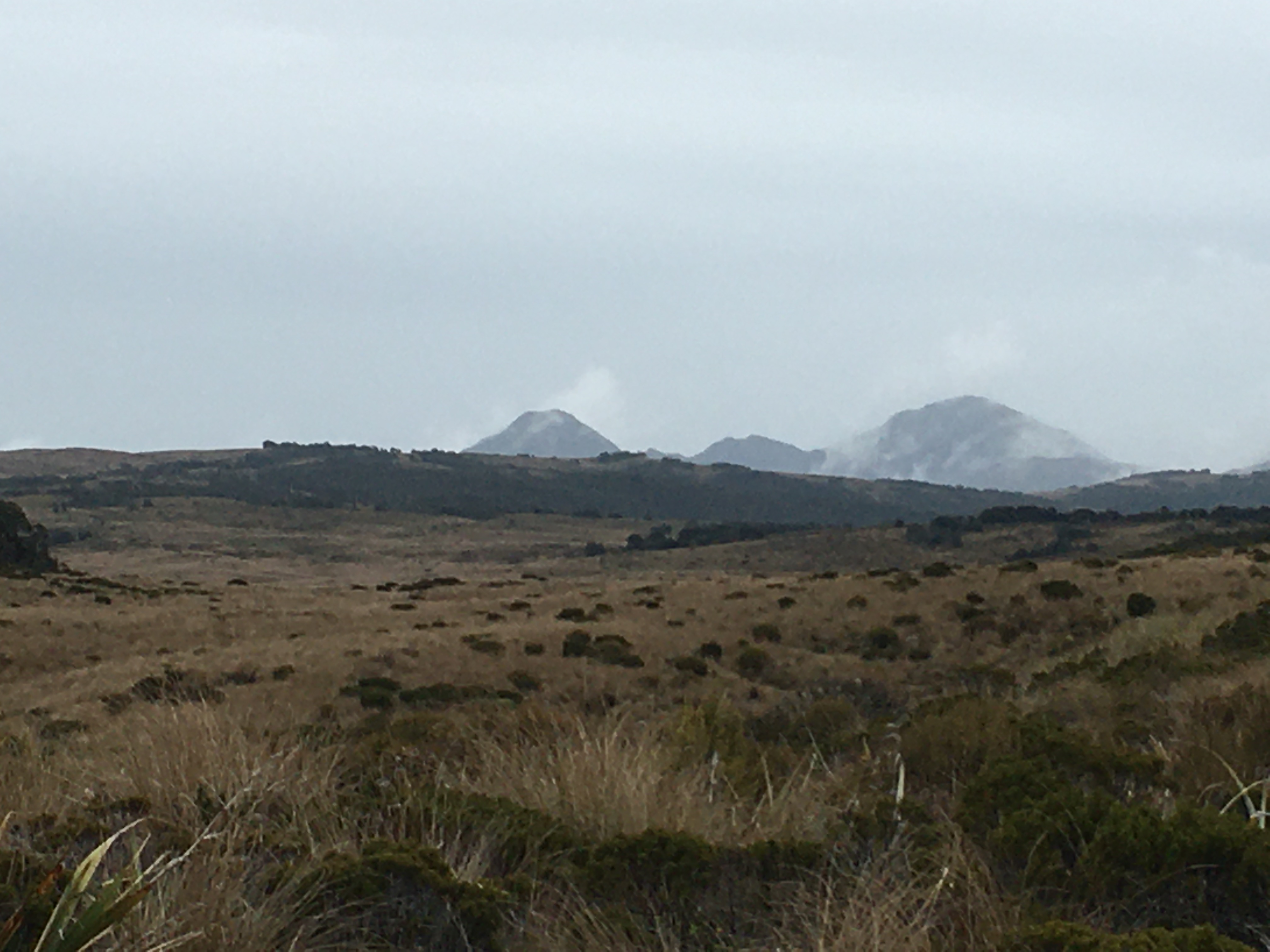
The family’s pre-Christmas tramping trip this year was to the Thousand Acre Plateau in Kahurangi National Park.
Last time we were in Kahurangi National Park was to hike the Kepler, our pre-Christmas tramp a few years ago. On that trip, it poured relentlessly, and we hiked with few breaks, for fear of hypothermia.
This trip was exactly the opposite. With sunshine and temperatures reaching 29℃ (84℉), we took lots of breaks, for fear of heat stroke.
The Needle
Our original plan had been to hike an hour to the Lake Matiri Hut on day one. After a leisurely start and five hours driving, it seemed reasonable not to plan too much hiking. But when we reached the first hut, none of us was ready to stop—we’d only just begun, after all.
The DOC time to Poor Pete’s Hut, on the plateau, was listed as 3 hours. It was only four o’clock, and it was the summer solstice—there was plenty of time to push on to Poor Pete’s.
Unfortunately it was straight up to Poor Pete’s, and the temperature remained stubbornly high. By the time we finally crested onto the plateau I was questioning our decision to push on in the heat. But the plateau was painted gold by the evening sun, and our first glimpse of the remarkable limestone landscape was truly spectacular. We reached Poor Pete’s Hut at 8 pm, enjoying the final 20 minutes of flat-ish hiking as the sun set.
Poor Pete’s Hut is a sweet little 2-bunk hut. Unlike last year’s two-bunk huts that our family of four crammed into, Poor Pete’s has a spacious covered porch area that was brilliant for sleeping, so we snoozed in style as the noisy weka and ruru did their best to keep us up all night. And I can’t discuss Poor Pete’s Hut without mentioning the long drop, which isn’t the standard modern DOC vault toilet. Rather it is an old-style wooden box set atop one of the many deep crevices in the Thousand Acre Plateau landscape. And to make a trip to the loo exciting, the path down to the facilities crosses the crevice in an awkward fashion. I nearly slipped in my first time. Classic.
On day two, we hiked across the rolling landscape of the Thousand Acre Plateau to Larrikin Creek Hut. Compared to the first day, it was an easy stroll, but I can imagine in wetter weather it could be an absolute nightmare. The plateau is mostly wetland, with lots of tarns and wet, mossy and muddy ground. Entries in the hut book at Larrikin Creek Hut mentioned ending up waist deep in some of the boggy holes. We managed it with mostly dry feet.
The Hundred Acre Plateau, as seen from the top of The Needle
It was only 9.30 am when we reached Larrikin Creek Hut, nestled at the edge of the forest near the base of The Haystack, a gravelly limestone ridge that kept shedding rock, even in the still and sunny weather. We had a brief rest, dropped most of our gear, and headed up to the top of The Needle, which looks like a child’s drawing of a mountain. There is no official, marked route to the top of The Needle, and it’s a bit of a scramble up Spaniard-infested scrub to get there. I decided there is no good way up, only less bad ways. But the view from the top is fabulous.
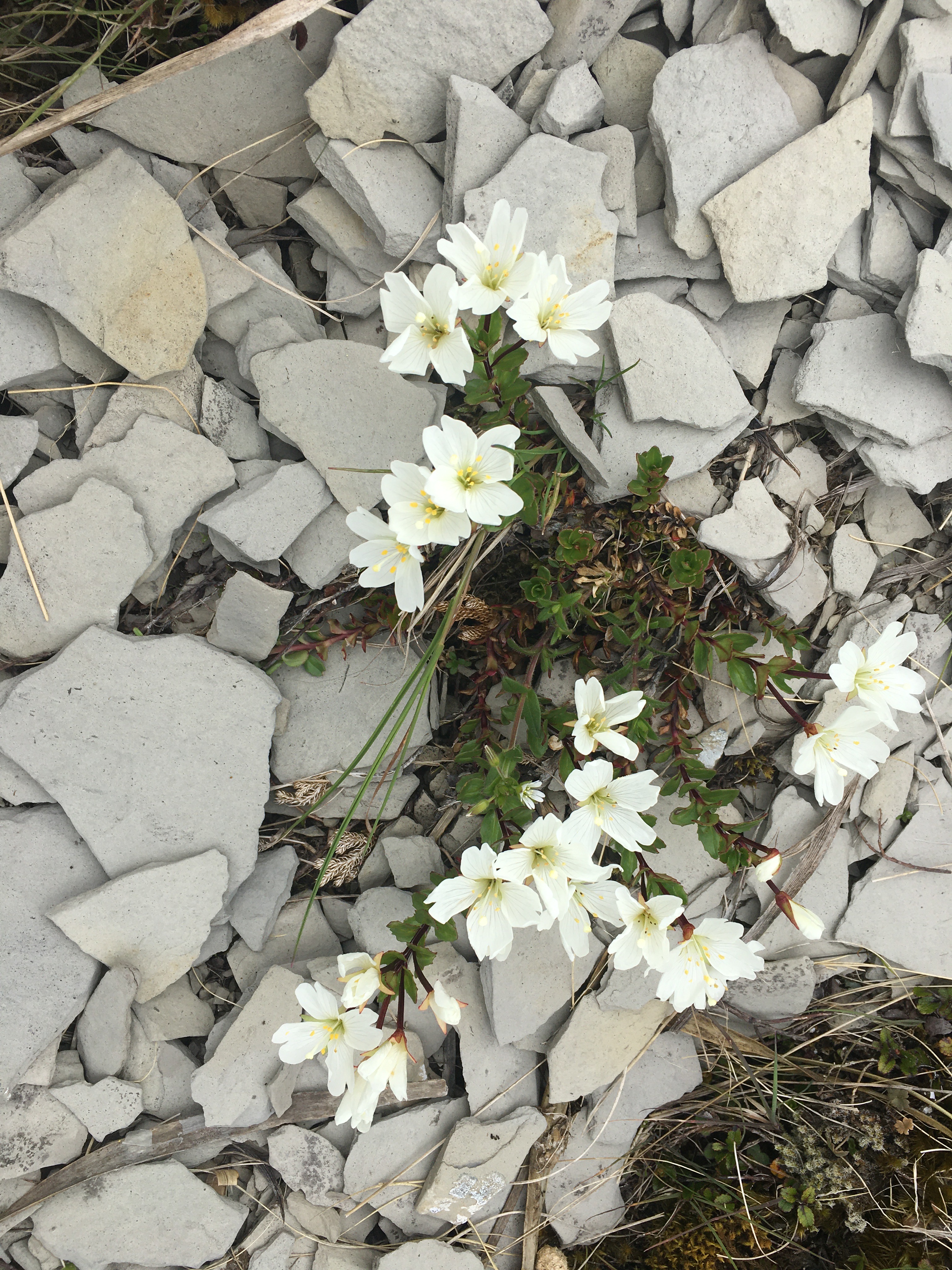
The limestone of the plateau is fractured and crumbling, and with landslides clattering down The Haystack, it wasn’t hard to imagine how the entire plateau will eventually tumble into the valleys below.
Evening at Larrikin Creek Hut was filled with birdlife—a cheeky weka kept us vigilant as it eyed up our boots and snacks. A kea called from somewhere on The Haystack, but thankfully didn’t descend to plunder our gear. Weka, bellbirds, and tūī kept up a cacophony until dark, when the ruru joined the weka (do those birds ever sleep?) for the night shift.
On Day three, we took an early morning jaunt down Larrikin Creek to the point where it plunges off the plateau. There were a couple of lovely pools near the edge, which would be fabulous swimming spots on a hot day (day three dawned coolish and drizzly, so no swimming for us, though we did all take a dip the day before in some shallower pools upstream). Walking across water-smoothed slabs of limestone in the creek bed, we saw lots of fossils and some interesting aquatic invertebrates.
After our stream scramble, we hefted our packs and began the return journey. Lunch at Poor Pete’s Hut in the rain was a real treat—that covered porch working its magic again. The descent off the plateau was not quite as bad as the ascent had been, but the earlier rain only served to make the forest hot and humid, so it was almost as sweaty.
The real treat on the descent was a flock of kākā calling in the treetops, keeping pace with us for a while.
We spent the night at the heavily sandfly-infested Matiri Hut, which we shared with a group of three others who were on their way up. The sandflies drove us out early on day four, and we were back at the car by shortly after 7 am. A nice little tramp in a spectacular landscape!
The traditional Christmas celebrations and decorations involving twinkling lights, snowflakes, snowmen, warm drinks and roaring fires make no sense here in Aotearoa New Zealand. But there’s plenty to celebrate at this time of year.
I always know it’s time to start thinking about the holidays when the strawberries and gooseberries ripen. I know it’s time to decorate when I can stroll through the garden, grazing on peas, gooseberries, raspberries, boysenberries and strawberries. When I can fill a colander with red and black currants. When the supermarket fruit begins to look old and nasty by comparison to what’s tumbling off the bushes at home. When it’s hard not to pick too much lettuce for the day’s salad.
Food is an important part of holiday celebrations, and for me half the celebration is the ability to eat my way through the garden. Finally in December, picking vegetables for dinner doesn’t feel like scrounging for whatever’s left from the winter crops. At some point during the month, the question of ‘what is there to cook for dinner’ shifts to ‘what needs to be eaten today’ (or processed and preserved). Jam making is my Christmas ‘baking’. Fresh berries replace the traditional bowl of mixed nuts put out for munching. Fruit ice creams and cordials are our figgy pudding and wassail.
As we make our way toward the summer solstice, the long days provide plenty of daylight for picking and processing fruit. And because it’s the Christmas season, those long days (and nights) in the garden and kitchen feel more like a celebration than a chore.
Is there holiday stress because of the increase in garden work? You bet—I can’t tell you how many times I’ve sat in the car, bucket between my knees, shelling peas on the way to the beach so I can get the work done and still have time for fun stuff. And keeping up with the weeds is a struggle while many of the vegetables are still small. Then there’s the inevitable broken tap or pierced irrigation line you find the first time you need to water (which usually happens this month). And the constant struggle with the thieving birds, who want to partake of the garden’s bounty, too.
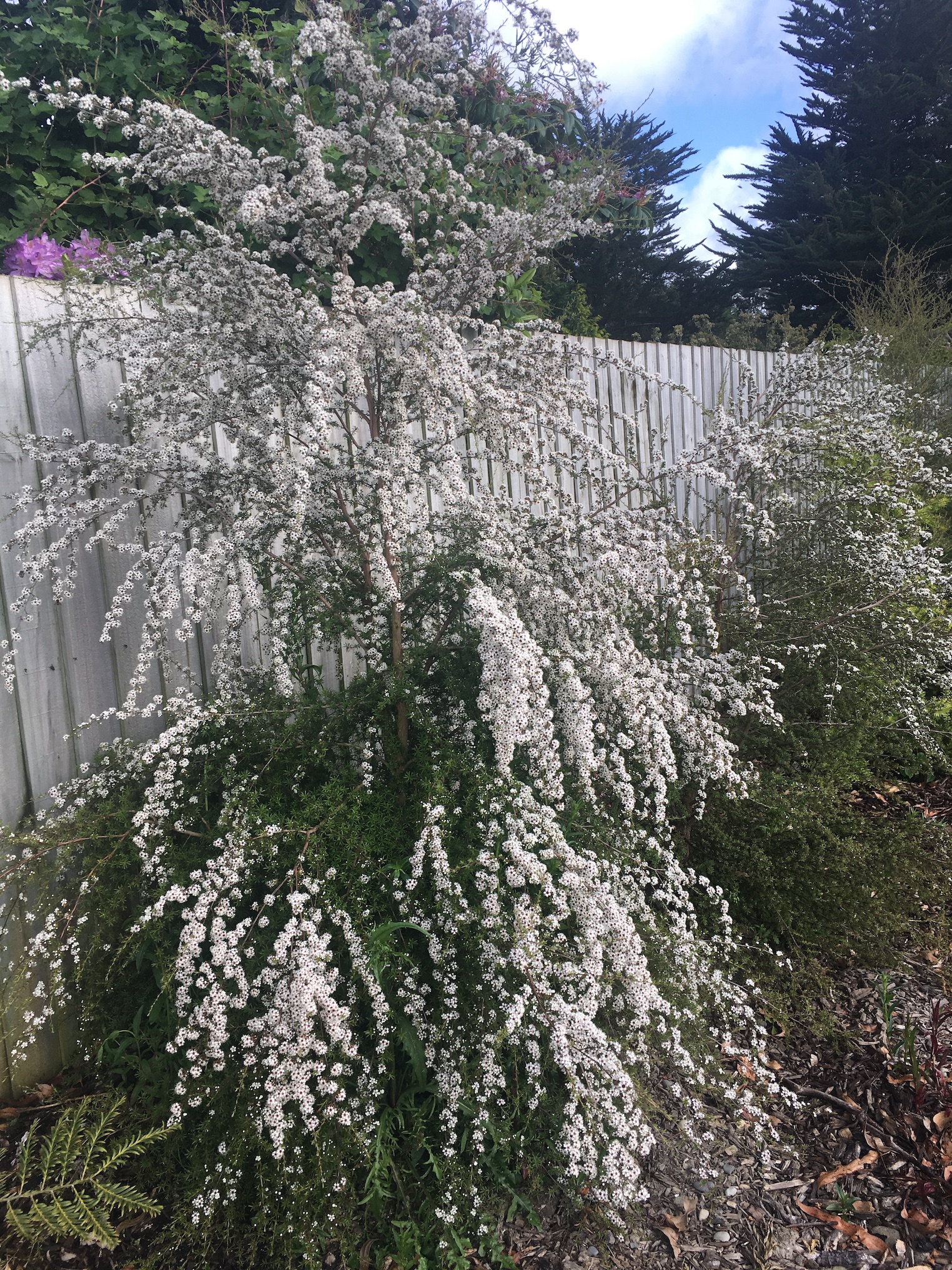
We may not have snow, but the kānuka flowers are a spectacular substitute.
But overall, the holiday season is a time to celebrate the garden’s summer bounty. It’s a time of fresh fruit and vegetables, and long days outdoors. Next week marks the end of my work year, with schools letting out for summer, and this weekend will be my first jam-making weekend of the season. Let the celebrations begin!
Today is Thanksgiving Day in the U.S. Although my husband and I don’t celebrate the day here with a gathering of friends and family, pumpkin pie out of season, and imported cranberry sauce like some American expats, I still like to take the day to give thanks.
Today I’m particularly thankful for a number of things. I’ve been home sick all week. Today is day nine of this miserable head cold and it’s getting really old. After more than a week of all the joys a bad cold can offer, I am incredibly thankful for the luxury of taking time off work when I’m sick.
I’m thankful for the riotous display of flowers outside my office window, which made me smile in spite of feeling crummy. I am also thankful for the vegetable garden’s springtime bounty, which allowed me to hole up at home without need for a trip to the grocery store. I’m thankful for the neighbour who brought me lemons, knowing I was sick. I’m thankful for the warm sunshine I sat in at lunchtimes this week.
Today, wild wind and rain are pounding the garden and house. So today I am thankful for the rain—it was much needed. I am also thankful for a roof that doesn’t leak, and snug windows and doors through which the southerly wind can’t whistle.
Those are the little things, of course. With the drumbeat of war and disaster in the news, I’m also keenly aware of and thankful for the safety and stability of my life. My easy access to food and water. My ability to plant a garden and expect to be able to harvest it. The opportunity to live in a culture in which most people embrace diversity and treat others with respect.
So, while I’ve had plenty to grumble about this week, I’ve also been blessed in thousands of immeasurable ways, for which I am grateful every day, not just on Thanksgiving.
May your day be filled with things to be thankful for.
I don’t often get to geek out with biologists (other than my own family, of course), so I was pleased to have an opportunity over the weekend to spend a day at Cass Mountain Research Station helping out with a mini bioblitz.
We couldn’t have asked for a better day—warm sun and clear skies made it a pleasure to be wandering around the forests and fields of the research station. And the company was great—everyone eagerly pointing out the mosses, herbs, bugs, birds, fungi and slime moulds we came across.
The enthusiasm was infectious. Back at the lab, folks peered at bugs, fungal spores, slime moulds, and moss, debating and discussing identifications, and calling out in delight when they discovered something awesome.
I was disappointed to have missed the tardigrades under the microscope, though my husband got fabulous footage of one being about as cute as an animal can be.
I was also jealous of the crew who spent the previous night at the station observing the nocturnal creatures—they bagged a giant springtail.
But there were more than enough cool critters to go around. I enjoyed peering at some of the little spiders I swept from the tussocks, and finding a clutch of spiky beetle larvae all curled up together in a rotting stump. The freshwater researchers brought in trays full of wriggling caddisflies, midge larvae, mayflies and other macroinvertebrates. The botanists catalogued a wide variety of orchids, mosses, and shrubs. The soil researchers found slime moulds, fungi, nematodes, and beetles.
When all the specimens were identified and catalogued, we’d logged 579 individual observations of 259 different species. Many of those species were new records for Cass, bringing the total number of species recorded for the field station to 590 and blowing our goal of 500 well out of the water. A fabulous effort, and a thoroughly enjoyable day!
Sometimes it’s easy to forget the simple thrill of discovery—that wide-eyed wonder we had as kids, when everything was new. We get bogged down in daily life, forget to keep our eyes open. It was great to remind myself last weekend that there is joy in simply observing.
Over the weekend, I was weeding the native plantings at the front of the property and discovered a wee lancewood seedling. We’re quite fond of lancewood, and have planted several around the property, but none of ours have set seed yet—they’re all still in their stick-like juvenile form. So the volunteer came in from someone else’s property, no doubt dispersed by a bird.
Normally, weeds are a source of dismay, but I was thrilled to find the little lancewood. I’ve been surprised at how many ‘volunteer’ plants we get at our new property—there’s more rainfall here than at the old place, and plants tend to establish on their own, without my help. It means the unwanted weeds grow better, too, but I’ve been thrilled by what has popped up.
Among the native weeds, we’ve got coprosma, akeake, poroporo, NZ iris, snow tussock and hebes. Some, of course, sprout where we don’t want them, and I have to weed out a fair few. But many get transplanted elsewhere or potted up and given away. I love the thought that our native plantings might one day be self-perpetuating.
Rampant fumitory, rampant along the garden fence.
Among the non-natives there are some welcome weeds, too. Pansies, flax, thyme, oregano, sage, cilantro, peas and fennel are all desirable—in the right place.
I will also admit to appreciating the flowers of daisy, scarlet pimpernel, scrambling speedwell, and rampant fumitory wherever they grow, but only because these plants are a minor nuisance and easy to pull out. Other pretty weeds, like bindweed, yarrow and vetch are on my hit list, regardless of their flowers.
Then there’s stinging nettle. I hate nettles. But lush nettles are a good sign of fertile soil, so I admit I like to see them pop up and grow well, even if I do pull them out.
Is a plant a weed if I like it? Maybe not. But all these volunteer plants do make for extra work in the garden, whether I appreciate them or not.
The volunteer pansy brigade. Who can complain about that?
Yesterday I wrote about strategies for preventing pest problems. If you’ve taken all the measures you can to prevent pests, but the pests arrive anyway, there are different questions to ask:
Centipedes are predators of many garden pests.
Do I need to worry? Low levels of pests aren’t a big deal. A few aphids, a caterpillar here or there, the odd bite out of a leaf—these things aren’t going to have a big impact on the quality or quantity of your harvest. Just keep an eye on them to be sure the problem doesn’t get worse.
Can I physically remove them? I’m a huge fan of squishing and hosing pests off plants. For example, I have problems every spring with aphids on my roses. If I do nothing, the plants become completely covered, and the blooms are destroyed. So in spring, I keep an eye on the plants, and once the aphids start reproducing, I hose the plants down once a week, knocking off most of the aphids. Usually I only have to do this about three times before the aphids’ natural enemies build up enough to keep them under control without my help.
Can you disrupt a critical part of your pest’s life cycle? Is there a life stage that can be easily killed, or has specific requirements you can disrupt? For example, I keep a close eye on my brassica seedlings, looking out for cabbage white butterfly eggs on the undersides of the leaves. All it takes is a quick swipe of the thumb across the bottom of each leaf to squash the eggs and eliminate future problems with caterpillars. Another example is my recent problems with slaters in my greenhouses. Discovering that the slaters are congregating between cement blocks stacked beside the greenhouse, I’ve started regularly checking and squashing all the slaters in those blocks. (I could also have moved the blocks, to eliminate the slaters’ shelter, but since the population was quite high, I thought squishing a whole lot of them would be more effective for now. Later I will probably move the blocks to make the area around the greenhouse less attractive to slaters).
Can I make use of them? Pest-covered plants, grass grubs and slugs all get thrown over the fence to my chickens, who turn them into beautiful eggs for me and save me from the disgusting task of squishing the bugs.
Can I pull out badly infested plants? If there’s a couple of plants badly infested, but the pests haven’t spread much, rip out those infested plants and destroy the pests on them. You’ll lose a few plants, but you’ll protect the rest of your crop.
Pest-gobbling chickens.
In an IPM system, you don’t consider any sort of chemical control until you’d exhausted all the possibilities above. In practice in my garden, I almost never need anything else. Occasionally, if I’ve missed an aphid infestation on a crop that can’t handle a strong spray of water, I’ll use a soap solution to kill aphids. That’s the extent of my chemical control. But if you do need to resort to chemicals, it’s important to choose the right one. The more specific it is to your pest, the better. Many modern pesticides are narrowly focused, and target specific pests, and that’s great. With a narrow target, the pesticide is less likely to kill beneficial insects or harm people and pets. Stay away from broad spectrum pesticides. Also, if you do use pesticides, be sure to follow the label directions carefully, wear protective gear, and dispose of leftover product and empty containers properly.
It’s nearly spring, so naturally my thoughts turn to the subject of pests. Our big pest-related project in the garden this year is bird netting a third of the vegetable garden, so we don’t lose most of our tomatoes and peas to the feathered rats.
Aphids–the one on the right is healthy, the one on the left has been parasitised by a wasp, one of the many natural enemies that keep aphids under control in the garden.
As an entomologist whose research focused on Integrated Pest Management, I always have a lot to say about pests. And it’s an important topic—globally, 30-40% of crop yield is lost to pests (interestingly, this figure didn’t change with the advent of chemical pesticides—insect pests are incredibly quick to evolve pesticide resistance). That’s a lot of wasted food!
For home gardeners, fighting pests is a daily task. Every place I’ve gardened has its own unique pest problems. Growing up in Lancaster Country, Pennsylvania, I remember the rabbits munching through the garden. In State College, Pennsylvania it was flea beetles that shot so many holes through my eggplants’ leaves they never had a chance to grow, and the squash bugs that clustered in masses under the leaves of my zucchinis. In Panama, leaf cutter ants could strip a plant bare in no time.
In my first garden in New Zealand, aphids and rabbits were my main problems. When we first arrived on the property, there were so many rabbits I wondered if I’d be able to grow anything. A rabbit-proof fence was the first garden project there.
In my current garden, birds are my worst enemy—mostly English sparrows and European blackbirds. They strip seedlings bare, eat tomatoes, pull out onions, and scratch away mulch and soil, leaving plant roots to dry out (never mind the amount of chicken feed they snarf down every day!).
Fortunately for me (and unfortunately for the pests), my masters degree focused on Integrated Pest Management (IPM), so I’m well-armed when it comes to tackling pest problems.
IPM is often called common sense pest control. In IPM, the goal isn’t to eliminate pests, but to minimise the damage pests cause, while choosing the most environmentally-friendly control methods that do the job.
To successfully use IPM, you must first know your enemy. What conditions does it like? What’s its life cycle? What are its natural enemies? How does it find your plants, and how does it travel? Books and the internet can tell you a lot, but careful observation of the pests in your garden is key. The particular conditions in your garden will affect how pests behave, and where their weaknesses are. If you know exactly where pests are and what they’re doing in your garden, you can begin to tackle them more effectively. For example, I know that in my current garden, there are particular varieties of squash the aphids like. By keeping an eye on those particular plants, I can catch aphid infestations early and deal with them before they spread to more plants.
Bird netting protecting pea seedlings
Once you know your pest’s habits, you can begin to consider control methods. Questions to ask:
Can you time your plantings to avoid the damaging stage of the pest’s life cycle? For example, I don’t grow brassicas during the summer here—I have an early spring crop and a winter crop. By avoiding brassicas in summer, I eliminate bad problems with cabbage white butterflies, which tend to reach damaging levels around Christmas. I still have to be on the lookout for butterfly eggs on my seedlings, but once the plants are growing, they easily stay ahead of the caterpillars.
Can you exclude the pests from your crops during critical time periods? For example, psyllids can transmit disease to potatoes and tomatoes, leading to poor growth and damaged tubers. By covering the plants with a fine mesh cloth, I can keep the psyllids out for most of the summer (until the plants are too big for the covers, by which point the psyllids don’t seem to be much of a problem). I do the same for my peas and lettuces—netting out birds until the plants are large enough to handle losing a few leaves. I also net my berry crops and olives before the fruits start ripening, so the birds don’t pick them before I do.
Can you plant varieties the pests don’t like as much? For example, I plant mostly red varieties of lettuce, because the aphids take longer to discover them than they do the green ones. Usually, by the time the aphids find my red lettuces, they’re bolting and ready to pull out anyway.
Can you plant a ‘trap’ crop that the pests like more than your favourite vegetables? I haven’t done this explicitly, but as I mentioned earlier, there are certain varieties of plants I know are particularly tasty to pests, and I closely monitor them and kill the pests on them before they can spread to other crops. A true trap crop is something you’re willing to pull out entirely when it is infested by your pest, in order to destroy the pest.
Can you prevent pests from finding your crop? Interplanting different crops can help disrupt the spread of pests, because they struggle to find new plants to feed on. It can also help you make the most of the space in your garden. For example, I sometimes plant summer lettuces in the shade of my sweetcorn—not only does the shade help prevent the lettuce from bolting, it also seems to hide the lettuce from aphids.
Can I encourage the pests’ natural enemies? Many pest insects are preyed upon or parasitised by the larvae of beetles , flies and wasps. The adults often eat pollen and nectar, so planting herbs and flowers is a great way to encourage many pests’ natural enemies.
All six of the questions above will help you avoid a pest problem in the first place. They are changes in the way you plant or grow your crops that make it less likely you’ll have pest problems. Tomorrow, I’ll look at what you can do once you’ve discovered pests in your garden.
Injuries and weather have conspired to keep me out of the mountains for months, but my husband and I finally made it to the hills a few weekends ago.
It wasn’t a big trip—just a little jaunt to the top of Mt Richardson, one of the foothills around Oxford.
At only 1047 metres tall, Mt Richardson doesn’t get above tree line, but a clearing at the top provides a great view of the ‘real’ mountains beyond.
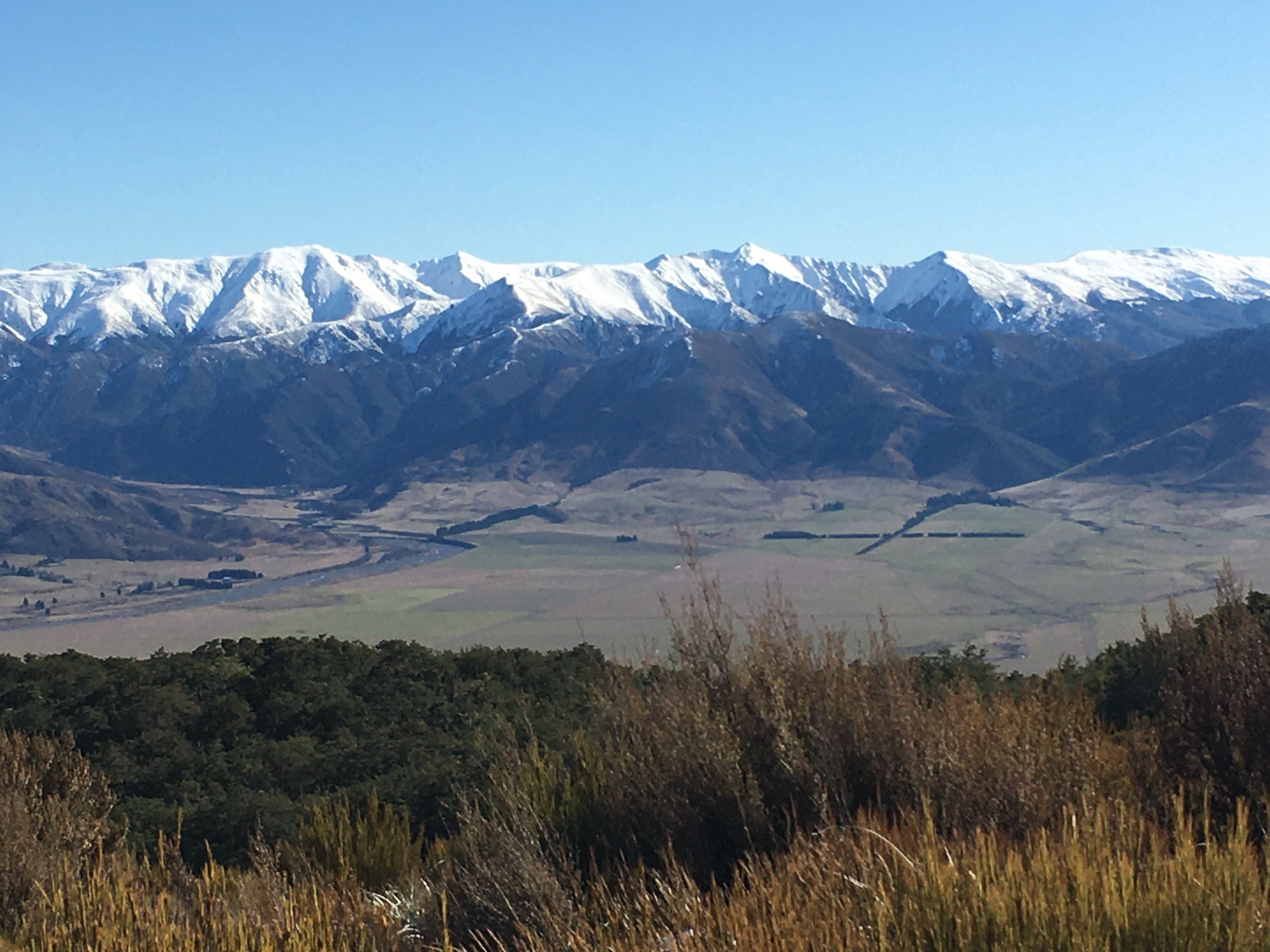
The day we went was sunny and nearly windless. There was snow on the ground, but we ate lunch at the top in our t-shirts, enjoying the stunning panorama spread out around us.
I would say that the only things that diminished the perfection were the mud, the slip that took out a section of track (necessitating a bit of bushwhacking) and the washed-out bridge that meant wading through an icy stream, but those things only added to the fun.
I look forward to better weather and more outdoor adventures as we head into spring.
Looking forward to scenes like this in the coming weeks …
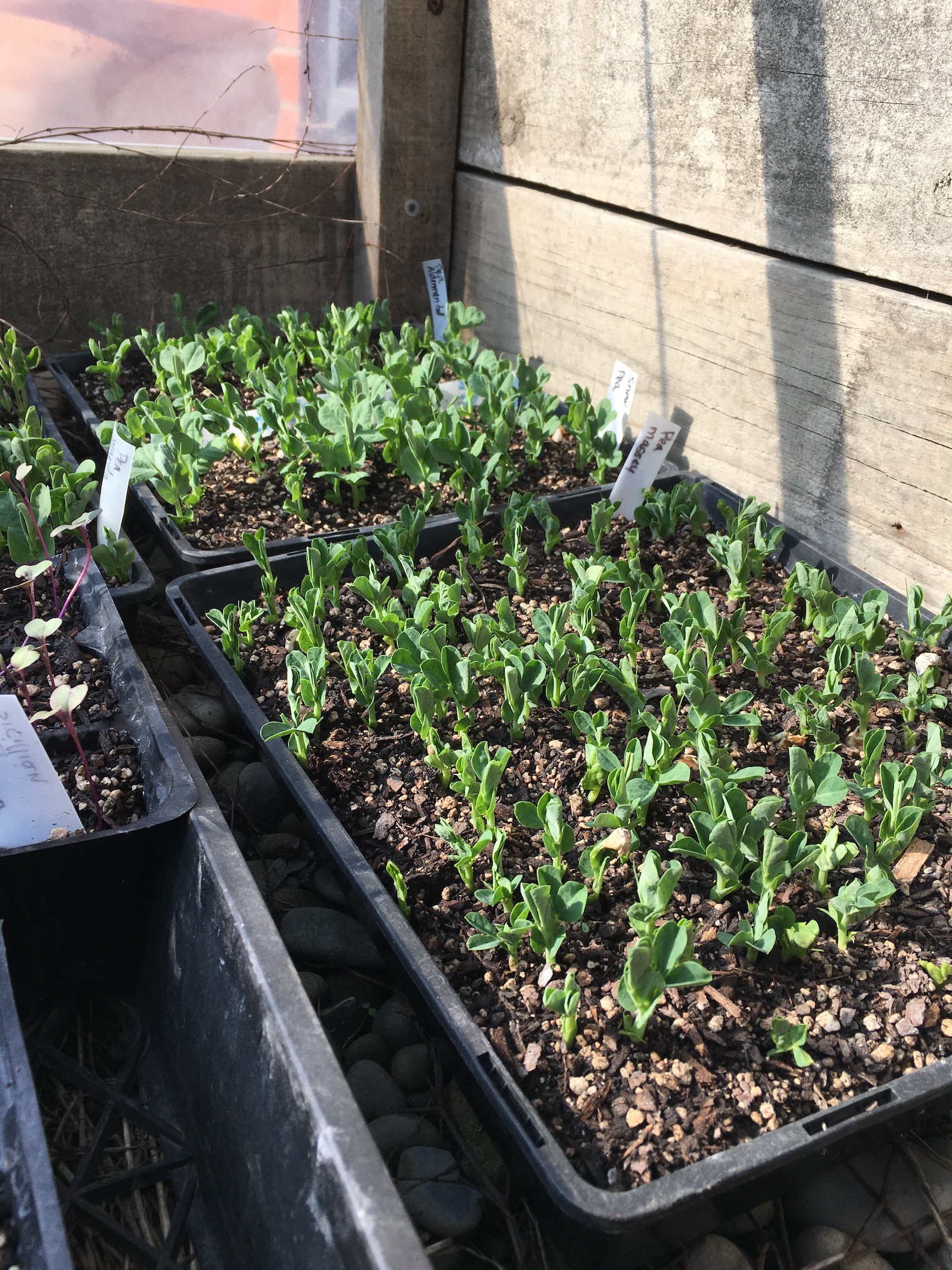
My seed order arrived last week, and I’ve stocked up on seed raising mix in preparation for this coming weekend.
The middle of August marks the start of spring planting, even though officially spring is still two weeks away (in spite of this week’s cold and snow).
This weekend I will plant hundreds of vegetable seeds—broccoli, cauliflower, cabbage, lettuces, spinach, onions, peppers, eggplants, herbs—a combination of early crops that can handle the cold and slow-growing late crops that need a long time in the greenhouse or indoors.
This weekend is always a bit exciting and a bit daunting. Daunting because whatever winter projects I had going are doomed to the back burner until next April. Daunting because of the vast amount of work to get done in the coming months. And exciting because of the pleasure I get out of growing delicious food, and the joy of trying out new varieties of vegetables each year (this year, I’m trying Bartowich Parsley for the first time, a purple snow pea, a new hot pepper, and a couple of new tomato varieties).
I used to get overwhelmed at this time of year by the sheer amount of work ahead, but I’ve learned to manage the work, and more importantly the stress, by creating a weekend-by-weekend to-do list that runs from mid-August through the end of November. The list includes all the annual garden tasks associated with spring—planting seeds, potting up seedlings, preparing garden beds, setting up trellises, cleaning greenhouses, maintaining irrigation lines, fertilising weeding, mulching … With everything on the list, I know I won’t miss any tasks and everything will be done on time.
Obsessive compulsive? Yeah, probably. But it means I can fully enjoy each and every task without stressing about the fact I’m NOT doing something else.
So from tomorrow, if you need to catch me on the weekend, I’ll be in the garden.








 Robinne Weiss