Skink Snap

Stepping out the door one day last week, I met with this lovely skink on the porch. It’s not unusual to see them on our property, but it is unusual for them to sit still for photographs. The cool morning must have made this one sluggish, because he happily waited while I snapped a few pictures. 

I’m always pleased to see skinks; native vertebrates are pretty rare out here in the middle of the Canterbury Plains. We’ve deliberately landscaped to protect and encourage skinks, as I’ve blogged about before. It’s nice to know our efforts have been successful. On sunny days the native plantings rustle with unseen skinks, and the rocks sport basking lizards. I’ve learned not to leave garden hoses lying on the ground, lest a lizard take up residence in the open end.

The common skinks in our yard aren’t in any danger of extinction (unlike many of our native lizards, which are), but it’s nice to know they thrive here. Seeing them makes me smile.

Mingha-Deception Track

Last Wednesday was a glorious, chilly, sun-sparkling autumn day. A perfect day to climb up over the main divide on the Mingha-Deception Track. The track starts where the Mingha River joins the Bealey River. It follows the Mingha upstream through beech forests to the tussock-covered Goat Pass. On the way, it passes a spectacular hanging valley over which tumbles Kennedy Falls—150 metres tall. Kennedy Falls reminds me of one of the reasons New Zealand is so special. This spectacular natural feature sports no access road, no interpretive signage, no gift shop, not so much as a footpath to reach it. It spills down the mountainside in all its glory, unsullied by tourism. By the time you get to view the falls, you feel you’ve earned the privilege.

Goat Pass Hut, set in a hollow just north of the pass, is a spacious hut which we shared with just one other group of trampers Wednesday night. As we ate dinner, a group of noisy kea flew overhead. Thankfully, they didn’t call in at the hut to tear apart our shoes drying on the porch. About ten-thirty, while we all lay snug in our sleeping bags, great-spotted kiwi began calling around the hut—males and females duetting and answering one another. The great-spotted kiwi is a nationally vulnerable species, with a population around 15,000, and I always feel lucky to hear them in the wild.

Thursday morning saw us scrambling down the boulder-strewn upper Deception River on the other side of the main divide. 

Formerly known as Goat Creek, the Deception River got its name in 1900 when surveyor Mr. N. A. Harrop warned engineers building the rail line along the Otira River that the water level in the little river was deceptive—they had no idea how much water could come down the river where it flowed into the Otira River. Three months later, the river flooded and crossed the Otira Valley, damaging the new rail line. It has been called the Deception River ever since.

The day we scrambled down the Deception was one of those deceptive days—the river was lively and powerful, but the water was clear and low enough to cross on foot. Tumbled and scoured boulders left no question about what the river could be like, however. It’s not a place you’d want to be in a storm.

A few hours downstream, we passed a pair of whio (blue ducks) sitting on the rocks preening and ignoring us. Like kea and kiwi, whio are threatened with extinction. There are fewer than 3,000 remaining, so seeing a pair of them was a treat. 

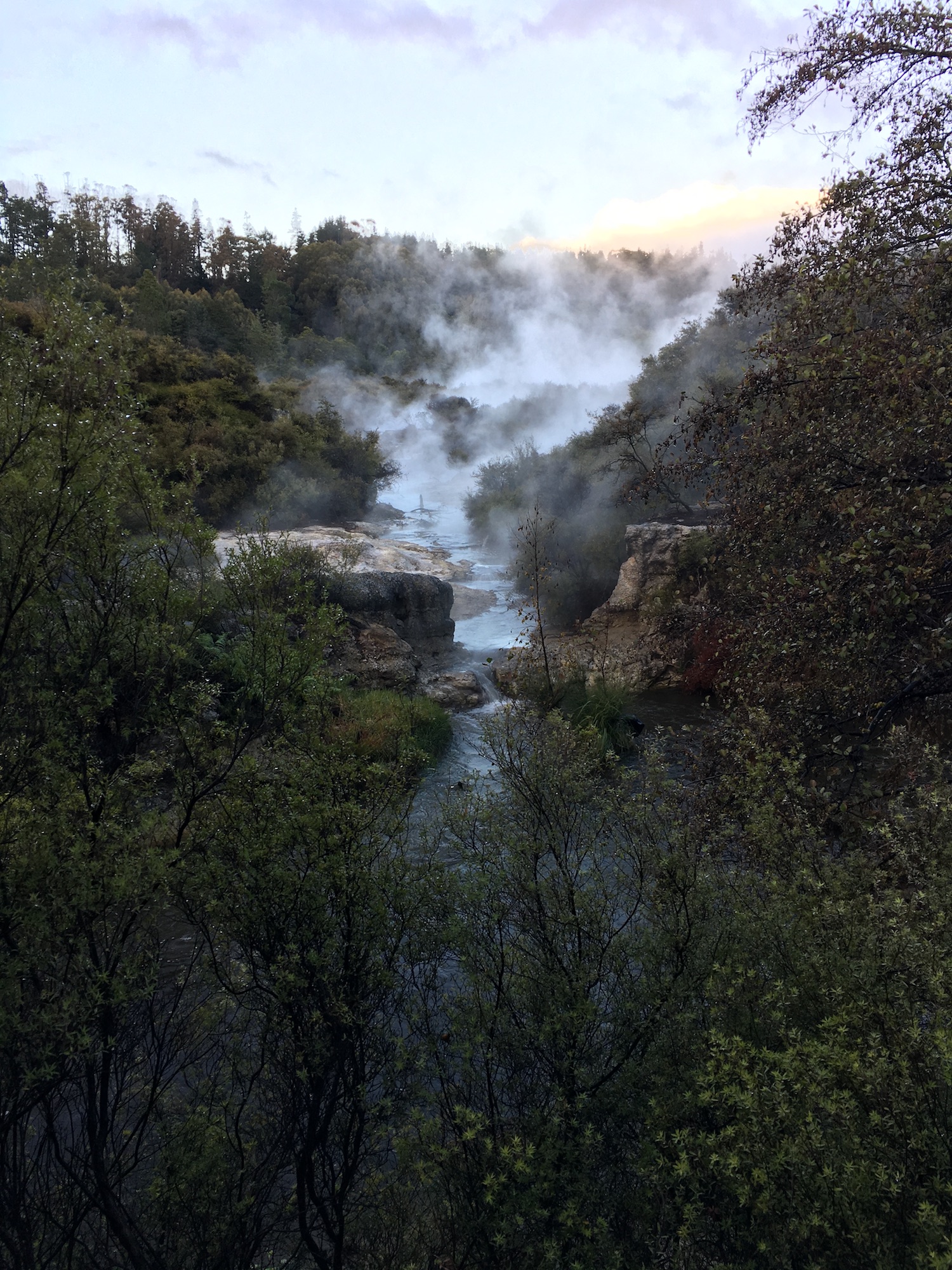
The Deception Valley is narrow and steep, with many side streams pouring into the river, often in waterfalls that would be tourist attractions in their own right if they were anywhere else. Old slips, scoured into crumbling cliffs by the river, speak of a landscape in constant motion. A section of the river smells of sulphur from warm springs nearby—a reminder of the intense geological forces that have shaped the land.

As we emerged from the valley onto the wide flat where the Deception meets the Otira river, the deceptive nature of the river revealed itself again. Freshly tumbled rocks lay in drifts on the forest floor, far from the river’s current flow, showing the extent of recent flooding.

We had a glorious two days, with perfect weather, great wildlife encounters, and good company. Definitely a track to recommend.

Stand Together, Every Day

It has been a difficult few days for all of us here in Christchurch. Shock. Horror. Sadness. Fear. Anger. We have been through so many emotions, it’s hard to know what we are feeling at any given moment.

But one emotion has come to the fore—love. 

Even before we understood the full scope of the horror unleashed in our midst, ordinary people were mobilising to help. Within hours, there were community Facebook groups organising walking buddies and rides for those who felt unsafe on the streets. Other pages were organising meals for the families of victims. Donations poured in on multiple Give-a-little pages (when I went to one of them to donate, less than 48 hours after the attack, the total was already well over $3 million). The NZ Red Cross quickly announced they had plenty of blood after being inundated with donors. People from all over the city left flowers at the police cordons outside the mosques.

Everywhere, people stood together in love.

It’s something Christchurch is good at. We’ve had a lot of practice coming together in the face of adversity in recent years.

It’s tempting to focus on this outpouring of support, to acknowledge the love, and reject the attacker as the enemy. It’s tempting to look at the last three days and pat ourselves on the back for how we’ve responded.

But no matter how good we are at standing together in adversity, the fact is, we’re not good at standing together in the normal times.

We still speak of the Muslim community as though it is separate from the rest of the community. And it is. We need to ask ourselves why. What unacknowledged biases keep us apart? What unacknowledged prejudice prevents us from reaching out to one another in friendship in the good times? Why do we use our differences as an excuse to stay separate, rather than as an encouragement to enrich our lives by learning from one another?

Facing these questions may be uncomfortable—the answers will reveal things we may not want to acknowledge about ourselves—but we must confront them. The man who attacked on Friday may not have been a New Zealander, but there is no question the same attitudes are present here. They are fed by our separateness, fed by our unwillingness to stand up against the little things—the racist comments, the perpetuated stereotypes, the marginalisation of those who may look different to ourselves. These little actions nurture hate. Only by vocally and visibly standing together in the good times can we prevent this from happening again.

Today, wherever you are in the world, step out of your comfort zone. Reach out to someone different from you—make a new acquaintance, a new friend. Shut down an off-colour joke. Push back against a racist comment. Show your love. 

Kia kaha katoa.

Stay strong. Stand together, every day.

Beach Hangout

We nipped out to the beach after dinner on Saturday. We had a nice walk on our lovely, lonely bit of coastline.

But the beach was busy with youth hanging out (up to no good, probably). Some were alone, and some were in groups, strutting their stuff.

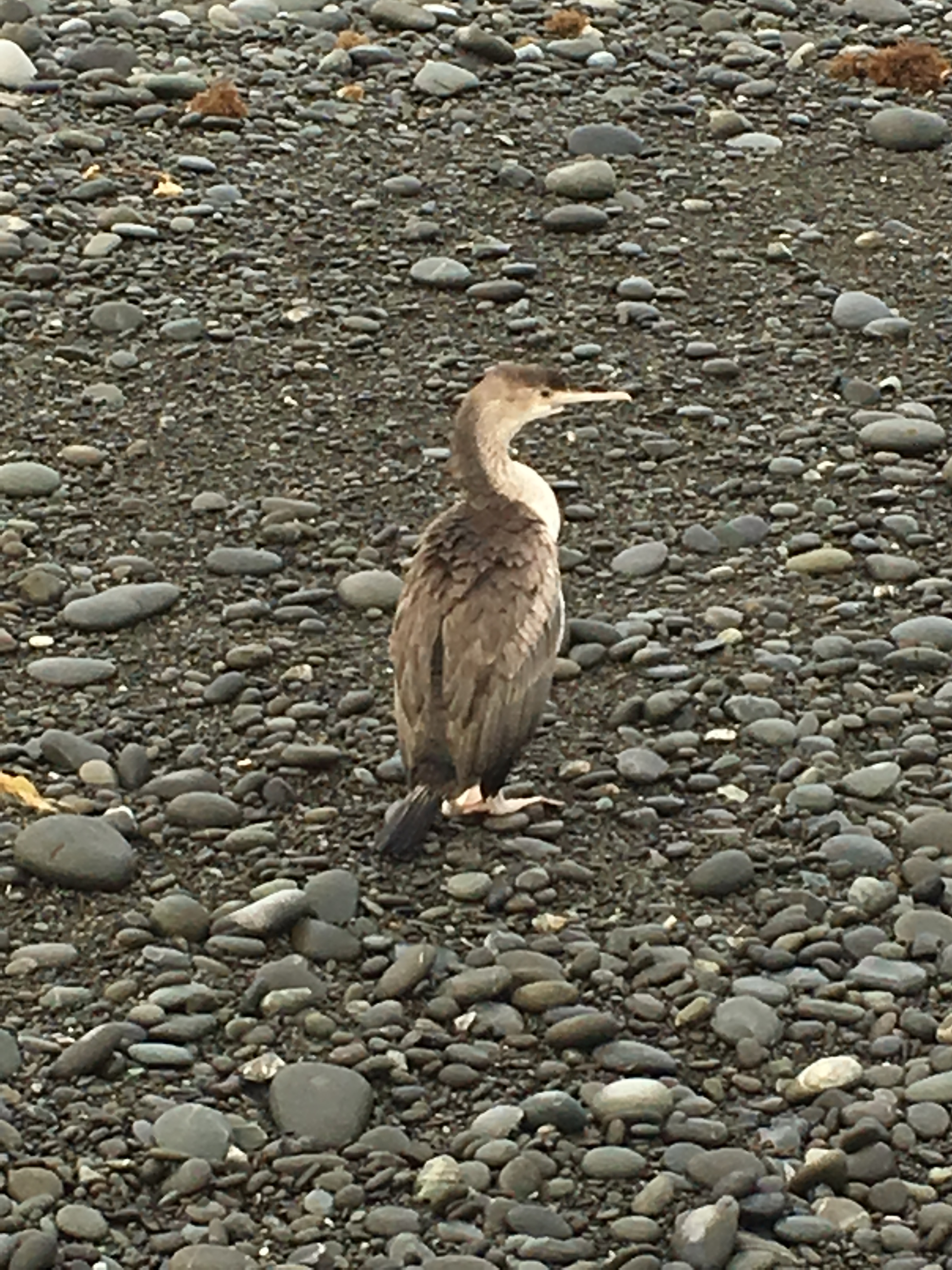
But these youth weren’t your usual crowd of city kids, they were juvenile spotted shags, Strictocarbo punctatus punctatus, also known as spotted cormorants, parekareka, and kawau tikitiki.

Shags were once heavily persecuted as pests. Fisherman believed they destroyed the fisheries, snapping up all the commercial fish and decimating their numbers. Research has shown, however, that their impact on fisheries is minimal. On the other hand, there is some evidence that, in our area at least, shag populations are hurt by commercial fishing. Spotted shag populations on the Banks Peninsula rose from 9,787 pairs in 1960 to 22,123 pairs in 1996 following a reduction in commercial fishing around the peninsula. Illegal shooting can also cause local population declines.

The spotted shag is a marine species, never venturing far from the sea and feeding in deep water up to 16 km from shore. They’re gregarious, breeding and roosting in colonies with up to 2000 birds. The groups of juveniles on our beach were small—a few dozen birds at most. These birds were probably born on cliffs around the Banks Paninsula, and when mature, they’ll head back to those cliffs to lay eggs and rear their young.

So they really were just hanging out on the beach, just like teenagers from Christchurch hang out on the beach on weekends, away from the adults, goofing off and getting takeaways.

Mystery Maggots

Caterpillar, not maggot–see the six true legs and 10 prolegs?

The weather has been hot here, and all the doors and windows stand open all day. With no window screens, that means an array of bugs (and the occasional bird) pops in and out of the house. It’s not unusual to find flies, butterflies, damselflies, etc. on the windows. 

Still, I did a double-take when I saw maggots on my desk the other day. I knew they hadn’t flown in on their own—they must have been hatched nearby. I checked for unseen dead things on the shelves above, but found nothing. There was another maggot this morning, and I did a second unsuccessful check for the source. Then, while I was away from my desk for fifteen minutes, another appeared.

This time I pulled out the microscope and had a closer look.

It wasn’t a maggot at all. It was a tiny caterpillar.

I could think of no reason for a bunch of caterpillars to be living on my bookshelves and dropping onto my desk.

Then I remembered earlier in the day I’d shooed a wasp out of the office several times.

Bingo!

The wasp was a European tube wasp. These little insects seek out cracks and holes to nest in. They fill their nests with up to 20 caterpillars as food for their larvae and then seal the nest with mud.

That would explain the bits of dried soil that accompanied some of the ‘maggots’.

We’ve seen the same thing with our native potter wasps. Last year I had to put tape over all the screw holes in the underside of the dining table, because potter wasps were stuffing them with paralysed spiders (and the spiders kept falling out all over the floor).

As I write, the wasp has returned. Empty-handed this time, she’s fossicking around for a new place to raise her young. Maybe she’ll find one her caterpillars will stay in this time.

Sub-Alpine Idyll

We recently went on a lovely hike up Peak Hill, overlooking Lake Coleridge. The start of the track crosses paddocks, but once on the reserve land, the vegetation changes to a beautiful sub-alpine spread of daisies, Spaniard, matagouri, and tussocks. The daisies, in particular, were spectacular—so many were in bloom that the whole hillside looked frosted. The Spaniard was blooming, too, spiky flower heads rising above the daisies like something from a Dr. Seuss book. Native bees, mānuka beetles, and syrphid flies were all taking advantage of the abundance of nectar and pollen. The air hummed with insects.

You could be forgiven for thinking it was a beautiful, peaceful place. And it was, for us. But among the insects buzzing around were predators—pompillid wasps hunting for spider prey, robber flies snatching unwary insects out of the air, and birds snapping up bugs to feed to their young.

And then there were the plants themselves. At least one hapless beetle impaled itself on a Spaniard leaf. 

It may be pretty, but it’s a rough world out there when you’re insect-sized.

A Little Bit of Crazy

On the lower slopes, looking up to the clouds.

You have to be some kind of crazy to summit Mount Herbert in a raging Nor’easter. Apparently my family and I are some kind of crazy.

To be fair, we didn’t set out to summit. We’d hoped for a day at the beach, but the wind and cloud cover wasn’t promising. So we pulled into Orton Bradley Park thinking we’d do a nice little hike.

We thought, ‘Let’s go toward Mount Herbert; we haven’t actually hiked that track before.’

It’s a typical Banks Peninsula track, winding through non-native forestry blocks, pasture, and scrubby native bush on its way up the mountain. As we got higher and higher, the wind picked up. The ridge line and summit were shrouded in cloud. It certainly wouldn’t be nice up there.

But, hey, it was great hiking weather down lower—not too sunny, and the breeze was nice … until it started whipping off our hats. We carried on up the slope.

By the time we reached the bottom of the cloud layer, the wind was getting a bit ridiculous. We checked our location on the topo map.

Well, it wasn’t too much farther to a shelter where we could eat lunch. Surely we could go that far. We carried on, around a switchback so the wind was blowing full in our faces. I laughed and shouted, ‘This is silly!’ But no one heard me over the wind.

We were in the cloud now, hiking blind to the shelter. When we found it, we tumbled inside, laughing and a little breathless. As we ate our lunch, the sturdily-built shelter shimmied and moaned in the wind. Billowing waves of cloud poured in with each gust.

It would be ridiculous to go on in this weather. What would there be to see, anyway, in the cloud?

But it was only a little bit further to the summit …

We donned our raincoats, shoved our useless hats into our bags, and made for the top.

And so there I was, leaning into the wind, a cramp in my left thigh and a blister on my right heel, condensation dripping off my hair and running down my glasses, unable to see the rest of my family just ten metres ahead of me through the cloud … and stupid-grinning the whole way.

At the summit (the highest point on the Banks Peninsula) we should have been able to see a huge expanse of the South Island spread out around us. We could barely see each other. We cheered our accomplishment, admired the view, and then set off back down.

Our little walk ended up traversing 15 kilometres and climbing 900 vertical metres. It was a ridiculous walk to do, given the weather conditions, but it was absolutely brilliant.

And we got our beach time in, too. By the time we made it back to sea level, it was sunny and hot, so we had a little splash in the sea before returning home.

Sometimes a little bit of crazy is perfect.

Respite on the Rakaia

The temperature is squatting at 37 degrees C. Body temperature. I’ve experienced hotter, but when it hits 37, it’s just hot, no way to argue it’s not.

So we headed down to the Rakaia River, just a short drive from our place.

The walk in from the settlement of Rakaia Huts is green and humid. The track is maintained only by the feet that tread it and winds through a magical scrubby forest. Non-natives brush leaves with natives, feral fruit trees share space with hydrangeas. The worst of Canterbury’s weeds coexist with a remarkable array of native shrubs and ferns—it’s the Peaceable Kingdom of the plant world.

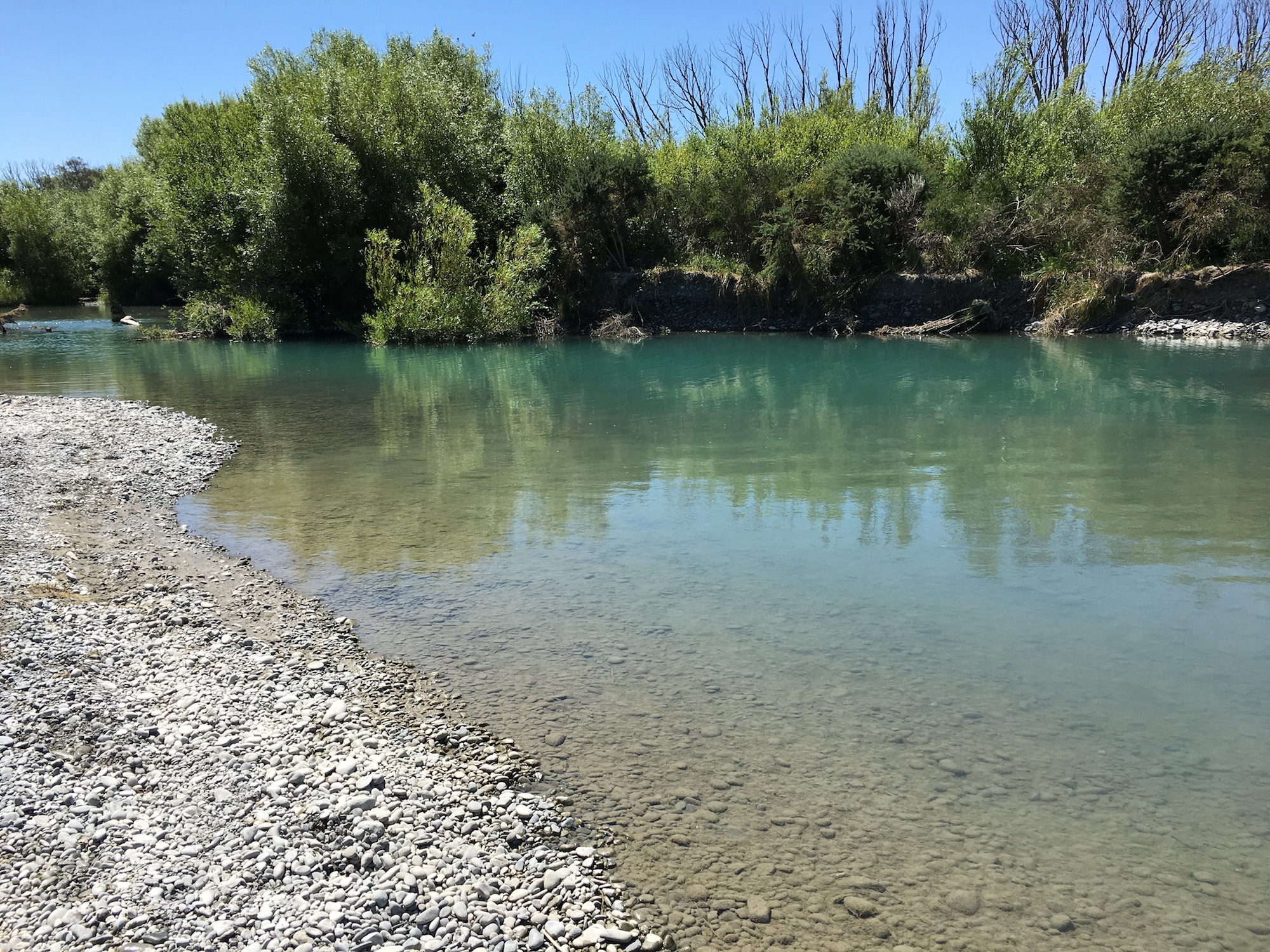
Twenty minutes of walking through this green glade brings you to the river. The Rakaia is a braided river, so you cross and re-cross channels to reach one suitable for swimming. Down near the mouth, there are many swimming holes—deep and turquoise with suspended loess (wind-blown rock dust)—separated by sparkling riffles. We followed the river to the sea, testing each pool to find the best one.

They were all delightful, all ours for the taking, because there was no one else there.

Back home, we stayed in our wet togs until they dried, bringing the cool river with us.

In the time it’s taken me to write this blog, the temperature has risen further. The river water has long since evaporated. Now we have just the memory to keep us cool.

Alpine Delights

The family spent a delightful hour on the Dobson Nature Walk in Arthur’s Pass National Park on Wednesday. The track is an easy one, and hiking it quickly takes about 20 minutes. But it’s not a walk you want to do quickly, especially in summer. It winds through alpine and sub-alpine vegetation, including some beautiful tarns, and in summer, so many plants are blooming, it’s hard to take five steps without finding another lovely orchid, daisy, or hebe in bloom.

For me, the best part of the walk is the abundance of sundews in the tarns. As an entomologist, I’m naturally drawn to carnivorous plants like sundews. Sundews catch insects on the sticky hairs you can see glistening in this photo. The hairs are sensitive to both touch and taste, and when they sense a struggling insect, they fold inward to further entangle their prey. Enzymes exuded by the hairs then digest the insect, and the leaf takes up the nutrients in order to grow in the nutrient-poor alpine wetlands. 

These sundews were just beginning to flower—many plants had flower buds, but none had yet opened. The flowers sit above the leaves—an important adaptation, since the plant needs to be pollinated by the very insects it eats.

The alpine summer is short, so when these plants are done flowering, the leaves will slowly shrink into a structure called a hibernaculum that sits near the soil surface and protects the plant through the winter.

Christmas Baking

When I was a kid, my mother would start her Christmas baking just after Thanksgiving. She’d bake dozens of kinds of cookies and freeze them. For weeks before the big day, there would be a big platter of cookies—a few of each of the types she’d made—out for eating. It was a child’s dream. I don’t remember her making anything but cookies for holiday desserts. We certainly didn’t need anything else, with all those cookies available.

Before moving to New Zealand, my holiday baking was similar (though with only one child eating cookies, I didn’t make quite so many as my mother did—she had three young cookie eaters). But it’s changed a lot since then.

Cookies are made with ingredients that store well—flour, butter, sugar, nuts—that’s great for winter baking, when fresh ingredients are hard to come by. But Christmas falls at the height of the summer fruit season here—it’s no wonder the traditional Christmas dessert here is pavlova—a meringue ring filled with fresh fruit (Unfortunately, I’m really not fond of meringue).

At the moment on our property, we are harvesting black currants, red currants, gooseberries, raspberries, strawberries, cherries, and blueberries. With as much as 10 kilograms of fruit coming in every two days, much of that harvest goes into jam, sauces, chutney, or simply gets frozen for later use. But it would be a shame not to bake with that fruit, in favour of cookies, which I can make any time of the year.

So we’ve been enjoying strawberry shortcake, currant pie, and gooseberry crisp. For breakfast, we’ve been eating waffles smothered in fruit, and muffins studded with fruit. For snacks, and with every meal, we’ve been eating fresh fruit—whatever hasn’t gone into baking or the freezer.

Oh, there are cookies, too (why not?). But it’s the fruit I snitch while walking through the kitchen, and it’s the pie I crave for dessert.

Some day I’ll dispense with the cookies entirely … Maybe I’ll even learn to like pavlova.