Diversity in Music

My children’s school held a showcase concert last night featuring the best of the music department.

The performances ranged from classical to jazz to swing to folk music to rock to heavy metal. Some pieces were by famous composers, others were written by the students themselves. Students dressed for their performances in clothes ranging from torn jeans and t-shirts to suits and ties and floor-length gowns.

The mood was supportive and celebratory. It recognised that the musical achievement of a student interested in heavy metal is no less than that of a student interested in classical piano. It celebrated the diversity of student achievement as well as the achievements themselves.

How different from my own high school’s showcase concerts, filled with little beyond classical and religious music, with the odd show-tune thrown in. I distinctly remember the shock in the auditorium once when a group of students not sanctioned by the school showed up and played rock-n-roll.

If you didn’t sing in choir, you didn’t sing. If you didn’t play in the marching band or the orchestra, you didn’t play. I wonder how many students decided they didn’t like music because the only music they were allowed to make was the sort they didn’t identify with. I wonder how many good musicians let their own music die because it wasn’t valued by the school and the adults around them.

My kids enjoy diverse music. Though they both play instruments, neither of them is likely to go on to become a professional musician. Still, I’m thrilled their school encourages students to explore their own music, and recognises that musical skill can be demonstrated in an ear-splitting heavy metal guitar riff just as effectively as in an operetta.

Making Music

file-8-09-16-7-34-10-pmI attended another high school music programme this evening and was struck once again at how important making music is to human culture.

Not listening to music, though that is nice, too.

Making music.

I have always loved music—classical, rock, country, folk, hip-hop, jazz—doesn’t matter what it is. If I could live my life inside a musical, I would. In fact, some days you could be forgiven for thinking I do, the number of times my husband or I break out in song.

Young people seem to understand this need to make music—kids sing on the playground when they’re younger, and gather with friends and a few guitars when they’re teens.

They make up songs about their high school teachers. The one we heard tonight was loving; some of the ones I remember singing with my friends in high school were not so kind.

They beat drums, tap silverware on the table, clap their hands and do beat boxing. They write music, they play music, they make it their own. They use it to say the things they cannot speak. They use it to be the people they want to be.

And somewhere along the line, they stop making music.

Somewhere along the line, music becomes something that ‘professionals’ do.

They start to believe that making music is embarrassing, a waste of time.

They start to believe that music must be performed for an audience.

Gatherings no longer include the guitars. Beat boxing gets rolled eyes instead of an on-the-fly rap to go with it. Show tunes no longer feature in everyday conversation.

Oh, there are adults who still do this, for sure. But usually they have a reason for doing it—they’re in a band, or music is part of their work. The average adult with 2.5 kids, a mortgage, and a job doesn’t.

It is a loss.

A loss, not just to the individual, but to society as a whole. We lose our ability to express the things we cannot say. We forget to be the people we want to be. Celebrities become demi-gods, because we forget that we can all make music—we don’t need a recording contract, a gig, an audience, or even an ounce of musical ability. We can make music because we are human. We need to make music to remain so.

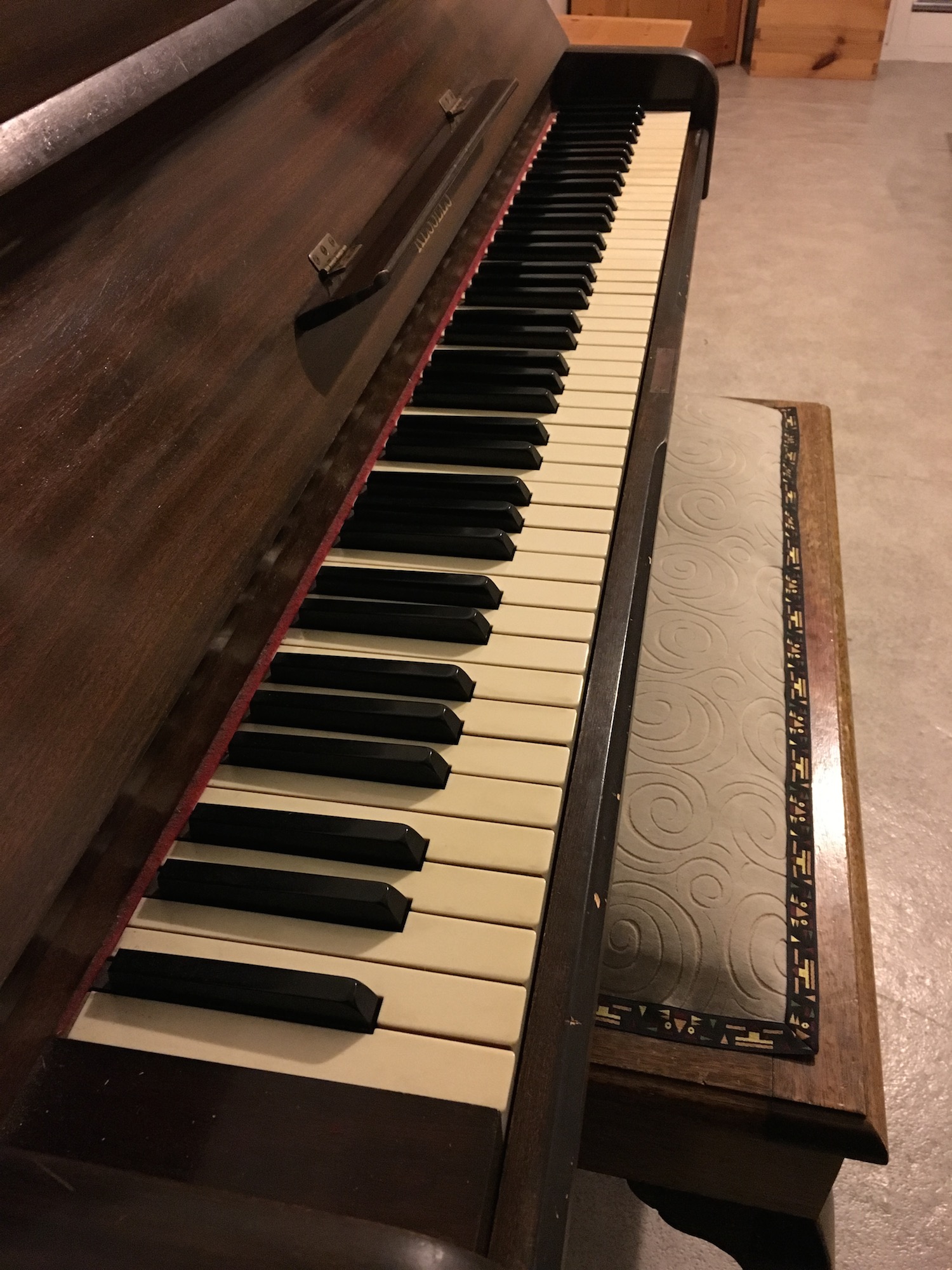
The Piano

file-8-09-16-7-34-10-pmA dozen things I should be doing
But I am at the piano instead.

Rodgers and Hammerstein,
Gary Portnoy,
Roger Post,
Scott Joplin,
Johann Straus…

Paths my fingers have travelled before,
New ones they do not know.

I sing along
Or not.

A key sticks.

It doesn’t matter.

In the notes,
In the silences
In rest and beat

Between bass and treble clefs
I find the centre once again.

Dissonance

Resolved

The last note
Carries me on.

The hills are alive with the sound of music

I was in the garden, weeding as usual, when I heard the Star Wars theme wafting across the yard. It was my daughter, testing the new low register she was making for the flip-flop-o-phone.

What’s a flip-flop-o-phone, you ask?

It’s one of a number of musical instruments scattered around our yard. My husband believes in tantalizing all the senses in the garden. Music is an important part of that, so he builds instruments everywhere.
tubophone smIn the herb garden is the tubophone—galvanized electrical conduit cut to a C-major scale and played with a mallet—a DIY glockenspiel.

musicalbench sm


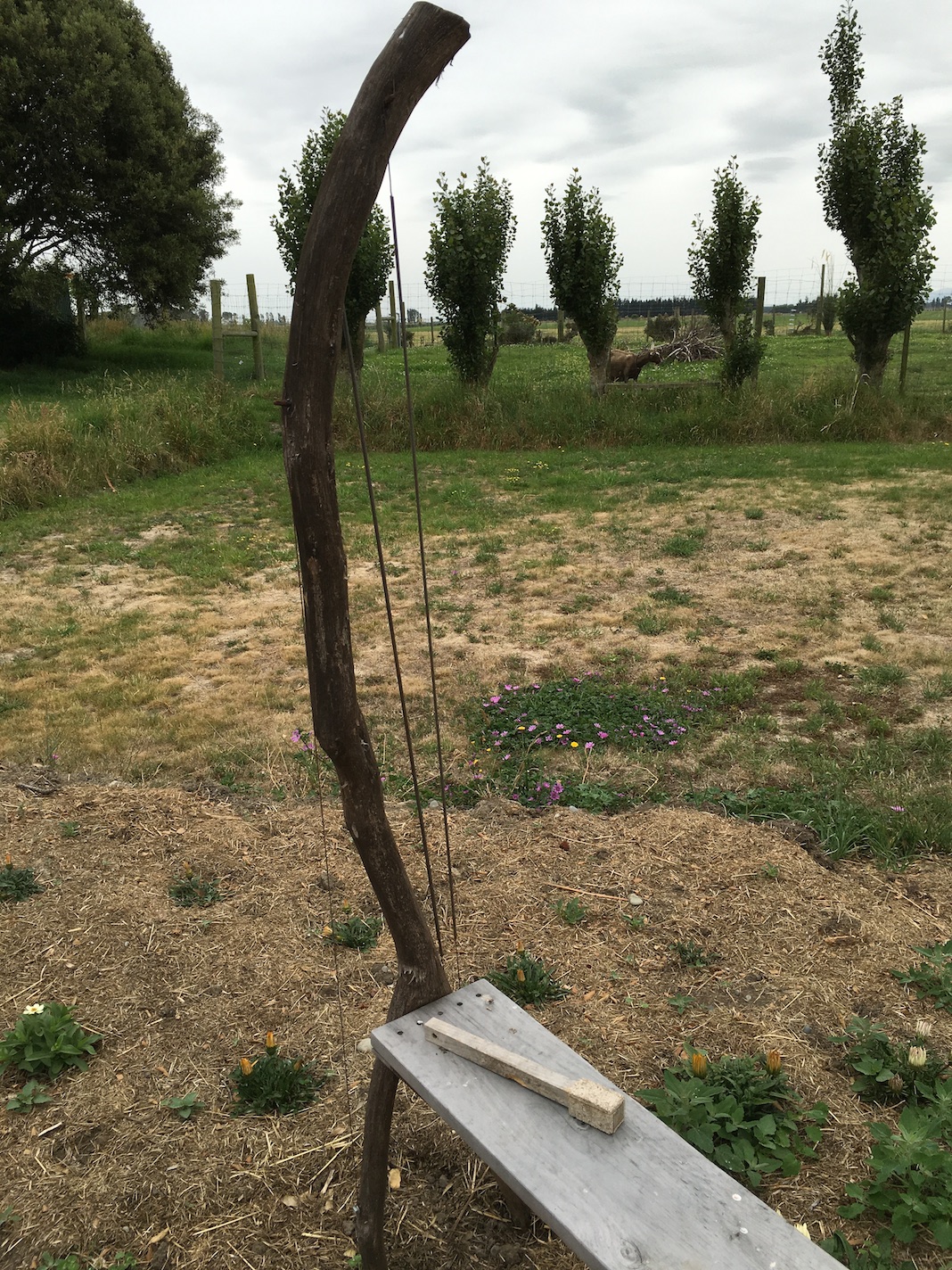
In the pond garden is a bench strung with strikable and pluckable piano strings—sort of a jug band sound.


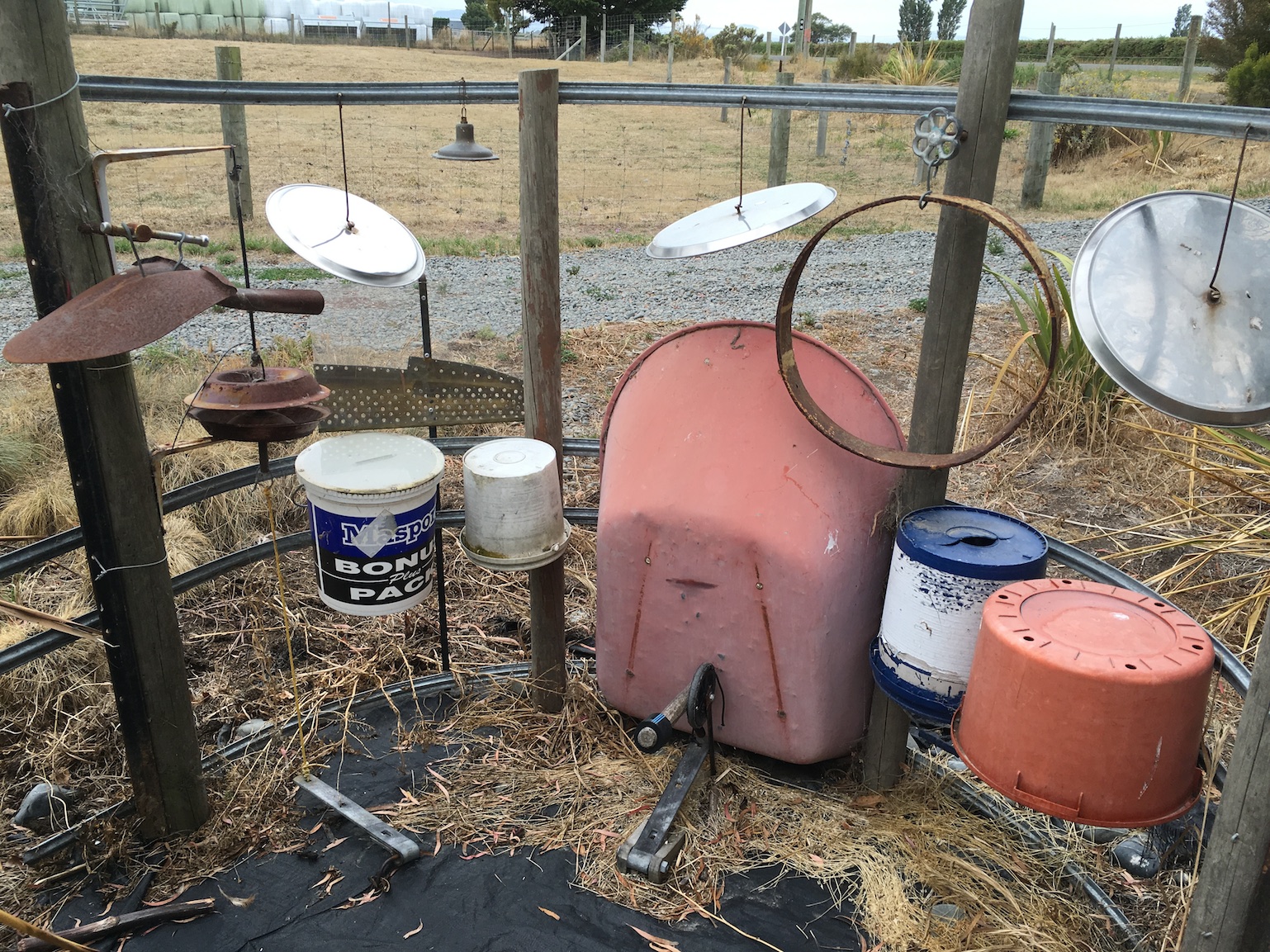
drumkit1 smAnd nestled among the plants in the native garden are the garden drum kit (complete with wheelbarrow bass drum, bucket snare, and tyre hub high hat), and the flip-flop-o-phone.
flipflopophone1 sm


The flip-flop-o-phone is a set of pvc pipes (salvaged plumbing) that are struck on the end with an old flip-flop to make a (sort of) musical note.

The outdoor instruments are fun, interactive garden elements we all enjoy—one of the many elements of whimsy my husband adds to the landscaping.