A Glint of Exoskeleton–available now!

GlintCoverNEWAnnouncing the release of my new novel: A Glint of Exoskeleton–an entomological adventure for ages 8-13.

Thirteen year-old Crick struggles to hide her secret ability. She has learned the hard way that adults think she’s crazy if she tells them she can talk to insects.

So when her best friend—a cockroach named Peri—enlists her to help save the human race from a deadly new insect-borne disease, she must do it in secret.

The mosquitoes have engineered a new disease—Leopard Spot Fever—and have planned its orchestrated release to wipe out the human race.

Crick and Peri embark on an undercover mission to kill the mosquito leader and destroy her plans. Their mission takes them to tropical Panama, where they find more than they bargained for. Soon they are on the run from the evil Dr. Dirk, in league with the mosquitoes.

They must use all their cunning, and draw on a host of insect allies. But will it be enough to survive? Will they be able to stop Leopard Spot Fever before it’s too late?

A Glint of Exoskeleton is available paperback and e-book formats.

Get your copy at:

Amazon.com: http://www.amazon.com/s/ref=nb_sb_noss?url=search-alias=stripbooks&field-keywords=a+glint+of+exoskeleton

Smashwords: https://www.smashwords.com/books/view/620128

Barnes and Noble: http://www.barnesandnoble.com/w/a-glint-of-exoskeleton-robinne-weiss/1123488988?ean=2940152902709

Kobo: https://store.kobobooks.com/en-us/ebook/a-glint-of-exoskeleton

iBooks: http://www.apple.com/ibooks/
Step on a Hedgehog

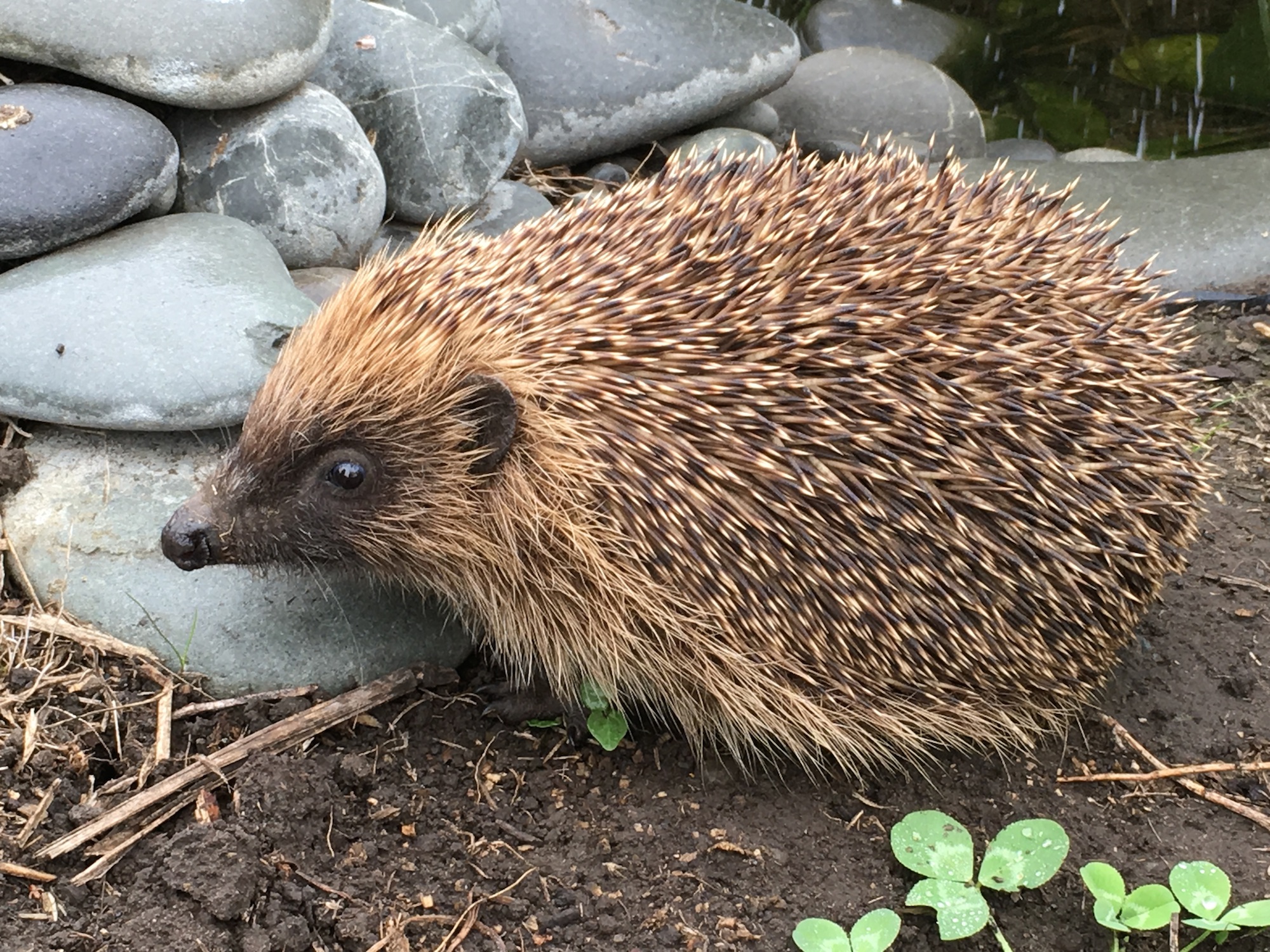
2016-01-26 18.07.41 smMy daughter came to me frustrated yesterday evening.

“What is fear?”

Knowing she had just been out in the dark, I asked her if she was frustrated because she was afraid of the dark.

“No, I’ve gotten over my fear of the dark. Now I’m afraid of hedgehogs.”

“Ah. You’re afraid of stepping on them in the dark.”

She nodded.

“Well, you learned that from your father, who worries about stepping on hedgehogs in the dark. But I’ve actually stepped on hedgehogs in the dark.” I shrugged. “It’s not so bad—for me or for the hedgie. You tend to feel it before you put all your weight on it, and you pull back before you hurt it.”

She looked relieved.

It got me thinking about the nature of fear, how easily it is taught, and how difficult it can be to overcome.

Teaching children about insects, I see fear all the time. The fear that another living thing might harm us (and sometimes the fear that we might harm another living thing). Much of my teaching is aimed at overcoming those fears.

And in saying ‘overcoming,’ I don’t mean eliminating those fears—that’s the work of decades, not of an hour.

I know that, because I experience those fears, myself—they are deeply rooted in our culture, and I was taught them just like everyone else was. But I have confidence in spite of the fear. Part of that comes from knowing that the worst that can happen is really not all that bad (for most things). I have been bitten, clawed, and stung by songbirds, parrots, raptors, rabbits, rodents, snakes and all manner of insects and spiders, and have survived it all. More importantly, I’ve learned that if I understand the animal and move with confidence and care, I am unlikely to be hurt (or to hurt the animal).

So I don’t try to make children unafraid of insects; instead, I teach them how to move with confidence and care, even if they don’t feel the confidence yet. I teach them how to hold an insect safely. If I think they’re ready for it, I give them an insect that is likely to bite them—a tiny nip they might actually feel, if they’re paying attention. They might cry out, “Oh! It bit me!” They might fling the insect off their hand. But chances are good, they’ll pick it up again, because the worst has happened, and it wasn’t so bad. The act of taking the risk once makes it easier to do it again. Confidence grows. The fear may still be there, but it is diminished by understanding and experience.

I hope my daughter does step on a hedgehog in the dark. She will stumble in her effort to not squash it. She’ll cry out in surprise, and then laugh as the offended hedgehog lumbers away. When she goes out in the dark next, she’ll walk with more confidence. And because the fear will probably still be there, she’ll feel incredibly brave in doing so.

Dobsonflies

Photo: Geoff Gallice

Photo: Geoff Gallice

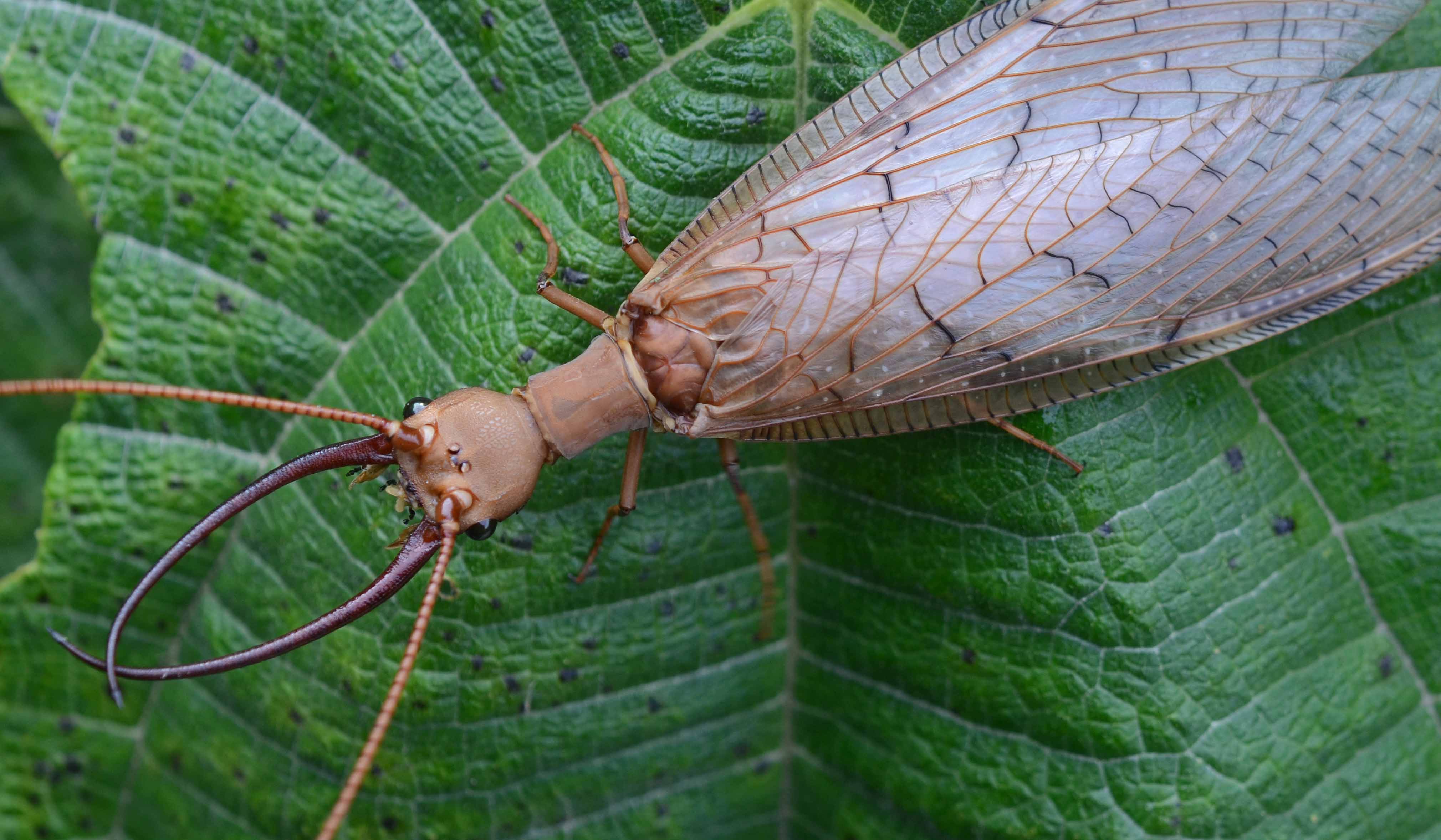
One of the insects I wish we had in our pond is dobsonflies. When I first learned the insect orders, the dobsonflies were lumped with the lacewings. Now they’ve got their very own order–Megaloptera. So, of course, since they have their own order, they need their own poem!

Megaloptera, helgrammite!
Known as toebiters.
When larvae bite

Adults are gentler,
Though they still look fierce
Their scimitar jaws
Are too weak to pierce.

Massive jaws
And flashing wing
Woo the ladies
But don’t catch a thing.


Puddles of Crickets

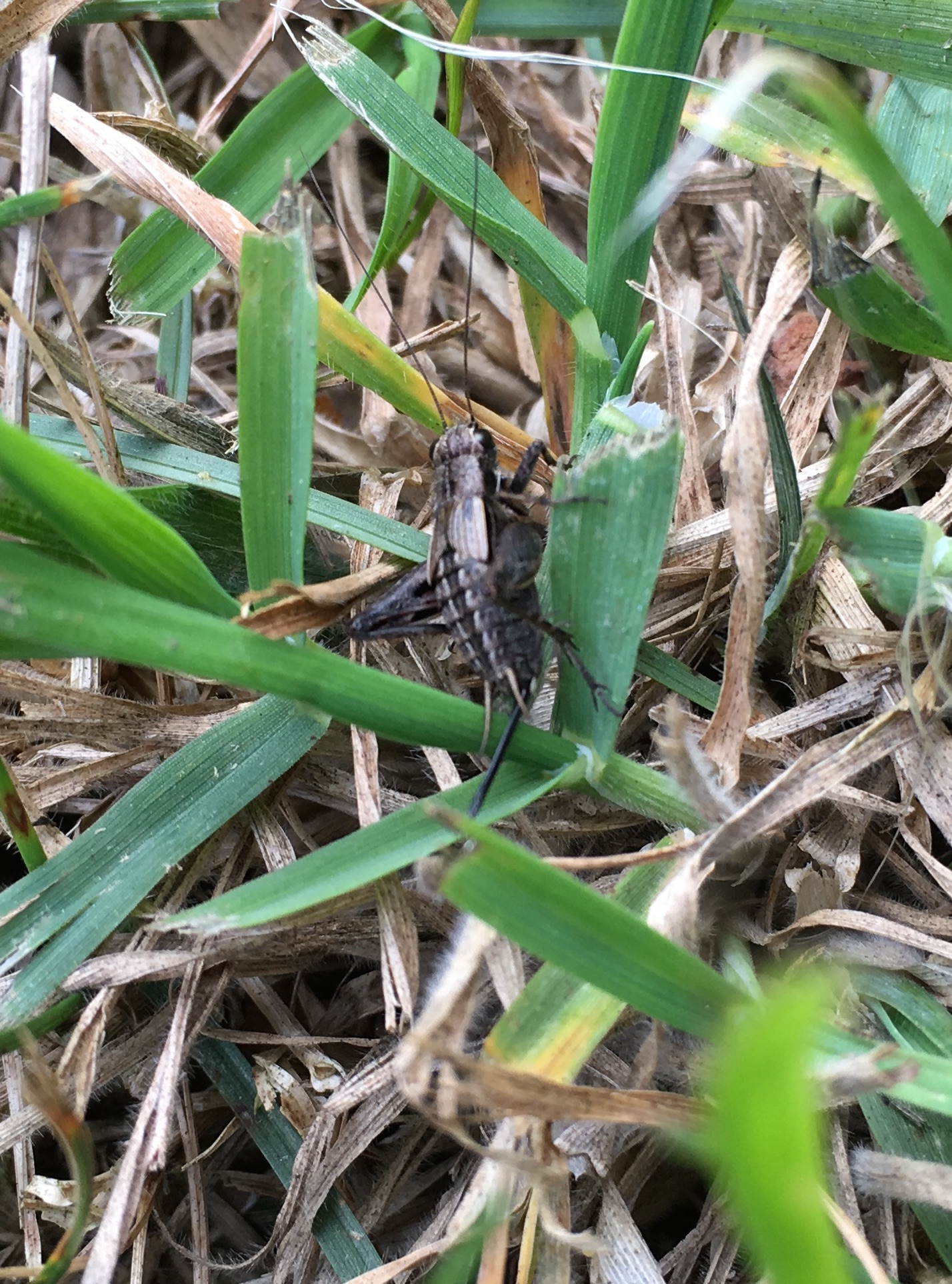
A female small field cricket--the long ovipositor (egg laying tube) at the rear tells you she's a girl.

A female small field cricket–the long ovipositor (egg laying tube) at the rear tells you she’s a girl.

It was like walking through puddles, my daughter said.

There had been no rain.

But the grass was so alive with crickets, they rippled away from every step like splashes of water.

By the time I got there, she had splashed all the crickets away, but I could still hear them. Their little bell-like songs have been a constant background noise all summer, and are particularly loud now, in autumn, when most are adults.

It’s only the males who sing, and they do it by rubbing their short, leathery wings together. The song is fiendishly difficult to locate—it sounds like it’s coming from a dozen places at once, and finding a calling male is all but impossible for a predator. The other crickets are able to do it, though. Males’ calls stake out their territories and attract females.

When I ran the Bugmobile, I used to take crickets to schools, and I always wanted to have a couple of males so the kids could hear them singing. Catching males was a challenge. Not only are they difficult to locate by sound, but if you do stumble across one, it will drop immediately to the ground and scurry underneath the leaf litter like a cockroach. Females, on the other hand, take great bounding leaps to get away, making them easy to catch in a sweep net. I could collect a dozen females in one sweep of the net, but it might take me half an hour to search out as many males.

It was the same story when I went to photograph them for today’s blog post. Males singing all around me, and not one available for the camera. The girls were more obliging. It wasn’t quite like walking in puddles, but there were an awful lot of them hopping around in the grass.

Diptera—the Flies

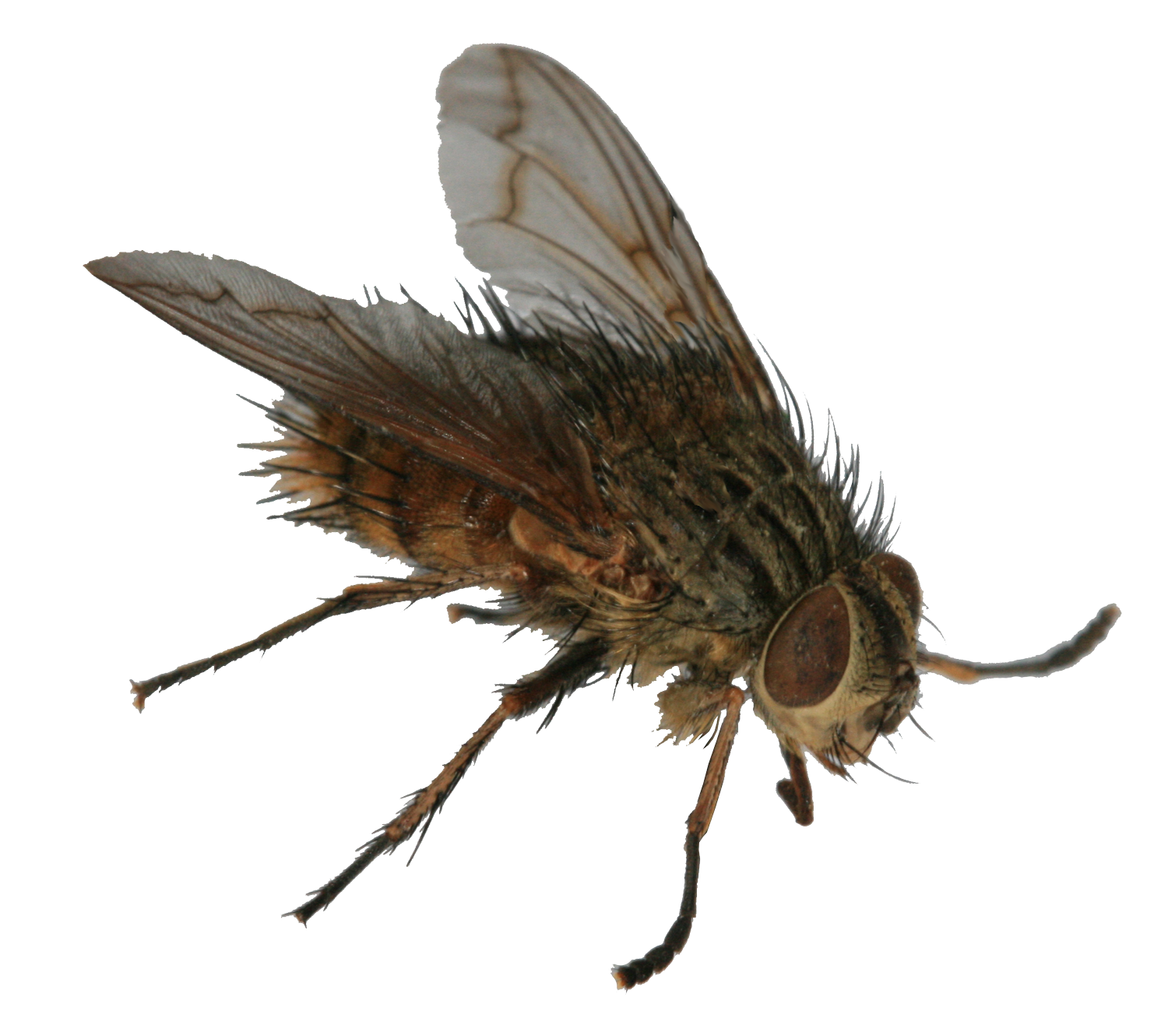
tachinid2With several thousand sheep as neighbours, it’s no surprise the house is full of flies all summer.

There are, of course, house flies, but the Dipterans don’t stop there, and not all of them are around for the sheep poo. We also have lesser house flies, crane flies, fungus gnats, midges (which I’ve mentioned before), several species of blowfly, drone flies, striped dung flies, ginger bristle flies, two species of soldier fly, robber flies, longlegged flies…and those are just some of the flies that find their way into the house.

Not all of the flies are pests, though none really belong in the house. Some are important pollinators, many are decomposers breaking down plant and animal material, some prey on pest flies, and all are food for other animals.

And, like all insects, they are inspiration for doggerel…

The order Diptera
Known as the flies
Have one pair of wings
(I tell you no lies)

They’re often seen flying
‘Round garbage and such
And generally people
Don’t like them too much.

Ant Swarm

2016-03-18 12.59.05 smI walked out the brick path to my office after lunch today, my mind focused on how I was going to write my main character out of the mess I’d written her into in the morning.

Then something in my peripheral vision made me leap over a few bricks. I turned to inspect what I’d thought I’d seen.

Sure enough, there were three growing ant swarms on the path. And as I expected, when I looked more closely at them, I found winged ants among them.

Among the eusocial ants, only the reproductive individuals have wings. Throughout most of the year, the colony produces wingless worker ants—females who don’t ever reproduce, but instead care for their younger sisters, and feed and defend the colony. In late summer, in response to some environmental signal (often rain), all the colonies in an area simultaneously produce winged ants—both males and females.

Entomology textbooks dryly say the winged ants fly off in search of mates, but from my perspective, having watched winged ants emerge for over 45 years now, the colony throws a huge party for the winged ants before they go.

On “Emergence Day”, an ant nest swarms with activity—not just inside, where it’s always busy—but also out on the surface. Winged and wingless ants pour out of the nest and mingle in the sunshine, sometimes for hours before the winged ants finally take flight. I like to think they’re having a little bachelor/bachelorette party for the potential brides and grooms.

When the winged ants take off, the wingless ones retreat to the nest. Their brothers and sisters will never return. If they are lucky, they’ll find a mate. The males, once they’ve mated, won’t live long. Their job is done, and they are easy prey for birds, spiders, and other predators.

The mated females, if they escape predators themselves, will fly to a favourable nest spot, break off their own wings (they’re not needed anymore), and begin to dig. The small nest each excavates will be home to her first offspring, who will enlarge the nest and care for the next batch of eggs the new queen lays.

A queen ant will mate only once. From this mating, she will parcel out sperm for her entire life (up to 30 years for some species!) to fertilize the eggs she lays.

So the ant swarms you see on the sidewalk are serious business. Step carefully, please!


Psocopterans

I dedicated my book, A Glint of Exoskeleton to the Psocopteransthe booklice. Cute little creatures. They like books–they eat the moulds that grow on them–but they’re not luddites; there’s a whole crew of them that lives in my keyboard. Here is a silly little verse about them.

Psocoptera

Psocopterans are

Great readers of sorts

But don’t enjoy reading

Physics or sports.

They much prefer Hemmingway,

Tolstoy or Shakespeare.

“The classics,” they say,

“Are just so much tastier!”

German Wasps

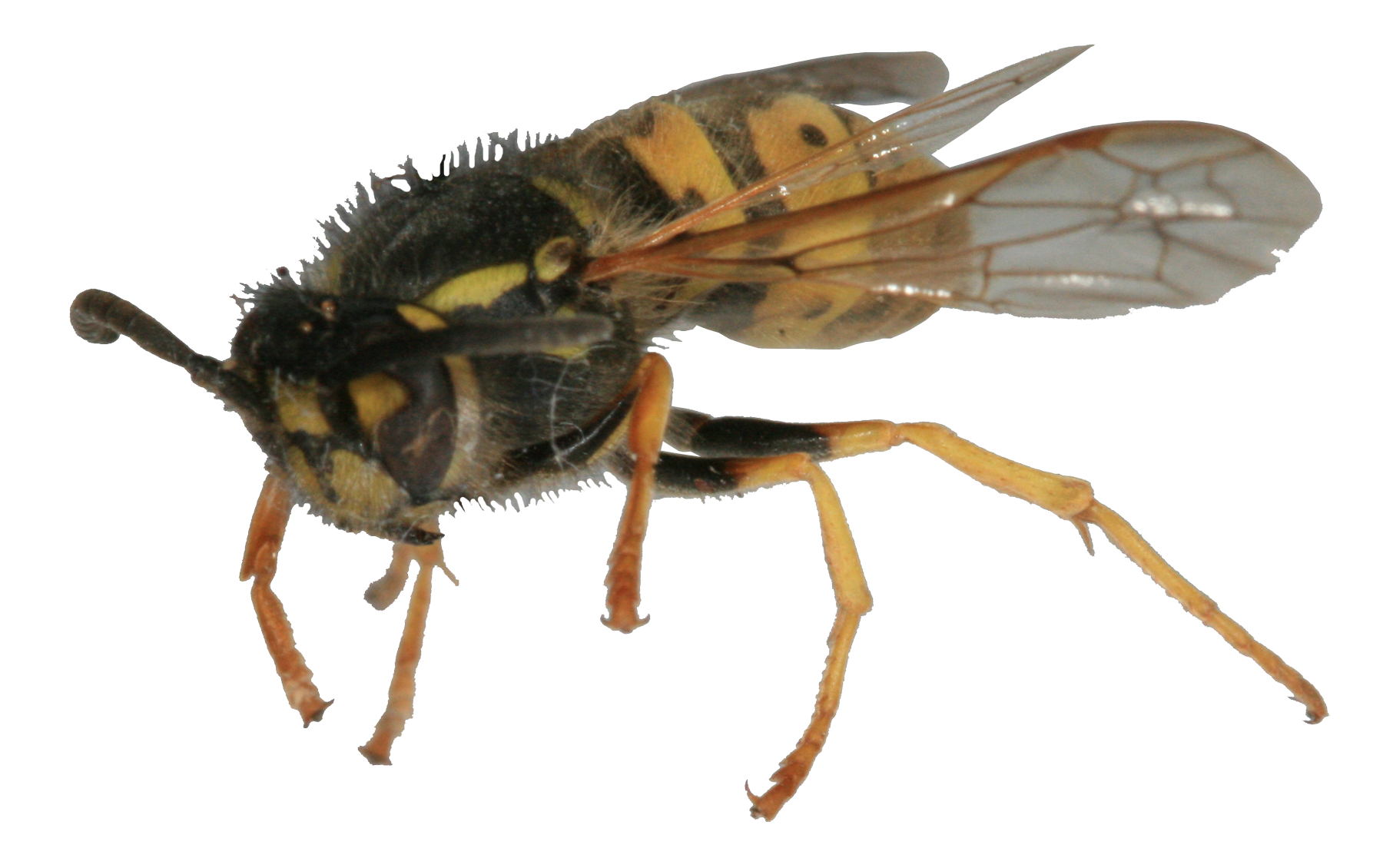
GermanWaspCanning fruit or tomatoes always brings them around—the German wasps can’t resist the sweet/tart smell of chutney, tomato sauce, or apples. And of course, their numbers are highest in late summer/early autumn when we’re doing lots of canning.

Today, they flitted around the kitchen most of the afternoon, licking up applesauce from the benchtops, and generally being a nuisance.

German wasps are opportunistic feeders—they’ll eat most anything, from fruit, to dead animals, to live insects. In the house, they not only go for whatever’s cooking on the stove, but they catch houseflies in mid-air, chomping them messily on the windowsills and leaving cast off fly legs and wings all over the place.

Though they are a nuisance indoors, and can prove deadly to people like me, with allergies to their stings, they do their worst damage in our native forests where they rampage like a pack of hungry teenage boys.

As flexible scavengers whose numbers can grow to an estimated 10,000 wasps per hectare in beech forest, their impact can be devastating. They compete for food with native birds, lizards, and bats. They also eat native insects and even baby birds.

Almost every year, we have a wasp nest somewhere on the property. I haven’t found this year’s yet, though by the number of wasps enjoying my applesauce today, I know there’s a nest somewhere nearby. When I find it, I’ll destroy it—from an environmental perspective, and from a personal safety perspective it needs to be done.

But I admit I will do so with a twinge of guilt. Troublesome as they are, I have great respect for wasps. These beautiful animals are the ultimate efficient eating machine. They are no-nonsense foragers who go out and get the job done so well that they’ve been able to invade diverse habitats throughout the world. I may not like the consequences of that, but I can admire an animal flexible enough to thrive almost anywhere.

The Midges!

A male midge, with feathery antennae.

A male midge, with feathery antennae.

It was like a scene from an Alfred Hitchcock film. The sliding glass doors of my office were swarming with midges, commonly called lakeflies here (because they lay their eggs in nearby Te Waihora/Lake Ellesmere, and rise off the lake in huge swarms in summer). By their density (at least 1 per square centimetre), and the size of the doors, I estimated that there were at least 90,000 on the doors alone, not counting the ones swarming around looking for landing space.

I had been working late in the office, with the lights on, and they were attracted to the light. I turned off the light, took a deep breath (breathing in midges is horrible), and bolted out the door, slamming it closed behind me.

A female midge, with thread-like antennae.

A female midge, with thread-like antennae.

There were about a hundred on my ceiling in the morning. I reckon that was pretty good, given how many were knocking on the door.

I actually don’t mind the midges much. They don’t bite, and their appearances are brief, if dramatic.

But the question is, what are they all doing in those great big swarms? Well, the swarms are great big mating displays called leks. Male midges (they are the ones with feathery antennae), fly around in large swarms trying to attract the eye of a female. The females drop by the lek, pick out their favourite male, and mate with him. The resulting eggs are laid in slow-moving bodies of water (or sometimes on wet car parks, where I imagine they don’t live long).

The larvae of our particular midges are called bloodworms. They are one of the few insects that have haemoglobin in their blood. That’s what gives our blood its red colour, and it does the same to the midge larvae. The haemoglobin allows the midge larvae to live in low-oxygen, stagnant water, because it can capture and store oxygen, just as it does in our blood.

Midge larvae are a critical part of the food chain in many terrestrial aquatic ecosystems, feeding fish and other insects. They also must be important food on land, too. The spiders and songbirds certainly enjoy them when they swarm.

Still, in spite of their harmlessness and their ecological importance, I think Hitchcock could have had made a great movie of them.

Invasion of the Cabbage Whites

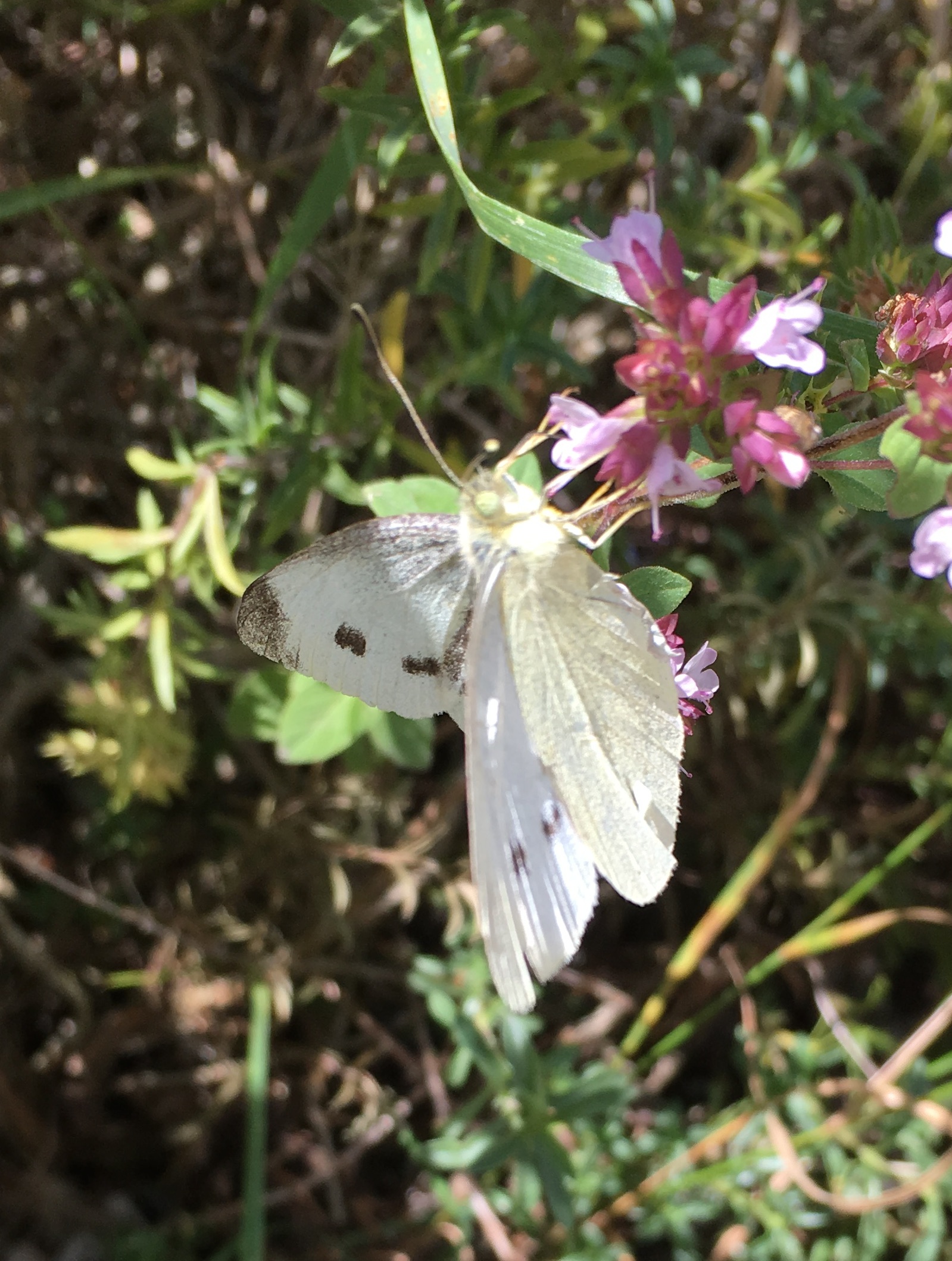
2016-03-02 14.24.23The small cabbage white butterfly (Pieris rapae) is the bane of gardeners’ existence all over the world. Native to Europe, Asia and North Africa, the butterfly is now found throughout most of North America, Hawaii, Australia and New Zealand.

In my little corner of New Zealand, the butterfly is especially common, presumably because of the huge numbers of commercial brassica crops grown here. In late summer, the roadsides shimmer with the butterflies, and their tattered wings flutter like flags in my car’s grille.

These butterflies are the reason broccoli is a seasonal crop for us. Broccoli can be grown year-round here, but mid- to late-summer broccoli becomes infested with caterpillars. For a few years, I dutifully treated my broccoli with Bt (an organic bacterial toxin that selectively kills caterpillars), but I eventually stopped bothering.

By mid-summer, there is so much other food coming out of the garden that, truth is, we don’t need the broccoli. And having a broccoli-free part of the year helps bring variety to our diets, and makes broccoli more special when it is available in winter and spring.

Sour grapes? Not at all! Just learning to work with the local wildlife instead of against it. Makes life easier for everyone!