Insects in the Classroom

insectsintheclassroomcoverI’m pleased to announce the release of Insects in the Classroom!

This collection of insect information and activities is the only one of its kind written specifically for the New Zealand classroom. Special features include:

  • Background information about insects and their relatives
  • Instructions on how to care for live insects in the classroom
  • A dozen buggy classroom activities
  • Student-friendly identification guides designed for the New Zealand school yard
  • Insect-themed colouring sheets and worksheets

The book is released in conjunction with a new outreach programme for schools–Bugs and Books–that uses science as the inspiration for writing.


Get Outside—See Cool Stuff

The swarm--apologies for the image quality; I'm allergic to bee stings.

The swarm–apologies for the image quality; I’m allergic to bee stings.

I’m trying to make myself go out for a walk at lunchtime every day. I’ll admit that I can be a bit of a slave driver when I’m working, and I don’t always manage it. I have a tendency to simply work through lunch, and then suddenly discover it’s late afternoon.

In truth, the walks available to me from my front door aren’t necessarily all that inspiring—endless agricultural fields in every direction.

But you can’t experience anything if you don’t first go out. Yesterday, I took the most boring of the boring walks from my house—the one that doesn’t offer so much as a mailbox for the first kilometre. Don’t ask why I chose that way—maybe I wanted to clear my mind, as I’d been doing intense editing all morning.

On this most boring of walks, I happened to see something awesome—a honey bee swarm.

We are blessed with many nearby apiaries, and I always have a plentiful supply of bees to pollinate my garden vegetables, but even so, it’s unusual to spot a swarm. This one was hanging in a drooping mass off the neighbour’s fence.

Bees swarm to create a new colony. It’s usually the old queen who leaves her hive with a large portion of the workers. A new queen will hatch in her absence and take over the old hive.

The swarming bees leave the hive and gather nearby while scout bees search for a new hive location. This is what I saw—the resting swarm. It likely flew away to a new home within a few hours. Where those bees are now, I don’t know, but I hope they found a nice place nearby from which to visit my garden.

So, my most boring walk was amazing. That reminds me, I still haven’t gotten out for a walk today. Time to step away from the desk and get outside. Who knows what I might see?

End of the Pickle Drought

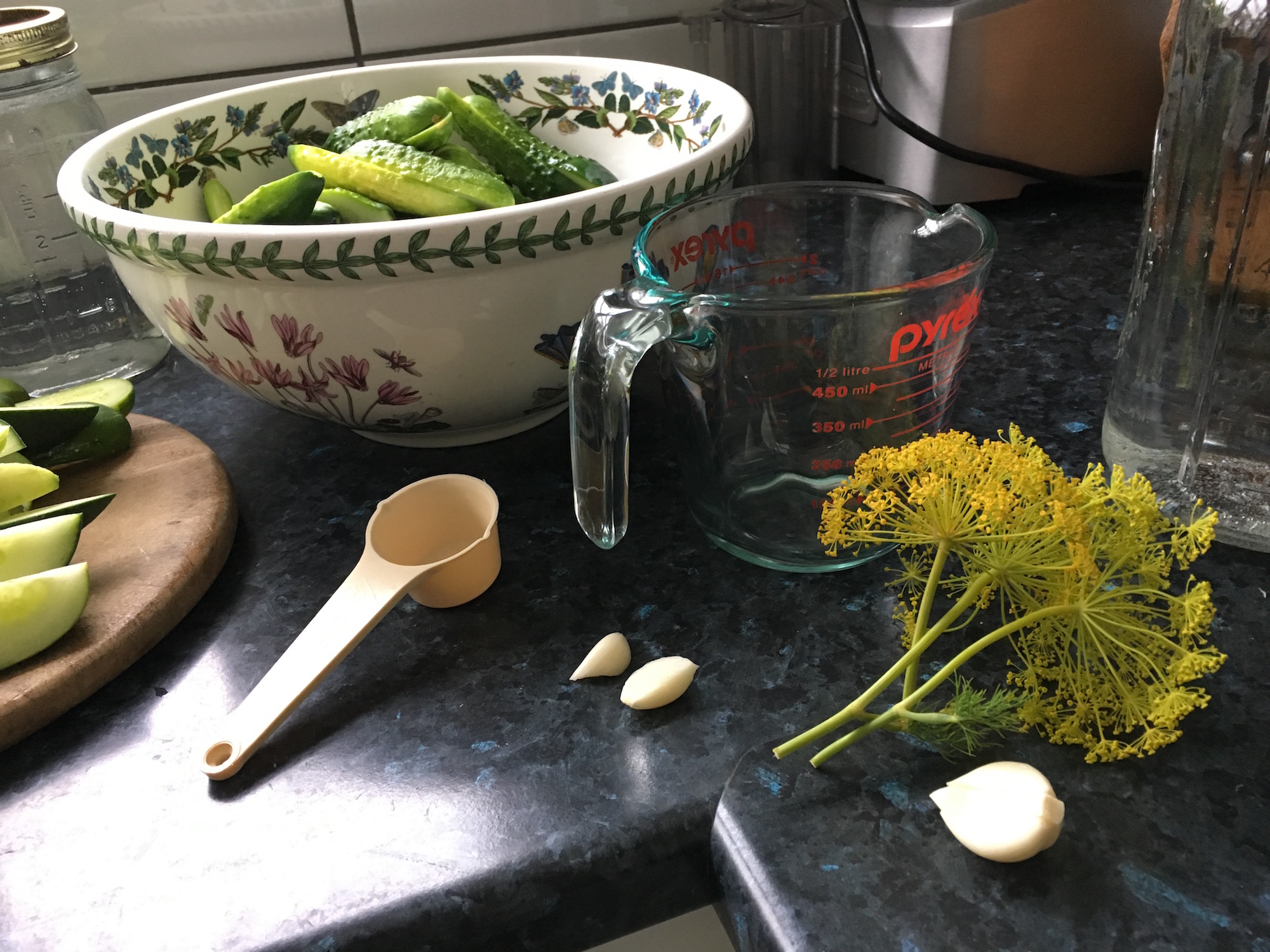
2017-01-02-08-03-25-smI grow pickling cucumbers every other year, in order to avoid becoming the Pickle Lady. Last year’s crop, however, was killed by frost, and we’ve been out of pickles for some time.

This year, the stars have aligned, and I have a beautiful crop of cucumbers coming on. As a bonus, the dill didn’t get completely wiped out by aphids (as it often does), so it’s perfectly timed with the cucumbers. There will be plenty of dill seed heads to flavour the pickles this year.

So it was with joy that I picked the first cucumbers yesterday. There weren’t enough to make a proper batch of pickles—there’s no point in heating up the canner unless I can fill it at least once—but I was fine with that. In fact, I was quite pleased there weren’t more. It meant I could make a batch of fresh pickles to put in the fridge and eat right away. After a long pickle drought, they’re going to taste fabulous!

Think Like an Entomologist

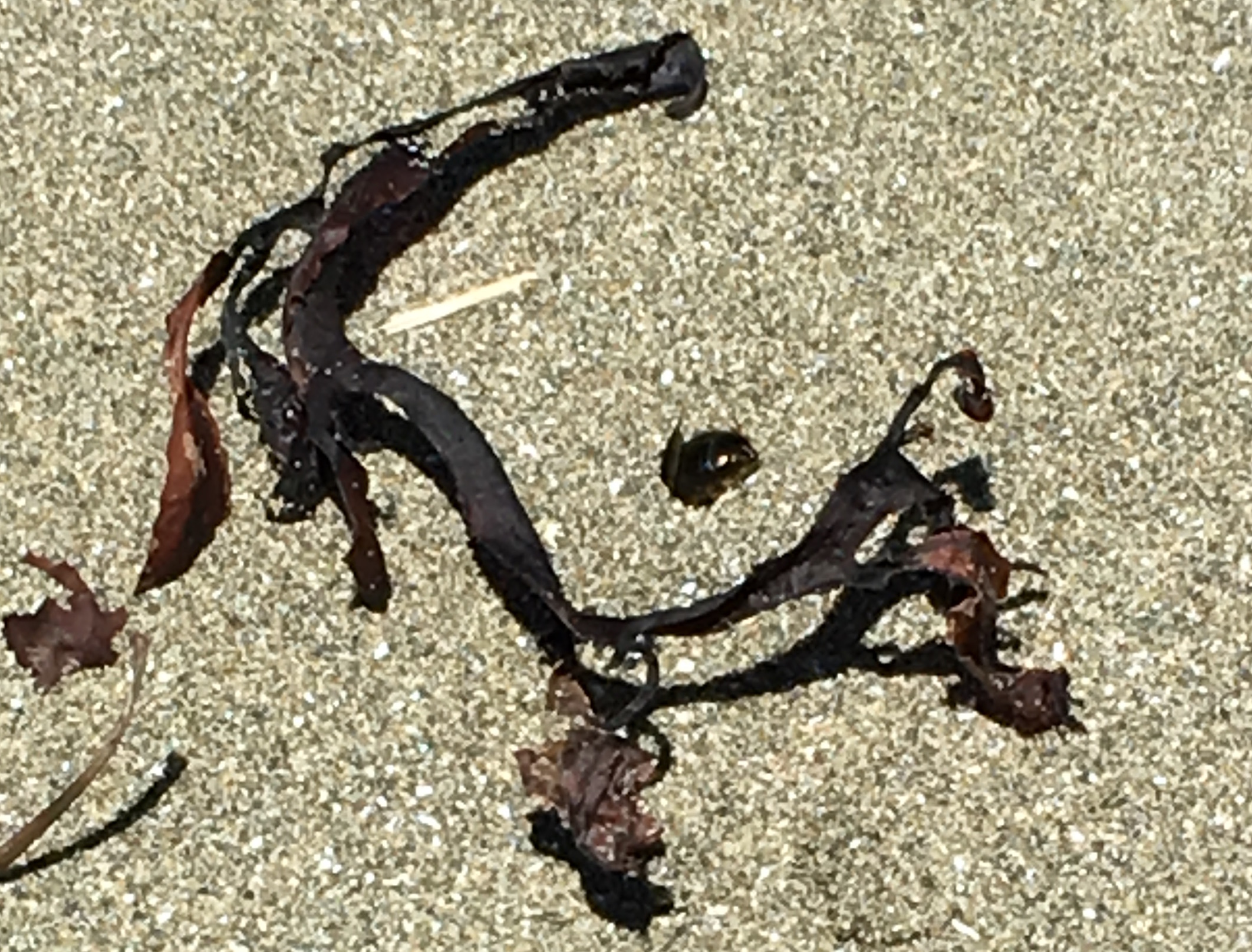
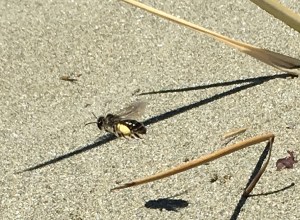
2016-12-21-12-45-56We went to the beach today. It was the perfect beach day—hot, and not too much wind (not at the beach, at least). The waves were big and great for body surfing and boogie boarding, and as usual, we ran into friends who also happened to be there, and had a good catch-up.

But the very best part of the beach today was the bees.

Thousands of native bees on the dunes just above high tide line. Swarming in the air, just 30 cm off the soil surface. I couldn’t help but watch, and I was rewarded with a fantastic show.

The bees almost all had loaded pollen baskets, and at first I wondered if they were feeding on something on the sand, because they would dip down to the surface, take a few steps, then fly away. I watched dozens of bees do this, but still couldn’t tell what they might be collecting.
2016-12-21-12-48-28Then I saw it. A bee landed, then quick as a flash, dove head first into the loose sand. It took her only a moment, and she had vanished, leaving nothing but a slight divot in the sand to show where she’d gone.

Then I knew. They were burrowing into the sand, provisioning nests for their larvae. They had dug the burrows earlier, and the brief touchdowns on the sand were to locate the right burrow. I watched for a long time, and saw several bees dive into their burrows. I even saw one go part way, decide she had the wrong spot, and scramble back to the surface to try again.

Then I saw another insect in the crowd—a wasp. It, too, was hovering over the sand and dropping down now and again to the surface. I surmised that it was a parasite, looking for the hidden bee burrows. I guessed it would enter a burrow and lay an egg on the bee larva, and the wasp larva would eat the bee.

These were all guesses based on my observations. I really didn’t know if there were dune-nesting bees here, or if they were parasitised by wasps.

At home, I was able to confirm my observations. My bees were the native Leioproctus metallicus, and they are parasitised by a gasteruptid wasp that lays its own eggs in the bee burrows.

I was pleased to have pieced together this puzzle by watching bees on the beach. (The only part I couldn’t see was that the bees try to fool the wasps by digging many burrows, not all of which contain larvae.) Entomologist Tom Eisner once wrote, “There is a saying that ‘5 minutes in the library can save you weeks in the laboratory,’ which has considerable merit. I prefer the naturalist’s version, which says that ‘weeks in the field can save you minutes in the library.'”

I’m with Eisner on that one. Watching those bees and trying to piece together what was happening was pure magic.

Bugs in Your Food

2016-12-18-06-46-58Can you find the insects in this ingredient list?

Yep, that’s it, at the very end—carmine—an all-natural food-safe red colouring made from the crushed bodies of the cochineal scale insect (Dactylopius coccus).

I don’t buy much processed food, so I rarely eat carmine, but I was excited to find it listed as an ingredient in the packaged macaroni and cheese I recently bought for a backpacking trip.

The cochineal scale is native to Central and South America, and lives on prickly pear cactus. It has been used as a dye since at least the 15th century, when it was used primarily to colour textiles. For three hundred years, it was one of our only red food-safe dyes. In the late 19th century, synthetic dyes began to replace carmine.

Until the 1820s, Mexico was the sole commercial supplier of carmine to the world, despite efforts to grow the insect elsewhere. At least one of those attempts ended in an environmental disaster. The British tried to establish carmine production in Australia to supply red dye for military uniforms in the 1700s. The insects died, but the cactuses thrived and eventually took over 259,000 square kilometres (100,000 square miles) of the country before being brought under control in the 1920s by the introduction of a moth that eats the cactus.

Carmine production is labour intensive. The insects need to be protected from predators and severe weather, then have to be brushed off the plants by hand at harvest. The insects are dried, crushed, and mixed with various substances to make a range of colours from bright red, to pink, to purple. It takes 80,000-100,000 insects to produce 1 kg of carmine.

Concerns over the safety of synthetic food colouring has led to a resurgence in the use of carmine in recent years, and it’s not unusual (though still not common) to find it included on the ingredient lists of food packages. In fact, you might be surprised how many products on the supermarket shelf contain carmine. Though it is more expensive than synthetic red dyes, it shows up in various cosmetics, candies, alcoholic drinks, fruit juices, sauces, cheese, meat, preserves, and desserts. In the US, the ingredient list is required to say ‘cochineal extract’ or ‘carmine’. In the EU, it might be labelled additive E120, and here in New Zealand, it is usually listed as colouring 120.

After Dinner Stroll

2016-12-19-19-04-24-smI am alone at home this evening. After dinner (eaten at the picnic table while reading a book), I went for a stroll around the property. Part of my path wound through the tall grass between the hedge and the vegetable garden.

Setting aside my normal reaction (This is so overgrown! I’ve got to get out here and cut this down), I did what my ten year-old self would have done, and lay down in the grass, holding still until I began to notice things.

I noticed that the ground was delightfully warm against my back.

I noticed that some of the grass was still in flower—anthers nodding in the wind—and other grass had already gone to seed and been stripped by the birds.

I noticed that the smaller flies meandered around among the grass stalks while the larger flies zipped overhead.

I saw a velvet mite gliding up and down a stalk of grass.

I noticed that a house sparrow nearby was chirping at just the right frequency to be irritating to my ears.

I noticed that the clouds weren’t moving across the sky as I thought, but rather were simply growing and coalescing in place.

Next thing I knew, I was starting awake, with the clouds, the grass, the birds, and the insects all still doing their thing around me.

Watching My Babies Grow

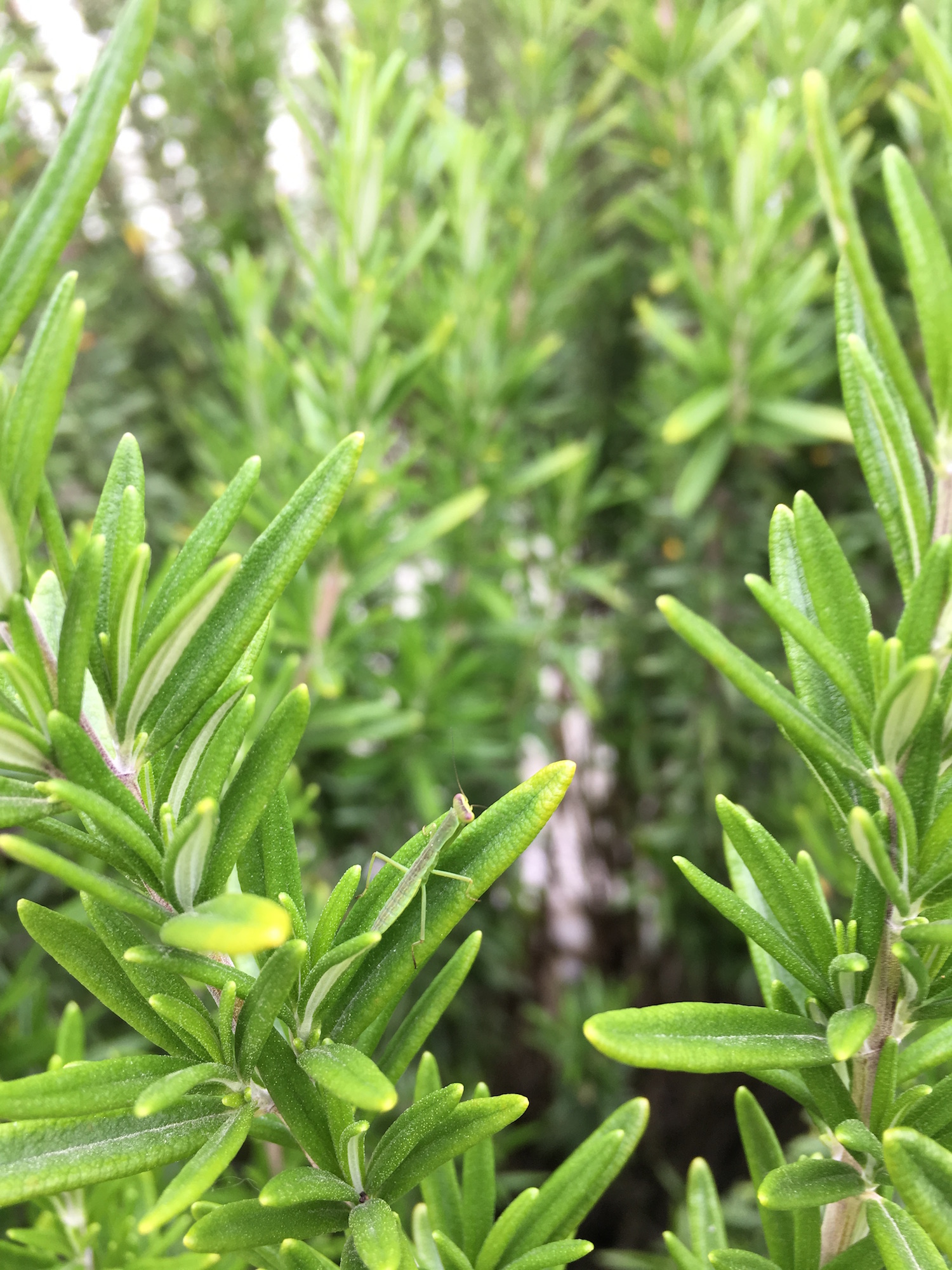
Recently hatched mantids--can you see them both?

Recently hatched mantids–can you see them both?

All winter I kept an eye on the eggs.

Now the preying mantids have all hatched, and I can’t help but watch them grow and develop.

They don’t tend to wander far, so it’s easy to keep tabs on them. Sometimes it takes a few minutes of staring before I see one, but then they start popping out at me until I’ve counted dozens of them.

I’m happy to report that they appear to be doing well. I’m sure that some are looking fat and sassy because they’ve eaten their brothers and sisters, but that’s the way it goes in the mantid world. Live by the raptorial front legs, die by the raptorial front legs.

This one is a bit older and easier to see.

This one is a bit older and easier to see.

Sometimes I wonder at myself, that I can watch this year after year, and still be excited as each new egg case hatches. I hope I never lose that wonder and joy.

A Rose

R Weiss roses Christchuch Botanic Gardens

R Weiss
roses
Christchuch Botanic Gardens

A rose, by any other name
Would still have thorns and be a pain.

Black spot, chafers, aphids, too,
Spider mites and powdery mildew.

Japanese beetles, leafcutter bees
It’s rife with pests and disease.

So go ahead, forget the rose
Plant a flower with fewer foes.

Sunflower, Daisy, there’s really a passel
Of flowers easy to grow without hassle.

No pruning, no spraying, no disease or thorns
For none of these things a gardener mourns.

Or better yet, just live with the weeds
They grow by themselves, and spread their own seeds.

Dandelion, yarrow, catsear and cress
All grow on their own and let the gardener rest.

Crane Flies

2016-11-29-07-27-59The crane flies are the largest family of flies in the world. There are over 15,000 species worldwide, with 1600 species in North America and 600 species in New Zealand.

The Māori name, matua waeroa, means ‘king mosquito’. You could be forgiven for thinking crane flies are giant mosquitoes—their body shape is similar. But crane flies cannot bite. The adults of many species don’t eat at all, and those that do sip nectar.

Crane fly larvae are sometimes called leatherjackets, because their exoskeletons are thick and leathery. They are aquatic or live in wet soil or rotting vegetation. Most feed on dead plants, though there are a few predators among the aquatic larvae.

When we moved to Crazy Corner Farm, and I turned the vegetable garden for the first time, I found the wet end of the garden teeming with crane fly larvae. Hundreds and hundreds of them. Every shovelful of earth came up with at least ten larvae. It was truly impressive, and the chickens loved me for the handfuls of larvae I tossed to them that year. The larvae must not like cultivation, though, because I don’t find them in the vegetable garden anymore.

I find crane flies endearing—awkward and gangly, they remind me of teenage boys who’ve just gone through a growth spurt and aren’t quite comfortable with their larger dimensions. The analogy might not be so far off. Crane fly larvae are legless and live in confined spaces. When they become adults, they suddenly have six impossibly long legs, and are airborne. It must be terribly confusing.

I spotted this beauty on my office door this morning, sitting on the glass with the white curtain behind it. I couldn’t resist photographing it.


Entogeeks Anonymous

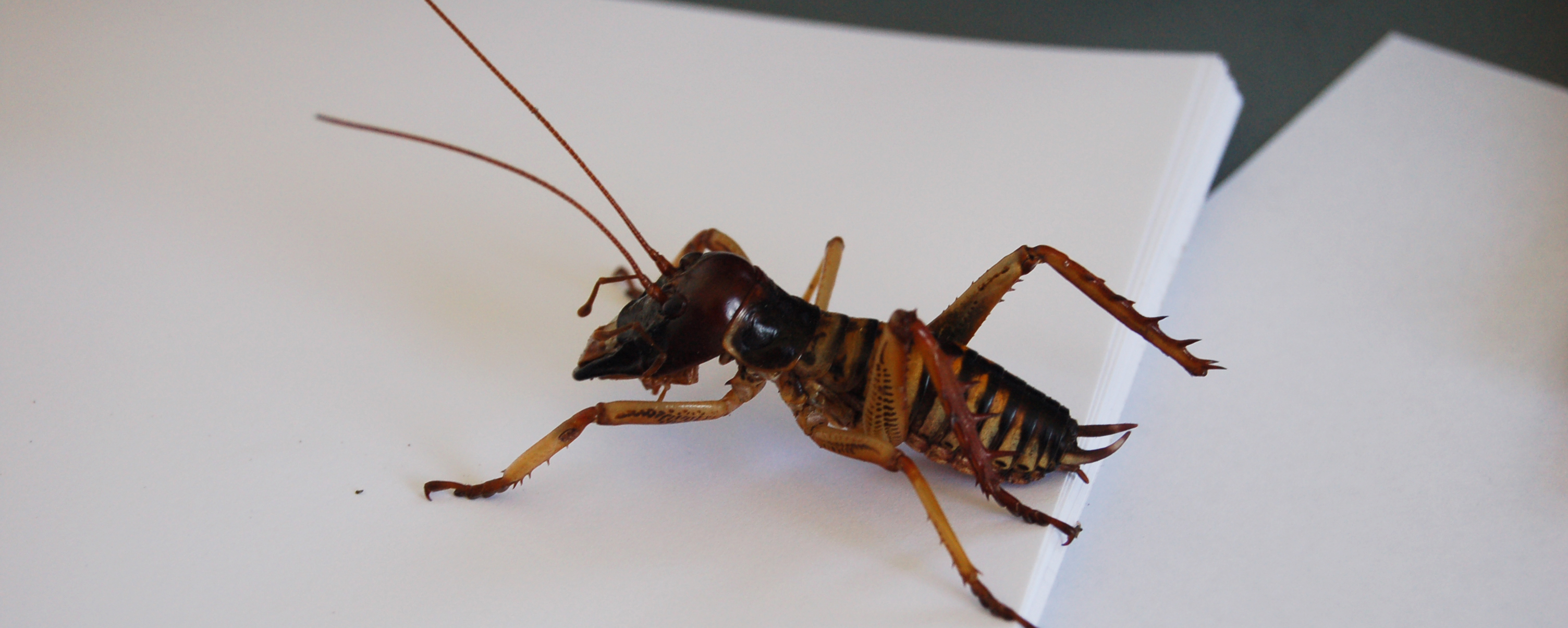
wellingtontreeweta3cropYou know you’re an entomologist when…

You find aphids on your lettuce, and eat it anyway.

You apologise to the grass grubs before squishing them.

You rescue the earwigs and lacewing larvae floating in the sink after washing vegetables.

You drop everything when you hear someone say, “Wow, look at that bug.”

You waste hours at work watching the spider on the window.

You keep a hand lens and a microscope within arms reach at all times, just in case.

The glove box of your car contains a folding insect net and several jars.

You sit down to write the day’s blog (a nice poem, you think), and get sidetracked for an hour trying to determine whether Mantophasmatodea is still considered a separate order or whether it is now grouped with the Grylloblattodea in the new order Notoptera.

*sigh*