Just kidding…

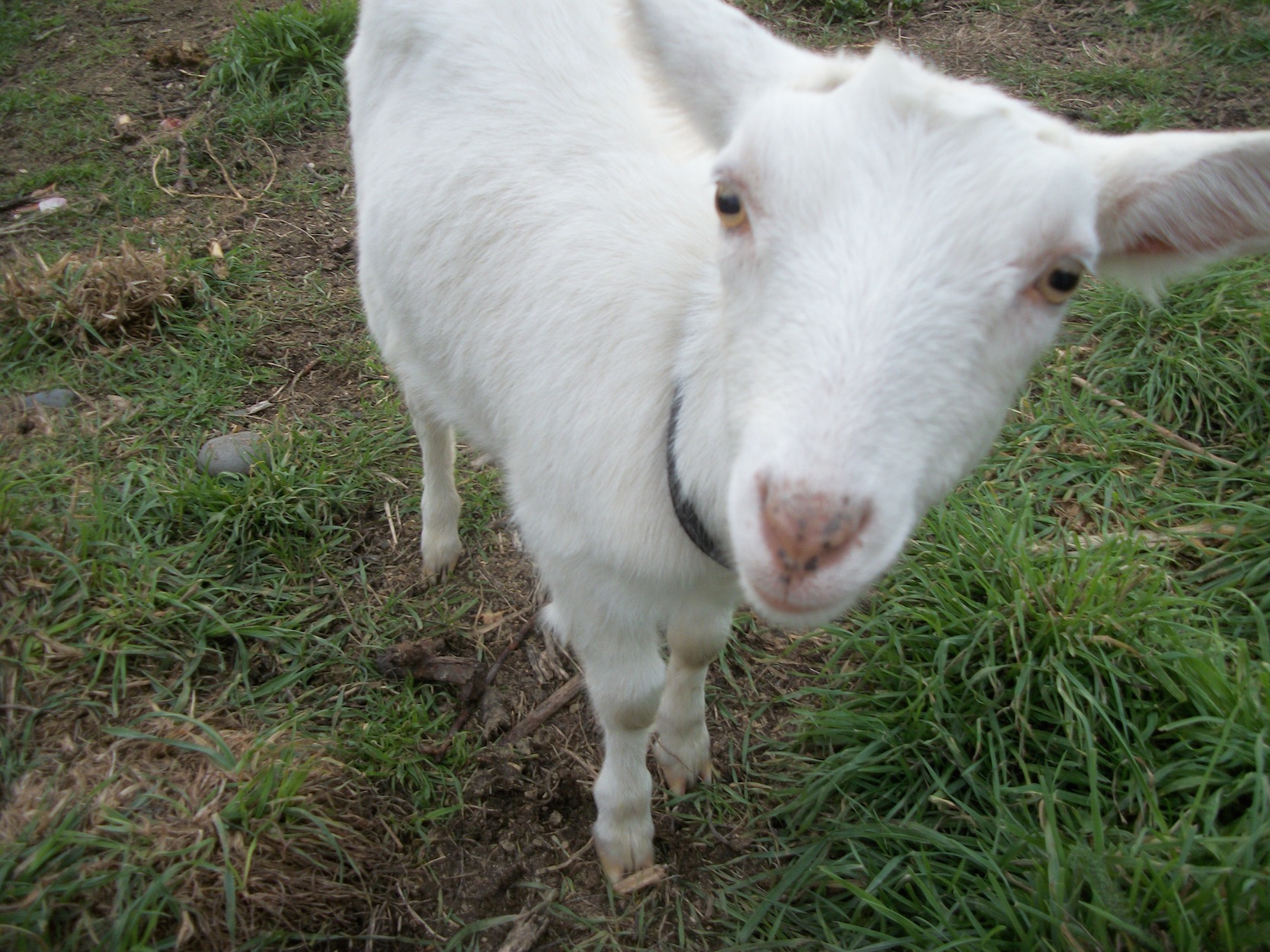
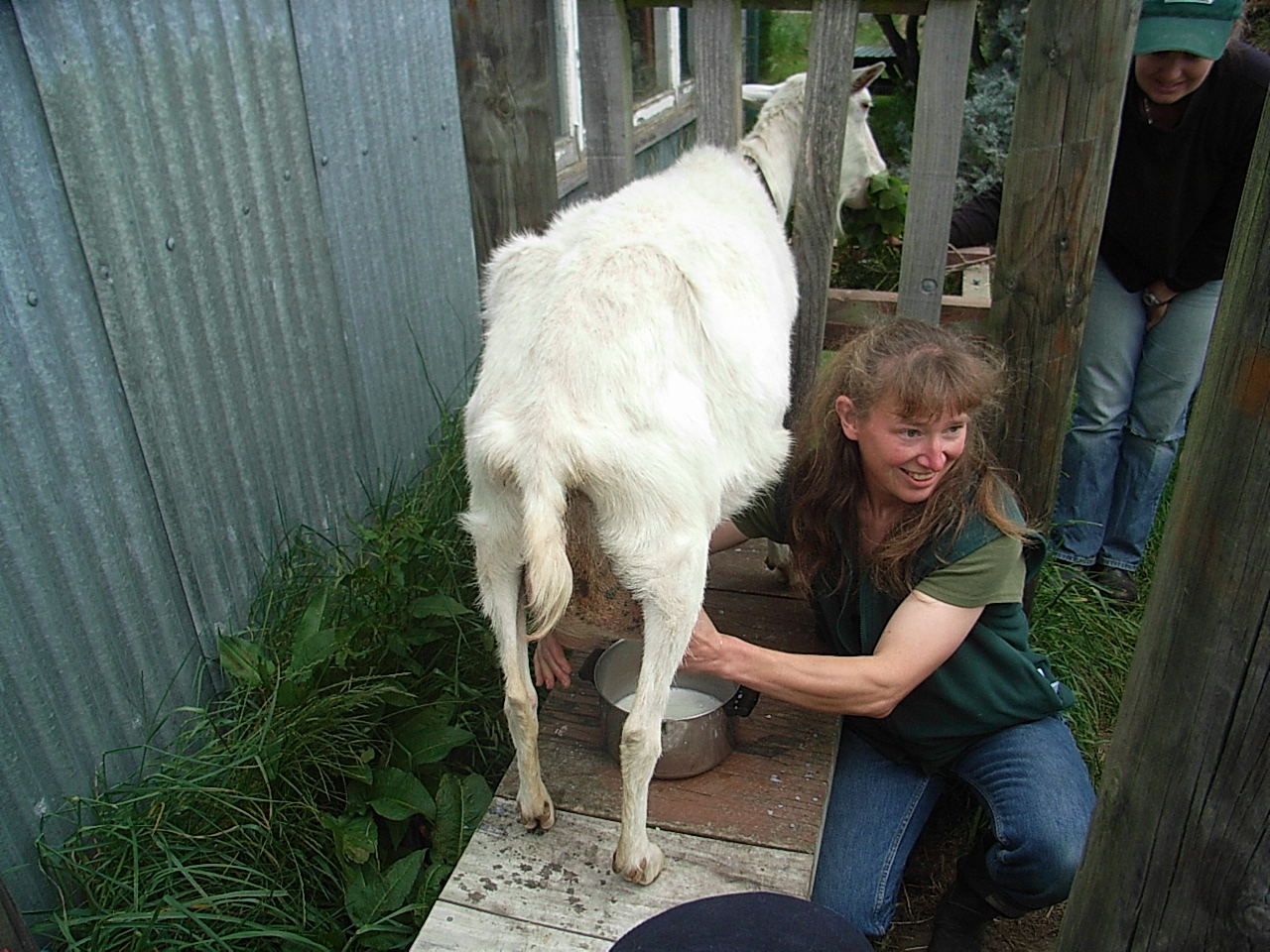
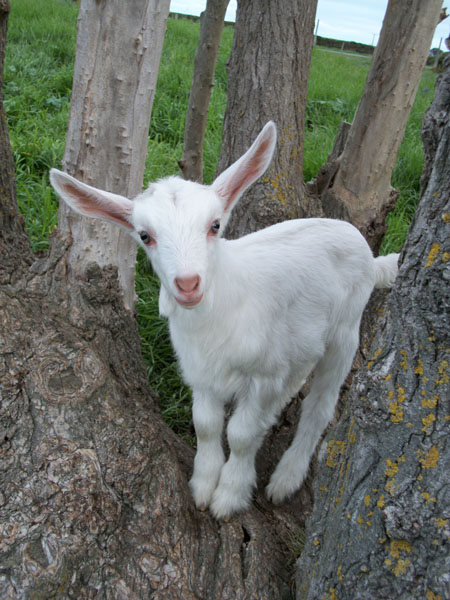
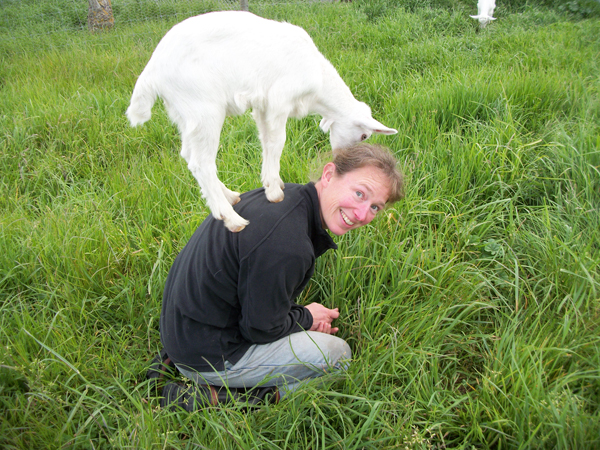
100_0746smWith kidding only weeks away, I thought I’d post this photo of one of my lovely little girls from a couple of years ago, playing King of the Mountain with me in the paddock.

And you wondered where the term “kidding around” came from? I don’t think it has anything to do with human children.

Looking forward to frolicking with the new kids soon!

Greek Salad

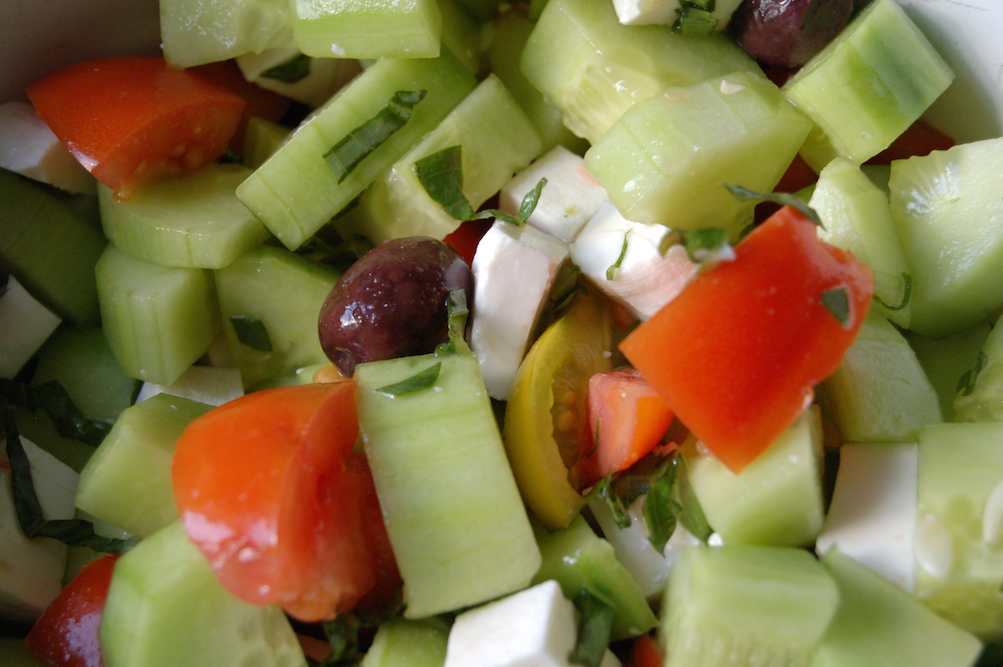
Greek salad3 smIt was a raw, overcast day today, and I spent most of it outdoors. So I thought I’d do a little summer dreaming for today’s blog to warm me up.

Dreaming about Greek salad—the essence of summer.

Fresh tomato (preferably Brandywine),

Fresh cucumber,

Homemade feta (from our own goat milk),

Big, fat black Kalamata olives,

Fresh basil,

Balsamic vinegar,

South Lea olive oil, made just down the road.

Serve it with some crusty homemade bread and a glass of wine.

Nothing could be better!

Seasons of Garlic

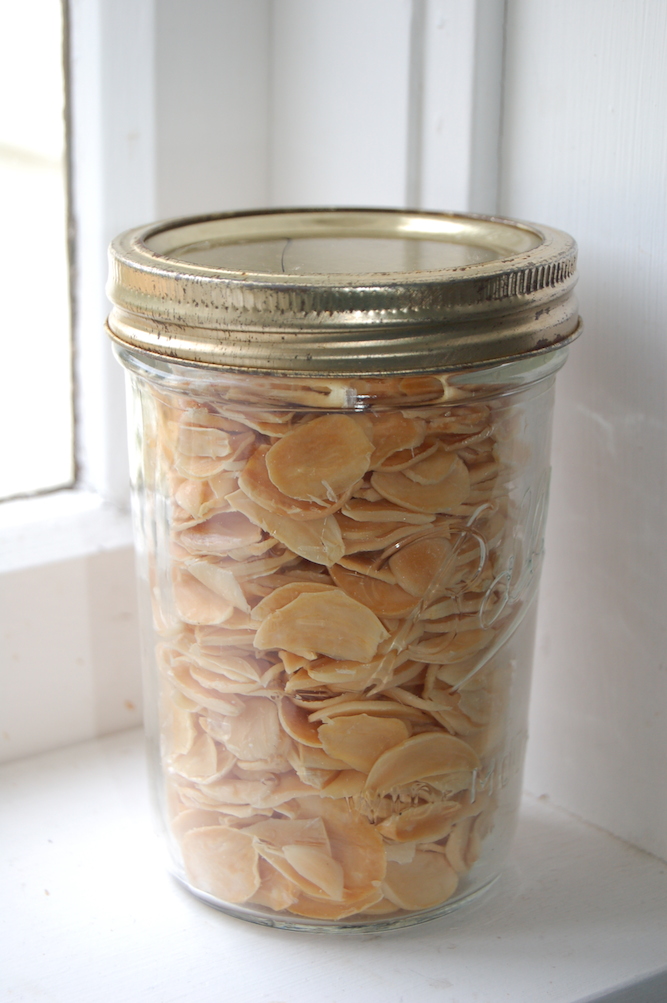
15 heads of garlic, all in one pint jar!

15 heads of garlic, all in one pint jar!

The garlic I planted on the winter solstice has taken advantage of the recent rain. It is now 5cm above ground, and looking great!

Of course, when the garlic in the garden starts sprouting, so does the garlic stored in the shed. And once it starts sprouting, its flavour goes off. The goats will still eat it (they seem to love garlic, and the local breeders feed it to them to help fend off intestinal parasites), but it’s not very tasty to the human palate.

So it’s about this time of year when we switch to using the garlic we dried at harvest time. The thin slices grind well in a mortar and pestle, and are easy to use. Though they aren’t as good as fresh garlic, they’re much better than sprouted garlic, because they were dried at peak freshness.

We’ll use this dry garlic until we can start harvesting the first immature new heads around Christmas. But as spring comes on, and the winter-planted leeks and the spring onions begin to be harvested, we naturally start using more of these fresh members of the onion family and less garlic. There will almost certainly be dry garlic left when the new heads start coming in. But that’s okay—the goats like dry garlic, too!

The Last of the Cheese

cheeseandcracker smWe marked another milestone in the food year yesterday—we ate the last of the goat cheese. We managed to finish off the Parmesan and Bishop’s Corner* on the same day.

It’s true, you only know what you’ve got when it’s gone. The goat cheese is that way for me. During the height of milking season, when rounds of cheese crowd out other food from the refrigerator, I can forget what a gourmet delight it is. I can forget that our ‘everyday’ cheese would cost us about $100/kg if we had to buy it. But when I’m staring at the last tiny sliver of perfection, knowing that my next bite of cheese is going to have to be run-of-the-mill commercial cow cheese, I recognise the value of what we produce.

So we savoured our last bites, and look forward to spring, when the milk will again be flowing, and the rounds of cheese will start stacking up.


*Bishop’s Corner is a cheese of my own creation—a happy mistake that turned out better than what I meant to make. I make that mistake over and over again now, and have named the cheese after a local crossroads.

Another James Herriot Day

100_3318 smIn a James Herriot novel, it would have been funny. The hapless protagonist wakes to a day of routine animal care and vetting. The first call is to a large, languid-looking house cat who needs worming. It’s a simple operation to force open the jaws and slip a pill into the cat’s throat–over before the cat even knows what’s happening. Except that it’s not. The pill slips out of the protagonist’s fingers and lands, in all it’s bitter potency, on the cat’s tongue. His sleepy eyes spring open, pupils dilated. He squirms and gags, tongue lashing to remove the offending pill. The protagonist reaches into the now-menacing mouth and snatches the pill out for another try, but the cat is wise to her tricks, squirming and growling, tail lashing in indignation. Instead of a ten-second procedure, the pill-taking becomes a battle of wills between protagonist and feline. The feline wins, and the protagonist promises to return later to try again to administer the now slimy pill.

Next stop is a small herd of goats needing injections of worm medicine. Just five goats, three of them kids. Should be a snap. Our protagonist decides that, while she’s got the goats immobilised for the injections, she’ll trim their hooves, too. The first goat walks obediently to the milking stand and eagerly pops her head into the head lock to reach the grain she knows awaits her there. She stands perfectly still for her injection, and only struggles for a moment as her hooves are trimmed. She’s done in a snap, and our protagonist looks forward to the prospect of a quickly-accomplished task. The second goat is the one that has instigated the worm treatment. She’s been scouring recently, and is in poor condition. Unfortunately, this goat, having endured long treatment for a near-deadly illness in the past, is shy of needles. She bucks and jerks as the protagonist gently eases the needle into her skin. The needle pops out. Our protagonist tries again, and manages to inject about half the dose before the goat again dislodges the needle. As soon as the needle is free of the goat’s flesh, the medicine flows so freely, that the protagonist squirts the remainder of the dose into the animal’s fur. So the only animal that desperately needs a full dose gets only half of one. Moving on to the hooves, our protagonist discovers hoof rot. She’s not set up to treat hoof rot today, so she’ll have to get the goat back on the stand another day to do that. The third goat is a young goatling. It is her very first time ‘on leash’ and on the milking stand. She refuses to step out of the paddock, and while our protagonist is trying to haul her out, another goat makes a break for freedom. Our protagonist desperately lunges at the escaping goat, grabbing her collar and almost ending up face down in the mud as the goat lurches out the gate.

Now, the young goatling refuses to be caught. She hides behind her mother, so that the protagonist must lean over the adult to snatch the goatling’s collar. The goatling takes off, knocking the protagonist off her feet and onto the mother. After much cajoling, pushing and pulling, our protagonist finally gets the goatling onto the milking stand. When the goatling finds herself locked in the headlock, she panics, kicking, bucking and shimmying from side to side until she falls of the edge of the stand. The injection and hoof trimming go reasonably well, but only because her small size means the protagonist can hold her still. Again, she discovers hoof rot that will have to be treated another day.

The last two goatlings are too small to fit into the headlock. They will have to be treated in the paddock. But our protagonist is alone, and holding even a small goat still enough with her knees to inject her and trim her hooves (which take both hands) is beyond her skill. She narrowly avoids stabbing herself with a needle, then gives up entirely. As she stands, surveying the unruly herd, she notices that one of the goatlings is limping. There is something distinctly odd about the way the animal steps on her front right foot. The foot almost knuckles under, like newborn kids’ feet do sometimes, before they straighten out and strengthen. The goat will have to be caught and examined, but having been just caught and manhandled, she’s reluctant to submit to it a second time. Our protagonist is flat out in the mud before the little goat is again caught. Our protagonist can find no fault with the leg, foot or hoof. It moves freely and there are no visible injuries. She lets the animal go again, and she limps off. Our protagonist decides to give the leg a few days to see if it comes right before taking her to the vet.

Later in the day, our protagonist steps out of her car, directly into a huge pile of cat poo—the cat has gotten revenge for the morning’s pill.

All the story needs is some local farmer looking over our protagonist’s shoulder saying, “Ach! Tha knows nothin’ ’bout animals!”

As I say, it would have been funny in a James Herriot novel…
Teenage angst

What do you mean I'm too young?

What do you mean I’m too young?

I was in my office, trying to focus on work when her insistent voice broke into my consciousness. Estrella, one of the goat kids, was whining loudly and incessantly. I stepped outside to see what was wrong with the normally quiet girl.

She was standing in the middle of the paddock. Her head wasn’t caught in the fence. Her sister and her mum were nearby. She hadn’t injured herself in the three hours since I was last in the paddock.

Ariana came bounding to her rescue, and her little tail gave a vigorous wag.

I sighed.

Estrella is in season. She’s the last of the three kids to start cycling. The other two have had their days over the past few weeks. Each cycle is heralded by vociferous maaa-ing.

At eight months old, the kids are too young to breed—though they’d happily get in kid, their bodies still aren’t fully developed, and it would cause them trouble. My old girl, Artemis, is now retired from breeding, though to hear her talk, she’d gladly visit the buck, too. Only one of the five goats in the paddock is at breeding age. She’s just come back from three weeks with the neighbour’s bucks, so I’m hopeful she is in kid.

But with four unmated goats in the paddock, and a cycle of three weeks between seasons, there’s going to be a lot of whining in the paddock this winter.

With two children in the house on the cusp of puberty, the whining indoors is almost as bad. I am surrounded by hormonal animals, all wanting something they don’t quite understand and cannot have.

It’s enough to make me dream of olive trees. They would look nice in the paddock. I love olives. And they don’t whine.

Blue Cheese

IMG_2297 copyThough it is sad when the last of the season’s goat cheese is gone, I do enjoy the excuse to buy cheeses I don’t make myself.

Blue cheese is one of these. I’ve heard enough horror stories about making blue cheese (“Once you’ve made blue cheese, all your cheeses end up blue”) that I’m reluctant to try it. Besides, there are plenty of moderately priced, locally produced blues available.

My family can polish off a generous wedge of blue at lunch, and much of the blue cheese we consume is eaten simply on bread or crackers.

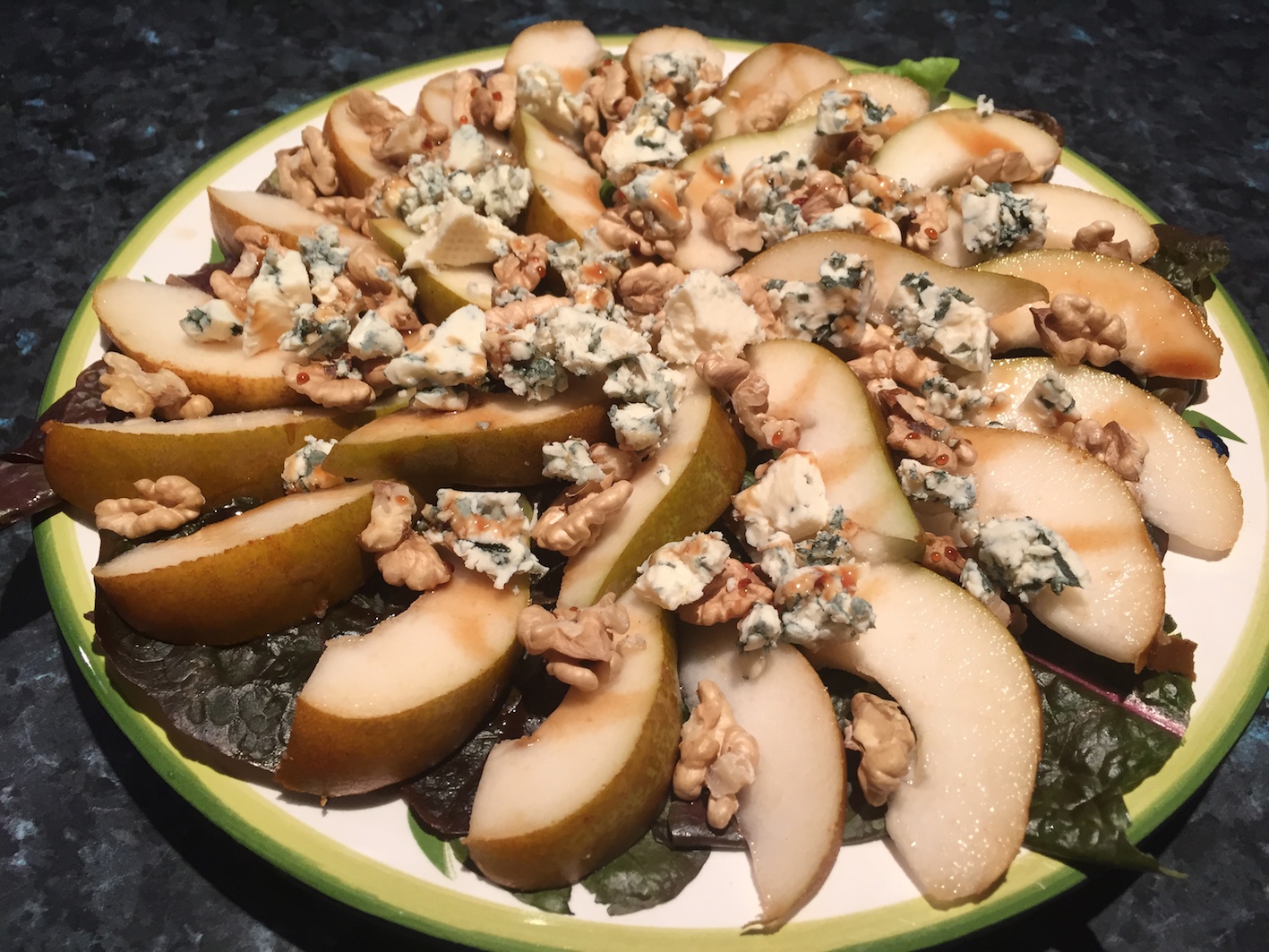
If I can hide it until dinner, though, I love blue cheese in a salad with pears and walnuts. The combination of bitter greens, sweet fruit, and sharp salty cheese hits all the right buttons. We usually top it with a bit of vinaigrette, but this time we simply drizzled some pomegranate syrup over it. Divine!


Beginnings and endings

Exif_JPEG_PICTUREThis week marked the end of this year’s milking season, and the beginning of next year’s.

We’ve been in the tail end of the milking season for a while now—the low-stress time when I could quit at any time and dry off the goats. Usually I quit milking when the weather turns bad in mid April. This year has been so mild, I’ve just kept going. But the goats needed worming, and rather than throw away milk for a couple of weeks while the medicine passed through, I decided it was time to end the milking season.

Besides, it’s time to start thinking about next year! The does are coming into season now, and it’s time for their annual visit to the buck. I have retired my old girl, Artemis, so she’s hanging out in the paddock with this year’s kids, but my young Toggenburg, Ixcacao, is spending the next three weeks boarding with the local breeder’s two bucks. Hopefully she’ll come home in kid, and I’ll start all over again, preparing for milking in the spring.

In the meantime, I will enjoy the excuse to sleep in a little in the mornings!

City Mouse, Country Mouse

See a beautiful goat kid? Beauty belies the truth: manually pulled from her mother, bottle fed because she was two weak to stand, then put down at 3 months old because of an injury.

See a beautiful goat kid? Beauty belies the truth: manually pulled from her mother, bottle fed because she was too weak to stand, then put down at 3 months old because of an injury.

I glanced down at my shirt as I got out of the car. Damn. Frayed on the hem, and stained with something dark—blood, probably. I sighed. Once again I would be the worst dressed parent at school—the country mouse among city mice.

It was easy when the kids were at the local rural school. Most of the parents showed up in manure-splattered gumboots and dirty coveralls there. But now that the kids are at school in the city, I feel a vast cultural divide between myself and the other parents.

They walk in wearing impeccable make-up, high heels, and dry clean-only clothes. They sport jewellery and labour-intensive hairstyles. Meanwhile, I’ve thrown on my least decrepit pair of blue jeans, hiking boots, and a t-shirt of dubious cleanliness. If I’m lucky, I’ve combed the hay out of my hair.

When these city parents find out I live on a lifestyle block in the country, they wax lyrical about how someday they want to live “the good life” in the country. I look at them dubiously. Those high heels wouldn’t work well in a muddy paddock. If they persist, I describe for them my daily routine, beginning at 5 most mornings. I enumerate the hours of hard labour in the garden, the DIY vetting (not for the faint of heart) that comes with owning livestock, the never ending struggle to maintain a rotting 125 year-old house.

It’s worse when city folk come to visit. Of course, other than at kidding time (see Worst Hostess of the Year), when visitors arrive, work stops. We make sure the garden is weeded, the grass trim, and the usual mess of half-finished projects is cleaned up before visitors come. We serve the fruits of our labour—homemade cheeses, fresh fruit and vegetables. We relax with a glass of wine. Visitors get the impression it is always like this.

The truth is much dirtier and sweatier, and it’s visible in our clothing. No matter how careful I am, eventually I find myself trimming hooves, treating an abscess, or tying up tomatoes in my “city” clothes. I sweat every day. I am regularly splattered with blood—my own or a goat’s. None of my shoes is reliably without manure on the soles.

So while the city folk see only the romance of rural subsistence farming, we live the reality. Are there moments of romance? Yes. In the silence of early morning milking. In the evening strolls around the property, when the day’s work is done. In the daily sweep through the vegetable garden to pick dinner. In the frolicking play of goat kids in the paddock. But it takes long, hard work to create those moments of romance, and the romance probably isn’t worth it unless you also enjoy the work. And, of course, if you don’t mind being the worst dressed parent at school.

Milking in the Dark

DSC_0012cropIt’s the time of year when milking gets difficult. The air is chilly, and it is still full night at 5:30 when I roll out of bed. I’ve already given up milking at 5—even I have trouble at that hour this time of year. If I start my day at 5.30, the sky is at least starting to lighten a bit by the time I finish milking and feeding the animals. In another week or two, I won’t even have that meagre consolation.

But there is something magical about stepping out the door in the pre-dawn darkness, the sky blazing with stars above, and no sound but the distant surf. Even the goats, who usually clamour for me every time they see me, are silent at that hour. They wait patiently for their turn on the milking stand, their turn to be fed. In the distance I can see the light from a neighbour’s milking shed, and I know I’m not the only one out in the darkness. While the neighbour works in the light and noise of a 60 cow rotary milking shed, though, I walk my goats one at a time to the solitary milking stand behind the shed. Weak light streams from the shed window—just enough to see the teats and the milking pail. I milk largely by Braille these mornings.

As I finish, and the eastern sky begins to lighten, a rooster crows in the distance, the neighbour’s peacocks mew. I stop for a moment on my way back into the house to admire the stars, listen to the sea. I won’t experience this stillness for the rest of the day; I need to savour it, store it up. When I step back into the warmth and light of the house, there will be a hundred frantic tasks waiting, and by the time I step back outside, the sun will be up, birds will be chattering in the trees, the goats will whine for attention, the neighbours will be passing back and forth on tractors, and the magic of the night will be gone.

And so I am thankful for this chore, the milking, that forces me out of bed and into the night, that I might have a moment or two of stillness in my day. Those brief moments are better than an extra hour of sleep any day.